Friday, December 26, 2025
Home Blog Page 2252

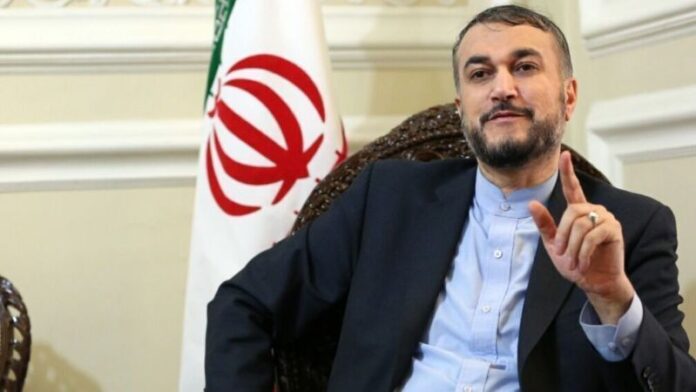
Iranian FM: Tehran will not accept anything beyond JCPOA

Hossein Amir Abdollahian made the remark in an Op-Ed published by the Iranian Newspaper, Iran Daily.

He added, the Islamic Republic of Iran will not enter into any discussion whatsoever about issues beyond the nuclear deal.

He reiterated that this window of opportunity will not remain open forever and the US and the three European countries must understand that.

Amir Abdollahian added that the Islamic Republic of Iran, while doing its best to get the oppressive US sanctions removed, has devised an effective program to neutralize the bans as part of its sustainable economic development program.

He also said the Islamic Republic will safeguard its nuclear achievements and at the same time will remain committed to non-diversion from its peaceful nuclear program.

The Iranian foreign minister said the main objective of the Vienna talks must be the full and effective implementation of the JCPOA and the normalization of trade relations with Iran.

According to Amir Abdollahian, it goes without saying that in order to return to the JCPOA, all the anti-Iran sanctions must be removed.

He said Iran is prepared to reverse its measures and to roll back its obligations under the deal if guarantees are given, damage assessment is done, and all sanctions are effectively and verifiably lifted.

The foreign minister noted that the possible return of the US to the nuclear deal will not be meaningful unless Washington gives guarantees that it will not make the mistakes it did and that Iran’s trade partners can enter into long term economic deals with Tehran without any concern.

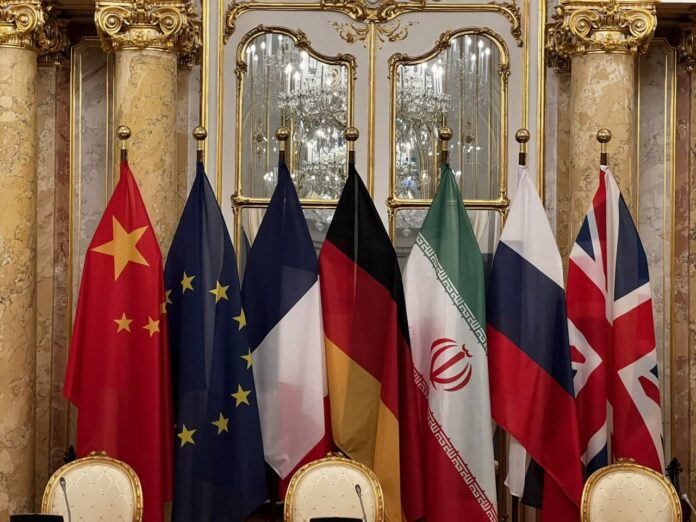
Iran, P4+1 negotiations begin in Vienna

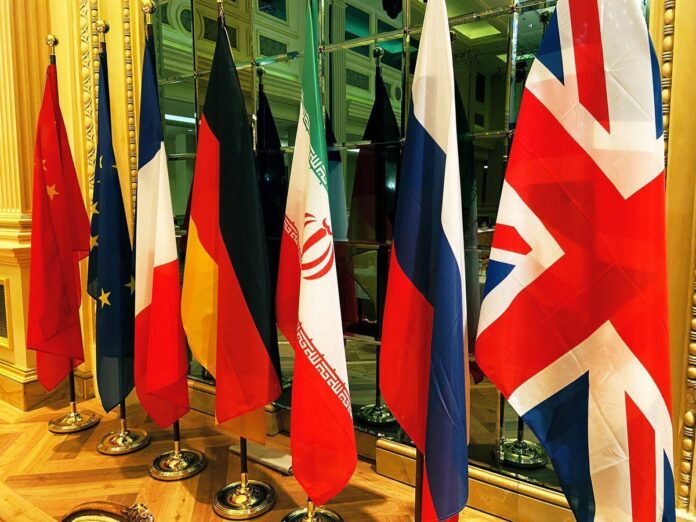
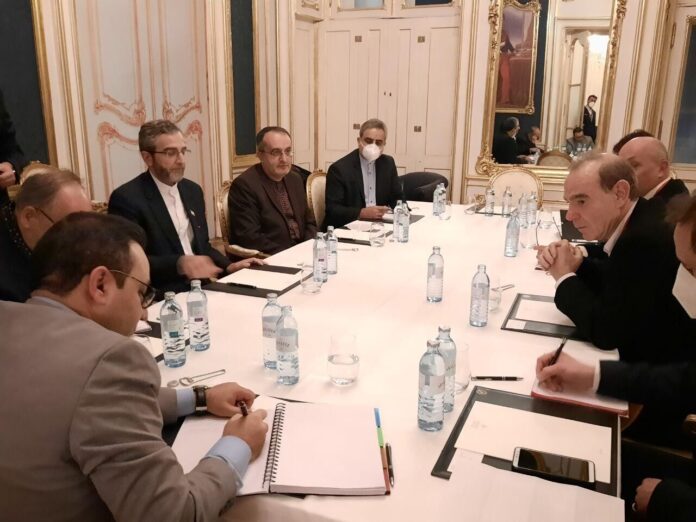
The meeting of the Joint Commission of the Joint Comprehensive Plan of Action is taking place in the Palais Coburg hotel.

Deputy foreign ministers and political directors of the foreign ministries of the Islamic Republic and the P4+1 group namely Russia, China, Britain, France and Germany are taking part in the meeting on Monday.

The session is chaired by European External Action Service Deputy Secretary General Enrique Mora, and Deputy Foreign Minister Ali Bagheri Kani is heading the Iranian delegation as its chief negotiator.

Iran says the talks are focused on finding ways to remove all sanctions imposed on Iran since the United States’ unilateral withdrawal from the JCPOA in May 2018.

“We have entered the negotiations with a strong will and strong preparation to lift illegal and oppressive sanctions,” Iran’s chief negotiator said ahead of the latest Vienna talks.

Tehran also insists that the United States must offer guarantees that it will not violate its commitments or withdraw from the deal again.

American negotiators are also present in the city but are not taking part in the meeting of the JCPOA Joint Commission because Iran says it will not talk to the party that unilaterally pulled out from the nuclear agreement.

Talks between Iran and 4+1 begin in Vienna

EU Foreign Policy chief Enrique Mora is presiding the meeting of the nuclear deal, JCPOA, joint commission.
He said in a tweet that he has returned to Vienna for the 7th round of talks aimed at reviving the JCPOA.
Mora also said the preliminary work is ongoing. He added that he met with Iranian Deputy Foreign Minister Ali Bagheri and the Russian and Chinese delegations.
The new round of negotiations at the JCPOA’s joint commission has begun at Coburg Hotel in Vienna.
Iran’s lead negotiator Ali Bagheri Kani has said the talks will only succeed if all JCPOA-related sanctions are lifted including bans imposed under the so-called maximum pressure campaign of the US.
He has warned if the sanctions are not removed, the talks will fail.

Cash-strapped Lebanon wakes up to countrywide roadblocks

Demonstrators block a road with burning tires during a protest on the back of the continuing deterioration of living conditions, in Beirut, Lebanon November 29, 2021. REUTERS/Mohamed Azakir

Protesters across Beirut, Tripoli, Saida, and other cities closed highways and intersections Monday morning with their vehicles, and lit tyres and garbage dumpsters on fire.

They called on the government to control the spiraling Lebanese pound, which for the past week has hovered at about 25,000 to the US dollar.

The pound has lost about 90 percent of its value in just over two years.

Mohammad, a taxi driver with his rental car parked at an intersection on Beirut’s bustling Hamra Street, said it has become less costly to be unemployed than to work.

“I can’t afford to pay my weekly rental fees for my car, not including gasoline prices and my monthly expenses for the family,” he told Al Jazeera, adding, “And there are barely any customers.”

The taxi driver said he has lost hope in political change, be it from the country’s ruling parties, or the slew of opposition political groups.

“I don’t trust anyone anymore. They’re all liars and thieves. And I don’t want charity. I want to just have a decent living,” said Mohammad, who gave only his first name.

The Lebanese Army was able to clear some closed intersections and thoroughfares. However, in Sports City just south of Beirut, protesters doused the highway with petrol so cars could not drive through, even if the army cleared the roadblock.

Anonymous calls to protest from across the country circulated on WhatsApp and other messaging apps over the weekend. Some political opposition groups said the demonstrations were organised by some of Lebanon’s sectarian parties.

Over the past month, Lebanese authorities have hiked petrol prices weekly as they continue to lift subsidies. They also partially lifted medicine subsidies, which increased prices on several medications for chronic illnesses and mental health.

Adham Hassanieh, from the opposition group Li Haqqi, told Al Jazeera he was not unsure who organised the protests. He noted he believes the Lebanese economy will continue to spiral without wholesale changes.

“It’s one failed government after the other,” Hassanieh said, adding, “The solution isn’t just technical … it’s about political will and who will bear the country’s financial losses.”

Prime Minister Najib Mikati’s government remains gridlocked, and has not convened in almost two months, unable to resolve a diplomatic dispute with Saudi Arabia and several Gulf countries, and settle differences over Beirut blast investigator Judge Tarek Bitar.

The government for months promised to introduce a one-year ration card programme to cushion the financial blow for about 500,000 families. However, they have yet to secure funding for the plan, which costs more than $500m.

Lebanon is also struggling to implement financial and accountability reforms, including a forensic audit of the Central Bank and state institutions. The international community has urged the country to restructure its wasteful and ineffective economy and reach an agreement with the International Monetary Fund in order to deliver financial assistance.

In just two years, more than three-quarters of Lebanon’s population has slipped into poverty, according to the United Nations.

Report: Underground intelligence operatives helped Taliban seize Kabul

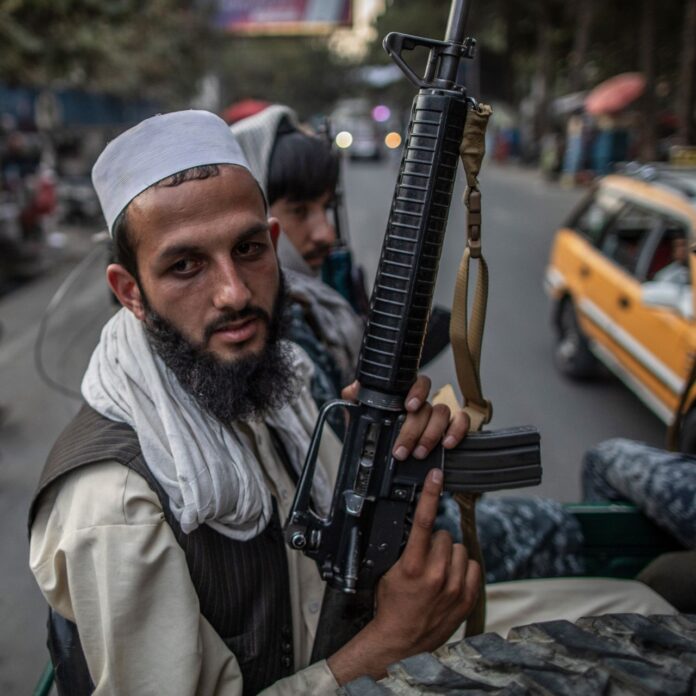
Taliban’s agents have been present in ministries, universities, business entities, and aid organizations, The Wall Street Journal reported on Sunday.

Mawlawi Mohammad Salim Saad, a key Taliban leader loyal to Haqqani Network has told WSJ they had agents in every organization and department who had already taken the control of strategic locations before they enter Kabul.

Mohammad Salim Saad is the security chief for the Kabul International Airport.

According to WSJ, the Taliban’s men were tasked on August 15 to take out their guns from hiding and conduct special operations in disarming security forces and taking the control of the strategic locations in the capital Kabul.

Mohammad Rahim Omari, a mid-level commander in the Badri force, was working undercover at his family’s gasoline-trading business in Kabul before he was called into action that day. He said he and 12 others were dispatched to an Afghan intelligence service compound in the east of the city, where they disarmed the officers on duty and stopped them from destroying computers and files.

Other cells fanned out to seize other government and military installations and reached Kabul airport, where the US was mounting a massive evacuation effort. They took control of the airport’s perimeter until better-armed Taliban troops arrived from the countryside in the morning. One agent, Mullah Rahim, was even dispatched to secure the Afghan Institute of Archaeology and its treasures from potential looters.

Kamran, who didn’t want his surname to be used, was tasked with taking over his alma mater, Kabul University, and the Ministry of Higher Education.

A 30-year-old from Wardak province west of Kabul, he stated he became a Taliban recruiter when he was pursuing a master’s degree in Arabic at the university in 2017. He estimates that, over the years, he persuaded some 500 people, mostly students, to join the insurgency. To maintain his cover, he shaved his chin, wore sunglasses and dressed in suits or jeans.

“Many of our friends who had beards were targeted,” he recalled, adding, “I was above suspicion. While many of our low-ranking friends were arrested, I wasn’t. Even though I was their leader.”

Many of his acquaintances—former classmates, teachers and guards—first realized he was a member of the Taliban when he showed up with a gun on Aug. 15, he continued.

“Many employees of the ministry and the entire staff of the university knew me. They were surprised to see me,” said Kamran, whose new job is head of security for Kabul’s several universities.

Kamran has since adopted the Taliban’s trademark look: a black turban, a white shalwar kameez and a long beard. As for his suits and jeans, they are gathering dust in his closet.

“Those aren’t our traditional outfits,” he stated, adding, “I don’t think I will have to wear them again.”

The WSJ report also uncovers that there have been key Taliban members among the students who were given scholarship opportunities to study in India.

Ahmad Wali Haqmal, who is now the spokesperson for the Ministry of Finance was a key Taliban member in the Kandahar University and was later sent to study Human rights in Aligarh Muslim Univesity of India, WSJ reported.

Bilal Sarwary, journalist and an activist on Twitter has shared a snapshot of his earlier post in response to the Wall Street Journal’s correspondent saying two Taliban members were employees of AIB in a Kabul downtown, Shahre-e-Now.

My neighbor who posed as an ordinary Afghan and lived with his family for years in Taymani was indeed a key Taliban intel operative. He was a good and polite neighbour until the end, Bilal Sarwary tweeted on Sunday.

This comes as the 20-year-old US-backed administration fell in the hands of the Taliban in almost 11-day fights, while the capital Kabul collapsed without any gunfire on August 15 as the former President Mohammad Ashraf Ghani fled without any early notice.

The way the security institutions fell in the hands of the Taliban without any resistance amid Ghani’s earlier claim to fight until death, has still remained an unanswered question.

The Taliban government is said to not be recognized by any country until they do not show they have the capacity to maintain human rights, women’s rights, freedom of speech and an inclusive administration that includes the ethnic groups including women.

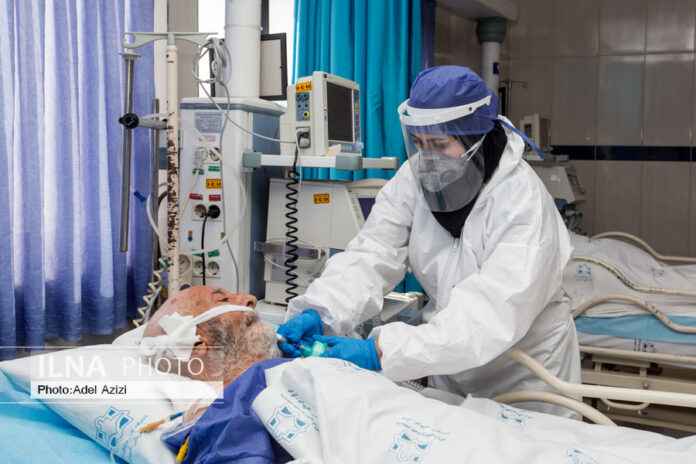
Nine Iranian provinces report no Covid-19 fatalities

The provinces with no new deaths are Khouzestan, Golestan, Kordestan, Hormozgan, Northern Khorasan, Zanjan, Kohgiluyeh and Boyer-Ahmad and Sistan and Balouchestan.

The ministry also reported on Monday that 82 people have died from the respiratory disease over the past 24 hours.

According to official figures, over 129,700 Iranian have lost their lives to the virus since its outbreak began in the country in 2020.

The ministry’s latest figures also showed that over 105 million doses of Covid-19 doses have been administered in Iran with more than 57,480,000 people fully vaccinated.

Over the past weeks Iran has been reporting a downward trend in the number of fatalities and new infection cases.

Health officials are mostly attributing the decreasing numbers to an intensified vaccination campaign over the past months.

Iran, which has been hit by five waves of the disease, has imported tens of millions of vaccine doses and is domestically manufacturing several types of Covid-19 shots to battle the virus.

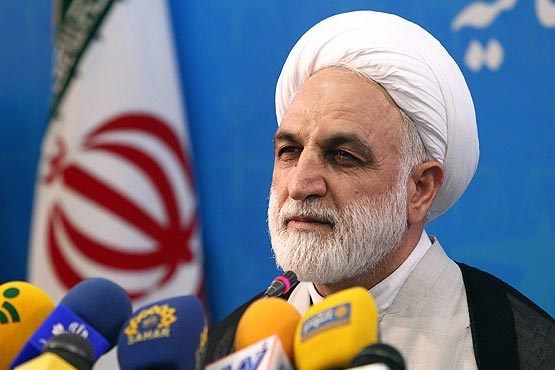
Iran judiciary chief: People have rightful demands about water

Mohseni Ejei however noted that the Iranian people must be vigilant in the face of enemy movements and should not allow ill-wishers among themselves.  

The judiciary chief added that officials should have made necessary plans for the management of water. 

He also called for efforts to allocate water to industries, agriculture and for drinking so that consumption is streamlined. 

Ejei’s comments comes as the central Iranian city of Isfahan was recently the scene of protests by residents over mismanagement regarding water supply in the Province of Isfahan. 

A small number of protesters however shouted anti-government chants which prompted police to disperse them.

Russia says optimistic about Vienna talks

“Count Russia out, please. We are fully aware of all the problems at the Vienna Talks but remain cautiously optimistic,” Russia’s Permanent Representative to the Vienna-based international organizations Mikhail Ulyanov wrote on his Twitter account.

“The reason for this cautious optimism is very simple: we have no reasonable and acceptable alternative to a successful conclusion of the talks on JCPOA,” he continued.

Tehran, Moscow and Beijing held useful informal consultations ahead of the beginning of the Vienna talks on the restoration of the Iran nuclear deal, Ulyanov had said.

“China, Iran and Russia held today trilateral informal consultations in preparation of the official resumption of the Vienna Talks on November 29,” he noted, adding, “The exchange of views was useful, first of all for better understanding of the updated negotiating position of Tehran.”

The seventh round of talk on the restoration of the Joint Comprehensive Plan of Action (JCPOA) on the Iranian nuclear program, which was suspended in June because of elections in Iran and the formation of its new government, will begin on November 29.

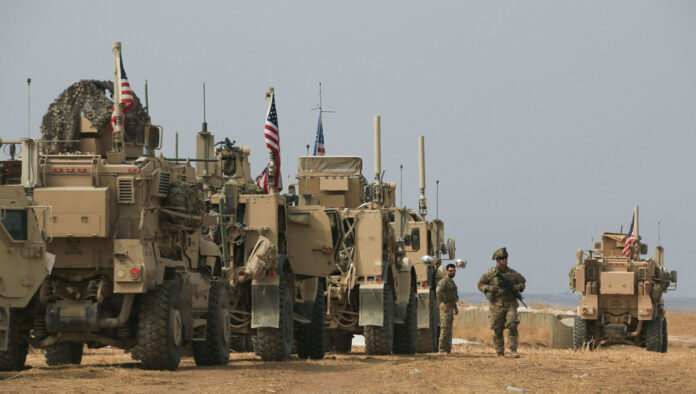
Report: US sends two military convoys to Syria

The convoys reportedly consisted of 100 trucks carrying containers with unknown cargo, purportedly “logistics materials”, and refrigerator trucks.

The first convoy reportedly consisted of around 60 vehicles, while the second had around 40 of them.

They crossed into Syrian territory from Iraq via the al-Waleed crossing, SANA’s sources stated.

Both convoys moved under the protection of several armoured vehicles.

The US deployed in Syria under the pretext of fighting Daesh, but has not completely withdrawn despite declaring the terrorist organisation defeated. Washington also lacks a UN Security Council mandate or an invitation from the elected government in Damascus to justify the deployment of its forces in the country.

Damascus, Tehran, and Moscow have repeatedly objected to the continuing stay of American troops in Syria, calling it illegitimate. Washington, in turn, claims that its forces have stayed behind to prevent the local oil resources from ending up in the hands of terrorists. However, the Syrian government insists they are, in fact, are engaged in the theft of the nation’s oil resources.

Iran: Some European parties not serious in Vienna talks

“The fact that the British foreign secretary, on the eve of the Vienna talks publishes a joint memo with a party, which from the day one has put all its efforts into preventing the JCPOA from being signed and for the nuclear deal to be eliminated and even today is the main opponent of the negotiations in Vienna and the revival of the JCPOA, when you see this arrangement, you realize that, at least, some European countries are not in Vienna with the required will for removal of the sanctions,” Foreign Ministry spokesman Saeed Khatibzadeh said in his weekly presser.

“Moreover, this shows not only some of these countries are not serious, but they are also preparing grounds so that these talks and negotiations expand so that the implementation of the JCPOA does not take place effectively. This is fully clear. Tell me with whom you’re friends with, I tell you who you are.”

Khatibzadeh was referring to the article by Liz Truss and Yair Lapid in which they vowed to “work night and day to prevent the Iranian regime from ever becoming a nuclear power.”

The spokesman also said the Iranian negotiating team is in Vienna with strong determination and is thinking of fruitful talks.

“If the other party’s team enters the talks to make sure extra-territorial sanctions are removed, then the negotiations are on the right course,” he said.

The spokesman also said Americans killed Iran’s time during the past six rounds of the talks to maintain what he called the “failed legacy of [former US President Donald] Trump.

“My advice is that now, at the beginning of the talks under [Iran’s] new government, they enter the negotiations with good will and real will and determination for fruitful talks. Real parties should take this window of opportunity as this window will not remain open indefinitely,” he said.