Thursday, December 25, 2025
Home Blog Page 2247

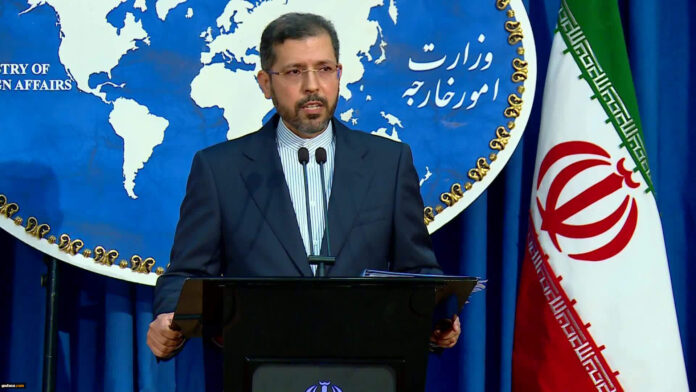
Khatibzadeh: Iran having no military presence in Yemen

The Iranian Foreign Ministry spokesman added that such baseless claims are aimed at distracting the public opinion of regional and world nations from the crimes committed by the invading countries. 

Khatibzadeh said the Islamic Republic of Iran has never had any military presence in Yemen to be hit by the invaders. 

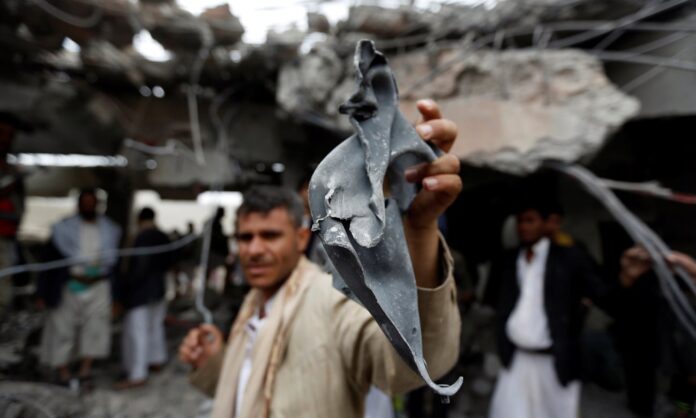
Some media reports claim that the self-styled Saudi-led military coalition has targeted a covert position belonging to the experts of Iran’s Islamic Revolution Guards Corps in the Yemeni capital Sana’a. 

The Iranian Foreign Ministry spokesman underlined that such groundless statements won’t change the reality in Yemen in respect of the flawed military strategy of the aggressors.

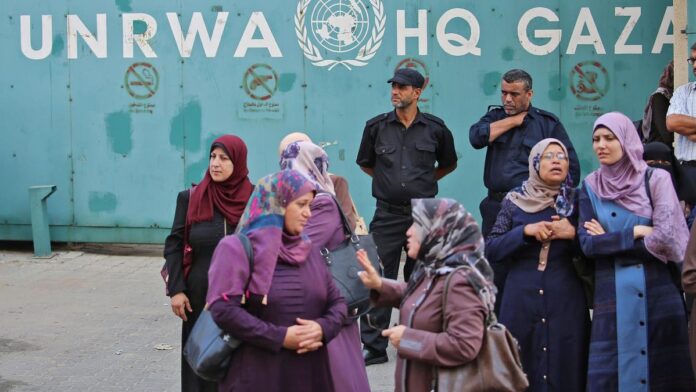
UN agency for Palestinian refugees faces funding crisis

UNRWA runs schools, clinics and food distribution programmes for millions of registered Palestinian refugees across the Middle East, mainly the descendants of Palestinians who were forcibly displaced from their towns and villages in what is now Israel in the run-up to its establishment in 1948.

The 5.7 million refugees mostly live in camps that have been transformed into built-up but often impoverished residential areas in the Israeli-occupied West Bank, East Jerusalem and Gaza Strip, as well as Jordan, Syria and Lebanon.

UNRWA head Philippe Lazzarini told reporters in Jordan on Tuesday that the resumption of United States support for the agency this year – which had been halted by the Donald Trump administration – was offset by a reduction in funding by other donors.

The agency also went through a management crisis in 2019, when its previous head resigned amid allegations of sexual misconduct, nepotism and other abuses of authority at the agency.

Staff went on strike on Monday after being informed last week that salaries would be delayed, but halted the action following mediation, Lazzarini said.

“If UNRWA health services are compromised in the middle of a global pandemic, COVID-19 vaccination rollout will come to an end. Maternal and child care will stop, half a million girls and boys not knowing if they can continue learning, and over two million of the poorest Palestinian refugees will not get cash and food assistance,” he added.

“The humanitarian needs of Palestinian refugees keep increasing while funding to the agency has stagnated since 2013,” he continued.

Lazzarini noted the agency raised enough donations at a recent conference in Brussels to cover up to 48 percent of its budget in 2022 and 2023. It also generated $60m towards a $100m shortfall until the end of the year to keep services running.

“I’m still not yet in a position to say when the November salaries will be paid,” he stated.

Critics of UNRWA, including Israel, accuse it of perpetuating the 73-year refugee crisis and say host nations should shoulder the burden of absorbing them.

The Palestinians say the refugees and their descendants have a “right of return” to their homes in what is now Israel, a position supported by host countries. Israel rejects that, noting that if such a right were fully implemented it would leave the country with a Palestinian majority.

‘Saudis used incentives and threats to shut down UN Yemen investigation’

The Saudi effort ultimately succeeded when the UN human rights council (HRC) voted in October against extending the independent war crimes investigation. The vote marked the first defeat of a resolution in the Geneva body’s 15-year history.

Speaking to the Guardian, political officials and diplomatic and activist sources with inside knowledge of the lobbying push described a stealth campaign in which the Saudis appear to have influenced officials in order to guarantee defeat of the measure.

In one case, Riyadh is alleged to have warned Indonesia – the most populous Muslim country in the world – that it would create obstacles for Indonesians to travel to Mecca if officials did not vote against the 7 October resolution.

In another case, the African nation of Togo announced at the time of the vote that it would open a new embassy in Riyadh, and receive financial support from the kingdom to support anti-terrorism activities.

Both Indonesia and Togo had abstained from the Yemen resolution in 2020. This year, both voted against the measure.

The resolution was defeated by a simple majority of 21-18, with seven countries abstaining. In 2020, the resolution passed by a vote of 22-12, with 12 members abstaining.

“That kind of swing – from 12 no’s to 21 – does not just happen,” stated one official.

John Fisher, the Geneva director of Human Rights Watch, noted: “It was a very tight vote. We understand that Saudi Arabia and their coalition allies and Yemen were working at a high level for some time to persuade states in capitals through a mixture of threats and incentives, to back their bids to terminate the mandate of this international monitoring mechanism.”

He added: “The loss of the mandate is a huge blow for accountability in Yemen and for the credibility of the human rights council as a whole. For a mandate to have been defeated by a party to the conflict for no reason other than to evade scrutiny for international crimes is a travesty.”

Representatives from the Indonesian and Saudi embassies in Washington and the foreign ministry in Togo did not respond to a request for comment.

The HRC first voted to establish a team of experts who would investigate possible violations of humanitarian law and human rights in Yemen in 2017.

Yemen’s war had intensified in 2015 after a coalition led by Saudi Arabia, using weapons procured in the US and UK, intervened on behalf of the internationally recognised Yemeni government against Houthi rebels. More than 100,000 people have been killed in the conflict and over 4 million have been displaced, activist groups say.

Saudi Arabia, which is not a voting member of the UN human rights council, initially supported the effort.

Reports by the experts – known as the Group of Eminent Experts on Yemen (GEE) – grew more “damning” over the years, one person who closely followed the matter stated.

In 2020, the GEE recommended for the first time that the international community focus their attention on accountability for potential war crimes. They included five recommendations, including that the matter be referred to the prosecutor of the international criminal court by the UN security council.

One person who followed the matter said: “I think that must have been the trigger moment when the Saudi coalition realised this is really going too far.”

Nations that supported the measure, which was led by the Netherlands, were apparently caught off guard by the Saudis’ aggressive tactics.

During the negotiations, none of the countries that would later change votes from abstaining to “no” raised objections to the resolution, which differed from the 2020 version in only one substantive way: it sought to extend the mandate to two years instead of one.

Sources noted it was not until about a week before vote that “alarm bells” began to ring for proponents of the measure. when they grasped that the Saudi campaign “was very different from previous years” – in part because Saudi had engaged with policy makers in individual capitals around the world.

“You could see the whole thing shift, and that was a shock,” noted one person familiar with the matter. Usually, voting positions are known days before a vote is taken.

But in October, member countries resisted sharing what their final position would be, which proponents saw as a worrying sign that some countries were under intense pressure.

Supporters of the resolution decided to proceed with the vote, even though its outcome was uncertain.

“For the Saudis to win this battle at the expense of the Yemeni people is terrible. But it’s also a textbook case for other countries like the Russia and China to torpedo any other investigation. It really shook everyone to the core. The scrutiny should be on those members of the council that couldn’t withstand the pressure,” added one person close to the matter.

Members of the HRC serve for a period of three years. Of the countries that served both in 2020 and 2021, four changed their votes from abstention to “no” on the Yemen resolution: Indonesia, Bangladesh, Senegal and Togo.

The vote came when the foreign minister of Togo was on an official visit to Saudi Arabia, and coincided with the announcement of the new embassy in Riyadh. Togo also announced that it would be receiving counter-terrorism funding from the Saudi-based International Center for the Fight against Extremist Ideology.

In the case of Indonesia, it is understood that a Saudi Arabia communicated that Indonesian Covid vaccination certificates might not be recognised for Indonesians traveling to Mecca if the country did not reject the measure. One observer said the alleged threat showed Saudis were willing to “instrumentalise” their access to a holy place.

One week after the vote, the UAE, an ally of Saudi Arabia in the Yemen conflict, invited Senegal to sign a memorandum of understanding to establish a joint Emirati-Senegalese business council. The aim of the council was for the UAE chamber of commerce to “boost cooperation” between the “two friendly countries”.

The UAE did not respond to a request for comment.

Foggy autumn of Deraz-e-Now Village, Golestan province

Deraz-e-Now is a summer and mountainous village in the highest altitudes of Kordkuy in Iran’s Golestan Province, which welcomes many tourists and travelers in all four seasons due to its beautiful and pristine natural environment.

Being located in the Alborz highlands, Deraz-e-Now has an amazing view of Gorgan Bay and overlooks the cities and villages of Golestan and Mazandaran provinces. Deraz-e-Now has colorful wild and medicinal plants, dense and lush forests, waterfalls and springs.

These days, the heights of Golestan Province take on the color of autumn and show off with their eye-catching colors. 

These pictures show the heights of Kordkuy Forest and the road of Deraz-e-Now village. 

The two parts of Deraz-e-Now has 160 fixed families who use their summer environment for recreation only in spring and summer. 

In the village, houses have been built according to the climate of the region. Thatched houses with wooden and thatched walls and thatched roofs are for mountainous areas. The advantage of such buildings is that they maintain heat in winter and cool air flow in summer, and are resistant to earthquakes. 

The weather condition in Derz-e-Now is in stark contrast with that in big cities where people are grappling with severe air pollution. The most polluted city is the Iranian capital. Tehran on Tuesday registered red air quality alert and ranked as the world’s fourth most polluted city.

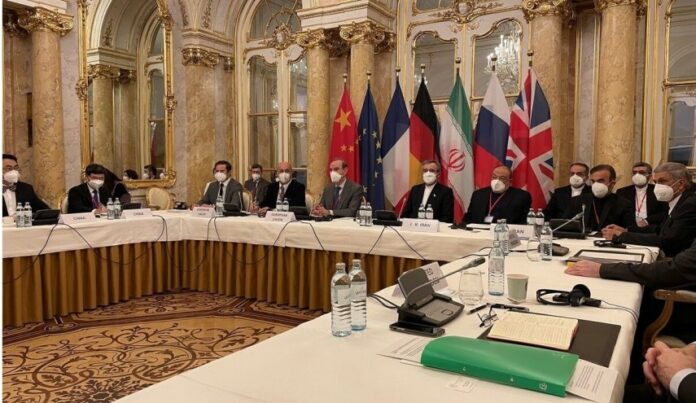
Iran, 4+1 talks continues in Vienna

The senior negotiators form what has been described as the sanctions removal working group are seeking to set a prospect for the continuation of the talks with the lifting of the bans, topping their agenda.

Meanwhile, Iran’s chief negotiator Ali Bagheri Kani met with the EU’s Deputy Foreign Policy Chief Enrique Mora as Iran and the 4+1 group – Russia, China, Britain, France and Germany- are trying to reach an agreement.

Today’s talks are the continuation of Tuesday’s meeting where the Iranian negotiators outlined the Islamic Republic of Iran’s views and reaffirmed their seriousness to interact with the other parties to get the sanctions removed.

Most diplomats attending the negotiations have described them as positive.

Meanwhile, most experts and members of the delegations of both sides believe an agreement is possible though the road ahead is bumpy.

Iran has made its full compliance with the nuclear deal, JCPOA, conditional on other parties sticking by their part of the agreement and the US removing its sanctions on Tehran before Washington’s return to the deal.

No Covid deaths in 8 Iranian provinces

Iran's COVID-19 Cases Rise to 530,000: Ministry

Figures show there were no fatalities from the Coronavirus in 8 Iranian provinces.

Meantime, 4,312 new infections have been logged since Tuesday including 660 hospitalizations.

So far 6,121,757 people have contracted the disease. Of that figure, 5,892,574 people recovered from the it.

Iran’s nationwide inoculation drive has been credited with the downward trend in deaths, infections and hospitalizations countrywide.

The number of Covid vaccine doses administered to Iranians has now crossed the 106 million mark.

So far, 57,776,917 people have received the first dose of vaccine while the number of those who have been given the second shot is 47,385,346. The number of the third dose, known as the booster shot, is 1,105,056.

There are no Coronavirus red zones in Iran. Red zones are areas and cities facing the highest risk from the disease. Meanwhile, 22 cities across Iran are orange, 207 brown and 219 blue with the latter showing the lowest level of risk.

Russia, Iran mull ratification of convention on legal status of Caspian Sea

“The Caspian Summit was held in Astrakhan when Russia’s turn came. This summit took place in the Astrakhan Kremlin. It turned out to be productive – it laid the foundation for completing the work on the Convention on the Legal Status of the Caspian Sea, which four countries had already ratified,” the foreign minister said.

“Only Iran remained, they asked for a pause because they had an election campaign, and now we are returning to this topic,” he added.

The presidents of Russia, Kazakhstan, Iran, Azerbaijan, and Turkmenistan signed the Convention on the Legal Status of the Caspian Sea at the end of the 5th Caspian summit in Aktau on August 12, 2018. This agreement will take effect only after ratification by all five signatories. So far, the convention has been ratified by all countries except Iran.

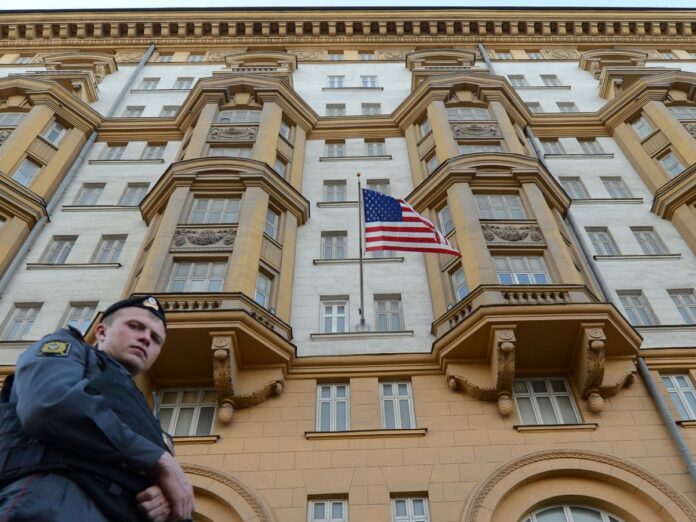
Russia tells US embassy staff to leave by Jan. 31

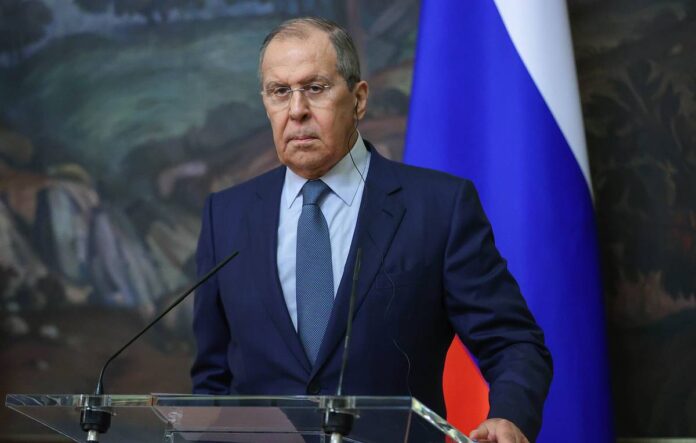
If Washington fails to compromise on the issue of Russian diplomats, another group of US diplomats will have to leave Russia by 1 July, the ministry warned.

Meanwhile, Deputy Foreign Minister Sergei Ryabkov has stressed that Washington still has time to stop the ouster of American diplomats from Russia. He warned that the move comes as a mirror response to the US expulsion of Russian diplomats from Washington.

The announcement comes a day after Russian Ambassador to the United States Anatoly Antonov said that Washington was de facto expelling Russian diplomats.

“The American side is trying to mislead the local and world public, deliberately distorting facts. We are credited with something that has nothing to do with reality. The situation is exactly the opposite,” Antonov noted.

The ambassador added that in December 2020, the US State Department unilaterally set a three-year limit on long-term assignments for employees of the Embassy in Washington and Russian consulates general in New York and Houston.

“Regarding other diplomatic missions, there is a five-year period of stay in the US. The statement that the departure of 55 Russian diplomats cannot be regarded as expulsion does not stand up to criticism either. It was clearly indicated to us that in case of refusal to comply with this requirement, the Russians would be deprived of immunity and other diplomatic privileges. So, the talk is actually about expulsion,” the ambassador stressed.

Antonov called on Washington to return to international obligations regarding diplomatic property and the normal practice of the operation of diplomatic missions.

“Our proposals remain on the negotiating table,” he said.

Meanwhile, Russian Deputy Permanent Representative to the United Nations Dmitry Polyanskiy warned that every Russian diplomat in the United States faces the risk of expulsion, stressing that the overall situation is unpredictable.

“Nobody is safe, including myself, because you never know what will come to the minds of our American friends,” he stated, adding that the complexity of the situation prevents Russia and the United States from achieving a “renaissance” in their bilateral relations.

Although Russian diplomats working at the country’s permanent mission to the United Nations in New York experience fewer difficulties than their colleagues in Washington, they still face issues caused by restrictions imposed by the US government that obstruct the working process, Polyanskiy said.

“The status [of the diplomatic mission to] the United Nations helps us a lot but… we still face very problematic and nervous situations when we want to bring somebody here to the United Nations, which should be done automatically as part of US obligations as the host country,” he added.

On Monday, State Department Principal Deputy Spokesperson Jalina Porter claimed the order for 27 Russian diplomats to leave the United States by late January is not an expulsion, as Moscow can assign other diplomatic members instead of those departing ones. Porter called it a measure to ensure “greater parity.”

Google changes logo to respect Iranian scientist

Aliasker Zadeh was born in Baku, Azerbaijan, on February 4, 1921, while his father, a journalist, was on assignment there from Iran. In 1931, at age 10, Askar Zadeh and his family moved back to Tehran, Iran.

While attending school in the Iranian capital, Askar Zadeh earned a degree in electrical engineering from the University of Tehran and later moved to the United States with his wife.

Askar Zadeh’s greatest contribution to computer science came in the form of a paper called “Fuzzy Sets”. In the “Fuzzy Sets” paper, and the ensuing field of “fuzzy mathematics,” Askar Zadeh shows the usefulness of the infinite number of decimal places between 0 and 1.

As for why Google chose today to celebrate Askar Zadeh, the “Fuzzy Sets” paper was first submitted on November 30, 1964, and was ultimately published in 1965.

Askar Zadeh died in Berkeley, California, in 2017 and was buried in his birthplace.

President Raisi meets ralliers outside parliament

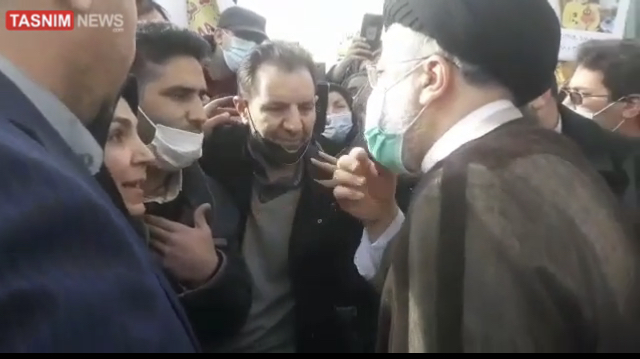
After leaving Parliament at the end of a joint meeting between government officials and lawmakers on Wednesday, the president got off his car and talked to the ralliers who were there along with their ill children.  

They rushed to Raisi upon seeing him and put forward their demands about medicines and treatment challenges of their loved ones.  

Raisi expressed sympathy with them and promised that his administration will do its best to resolve problems of people suffering from specific diseases including SMA patients.

Spinal muscular atrophy (SMA) is a rare neuromuscular disorder that results in the loss of neurons and progressive muscle wasting. The US sanctions have hampered Iran’s efforts to import highly-needed medical supplies.