The collision happened on Wednesday morning. The incident caused no deaths but twenty two people were injured with one being in critical condition.
The cause of the derailment is unknown. But a subway official said it’s under investigation.

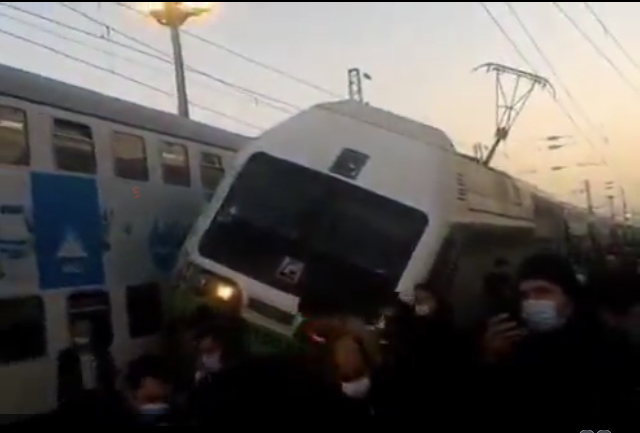
The collision happened on Wednesday morning. The incident caused no deaths but twenty two people were injured with one being in critical condition.
The cause of the derailment is unknown. But a subway official said it’s under investigation.
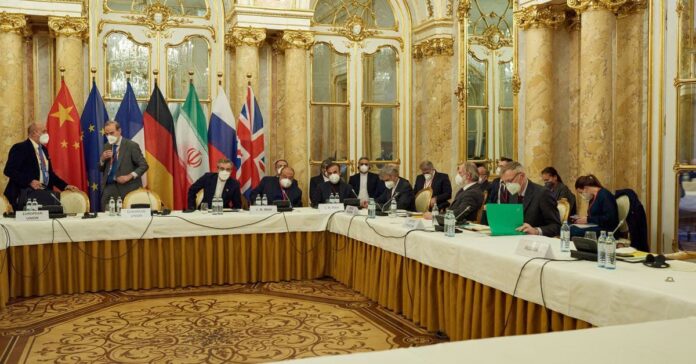
Malley, in an interview with CNN, warned of a “period of escalating crisis” if diplomacy failed to restore the 2015 nuclear agreement between Tehran and world powers known as the Joint Comprehensive Plan of Action (JCPOA).
Negotiations restarted in November, after a five-month hiatus, to try to restore the deal with Iran, which the United States withdrew from under former president Donald Trump in 2018.
The indirect talks have been suspended but Malley noted he hoped they would resume “relatively soon.”
Washington has warned recently that it may soon be too late to revive the JCPOA.
“It really depends on the pace of their nuclear process,” Malley, the US special envoy for Iran, noted, adding, “If they halt the nuclear advances, we have more time.”
“If they continue at their current pace, we have some weeks left but not much more than that, at which point the conclusion will be there’s no deal to be revived,” he said.
“At some point in a not-so-distant future we will have to conclude the JCPOA is no more and we would have to negotiate a wholly different deal and we would go through a period of escalating crisis,” he added.
US Secretary of State Antony Blinken said Tuesday that he was not going to set a deadline for the talks.
“I’m not going to put a time limit on it,” Blinken told reporters, but the remaining runway for a deal is “getting very, very, very short.”
“We continue to have a strong interest in seeing if we can put the nuclear program back into the box that it was in,” he continued, adding, “But if we can’t do that, because Iran will not engage in good faith, then we are actively looking at alternatives and options.”
Iran has submitted two draft proposals to the other parties concerning the removal of sanctions and Tehran’s nuclear commitments.
Iran’s Deputy Foreign Minister and chief nuclear negotiator Ali Bagheri Kani has said Tehran will not retreat from its demands in the Vienna talks.
Bagheri has emphasized Iran’s clear stance that all oppressive US sanctions against Iran must be lifted, adding that it was the US that first left the Iran nuclear deal, JCPOA, and Washington now must take the first step toward reviving the agreement.
He noted that Iran’s proposals to the other signatories to the JCPOA for the purpose of reviving the deal are substantiated and logical and they can serve as a basis for talks.
The JCPOA was signed with Iran in 2015 in order to overcome the crisis over its nuclear program by the permanent five of the UN Security Council and Germany. In 2018, former US President Donald Trump made the decision to withdraw from the JCPOA. Current US President Joe Biden has shown the US was ready to return to the nuclear deal with Tehran.
The seventh round of negotiations to re-establish the Iranian nuclear deal had previously ended in Vienna. European negotiators decided to take a break for the Christmas holidays.
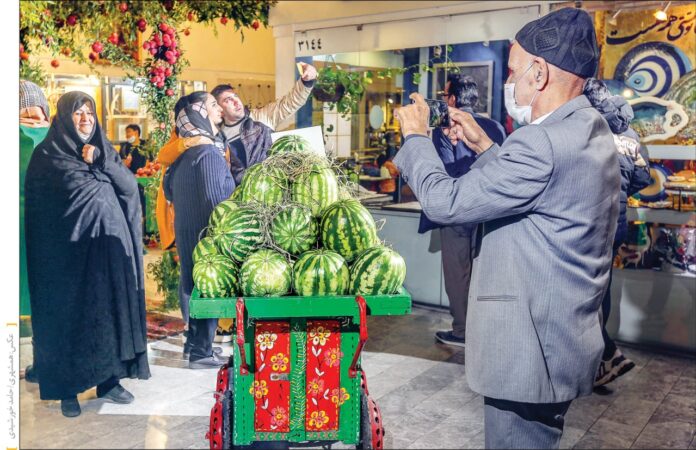
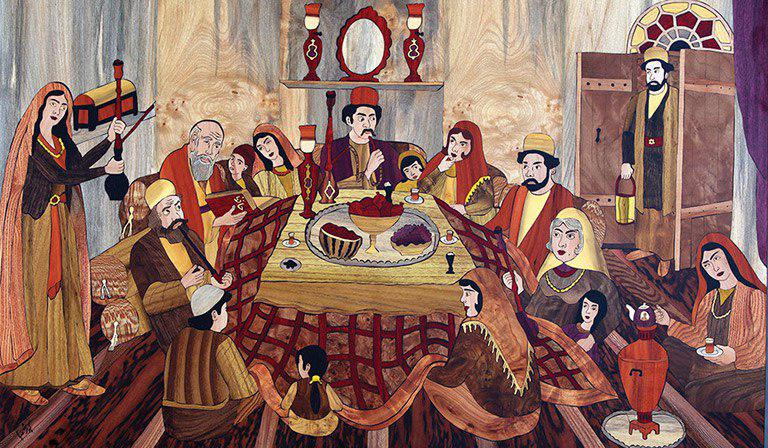
That’s when people warm their family gatherings by eating watermelons, dried nuts, all kinds of local foods and by playing group games. Over the past two years, the Covid pandemic affected the rituals of Iranians and forced people to hold feats apart. It looks like Iranians have to get along with virtual gatherings this year as well. According to The Tehran-based Hamshahri newspaper, the Covid map of Iran is now yellow and blue and more beautiful than the past two years. But over the past days, the Omicron strain of the Covid has reportedly made its way to Iran to remind people that this year again we have to be patient, hold virtual gatherings and read the rituals of our own city and other cities until we all get together next year in good health.
West Azerbaijan Province and Yalda Night
One of the most ancient traditions in West Azerbaijan Province on Chelleh Night is the holding of the Prophet Khedr Feast. On this night, ready-for-marriage youths would collect beans and, after cooking, would beat them with salt in the mortar. Each youth would put some 7 nails of the food under their tongues and would sleep. Their dreams would then be interpreted by the elder ones. Young girls would also cook āsh with the collected beans. The āsh woulf mean to untie the knot for them so they would marry.
Ardabil and Yalda Night
People in Ardabil traditionally beseech the greater Chelleh Night to not be tough on them and they usually eat roasted wheat (Qorqa), watermelon, green, walnut, chickpeas and raisin. In the past, the grownups would become playmates of kids and they would play golyapuch (a traditional Iranian game). But such scenes are rare now.
Alborz and Yalda Night
Shawl-throwing was the most important ceremony observed on Yaldā Night and it is still done by some families. The youngsters would send the shawl down through the hatch over the roof until late at night, and the housekeeper would tie food to it. Sometimes there was a message of apology or even courtship in these shawls.
Tehran and Yalda Night
Jafar Shahri writes in his book “Old Tehran”: “On the night of Yaldā , the people of Tehran welcomed guests with fresh fruits of autumn and dried fruits of summer and nuts, and they believed that Yaldā ‘s dinner dishes, such as Haftsin’s tableware, could cool hot nature and warm cold nature”. Among the hobbies of Tehran families is storytelling included the story of good and evil, the sange saboor (patient listener), the mahpishooni (beautiful girl), and so on.
Chaharmahal and Bakhtiari and Yalda Night
Baking a thick bread called gerdeh, in which blue beads are placed, is one of the rituals of the people of Chaharmahal and Bakhtiari. They distributed this bread among the family members and the person who had a blue bead in his piece of bread was introduced as a lucky person.
South Khorasan Province and Yalda Night
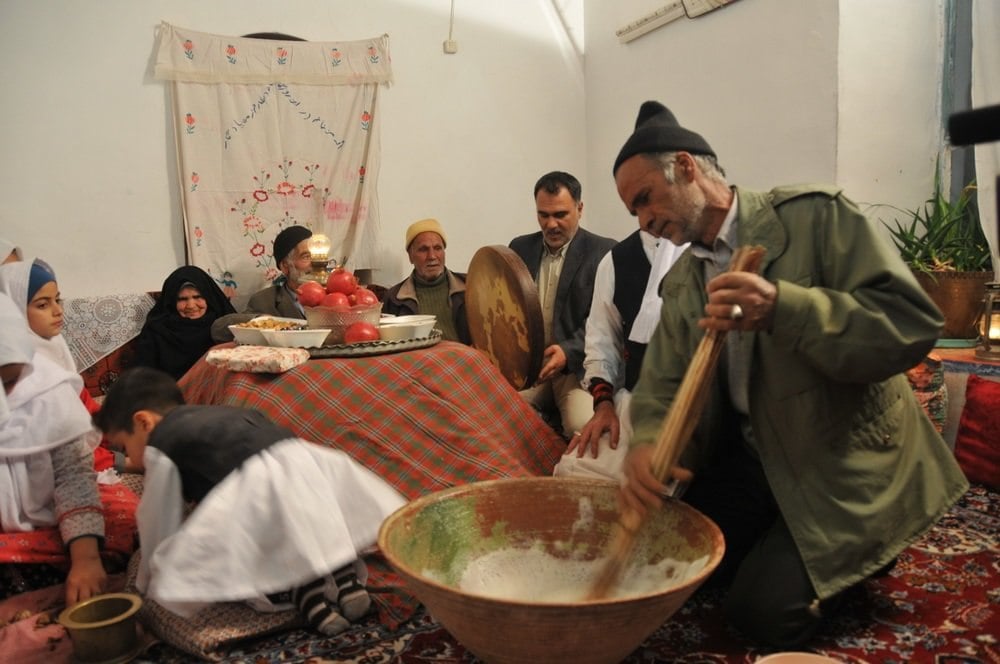
In addition to the traditional gatherings in Iran, the ceremony of foam mixing and the fortieth night of new grooms is one of the special customs of the people of South Khorasan, which is performed on the night of Challeh. At the ceremony, family members gather on the night of Yaldā , and in cold weather, they mix the foam, which is a kind of local dessert similar to ice cream, until it foams, and then they eat it. During the ceremony, new grooms go to visit the new bride with different gifts like nuts and sweets.
Khuzestan and Yalda Night
The people of Khuzestan wait until dawn to welcome the legendary Qarun. Qarun brings pieces of wood in wood-breaking clothes for poor families. The wood turns to gold, bringing wealth and blessings to the family. Shahnameh reading, poetry reading and breaking hazelnuts on Yaldā Night are other rituals of the longest night of the year in thise.
Zanjan and Yalda Night
In ancient times, the people of Zanjan on the night of Yaldā , placed a container of halva and qavut on the ledge behind the window and placed a beautiful vase full of flowers and a mirror next to it, and they believed that the Prophet Khezr would come to their house at night to eat halva and qavut. When dawn broke, if they saw a fingerprint on a food, they considered it a sign that their needs were being met.
Fars and Yalda Night
In addition to reading Shahnameh and reciting poetry from the Shirin and Farhad love story, other customs of sacrificing in Kazerun, making vegetable seeds, rice milk in Marvdāsht, cooking komach (a kind of sweet) in Darab and Āsh Doogh in Firoozabad are some of the customs of the people of Fars province on Yaldā Night.
Kordestan and Yalda Night
A few months before Chelleh Night, the people of the capital city of Sanandaj put small melons brought from the village of Sarab Qamish in vinegar pulp to make Kalektorsh which is one of the main items on the table, for this night. The food of this night is usually a mixture of grape tree leaves and cabbage, which the meat is placed between each one.
Kermanshah and Yalda Night
The people of Kermanshah eat fruits on this night which are a symbol of the sun; Such as red watermelon, red pomegranate, red apple or yellow lemon. They also tell stories of the eternal love of Shirin and Farhad, Rostam and Sohrab, the story of Hussein Kurd Shabestari and the recitation of beautiful and pleasant poems by Shami Kermanshahi.
Kerman and Yalda Night
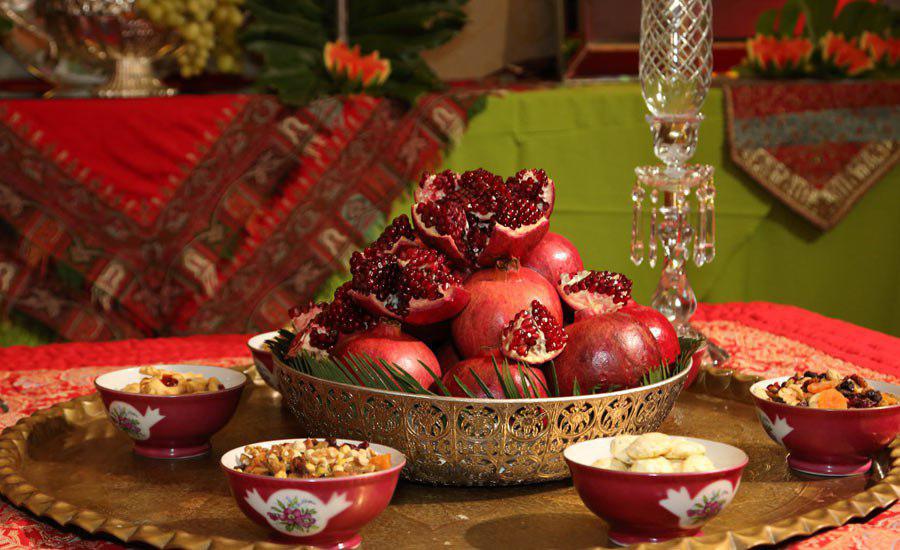
On this night, like what was done by their ancestors, the Kermanis gather on the Yaldā Night in the big house of each family, spread a tablecloth on pateh on a Kerman rug, and place the poshtis adorned with pateh around the room. In the middle of the table, they put a dish of pistachios, watermelon, black pomegranates from the surrounding villages, kalempe (traditional sweet of Kerman), qovatu coffee and other snacks.
Gilan and Yalda Night
In some parts of Gilan, it is believed that all the waters of the world close and freeze at an indefinite moment in this night, and whoever realizes that moment, he will be granted whatever he intends and asks God for. Some also believe that on this night, the trees lower their heads and at this moment, if a person wakes up, whatever his intention is, his wish will be granted.
Yazd and Yalda Night
On this night, Yazidis have a special dish called Āsh-e-Shouli, which is still popular in families and they make a plan to cook it, and on Yaldā Night, the fragrance of this local food can be smelled in homes. Another custom of the night is to light a fire.
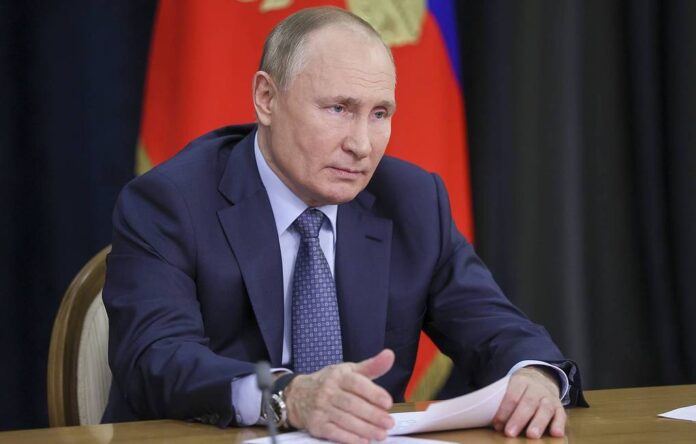
In a speech to Moscow’s senior military officers on Tuesday, Putin stated he no longer viewed the West as a dependable partner.
Russia has been seeking written assurances about the presence of US troops and hardware near its borders, he said, but even those assurances could not be depended on.
“We need long-term legally binding guarantees. But you and I know them well. And that is something that cannot be trusted,” Putin went on, noting that the US “easily withdraws from international treaties that it becomes uninterested in,” apparently referencing Washington’s unilateral withdrawal from the landmark Anti-Ballistic Missile Treaty in 2002. The accord, inked between the USSR and US in 1972, intended to limit both sides’ missile defense capabilities.
“You and I both know very well: under various pretexts, including the purpose of ensuring their own security, that they act thousands of kilometers away from their national territory,” he continued, adding, “When international law and the UN Charter interfere, they declare it all obsolete and unnecessary.”
The president added that he considered NATO’s further expansion into Eastern Europe a consequence of the “euphoria” that stemmed from the West’s apparent victory in the Cold War and the result of a misanalysis. He also expressed his confusion at the US-led military bloc’s encroachment on his country’s borders despite the friendly relations between Moscow and the West at that time.
Putin stressed that Russia was ready to take both military and technical measures as a response to what it perceived as the unfriendly steps taken by Washington, insisting that it was Moscow’s right to do so.
Putin’s remarks come shortly after Moscow issued two documents, one addressed to NATO and the other to US officials, requesting a range of guarantees it said were aimed at boosting the security of all parties.
The proposals focus on the movement of military personnel and hardware, and include the requirement that Ukraine’s long-held requests to become a member of the bloc would not be granted. A separate document calls for current NATO members to desist from any military activity on Kiev’s territory, as well as in Eastern Europe, the South Caucasus, and Central Asia.
In the draft agreement sent to Washington, Moscow requested that officials make a firm commitment to ruling out the enlargement of the bloc to include any other former Soviet republics. Speaking via video link earlier in December, Putin told his US counterpart, President Joe Biden, that Russia was “seriously interested” in getting “reliable and firm legal guarantees” that would prohibit NATO’s expansion further eastwards, as well as the deployment of “offensive-strike weapons systems” nearby.
Putin has previously insisted that his predecessor, Mikhail Gorbachev, was given guarantees by Western leaders that the bloc would not expand into the space left after the collapse of the USSR. In 2017, a tranche of documents was declassified, and subsequently widely interpreted as showing that American, British, and German officials gave verbal assurances to the Kremlin in the 1990s that NATO would not push into Eastern European nations, before then admitting as members nations such as Poland, Lithuania, Latvia, and Estonia.
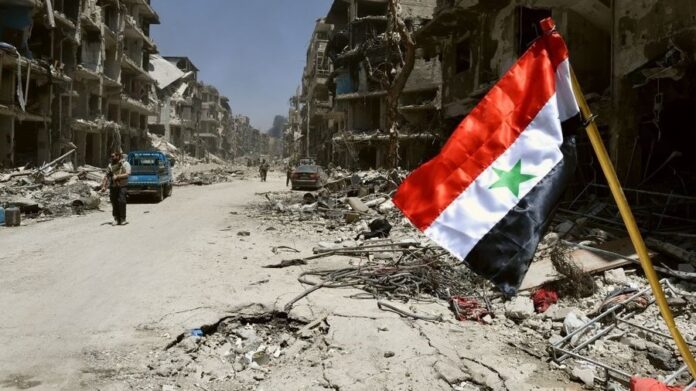
“It is most important that all three guarantor countries support this process and see no alternatives to the constitutional committee in Geneva. All sides will furnish comprehensive support for its activities,” Russia’s special presidential representative for Syria, Alexander Lavrentiev, stated on Tuesday.
The 6th round of sessions by the Small Group (editorial board) of the Syrian Constitutional Committee took place in October. The UN Secretary-General’s special envoy, Geir Pedersen, acknowledged that key disagreements and mutual distrust remained among the participants in the Geneva dialogue, which prevented them from discussing the drafts of a constitutional reform.
The Small Group is expected to produce recommendations regarding amendments to the country’s fundamental law. General elections under the UN auspices are to follow.
Lavrentiev added Russia, Iran, and Turkey have discussed some concrete measures to maintain a ceasefire in Syria.
“We held talks with the Turkish delegation, and prior to that, we negotiated with the Iranian side. We addressed all issues in a very constructive manner,” the Russian envoy noted.
As Lavrentyev mentioned, the sides focused on stabilizing the situation in Syria to reach a ceasefire.
“This refers both to Idlib and the south, including the Syrian-Turkish border in the north, where the clashed have recently intensified,” the diplomat pointed out.
The 17th International Meeting on Syria in the Astana format is taking place on December 21-22 in Kazakhstan’s capital. The participants are likely to address the future prospects of the Syrian Constitutional Committee in Geneva, the recent developments in Syria, efforts focused on maintaining the ceasefire in the de-escalation zones in line with the previous agreements as part of the Astana format. A working group on captives, with the participation of guarantor countries, as well as the UN and the International Committee of the Red Cross are going to hold a meeting.
Lavrentyev said Moscow expects that the sanction pressure on Syria, levied by several states, will be rolled back in 2022.
“Unfortunately, the Astana format members and [the Syrian] Constitutional Committee stick to somewhat different approaches. <…> The position and policy of exerting pressure on Damascus through sanctions still remains. But we hope for some changes as early as next year,” the Russian envoy noted.
Lavrentyev pointed out that it would be challenging to stabilize the situation in the war-ravaged Middle Eastern nation without providing humanitarian aid and launching some projects to revive the Syrian economy.
“It is just going to take much longer,” the diplomat mentioned.
Moscow sees no challenges in adopting a joint statement of the Astana format member countries following the 17th International Meeting on Syria in the Astana format, he added.
“We are still hammering out the final statement, it needs some adjustment. All states have their own approaches, however, there are no any insoluble difficulties, which would prevent the adoption of a joint statement,” the Russian envoy continued.
The joint statement is likely to be adopted by the Astana format member states on Wednesday.
The next meeting of the Syrian Constitutional Committee in Geneva may take place in January 2022, Lavrentyev told reporters.
He recalled that Pedersen was in Damascus on December 12.
“His impression was quite positive. We believe this allows us to expect the next, seventh session of the Constitutional Committee to be convened in January. We all hope that during this session the Syrian parties will be able to find a compromise solution,” he said.
He added that the results of the previous session were very modest but the parties were able to sit down at the negotiating table.
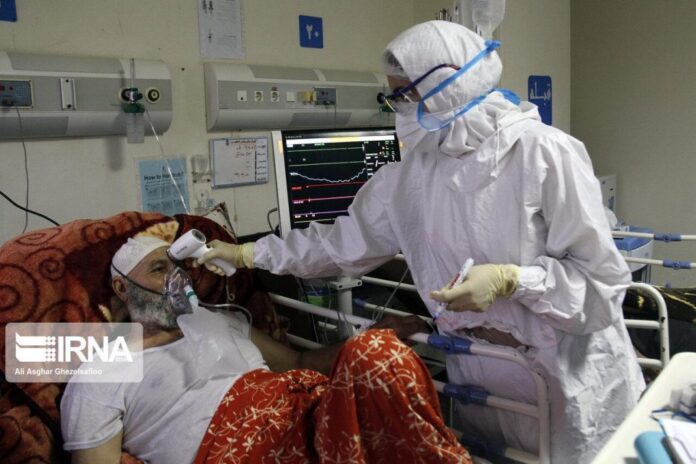
The number of daily deaths remains near record lows largely thanks to an intensified national vaccination campaign over the past months.
The latest figures also show that over 2,400 new infection cases have been identified over the past 24 hours which is also near record lows.
The Health Ministry said on Tuesday that over 530,000 vaccine doses have been administered over the past day taking the total number of jabs to over 114,280,000 with well over 50 million people fully vaccinated.
The Health ministry also said that over 4,360,000 people have received their booster shots.
On Sunday, Iran confirmed its first case of the Omicron COVID-19 variant with health officials urging people to get their booster shots to improve immunity against the new highly contagious strain.
The Health Ministry announced this week that over 18-year-olds, who had their second dose three to four months ago, can get their booster jab.
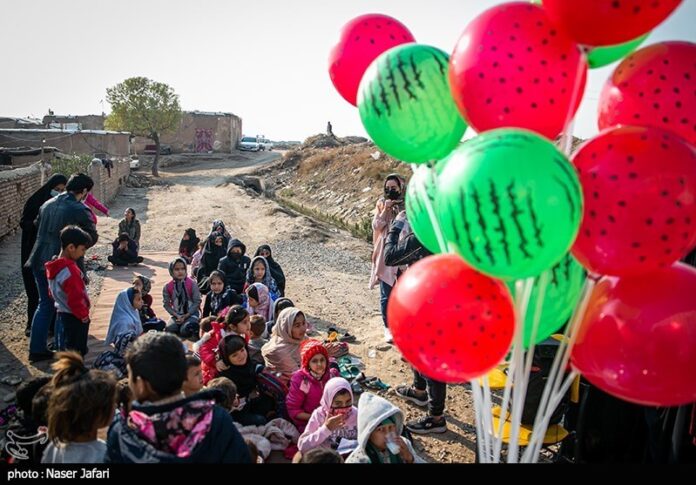
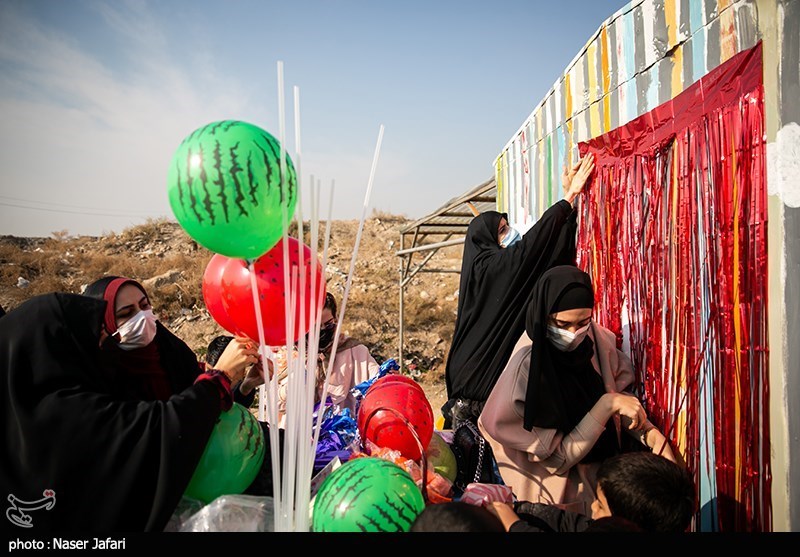
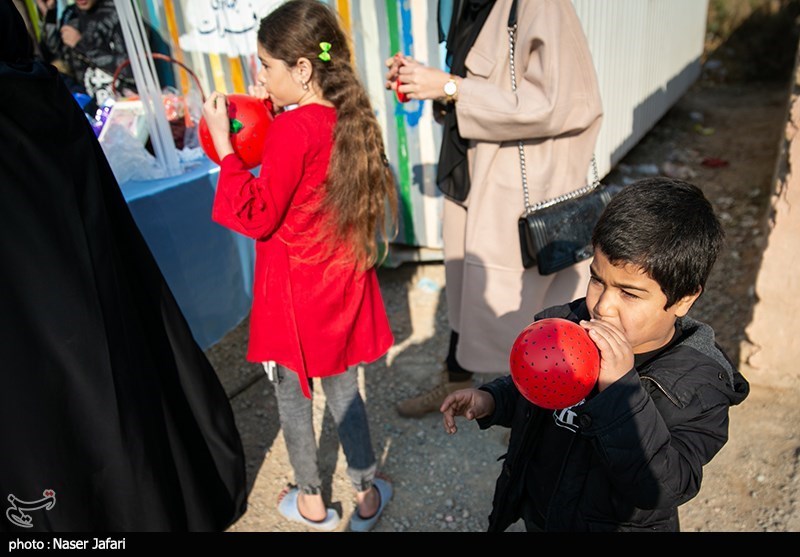
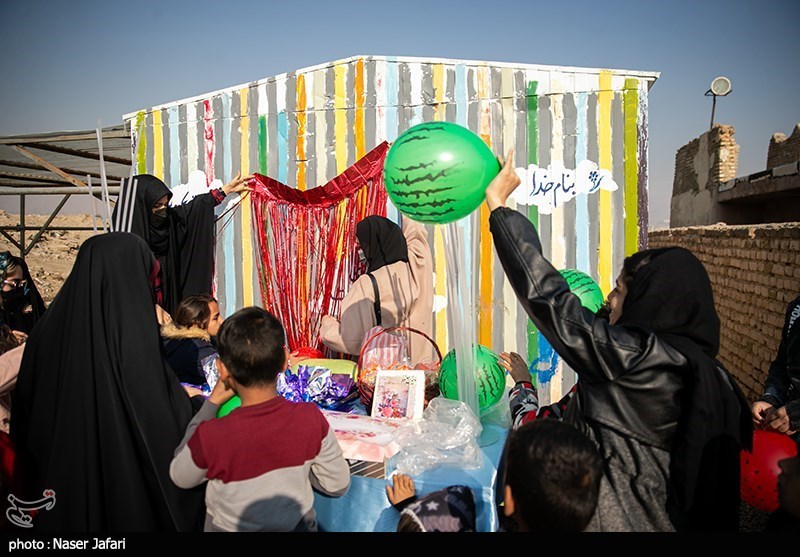
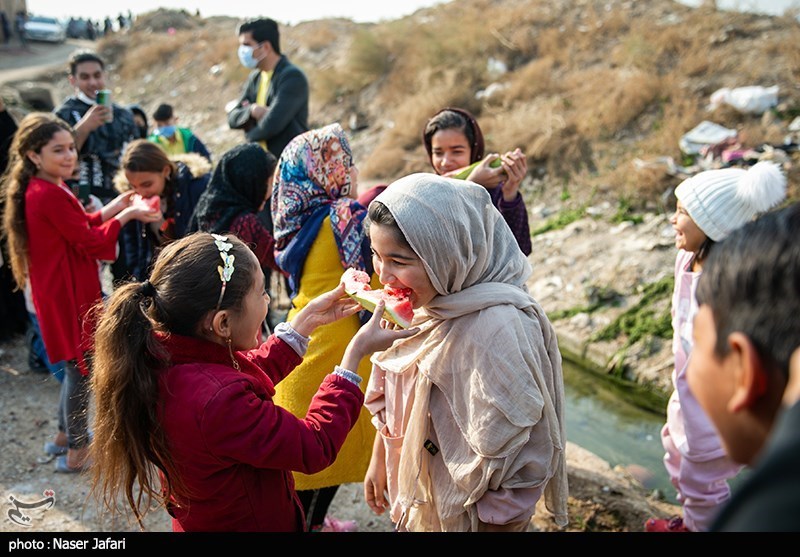
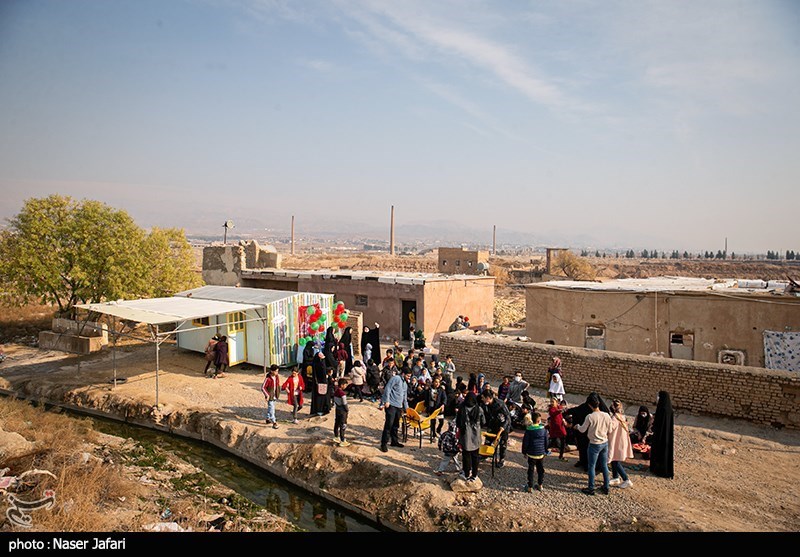
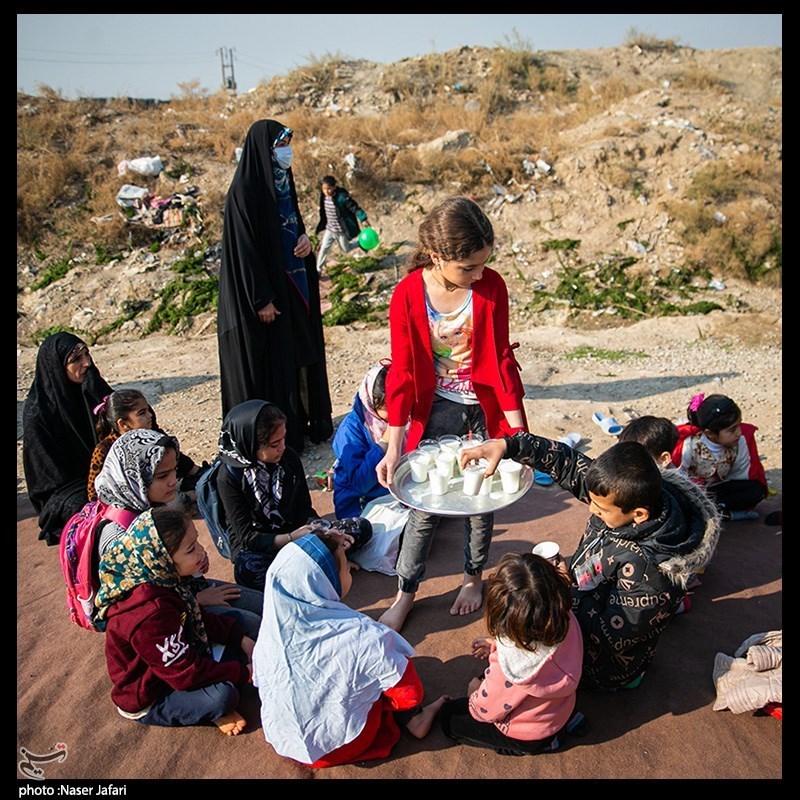
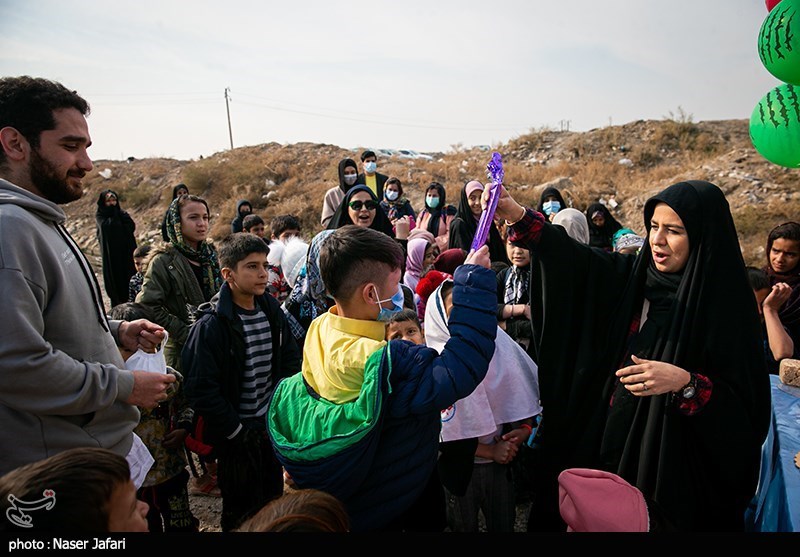
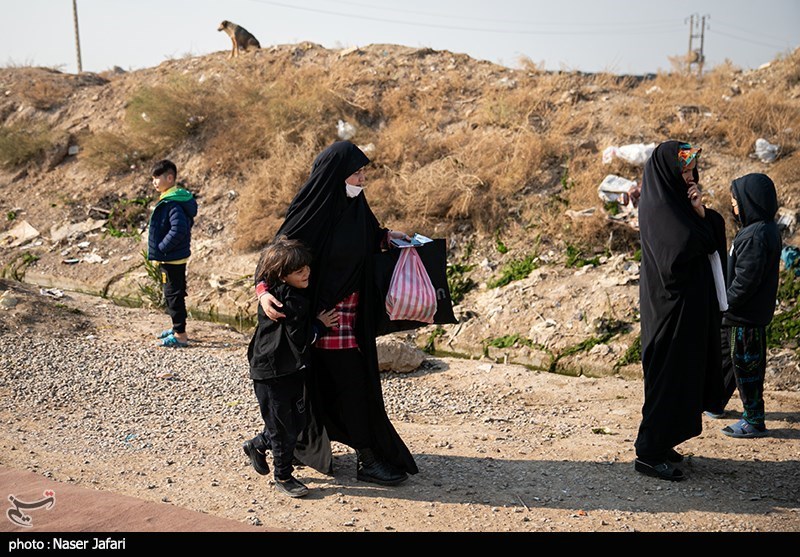
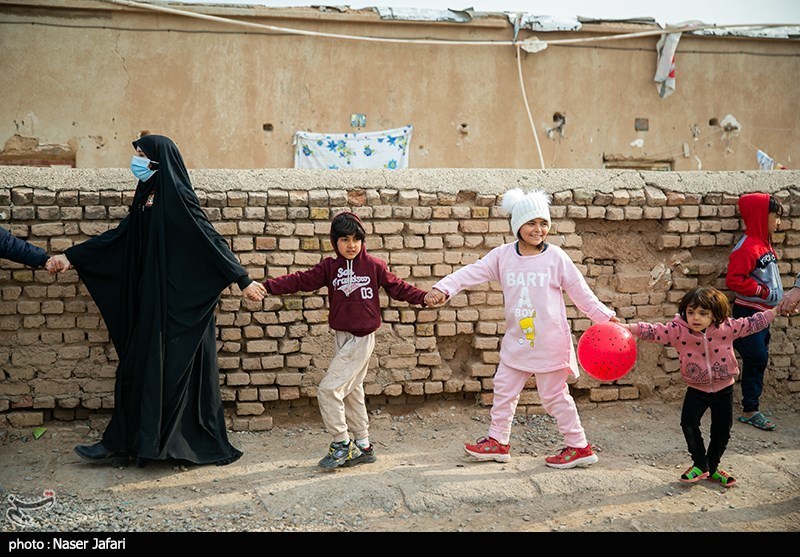
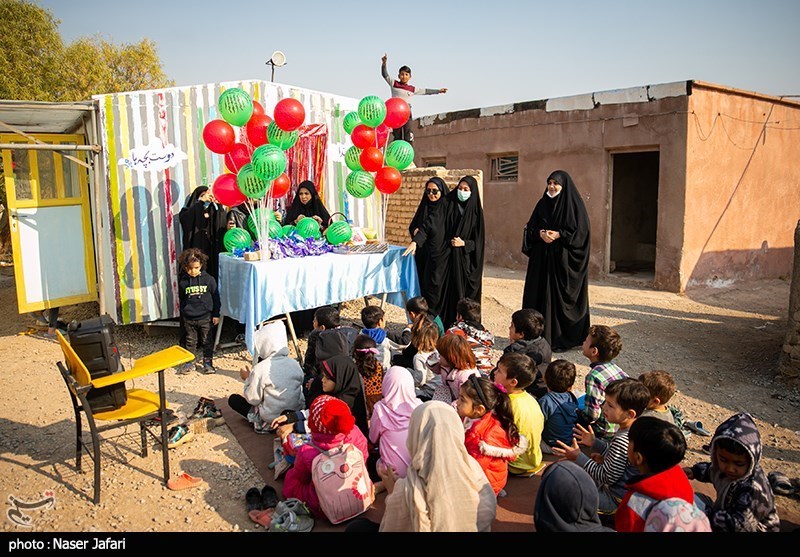
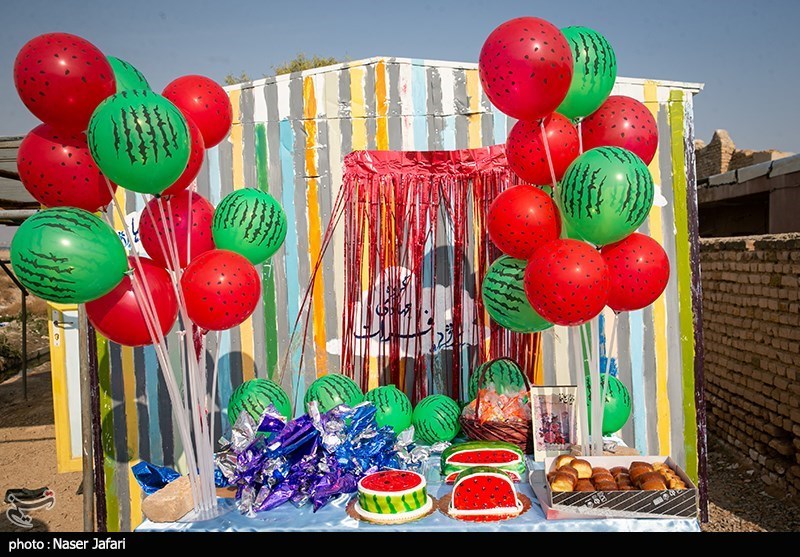
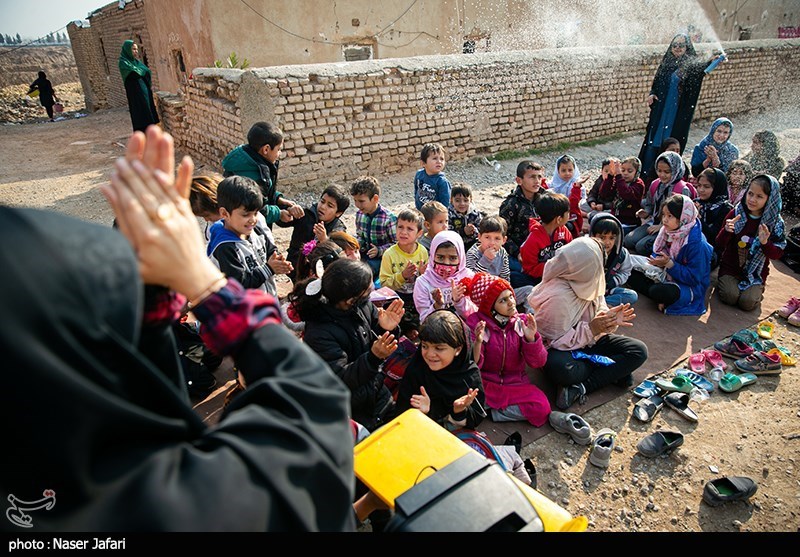
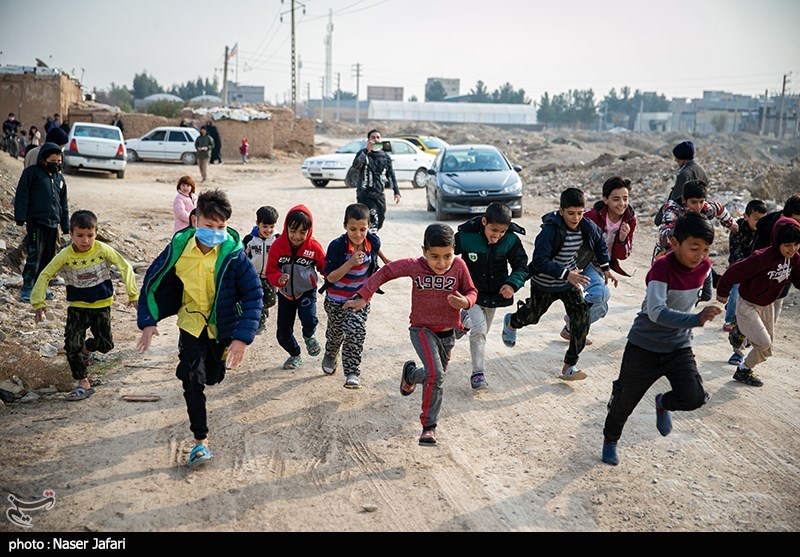
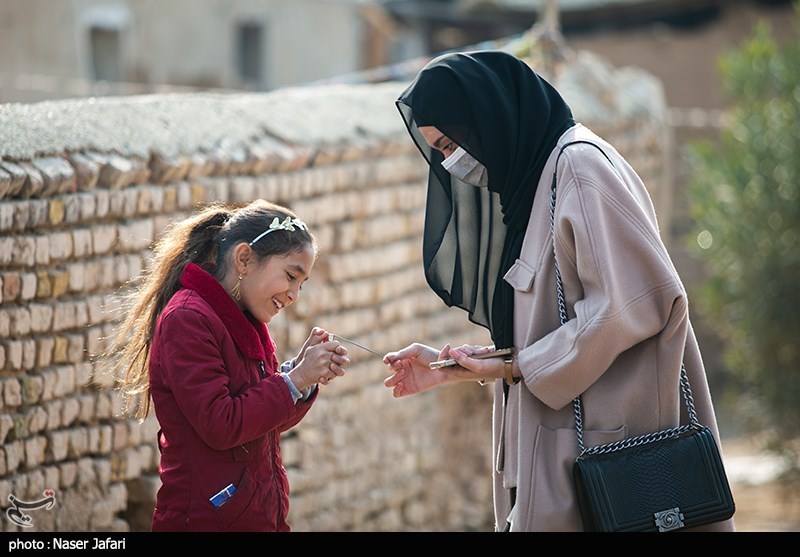
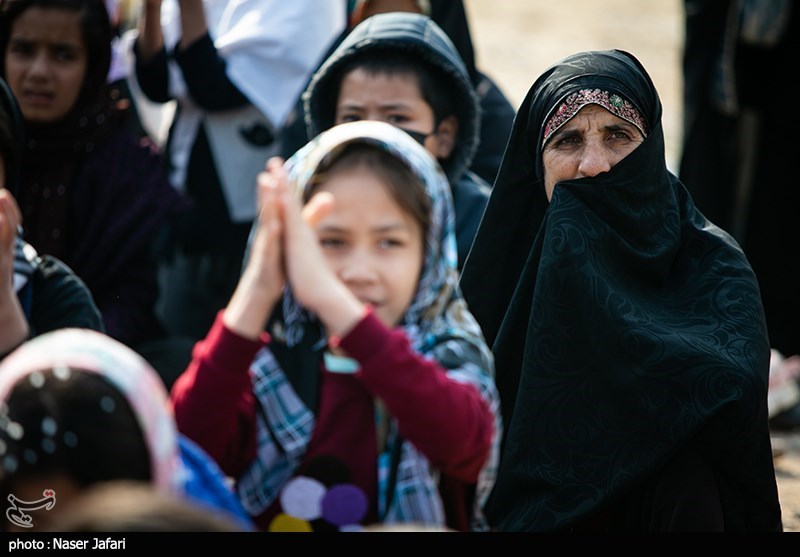
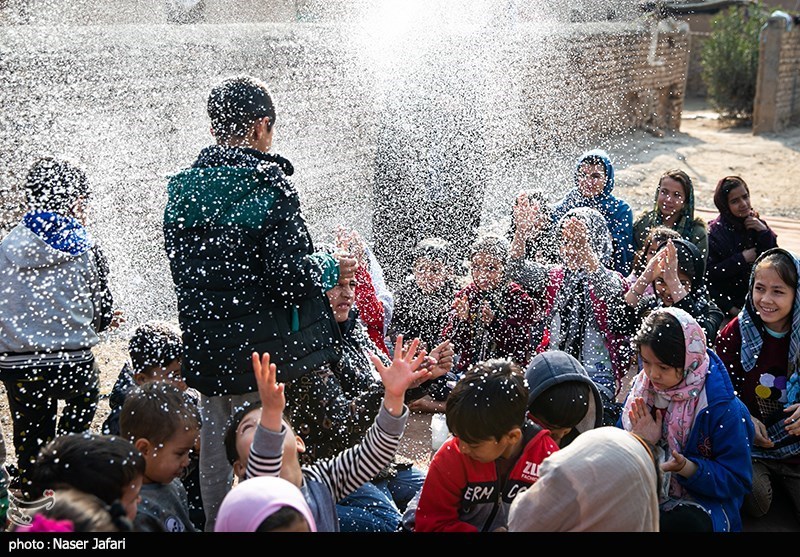
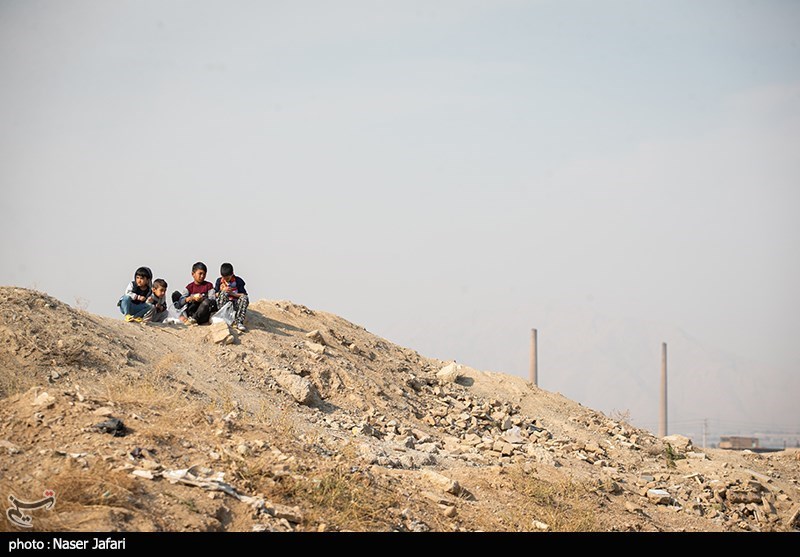
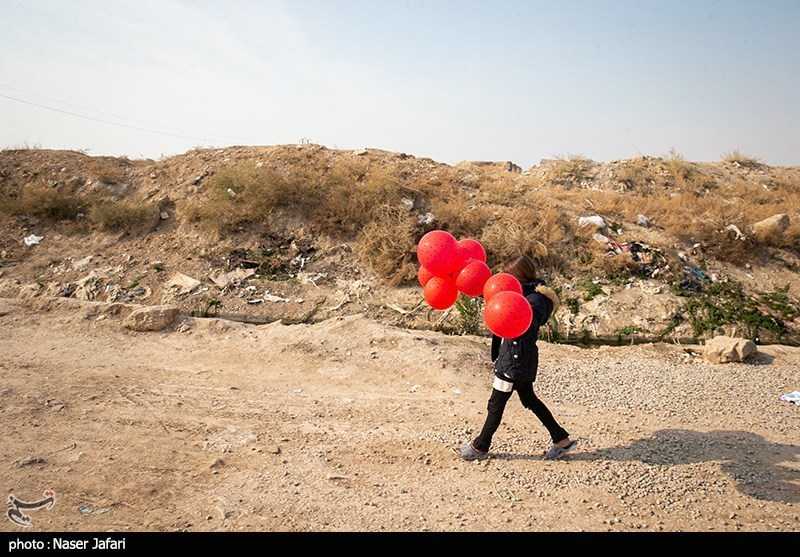
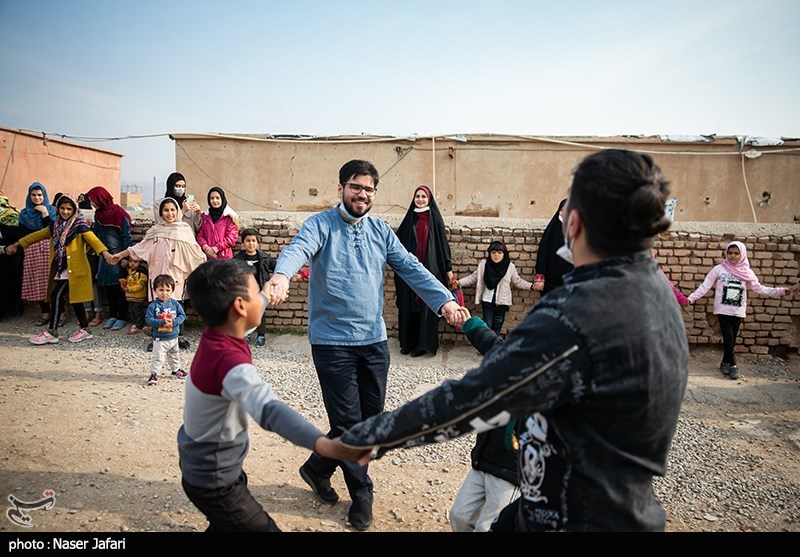
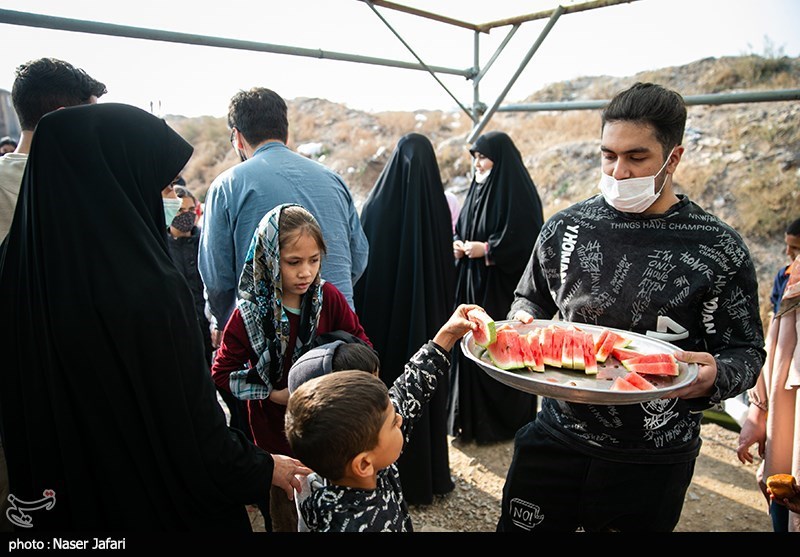
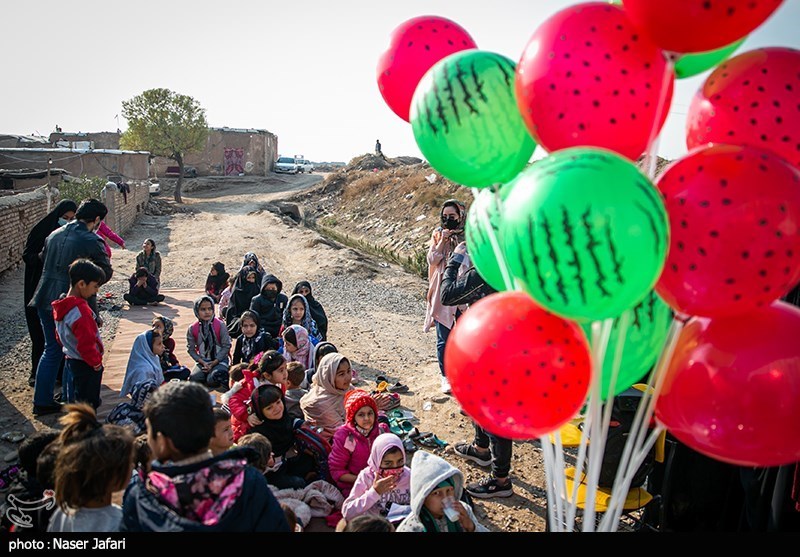
Volunteer groups have visited brick kilns in the southern suburbs of the capital Tehran to celebrate with children on the occasion of the last day of the autumn, known as Yalda Night.
The volunteers have been visiting the kilns in Khahvarshahr suburb over the past two years in a bid to help educate children working at the kilns. Along with education, the volunteers are offering medical treatment, construction and skill-training services in the area.
However, their latest visit focused solely on making sure children working at the kilns have a jolly Yalda.





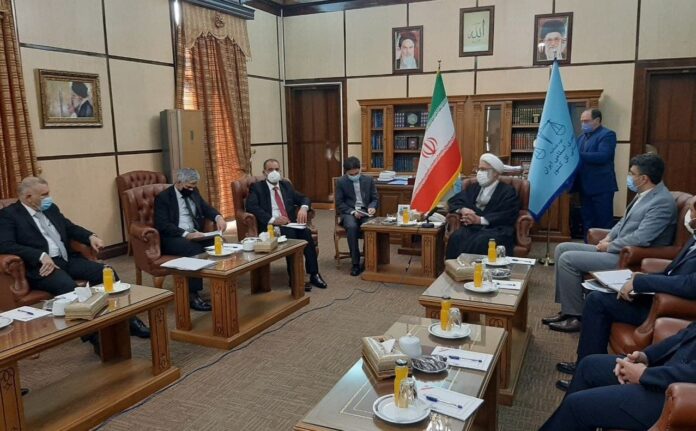
The Iranian prosecutor general said during the meeting “there is not the slightest doubt that the former Iraqi president and his agents were involved in this assassination and this is not something that requires so much time to gather documents and evidence.”
“This is not an ordinary incident and it was not even a matter of premeditated murder that we want to prove with evidence, but it is a terrorist crime that was designed with well-calculated preparations and its command room was in the U.S. and its agents in the region and its perpetrators in Iraq,” Montazeri stated.
He added that Iran and Iraq need to work more closely on the case and that both sides need to move forward carefully and quickly.
The head of the Iraqi Judicial Oversight Organization also said legal measures are being taken regarding the case and that Iraq wants the perpetrators and accomplices to be identified and brought to justice
The meeting comes as Iran is preparing to mark the second anniversary of the high-profile U.S. assassination on January 3.
General Soleimani and Iraqi commander Abu Mahdi al-Muhandis, who played a key role in the fight against the Daesh terrorist group in Iraq and elsewhere in the region, were killed in a U.S. drone strike which was directly ordered by former U.S. president Donald Trump.
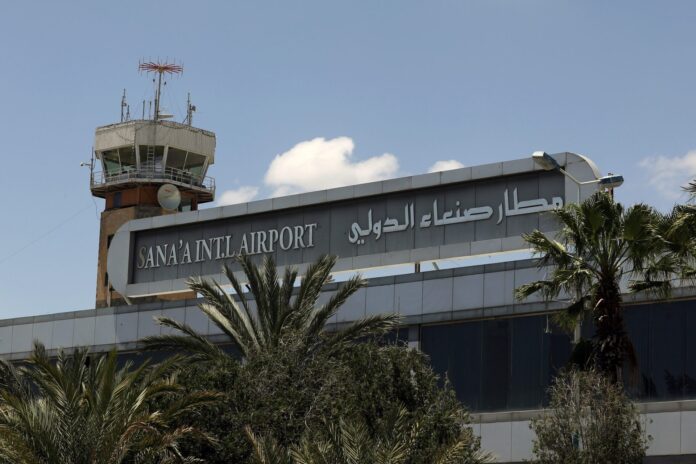
The air raids came after the coalition urged civilians and United Nations agencies to evacuate immediately.
The coalition said in a statement it had lifted the protection off specific sites in the airport and carried out attacks on “legitimate military targets” there.
“The operation comes in response to threats and the use of the airport’s facilities to launch cross-border attacks,” it added.
A spokesperson for the UN’s World Food Programme stated a UN team was on the ground at the airport to verify the extent of any damage.
Houthi-run Saba media, quoting the head of the Houthi administration’s aviation authority, said the airport had been put out of operation.
An airport official cited by the AFP news agency noted UN aid flights had been halted.
“The airport is no longer able to receive aircraft operated by the United Nations or international humanitarian organisations,” the official told AFP.
The raids hit six sites, coalition spokesman Brigadier General Turki al-Malki stated, including places used for launching attacks by drones, training drone personnel, housing trainers and trainees, and storing drones.
“Destroying these targets will not have any effect on the operational capacity of the airport, and will not affect managing the airspace, the air traffic, and ground handling operations,” he added.
Saudi Arabia and its allies launched a war against the Arab world’s most impoverished nation in March 2015. The war has been seeking to restore power in Yemen to Riyadh’s favorite officials.
The death toll of the war, now in its seventh year, will reach an estimated 377,000 by the end of 2021, according to a recent report from the UN’s Development Programme.
The fighting has seen some 80 percent of the population, or 24 million people, relying on aid and assistance, including 14.3 million who are in acute need.
© All Content by IFP News ( Iran Front Page ) is licensed under a Creative Commons Attribution 4.0 International License.