Friday, December 26, 2025
Home Blog Page 2232

Iraq declares end to US-led combat mission

US forces in Iraq
US forces in Iraq. (AFP)

According to the official, Baghdad would continue its cooperation with the US-led coalition in the fields of development capacity and training.
So far, there has been no confirmation from the US-led coalition officials on the pullout of their troops from Iraq.
Following the US assassination of Iran’s top commander and anti-terror icon General Qassem Soleimani and his Iraqi companion Abu Mahdi al-Muhandis in January 2020, Iraq’s parliament approved a bill demanding Washington withdraw its forces from the Arab country.
Washington drew some of its allies into Iraq in 2014 under the pretext of fighting Daesh, a terrorist group that was invading the country. But the foreign troops stayed on, even after the terrorists were defeated four years ago.

Russia slams US-led military presence in Syria

According to the top military official, this weakens the effectiveness of the fight against the terrorists and contributes to their strengthening across the war-torn Middle East nation.

“Illegal armed groups have not abandoned their plans of territorial expansion. The illegal military presence of the US and a number of other countries on Syrian soil contributes to this, and makes the fight against terrorists less effective,” Gerasimov pointed out.

According to him, the Russian Aerospace Forces jointly with Syrian government forces have been continuing raids to stamp out terrorists in addition to providing assistance for the return of refugees, along with restoring infrastructure and the country’s territorial integrity.

“Work with the Turkish side is in progress to implement existing agreements and uphold the cessation of hostilities in the Idlib de-escalation zone,” the top Russian military official noted.

Iranian parliament speaker meets Turkish peer in Istanbul

The Iranian parliament speaker said Iran and Turkey can have a positive impact at the regional and international levels through close cooperation, adding, “I saw the result of this cooperation in the meeting of metropolitan mayors when I was the mayor of Tehran, and now we are ready to define joint cooperation”. Qalibaf said Iran’s priority is to develop cooperation with neighboring and Islamic countries. He also expressed hope that in the near future, the strategic agreement between Iran and Turkey will be finalized and a roadmap for developing bilateral relations will be developed.
The Iranian parliament speaker said close bilateral cooperation between Tehran and Ankara will play an effective role in regional and international developments.
He also said the US enmity toward Iran and its recent pressures on Turkey show Washington understands the power f the two countries and their influence in the region.
Şentop also said it is necessary to strengthen the position of the Inter-Parliamentary Union of the Organization of Islamic Cooperation once again through coordinated actions and close cooperation on problems of Islamic countries.
The Turkish parliament speaker emphasized the formation of a committee for the rights of Muslims, saying the issue of Palestine has always been on Turkey’s agenda.
On bilateral ties, Şentop said “We are also determined to develop ties with Iran within the framework of parliamentary relations”.

EU’s Mora: New sense of JCPOA revival in Vienna

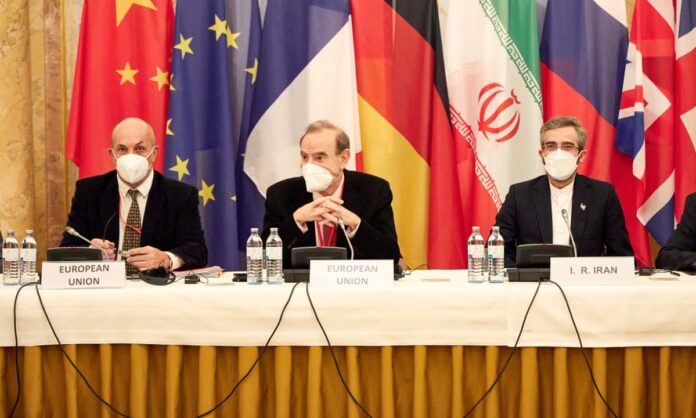
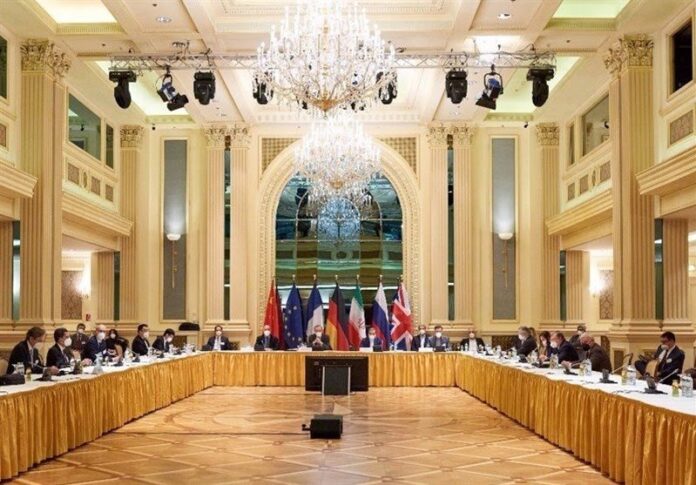
“What I felt this morning was that all the delegations had a fresh sense of the need to work and reach an agreement on reviving the provisions of the JCPOA,” Mora made the remarks after a meeting of the JCPOA Joint Commission in the Austrian capital on Thursday.
He said there are different views on the negotiation process, and the parties are currently working to bring these views closer together, adding that he considered overcoming the differences as the most important factor in the ongoing negotiations.
“I emphasize that there is an urgent need to reach an agreement, and the more time passes, the greater the need,” the European Union’s deputy foreign policy chief noted.
Earlier, Iran’s chief nuclear negotiator Ali Bagheri said there is no obstacle to an agreement if necessary grounds are provided during the negotiations in the Austrian capital.
He added that at the JCPOA Joint Commission meeting on Thursday, Iran and members of the P4+1 group expressed their views on the future direction of their talks.
Negotiators of Iran and the P4+1 group namely Russia, China, Britain, France and Germany are discussing ways to remove anti-Iran sanctions and a possible U.S. return to the 2015 deal.

Saudi crown prince on first visit to Qatar since end of blockade

MbS was received on arrival by Qatari Emir Sheikh Tamim bin Hamad Al Thani, after which the two leaders held meetings on Wednesday night.

The visit came after Saudi Arabia took steps to end the diplomatic crisis that deeply divided the international community, frayed societal ties, and tore apart a longstanding alliance of Persian Gulf states.

In a tweet, Sheikh Tamim welcomed bin Salman and said that the brotherly relations and cooperation between Qatar and Saudi Arabia are “based on solid foundations of history and a common destiny”.

Referring to Prince Mohammed as his brother, Sheikh Tamim added they discussed ways to enhance cooperation between the two countries, and affirmed the joint keenness of the two sides to support security and stability in the region.

Qatar is the third stop on a tour of Persian Gulf Arab states by MbS before a Gulf summit later this month.

The summit will be the first since Saudi Arabia – together with Bahrain, Egypt, and the United Arab Emirates – agreed to end their dispute with Qatar over its foreign policy, which led them to sever diplomatic ties with Doha in June 2017.

During the regional spat, Qatar rejected the quartet’s demands – which included that it shut down the Al Jazeera Media Network and expel a small contingency of Turkish troops from its territory.

In January, the four blockading countries agreed to end the row.

Since then, Riyadh and Cairo have appointed new ambassadors to Doha. Abu Dhabi and Manama have yet to follow suit. Qatar also re-established trade and travel links with Saudi Arabia, the UAE and Egypt, but not with Bahrain.

Qatar’s emir has travelled to Saudi Arabia and met bin Salman several times since the end of the dispute. Wednesday’s visit was the Saudi prince’s first official trip to Qatar since he was named crown prince in 2017.

The Saudi crown prince’s tour had already stopped in Oman and the UAE where he visited Expo 2020 in Dubai earlier on Wednesday before taking the short flight to Doha. He is still expected to travel to Bahrain and Kuwait later in the week.

Bin Salman’s tour coincides with talks between Iran and world powers aimed at salvaging the landmark nuclear agreement signed with world powers in 2015.

Then-President Donald Trump withdrew the United States from the pact in 2018 and reimposed punishing sanctions. Tehran has denied seeking nuclear weapons, and has stressed its efforts are for energy purposes only.

While relations among the PGCC are underpinned by cultural, religious and tribal ties, they have widely different foreign policy stances on Iran.

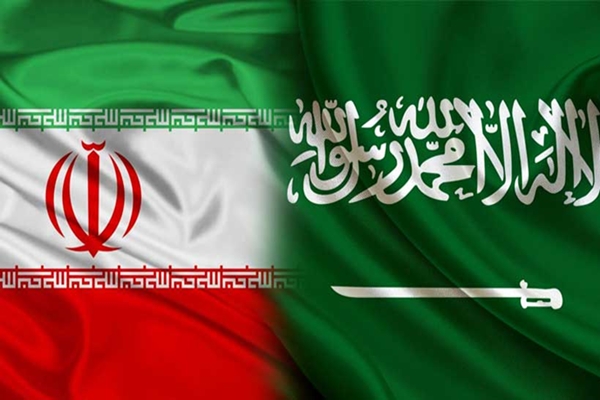
Oman, Kuwait and Qatar have all maintained relations with Tehran, while Saudi Arabia, Bahrain and the UAE have seen tensions spike.

Iran’s chief negotiator: no obstacle to deal

Iran's deputy negotiator Ali Bagheri speaks during a news conference in Almaty April 5, 2013. REUTERS/Shamil Zhumatov

Bagheri was speaking at the end of the meeting of the Joint Commission of the Iran nuclear deal, JCPOA in Vienna on Thursday.
He added that at Thursday’s meeting, parties to the talks, including Iran, expressed their views on the future course of the negotiations.
He said that the Iranian negotiating team emphasized in the meeting that it has already expressed its views on the path of the talks based on its own position and will continue seriously down the path and is firmly resolved for negotiations.
Asked whether the other parties provided a substantiated and logical response to Iran’s proposals at the meeting of the Joint Commission of the JCPOA, Bagheri said this issue should be pursued at the meeting of the working groups.
He added the mere fact that the two sides are seriously determined to continue the talks shows that they want to find common ground.
Meanwhile, Russia’s representative to international organizations Mikhail Olyanov described the meeting of the Joint Commission of the JCPOA as constructive.
The meeting of the Joint Commission of the JCPOA was held on Thursday, and parties to the negotiations decided to discuss the texts proposed by Iran at different levels

Iran FM slams West’s failure to offer constructive proposals in Vienna

“We have not received any constructive and forward-moving suggestions from the other side, which contradicts their announcement in which they said they will take part in the talks seriously,” the top Iranian diplomat said during a phone call with EU Foreign Policy Chief Josep Borrell on Thursday.
He also blasted the West’s inaction as the Iran nuclear deal unraveled because of the re-imposition of unilateral American sanctions against Tehran.
“Over the past eight years, there were enough words but no deed; however, today is the time of taking action and we are trying to reach a serious and good deal,” he noted.
He also criticized the stances and statements by the three European countries of the P4+1 group saying they have adopted a negative political and media stance.
Amir Abdollahian reiterated that Iran’s proposed texts are completely in line with the 2015 nuclear deal and focus on unfinished discussions in June 2021 talks.
He called on the European negotiators to the Vienna talks to study Iran’s proposed texts carefully and without wrong presuppositions.
The Iranian Foreign Minister described the positions and viewpoints of China and Russia during the talks in the Austrian capital as realistic and constructive.
The EU foreign policy chief, for his part, expressed content with the resumption of the Vienna talks, noting that the United States and the three European countries have been reminded that the negotiations should be realistic.
Josep Borrell also called for some concerns over Iran’s nuclear program to be addressed.
Negotiators of Iran and the P4+1 group namely Russia, China, Britain, France and Germany have resumed talks in Vienna trying to find ways to remove anti-Iran sanctions and a possible U.S. return to the 2015 deal

UNSC condemns deadly terror attacks in Iraq

In a press release issued on Wednesday, the 15-member body expressed its deepest sympathy and condolences to the Iraqi government and the families of the victims of the attacks, wishing a speedy recovery to the injured.

The UNSC “underlined the need to hold perpetrators, organizers, financiers and sponsors of these reprehensible acts of terrorism accountable and bring them to justice, and urged all states … to cooperate actively with the government of Iraq and all other relevant authorities in this regard”.

It also “reiterated that any acts of terrorism are criminal and unjustifiable, regardless of their motivation, wherever, whenever and by whomsoever committed”.

The UN body reaffirmed the need for all countries “to combat by all means, in accordance with the Charter of the United Nations and other obligations under international law, including international human rights law, international refugee law and international humanitarian law, threats to international peace and security caused by terrorist acts”.

The Security Council further voiced support for Iraq’s security and the continued fight against terror outfits such as Daesh, stressing that terrorism in all its forms and manifestations constitutes one of the most serious threats to international peace and security.

On Tuesday, a motorbike rigged with explosives killed four people and wounded at least 20 others in Iraq’s southern city of Basra. There was no immediate claim of responsibility, but Iraqi authorities stated the blast carries fingerprints of the Daesh Takfiri terrorist group.

Daesh began a terror campaign in Iraq in 2014, overrunning vast swathes in lightning attacks.

Iraq declared victory over Daesh in December 2017 after a three-year counter-terrorism military campaign, which also had the support of neighboring Iran.

The terror outfit’s remnants, though, keep staging sporadic attacks across Iraq, attempting to regroup and unleash fresh violence.

Daesh has intensified its terrorist attacks in Iraq since January 2020, when the United States, which is believed to be a staunch sponsor of the terror group, assassinated top Iranian anti-terror commander Lieutenant General Qassem Soleimani and Hashd al-Sha’abi deputy commander, Abu Mahdi al-Muhandis, near Baghdad International Airport.

Iran Covid: Number of vaccine doses nearing 110 million mark, 87 new deaths

There were 3,356 new cases including 559 hospitalizations over the p past 24 hours. This pushes the caseload to 6,147,872.
Meanwhile, Iran is pressing ahead with its nationwide vaccination campaign. The total number of doses administered in Iran is now 109,387,244 doses. There has been no change in the number of red zones in terms of risk from Covid-19.
Currently, two cities are marked red, showing they face the highest level of danger from the disease. Meanwhile, 9 cities are orange, 153 yellow, and 284 blue. Blue cities and towns face the lowest level of risk. The number of blue cities has jumped in recent weeks.
Authorities have also relaxed some Covid-related curbs. But they have at the same time demanded people be on the safe side, saying attending meetings and reopening schools amid the cold season, if left unchecked, can shoot up Covid cases

Iran-P4+1 talks restart in Vienna

The Iranian negotiators led by Deputy Foreign Minister Ali Bagheri on Thursday morning held one-on-one talks with the EU’s Deputy Foreign Policy Chief Enrique Mora and a three-way meeting with the Russian and Chinese delegations.
On his twitter account Bagheri Kani referred to his talks with Mora and the Chinese and Russia delegations, saying Iran will continue to engage seriously with the P4+1 – Russia, China, Britain, France and Germany – and is determined to reach a good deal that secures the Iranian people’s rights and interests.
Iran’s proposals laid out in two draft documents are expected to top the agenda of talks this time around. One of the drafts is about sanctions removal and the other about Iran’s nuclear activities.