Tuesday, January 13, 2026
Home Blog Page 2202

Long hair causes trouble for former footballer in Iran 

The SMS also said Arifi would be fined if he fails to observe the hijab code.

It seems that the traffic police cams in Tehran where Arifi is living mistook him for a woman because of his long hair.

The former footballer is now the manager of the junior team of the Perspolis FC.

Iranian Health Ministry urges hike in sugar prices over health concerns

The director general of the Nutrition Improvement Office of Iran’s Ministry of Health referred to the high consumption of sugar in the country, saying the proposal to increase prices or eliminate sugar subsidies is aimed at keeping people healthy because Iranians consume too much sugar.

Zahra Abdollahi noted that a priority of the Health Ministry is to reduce sugar consumption in society. She said research shows that the per capita consumption of sugar in Iran is much higher than the recommended amount, and this is a main cause of overweight, obesity, diabetes and some cancers such as pancreatic cancer.

Abdollahi added that due to the high consumption of sugar and sweet substances, people’s tastes have shifted to the consumption of sugary foods, and therefore, officials must work on reducing demand and consumption in different ways.

Situation tense in Azerbaijan amid reports of rise in bread prices

Several days ago, media outlets in the Republic of Azerbaijani quoted the producers of flour and bread as saying that due to rising world prices, Russian export duties and the expiration of government subsidies on flour, they have to raise the price of bread by 35 to 40 percent.

The news of the bread price hike angered people on social media, with some calling it similar to the ongoing protests by Kazakhstan’s people over rising liquefied natural gas prices.

Now the state television of the Republic of Azerbaijan says the increase in the world prices of wheat and the expiration of government subsidies for flour and its products on December 31 forced them to calculate the price of wheat on an equal footing with other foodstuffs in order to continue supplying this vital product.

All these reports angered the Azeri people, who staged demonstrations similar to those in Kazakhstan.

The unofficial telegram channel of the Armed Forces of the Republic of Azerbaijan wrote that the protests in Kazakhstan “are a warning to countries that ignore the fact that people could run out of patience if they come under more price pressures.”

Opposition politicians also warned the government against increasing prices.
Ali Karimli, leader of the People’s Front Party of Azerbaijan, an opposition faction, called on the government to resume subsidies as rising prices would spread poverty in the country.

Saudi coalition seizes another Yemen-bound fuel vessel

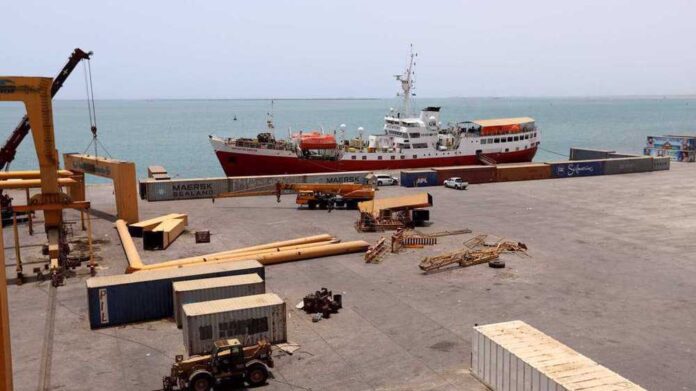
The Saudi coalition has seized a Yemeni tanker ship carrying liquefied petroleum gas (LPG) in the Red Sea on Thursday.

The Yemeni Oil and Gas Corporation (YOGC) announced that the Saudi coalition has seized a liquefied petroleum gas (LPG) before reaching the port of Hudaidah.

The vessel was carrying 9487 tons of gas for domestic use, which was directed by Riyadh-led coalition forces to the coast of Jazan in Saudi Arabia.

On Wednesday, Yemen announced that the coalition seized a fuel ship named “Splendour Sapphire” belonging to private sector factories in international waters, although it had been inspected and received UN clearance.

Last year, Yemen’s Minister of Oil and Minerals Ahmad Abdullah Dares warned that the Saudi seizure of ships carrying petroleum products could lead to the suspension of the service sectors and cause “a humanitarian catastrophe”.

Saudi Arabia and a number of its regional allies — including the United Arab Emirates (UAE) — launched a brutal war against Yemen in March 2015.

The UN says more than 24 million Yemenis are in dire need of humanitarian aid, including 10 million suffering from extreme levels of hunger. The world body also refers to the situation in Yemen as the world’s worst humanitarian crisis.

The Saudi war has also taken a heavy toll on the country’s infrastructure, destroying hospitals, schools, and factories.

A dozen killed, many injured in Afghanistan floods avalanches

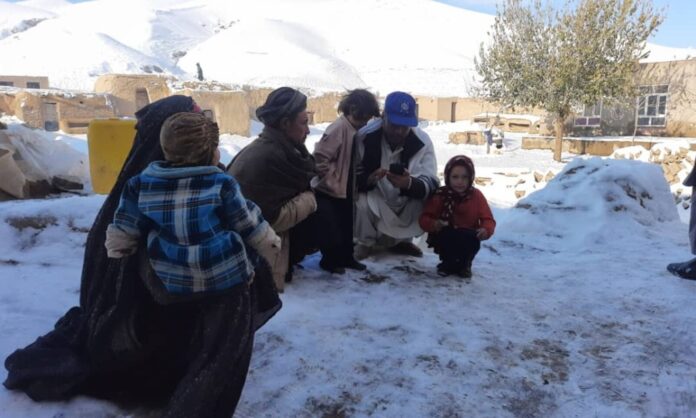
Citing officials of the Islamic Emirate of Afghanistan, Bakhtar News Agency-Afghan news agency reported that 90 percent of the country’s territory witnessed snow or rainfall that led to financial loss besides death toll.

The casualties have been reported in Helmand, Nimroz, Farah, Nangarhar, Kandahar, Jawzjan, Takhar, and the Afghan capital Kabul.

In the meantime, the Ministry of Disaster Management of IEA has also confirmed the number of deaths and those wounded.

Afghan officials have also stated that they have rescued tens of passengers stranded in floods by people collaboration.

The recent heavy snow and rainfall have also clogged several highways and flights to Kabul International Airport have also been disrupted.

Iran warns against foreign meddling in Kazakhstan

khatibzadeh-Iran

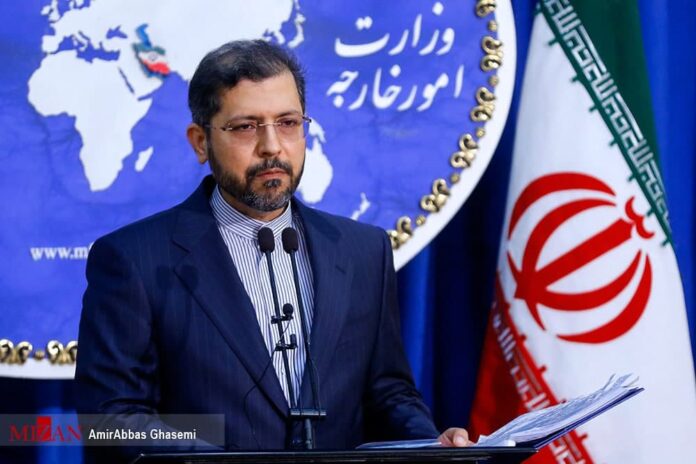
The Iranian Foreign Ministry Spokesman Saeed Khatibzadeh says Tehran believes that the people and government of Kazakhstan are able to resolve their differences without foreign interference and in line with their national interests through dialogue and in a peaceful manner.

He also said foreign elements must not be allowed to take advantage of the situation in Kazakhstan.

The Iranian Foreign Ministry spokesman underlined that the stability and security of Kazakhstan is important for Iran.

Meanwhile, a Kazakh police spokesperson says security forces have killed dozens of protesters in an attempt to prevent them from storming police buildings in the country’s main city Almaty.

The spokesperson described the crackdown on the demonstrators angry with a fuel price hike as “anti-terrorist operation”.

The Kazakh military was deployed in Almaty, the country’s largest city, after a day of violence on Wednesday, which saw mobs overrunning government buildings, including the old presidential residence and the mayor’s office.

The demonstrators also stormed the airport in Almaty but security forces regained control of it later.

Protests across Kazakhstan, including Almaty, capital Nur-Sultan, Aktobe and other cities, started after the New Year. They were sparked by a two-fold hike in gas prices after the government said it couldn’t afford to subsidize cheap fuel anymore.

This comes as Russia has deployed a contingent of peacekeepers to Kazakhstan as part of the Collective Security Treaty Organization involving Russia, Belarus, Armenia, Tajikistan and Kyrgyzstan.


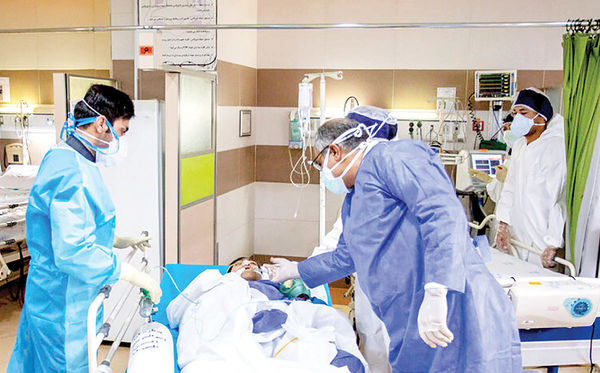
24 more people die of Covid in Iran

The deaths pushed to 131,802 the number of people killed by the disease since the Coronavirus pandemic engulfed the country some two years ago.

The Health Ministry also logged 1,579 new Covid cases across Iran including 269 hospitalizations.

Official figures also show 9,389,424 people have got their third shots of Covid vaccine – also known as booster shot- while the total number of jabs so far administered stands at 121,827,244.

The massive nationwide vaccination drive is credited with the downward trend in Covid deaths and infections in Iran where the disease killed as many as 800 people daily during its fifth wave.

Bagheri: South Korea obliged to release Iran’s assets

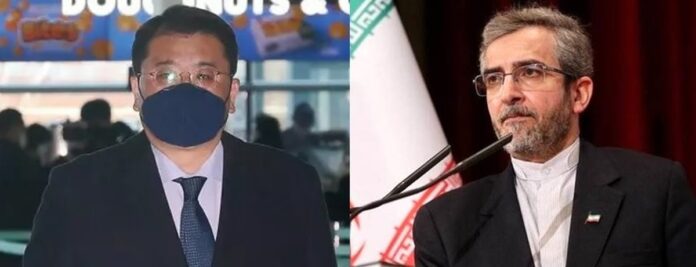
Unilateral U.S. sanctions cannot justify non-payment of debts to Iran, Bagheri said in a meeting with South Korea’s Vice Minister of Foreign Affairs Choi Jong Kun in the Austrian capital Vienna on Thursday.

The senior Iranian diplomat also stated that South Korea’s illegal and unjustifiable refusal to repay its debts to Iran would be a dark point in the history of relations between the two countries and that Seoul must act as soon as possible to release Iran’s assets.

During the meeting the Deputy Foreign Minister of South Korea also referred to the importance of Seoul-Tehran relations and offered some explanations about frozen Iranian money in South Korea, adding that the country is trying to pay its debt to Iran.

Tehran wants Seoul to quickly release nearly 8 billion dollars in funds for crude imports frozen because of American sanctions.

Before the sanctions came into effect in 2018, the Islamic Republic was South Korea’s third-largest trade partner in West Asia.

Iran has warned that it would take legal action against the South Korean government if it continues to refuse to pay its debt.

U.S. seeks snapback sanctions to deter Iran enrichment

Israel has been pushing the US and the E3 — France, Germany and the UK — to increase the pressure on Iran now and has raised the possibility of triggering snapback sanctions.

Only the UK had shown any openness to the snapback idea so far, Israeli officials say.

Iranian officials have warned the country is ready to react if West uses a “snapback mechanism” in the nuclear accord to reinstate sanctions on Tehran.

The US has been arguing to the Israelis that pressure needs to be balanced with diplomacy and that Israeli sabotage operations against Iran’s nuclear facilities have actually led the Iranians to accelerate their program.

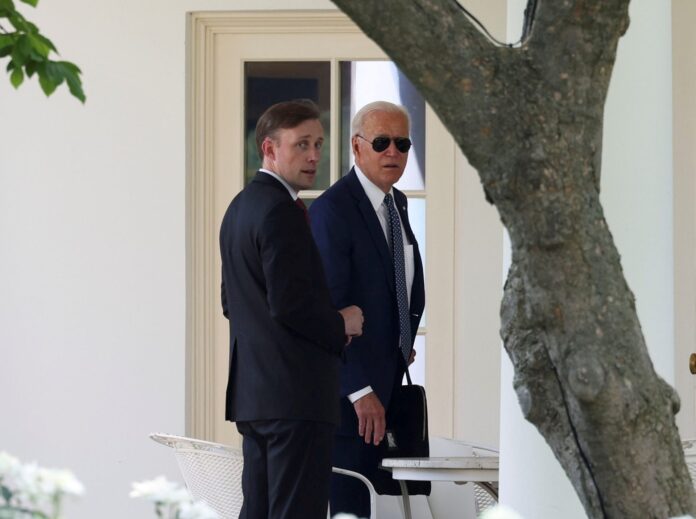
During a Dec. 22 meeting of the US-Israel strategic forum on Iran, Sullivan stated he was very concerned that the Iranians felt they were getting closer to the possibility of breaking out toward a nuclear weapon, the Israeli officials say.

Tehran denies seeking nuclear weapons, stressing it wants to master nuclear technology for peaceful purposes.

Sullivan added he didn’t know whether additional US pressure or a lack thereof would be more likely to lead Iran to move closer to a bomb, the officials say.

But he noted the threat of snapback sanctions — in addition to strengthening the credibility of the military threat against Iran — should be used to deter Iran from increasing uranium enrichment to 90% purity.

Head of Iran’s Atomic Energy Organization (AEOI) Mohammad Eslami has recently stated Tehran does not intend to exceed the 60% level of uranium enrichment even if the parties to the negotiations in Vienna do not come to an agreement and the United States does not lift its sanctions.

Israeli Foreign Ministry officials told Sullivan they think the US and E3 should move ahead with snapback sanctions if the Vienna talks reach a dead end, regardless of Iran’s levels of enrichment.

But at the end of the meeting, Sullivan’s Israeli counterpart, Eyal Hulata, agreed that using snapback as a deterrent against 90% enrichment makes sense.

Head of the International Atomic Energy Agency (IAEA) Rafael Grossi has recently dismissed claims by Israel that Iran is gearing up to enrich uranium to 90 percent purity.

A senior administration official told Axios the US would not comment on private diplomatic deliberations but stated, “The United States and Israel are closely aligned on the security threats posed by Iran. Jake Sullivan’s visit last month confirmed that alignment.”

The eighth round of the nuclear talks resumed in Vienna this week.

State Department Spokesperson Ned Price stated on Tuesday there had been “some modest progress” in recent days.

Sullivan noted in the US-Israel meeting that if no agreement is reached in Vienna within weeks and the Iranians aren’t negotiating in good faith, the US should walk away from the talks, the Israeli officials added.

Iran insists that the talks must lead to the removal of all US sanctions that were imposed against Tehran following Washington’s unilateral withdrawal from the Joint Comprehensive Plan of Action (JCPOA) in May 2018. Tehran has also demanded credible guarantees that Washington will not abandon the deal again.

Kazakh forces say ‘eliminated dozens trying to storm police stations’

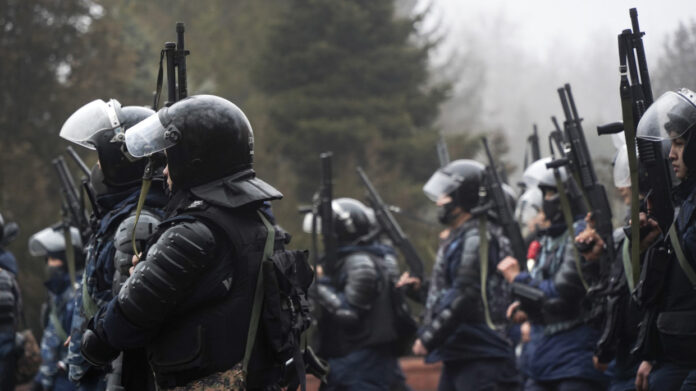
Demonstrators tried to take over the force’s headquarters and several stations across the city overnight, police spokeswoman Altanat Avirbek said on Thursday morning.

She indicated that those attempts had been curbed, while “dozens of attackers were eliminated.”

“Their identities are being established now,” she added, without revealing any more details.

“Anti-terrorist operations” have been ongoing at three police buildings in the city, according to the spokeswoman, who urged residents in those areas to stay indoors.

During the night, several hundred troops also surrounded Almaty’s main square and engaged in a gunfight with a group of rioters. The security perimeter has since been removed, and the soldiers have left.

The military had been deployed in the city of two million people, the country’s largest, after a day of violence on Wednesday, which saw angry mobs overrunning government buildings, including the old presidential residence and the mayor’s office.

The airport had also fallen into the hands of protesters, but it was later retaken by security forces, according to reports. Shops, gun stores, banks, hospitals and other venues have been ransacked and looted.

Some 353 members of Kazakhstan’s law enforcement were hurt in the clashes with protesters in Almaty, 12 were killed, the Khabar-24 TV channel reported quoting the Almaty commandant’s office. More than 1,000 people have been injured as a result of mass disturbances in Kazakhstan, almost 400 of them were hospitalized, the country’s Health Ministry reported as quoted by the Khabar-24 TV channel on Thursday.

At least two law enforcement personnel have been beheaded during violent demonstration in the Kazakh city of Almaty, according to local media reports on Thursday.

Kazakhstani President Kassym-Jomart Tokayev has blamed the violence on “international terrorist gangs,” and appealed to the Russia-led Collective Security Treaty Organization (CSTO) for help in restoring order in the country. The bloc said CSTO peacekeepers will be deployed in Kazakhstan “for a limited period of time in order to stabilize and normalize the situation.”

The CSTO is a security treaty between six former Soviet states: Armenia, Belarus, Kazakhstan, Kyrgyzstan, Russia and Tajikistan, It runs along similar lines to the US-led NATO bloc. Azerbaijan was an original member of the organization upon its foundation in 1994, but withdrew in 1999. Kyrgyzstan came close to asking for the deployment of peacekeepers 2010, during clashes between the country’s ethnic Kyrgyz and Uzbek populations, but on that occasion the alliance did not agree to provide military assistance.

Protests across Kazakhstan, including Almaty, capital Nur-Sultan, Aktobe and other cities, started after the New Year. They were triggered by a two-fold hike in liquefied petroleum gas prices as the government stated it couldn’t afford to subsidize the widely used cheap fuel anymore. The initially peaceful rallies quickly turned violent and got out of hand.