Thursday, December 25, 2025
Home Blog Page 2191

Iran dispatches more humanitarian aid to crisis-hit Afghanistan

In a statement on Friday, the Iranian Consulate General in Afghanistan’s Mazar-e-Sharif announced that it had distributed the non-cash aid among the poverty-stricken people in Kunduz in the presence of local Taliban officials.

The humanitarian aid was in the form of food staples, it added.

Iran has stepped up aid deliveries to various Afghan provinces since August, when the Taliban group took over the country following the US military’s withdrawal. The 13th shipment was delivered to Nangarhar in November.

Since then, Washington has imposed tough economic sanctions on the country under the pretext of putting pressure on the Taliban, but the policy has led to alarming levels of poverty and starvation among the civilians.

Iranian charity highlights transgenders’ woes, urges govt. help

On Thursday, Fars News Agency offered an opportunity to Mohammad Nourizadeh, who heads the Shams charitable organization, to shed spotlight on the culturally-taboo subject of the transgender people, their struggles in social life, and the measures that the government needs to take in order to break the taboo and empower the transsexual in the society.

Shams has been campaigning for three years to promote the rights of the transgender and highlight the need for the adoption of more laws in support of them.

Iranian charity highlights transgenders’ woes, urges govt. help

The campaign has been run by a group of servants at the holy shrine of Imam Reza, the eight Imam of Shia Muslims, in the city of Mashhad.
There has been a long history of activism in the field, but Shams has taken a big step in raising awareness about the topic and drawing the attention of Iranian authorities to the community’s woes.

Transgender individuals live and work with no legal barriers in the country. The government even pays subsidies for hormone medicine and gender-reassignment surgery for those who want it.
Nourziadeh, however, argues that is not enough.
The major problem is the “wrong image of the transgender” existing in the Iranian society, he said. “Transgender means living in the corpse of the opposite sex. This falls in the category of psychological disorders…They are neither homosexual nor bisexual.”

Iranian charity highlights transgenders’ woes, urges govt. helpShams, he said, has been making efforts to offer psychological assistance to the transgender, provide parts of the costs, and create jobs from them, among other such measures.

Nourizadeh said government institutions should take “serious action” to tackle a variety of hardships facing the trans community and offer a helping hand to charities and NGOs in their relevant activism.

Iran reports new record low Covid fatalities

The deaths push to 131,606 the country’s total death toll. According to the figures, 17 hundred and three new Covid-19 cases have been recorded as well since Thursday. The total caseload now stands at 6,194,401.

There were 279 hospitalizations, the lowest number of hospital admissions in more than a year.

The downward trend in Covid deaths and cases has been attributed to a mass vaccination campaign Iran rolled out in summer to curb the pandemic.

More than 119 million doses of Covid vaccines have so far been administered. The number of triple-vaxxed people is nearing the 8 million mark.
Despite the success in rolling back the Covid outbreak, Iranians are playing it safe at the officials’ demands who say the country is not yet completely out of the woods.

Situation back to normal at Iran-Turkey border crossing

Seyyed Ruhollah Latifi said long queues had been formed at the crossing in the last days of Gregorian year.

He added that the long queues were cleared thanks to diligent efforts by Iranian authorities at the border crossing.

He added that Last night, with the arrival of 650 trucks at the Bazargan customs, the number of trucks queuing there in the last 72 hours reached 2,050, soon things returned to normal.

Latifi also said cooperation of all border organizations, holding several border meetings with Turkish customs officials, round-the-clock measures, full support from Iran’s Foreign Ministry and other regulatory bodies, rapid evacuation of parking lots and internal transit of shipments at the order of the Director General of Customs all helped things return to normal at this border crossing.

Advisor: Haj Qassem won battle of hearts by respecting humans

Hassan Ravandeh made the comment as he related his memories of Haj Qassem, the top general’s nom de guerre due to the prowess he earned after fighting in the imposed Iraqi war and in Syria against myriads of Takfiri terror groups.

According to Tehran-based Fars News Agency, Ravandeh says General Soleimani had asked for a thousand Krasnopol shells, which are munitions for a Soviet 152/155 mm cannon-launched, fin-stabilized, semi-automatic laser-guided, artillery weapon system. Haj Qassem said Iran would pay for the shells.

The Russia general had told him that he had 140 shells and that he would give 100 of them to Haj Qassem and would keep the remaining 40 ones for his troops in Syria. The Russian officer did not receive any money for the shells though. The officer, now the commander of the Russian Army’s aerospace unit, sent a photo of himself along with his wife and child while holding a picture of Haj Qassem after the Iranian general was martyred.

Enclosed was his message of condolence which read, “We could not do anything but we share your grief”. General Soleimani’s advisor also says the late commander was so popular among Russian officers and even rank-and-file troops because he exchanged pleasantries warmly with all of them while visiting their positions in Syria.

Ravandeh added that in meetings with foreign officials, Haj Qassem would utter a sentence which had become his signature, saying “Ana Khademokom, which is Arabic for “I’m your servant”.

He noted that respect for human beings was the key to Haj Qassem’s success in winning hearts.

Advisor: Haj Qassem won battle of hearts by respecting humans

General Soleimani

Hassan Ravandeh made the comment as he related his memories of Haj Qassem, the top general’s nom de guerre due to the prowess he earned after fighting in the imposed Iraqi war and in Syria against myriads of Takfiri terror groups.

According to Tehran-based Fars News Agency, Ravandeh says General Soleimani had asked for a thousand Krasnopol shells, which are munitions for a Soviet 152/155 mm cannon-launched, fin-stabilized, semi-automatic laser-guided, artillery weapon system. Haj Qassem said Iran would pay for the shells.

The Russia general had told him that he had 140 shells and that he would give 100 of them to Haj Qassem and would keep the remaining 40 ones for his troops in Syria. The Russian officer did not receive any money for the shells though. The officer, now the commander of the Russian Army’s aerospace unit, sent a photo of himself along with his wife and child while holding a picture of Haj Qassem after the Iranian general was martyred. Enclosed was his message of condolence which read, “We could not do anything but we share your grief”. General Soleimani’s advisor also says the late commander was so popular among Russian officers and even rank-and-file troops because he exchanged pleasantries warmly with all of them while visiting their positions in Syria.

Ravandeh added that in meetings with foreign officials, Haj Qassem would utter a sentence which had become his signature, saying “Ana Khademokom, which is Arabic for “I’m your servant”.

He noted that respect for human beings was the key to Haj Qassem’s success in winning hearts.

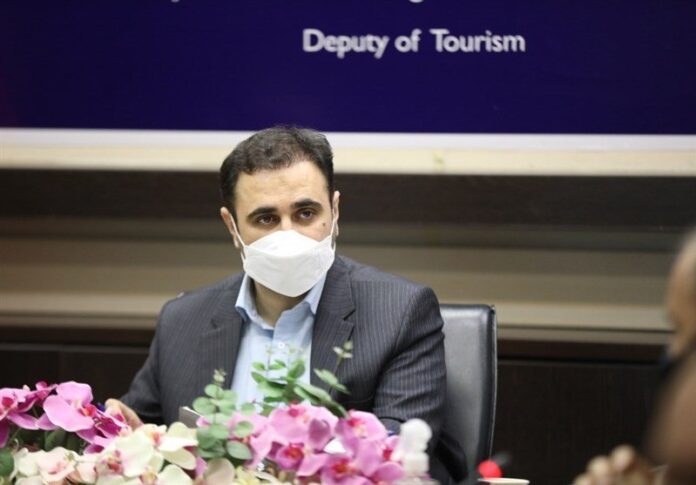
Iranian govt. spokesman’s 3-year-old child dies

He also said in a statement that his daughter died of a metabolic disease and that she suffered a lot during her 3-year lifespan.

Bahadori said he has surrendered to the divine will. He also wished health for all Iranians.

Iranian officials and media outlets have offered the government spokesman condolences over the loss his kid.

Iran increases military budget

Iran Joins World Club of Anti-Armour Missile Producers

The figure shows a 24 trillion toman increase compared with last year’s military budget.
Iran has strengthened its military capabilities in recent years amid repeated saber-rattling by the US and the Israeli regime.

In particular, the Islamic Republic has expanded its missile program which has given the country edge over adversaries in this regard.

Top US General Frank McKenzie admitted several days ago that Iranian missiles can strike effectively across the breadth and depth of the Middle East and also could strike with accuracy.

McKenzie added that Iran can fire some many missiles instantly to overwhelm an adversary.

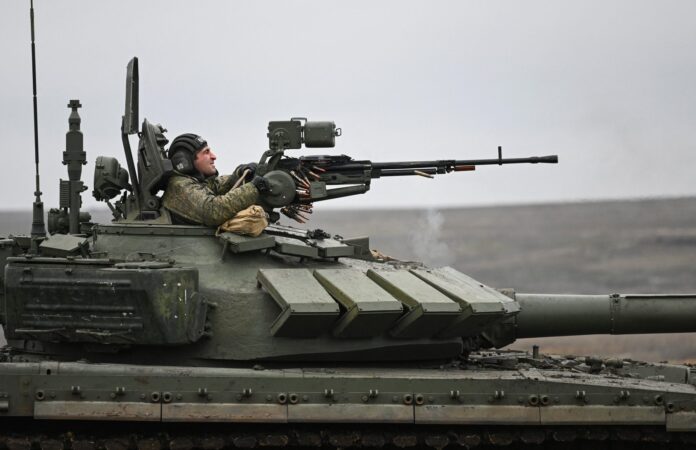
Putin tells Biden sanctions could cause complete severance of ties

Putin was responding to Biden’s warning that Western countries will introduce massive economic and military sanctions if further escalation on the Ukrainian border takes place, Ushakov said.

“Our president immediately responded to that by saying that if the West goes ahead to introduce abovementioned unprecedented sanctions, then all that could cause a total severance of relations between our countries and most serious damage will be done to Russia’s relations with the West in general,” the diplomat added.

Putin warned future generations will regard these moves as mistakes, the aide continued, noting, “There’s been a lot of these mistakes in past 30 years, and it’s preferable in this situation that they aren’t made any more.”

Biden didn’t say exactly what Russian actions could trigger sanctions, Ushakov told reporters.

Ushakov made the comments when asked if Biden explained what kind of escalation on the Russian-Ukrainian border could set off the restrictions.

“That wasn’t discussed in detail,” he added.

Biden “mentioned massive sanctions” and Putin responded they would be a huge mistake that could cause a complete severance of relations.

Questions were asked to clarify what is meant by severance of relations with the West.

“It doesn’t mean anything because we don’t know what these massive sanctions are, but we know they would be a colossal mistake that could lead to most serious consequences,” Ushakov continued.

“We hope that won’t happen,” he stated, adding, “That’s why we, the Americans and other Western countries are starting a negotiating process along three tracks.”

Biden agreed when Putin said Russia was seeking results in the talks on security guarantees, the Kremlin aide added.

Putin told Biden about the principles that underlie Russia’s security proposals, the aide said. The president said talks were important but the key goal for Russia was its security and the country will seek to achieve that goal, Ushakov added.

“The US president has generally agreed with that point of view and his reaction made sense and was quite serious,” the aide underscored.

Putin also underlined Russia is concerned about deployment of offensive weapons near its borders and it will act just like the US would act if it had to confront a deployment of such weapons near its own borders, Ushakov noted.

Putin elaborated on the subject to drive the point home, Ushakov stated.

On December 17, the Russian Foreign Ministry released draft agreements on security guarantees addressed to the US and NATO. They had been handed over to a US representative on December 15.

White House Press Secretary Jen Psaki announced in a statement on Thursday Biden in the call with Putin said Washington and its allies were ready to respond strongly if Russia “invades Ukraine”.

“President Biden urged Russia to de-escalate tensions with Ukraine,” the statement said, adding, “He made clear that the United States and its allies and partners will respond decisively if Russia further invades Ukraine.”

This was the second time this month that the presidents held talks. The previous conversation took place by video link on December 7, with topics including Ukraine, bilateral relations, cybersecurity and Iran’s nuclear deal.

The latest talks were requested by Putin. The aim was to continue discussions started during the previous talks and to discuss the negotiations scheduled for January, Kremlin Spokesman Dmitry Peskov stated.

There has been a flurry of statements in the West and Kiev lately that Russia could invade Ukraine. Peskov noted they were unsubstantiated escalation and that Russia doesn’t threaten anyone. At the same time, he didn’t rule out provocations to corroborate these Western statements and warned that the use of force to resolve the crisis in southeastern Ukraine will have serious consequences.

Biden assured Putin during their call that Washington doesn’t plan to deploy offensive weapons in Ukraine, Ushakov told reporters.

“The key point that was voiced by the American side during the call was that President Biden clearly stated that the US doesn’t plan to deploy offensive weapons in Ukraine,” Ushakov said.

Putin noted that was one of the key points in the proposals that Russia handed over to the US, which we want to hold substantive talks about in future, the Kremlin aide added.

Iran: Assassination of General Soleimani message of US support for terrorists

The statement was issued on the eve of the second anniversary of the assassination of General Soleimani and Iraqi commander Abu Mahdi al-Mohandes.

The ministry added the martyrdom of General Soleimani, Abu Mahdi al-Mohandes and their great companions, further highlighted the strategy and discourse of the Resistance.

The full text of the statement is as follows:


Statement of the Ministry of Foreign Affairs of the Islamic Republic of Iran on the second anniversary of the assassination of Martyr Soleimani


On the eve of the second anniversary of the martyrdom of the valiant General of Islam, Lieutenant General Qasem Soleimani, the Ministry of Foreign Affairs of the Islamic Republic of Iran commemorates this immortal martyr who spent his blessed life in sincere service to Iran, Islam and peace and security.

Martyr General Soleimani invariably played a role in line with the principled policies of the Islamic Republic of Iran to help establish peace and stability at the regional and international levels, and adopted various measures and devoted a great deal of efforts to combat international terrorism and growing terrorist outfits across the region.

For this reason, he has rightly and proudly been titled the Hero of the Fight against Terrorism and the General of Peace. Despite this role and position, the US government, through applying double standards and false claims like that of countering terrorism, in a criminal act that violates the rules and principles of international law, planned and carried out a terrorist attack against Martyr General Soleimani as one of the highest-ranking officials of the Islamic Republic of Iran on the territory of Iraq as the host country.

The move by then US officials to publicly assassinate the International Counter Terrorism Hero is in itself a message of support for terrorist groups that explicitly expose the lies of counter-terrorism claimants.

The martyrdom of General Soleimani, Abu Mahdi al-Mohandes and their great companions, not only did not diminish the capacity of the Axis of Resistance, but on the one hand imbued the domestic environment of Iran with national cohesion and unity, and on the other hand further highlighted the strategy and discourse of the Resistance.

In response to this assassination, the prompt and effective action of the Armed Forces of the Islamic Republic of Iran in slapping the American troops stationed at the Ain al-Assad base in Iraq in the face, along with the spiritual effects of the blood of Iranian and Iraqi martyrs, upset the equations and brought about the failure of US regional strategy. The US fleeing from Afghanistan, the beginning of the process of withdrawal from Iraq and the change in the strategy of the US military presence in the geostrategic region of Persian Gulf showcase a small part of such impacts and consequences.

Undoubtedly, the criminal act of the United States in martyring general Soleimani is a clear manifestation of a “terrorist attack” that was orchestrated and carried out in an organized manner by the then US government for which the White House is now responsible.

According to international and legal standards, the US government bears “definitive international responsibility” for this crime. In this context, all the agents, instigators, contributors and perpetrators of this terrorist crime are responsible. Therefore, in cooperation with other agencies and the Judiciary of the Islamic Republic of Iran, the Ministry of Foreign Affairs has adopted a number of measures from the very beginning based on the legal principle of “combating the impunity of criminals” to hold such individuals and entities accountable before the courts and will continue on this path until the final result is achieved.

The Ministry of Foreign Affairs has taken numerous measures with the aim of following up the issue at all domestic, bilateral, regional and international levels, the reports of which have been presented to the great Nation of Iran at various points to the extent possible. This pursuit of this path will continue vigorously and comprehensively.

These measures have been taken in the political, legal, international and public diplomacy dimensions. In this regard, in the foreign and international arena, special efforts were made to prevent the distortion of truth by the United States and its manipulation of the situation. The moral, political, and legal condemnation expressed towards the US government on an international level for committing this crime has been one of outcomes of such efforts.

In following up this issue, it is necessary to point to the continuation of endeavors by the Joint Judicial Committee between the Islamic Republic of Iran and the Republic of Iraq.

The Islamic Republic of Iran has always taken effective and active measures to establish peace and stability in the region. Now, according to the approaches of the 13th government, which reaches out to the neighbors of the Islamic Republic of Iran for extensive and stable engagement and cooperation, the groundwork for the development and strengthening of relations among the countries of the region is laid more firmly than before.

The government and people of Iran consider themselves to be on the side of the governments and nations of the region and have not and will not spare any assistance to maintain territorial integrity and establish lasting stability and security, and development and prosperity among the countries of the region and the Islamic world.

In the end, together with all Iranians in the motherland and all over the world, we pay tribute to the lofty spirit of the General of Peace and Security, Haj Qasem Soleimani.