Monday, January 12, 2026
Home Blog Page 219

Zelensky should ‘make a deal’: Trump says after meeting with Putin

In an interview with Fox News on Friday, Trump reflected on “a very warm meeting,” adding that the sides are “pretty close” to resolving the conflict.

He stressed that Kiev should be on board with the push for peace, for it to have any chance of success.

When asked what advice he would give Zelensky, Trump replied: “Make the deal”, adding that he believes that Putin “wants to see it done.”

“It’s really up to President Zelensky to get it done. And I would also say the European nations, they have to get involved a little bit,” the US president continued.

Trump said that he was ready to mediate direct talks between Putin and Zelensky.

“If they’d like, I’ll be at that next meeting… Not that I want to be there, but I want to make sure it gets done. And we have a pretty good chance of getting it done.”

Trump has described his summit in Alaska with his Russian counterpart, Vladimir Putin, as a “warm meeting,” and suggested that the Ukraine conflict is close to being resolved.

The US leader praised the three-hour talks with Putin in Anchorage on Friday, noting that they had made progress in talks mainly focused on ending the hostilities between Russia and Ukraine.

“Actually, I think we agree on a lot. I can tell you, the meeting was… warm,” Trump said, calling Putin a “strong guy.”

The US leader earlier suggested that he would “give today a ten” when it came to the outcome of the summit.

According to Trump, the sides are “pretty close to the end” of the conflict, although he added that “Ukraine has to agree” to any potential peace deal. He would not provide any details of the discussions, saying only that “there’s one or two pretty significant items, but I think they can be reached.”

The US president also noted that he had “always had a great relationship with President Putin, and we would have done great things together,” while praising Russia as a land brimming with natural resources.

Israeli military unit ‘tasked with smearing and targeting Gaza journalists’

Referred to as the “Legitimisation Cell”, the unit was formed in October of 2023 at the onset of the genocide that Israel is waging in the Gaza Strip.

The +972 investigation, which interviewed three intelligence sources, revealed that the unit was meant to portray Palestinian journalists in Gaza as “as undercover Hamas operatives, in an effort to blunt growing global outrage over Israel’s killing of reporters”.

The report comes days after the Israeli military assassinated Al Jazeera correspondent Anas al-Sharif in an air strike, following a months-long campaign seeking to portray the journalist as a military operative in an attempt to justify his targeted killing.

The attack on Sunday night also targeted and killed Al Jazeera correspondent and Middle East Eye contributor Mohammed Qreiqeh, alongside camera operators Mohammed Noufal, Ibrahim Zaher and Moamen Aliwa, and freelance journalist Mohammed al-Khalidi.

The Legitimisation Cell has played the role of a public relations body meant to declassify and produce counter-narratives when media criticism of Israel is heightened, a source told +972.

This information has subsequently been shared with media outlets and “also passed regularly to the Americans through direct channels”, the report added.

The report revealed several ways in which the unit has operated to manufacture doubt against the credibility of Palestinian narratives.

For instance, on 17 October 2023, an explosion hit Al Ahli Baptist Hospital in Gaza City. The Gaza health ministry announced it was caused by an Israeli air strike and killed more than 500 Palestinians, while Israel blamed a misfired Palestinian Islamic Jihad rocket.

The following day, the Legitimisation Cell released a phone call recording of so-called “Hamas operatives” suggesting that the explosion may have been caused by a misfire from the Palestinian group.

However, according to +972, the speaker quoted in the phone call recording was a Palestinian human rights activist who “insisted he had never been a Hamas member”, and was having a “benign conversation with another Palestinian friend.”

A 2024 investigation by Forensic Architecture investigating the cause of the strike disputed Israel’s claim, instead finding that the explosion was likely caused by an Israeli interceptor rocket.

Israel has systematically targeted and struck Gaza’s healthcare infrastructure since October 2023. On Wednesday, a Doctors Without Borders (MSF) staff member stated that there is “not one fully functioning” state hospital left in Gaza.

In October 2024, the Israeli military named six Palestinian journalists in Gaza as targets, claiming they were involved in militant groups. The list included Sharif and another prominent Al Jazeera journalist, Hossam Shabat, who was assassinated in March of 2025.

Israel has targeted and killed at least 238 Palestinian journalists in Gaza since October 2023, according to local authorities.

Putin says talks with Trump was ‘constructive, useful’

Moscow is “sincerely interested in putting an end” to the ongoing hostilities, Putin stressed.

“We have always considered the Ukrainian people…fraternal, as strange as it may sound in today’s conditions. We have the same roots and everything that is happening is a tragedy and a great pain for us,” he said.

Speaking at the press conference, Trump remarked that the meeting was highly productive, although the two sides didn’t reached full agreement and no deal was finalized yet. He highlighted the significant progress made during the discussions and affirmed his strong relationship with President Putin.

Putin noted that in recent years – under the administration of Joe Biden – US-Russia relations had sunk “to their lowest point since the Cold War,” which benefits neither the two countries nor the world as a whole.

“It is obvious that sooner or later it was necessary to correct the situation and the transition from confrontation to dialogue had to take place. In this regard, a personal meeting of the heads of the two states was really overdue,” he added.

The negotiations at Joint Base Elmendorf-Richardson lasted nearly three hours.

The Russian delegation for the Alaska summit also included Foreign Minister Sergey Lavrov, Defense Minister Andrey Belousov, Finance Minister Anton Siluanov, Kremlin aide Yury Ushakov, and presidential economic envoy Kirill Dmitriev, who has been a key figure in the Ukraine settlement process.

Trump was accompanied by Secretary of State Marco Rubio, Treasury Secretary Scott Bessent, Commerce Secretary Howard Lutnick, Special Envoy Steve Witkoff, and CIA Director John Ratcliffe.

For a lasting resolution to the Ukraine conflict to be achieved, all of its root causes must be addressed, Russia’s legitimate concerns taken into account, and a fair global security balance restored, Putin said at a joint press conference with Trump.

Putin acknowledged the willingness of the US administration and Trump to engage in dialogue and seek solutions, noting their commitment to understanding the complexities of the situation.

He reiterated his view that Russians and Ukrainians are brotherly peoples and described the current circumstances as a tragedy, stressing Moscow’s sincere desire to bring the conflict to an end.

Putin said that any sustainable resolution must address the root causes of the crisis while taking into account Russia’s legitimate concerns.

“A fair balance of security in Europe and globally must be restored,” he stated.

Putin agreed with Trump that ensuring Ukraine’s security is imperative and expressed a readiness to collaborate on the issue. He expressed hope that the mutual understanding reached during the discussions will pave the way toward peace.

“We hope that this will be perceived constructively in Kiev and European capitals, and that no obstacles will be created,” Putin stressed, adding, “There should be no attempts to undermine the anticipated progress through provocations or behind-the-scenes intrigue.”

UK to prosecute dozens of people for backing banned Palestine Action group

“We have put arrangements in place that will enable us to investigate and prosecute significant numbers each week if necessary,” the force said in a statement on Friday.

Since the controversial ban on July 7, more than 700 people have been detained at peaceful protests, including 522 arrested at a protest last weekend for holding signs backing the group, believed to be the largest number of arrests at a single protest in the capital’s history.

Critics, including the United Nations, Amnesty International and Greenpeace, have called the ban an overreach that risks stifling free speech.

Director of Public Prosecutions Stephen Parkinson stated the latest decisions were the “first significant numbers” from recent demonstrations, adding: “Many more can be expected in the next few weeks. People should be clear about the real-life consequences for anyone choosing to support Palestine Action.”

The UK’s Equality and Human Rights Commission has also warned against a “heavy-handed” approach, urging the government and police to ensure protest policing is proportionate and guided by clear legal tests.

The initial three prosecutions earlier this month stemmed from arrests during a July demonstration, with defendants charged under the Terrorism Act. Police announced convictions for such offences could carry sentences of up to six months in prison, along with other penalties.

Metropolitan Police Commissioner Mark Rowley praised the rapid coordination between officers and prosecutors, saying he was “proud of how our police and CPS teams have worked so speedily together to overcome misguided attempts to overwhelm the justice system”.

Home Office Minister Yvette Cooper defended the Labour government’s decision to proscribe Palestine Action, stating: “UK national security and public safety must always be our top priority. The assessments are very clear, this is not a non-violent organisation.”

The group was banned days after claiming responsibility for a break-in at an air force base in southern England, which the government claims caused an estimated 7 million pounds ($9.3 million) in damage to two aircraft. The home office has accused it of other “serious attacks” involving “violence, significant injuries and extensive criminal damage”.

Palestine Action has said its actions target the United Kingdom’s indirect military support for Israel amid the war in Gaza.

The UK’s Liberal Democrats voiced “deep concern” over using “anti-terrorism powers” against peaceful protesters.

Hundreds of thousands of people have demonstrated in several UK cities for nearly two years, calling for an end to Israel’s war on Gaza and for the British government to stop all weapons sales to the country.

Prime Minister Keir Starmer stated last month that the UK will recognise the state of Palestine by September unless Israel takes “substantive steps” to end its war on Gaza and commits to a lasting peace process. Many who have been protesting to end Palestinian suffering have said the move is too little, too late.

Iran’s parliament speaker condemns Zionist regime PM’s “Greater Israel” plan 

In a message on X to leaders of Muslim countries, Ghalibaf slammed “the criminal prime minister of the Zionist regime” as “the Hitler of the 21st century”.

He added, “Time is running out to contain the rabid Zionist dog”.

He further urged Muslim nations to unite against the Zionist regime, saying, “O Muslim brothers, officials of Islamic countries! Gaza is the last frontline…unite and rush to help Palestine before it’s the turn of the next territories”.

The harsh response from Ghalibaf came after Netanyahu told i24 TV news that he feels he is on a “historic and spiritual mission,” and that he is “very” attached to the vision of the so-called Promised Land and Greater Israel.

Netanyahu’s comments have also drawn widespread condemnation from many other countries including Muslim nations such as Saudi Arabia and the Persian Gulf states.

Famous Iranian Baluch musician shot dead at a gathering 

The incident occurred on Thursday evening during a private party.

According to Motrebian’s son, an unidentified individual opened fire at the gathering, killing the musician and wounding another person, who remains hospitalized.

He added that no motive is known for the shooting and that “my father had no enemies and the attacker is at large now”. A manhunt is underway for the suspect. Motrebian was 50.

Rosatom: Russia, Iran in talks on building small nuclear power plants 

Russia’s TASS news agency cited Alexey Likhachev as saying that in early 2025, Iran proposed expanding the bilateral nuclear energy cooperation agenda to include small-scale nuclear power projects. Likhachev, whose company has previously completed and commissioned Unit 1 of the Bushehr nuclear power plant and is currently building Units 2 and 3, voiced hope that agreements could be reached in the near future.

He also noted that Moscow regularly consults with Tehran on peaceful nuclear energy and has discussed a proposal to localize certain nuclear technology processes in Iran.

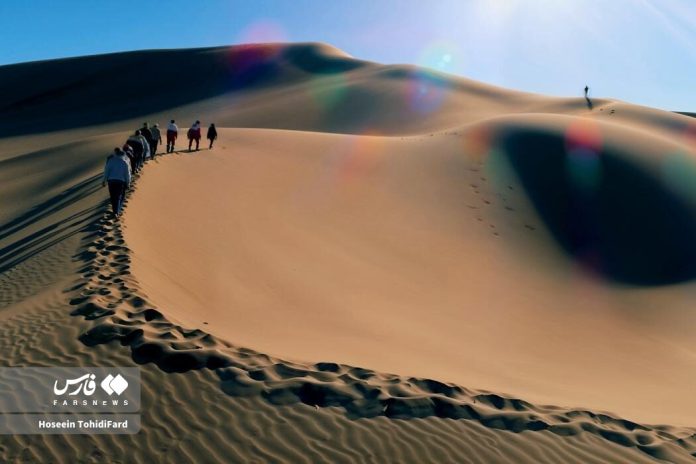
Tehran street temperatures exceed Lut Desert heat 

While the official meteorological report for Friday listed the city’s air temperature at 38°C, laser thermometers placed on asphalt in central districts recorded readings between 52°C and 55°C.

The Lut Desert averages around 50°C during summer.

At midday in August, solar radiation over Tehran reaches about 900 watts per square meter. Dark asphalt absorbs over 90 percent of that energy, while glass-clad buildings reflect and concentrate sunlight.

The “urban heat island effect” can raise city surface temperatures by up to 15°C compared with surrounding areas, according to a University of Tehran research.

In areas like Valiasr Square, idling vehicles and motorcycles emit exhaust gases at 50-60°C, adding to the heat. Even after sunset, street surfaces can remain near 40°C as trapped heat slowly escapes from asphalt layers.

Observers note that direct contact with pavement can cause a burning sensation in seconds, and under such conditions, an egg can fry on the street within minutes – a dramatic indicator of the capital’s mounting heat challenge.

Bus carrying Iranian pilgrims crashes in Iraq, injuring 43 

The incident occurred at around 6:00 a.m. local time, according to the organization. The pilgrims were traveling for the annual Arbaeen pilgrimage when the crash happened inside Iraqi territory.

Rescue operations involved one bus ambulance from the Iranian Red Crescent and 12 regular ambulances from both Iran and Iraq.

A total of 29 Iranian Red Crescent emergency personnel were deployed to the scene.

Of the injured, 13 were taken to Badr Hospital in Iraq for initial treatment and triage before being transferred to the Mehran border crossing. The remaining 30 were transported via Iranian and Iraqi ambulances to Mehran and then admitted to Imam Hussein Hospital in Mehran for further medical care.

Authorities have not reported any fatalities. The cause of the crash has not yet been disclosed, but Red Crescent teams said all injured pilgrims are receiving necessary medical assistance.

First VP: Iran’s Strategy Non-Intervention of Foreign Forces in Region

Mohammad Reza Aref, speaking on Friday morning in a meeting with Russian Prime Minister Mikhail Mishustin on the sidelines of the Eurasian Economic Union (EAEU) summit in Kyrgyzstan, referred to developments in the Caucasus and said that Tehran welcomes any understanding and cooperation aimed at de-escalation and fostering friendly and close relations among regional and neighboring countries.

Aref stressed that, like Russia, the Islamic Republic of Iran opposes US unilateralism in the world, and that the strategy of multilateralism as well as regional security and stability should be pursued with the help of the countries in the region.

Referring to Iran’s nuclear negotiations, he said that Iran has always sought dialogue and confidence-building regarding its peaceful nuclear activities, but Western countries have from the outset turned Iran’s nuclear issue into a political project. He emphasized that Iran has never sought non-peaceful use of technologies, especially nuclear technology.

Condemning the crimes of the Zionist regime in Gaza, the First Vice President stated that the Zionists seek to consolidate their aggression in Gaza and deny the residents their right to live, and that cooperation must be strengthened to prevent these crimes.

He also stressed the need to deepen and expand Tehran–Moscow relations in various fields, including energy, tourism, transport, railways, and corridors.

Mikhail Mishustin, for his part, said that the implementation of the free trade agreement between Iran and the Eurasian Economic Union will have an impact on increasing the scope of Iran’s relations with regional countries in various fields, and that in this regard, establishing the North–South Corridor is of fundamental importance in deepening these relations.

The Russian prime minister, referring to developments in the Caucasus region, emphasized that all countries in the region must have relations based on the principle of good neighborliness, and that together they can build the region’s future.