Thursday, December 25, 2025
Home Blog Page 2171

Blast kills 9 minors in eastern Afghanistan

The Interior Ministry of the Islamic Emirate of Afghanistan said that nine children were killed and four were wounded after a gas tank exploded in the Lalpora district of eastern Nangarhar province on Monday.

The incident has reportedly taken place close to a school in the Biganana residence of the district.

Victims of the explosion are all students of the local Warsak primary school.

The Taliban took over Afghanistan after entering Kabul in August 2021, leading to the collapse of the West-backed civilian government and mass evacuations. In September, the Taliban established an interim government led by Mohammad Hasan Akhund, the former deputy foreign minister and deputy prime minister of Afghanistan in the First Taliban government.

Iran futsal team, coach, players among world top 10

The website which annually publishes the world’s top 10 in different categories as best men’s and women’s players, best coaches, and best national teams, announced the 2021 list in which Iranians have significant presence.

Iran’s Men’s National Team was chosen among the 10 best national futsal teams of the world and Mes Sungun and Palayesh teams were respectively among the 10 best men’s club and the 10 best women’s club.

Ali Asghar Hassanzadeh from the men’s club Giti Pasand Isfahan FSC and Soheila Malmoli Tarazi from women’s club Palayesh Naft Abadan were selected among the 10 best men’s players and the 10 best women’s players in the world.

Also, Salar Aghapour from Mes Sungun Varzaghan FSC was in the list of the 10 best men’s young players.

Mohammad Nazemasharieh was among the best men’s national team coach in the world.

Ahmad Baghbanbashi Doust, who leads Mes Sungun Varzaghan FSC, and Narges Alvani, who coaches Palayesh Naft Abadan, were on the list of best men’s and women’s club coaches in the world.

Covid kills 37 more people in Iran

Health Ministry figures show that until Monday, January 10, 10,675,339 people have received their third dose of Covid vaccine also known as the booster shot.
The total number vaccine doses administered so far stands at 123,547,420.

The vaccination drive that was rolled out last summer is credited with the current downward trend in Coronavirus deaths and infections.
Later official figures show that 37 people died from Sunday to Monday. 1,932 new cases were also recorded. The cases include 298 hospitalizations.

These figures are way lower than the peak of the 5th wave of Covid that hit Iran several months ago. At the time, daily fatalities reached as many as 800 with many hospitals in Tehran and other cities having reached capacity.

Despite the downward trend, a member of Iran’s National Headquarter Against COVID-19 on Friday warned against complacency or relaxation of health protocols, adding that it’s likely the new Covid strain dubbed Omicron will invade Iran in the coming weeks.

Taliban confirm meetings with Ahmad Masoud, Isamail Khan

“During the meeting the Islamic Emirate [the Taliban government] ensured them that they can return to their own country without any worries,” Taliban Spokeman Zabihollah Mojahed said in a tweet.

Iran’s foreign ministry spokesman was also asked whether Taliban Acting Foreign Minister Amir Khan Motaqi held talks with the former Afghan leaders in Tehran.

“Iran hosts different Afghan groups and during this visit [by the Taliban delegation], Iran also played hosts to these talks. Good talks have been held between these leaders and we hope the outcome will be a bright future for the people of Afghanistan,” Saeed Khatibzadeh told reporters in his weekly press briefing.

He also touched on the fate of the people of Panjshir Valley, where the Taliban control is yet to be confirmed.

“Iran’s approach to situation of Afghan people is inclusive and devoid of region and ethnicity to ensure the voices of all ethnicities are heard,” he said.

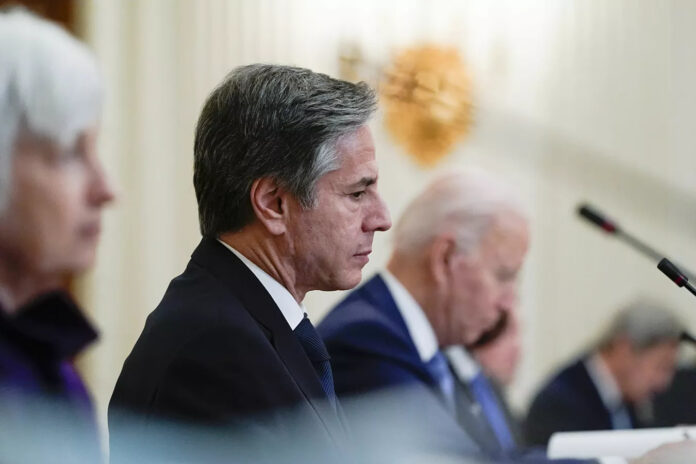
Polls: Most Americans support Iran nuclear deal, favor sanctions removal

However, President Joe Biden’s window of opportunity to act is shrinking as midterm elections approach and former President Donald Trump’s shadow looms large, with voters split sharply along party lines over his 2018 decision to withdraw from the Barack Obama-era deal.

The Dec. 28-29 survey shows broad support for the accord. However, framing matters greatly on the topic: While Republican voters are roughly split over the agreement in principle, they overwhelmingly back Trump’s unilateral decision to withdraw from the Obama-era deal less than three years after it was inked.

Opinions on the deal are swayed heavily by framing: 56 percent support the 2015 agreement, though partisan gaps widen over the question of whether Trump was right to withdraw from the deal, with 67 percent of Republicans supporting the withdrawal and 65 percent of Democrats opposing it.

Nearly 4 in 5 US voters said they were concerned Iran will manufacture nuclear weapons, with only North Korea and China drawing a greater share of worry.

Only 1 in 3 voters said they thought a return to the 2015 deal would prevent Iran from gaining nuclear weapons, if it were successfully negotiated.

Tehran denies seeking nuclear weapons, stressing it wants to master nuclear technology for peaceful purposes.

Morning Consult polling shows Americans would be willing for the government to lift sanctions on Iran if that was a condition for resumed talks.

And 2 in 3 voters in the Morning Consult survey said they would support increased economic sanctions against Tehran should the talks in Vienna fail.

The eighth round of talks kicked off in Vienna in late December 2021. The negotiations seek to restore the landmark deal in its original form and bring the US back into the agreement.

Iran insists that the talks must lead to the removal of all American sanctions that were imposed against Tehran following Washington’s unilateral withdrawal from the landmark agreement in May 2018. Tehran has also demanded credible guarantees that Washington will not abandon the deal again.

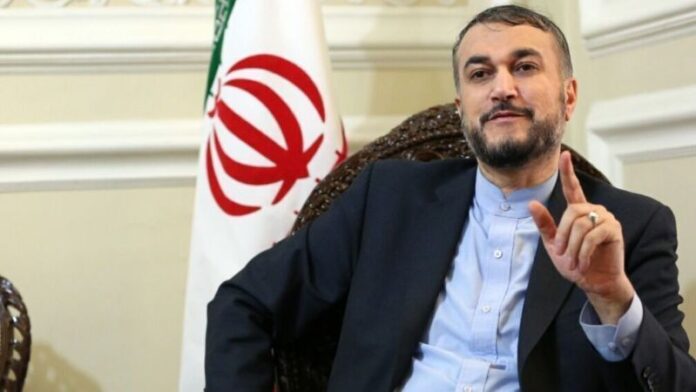
Iranian Foreign Minister Hossein Amir-Abdollahian has stated a good deal can be reached between Tehran and the P4+1 group of countries in Vienna if there is serious determination on the part of all sides.

“To us, it is definitely important to defend our country’s rights and interests. Negotiation is about giving something and taking something in exchange. If we have serious determination, we can reach a good deal in the shortest time possible,” he added.

The chief diplomat, however, noted Iran was not seeking to prolong the talks with the P4+1 states, namely France, Britain, Germany, Russia and China.

He also expressed satisfaction with the current state of progress in the talks and stressed the US had certain unacceptable demands earlier in the course of the diplomatic progress.

The foreign minister stated the proposals that Iran had put forward in the discussions were transparent, and that it was now the opposite parties, especially the Western side, that should show goodwill.

Putin says Russia not to allow ‘color revolutions’ in neighboring countries

‘Maidan methods’ have been resorted to in Kazakhstan, with the country facing a genuine threat to Its statethood, Putin has stated at a video conference of the heads of the Collective Security Treaty Organization (CSTO) on Monday.

He warned that what started as peaceful protests against higher gas prices and quickly escalated into violent riots and acts of terrorism was not the first and would not be the last attempt to meddle in the region from abroad.

Stating that the President of Kazakhstan had turned to the members of the CSTO for help in the face of an “unprecedented challenge to its security, integrity and sovereignty”, Putin added that the threat was caused not by spontaneous protests over fuel prices, but by the fact that “destructive internal and external forces had taken advantage of the situation”.

With that in mind, Putin underscored the need for the CSTO to develop measures jointly with to counter terrorism and protect security.

Mass demonstrations in Kazakhstan began earlier in the week as residents of Zhanaozen and Aktau opposed a two-fold hike in prices for liquefied petroleum gas. The originally peaceful protests subsequently spread to other cities, spiralling into violent clashes with the police, looting and vandalism. President Kassym-Jomart Tokayev declared a state of emergency until 19 January, inviting the CTO peacekeeping forces to help bring the situation under control.

After an appeal by the President of Kazakhstan, the CSTO forces “in a matter of hours” succeeded in preventing any undermining of foundations of state power in Kazakhstan, the complete degradation of the internal situation by “terrorists, criminals and marauders”, noted Putin.

The Russian President applauded the high level of mutual trust, cooperation and readiness to swiftly spring to action demonstrated by CSTO colleagues.

Forces of the Collective Security Treaty Organization would remain in the country as long as needed, underlined Putin.

“A contingent of collective peacekeeping forces of the CSTO has been sent to Kazakhstan and, I want to emphasize this, for a limited period of time, for as long as the president of Kazakhstan, the head of state, … finds possible to use it,” he said at the extraordinary session of the CSTO Collective Security Council.

Putin also proposed that on the basis of the CSTO further measures be developed to jointly counter such attempts at destructive external interference in the area. He accentuated that CTSO should never be blindsided by tragic events of the kind witnessed by Kazakhstan, and member-states ought to be “fully mobilized and ready to rebuff any provocations”.

Tokayev also told the extraordinary online meeting of heads of the CSTO that the main goal of the terrorists was undermining constitutional order, the seizure of power and an attempted coup.

“A hot phase unfolded and groups of armed militants who were waiting in the wings came into action. The main goal became obvious – the undermining of the constitutional order, the destruction of governance institutions, the seizure of power. We are talking about an attempted coup,” Tokayev said.

He added that foreign militants had participated in aggression against Kazakhstan.

According to Tokayev, the situation was critical, Almaty and 9 regional centres were held by terrorists.

The Kazakh president described the unrest as the most difficult in the entire history of the country since its independence and suggested that the violent riots were coordinated from one center.

Militants pretended to be participants of mass protests and used demonstrators as human shields, Tokayev continued, mentioning that foreigners participated in the aggression against Kazakhstan.

He promised to provide the international community with evidence of an aggression against Kazakhstan soon. “In the near future, after the completion of the preliminary investigation, we will provide the world community with additional evidence of the preparation and conduct of terrorist aggression against our country,” Tokayev stated.

Tokayev also thanked the CSTO leaders for their assistance and for agreeing to send peacekeeprs to Kazakshtan to protect critical infrastructure.

“Kazakhstan turned to the CSTO with a request to provide assistance, it turned out to be extremely timely. After finding out about the arrival of three military transport aircraft in the capital, the militants abandoned their plans to seize the presidential residence,” Tokayev said, adding that the large-scale counter-terrorism operation will end soon.

According to the Kazakh leader, the recent events “became a turning point in the development of the organisation [CSTO].”

The CSTO mission will end when the counter-terrorism operation is completed, Tokayev noted, mentioning that a total of 2,300 peacekeeprs are currently deployed in Kazakhstan.

“We already see that questions are arising about the legitimacy of the deployment of the CSTO forces. This is due to the lack of reliable information and misunderstanding of the whole situation,” Tokayev continued.

The State Secretary of the Republic of Kazakhstan, Erlan Karin, has said that the unrest in Kazakhstan was a “hybrid terrorist” attack carried out with the participation of both internal and external forces and aimed at overthrowing the government.

“We are faced with a hybrid terrorist attack on Kazakhstan with the aim of destabilization and coup,” Karin stated on the Khabar 24 TV channel on Monday.

He added that there was a “conspiracy” of both internal and external forces and that apart from terrorist groups, information attacks were also used.

“There is a certain conspiracy of internal and certain external forces, since the participants of the, let’s say, terrorist strike groups, were both Kazakh citizens and foreign citizens,” Karin continued.

The state secretary noted that it is not correct to describe the events in Kazakhstan as an attempt to carry out a color or velvet revolution, since such scenarios would be ineffective in Kazakhstan given the specific circumstances in the country.

“Our country has held out. The president’s decisive actions thwarted plans for destabilization, including his decision to invite the CSTO peacekeeping contingent. There was a very critical situation …so it was necessary to take tough, decisive actions …The involvement of the CSTO forces thwarted all the plans of destabilization. Thanks to the efforts of the peacekeeping contingent, it was possible to concentrate our forces on conducting a direct counter-terrorist operation … this made it possible to protect state integrity,” Karin stated.

Two extremist cells, whose members took part in the mass riots in Kazakhstan, have been neutralized in the city of Almaty, the country’s National Security Committee informed on early Monday.

“The National Security Committee of the Republic of Kazakhstan is implementing measures to search for and detain participants in mass riots and acts of terrorism, as well as to clarify the circumstances of the crimes committed. As a result, two extremist cells have been neutralized on the territory of the city of Almaty, whose members took an active part in the riots in the megalopolis on January 4-8, 2022,” the committee announced in a statement.

According to the release, four members of the same extremist cell were arrested on Sunday and firearms, traumatic and stun grenades, as well as other material evidence, were seized from them.

“The leader of another group, a foreign citizen, actively participated in the riots and had connections with terrorist groups abroad. According to the investigation, he purposefully arrived in Kazakhstan to prepare massive illegal actions and attacks on government bodies and security forces. A search for his accomplices has been organized,” the committee added.

Iran’s FM to visit China in coming days

Hossein Amir-Abdollahian

The announcement was made on Monday by Iranian Foreign Ministry Spokesman Saeed Khatibzadeh during a press conference.

Khatibzadeh said the roadmap will be executed by various sections of both private and public sectors of Iran and China.

He added the agenda of the Foreign Ministry is so diverse and that Iran is pursuing the matter in this regard.

The 25-year accord brings Iran into China’s Belt and Road Initiative, a multi-trillion-dollar infrastructure scheme intended to stretch from East Asia to Europe.
The project aims to significantly expand China’s economic and political influence, and further strengthens ties between the country and Iran.

This has raised concerns in the United States. China has spoken out often against U.S. sanctions on Iran and partly contested them.

Beijing is also a signatory to the Iran nuclear deal and is attending the Vienna talks aimed at reviving the agreement.

IRGC: Iran yet to fully revenge General Soleimani assassination

“We have exacted part of the severe revenge [for assassination of General Soleimani] and part of it is yet to be taken … US officials should know that one cannot engage in warmongering with a nation and safely avoid its retaliation,” Major General Hossein Salami warned.

Iran launched a barrage of missile on the US’s Ain al-Asad military base in Iraq in retaliation for General Soleimani’s assassination, just days after he was killed in a drone strike, outside the Iraqi capital Baghdad.

Salami touched on the Iranian attack on the US base saying it was a slap in the face of Washington.

“The US had threatened us to take reciprocal action. This is while, we managed a global-scale battle scene manlikely and did not assassinate an unarmed commander, who was visiting Iraq on an invitation from the country’s officials,” he said.

“In this battlefield, we have passed through dangers and difficulties and we wield power and we can well defend our independence and are not daunted by our enemies.”

The general further stressed that the US has failed to advance its political ends saying the Ain al-Asad attack and the Americans “escape” from Afghanistan serve as proofs.

Beauties of Iran: Somewhere between fall and winter

The fall of the Mazandaran’s Hyrcanian forests begins from early November in the upstream forests and reaches the downstream forests by late December.

Chahardangeh and Dodangeh regions of Sari, Savadkuh, Hezar Jerib in Neka, Dalikhani and Javaherdeh forests in Ramsar, Mazichal in Kelardasht and the region of Two Thousand and Three Thousand in Tonekabon are the most prominent of these regions, which are extremely gorgeous in autumn and winter and catch the eyes of every viewer.