Friday, December 26, 2025
Home Blog Page 2163

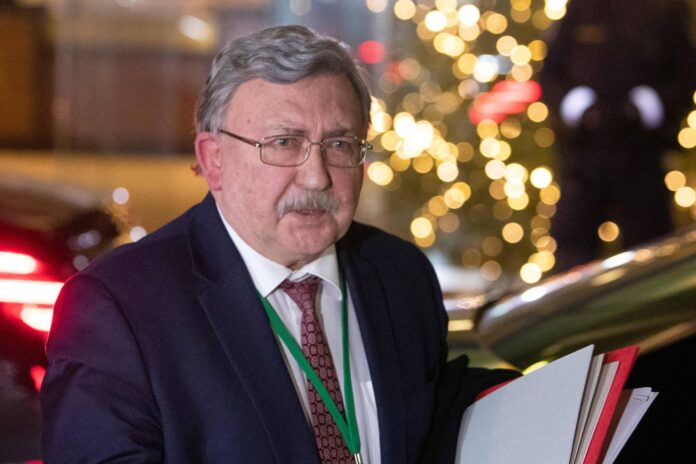
Ex-deputy foreign minister: “China won’t make any sacrifices for Iran”

Ebrahim Rahimpour told Etemad Newspaper that China, and even Russia, wouldn’t stand on ceremony in their dealings with Iran. According to the former deputy foreign minister, the Chinese and the Russians had good ties with Iran during the tenure of former presidents Mahmoud Ahmadinejad and Hassani Rouhani.

He however said if Moscow and Beijing deem it in their interest and think that Iran’s actions are going their way or serve their interests, they use their levers including their veto power at their own discretion.

Rahimpour singled out China, saying it intends to play a more robust role in the region and “my prediction is China’s role will gradually grow bigger”.

“I’m confident that the Chinese are not after making any military commitments in our region”, he said.

The former deputy foreign minister of Iran added that basically, Beijing does not need to create any military and security obligations for itself in West Asia because it will achieve its goals and interests in the region using its economic and financial clout.

Rahimpour noted that it’s preposterous to imagine that Iran can build considerable momentum in its trade relations with China while the Islamic Republic is under sanctions.

He also advised officials to not think China is only seeking to sign a 25-year cooperation agreement with Iran, adding Beijing will not hesitate to enter into similar agreements with other countries like Saudi Arabia, Qatar and Pakistan.

He also underlined that the 25-year deal with China made too much noise and “we are not seeing any actions that would match that noise”.

Iran’s nine-month trade with neighbors tops $36.8bn, up 42%

Alireza Moqaddasi, who made the statement on the sidelines of his visit to the Customs Office of Shahid Rajaei Port in the southern province of Hormuzgan, said the products shipped between Iran and neighboring states surpassed 75 million tons, showing an 18 percent increase in terms of weight.

According to the IRICA chief, the traded commodities were valued at more than $36.8 billion.

One of the main policies of the 13th government is the expansion of economic ties with the neighboring countries, said Moqaddasi, adding the IRICA has taken strides toward achieving the goal by formulating various plans to increase the country’s exports, facilitate the imports of necessary products, and expand the transit process.

Moqaddasi explained that Iran has exported 57.335 million tons of products worth over $18.766 billion to the neighboring countries over the nine months, adding the figures show a nine percent hike and 24 percent growth in terms of weight and value, respectively.

According to the official, the top five importers of the Iranian products were Iraq ($6.8 billion), Turkey ($4.131 billion), the United Arab Emirates ($3.433 billion), Afghanistan ($1.412 billion), and Pakistan ($911 million).

Shifting to Iran’s imports from the neighboring states, Moqaddasi said, “Out of 30 million tons of imported products valued at over $37 billion, 17.682 million tons worth over $18 billion have been shipped from the neighboring countries that were mainly basic goods, raw materials, and machinery.

The country’s imports in the mentioned nine months witnessed a 62 percent increase in terms of weight and a 68 percent growth in terms of value.

The head of the Islamic Republic of Iran Customs Administration further said the top five neighboring exporters to Iran were the UAE ($11.497 billion), Turkey ($3.7 billion), Russia ($1.224 billion), Iraq ($880 million), and Oman ($409 million).

Iran approves Covid vaccine SpikoGen for third dose

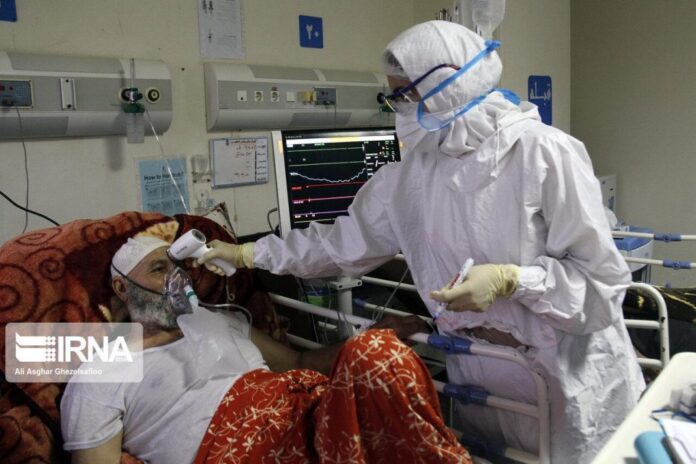
Dr. Kamal Heidari, in a letter to the universities’ deputy chancellors for health affairs and universities of medical sciences, wrote, “Based on conducted studies, the authorization of Iran’s Food and Drug Administration, and the approval of the National Covid-19 Vaccine Committee, SpikoGen has been approved as the booster for all vaccines used in the country and can be injected at least three months after the second dose.

He added that SpikoGen is being injected as the first and second doses for people aged 18 to 50 and as a booster for the above-18 persons.

SpikoGen has been developed in the Iranian company CinnaGen in collaboration with the Australian Company Vaxine and has received the emergency use license.

Iran is also jointly producing Covid-19 vaccines with Russia and Cuba.

Ayatollah Sistani: Pig kidney transplant permissible

Iran's President Lauds Ayatollah Sistani’s Vital Role after Controversy

Asked whether a pig kidney transplant is allowed under Islam, Ayatollah Sistani responded that it is permissible.

The remark comes days after a U.S. man with a life-threatening disease received a heart from a genetically modified pig in a groundbreaking eight-hour surgery.

The 57-year-old patient has been doing well after the operation on Friday.

The breakthrough has been giving hope to a very large number of patients with failing organs worldwide amid an acute shortage of organs available for transplantation.

Russia warns US against imposing sanctions on Putin

“Levying sanctions against the head of state, against the President of Russia, I repeat once again, would be an over-the-top measure that is comparable to severing relations,” the Kremlin spokesman emphasized.

“Russia is always ready and will always do what best suits the interests of our country,” Peskov said, answering a question about whether Moscow would be ready to introduce similar measures.

Earlier on Wednesday, a group of Democrat legislators led by Senator Bob Menendez of New Jersey introduced a bill to the US Senate on restrictions against Moscow if tensions around Ukraine escalate. It involves, among other things, sanctions against Putin, the prime minister, heads of the Foreign Ministry, the Ministry of Defense, the chief of the General Staff of the Russian Armed Forces, and other members of the military leadership. In addition, restrictive measures may affect the Nord Stream 2 gas pipeline.

The initiative submitted to the Senate of the US Congress was called the Defending Ukraine Sovereignty Act of 2022. Later, the document will be considered by members of the Senate Foreign Relations Committee chaired by Menendez. To come into effect, the bill should be approved by both houses of Congress and signed by the US President. Emily Horn, spokeswoman for the White House National Security Council, announced earlier that the US administration supports the senators’ initiative.

The draft of new anti-Russian sanctions proposed in the US Congress can be likened to an initiative to break off relations, since an equal response will inevitably follow from Russia, Peskov noted.

“The simultaneous timing of these statements and negotiations [on security] is an attempt to put pressure on Moscow. It is a priori meaningless, because we are talking about sanctions, which as such and considering the inevitable equal response, can be equated to an initiative to break off relations. It is impossible to interpret the wording in any other way,” he continued.

The Kremlin official stressed that Moscow strongly denounces the draft of new US anti-Russian sanctions.

“Especially in the context of the ongoing series of negotiations, albeit unsuccessful ones, but still negotiations,” he stated.

“They do not contribute to the further search for mutually beneficial solutions, do not contribute to the formation of a constructive atmosphere during the continuation of these three-stage talks. Today there will be a third stage, which is the final one of this phase. Therefore, the answer is definite: [our attitude is] negative,” Peskov stressed.

The consultations between Moscow and Western states on Russia’s proposals for European security are held in three stages. The first stage was held in Geneva on January 10 as negotiations between representatives of Russia and the United States. The meeting of the Russia-NATO Council held on January 12 became the second stage of consultations. The third stage will take place on January 13 in Vienna as part of the OSCE.

Nord Stream 2 is a commercial project, and linking it to security is “absurd”, this once again confirms that this is an attempt at unfair competition, Peskov said, commenting on possible US sanctions against the Russian-led project.

“Nord Stream [2] is generally a commercial project, and linking [it]… with security issues in Europe is absurd. This is absurd. This is just another confirmation of what is behind all this. Attempts to pressure Russia, attempts at the unfair economic competition”, Peskov added.

The Nord Stream 2 pipeline is capable of pumping up to 55 billion cubic metres of natural gas from Russia to Europe every year. Its construction was completed in September 2021, but the project is yet to be approved by German regulators.

Washington imposed a number of sanctions on the project, claiming it poses a danger to European security, which Moscow and Berlin both rejected.

Iran MPs urge government to control petrochemical industry

Hadi Beiginejad, a member of Parliament’s Energy Commission, said the lawmakers sent a letter to President Ebrahim Raisi to this effect.

Beiginejad noted that the petrochemical industry produces many products in Iran and the value of its products is equal to crude oil, saying, “If we sell each ton of crude oil for $500, the sales value of petrochemical products is about the same and this almost shows that we are selling raw materials.”

Beiginejad added that for this reason, Iran needs to design a strategy in the field of petrochemicals to determine where it wants to go in the future, what materials it needs to produce and where the Iranian government stands in this industry.

He maintained, “Petrochemical complexes have been in the hands of the government in recent years, many of which have been handed over to the private sector and some have remained as public sector, but we have not sold these petrochemicals to private individuals, but to a government that does not control the industry, and this has weakened the petrochemical organization in recent years.”

Lebanon unions go on strike amid dire economic conditions

The move comes as the country’s ruling class has done almost nothing to try to pull the country out of its meltdown, rooted in decades of corruption and mismanagement.

The political class that has run the small nation of 6 million people, including 1 million Syrian refugees, since the 1975-90 civil war is resisting reforms demanded by the international community.

Universities and schools were closed all over Lebanon and many people were not able to reach work because of road closures.

Demonstrators closed the country’s major highways as well as roads inside cities and towns starting at 5 a.m. The nationwide protests, dubbed a “day of rage”, are scheduled to last 12 hours.

Taxi and truck drivers used their vehicles to block roads to protest a sharp increase in fuel prices as the government lifted subsidies. They are demanding getting subsidized fuel again.

In the capital of Beirut, many roads were blocked by giant trash bins and vehicles.

About 80% of people in Lebanon live in poverty after the Lebanese pound lost more than 90% of its value. Lebanon’s economy shrank 20.3 in 2020 and about 7% last year, according to the World Bank.

Iran successfully tests first solid fuel satellite carrier

“Last week, the propellant and engine of Iran’s first solid-fuel satellite carrier was successfully tested,” Brigadier General Amir Ali Hajizadeh announced on Thursday.

“Over the past two years, Iranian satellite carriers have been tested using liquid fuel, and from now on, Iran will launch many satellites using inexpensive engines,” he explained.

“The new Iranian satellite carriers are made of non-metallic and composite material … which will further increase the rocket thrust and reduce costs,” he added.

The commander of the aerospace force of the Islamic Revolution Guards Corps said only four countries in the world have mastered this technology, adding that Iran has progressed in the aerospace and satellite field to such an extent that assassination, threats and sanctions will not stop it.

Iran has put several domestically manufactured satellites into orbit using its own carrier rockets since 2009.

In 2020, it successfully put its first military satellite into orbit, following repeated failed attempts.

The country attempted to send three research devices into space in late December, but failed after the rocket was unable to reach the required speed.

The Islamic Republic is one of the founding members of the United Nations Committee on the Peaceful Uses of Outer Space.

Iranian FM heads to China for talks

Bilateral political, economic and cultural ties as well as international and regional issues are on the agenda of negotiations during Amir Abdollahian’s visit to China.

China is Iran’s number one oil customer. The two countries also enjoy close political relations.

Tehran and Beijing have signed a 25-year strategic cooperation agreement which they have pledged to implement.

Under the comprehensive strategic partnership agreement, the Chinese government will increase investment in Iran’s energy, transportation and other key sectors.

The agreement will boost military and intelligence cooperation between the two countries as well.

Rights group slams rise in executions in Saudi Arabia 

ESOHR said 67 people were executed in the kingdom in 2021. The number of similar deaths in the previous year was 27. The organization also said the death sentences were issued following illegal and unfair proceedings which fail to meet international standards.

ESOHR added that a decrease in the number of executions in 2020 was because Saudi Arabia’s de facto ruler Mohamamd bin Salman wanted to repair the tarnished image of the country in the eyes of the world.

186 people were put to death in Saudi Arabia in 2019, which drew fire from international rights organizations.

The latest death sentences were issued by Saudi authorities against 2 young Bahrainis who were charged with trying to bomb a road that connects the kingdom to Bahrain.

Saudi Arabia has stepped up its crackdown on dissent since bin Salman was declared as Crown Prince by King Salman several years ago.

The crackdown has targeted both royal family members and Shia Muslims in the country’s east who criticize the regime of discrimination against the minorities.

Saudi Arabia has been shielded from meaningful action at international bodies over their dark rights record by its Western patrons, most notably the US. Washington is Riyadh’s number one weapons supplier as well.