Friday, January 16, 2026
Home Blog Page 2159

Iranian FM says Tehran does not rule out talks with US over good deal

Hossein Amir Abdollahian added if face-to-face talks are necessary for a good deal with a high level of guarantee, the Islamic Republic will not rule out one-on-one negotiations with Washington.

He made those comments in his closing speech at the National Conference of Iran and Neighbors in Tehran on Monday.

The top Iranian diplomat however denied social media reports that the Iranian negotiating team is holding direct talks with the US in Vienna.

He noted that the US has called for one-on-one negotiations with Iran but Tehran has not yet arrived at the conclusion that it needs to hold direct talks with the Americans.

Iran’s Foreign Minister also said the Vienna talks aimed at reviving the 2015 nuclear deal are headed for a point where technical discussions reach saturation and all sides must make political decisions.

Amir Abdollahian spoke of the European troika’s conduct in the talks. He said when Iran raises the issue of sanctions, the European signatories to the Iran nuclear deal throw the ball into the court of the US.

According to the foreign minister, the Europeans also say the sanctions are about non-paper issues between Tehran and Washington and that the EU only acts as a mediator.
Amir Abdollahian also said when the nuclear issues are involved, the Europeans voice concern and say they are ready for negotiations over all related matters.

The foreign minister said Iran is critical of the European troika because they failed to come up with a new, constructive initiative and tried instead to be logical during the talks in the past few weeks.

Amir Abdollahian singled out France as an example, saying Paris is no longer playing the bad cop role.

He then referred to the role of Russia and China, the other two members of the P4+1 group of countries. Amir Abdollahian said Moscow and Beijing are playing a constructive and positive role and at times they act as conveyors of the messages of the US.

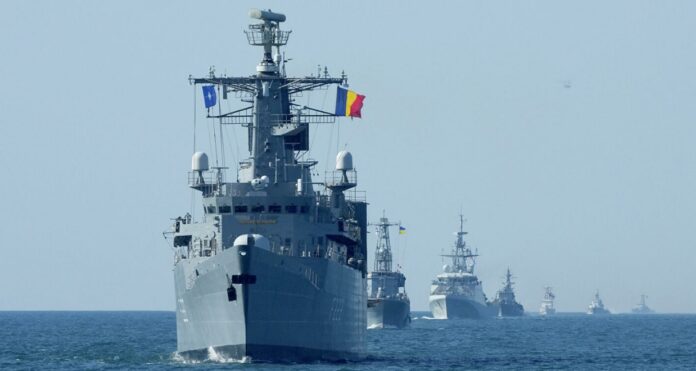
NATO sends additional ships, jets to Eastern Europe amid tensions with Russia

“Denmark is sending a frigate to the Baltic Sea and is set to deploy four F-16 fighter jets to Lithuania in support of NATO’s long-standing air-policing mission in the region,” the alliance said in a statement on Monday.

“Spain is sending ships to join NATO naval forces and is considering sending fighter jets to Bulgaria. France has expressed its readiness to send troops to Romania under NATO command,” it added.

The alliance also announced that the Netherlands was putting “a ship and land-based units on standby for NATO’s Response Force”, and as of April would send two F-35 fighters to Bulgaria to support the alliance’s air-policing activities in the Black Sea region.

NATO’s announcement comes amid reports that senior Pentagon officials on Saturday presented US President Joe Biden with options for adopting a more aggressive posture toward Russia. This would include deploying additional military forces and equipment to Eastern Europe, according to The New York Times.

“NATO will continue to take all necessary measures to protect and defend all Allies, including by reinforcing the eastern part of the Alliance,” Secretary-General Jens Stoltenberg, the alliance’s top civilian official said in the statement.

“We will always respond to any deterioration of our security environment, including through strengthening our collective defence,” he added.

While some of the NATO movements seemed to involve personnel or equipment previously committed by allies, the effort to publicize the deployments signalled that Western powers wanted to raise the volume in their warnings to the Kremlin about any potential military strike.

While Ukraine is not an ally, NATO countries have threatened severe sanctions in response to any attack, and Stoltenberg has stressed that the alliance will move quickly and forcefully to protect its members, including the small Baltic nations, under Article 5, the collective defense clause in the NATO treaty.

As part of Russia’s recent ultimatums, the Kremlin has demanded last Friday a raft of security guarantees including the withdrawal of NATO forces from countries that were not members of the alliance prior to 1997 — namely Bulgaria and Romania. The redeployments indicate that NATO is not only rejecting Russia’s request but, in fact, increasing its presence.

US Secretary of State Antony Blinken was due to meet later Monday by videoconference with EU foreign affairs ministers to discuss the ongoing tensions with Russia, as well as the effort to develop a package of heavy sanctions to be imposed in the event of any attack. Russian Foreign Minister Sergey Lavrov has noted he expects Washington and NATO to issue their written replies to Russia’s security demands later this week.

Recently, the West and Ukraine frequently echoed an allegedly looming Russian invasion of Ukraine. Kremlin Spokesman Dmitry Peskov castigated these statements as an empty and groundless escalation of tension, emphasizing that Russia posed no threat to anyone. At the same time, the Kremlin press secretary did not exclude some possible provocations to justify such claims and warned that the attempts to resolve the Ukrainian conflict by force would carry extremely serious consequences.

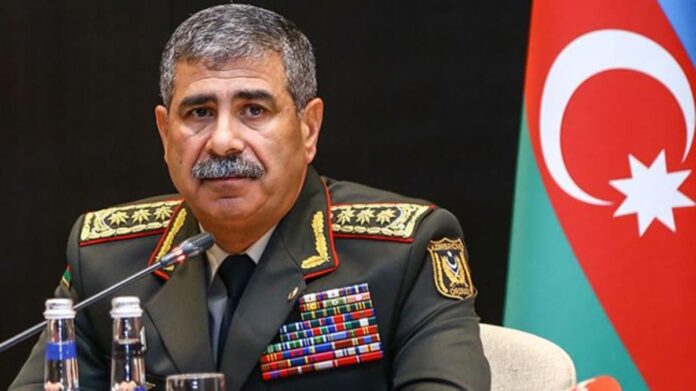
Azerbaijani defense minister due in Tehran Tuesday

Azerbaijan Ambassador to Iran Ali Alizadeh in a tweet announced that Zakir Hasanov will leave Azerbaijan for Iran on Tuesday.

Earlier, Iranian Defense Minister Brigadier General Mohammad Reza Ashtiani met and held talks with Alizadeh on military cooperation.

During the meeting, the sides emphasized Azerbaijani and Iranian presidents’ special attention to the bilateral relations and hailed the close ties between the two countries.

They stressed the necessity of continuing cooperation between Azerbaijan and Iran in all fields as friendly and close neighbors. They touched upon issues of cooperation in military and military-technical fields.

The two sides also had a broad exchange of views on prospects for strengthening fruitful cooperation, as well as the organization of reciprocal visits, enhancing the exchange of information and implementation of joint projects.

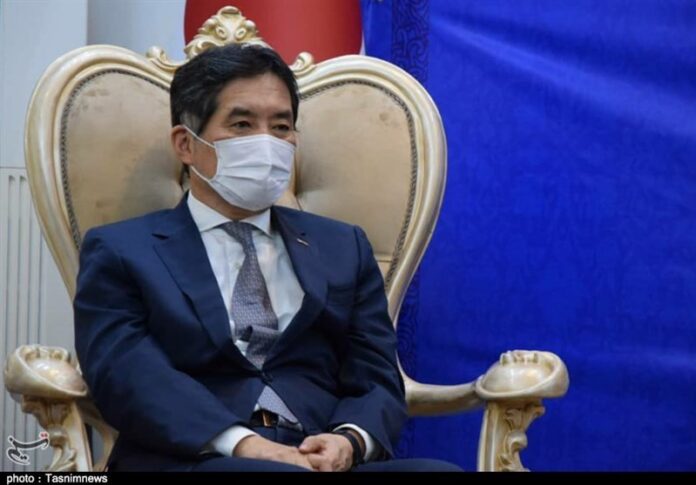
Japanese ambassador to Tehran visits southern city of Ahvaz

Ikawa was speaking on the sidelines of a conference on exploring investment opportunities in the southern Iranian city of Ahvaz.

He made the comments in a meeting with the mayor of Ahvaz and other local officials during which investment opportunities and ways of development of the city were examined.

The Japanese ambassador to Iran added that Khuzestan province has many rich capacities in fields such as energy.

Regarding Japan’s efforts in the fight against Covid-19 in Iran, Ikawa said his country has so far sent more than 30 million doses of vaccine to the Islamic Republic, which have been distributed among different provinces, including Khuzestan.

Regarding clean energy in Khuzestan province, the Japanese ambassador said Khuzestan has very good capacities for the fight against global warming, including in the field of agriculture.

Reza Amini Ahvaz’ mayor also said the Japanese ambassador’s visit to Ahvaz shows Japan welcomes the idea to help the development of this city.

The mayor of Ahvaz stressed investment opportunities that were discussed in the presence of the Japanese envoy are related to environment, waste recycling, and renewable energy such as solar energy and natural energy. Amini said Iwaka promised that he will inform Japanese investors of investment opportunities in Ahvaz and that the development of Ahwaz will be accelerated by attracting international investment.

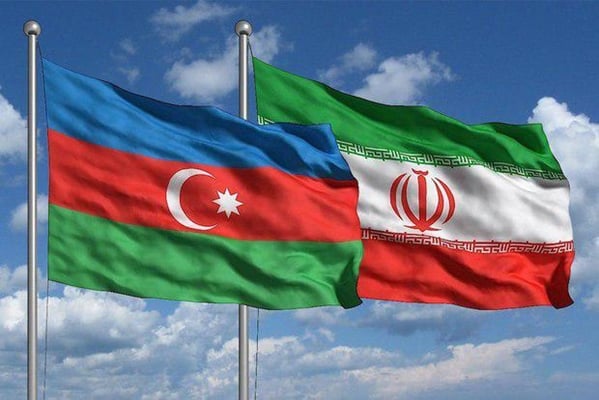
Iran-Azerbaijan Republic ties expanding

Iran Azerbaijan Flags

According to the IRIB, Iranian Foreign Minister Hossein Amir Abdollahian has described the trip, which began on Monday, as constructive and important, and Anar Rezayev, the head of the Azerbaijan Republic state office for roads and transportations services called it very necessary.

Historical and cultural commonalities, areas of joint economic cooperation, the support of the Islamic Republic of Iran for the territorial integrity of the Republic of Azerbaijan in the Nagorno-Karabakh conflict and the request of the Azeri authorities for Iran to participate in the reconstruction of these areas all point to deepening relations between the two neighbors.

Another area of bilateral and multilateral cooperation is the energy sector.

After the meeting between Presidents of Iran and Azerbaijan Ebrahim Raisi and Ilham Aliyev in the capital of Turkmenistan Ashgabat, a gas swap deal was implemented among Baku, Tehran and Ashgabat.

According to experts, the two countries have yet to fully utilize their high capacities for bilateral trade and cooperation.

The development of cross-border trade, especially in the liberated Karabakh areas, the construction of the Astarachay road bridge, solving transit and road traffic problems, the expansion of cooperation in the Caspian Sea region and dozens of other projects are on the agenda of Rostam Ghasemi’s trip to Baku.

Iran book place at the 2023 World Men’s Handball Championship

The top five teams from the Championship will directly qualify for the 2023 World Men’s Handball Championship that will be hosted jointly by Poland and Sweden. 

This is the second time Iran has been qualified for the World Men’s Handball Championship.

Iran Covid-19 infection cases increase as Omicron spreads

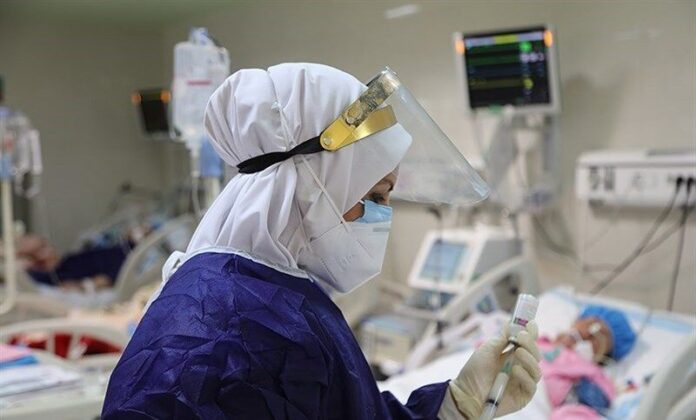
Iran’s Health Ministry said on Monday that nearly 7,700 new cases of the disease were detected compared with over 5,000 on Sunday.

The ministry also said on Monday that 21 more people lost their lives to the respiratory disease compared with 28 on the previous day.

An intensified national vaccination campaign over the past months saw all Iranian provinces declared blue (very low risk) in recent weeks. Now increasing infections cases have led to dozens of cities being declared yellow (medium risk) and one orange (high risk), but there are no red cities yet.

Iran has administered over 129,000,000 Covid-19 vaccine doses so far with more than 53,600,000 people fully vaccinated.

Health authorities are asking people to get their booster jabs as soon as possible to prevent another wave of the disease.

Over 14,850,000 people in Iran have so far received their booster shots.

Taliban officials meet western diplomats in Norway

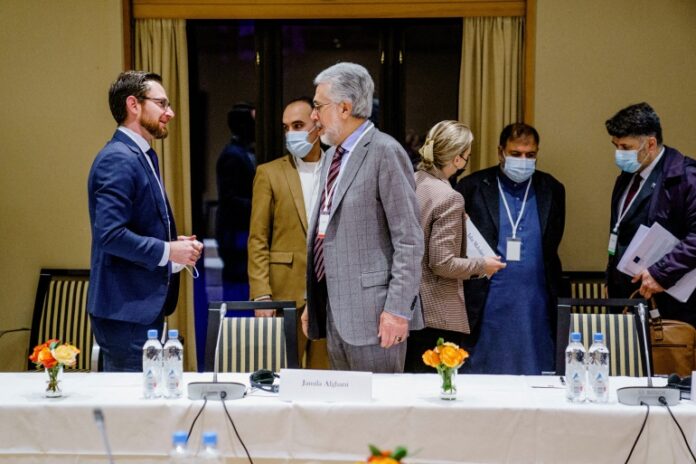
The closed-door discussions with representatives of the United States, France, Britain, Germany, Italy, the European Union and Norway are being held on Monday at the Soria Moria Hotel, on a snowy hilltop outside Oslo.

On Sunday, during the first day of the three-day talks, the Taliban met with Afghan civil society members, including women activists and journalists, for talks on human rights.

Women’s rights activist Jamila Afghani, who attended Sunday’s talks, told the AFP news agency “it was a positive icebreaking meeting”.

The Taliban “displayed goodwill … Let’s see what their actions will be, based on their words”, she said.

The 15 members of the all-male delegation arrived on Saturday on board a plane chartered by the Norwegian government.

The Taliban has been demanding that its assets of nearly $10bn held by the US be released and Afghanistan be linked to global trade.

International aid came to a halt following the Taliban’s return to power on August 15, worsening the plight of millions of people already suffering from hunger after severe droughts.

The freezing of Afghan central bank assets worth billions of dollars by the US and suspension of funds by international financial institutions have triggered a banking crisis and caused a near collapse of the Afghan economy.

“We are requesting them to unfreeze Afghan assets and not punish ordinary Afghans because of the political discourse,” Taliban delegate Shafiullah Azam told The Associated Press news agency, speaking at the end of the first day of talks.

“Because of the starvation, because of the deadly winter, I think it’s time for the international community to support Afghans, not punish them because of their political disputes,” he added.

He also stated the meetings with Western officials were “a step to legitimise (the) Afghan government”, noting that “this type of invitation and communication will help (the) European community, (the) US or many other countries to erase the wrong picture of the Afghan government”.

However, Norwegian Foreign Minister Anniken Huitfeldt earlier stressed that the talks were “not a legitimation or recognition of the Taliban”.

A US delegation, led by Special Representative for Afghanistan Tom West, plans to discuss “the formation of a representative political system; responses to the urgent humanitarian and economic crises; security and counterterrorism concerns; and human rights, especially education for girls and women”, according to a statement released by the US State Department.

On Sunday, 200 protesters gathered on an icy square in front of the Norwegian foreign ministry in Oslo to condemn the meetings with the Taliban, which have not received diplomatic recognition from any foreign government.

“The Taliban has not changed as some in the international community like to say,” said Ahman Yasir, a Norwegian Afghan living in Norway for about 20 years.

“They are as brutal as they were in 2001 and before,” Yasir added.

Fawzia Koofi, former deputy speaker of Afghanistan’s parliament who is also involved in negotiations with the Taliban, told Al Jazeera that the current talks only help consolidate the group’s power.

“In the situation where there is a lot of disunity and the political community of Afghanistan has not taken steps to unite and have a common position at the negotiation table, the talks will further weaken our position and further boost that of the Taliban,” she continued.

Meanwhile, Taliban spokesman Zabihullah Mujahid said in a tweet, “All Afghans need to work together for better political, economic and security outcomes.”

“The participants … recognised that understanding and joint cooperation are the only solutions,” he added.

Since sweeping to power in mid-August, the Taliban have imposed widespread restrictions, many of them directed at women, many of whom have been banned from certain jobs outside the health and education fields.

High school girls have been confined to their homes as schools have yet to be opened. Last week, the Taliban promised all girls will be able to return to school by end of March.

The Taliban have, however, stopped short of imposing a burqa ban, which was compulsory when they previously ruled Afghanistan in the 1990s.

The Taliban have been accused of targeting rights groups as well as journalists, in many cases detaining them.

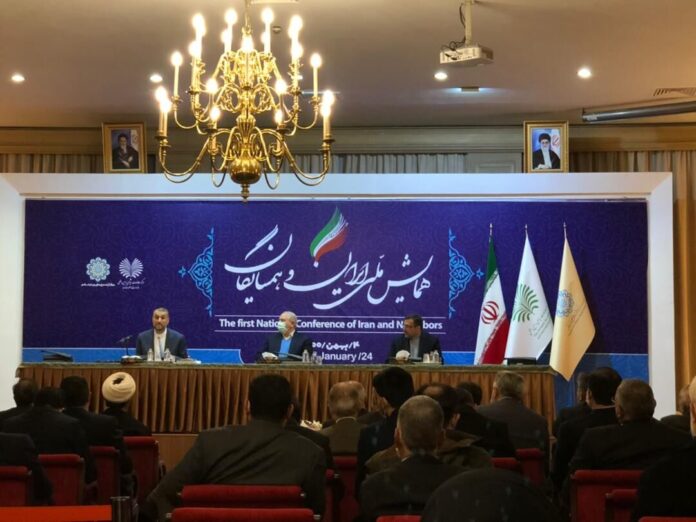
US withdrawal from region provided chance for good-neighboring policy

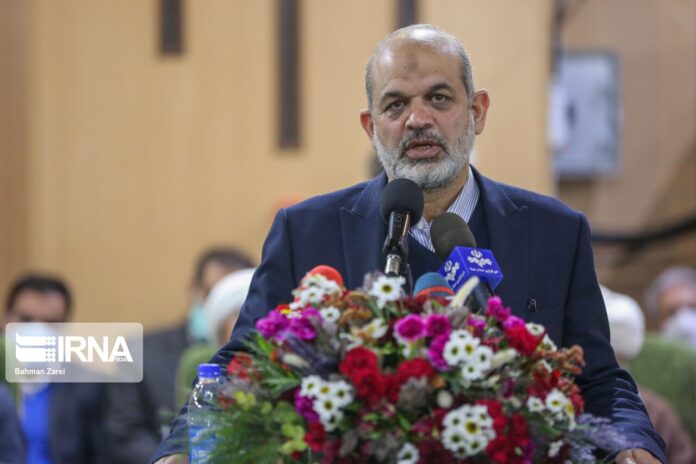
Ahmad Vahidi said the policy of neighborliness however faces some problems including efforts by other Western governments than the US to fill the gap created by Washington’s pullout. 

He also referred to the Zionist regime’s attempts to gain a foothold in the region as another factor which poses a threat. 

The Iranian interior minister further noted that Iran’s insistence on the policy of neighborliness does not mean that Tehran is indifferent to international affairs. 

He cited the 25-year strategic partnership agreement with China as an example of Iran’s look to regions beyond West and Central Asia.

Vahidi also said Iran’s border provinces serve as links to strengthen ties with neighboring countries. 

The interior minister said Iran started to pursue the policy of neighborliness after the US withdrew from the 2015 nuclear deal, or the Joint Comprehensive Plan of Action, JCPOA, and also the West’s violation of its promises. 

He added that the US pullout showed that looking to the West is a flawed vision and will get nowhere.  

Vahidi said the Western governments have never been trustworthy, noting, “They were our enemies since the very beginning of the Islamic Revolution and this prompted us to realize that we should not look to the West”.

Deputy minister: Iran’s non-oil exports expected to hit $45bn

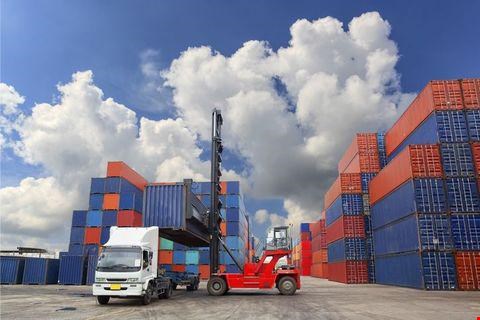
Alireza Peyman-Pak added that the value of non-oil exports has so far reached $40 billion and could be increased by $5 billion more by the end of the current Iranian calendar year (March 20, 2022).

The government’s special attention to foreign trade and removal of obstacles facing exporters have caused the country’s exports to witness the growth, he noted.

Peyman-Pak, who is also the head of the Trade Promotion Organization (TPO), pointed to the achievements of President Seyyed Ebrahim Raisi’s recent visit to Moscow and said Iran could increase its exports to Russia to $7.5 billion by 2025.

Iran’s current exports to Russia stand at $500 million, regretted the TPO chief, continuing that the country plans to increase the figure to $750 million by late March this year.

He said the Raisi administration is resolved to develop its trade relations, regardless of political issues, with all countries.

To that end, Iran’s minister of industry is scheduled to visit the United Arab Emirates (UAE) on February 8 and Oman on February 10, revealed the official, adding the minister will also make a trip to Latin America in April.