Thursday, January 1, 2026
Home Blog Page 2124

Iran: US should decide on sanctions, other issues, before Vienna talks advance

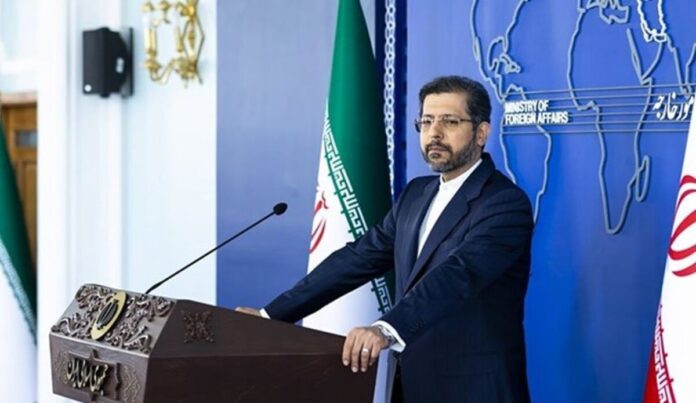
“Part of the parentheses have been cleared and agreements have been made, to a great extent, on tabled ideas. What remains are key issues that specifically call for special political decisions and Washington should make its decision on outstanding issues and the removal of the sanctions,” the ministry’s spokesman Saeed Khatibzadeh said in his weekly presser.

Khatibzadeh added that if such decisions are made after chief negotiators in the talks return to Vienna Monday, then one can say “We are moving toward a reliable and lasting agreement with a good pace”.

He also talked about the demand by 110 US republican lawmakers that Washington leave the Vienna talks. 

“We do not recognize more than one government in the US and stress the clear responsibility of the US in fulfilling its obligations in the 2015 nuclear agreement and the resolution 2231 of the UN Security Council. The US has arrogantly refused to meet its obligations under this resolution,” he said.

Also referring to the implantation of the 25-year strategic partnership agreement between Iran and China, he said 

“The logic behind this agreement is a roadmap for long-term cooperation between the Islamic Republic of Iran and People’s Republic of China and upgrading ties to a comprehensive strategic partnership.” 

“The agreement was pending the implementation of its various articles in the fields of economy, culture, politics, parliaments and judiciaries, and this was done thanks to the special focus by the government.”

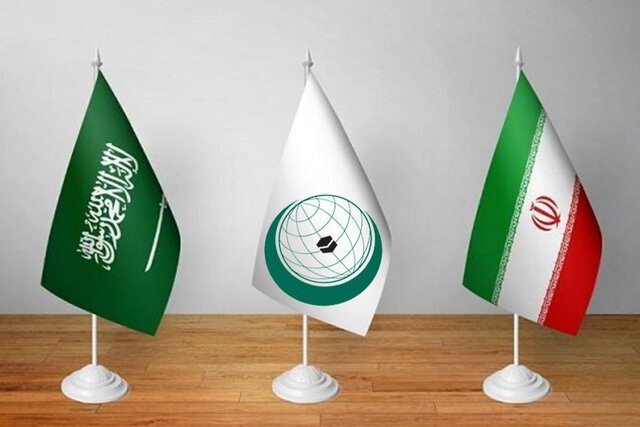
Khatibzadeh then addressed the issue of ties with Saudi Arabia. He said as already clarified by President Ebrahim Rasisi, Iran is ready to open its embassy in Saudi Arabia, but that “depends on the Saudi side and what actions they take”. 

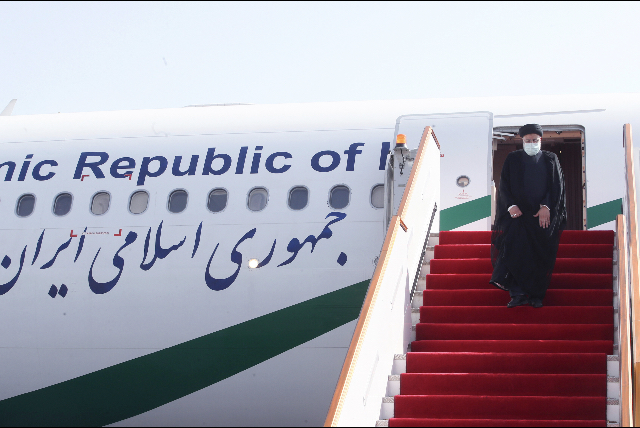
Next he talked about President Ebrahim Rasisi’s upcoming visit to Moscow. The spokesman said Raisi is visiting Moscow upon repeated invitations by Russia and as part of his government’s policy of a balanced foreign diplomacy.

Khatibzadeh said, during the visit, Raisi will hold detailed discussions with his Russian counterpart Vladimir Putin on a range of issues including cultural, political, economic and technological cooperation.

Biden aide says US paying price for Trump ‘catastrophic mistake’ on Iran

“The reason we’re in the situation we’re in right now is because the previous administration pulled out of the Iran deal and we are paying the wages of that catastrophic mistake,” he stated in an interview with CBS’ “Face the Nation”.

The Joint Comprehensive Plan of Action (JCPOA) was inked by Iran and six world powers in 2015. Under the deal, Tehran agreed to put limits on certain aspects of its nuclear activities in exchange for the removal of draconian international sanctions imposed against the country.

In 2018, however, the US pulled out of the pact and reinstated sanctions under the so-called ‘maximum pressure campaign’ against Tehran, effectively depriving Iran of the deal’s benefits by forcing third parties to stop doing business with Iran.

Iran remained patient for an entire year, after which it began to take incremental steps away from its nuclear obligations, especially after Europeans failed to salvage the deal under the US pressure.

The Islamic Republic’s decision to ramp up its nuclear activities prompted other parties to revive talks earlier this year.

The White House has stepped up criticism of Trump, blaming him for the current situation over the Iran nuclear deal. Several American officials have stated the United States in some ways more isolated diplomatically than Iran because of the course that the previous administration had pursued.

US Secretary of State Antony Blinken has recently criticized Trump for the current situation over Iran’s nuclear programme. The top diplomat has called Trump’s move to pull Washington out of the Iran nuclear dal as ”one of the worst decisions made in recent American foreign policy”. Blinken had called Washington’s withdrawal from the 2015 agreement “a terrible mistake”.

President Joe Biden has recently stated the United States is “continuing to suffer” from Trump’s decision to pull Washington out of the Iran nuclear deal.

Iran and the five remaining parties to the JCPOA — Germany, Britain, France, Russia and China — began the talks in the Austrian capital in April with the aim of removing the sanctions after the US voiced its willingness to return to the agreement.

During the seventh round of the Vienna talks, the first under President Ebrahim Raeisi, Iran presented two draft texts which address, separately, the removal of US sanctions and Iran’s return to its nuclear commitments under the JCPOA. Tehran also said it was preparing a third draft text on the verification of the sanctions removal.

The eighth round of talks kicked off in Vienna in late December. The negotiations seek to restore the JCPOA in its original form and bring the US back into the agreement.

Iran insists that the talks must lead to the removal of all American sanctions that were imposed against Tehran following Washington’s unilateral withdrawal from the landmark agreement in May 2018. Tehran has also demanded credible guarantees that Washington will not abandon the deal again.

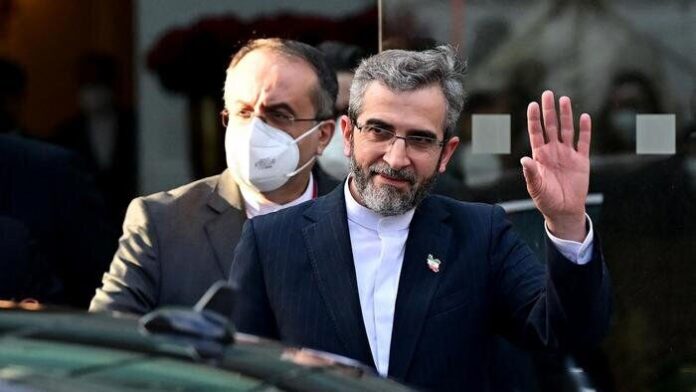
Vienna talks to resume on Monday; Bagheri in Austria’s capital

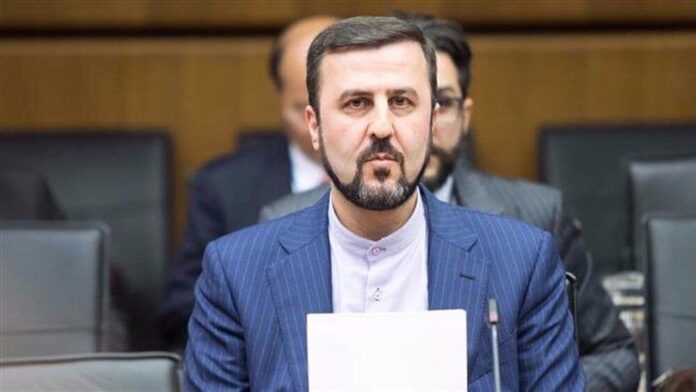
Iran’s chief negotiator in the Vienna talks for the revival of the 2015 nuclear deal has arrived in the Austrian capital.

Ali Bagheri Kani and his European counterpart in the Vienna talks returned to their capitals Friday for consultations with top officials to decide on the way forward in the discussions.

The negotiations, which were ongoing at the expert level during Bagheri’s two-day stay in Tehran, are scheduled to officially resume on Monday after the arrival of the Iranian delegation in Vienna.

Iran and the remaining signatories to the nuclear deal are holding the eighth round of talks to revive the agreement and remove anti-Iran sanctions.

The eighth round began on December 27 and has raised hopes that the parties could hammer out an agreement, despite warnings by both sides that negotiations are moving forward slowly and that key issues remain to be resolved.

Iran’s diplomats stationed in Saudi Arabia; six years into ties cut-off

Several weeks ago, Iranian Foreign Minister Hossein Amir Abdollahian, in a press conference with his Iraqi counterpart, Fouad Hussein, in Tehran, referred to Baghdad’s role in holding four rounds of talks between Iran and Saudi Arabia. 

He said Saudi Arabia had agreed to issue visas for three Iranian diplomats to be stationed in the headquarters of the Organization of Islamic Conference in Jeddah. 

He later told Al Jazeera that the issuance of visas for Iranian diplomats in Jeddah was a positive sign.

Meanwhile, Hussein Ibrahim Taha, the new Secretary General of the Organization of Islamic Cooperation, in separate messages to Iranian President Ebrahim Raisi and Foreign Minister Hossein Amir Abdollahian, announced his readiness to strengthen cooperation with the Islamic Republic of Iran.

Iran and Saudi Arabia have held several rounds of negotiations in Baghdad to normalize their relations in the past months. 

The Saudis moved first in cutting ties with Iran in early 2016 after Iranians protested the execution of Shia Saudi cleric Sheikh Nimr al-Nimr by holding rallies outside the Saudi embassy in Tehran.

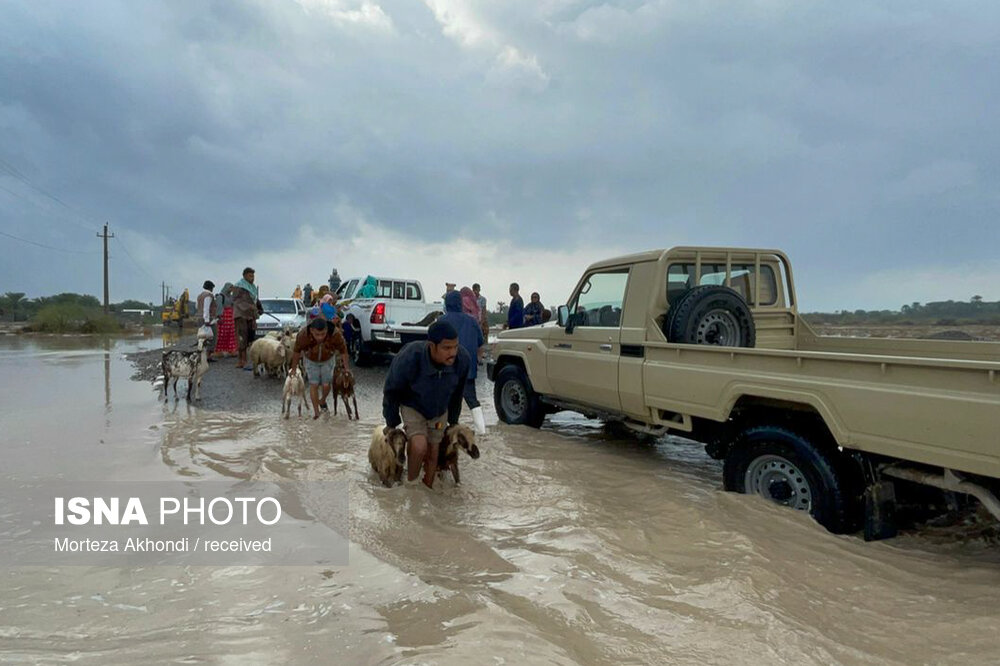
Villages being evacuated in southern Iran amid flooding

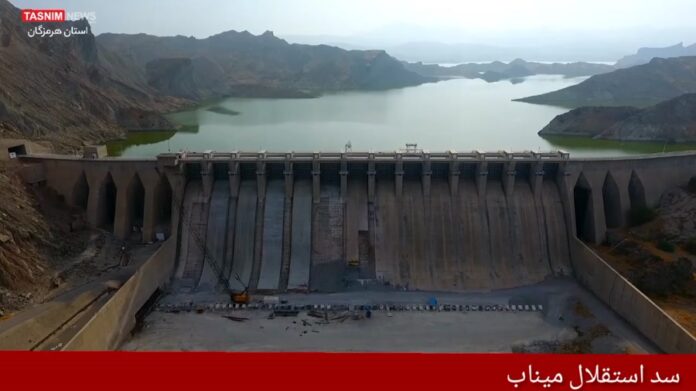
Minab has been hit with flooding since heavy rainfall two weeks ago that forced authorities to open floodgates of the local Minab dam.

New rainfall has put the area also at risk of flooding from the southern parts of the neighboring province of Kerman.

Now, Minab’s governor has ordered all villages, located downstream to the dam, to evacuate. The official has warned that villages could be submerged and lives could be lost seeing the scale of flooding and the overflowing of Minab dam.

Villages being evacuated in southern Iran amid flooding

Authorities have already issued emergency evacuation orders for some villages where recent flooding dealt heavy damage to houses and farmlands.

Meanwhile, military forces in the region are setting up flood barriers around villages downstream to the dam.

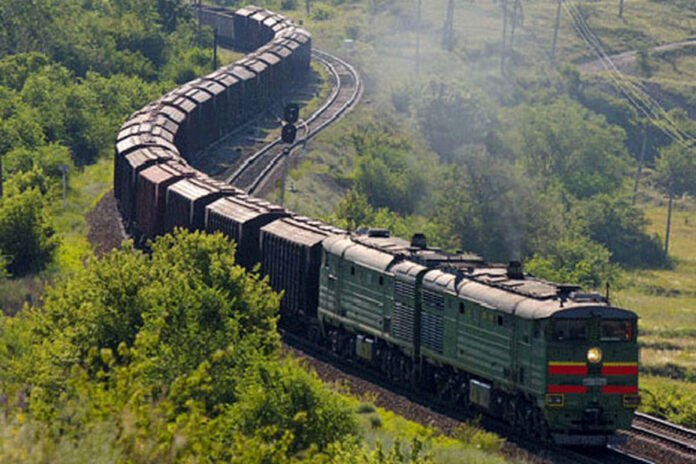
Ministry: Iran’s rail transit highest in 10 years

railroad

According to the report, 1.39 million tons of goods have been transited by rail from March 21-December 21, 2021), showing a 202 percent increase in comparison to the figure of the corresponding period in its preceding year, which stood at 460,000 tons.

It added that 955 locomotives and 27,602 freight wagons carried the commodities in the mentioned period, indicating 0.1 percent and two percent growth when compared with the figures in its previous year.

Rains bring joy as dams in Iran’s drought-hit Hormozagan fill up

Speaking to Tasnim News Agency, Jamishid Eidani, head of the local water company, said in the wake of the recent rainfalls, specially the heavy downpours and consequent flooding on January 6, the Shemil and Nian dam reached full capacity.

Meanwhile, he added, the Esteghlal dam in the city of Minab was also overflowed thanks to the rainfalls, not only filling up to 100 percent but also allowing 40 million cubic meters of water to be extracted from it.

The province’s Sarney and Jagin dams also filled up 30 percent and 87 percent, respectively, he added.

New rainfalls over the past days have prompted the authorities to reopen the valves of the Esteghlal dam to deal with possible flooding, causing water to start flowing in the Minab river’s basin again.

Largely arid Iran has been suffering chronic dry spells for years. Hormozgan, in particular, grapples with water shortages almost every year. The province’s water resources get depleted, from time to time, due to a lack of rain and farming of water-intensive products.

Prior to the recent rainfalls, officials and residents had sounded the alarm that a drastic reduction in Hormozgan Province’s water resources, particularly the dams, could cause problems for the next agricultural season.

Iran slams French meddling in judicial case involving dual national

Kazem Gharibabadi, the Judiciary chief’s deputy, on Sunday, confirmed that Fariba Adelkhah had returned to jail for breaching her house arrest restrictions “dozens of times.”

France’s Foreign Ministry on January 12 condemned Adelkhah’s new imprisonment, threatening that her case would have negative consequences on Tehran-Paris ties.

Responding to the statement, Gharibabadi said, “Ms. Adelkhah is a citizen of the Islamic Republic of Iran and we fully condemn the interference of other countries in the relevant judicial process.”

Adelkhah — who is said to have been a researcher in Paris — was taken into custody in Iran in 2019 on espionage charges. The 62-year-old was given a five-year sentence after being found guilty of conspiring against national security.

In October 2020, she was allowed to live under house arrest, wearing an electronic-monitoring bracelet.

Gharibabadi rejected France’s statement as “hasty,” “baseless,” and “definitely unacceptable.”

The official explained that allowing an inmate to be placed under house arrest with electronic bracelets generally means that the individual is facing certain restrictions in that area.

“The prisoners themselves are aware of the restrictions and know that they will return to jail in case of any breaches,” Gharibabadi said.

“Ms. Adelkhah has knowingly violated the limits set for her during the house arrest dozens of times and insisted on doing so despite repeated warnings from judicial officials,” he said.

Deadly blast rocks Afghanistan’s Bagram district

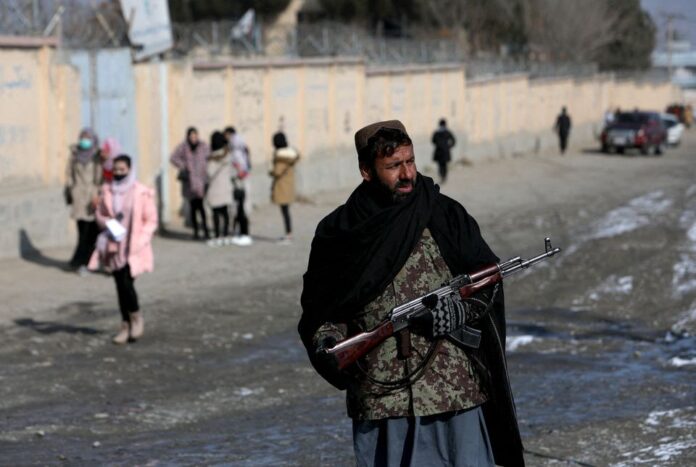
A bomb exploded in a car belonging to the Taliban in the Bagram district in the central part of Kabul Province.

Eyewitnesses announced the bomb exploded around 12:00 local time. Two children were killed and several civilians were wounded.

The blast also damaged several vehicles and nearby buildings. 

No group has claimed responsibility for the attack yet.

Reports say that 38 people were killed and 16 others injured in separate incidents in Afghanistan’s Kabul, Heart, Faryab, Laghman and Nangarhar provinces during the last week.

Militants affiliated to the Daesh terror group have claimed responsibility for a number of bomb attacks in Afghanistan in recent months.

Afghanistan’s Taliban-led administration has vowed to crack down on the outlaws and criminals to ensure law and order in the Asian country.

Russia TV: Putin to host Iran’s Raisi within days

Rossiya-1 did not disclose when precisely the meeting between the two leaders would take place, nor the issues they would discuss.

This will be the first official meeting between the two since Raisi was sworn in as president of Iran in August 2021.

On Friday, Russian Foreign Minister Sergey Lavrov said Raisi’s upcoming visit to Moscow will be very important.

“The visit, in short, is very important. It’s time to resume contacts at the highest level, which are traditionally close and regular among us and which also fell victim to the coronavirus infection,” Lavrov stated.

“The significance (of the visit), first of all, is the need to take an inventory of our entire agenda taking into account changes in the leadership of Iran,” he added.