Thursday, December 25, 2025
Home Blog Page 2080

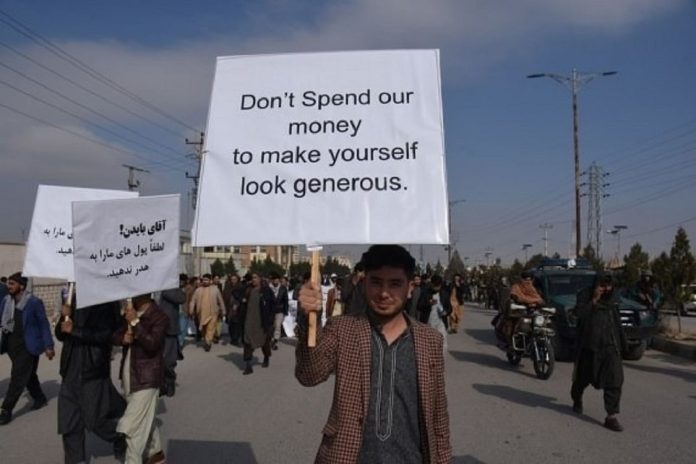
Disabled Afghans call on Biden to return Afghan funds

The demonstrators described the freeze of Afghanistan’s assets in U.S. banks or giving them as compensation to the families of the 9/11 terrorist attacks victims as “unjust”, saying that Washington should return the assets to Afghanistan.

The United States, following military defeat and complete withdrawal of forces from Afghanistan in August last year, has frozen nearly 10 billion U.S. dollars assets of Afghanistan’s central bank, leading to worsening economic problems and poverty in the war-torn country.

U.S. President Joe Biden, reportedly in a decree issued on Feb. 11, allocated 3.5 billion U.S. dollars of the sum to the families of the victims of the 9/11 terrorist attacks and also diverted 3.5 billion more U.S. dollars to the Afghans as humanitarian aid without consent of the Afghan administration run by the Taliban.

The disabled union’s chief Masoud Safi said in his speech during the protest “No Afghan was involved in the Sept. 11, 2001 terrorist attacks on America and therefore allocating Afghanistan’s assets to the families of the terror attacks victims is unfair.”

Afghans, by holding similar protests in different cities over the past week, have demanded the release and return of the assets to Afghanistan.

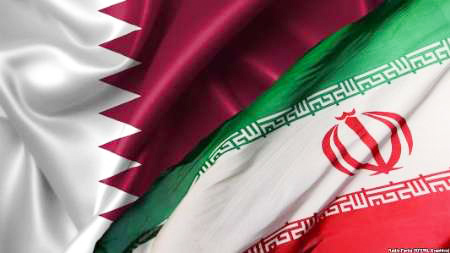
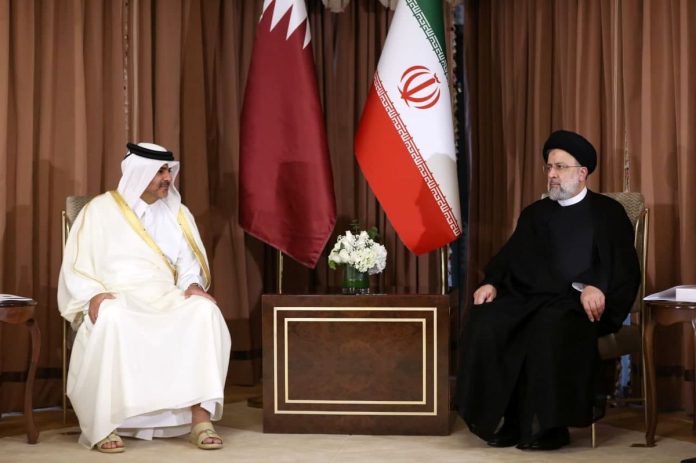
Raisi’s major mission in Qatar

Iran and Qatar to form joint working group for South Pars study

The Iranian president has held talks with top Qatari officials. During the first day of his trip this week, 14 cooperation documents were signed in the fields of aviation, trade, shipping, radio and television, foreign policy (visa waiver), electricity, standards, culture and education.

Of course, cooperation between the two countries has accelerated considerably because the nature of Tehran-Qatar relations is significantly different from ties between Tehran and other members of the Persian Gulf Cooperation Council. A quick look at the historical trend of relations reveals this.

For instance, when Persian Gulf Arab states were seeking international consensus to pile pressure on Tehran over its nuclear energy program, Qatari leaders openly sided with Iran in international forums.

In 2015, Qatar voiced full support for the Iran Nuclear Deal.

When in 2017, the Saudi-led GCC accused Qatar of sponsoring terrorism and imposed an all-out blockade on the country, Iran intensified its support for Qatar.

Due to Iran’s diligent support, the prolonged blockade of Qatar not only failed to change Doha’s behavior the way Riyadh would have wanted, but also strengthened Iran-Qatar relations.

For instance, during the Saudi-led blockade, Qatar Airways increasingly used Iranian airspace to circumvent the imposed restrictions.

In addition, Iran provided food shipments to help Doha avoid a food security crisis. Iran’s exports to Qatar increased from $60 million in 2016 and 2017 to $250 million between 2017 and 2018.

Tehran and Doha have had somewhat similar fates in recent years. Iran is targeted by U.S. economic sanctions and terrorism, and Qatar has been in a state of economic war with some Arab countries.

This similarity or the common pain has led the leaders of the two countries to reconsider their foreign relations and economic policies. A common pain that could lay the groundwork for broader Tehran-Doha economic cooperation.

However, despite great potential for expansion of relations, Iran and Qatar still have a very long way to go to properly utilize each other’s economic capacities.

Unfortunately, Iran is not among Qatar’s top 20 trading partners. Qatari imports stand at nearly 27 billion dollars a year. What is Iran’s share of that huge figure? Between 350 to 360 million dollars. Therefore, a comprehensive study and serious efforts are needed to improve the volume of trade with Qatar.

Meanwhile, another important aspect of Raisi’s visit to Doha is related to Tuesday’s meeting of the Gas Exporting Countries Forum.

The Gas Exporting Countries Forum, headquartered in Doha is an intergovernmental organization with 19 members. The group produces 44% of the world’s gas and controls over 70% of all natural gas reserves.

Given the crisis between Russia and the West over Ukraine, and the possibility of American sanctions again Russian gas exports to Europe, Qatar is gaining significant political and economic weight because it is considered as an alternative source of natural gas to Europe.

Iran and Qatar share the world’s biggest gas field. Cooperation between the two sides is essential for ensuring the security of this field and access to it.

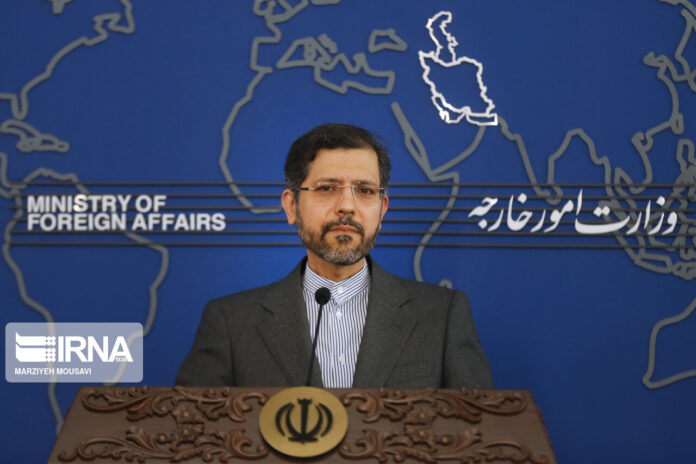
Iran says US, NATO to blame for Ukraine escalation

The ministry’s spokesman Saeed Khatibzadeh says Iran is pursing issues related to Ukraine with sensitivity.
Khatibzadeh called on all parties, involved in the crisis to exercise restraint and to avoid “any action that could escalate tensions”. He urged dialogue to resolve the dispute.
His comments come after Russia ordered its troops to enter the two eastern Ukrainian regions of Donetsk and Luhansk, after announcing recognition of their independence.
Russian President Vladimir Putin said the deployments are aimed at “maintaining peace” in Donetsk and Luhansk, which have seen fighting with Ukrainian forces over the past days.
Putin claimed the deployments are to meant to prevent a new “bloodbath” in the larger Donbas region, where fighting between pro-Russian forces and the Ukrainian army killed hundreds in 2014.

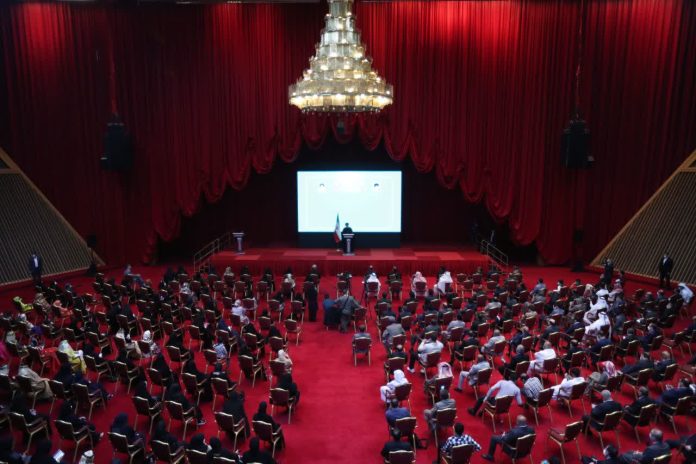
Raisi invites Iran expats in Qatar to invest in motherland

Raisi invites Iran expats in Qatar to invest in motherland

“The grounds should be laid for further presence and economic activity and investment of Iranian expatriates inside the country. Of course, good work is underway in this regard including elimination of existing obstacles to issuance of business licenses,” he said in a meeting with Iranian expatriates in Qatar.

Raisi also invited Iranians living abroad, who are active in economic domains, to engage in economic projects in the country.

“All of us have a duty to work to increase Iran’s exports. Today, unfortunately, our share in the regional economy is not what is proper. This is while, Iranian products are sought after in the region and meet the necessary standards and can compete with products of leading producers,” the president said.

He added that his talks with Qatar’s Emir and prime minister show there is a serious will in Doha for expansion of trade and economic ties with Iran, stressing that Iranians living in Qatar can play a more effective role in the realization of this objective.

“The Islamic Republic of Iran, in defiance of enemies, has made great advancements in areas, where it has faced the most severe sanctions and pressure. These advancements have led the US officials to officially acknowledge that their maximum pressure campaign has suffered a humiliating defeat in the face of the maximum resistance of the Iranian nation,” he said.

Raisi also said his government is building its foreign relations based on using numerous potential for cooperation with neighboring countries, adding exports and trade ties with some countries have risen three-fold since he has taken office las August.

World reacts to Russia’s recognition of Ukraine regions

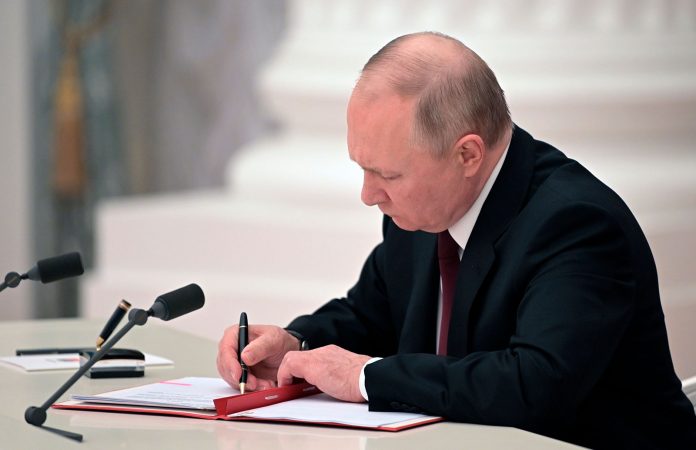
Russian President Vladimir Putin signs a document recognizing the independence of separatist regions in eastern Ukraine in the Kremlin in Moscow, Russia, Monday, Feb. 21, 2022. Russia's Putin has recognized the independence of separatist regions in eastern Ukraine, raising tensions with West. (Alexei Nikolsky, Sputnik, Kremlin Pool Photo via AP)

The Russian leader has also ordered troops to “maintain peace” in the breakaway regions of Luhansk and Donetsk.

Moscow’s moves come amid months of tension over Russia’s military deployment on the borders of Ukraine, which has prompted warnings from the United States and several European nations.

Ukraine

President Volodymyr Zelensky said he would not concede his country’s land despite escalating tensions with Russia amid the possibility of an invasion.

“We are committed to the peaceful and diplomatic path, we will follow it and only it,” Zelensky stated, adding, “But we are on our own land, we are not afraid of anything and anybody, we owe nothing to no one, and we will give nothing to no one.”

The president also accused Moscow of violating Ukraine’s sovereign territory and called for an emergency meeting of the leaders from Ukraine, Russia, Germany and France as well as support from Ukraine’s allies.

At an emergency meeting of the United Nations Security Council on Monday, the Ukraine ambassador to the UN condemned Russia’s decision to recognize pro-Moscow regions of Ukraine as “illegal and illegitimate.”

“Today the entire membership of the United Nations is under attack,” Sergiy Kyslytsya said, adding, “The internationally recognized borders of Ukraine have been and will remain unchangeable, regardless of any actions and statements by the Russian federation.”

“The political leadership of the Russian federation shall bear full responsibility for the outcomes of the decision taken,” he continued, noting, “Recognition of the occupied parts of Donetsk and Luhansk regions of Ukraine may be considered as unilateral withdrawal by Russia from the Minsk agreement.”

Foreign Minister Dmytro Kuleba said further actions by Russia will “rely on how the world reacts.”

“World capitals don’t sleep now, regardless of their time zones. The scope and timeline of sanctions are being finalized. Ukraine insists: further Russian actions rely on how the world reacts. Russia must be in no doubt that the world talks the talk and walks the walk on sanctions,” he added.

The United States

President Joe Biden “strongly condemned Russian President Putin’s decision to purportedly recognize the ‘independence’” of the eastern regions of Ukraine, the White House said.

The US president also told Zelenskyy “that the United States would respond swiftly and decisively, in lock-step with its Allies and partners, to further Russian aggression against Ukraine”.

Secretary of State Antony Blinken has also said Russia’s recognition of east Ukraine’s breakaway region requires a “swift and firm response”, tweeting that Washington and its partners will take “appropriate steps” against Moscow.

In a separate statement, Blinken also slammed Moscow’s decision as “yet another example of President Putin’s flagrant disrespect for international law and norms”.

The White House has also responded to Putin’s decision to recognize the independence of two breakaway regions of eastern Ukraine, levying a number of sanctions on the region.

Biden signed an executive order that prohibits new investment, trade and financing by U.S. persons to, from, or in the so-called Donetsk People’s Republic and Luhansk People’s Republic regions of Ukraine.

Linda Thomas-Greenfield, the US ambassador to the UN, has announced that Russia has taken the exact actions that the US predicted, and that the US does not believe that Putin will stop now.

France

President Emmanuel Macron stated that “by recognising the separatist regions in eastern Ukraine, Russia is violating its commitments and undermining Ukraine’s sovereignty.”

“I condemn this decision. I have asked for an emergency meeting of the UN Security Council and European sanctions,” he wrote on Twitter.

Germany
Chancellor Olaf Scholz condemned remarks by Putin that Russia could recognise two Kremlin-backed breakaway Ukrainian regions as independent, his office said in a statement.
Scholz’s office added the German chancellor also told Putin during a phone call that any such move would amount to a “one-sided breach” of the Minsk agreements designed to end a separatist conflict in eastern Ukraine.

Scholz also urged Putin to pull Russian troops from Ukraine’s border and deescalate the situation in eastern Ukraine.

His office said he would consult with Ukrainian and French leaders about the situation in Ukraine.

The United Kingdom

Prime Minister Boris Johnson has stated that “it’s a flagrant violation of the sovereignty and integrity of the Ukraine… a repudiation of the Minsk process and the Minsk agreements.”

“The UK will continue to do everything we can to stand by the people of Ukraine with a very robust package of sanctions,” he noted.

Foreign Secretary Liz Truss has also noted the move “signals an end to the Minsk process and is a violation of the United Nations Charter.”

“We will not allow Russia’s violation of its international commitments to go unpunished,” she said.

Truss has warned that Britain will announce new sanctions against Russia on Tuesday over what she called Moscow’s “breach of international law and attack on Ukraine’s sovereignty”.

NATO

Chief Jens Stoltenberg denounced President Putin’s recognition of areas in east Ukraine, saying it violated international agreements Moscow had signed.

“I condemn Russia’s decision to extend recognition to the self-proclaimed ‘Donetsk People’s Republic’ and ‘Luhansk People’s Republic’. This further undermines Ukraine’s sovereignty and territorial integrity, erodes efforts towards a resolution of the conflict, and violates the Minsk Agreements, to which Russia is a party,” Stoltenberg added.

The United Nations

Spokesperson for UN chief Antonio Guterres has stated the secretary-general considers the decision of the Russian Federation to be “a violation of the territorial integrity and sovereignty of Ukraine and inconsistent with the principles of the Charter of the United Nations.”

“The United Nations, in line with the relevant General Assembly resolutions, remains fully supportive of the sovereignty, independence and territorial integrity of Ukraine, within its internationally recognised borders,” the spokesperson said.

The European Union

European Commission President Ursula von der Leyen noted “the recognition of the two separatist territories in Ukraine is a blatant violation of international law, the territorial integrity of Ukraine and the Minsk agreements.”

“The EU and its partners will react with unity, firmness and with determination in solidarity with Ukraine,” she added.

Josep Borrell, the High Representative of the European Union for Foreign Affairs and Security Policy, has also stressed that “the decrees by President Putin ordering a so-called peacekeeping mission into the so-called Donetsk and Luhansk people’s republics is another outright aggression against Ukraine, a violation of its territorial integrity and sovereignty.”

China

Beijing has released a statement at an emergency meeting of the United Nations Security Council, with the Chinese ambassador to the UN saying “all parties concerned must exercise restraint and avoid any action that may fuel tensions.”

“We welcome and encourage every effort for and call on all parties concerned to continue dialogue and consultation and seek reasonable solutions to address each other’s concerns, on the basis of equality and mutual respect,” stated Zhang Jun in a statement.

“The current situation in Ukraine is the result of many complex factors. China always makes its own position according to the merits of the matter itself. We believe that all countries should solve international disputes by peaceful means in line with the purposes and principles of the UN charter,” he added.

Putin recognizes Ukraine’s pro-Russia regions’ independence

The Russian president signed the corresponding documents and asked the Federal Assembly to support the signing of treaties of cooperation with the Donbass breakaways.

“Ukraine is not just a neighbour to us, but an inherent part of our history, culture and spiritual space. They are our comrades…our family, people we have blood and family ties with,” Putin said in a speech Monday night outlining his decision.

“Modern Ukraine was completely created by Russia, more precisely by Communist Russia. This process was started after the 1917 Revolution,” Putin added.

The president suggested that Ukraine saw its territory expand at “historic Russia’s” expense after the Revolution, and at Poland’s expense after the Second World War.

He also recalled that Soviet leader Nikita Khrushchev cut Crimea off from the Russian Soviet republic’s jurisdiction and handed it over to the Ukrainian Soviet republic in the 1950s.

After the collapse of the USSR, Putin noted, Ukraine was taken over by nationalist elites and oligarchs who had “nothing to do with” its independence.

At the same time, Putin recalled, Russia continued to work with post-Soviet Ukraine, to act in an “open and honest manner with respect to Ukraine’s interests,” including through growing trade cooperation, which reached tens of billions of dollars by the early 2010s.

Putin suggested Ukrainian radicals backed by US forces took advantage of popular anger over corruption in 2014 to stage a coup, with the country’s current ‘patriotic’ authorities leading the country toward desovereignization and total subservience to the West, while marginalizing the Russian-speaking community and undermining the rights of Orthodox believers.

Putin accused the current authorities in Ukraine of seeking to drag other countries into a war with Russia.

“We have also heard statements about Ukraine threatening to create a nuclear weapon,” he noted.

The Russian president suggested this was not an “idle threat,” with Ukraine possessing Soviet-era nuclear and delivery technology to build such a weapon.

“We cannot help but react to this real threat,” he warned.

Putin added that Moscow could not exclude the danger of Ukraine receiving assistance from the West in building a nuke, given the billions of dollars in military assistance already sent to Ukraine by NATO nations.

Putin warned that Ukraine’s entry into the Western alliance would constitute a “direct threat” to Russia’s security, and that the alliance’s training centers already established in the country amount to military bases – something illegal under Ukraine’s own Constitution.

Putin recalled that despite posing no threat to the Western alliance after the Cold War, Russia has received five waves of NATO expansion – despite promises in the early 1990s not to do so.

“They just lied to us,” he said.

The Russian president also pointed to the deployment of dual-use US missile defence systems in Eastern Europe which can be used to strike targets in Russia, and stressed the military threat to Moscow will increase “manyfold” as the number of these systems inevitably grows.

He announced that the deployment of NATO radar equipment in Ukraine would allow them to effectively control airspace inside Russia.

Raisi proposes establishment of Iran business center in Qatar

“Today, the Islamic Republic of Iran has great achievements in different fields of production, industry, technology, nanotechnology and biotechnology, and knowledge-based projects, which can be provided to Qatar’s elites and economic and commercial actors in order to improve the level of bilateral interaction,” Raisi said in a meeting with Qatar’s Prime Minister Khalid bin Khalifa bin Abdulaziz Al Thani in Doha on Monday.

Noting that good relations between Iran and Qatar can lead to constructive regional and international relations, the Iranian president added that the existing capacities in the two countries have yet to be utilized appropriately to expand bilateral ties.

“During this trip, good agreements have been reached to expand relations, and I have instructed my ministers to follow them… so that we can see the results in the field of implementation and action, and improving the level of bilateral relations. Facilitating the movement of Iranian and Qatari businessmen and economic actors will be an effective prelude to the realization of the agreements of this trip.” Raisi added.

The Iranian president went on to say that Iran has succeeded in thwarting sanctions, and that the Americans have publicly acknowledged that the policy of maximum pressure against Tehran has failed.

The Qatari prime minister also described Raisi’s visit to Qatar as historic, adding that there is great potential for expanding bilateral ties.

He also congratulated the Iranian national football team for qualifying for this year’s World Cup in Qatar.

The Iranian president arrived in Doha on Monday on a two-day visit. Earlier in the day, he sat down for talks with Qatari Emir Sheikh Tamim bin Hamad al-Thani.

Iranian govt. oil budget: A return to oil addiction era?

According to Eghtesad News website, with the approval, Iran’s estimated oil revenues next year will reach 484 thousand billion tomans (more than 19 billion dollars).

Earlier, Iranian Economy Minister Ehsan Khandouzi criticized the decision of parliament’s Joint Commission, calling it a “return to the era of addiction to oil budget.”
The administration of Iranian President Ebrahim Raisi, in its bill submitted to parliament in December, had predicted that in the solar year of 1401, it would earn about 381 thousand billion tomans (more than 15 billion dollars) from oil exports.

The members of the Joint Commission, however, partially offset the deficit by changing the government’s oil assumptions due to the approval of the allocation of $9 billion from oil revenues to the import of basic goods and medicine at preferential rates.

In other words, the members of this commission increased the price of oil from $60 to $70 per barrel, and also increased oil exports projected by the government.

The government had set oil sales at 1.2 million barrels per day, which the Joint Commission increased to 1.4 million barrels per day. According to the changes in the government’s oil assumptions in the Joint Commission, oil revenues next year will be 103 thousand billion tomans (around 4 billion dollars) more than the government forecasts.

The commission increased the oil sales revenue from 381 thousand billion tomans to 484 thousand billion tomans by changing the dollar rate in the government bill.

It also paved the way for the continuation of the policy of USD 4,200 by changing Note 1 of the budget. The government is now required to pay $9 billion out of the oil revenues to importers next year at a preferential exchange rate for importing basic goods and medicine, which could further fuel the entire exchange policy.

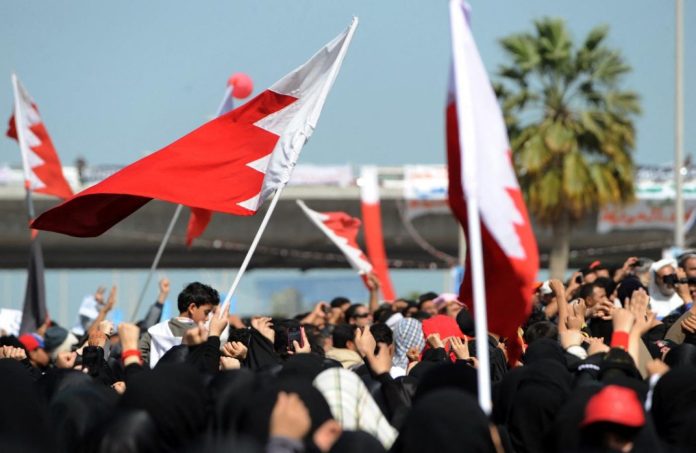
Bahraini activists take kingdom to court over spying allegations

Saeed Shehabi and Moosa Mohammed, political activists living in the UK, allege that their computers were infected with FinSpy in September 2011, seven months after anti-government protests started in the island nation.

The software, produced by UK-German company Gamma Group, can conduct live surveillance through a computer’s camera and microphone and access documents, emails and messages.

Shehabi and Mohammed used the computers to get photos and videos documenting attacks on Bahraini citizens out of the country.

They also used them to communicate with other activists, journalists, political prisoners, torture victims and their families and lawyers, London firm Leigh Day has said.

But they only realised they had been spied on three years later, after Wikileaks released a target list in relation to the Kingdom of Bahrain’s use of FinSpy, the lawyers added.

Shehabi, 67, a journalist and leading figure in Bahrain’s opposition movement, said the lawsuit, scheduled to be heard by the court on Tuesday and Wednesday, is an important one.

“We want to show that harassing people in this way is happening by states and it is not on. It is intrusive and should not be allowed,” added Shehabi.

“Who knows if we will win but it is important to show everyone that it is happening and we can do something about it,” Shehabi continued.

According to Leigh Day, the Kingdom of Bahrain has claimed it has state immunity, but Shehabi and Mohammed contend that the alleged harassment and personal injury was “caused by acts or omissions” in the UK.

“Foreign governments should not be able to hide behind state immunity when they are accused of causing serious harm to those living in the UK,” said Ida Aduwa, a solicitor at Leigh Day, involved in the case.

“We hope the court will dismiss the Kingdom of Bahrain’s arguments so we can proceed to a trial on the issues of the case,” Aduwa added.

President Raisi says Iran won battle against “maximum pressure campaign”

Raisi made the remarks during a joint presser with Qatari Emir, Sheikh Tamim bin Hamad al-Thani in Doha on Monday.

He also said that the Vienna talks will succeed if the U.S. shows determination and remove sanctions on the Islamic Republic.

Raisi spoke about a range of other issues including the war on Yemen, the Afghanistan situation and also ties with Qatar.

He once again called for the formation of an inclusive government in Afghanistan and urged the country’s neighbors to help this happen.

President Raisi also said the Yemen crisis has no military solution, adding the only solution to the crisis is dialog among Yemeni factions.

The Iranian president said during his meeting with the Qatari emir, the two sides decided that Tehran and Doha should tap into their possibilities to expand cooperation in all spheres.

Raisi noted that Iran is fully prepared to help Qatar hold the FIFA World Cup 2022 finals. Sheikh Tamim bin Hamad al-Thani said for his part that he’s pleased that Iran and Qatar have signed a number of agreements during President Raisi’s visit to the Persian Gulf sheikhdom.

He added that he and President Raisi talked about regional and international issues, security as well as stability in the region.

Sheikh Tamim further said another topic he and President Raisi discussed was the Vienna talks to remove sanctions on Iran and the revival of the Iran nuclear deal.

He added that the Qatari government is pursuing the talks and hopes an agreement will be reached that satisfies all parties and respects the right of countries to use nuclear energy for peaceful purposes.

“We also discussed the issue of Palestine, which is the main issue in the region, and we stressed the need to stop Israeli aggression against the Palestinian people and find a solution to the Palestinians’ right to self-determination”, Sheikh Tamim said.

The Qatari emir also invited President Raisi to attend the World Cup finals in Qatar and noted that his country welcomes Iranians who will come to the Qatar to watch their National team’s matches.