Monday, January 5, 2026
Home Blog Page 201

US general whose report on Iran nuclear facilities angered White House fired

Pentagon

The Pentagon firings on Friday, which, according to US officials who spoke to the Reuters and Associated Press (AP) news agencies, also include two other senior military commanders, are the latest moves by the Trump administration to purge officials at the Department of Defense .

It was not immediately known on what grounds Lieutenant General Jeffrey Kruse, who led the Defense Intelligence Agency (DIA) since early 2024, was fired.

But President Trump had previously decried the agency’s initial findings on US strikes against Iran.

The initial DIA assessment – which was widely reported on by US media – contradicted claims by Trump that the strikes totally destroyed the nuclear sites, drawing the ire of both the president and officials within his administration.

Kruse “will no longer serve as DIA director”, a senior defence official said on condition of anonymity on Friday, without providing an explanation for the general’s departure.

Prior to becoming director of the DIA, Kruse served as the adviser for military affairs for the director of national intelligence, and also held positions including director of intelligence for the coalition against the ISIL (ISIS) group.

Hegseth also fired Vice Admiral Nancy Lacore, who is chief of the Navy Reserve, as well as Rear Admiral Milton Sands, a Navy SEAL officer who oversees Naval Special Warfare Command, according to officials who spoke to both AP and Reuters.

All three military officials said they did not know why they were fired by the Trump administration, which has demanded loyalty across the government.

“The firing of yet another senior national security official underscores the Trump administration’s dangerous habit of treating intelligence as a loyalty test rather than a safeguard for our country,” stated US Senator Mark Warner, who is the vice chair of the Senate Select Committee on Intelligence.

Since beginning his second term in January, Trump has overseen a purge of top military officers, including the chairman of the Joint Chiefs of Staff, General Charles “CQ” Brown, whom he fired without explanation in February.

Other senior officers dismissed this year include the heads of the US Navy and Coast Guard, the general who headed the National Security Agency, the vice chief of staff of the US Air Force, a Navy admiral assigned to NATO, and three top military lawyers.

The chief of the US Air Force also made a surprise announcement on Monday that he planned to retire only halfway through his tenure.

Hegseth has insisted the president is simply choosing the leaders he wants in top positions, but Democratic lawmakers have raised concerns about the potential politicisation of the traditionally neutral US military.

Earlier this year, Hegseth additionally ordered at least a 20 percent reduction in the number of active-duty four-star generals and admirals in the US military, as well as a 10 percent cut in the overall number of general and flag officers.

News of Kruse’s firing came two days after Director of National Intelligence Tulsi Gabbard announced that she was revoking – on Trump’s orders – the security clearances of 37 current and former US intelligence professionals.

Gabbard has also announced the first major overhaul of her office since its creation, slashing personnel by more than 40 percent by October 1 and saving more than $700m per year.

Trump again threatens Russian sanctions if Ukraine war doesn’t end

Trump

“I’m not happy about anything about that war — nothing, not happy at all,” Trump said Friday, adding, “I think over the next two weeks, we’re going to find out which way it’s going to go. And I better be very happy”.

He said he would then make a decision “whether or not it’s massive sanctions or massive tariffs or both — or do we do nothing and say, ‘it’s your fight’”.

The threat, which came in response to questions from reporters in the Oval Office, is the latest case of Trump’s whipsawing stance toward Russia and Putin. Trump had demanded a ceasefire before he met with Putin in Alaska a week ago, but said after the meeting he was hopeful about the prospects for a deal.

But the likelihood of a truce dimmed again in the days since the summit, with Russian officials noncommittal about a possible meeting between Putin and Ukrainian President Vladimir Zelensky.

Officials have also said Russia should have a say in security arrangements for Ukraine.

Speaking at a news conference with NATO Secretary General Mark Rutte in Kiev on Friday, Zelensky reiterated his readiness for both a bilateral leaders’ meeting with Putin as well as a trilateral format including Trump.

“He is currently the only person who can stop Putin,” Zelensky said in Kiev.

It wasn’t immediately clear how seriously to take the latest threat.Trump often suggests that something will happen in “two weeks” when he’s looking to buy time. Last month, Trump threatened 100% tariffs on Russia if it did not comply with his calls for a truce, and on July 28, he gave Russia 10 days to reach a ceasefire with Ukraine.

That deadline came and went without action. And Trump’s own team has offered contradictory views about possible sanctions.

In an interview with NBC News last Sunday, Secretary of State Marco Rubio stated he didn’t think “new sanctions on Russia are going to force him to accept the ceasefire”.

Even as Trump threatened Russia anew on Friday, he held up a photo of himself and Putin from their Alaska summit and said he would sign it for the Russian leader. Trump also raised the possibility Putin could attend the 2026 World Cup, which is being held in the US, Mexico and Canada.

“He’s been very respectful of me and of our country, but not so respectful of others,” Trump said, adding, “That’s a man named Vladimir Putin, who I believe will be coming, depending on what happens.”

The Russian leader on Friday also offered praise for his US counterpart, calling the Alaska summit “just the start of a full recovery of our relations”, with the US. However, the outcome depends on numerous Western nations and the US is “bound by its obligations” to its partners, including NATO, he noted.

“But I am sure that leadership qualities of the current president, President Trump, are a good guarantee that the relationships will be restored,” Putin stressed at a meeting with nuclear scientists in the city of Sarov, where the first Soviet nuclear bomb was made.

Ukraine official says Zelensky ready to discuss territory with Putin

Zelensky

In an interview with NBC News, Ukraine’s First Deputy Foreign Minister Sergey Kislitsa reiterated that the country’s population “is categorically against trading our land for peace.”

“I think President Zelensky made it very clear he’s ready to sit down with President Putin and discuss it, and the beginning of the conversations on the territorial issue is the contact line that is currently there,” he said.

While publicly the Ukrainian leader has rejected the idea of any territorial concessions to Russia, several media reports claimed that he could agree to freeze the current front lines as part of a possible settlement.

Kislitsa also weighed in on the issue of Western security guarantees to Ukraine, noting that US officials are “working very hard” to draft an agreement.

“Ideally, we may have the first draft sometime early next week, and then… the political leadership has to decide how we do work with these drafts,” he added.

His comments followed reports that European nations are likely to provide “the lion’s share” of any forces involved in security guarantees, while the US could potentially take over the overall command.

Moscow has not ruled out security guarantees for Kiev but also maintains that any deployment of Western troops to Ukraine is out of the question.

Russian Foreign Minister Sergey Lavrov has said that Moscow could agree to direct talks with Zelensky, but before any meeting could take place, “all issues that require top-level deliberations should be worked through.”

Russia has also voiced concern about Zelensky’s authority to sign any binding agreements, given that his presidential term expired more than a year ago.

Meaningful negotiations possible only if West acknowledges war threats will not work against Iran: Security chief

Ali Larijani

In a recent interview with the website of Islamic Revolution Leader Ayatollah Seyyed Ali Khamenei, Larijani, who serves as the Secretary of Iran’s Supreme National Security Council, emphasized that diplomacy remains a central tool for the Islamic Republic, but only when conducted in good faith.

“My advice has always been that Iran must never abandon diplomacy, because diplomacy itself is a tool,” he stated.

“The Islamic Revolution Leader has also asserted that the flag of negotiation must always be held in our hands. That is absolutely correct.”

Larijani, however, cautioned that negotiations cannot succeed if the West uses them as cover for hostile actions.

“If the enemy turns the diplomatic scene into a theater, or uses it merely to justify another course of action, then that is not diplomacy,” he stated, adding, “But if diplomacy means that we realize war is useless and we want peace, then that is real diplomacy.”

Iran’s mistrust of the United States and its allies has deepened in recent weeks. On June 13, the Israeli regime carried out an unprovoked strike against Iran, assassinating senior military commanders, nuclear scientists, and civilians.

Less than ten days later, the US officially entered the war by bombing three peaceful nuclear facilities, which were safeguarded by the International Atomic Energy Agency, in clear violation of the UN Charter and the Non-Proliferation Treaty (NPT).

These attacks came even as Iran and the United States, with Oman’s mediation, had held five rounds of indirect nuclear negotiations since April and were preparing for a new round of talks in Muscat on June 15.

Against this backdrop, Larijani pointed out that the West has exploited diplomacy as a tactic rather than a genuine avenue for peace.

“I feel that the diplomacy they are pursuing is just for creating excuses,” he said. “We must not say we are cutting off diplomacy… [but] real negotiations bear fruit only when the other side understands that war is useless.”

Larijani was clear about Iran’s red lines. “If you are seeking war, then go ahead. Whenever you regret it, come for negotiations,” he said.

“But if you truly understand that this resilient nation cannot be forced into submission, then there is a basis for real talks.”

He pointed out that Western rhetoric about pressuring Iran into surrender has already proven hollow. “In this war, they themselves realized that Iranians are not the kind to surrender,” he added.

Asked about Iran possibly leaving the NPT in case of increased pressure on the country, Larijani did not rule out the option.

“This possibility has always existed.”

“I’m not saying anyone will do it now, because this too must be approached with prudence… We are not pursuing a [nuclear] bomb, but the reality is that the NPT has brought us no benefit.”

He argued that what matters in the international arena is strength, not empty agreements.

“Whenever you act with power, you advance. But if you think problems are solved through mere diplomatic embrace, no, such a thing does not exist. If you have power, you will move forward; so Iran should seek power,” he added.

He also criticized European efforts to revive the so-called “snapback” mechanism, describing it as a threat that undermines constructive engagement.

He stated the European nations are effectively serving Washington’s agenda. “Their behavior is clear; they are carrying out part of America’s operation.”

Snapback mechanism would reinstate six UN Security Council resolutions against Iran, bringing back the expired arms embargo, asset freezes, and travel bans. Iran insists the European states have no legal or moral authority to invoke such measures, arguing that they failed to honor their commitments under the 2015 nuclear deal in the first place.

Larijani dismissed the approach by the European countries as both legally flawed and politically biased.

“This mechanism was meant for a party that failed to honor the JCPOA commitments. Who violated the agreement? Our facilities were bombed, yet they want to use snapback against us,” he said. “From the perspective of international law, the situation is tragic.”

He also pointed out procedural violations.

“If you want to use the snapback mechanism, you cannot go straight to the [UN] Security Council. First, you submit your request, then a panel of experts, then ministers evaluate it. Yet they rushed directly to the Council,” Larijani explained.

Larijani argued that the logical way forward is through genuine dialogue, not pressure. “The reasonable path was to solve the issue through negotiation,” he said. “But they want to solve it through pressure — either the American way with bombings, or the European way with threats.”

Iran reformist front urges state TV to provide equal airtime

IRIB TB

In an open letter to IRIB chief Peyman Jebelli, Reformist Front leader Azar Mansouri condemned the state-run network for what she said was a deliberate effort to marginalize or discredit lawful political movements.

“The national broadcaster, funded by public resources, has a duty to provide equal, transparent, and fair access to all legal political groups and voices,” Mansouri wrote, stressing that the IRIB’s current approach undermines public trust and national unity.

She argued that while the Reformist Front has consistently advocated for responsibility and cohesion, particularly during and after the recent 12-day war with Israel, their perspectives have been ignored or misrepresented on state platforms.

Mansouri urged the network to host reformist representatives in a live, impartial broadcast to respond to “unfair attacks,” warning that the broadcaster’s continued partisanship risks further eroding its credibility among the Iranian public.

Iranian MP warns of possible NPT exit if “snapback” mechanism is triggered

Iran Nuclear Program

Esmaeil Kowsari, a member of the Parliament’s National Security and Foreign Policy Committee, said Saturday that the snapback tool, part of the 2015 nuclear deal (JCPOA), has long been “invalid and ineffective.”

“The mechanism lost its credibility during Trump’s presidency when the US unilaterally withdrew from the JCPOA. The Europeans, despite their commitments, failed to honor any of their obligations,” Kowsari said.

He accused the US and its allies of acting above international law, using global platforms such as the United Nations for their own interests. “Claims of activating the snapback mechanism are nothing but psychological warfare against Iran,” he added.

Kowsari stressed that Iran has fully complied with its nuclear commitments while Washington not only abandoned its pledges but also imposed new sanctions.

He warned, “If they proceed with this illegitimate step, exiting the NPT will be one of our definitive and proportionate options.”

Iran ranks third worldwide in land subsidence amid severe groundwater loss

Ali Beitollahi, head of the Seismology and Risk Department at the Road, Housing, and Urban Development Research Center, said that excessive groundwater extraction is the main driver of the phenomenon.

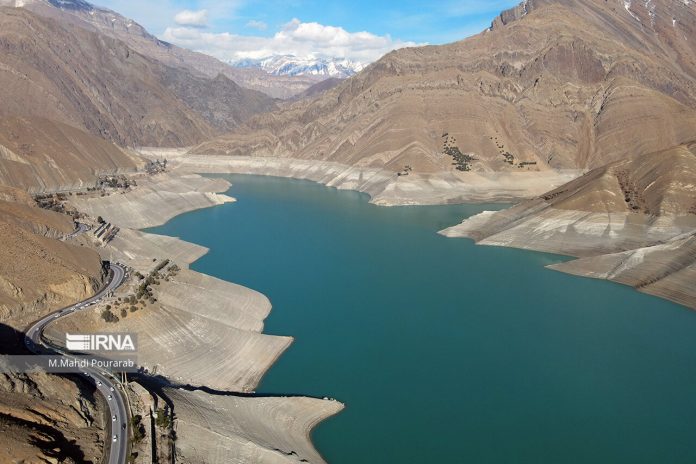
“In areas around Tehran, groundwater levels that used to be just 20 to 30 meters deep now require drilling as far as 120 meters, and even then, there’s often no water left,” he said.

Beitollahi explained that the loss of groundwater compresses underground layers, causing the land surface to sink.

Subsidence has been reported in numerous populated regions, including northwestern Mashhad, southwestern Tehran, northern Isfahan, and southeastern Shiraz. Golestan Province currently has the largest subsidence zone, with unexpected cases also observed in Mazandaran.

The crisis is not only damaging farmland, turning once-fertile plains into barren lands, but also threatening infrastructure and cultural heritage sites.

“About 27 out of 67 key heritage sites, including Naqsh-e Jahan Square in Isfahan and Persepolis, have suffered cracks,” he added, warning that urgent water management reforms are critical to prevent worsening damage.

Foreign tourist arrivals in Iran up 48% this year, minister says

Takht-e-Jamshid

Speaking at an administrative council meeting in Lahijan, northern Iran, Salehi Amiri reported that over 7.39 million foreign visitors entered the country last year, generating $7.4 billion in revenue.

“We expect to reach 10 million tourists and around $10 billion in revenue by the end of this year,” he said.

Highlighting Gilan Province’s vast cultural, historical, and natural potential, the minister described the region as a “powerful engine for national development.”

He noted that tourism is more than just hotels and accommodations, calling it a key driver of economic transformation.

Salehi Amiri also underscored Iran’s global cultural significance, pointing out that over 50 historical sites are awaiting UNESCO World Heritage registration.

“Iran is not just unique; it is unparalleled,” he said, calling Lahijan “an open-air historical museum” with thousands of years of history, from medieval fortresses to Safavid-era polo fields.

He urged greater investment in tourism infrastructure to better showcase Iran’s cultural richness to international audiences.

Hopes dim for peace summit between Russia, Ukraine leaders

Trump had raised expectations on Monday by saying that Russian President Vladimir Putin and Ukraine’s Volodymyr Zelensky had agreed to meet face-to-face — but on Friday he compared the two men to “oil and vinegar.”

Russian Foreign Minister Sergei Lavrov stated “no meeting” was planned as Trump’s mediation efforts appeared to stall, while Zelensky said Russia was trying to prolong the war.

Trump told reporters on Friday he would make an “important” decision in two weeks on Ukraine peace efforts, specifying that Moscow could face massive sanctions — or he might “do nothing.”

“It takes two to tango,” the US president, wearing a red baseball cap saying “Trump was right about everything,” said in the Oval Office.

“In two weeks, we will know which way I’m going. Because I will go one way or the other, and I’ll learn which way I’m going,” he added.

“That’s whether or not it’s massive sanctions or massive tariffs or both. Or do we do nothing and say it’s your fight.”

Trump did however hold up a photo that he said Putin had sent him after their landmark summit in Alaska a week ago. He also said that he may invite the Russian leader to the 2026 FIFA World Cup finals being held in the United States if there is progress on Ukraine.

Lavrov dampened hopes for direct Putin-Zelensky talks to resolve the conflict, now in its fourth year, by questioning the Ukrainian president’s legitimacy and repeating the Kremlin’s maximalist claims.

“There is no meeting planned,” Lavrov said in an interview with NBC’s “Meet the Press with Kristen Welker.”

The veteran Russian diplomat noted Putin was “ready to meet Zelensky” as soon as an agenda was prepared. He added that such an agenda was “not ready at all.”

In Kyiv, speaking alongside visiting NATO chief Mark Rutte, Zelensky said Ukraine had “no agreements with the Russians.”

On Thursday, Zelensky had accused Russia of “trying to wriggle out of holding a meeting,” adding that Moscow wanted to continue the offensive.

The question of eventual security guarantees for Ukraine has been front and center during the latest US-led diplomatic push to broker a peace deal to end the conflict.

Trump — who hosted Zelensky, Rutte and top European leaders at the White House on Monday before making a call to Putin — said Russia had agreed to some Western security guarantees for Kyiv.

But Moscow later cast doubt on any such arrangement, Lavrov saying on Wednesday that discussing them without Russia was “a road to nowhere.”

“When Russia raises the issue of security guarantees, I honestly do not yet know who is threatening them,” stated Zelensky, who wants foreign troops in Ukraine to deter Russian attacks in the future.

The Kremlin has long said it would never accept that, citing Ukraine’s NATO ambition as one of the pretexts for its invasion.

On a visit to Kyiv, during which an air raid alert sounded across the city, Rutte said security guarantees were needed to ensure “Russia will uphold any deal and will never ever again attempt to take one square kilometer of Ukraine.”

Moscow signed the Budapest Memorandum in 1994, which was aimed at ensuring security for Ukraine, Belarus and Kazakhstan in exchange for them giving up numerous nuclear weapons left from the Soviet era.

Russia violated that first by taking Crimea in 2014, and then by starting a full-scale offensive in 2022, which has killed tens of thousands of people and forced millions to flee their homes.

Israeli data reveals 83 percent of Gaza war dead are civilians

Gaza War

Figures reviewed by the outlets indicate that, as of May 2025 – 19 months into Israel’s war on Gaza – Israeli military intelligence had listed 8,900 fighters from Hamas and Palestinian Islamic Jihad (PIJ) as confirmed or “probably” dead.

Over the same period, Gaza’s health authorities recorded at least 53,000 deaths from Israeli attacks, meaning that named fighters accounted for just 17 percent of those killed, with civilians at about about 83 percent of the total death toll.

Conflict researchers say that ratio is almost unparalleled in modern warfare. Only the Rwandan genocide, the 1995 Srebrenica massacre, and Russia’s 2022 siege of Mariupol recorded a higher civilian death rate, the authors noted.

Rights groups and genocide scholars argue the findings further support claims that Israel is committing genocide in Gaza, pointing to mass civilian deaths alongside deliberate starvation.

When asked to comment by The Guardian, +972 Magazine, and Local Call, the Israeli military did not deny the existence of the intelligence database or the listed figures for Hamas and PIJ casualties.

Israeli politicians and military leaders have long inflated fighter death tolls, at times claiming as many as 20,000 fighters killed or insisting on a civilian-to-combatant ratio of 1:1 – figures that the report notes they do not believe in private.

By March, Gaza’s death toll had reached 50,000; it has since risen to beyond 62,000, according to the enclave’s health ministry. The total number of wounded has now exceeded 157,000.

The International Criminal Court has issued arrest warrants for Israeli Prime Minister Benjamin Netanyahu and his former Defence Minister Yoav Gallant, accusing them of war crimes and crimes against humanity committed between October 2023 and May 2024.