




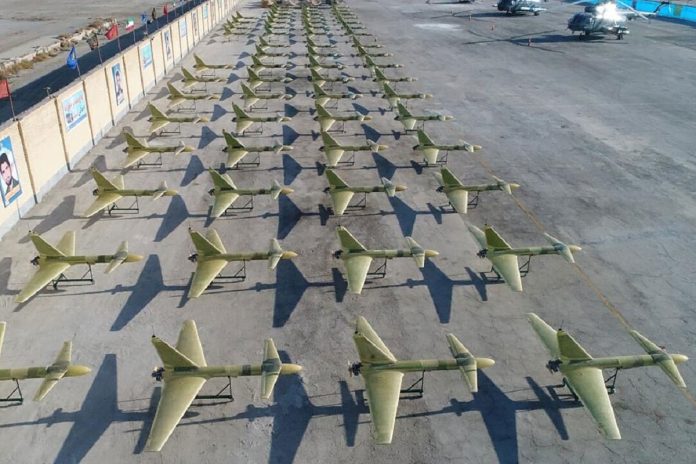
It’s supposed to manufacture Ababil-2 drones with help from experts of the defense industries of the Iranian Defense Ministry.
During the inauguration ceremony, General Bagheri said the Islamic Republic of Iran, thanks to efforts by its committed experts and scientists and also its domestic capabilities, has made progress in all military and defense areas, especially the manufacturing of unmanned aerial vehicles.
“We are today at a point where we are capable of exporting military hardware to allied and friendly nations while meeting our domestic needs”, the chairman of Iran’s Joint Chiefs of Staff said.
Bagheri expressed hope that military cooperation between Iran and Tajikistan will increase in the near future.
Ababil-2 drone is a low-flying UAV and is capable of conducting reconnaissance operations. Its range is 200 kilometers and it can fly at a maximum speed of 220 kilometers per hour.
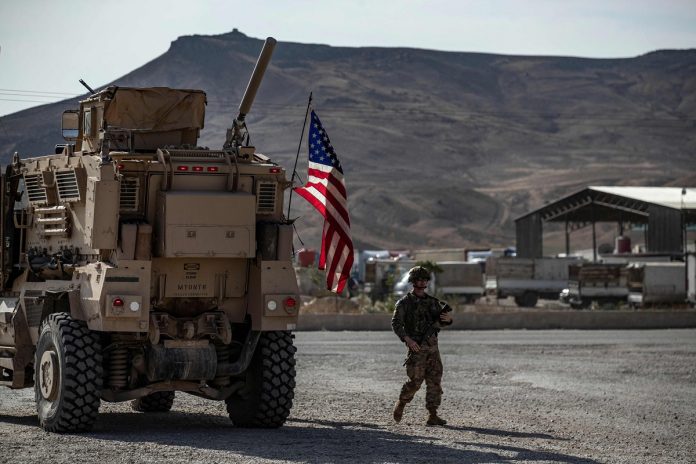
Local sources, wishing anonymity, told Syria’s official news agency SANA that the projectiles landed in the vicinity of the US-controlled al-Jabsa oil field in al-Shaddadi town late on Monday.
One of the rockets, they added, struck the al-Jabsa installations, which house the military aircraft of the US occupation forces.
Another hit the headquarters of the al-Jabsa Fields Directorate, which American forces use to manufacture unmanned aerial vehicles for Kurdish militants from the so-called Syrian Democratic Forces (SDF).
The sources said that ambulance sirens could be heard around the base after the incident.
US military drones flew over the field after it came under the attack, and groups of SDF militants were also immediately dispatched to the town.
The development came days after a convoy of 70 US military trucks transported stolen Syrian oil from the northeastern province of Hasakah to the semi-autonomous Kurdistan region in northern Iraq.
Local sources from al-Ya’arubyia, requesting anonymity, told SANA that the US military vehicles, including tankers, refrigerators, and 15 trucks carrying munitions, entered the Iraqi territories after crossing the al-Waleed border crossing on Saturday.
“The convoy was accompanied by six armored vehicles,” they were quoted as saying.
The US military has stationed forces and equipment in northeastern Syria, with the Pentagon claiming that the deployment is aimed at preventing the oilfields in the area from falling into the hands of Daesh terrorists.
Damascus, however, maintains the deployment is meant to plunder the country’s rich mineral resources.
Former US President Donald Trump admitted on more than one occasion that American forces were in the Arab country for its oil.
After failing to oust the Syrian government through militant proxies and direct involvement in the conflict, the US government has stepped up its economic war on the Arab country.
In June 2020, the US enacted the so-called Caesar Act that imposed the toughest sanctions ever on Syria intending to choke off revenue sources for the government.
The sanctions have crippled the war-torn country’s economy by barring foreign companies from doing trade with Damascus.
Syria says the real purpose of the measures is to put pressure on Syrians and their livelihoods.
Officials also say the increased smuggling of strategic Syrian resources is the latest inhumane tactic using people’s basic needs as a tool to mount pressure on the democratically-elected government in Damascus.
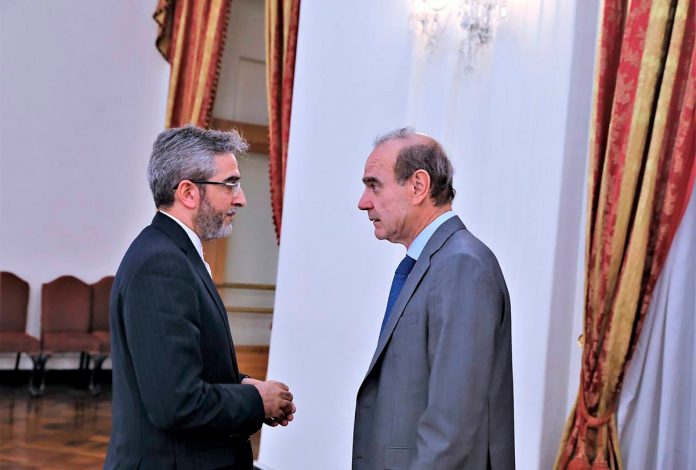
Mahdi Motaharnia told Iranian Students’ News Agency, ISNA, that the process of the Vienna talks on the 2015 nuclear deal shows Iran and the US have developed a constant resistance against an agreement.
Motaharnia touched on the US claim that it does not want Iran to be a “rogue” element in the region.
“The Joint Comprehensive Plan of Action hinges on the US impression of Iran as a player that disrupts regional and international order. Tehran also considers negotiations on its nuclear case as a means to remove all sanctions it is facing,” he said.
This is why, the analyst says, the current process is advancing in a fashion that it does not facilitate the talks.
Motaharnia also talked about Europe’s role in the nuclear negotiations saying Europeans are heirs to the agreement therefore “the representative of the European Union is tasked with protection of this inheritance”.
“But Europe is reliant in its actions. It means Europe, in its personalized actions, faces a revolutionary Iran on the one side, and a US on the other that enjoys economic and security dominance over a united Europe, which is itself an ally of the US. This means Europe is both cooperating with the US and in rivalry with it,” he said.
“This is while Russia and China have variable resistances, which means their resistance revolves around their interests in the case. Russia and China are not after confrontation with the US. They seek to get concessions from the US. But their approach to Iran is stable and they consider Iran as a strategic target market, which is a winning card against the US.”
He noted that progress in the Vienna talks and achieving an agreement hinges on how Iran and the US confront each other, rather than on the moves by Europe and Russia in Ukraine. These, he said, are “elements that seek greater tension between Iran and the US” and they are represented by none other than Israel, in the region.
Motaharnia further touched on the visits by such “liaisons” as the Qatari Emir and the EU deputy foreign policy chief and the “positive signals” about all sides returning to the Vienna talks, stressing that the influence of such liaisons would be based on their interests.
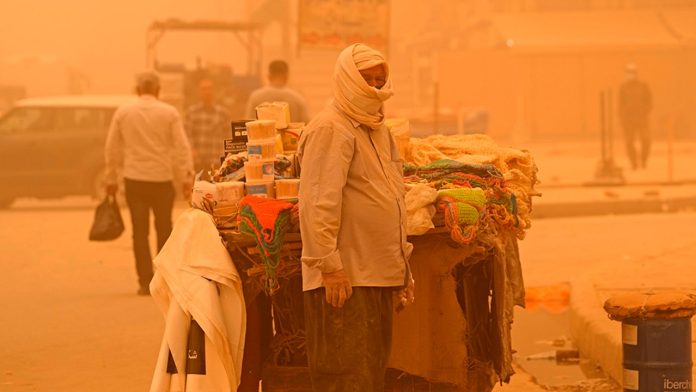
The company’s Managing Director Mohammad Mahdi Mirzaei Qomi says a look at the dust storm since March 21 shows construction of dams on Tigris and Euphrates by Turkey, have turned Iraq and Syria into hubs for spread of dust particles across the Middle East.
“Although dust storms have been seen in the city of Tehran over the past years, their repetition and strength in the current Iranian year have been unprecedented in the past 12 years,” Qomi says.
“In the dust storms that hit on April 8 and 9 this year, the main source was the hubs in Iraq, Syria and Jordan. Also, Iraq and Saudi Arabia were the sources of the dust storms that hit on May 7 and 8.”
He explained that Turkey’s construction of dams on Tigris and Euphrates over the past years has led to desertification of land in such countries as Iraq and Syria and has activated the dust particle hubs.

The figures show only 56.6 percent of Student Olympiads medalists, 69.1 percent of those eligible to join the foundation and 78.3 percent of students, who ranked up to 1,000th in the national university entrance examinations are now living in Iran.
Among these groups, Olympiads medalists constitute the largest portion of brain drain from Iran.
Iran’s Ministry of Science, Research and Technology, dealing with the issue, has yet to comment on the report.
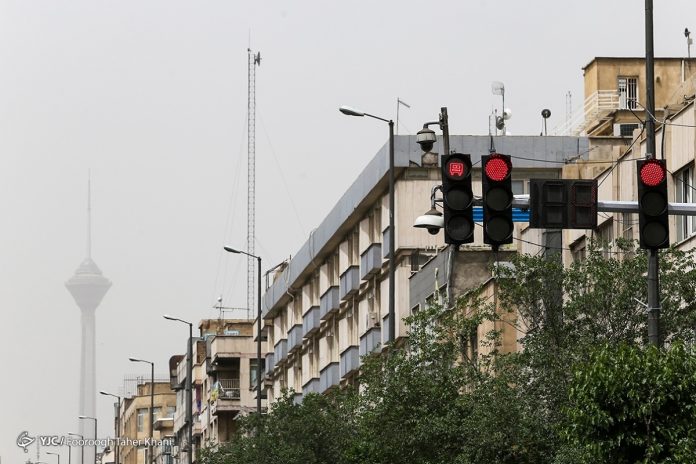
According to the company, the air quality was at 97, which is acceptable, during the past 24 hours.
Tehran has had 11 days of unhealthy air quality for sensitive groups since the turn of the year on March 21, as well as two days in which air quality entered the dangerous zone. This is hugely worst than the previous year in the same period.
Amid the pollution, the deputy governor of Tehran Province declared all schools, universities and government departments closed on Tuesday.
He said the air quality is expected to worsen during the day.
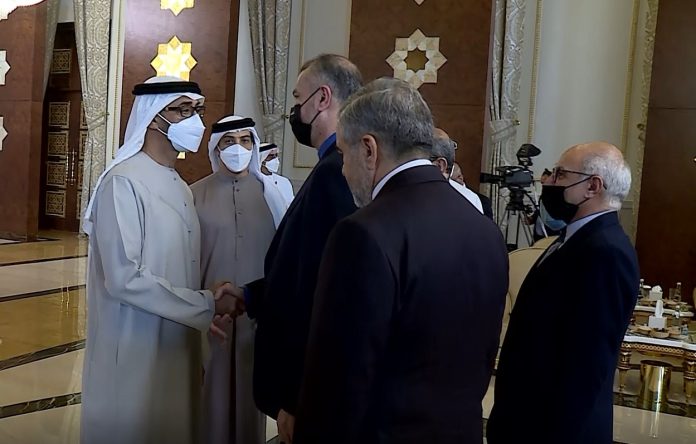
“A new chapter was opened in the relations between the Islamic Republic of Iran and the UAE. We shake our neighbors’ hands warmly. Warm relations with neighbors disappoint enemies of the region,” he said in a tweet.
Amir Abdollahian earlier met with Sheikh Mohamed bin Zayed Al Nahyan in Abu Dhabi three days after he took helm as Emirate’s new president.
During the meeting, Amir Abdollahian congratulated Sheikh Mohamed on his appointment and expressed hope that the ties between the two countries would expand in all areas.
Sheikh Mohamed also called for the removal of obstacles to deeper bilateral relations, saying that regional issues should be resolved by the countries in the region.
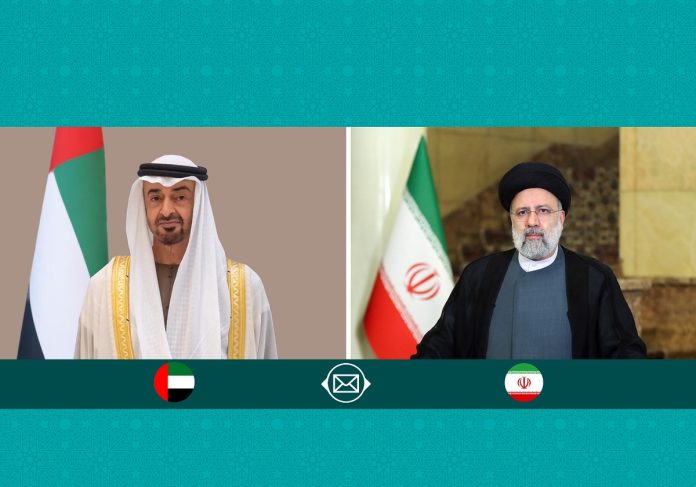
In his congratulatory message on Monday, Raeisi hoped that the mutual relations, which were established during the rule of late UAE president Sheikh Khalifa bin Zayed Al Nahyan, would be expanded with wisdom and in line with interests of the two countries.
The Iranian president also hoped that Tehran and Abu Dhabi would witness the promotion of mutual relations in all fields.
Sheikh Khalifah, who was also the ruler of Abu Dhabi emirate, passed away on Friday at the age of 73.
Sheikh Khalifah was battling illness for several years and had long ceased having involvement in day-to-day affairs. According to the UAE constitution, Vice President and Prime Minister Sheikh Mohammed bin Rashid Al Maktoum, the ruler of Dubai, will act as president until the federal council, consisting of the rulers of the seven emirates, meets within 30 days to elect a new president.
Back in August, Raeisi said that the Islamic Republic is determined and open to the expansion of relations with the United Arab Emirates, stressing that Tehran sees no boundaries to the promotion of such ties, particularly trade and economic ones.
In recent months, Iran and the UAE have intensified efforts to rebuild relations affected by the years-long war in Yemen and other regional issues.
A huge re-exporting hub in the Persian Gulf, the UAE has been a major supplier of goods and machinery to Iran since 2018 when Tehran came under a series of unilateral economic sanctions by the United States.
UAE’s value of exports to Iran amounts to over $1.5 billion per month, according to figures by the Iranian customs office.
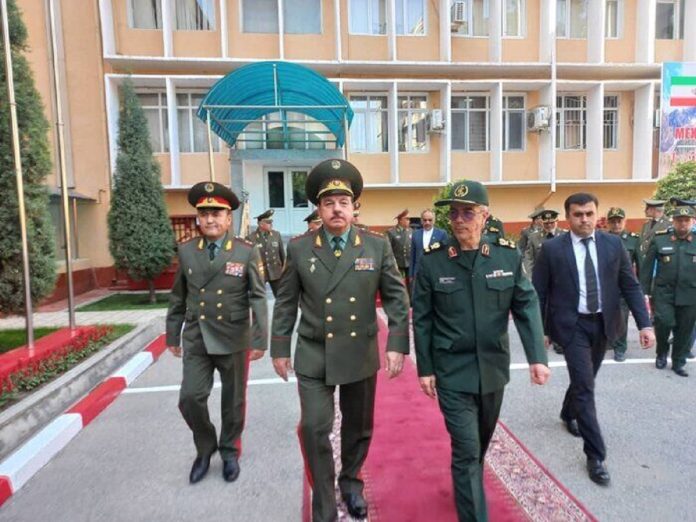
The two officials also called for holding joint military drills and enhancement of military equipment.
Bagheri and Mirzo also discussed regional cooperation with the focus on Afghanistan.
The Tajik defense minister welcomed Iran’s plans for joint cooperation on fight against terrorism, organized crimes and drug trafficking.
He stated that holding joint military drills and enforcement of military equipment are among top priorities of the armed forces of Iran and Tajikistan.
© All Content by IFP News ( Iran Front Page ) is licensed under a Creative Commons Attribution 4.0 International License.
