Saturday, December 27, 2025
Home Blog Page 184

Ukrainian attacks disrupt around 17% of Russia’s oil refining capacity: Reuters

Russia Ukraine War

Kyiv has targeted dozens of refineries, oil depots, and military-industrial sites since the start of Russia’s full-scale invasion in 2022 to disrupt Moscow’s war effort. Winter drone attacks forced at least four Russian refineries to temporarily shut down.

The attacks have disrupted Russia’s ability to process and export oil and created gasoline shortages in some Russian regions, as well as in occupied Crimea.

Kyiv has increased the attacks recently ahead of potential peace talks following U.S. President Donald Trump’s meeting with Russian President Vladimir Putin in Alaska on Aug. 15 and with President Volodymyr Zelensky in Washington on Aug. 18.

Most recently, Ukrainian drones struck an oil refinery in Russia’s Samara Oblast and a gas terminal in Leningrad Oblast.

Lukoil’s refinery in Volgograd Oblast and a Rosneft facility in Ryazan have also come under attack in recent weeks.

A massive fire also broke out at the Novoshakhtinsk oil refinery in Rostov Oblast after another drone strike on Aug. 21. It took five days to extinguish the fire.

Ukraine’s military estimates that long-range strikes have cost Russia around $74.1 billion, or 4.11% of its projected gross domestic product (GDP) in 2025 alone.

Iran, Russia talk military cooperation, regional security

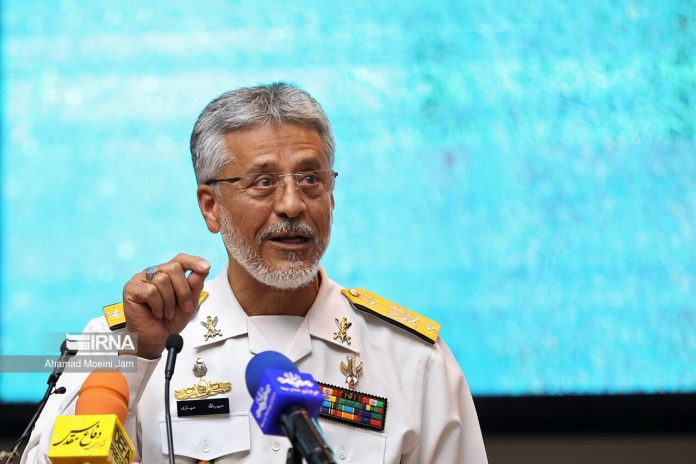
Iran National Army Day

According to the ministry’s statement, the two sides reviewed ongoing matters in defense collaboration and discussed prospects for expanding military ties. They also exchanged views on pressing global and regional security developments, with particular focus on the situation in the South Caucasus.

Fomin expressed appreciation for Jalali’s contributions to advancing Moscow–Tehran relations. The Iranian ambassador, for his part, highlighted the dynamic and multifaceted nature of current cooperation between Tehran and Moscow in the military sphere and reiterated the Islamic Republic’s commitment to further developing these ties.

The Russian Defense Ministry emphasized that the meeting was conducted in a friendly atmosphere of mutual trust, with both sides reaffirming their determination to deepen strategic cooperation between the two countries.

Iran condemns Australia’s expulsion of envoy, denies anti-Semitism allegations

Iranian Foreign Ministry Spokesperson Esmail Baqaei said Tuesday that the decision is “unfounded and politically motivated,” adding that the allegations of anti-Semitism made by Canberra are “baseless and absurd.”

“There is no such concept as anti-Semitism in our culture and history; it is a Western and European phenomenon,” Baqaei said during his weekly press briefing.

He also dismissed claims that Iran was engaged in destabilizing activities in Europe, calling them “fabricated accusations.”

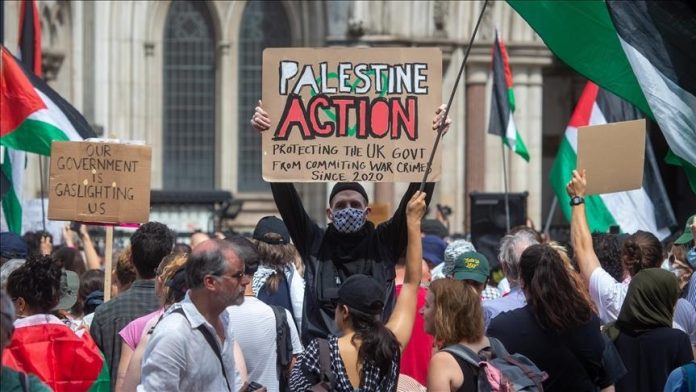
Baqaei suggested that Australia’s decision was influenced by domestic unrest, pointing to recent mass protests in the country condemning Israel’s military actions in the occupied Palestinian territories.

The remarks came after Australian Prime Minister Anthony Albanese accused Iran of organizing anti-Semitic attacks in Australia and said the country was severing diplomatic relations with Tehran in response.

“This decision appears to be a reaction aimed at compensating for the rare moments of criticism of the Israeli regime expressed in Australia,” Baqaei said.

The spokesperson warned that “any inappropriate diplomatic action will be met with a response,” noting that Tehran is assessing its next steps and will make an “appropriate decision” regarding the matter.

Gaza war will have ‘conclusive’ ending in two to three weeks: Trump

Gaza War

“Right now they’re talking about Gaza City – there’s always talking about something,” Trump said in the Oval Office during a meeting with South Korean President Lee Jae Myung.

“At some point, it’s going to get settled, and I’m saying you better get it settled soon. You have to get it settled soon,” he added.

For the first time since taking office, Trump gave a specific timeframe for when he imagined the war’s end.

“I think in the next two to three weeks, you’re gonna have a pretty conclusive ending,” he said before adding, “It’s a hard thing to say because they’ve been fighting for thousands of years.”

Trump is known for his impromptu style, and other deadlines he has given to enact tariffs have come and gone.

In general, the Trump administration has shown no urgency to end Israel’s genocide and has backed Israel’s decision to launch a new onslaught on Gaza City, experts say.

Speaking alongside Trump at the White House, Secretary of State Marco Rubio said the US wants the war to end, but the stipulation is the removal of Hamas.

“We want it to end. It has to end with no Hamas,” he added.

Despite a 22-month Israeli offensive following the Hamas-led 7 October 2023 attack on the occupied territories, the Palestinian group continues to launch guerrilla-style attacks on Israeli soldiers. US officials announced in January that Hamas had recruited almost as many fighters as Israel has killed.

Over 62,000 Palestinians have been killed in Gaza since October 2023, according to Palestinian health officials, the majority of them women and children.

Trump’s remarks on Monday were in response to questions over Israel’s devastating double-tap raid on Nasser hospital in southern Gaza that killed at least 20 people, of whom five were journalist.

The second part of the strike was caught vividly on camera by a Jordanian news station. The footage showed the obliteration of unarmed Palestinian rescue workers in safety vests trying to retrieve wounded people from the hospital.

Trump said he didn’t know about the Israeli attack but said, “I’m not happy about it. I don’t want to see it.”

Instead of addressing the deaths of Palestinians, however, Trump returned to talking about the Israeli captives still held in Gaza.

Israel says there are 20 captives still in the enclave – all military-aged men – but Trump has repeatedly said that number is less.

Trump stated on Monday that a “very serious diplomatic push” to end the war was underway, but didn’t provide details.

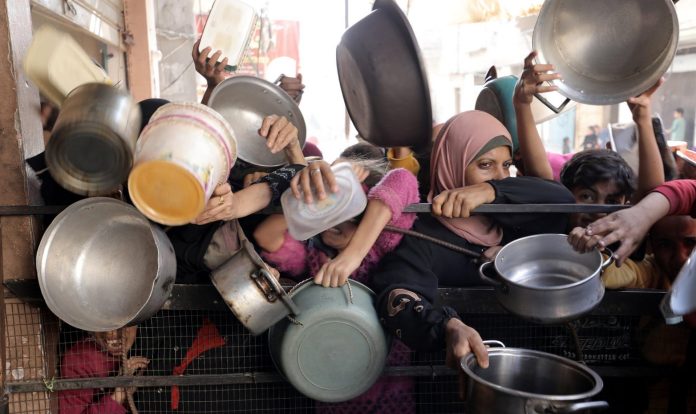
“It’s got to get over with because, between the hunger and all of the other problems – worse than hunger, death, pure death – people being killed,” Trump added.

Poll: 60% of Americans don’t think Trump will ultimately be able to solve Ukraine war

The Harvard CAPS/Harris polling released Monday found that two-thirds of voters support President Trump’s efforts to end the Russia-Ukraine war.

At least 66 percent support Trump’s efforts to end the war — which has been raging for more than three years — and 52 percent of voters were satisfied with how Trump is managing negotiations.

The president has claimed the war wouldn’t have started if he’d been in the Oval Office, a point Putin agreed with during the pair’s recent bilateral summit in Alaska. Trump later met with Zelensky at the White House last week.

Fifty-seven percent of voters surveyed said Trump deserves “a lot of credit” for the meetings, regardless of whether he succeeds in halting the fighting.

Despite the support for Trump’s efforts, 6 in 10 respondents said they viewed the Putin meeting as unsuccessful in advancing peace, compared to roughly half who said the Zelensky talks were successful.

Fifty-eight percent of voters said they think the president hasn’t been tough enough on Putin, with voters largely rating Washington’s relationship with Kyiv as more important than its relationship with Moscow.

Roughly 6 in 10 voters said they don’t think Trump will ultimately be able to solve the Ukraine war.

Trump has made the case that he should win a Nobel Peace Prize for his role in talks to curtail the war in Europe and other global conflicts. While he has struggled to make progress on the Russia-Ukraine clash or Israel’s war in Gaza, he aided in ending conflict between India and Pakistan in May, and between Cambodia and Thailand last month.

The poll found 61 percent of voters do not think Trump should win a Nobel Prize for his work.

Roughly two-thirds of voters in the polling said Putin is “playing games and stalling,” and the same share said they think Zelensky genuinely wants to stop the war.

“The voters think Putin is playing the president but they nevertheless think that President Trump’s efforts are worthy of support — maybe not a Nobel prize yet — but he is getting some significant applause for trying to end a war that has killed more than a million people,” said Mark Penn, chair of the Harris Poll.

The poll was taken Aug. 20-21 among 2,025 registered voters by The Harris Poll and Harris X. The margin of error for the total sample is 2.2 percentage points.

Iran spox: European states have no right to reimpose sanctions

On Tuesday, Esmail Baqaei said, “Such a right does not exist, and Iran has certainly undertaken extensive efforts to prevent it. Talks with the three European countries—Britain, France, and Germany—as well as with China and Russia, are being conducted in this regard.”

He added that Iran’s diplomatic apparatus, being fully aware of the negative consequences of the snapback and of the fact that the European parties have no legal right to misuse this mechanism, has long had the matter on its agenda.

Addressing claims that the consequences of the snapback were being downplayed in the public mind, he said: “It is by no means the case that we are seeking to diminish the significance of the reimposition mechanism. We are well aware of the adverse effects of such an event.”

Baqaei further explained: “When we say that the European parties lack legal competence, it means that not only do we reject their claims, but we are also concerned about its implications.”

Regarding Russia’s draft resolution for the extension of UN Security Council Resolution 2231, he noted: “We are informed about it, we have the text in hand, and we are reviewing it.”

On the process and manner of activating the snapback mechanism, and the coordination with Russia and China, Baqaei said: “Our discussion is not about creating costs but about safeguarding our own interests. We have not neglected any tool to ensure the protection of our national interests.”

Highlighting the importance of diplomacy in resolving disputes, Baqaei added: “Diplomacy never comes to a halt, and negotiations will always be pursued whenever they serve national interests. However, we will by no means yield under threats aimed at extracting concessions.”

Prosecutor files charges against Iranian comedian over remarks on epic poet Ferdowsi

According to the judiciary’s official news agency, Mizan, the case was opened after Mousavi’s comments were widely circulated online, prompting public backlash.

Authorities cited “offensive content violating public decency” against one of Iran’s most respected cultural figures.

Mousavi, known for her sharp comedic monologues, had previously faced legal action in October 2024 on charges of “disturbing public order.”

The incident has sparked heated debate online and among cultural figures.

Prominent Persian literature scholar Mohammad-Reza Shafiei-Kadkani reposted a note by the late Shahnameh expert Abolfazl Khatibi, calling the epic poem the “collective consciousness of Iranians.”

A page attributed to filmmaker Bahram Beyzai also shared excerpts from his script The New Prologue of the Shahnameh, describing Ferdowsi as a symbol of cultural resistance.

Iran’s Culture Minister Seyyed Abbas Salehi Amiri condemned the comedian, saying, “Some people seek attention through inappropriate behavior.”

The media have also joined the criticism. Khorasan daily described her remarks as an “attack on the national identity of Iranians,” adding: “Mocking the Shahnameh is foolishness and irrationality in the face of Ferdowsi’s intellectual legacy.”

Following the uproar, Mousavi’s Instagram account was blocked.

Trump claims US no longer spends money on Ukraine

US Weapons

Trump claimed that Washington was being “fleeced” under previous US administrations, which he said had committed $350 billion to Kiev.

“I don’t blame Ukraine… if they come and ask for a hundred billion dollars and they get it,” he remarked, calling Ukraine’s President Volodymyr Zelensky “the greatest salesman I think I’ve ever met.”

“We don’t pay any money to Ukraine anymore. Do you know that? In fact, it’s the opposite. They request through NATO. We deal with NATO. We don’t deal really with Ukraine,” Trump explained.

“NATO pays us in full and does what they want.”

Trump also emphasized that Washington would play only a supporting role in providing any security guarantees for Kiev, stressing that European nations should take the lead.

Zelensky and his Western European backers have called for “Article 5-like guarantees” that would obligate countries to respond collectively if Ukraine were attacked. Kiev has reportedly asked these supporters to allocate $100 billion to procure US-made weapons, according to the Financial Times.

Moscow has consistently denounced Western arms shipments to Ukraine in any form, warning they only prolong the conflict without changing its outcome while making NATO a direct participant in the hostilities.

Russia has also strongly opposed any Western arrangements that exclude Moscow. Foreign Minister Sergey Lavrov stated last week that collective security in Europe “cannot be resolved without the Russian Federation,” and warned that any efforts to do so would be rejected.

“We will ensure our legitimate interests firmly and harshly,” Lavrov added.

The Trump administration has repeatedly distanced itself from its previous blank-check US policy on Ukraine. Earlier this month, Vice President J.D. Vance said that Washington would no longer fund Kiev directly.

US Treasury Secretary Scott Bessent claimed that European countries would pay a 10% markup on American arms sales. Trump additionally said last week that, as far as Washington is concerned, Kiev regaining Crimea and joining NATO are both “impossible.”

Trump says US wants nuclear arms deal with Russia and China

The US president made the remarks while speaking to reporters in the Oval Office, claiming that Putin also showed interest in the matter during the summit.

“We would like to denuclearize. It’s too much power, and we talked about that also,” Trump stated.

“It was a very successful day for other things, because, you know, we’re also talking about missiles, nuclear, we’re talking about a lot of different things. We’re talking about limiting nuclear, we’ll get China into that. We have the most, Russia has the second most, and China has third. But China is way behind, but they’ll catch us in five years,” the US president added.

It was not immediately clear what the US president’s assessment of the three nations’ nuclear arsenals was based upon. According to the latest figures by the Stockholm International Peace Research Institute (SIPRI), Russia has some 2,591 warheads in storage and some 1,718 deployed, compared with 1,930 and 1,770 respectively in the US arsenal.

According to SIPRI’s estimates, Beijing has around 576 warheads, with only 24 deployed. The UK and France possess 120 and 280 deployed warheads, respectively.

The US president also said he had already spoken with Putin again following the Alaska summit, which was held on August 15.

“Every conversation I have with him is a good conversation. And then, unfortunately, a bomb is loaded up into Kiev or someplace, and then I get very angry about it. I think we’re going to get the war done. It’s tough,” Trump said, admitting that he had thought the Ukraine conflict “would be the easiest” to settle.

Pezeshkian reaffirms Iran’s stance on nuclear weapons

Pezeshkian Putin

During a phone call with his Russian counterpart Vladimir Putin on Monday, President Pezeshkian expressed satisfaction with the results of the Alaska talks, hoping the negotiations would contribute to a swift resolution of the Ukraine crisis.

The Iranian president also committed to personally overseeing the expedited construction of the Rasht-Astara railway, which plays a key role in connecting the Persian Gulf to Russia and Central Asia via the International North-South Transport Corridor (INSTC), and other bilateral agreements between Iran and Russia.

Furthermore, Pezeshkian acknowledged the importance of regional and international organizations such as the Eurasian Economic Union (EAEU), Shanghai Cooperation Organization (SCO), and BRICS as platforms for enhancing cooperation with member states, particularly Russia and China, in countering unilateralism.

In addition, he referenced his recent visit to Armenia, where he received assurances from Armenian Prime Minister Nikol Pashinyan that Iran’s concerns were fully considered in the country’s discussions and agreements with Azerbaijan and the United States. Pezeshkian advocated for the 3+3 dialogue framework involving Iran and Russia as a more effective mechanism for addressing issues in the Caucasus region.

In response, President Putin outlined the key points and outcomes of his recent negotiations with US President Donald Trump in Alaska, noting that positive results were achieved that could lead to a resolution of the ongoing conflict in Ukraine.

Putin also described the relationship between Moscow and Tehran as constructive and steadily improving, highlighting an 11% increase in trade between the two countries in the first half of the current year.

He also mentioned advancements in mutual projects, including the significant Rasht-Astara railway construction and the satisfactory progress in cooperation regarding the Bushehr nuclear power plant, noting that the transfer of new fuel for this power plant is also underway.

Putin affirmed Russia’s strong support for Iran’s right to uranium enrichment, calling it a key and essential aspect of their partnership. He expressed hope that negotiations surrounding UN Resolution 2231 would reach a favorable conclusion.