Tuesday, January 13, 2026
Home Blog Page 1828

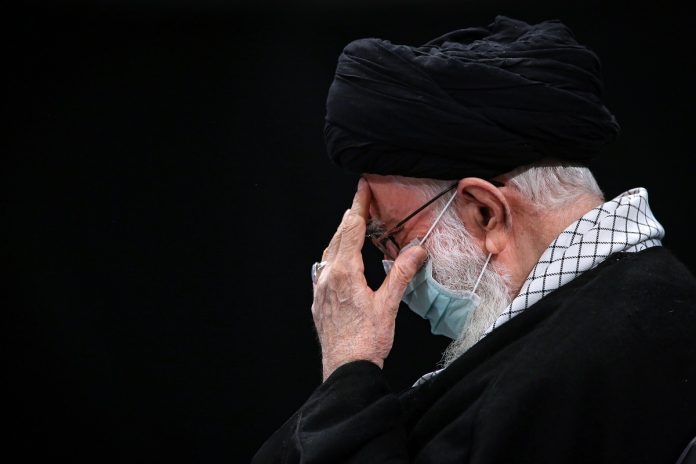
Ayatollah Khamenei offers condolences over deadly floods in Iran 

Iran’s leader Ayatollah Seyyed Ali Khamenei

Ayatollah Khamenei thanked officials and rescue workers for swiftly taking action to help those affected by the floods.

The leader also demanded that they continue their efforts to alleviate the painful impact of the tragic incidents.

Ayatollah Khamenei then wished good luck for the officials and the rescue workers making efforts to deal with the aftermath of the floods.

Dozens of people have died in recent flash floods hitting 21 provinces across Iran. Many remain missing.

Sadr supporters occupy Iraqi parliament again

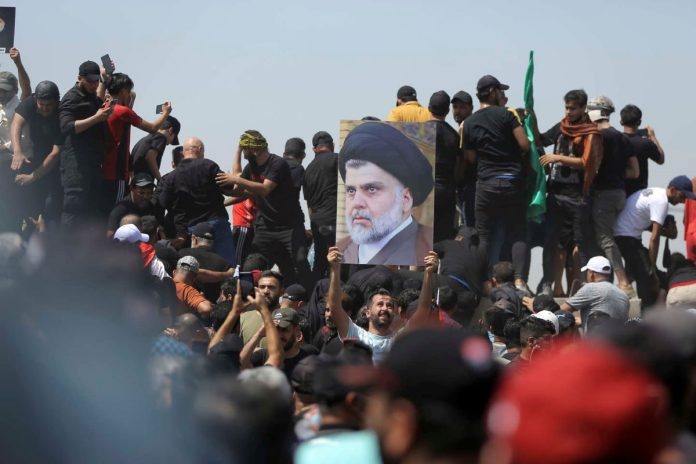
Sadr supporters occupy Iraqi parliament

Brandishing pictures of the firebrand cleric, they occupied the the legislative chamber to protest selection of a consensus nominee for prime minister following months of uncertainty.

They initially massed at the end of a bridge leading to the Green Zone before tearing down concrete barriers protecting it and ran inside.

Security forces had fired tear gas near an entrance to the district, home to foreign embassies and other government buildings as well as parliament.

State-run news agency INA reported Prime Minister Mustafa al-Kadhimi had called on the protesters to adhere to peacefulness demonstration, not to escalate the situation, and to abide by the orders of the security forces.

“Continuing the political escalation increases the tension and does not serve the public interests,” INA quoted a statement by al-Kadhimi’s media office as saying.

“The security forces have a duty to protect official institutions and need to take all legal measures to maintain order,” he added.

Sadr’s supporters, opposing the recently-announced nomination of Mohammed al-Sudani for premier, occupied the parliament building on Wednesday and left the area two hours later upon the cleric’s orders.

Analysts say through protests, Sadr wants to demonstrate he’s still politically relevant. The strategy, however, is a very dangerous game which can plunge the country into civil strife, they have warned.

In 2016, his supporters stormed the parliament in a similar fashion. They staged a sit-in after then-prime minister Haider al-Abadi sought to reshuffle the cabinet.

After the Sadr bloc exited government formation talks, al-Sudani was selected by consensus to face parliament for vote.

However, parties must first select a president. Sadr resigned from political activity after he was not able to persuade enough legislators to choose him as Iraq’s next president.

Iranian official: 90% of nuclear equipment domestically produced

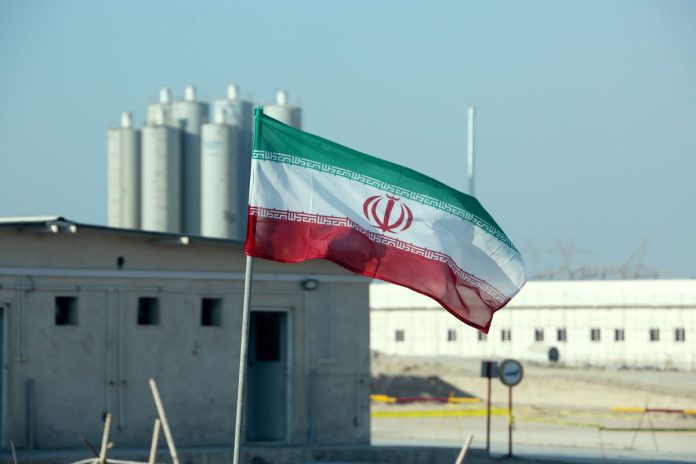
Iran nuclear programe

Shirmardi stated on Saturday that approval of the Strategic Action Plan by the Iranian Parliament resulted in production of 60% fuel enrichment and the installation of IR6 centrifuges.

He pointed out that the AEOI’s achievements are the winning card of the negotiating team and the biggest fear of the western negotiator while science and technology used for making the achievements are native.

AEOI deputy chief noted that the sanctions resulted in greater self-confidence, the realization of internal capacities, crossing borders of knowledge and actual realization of Imam Khomeini’s (RA) commandment who said: “We can do it.”

He added that about 90 percent of the equipment in the field of nuclear technology has been domestically produced which is the result of the efforts of the Iranian scientists, and this would not have been achieved if the country depended on foreign powers.

In explaining the goals set in the electricity generation sector, he said, “According to the comprehensive strategic document of the Atomic Energy Organization in Iran’s 1420, the production of 10,000 megawatts of nuclear electricity is envisaged, and the approach of the organization is fully Iranian and indigenous reactor production, along with the use of external capacities; the Arak reactor will be used to produce radioisotopes, and the main goal is to make Iran a hub for the production of radioisotopes with medical use in the region.”

Deputy Chairman of the Atomic Energy Organization of Iran added that the AEOI aims to compile a comprehensive strategic document in Iran’s 1420 while focusing simultaneously on the hardware sector (power plants, fuel cycle, use of radiation, etc.) and the soft nuclear sector (law, security, economy and nuclear diplomacy), and added: such an approach will lead to social, cultural and economic attachment; along with strengthening foreign relations and using these capacities, “we are seriously pursuing the localization of nuclear industry equipment”.

Regarding new technologies, Shirmardi stated, “In this field, the goal is to pass the research stage and move towards commercialization and popularization of products.”

Quantum technologies and nuclear fusion are examples of this sector, in the field of nuclear fuel cycle, the country has reached maturity and now “we are one of the 13 countries” with a complete nuclear fuel cycle, he added.

Referring to the impact of the approval of the Strategic Action Plan by the Iranian Parliament on the nuclear industry, Shirmardi explained that “this action and its approval was done correctly; This Plan created tasks for the Atomic Energy Organization, which was implemented with the determination and order of the head of the Atomic Energy Organization”.

Among the results of the approval of this Plan, we can mention the production of 60% fuel and the launch of IR6 centrifuges, and the opposite front should know that in case of any immature actions on the western side, the Islamic Republic of Iran will respond with a ready answer.

Regarding the role of the Atomic Energy Organization in the JCPOA and support for the negotiating team, Shirmardi noted, “The arrogant powers are against the management method of the nuclear issue of the Islamic Republic of Iran, now the achievements and actions taken in the Atomic Energy Organization are a winning card for the team.”

EU’s top diplomat: Time is now to save Iran nuclear deal

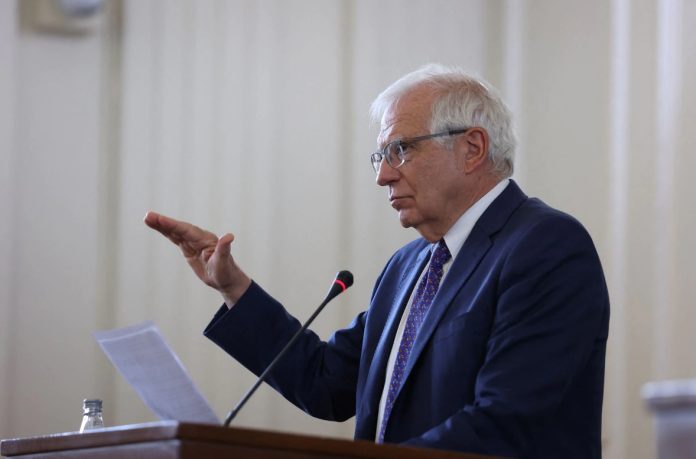
Josep Borrell

Borrell noted that there is no viable alternative to the 2015 nuclear deal.

He said the aim has always been to sign a deal that would benefit all parties, including Europe, Iran and the global community.

Borrell added that the JCPOA secured strict limits on Iran’s nuclear activities and the most extensive monitoring and inspection regime ever implemented by the International Atomic Energy Agency, and In return, it opened up the prospect of benefiting economically from the lifting of U.S., EU and UN sanctions to Iran.

The EU high representative for foreign affairs and security policy also said the “maximum pressure” imposed against Iran by former US President Donald Trump has “failed”.

Borrell added that what matters most now is the preservation of the JCPOA.

Borrell’s remarks come as the stumbling block in the way of reaching a deal is the US failure to lift anti-Iran sanctions in a verifiable manner. Washington also refrains from giving the guarantee that it will not leave the nuclear deal again.

Tehran says it must enjoy full economic benefits of a deal.

The Islamic Republic also says it’s ready for a lasting and robust agreement to revive the JCPOA but makes this condition on the US fulfilling its part of the JCPOA.

Iran Covid daily caseload drops sharply

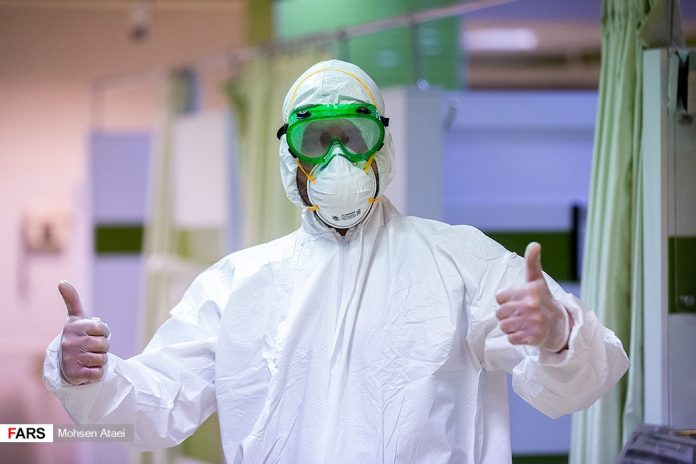
COVID in Iran

Health Ministry figures showed that 4,505 people had tested positive for the Coronavirus in the past 24 hours. They included 1,070 hospitalizations. The Friday tally was 7,849.

Saturday’s death toll was 42 while that of Friday was 54.

The number of both cases and deaths from the virus has increased in the past couple of weeks.

Authorities blame this on both people’s failure to stick to health protocols and also the emergence of a new subvariant of the Omicron strain of Covid that spreads much faster than the previous ones.

People are now showing up at vaccination centers at the urging of officials to help bring the disease under control again. Earlier this month, Covid’s daily death toll was zero on several days.

Now the number of red cities where people face the highest level of risk from the virus has doubled in Iran. Authorities say 120 cities across the country are red. This is while the number of blue cities where things are normal have decreased to 50.

Iran’s Intelligence Ministry arrests Swedish national on espionage charges

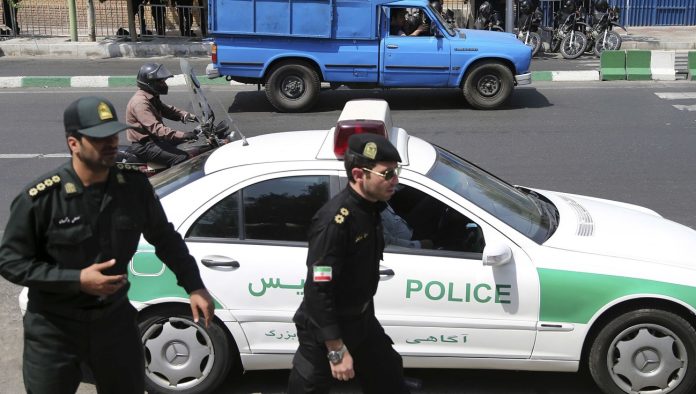
Iran Police

In a statement issued on Saturday, the ministry said the Swedish citizen had been placed on its counter-espionage unit’s “list of suspects” due to certain “suspicious contacts and behavior” during multiple trips to the country.

The ministry did not identify the detainee.

The foreign citizen’s activities, contacts and trips to different Iranian cities (which were generally inconsistent with tourism purposes) had closely been under watch by the ministry’s professional counter-espionage agents from the moment of entry into Iranian borders until exit, the statement added.

The statement said the findings revealed that the Swedish citizen used to establish links with a number of European and non-European suspects, who were themselves being monitored in Iran, while adhering to professional safe communication and concealment techniques.

The individual once again entered Iran a few months ago, following the arrest of another European spy, on a mission to find out how the identity of the detained spy had been revealed and how much data had been collected from the arrestee by the Iranian Intelligence Ministry, the statement added.

During that trip as well, Iranian intelligence forces monitored the Swedish citizen’s contacts during the entire mission. The foreign national was eventually taken into custody upon a judicial order when the process of gathering evidence was completed as the individual was trying to leave the country.

The suspect in question has a history of travelling to the Israeli-occupied territories prior to visits to Iran, the statement added.

“As repeatedly stated before, the Intelligence Ministry views the country’s security and the people’s calm as a red line for itself and responds to even the slightest violation of the country’s security borders firmly” and regardless of any hype.

The ministry said Sweden had so far supported several spies operating by proxy for the Israeli regime and had provided a safe haven for anti-Iran terrorists, and warned the European country that it would receive “a proportionate response” if it continued the practice of “providing proxy spies” and “sponsoring persistent-offense murderers.”

Iranian newspaper: One year on, Raisi’s record ‘unacceptable’

Iran President Ebrahim Raisi

Jomhouri-e Eslami, in an article on Saturday, slammed the Raisi administration for ‘underestimating the effects of sanctions’ re-imposed after former US president Donald Trump withdrew from Iran’s nuclear deal in 2018.

It wrote shielding people’s livelihood from sanctions and talks on restoring the nuclear deal, known as the Joint Comprehensive Plan of Action (JCPOA), is a good slogan for election campaign trail, but lacks practical support.

The daily said the Raisi administration, after almost a year in office, has realized that the economic hardships in the country cannot be resolved without getting the embargos removed.

Jomhouri-e Eslami added, Iranian citizens are under crushing economic pressure as the marathon talks to revive the JCPOA have been dragging on without any significant improvement on the horizon.

It asked the Iranian president, a vocal critic of the nuclear agreement during his presidential campaign debates, to revert living standards to a year ago before his economic policies were implemented.

According to the International Monetary Fund, price hike in Iran has been rampant for years, over 30 percent annually every year since 2018.

The trend spiraled after President Raisi’s economic team decided to remove heavy subsidies on basic commodities and products, arguing the ‘surgery’ is painful but necessary for economic reforms.

‘Iran had better mend ties with Saudi Arabia before Riyadh normalizes with Israel’

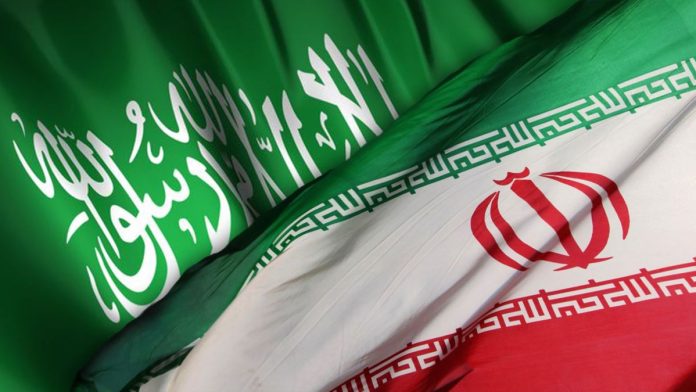
Iran Saudi Flags

“There is no issue between Iran and Saudi Arabia that is fundamental and unresolvable,” Sabah Zanganeh told Tehran–based Khabar Online new outlet on Saturday.

“Most of what is talked about is related to the type of Iranian presence in different countries, which has been discussed so many times before, and there seems to be no obstacle to the negotiations (between Iran and Saudi Arabia).”

Zanganeh added, though, that those talks had better be pursued before the presidential election in the United States and before Saudi Arabia potentially jumps on the bandwagon of Arab countries normalizing ties with Israel.

“Generally speaking, Saudi ties with the US aren’t exactly sweet when Democrats are in power… But the new election in the US may place the Republicans in power, and Saudi Arabia’s policies may change as well,” he said.

“But of course, the mending of ties had better be finalized before Saudi Arabia joins… (the several other Arab countries) in normalizing relations with the Zionist regime,” he cautioned.

Zanganeh said the time was right for the negotiations to proceed smoothly at this point in time and the Israelis and extremist Americans shouldn’t be allowed to sabotage that process.

“Now is the easiest time to do this,” he said, referring to the negotiations between Tehran and Riyadh.

Iranian MP: Iran-Russia strategic ties deepening

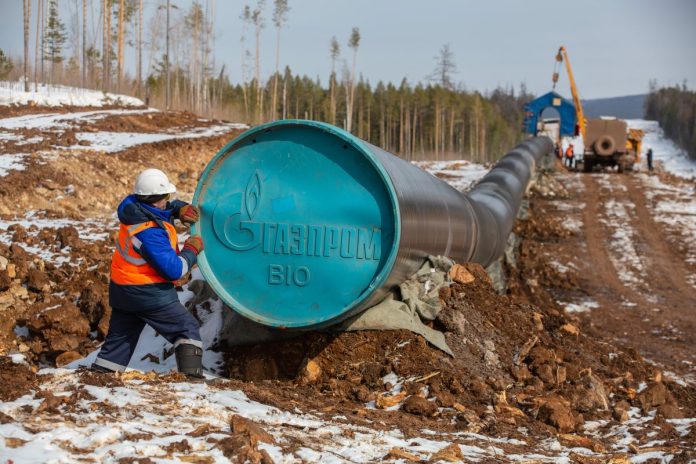
Russia’s energy giant Gazprom

Mahmoud Abbaszadeh Meshkini told IRNA on Saturday that the $40-billion deal signed between Iran’s national oil company and Russia’s energy giant Gazprom on July 19 can tip the balance in favor of both countries in the world markets.

“If the strategic oil and gas agreement between Iran and Russia is implemented, the two countries can have the highest role in determining the price and managing the world markets,” Meshkini said.

He added Iran and Russia are heavy-weight producers in the world’s energy markets and European sanctions on the energy sector will blow up in their own face.

Russia and Iran are under draconian US-speared Western sanctions and they say they are coming up with strategies, including forging new alliances and ditching the dollar in their bilateral transactions, to cushion the effective of the punitive measures.

The Iranian parliamentarian said, “The American sanctions against Iran will not cause any problems in conclusion of the contracts between Iran and Russia, as the relations between the two countries are defined in the strategic field and both countries want to cooperate in the field.”

The remarks came a day after Mohammad Tala Mazloumi, another member of the Iranian parliament, said Iran and Russia sit on 30 percent of the world’s gas reserves and energy deals between the two countries can elevate their standing in the world.

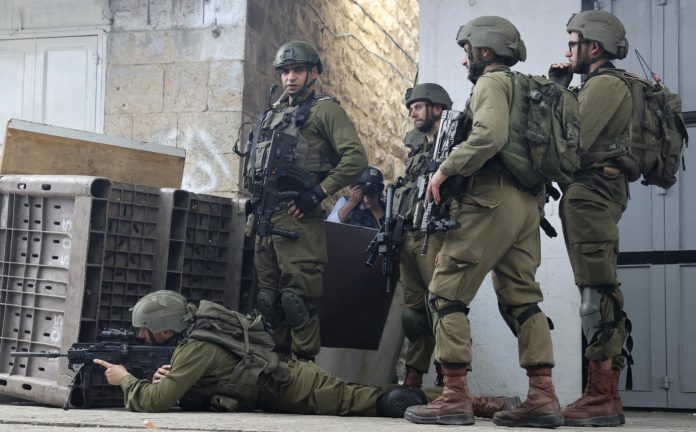
Young Palestinian killed by Israel forces in WB

Israeli Forces in WB

The ministry identified the youth as Amjad Nashat Abu Alya, saying he was shot with a bullet to the chest on Friday afternoon.

He was taken to a hospital in Ramallah where he was pronounced dead at approximately 2pm (11:00 GMT).

The killing took place during confrontations with the Israeli army and Jewish settlers that broke out following a protest by Palestinians against settler violence in the area.

The protest began at approximately 11am (8:00 GMT) and had been called for by several popular committees and the Palestinian Authority’s Committee against the Wall and Settlements, which regularly organises protests.

Journalist Hadi Sabarneh, who was present at the scene, told Al Jazeera that, along with the Israeli forces, a group of settlers had arrived at the protest, including one armed with what appeared to be an M-16 rifle, which the journalist filmed.

“Both the army and the settler were shooting at the protesters who were throwing rocks. When they both started shooting, the youth fell to the ground,” Sabarneh added.

Nassar Nassar, said he was approximately 10 metres (30 feet) away when his cousin Amjad was killed, adding that the settler who was armed was “shooting indiscriminately”.

“There were confrontations, and there was a lot of friction between the youth and the Israeli army and settlers,” he told Al Jazeera, adding, “There was one settler who was armed, and my cousin was very close to him – it was point blank.”

Nassar said it was not clear whether the Israeli army or settler fire had killed Amjad.

“It’s clear that there was the intention to kill because the shot was above the waist,” Nassar continued.

The Israeli army spokesperson said that it was “aware of reports of a Palestinian that was killed”, and that the army had responded after Palestinians burned tyres and threw stones.

The spokesperson added that the army had “worked to restore order” after “clashes erupted between Palestinians and settlers, which involved throwing stones at one another”.

Israeli media reported that a settler was also injured.

Settlements in the occupied West Bank are illegal under international law, but Israeli governments have continued to allow their expansion.

According to his cousin, Amjad was in the 10th grade and regularly attended protests, particularly after his friend, Ali Abu Alya, was killed by Israeli forces in 2020 during confrontations between Israeli forces and Palestinians.

“He was his closest friend, and after his killing, Amjad was always at the first line of defence,” noted Nassar.