Thursday, April 23, 2026
Home Blog Page 173

US issues Russia sanctions ultimatum to EU

Donald Trump

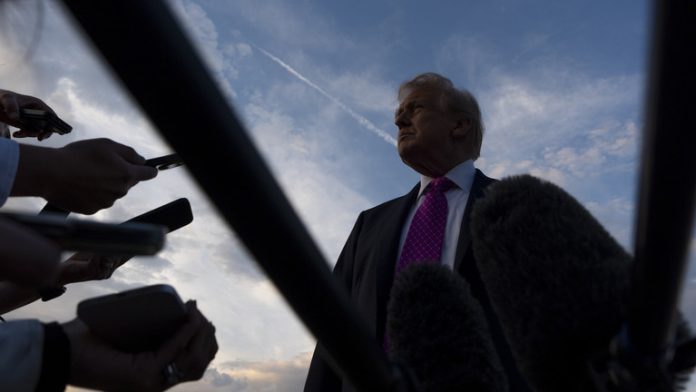
Speaking to reporters while returning to the White House on Sunday, Trump stated NATO and EU members must “get together” and “toughen up” before the US can be expected to go “full bore” on Russia.

“Europe is buying oil from Russia. I don’t want them to buy oil – and the sanctions that they’re putting on are not tough enough,” Trump said.

“I’m willing to do sanctions, but they’re going to have to toughen up their sanctions commensurate with what I’m doing. Well, I’m ready to move ahead, but they have to do it,” he added.

In recent days, Trump has intensified calls for all NATO states to stop purchasing crude from Russia and urged EU nations to impose tariffs of up to 100% on China and India, according to the Financial Times.

Last month, Trump imposed 50% US tariffs on Indian goods. New Delhi has so far refused to cut imports of Russian oil, citing national energy security and sovereignty over its economic decisions.

The EU is currently preparing its 19th sanctions package, which may target Russian oil exports and the banking sector. Brussels has pledged to phase out Russian fossil fuels entirely by 2027, but several member states – including Hungary and Slovakia – continue to oppose immediate restrictions due to their dependence on the Druzhba pipeline.

“Right now they’re talking and they’re not doing,” Trump stated.

Russia has maintained that it wants a long-term and sustainable peace in the Ukraine conflict, and has accused Kiev and backers of working to undermine the peace process.

Russian President Vladimir Putin recently warned Western nations against trying to “punish” China and India or adopting a “colonial” tone toward them.

“Talking to such partners in such a tone of voice is unacceptable,” he said during a visit to Beijing earlier this month.
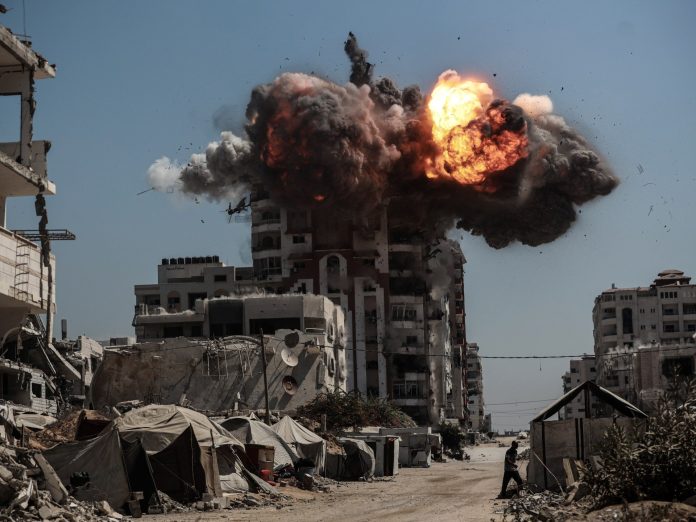
Israeli military bombs 2 high-rise buildings in Gaza City amid occupation push

Witnesses said fighter jets struck the Al-Kawthar residential tower in western Gaza City shortly after the army issued immediate evacuation orders for its residents and nearby tents.

Israeli warplanes also destroyed the Unknown Soldier Tower in the city’s al-Rimal neighborhood shortly after ordering residents to evacuate, even though the area was crowded with tents and residential buildings sheltering hundreds of displaced people.

Residents rushed out of the high-rise tower without belongings or clothes, fearing imminent strikes, witnesses added.

The Unknown Soldier Tower, one of Gaza City’s largest residential high-rises, housed dozens of apartments, shops, and hundreds of families and displaced people during the war. It was located in one of the most active commercial districts of al-Rimal.

The Israeli army has been targeting high-rise buildings across Gaza City as part of its ongoing offensive to occupy Gaza City, ordering residents to move southward to a so-called “safe humanitarian zone” in Al-Mawasi, Khan Younis, which repeatedly came under Israeli fire more than 100 times, killing hundreds of civilians.

According to Gaza’s Government Media Office, the Israeli army has completely destroyed 1,600 towers and residential buildings in Gaza City since Aug. 11, in addition to 13,000 tents, displacing more than 100,000.

The vast majority of Gaza City residents are now crowded into the western neighborhoods of the city, which have witnessed concentrated and intense Israeli bombing since Friday.

Israel’s ongoing war on Gaza has killed nearly 65,000 Palestinians since October 2023, and devastated the enclave, which faces famine.

Israel is facing a genocide case at the International Court of Justice over its war on the territory.

Iran’s President: Israel commits every crime with US support

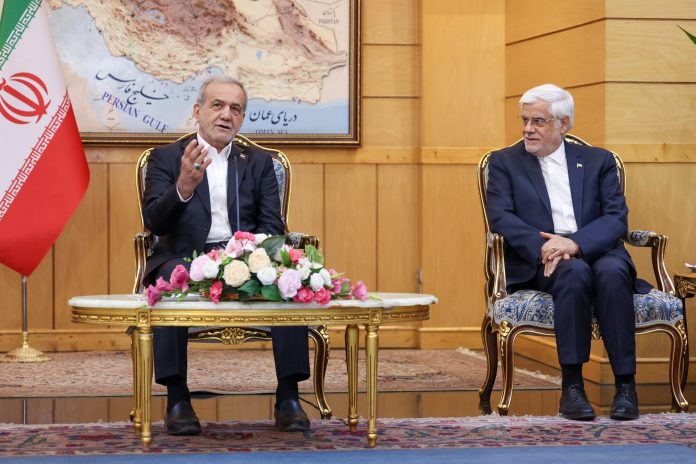
Masoud Pezeshkian said on Monday morning—before departing for Qatar to attend an emergency meeting of the Organization of Islamic Cooperation—that the Zionist regime sets no boundaries for its aggression. Ignoring human-rights norms, it has struck at multiple countries, including Lebanon, Syria, Qatar, Iran, Yemen and even Iraq, and has carried out whatever military action it desired.

The President continued: “What is happening in Gaza is an all-out humanitarian catastrophe — not only a catastrophe in the making but a real, ongoing genocide. Many children have lost their lives and many more are dying. Women, the elderly and defenseless civilians, because of siege, starvation and repeated bombardments, are condemned to death.”

He stated: “Regrettably, the United States, by using its veto power in international bodies and through logistical and political support, assists the Zionist regime in continuing these crimes — a regime whose apartheid and anti-human character have become clear to all.”

He added: “Islamic countries should sever their ties with the fabricated Zionist regime and strive for unity and cohesion as much as possible. If we Muslims stand together, they naturally will not dare so easily to attack Islamic countries and trample the world’s laws.”


Head of Iran atomic organization: IAEA applying double standards

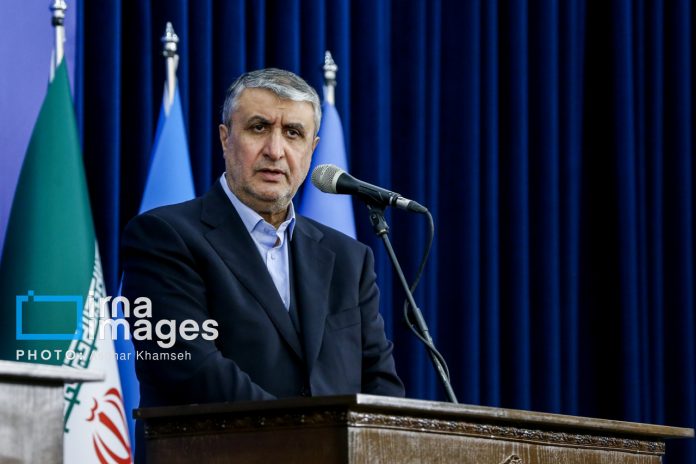
Mohammad Eslami
Mohammad Eslami, speaking about Iran’s draft resolution at the IAEA General Conference, stated: “It is very important that such a law be established to prohibit military attacks on nuclear facilities. Even if this resolution is not adopted, it will demonstrate that the UN Charter has been undermined.”
Eslami has arrived in Vienna to attend the 69th General Conference of the International Atomic Energy Agency (IAEA).
The Vice President said: “This year’s General Conference is a very valuable opportunity for us to attend, present our country’s positions, and confront such double standards.”
Referring to the attacks on Iran’s nuclear facilities, Eslami added: “In the case of what happened to the Islamic Republic of Iran, we witnessed the IAEA’s lack of professional conduct. The Agency failed to condemn these incidents and reacted with complete neutrality—truly applying double standards.”
Eslami continued: “For instance, the Director General of the Agency regularly issues statements and resolutions regarding the situation at Ukraine’s Zaporizhzhia nuclear power plant. But when it comes to the Islamic Republic of Iran’s nuclear facilities—facilities under safeguards and strict oversight—that have been subjected to military attack, the Agency has taken no position. This is a clear signal and an explicit example of applying double standards.”
The head of Iran’s Atomic Energy Organization said: “That is why a resolution has been drafted, proposed, and placed on the agenda of the General Conference. The recent aggression against Iranian territory has not only damaged the nuclear industry, but also struck a blow to the UN Charter itself.”


Iran reaffirms support for Qatar, Muslim nations amid regional tensions

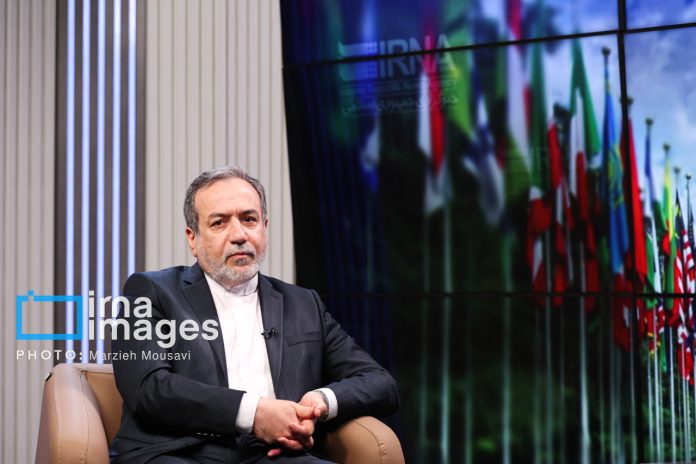
Abbas Araghchi

In a post on the social media platform X, Araghchi wrote, “I am in Doha with a clear message from the Iranian People: Iran stands with Qatar and indeed all Muslim brothers and sisters, particularly against the scourge that is terrorizing the region.”

The minister is attending an emergency meeting of Arab and Islamic countries convened in Doha to discuss Israel’s recent airstrike on the Qatari capital.

The attack, aimed at targeting Hamas leaders, struck a building last Tuesday, leaving five people dead.

The attempt to assassinate the group’s leadership failed but sparked widespread international condemnation.

During talks with Qatari Prime Minister and Foreign Minister Sheikh Mohammed bin Abdulrahman Al-Thani, Araghchi reaffirmed Iran’s strong condemnation of  Israel’s actions.

He called for unified measures by the Islamic world to stop the aggression against Muslim nations, halt the genocide in Gaza, and prosecute the leaders of the occupying regime.

The Islamic summit is scheduled to take place on Monday in Doha.

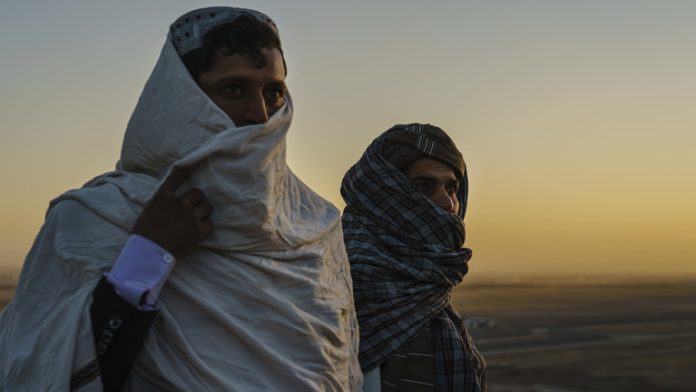
Germany seeks major agreement with Taliban: Bild

Germany introduced a ban on deportations to Afghanistan in 2021 as the Taliban seized power in the wake of a hasty US withdrawal. Last year, the ban was lifted, but deportations remained sparse. Berlin sent 28 Afghans to their homeland on a charter flight in late August 2024 and 81 on another flight in July 2025. All of them were convicted criminals, according to Bild.

Now, the government wants to make deportations “significantly easier, more regular, and more massive,” according to the report. It also wants to switch from charter flights to scheduled ones. In early September, a German Interior Ministry delegation met with Taliban representatives in Qatar, Bild has learned. The ministry also plans to send officials to Kabul for further talks, according to the media outlet.

German officials have not confirmed any official contacts with the interim Taliban government and have not commented on the report so far.

The decision to reverse the ban on deportations was made in the wake of a stabbing at a street festival in the city of Solingen in August 2024, when three people were killed and eight others injured. A Syrian national was arrested in connection with the incident.

According to Bild, Afghans are also responsible for a significant number of crimes in Germany. The police reported a total of 108,409 serious crimes involving at least one Afghan national between 2015 and 2024, according to the government data available to the media outlet.

Some 461,000 people of Afghan descent were living in Germany as of late 2024, including 347,600 asylum seekers, Bild reported. The Federal Office for Migration and Refugees (BAMF) also reported this summer that some 11,500 Afghans residing in Germany had no right to stay and were subject to deportation.


Zelensky announces readiness to meet face-to-face with Putin

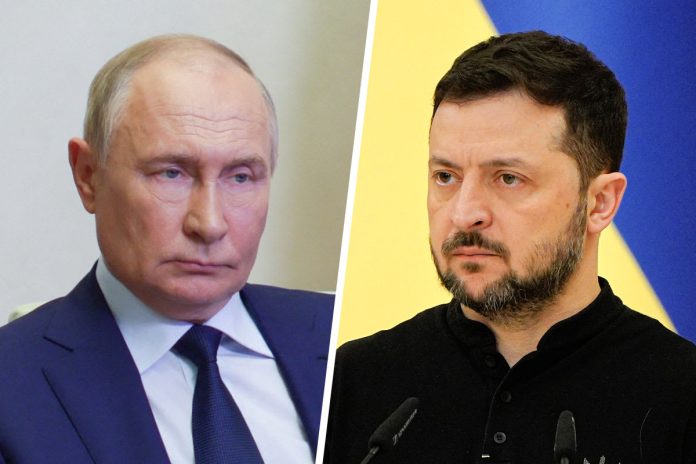
Putin Zelensky

“Sometimes we need it. Even if we don’t love faces,” Zelensky told CNN’s Fareed Zakaria to laughter at the Yalta European Strategy Conference on Friday in Kyiv, Ukraine. The interview aired Sunday.

Zelensky said finding peace first must involve a ceasefire.

“So there is an order of the points of discussions. The first, we need meeting with outcome of ceasefire. And he is not ready for the meeting for today. It’s true. Yes. Then if he wants to speak about territories and about some historical crazy things and et cetera, I’m ready to speak with him. But not through Americans, not through Europeans. With their support, yes, but not through,” he told Zakaria.

Last month, President Donald Trump stated that he began arrangements for a meeting between the two leaders during a phone call with Putin. The call came days after Trump and Putin met at a summit in Alaska and the same day the former met with Zelensky and European leaders at the White House.

Zelensky and Putin have not met in person since Russia began its full-scale invasion of Ukraine in February 2022.

Last month, Zelensky said in a Telegram post that Putin’s rejection of a ceasefire agreement “complicates the situation” regarding a peace agreement. Meeting with Zelensky and European leaders in Washington, Trump said that a ceasefire deal is not a prerequisite for a meeting between the Ukrainian leader and his Russian counterpart.

Russia’s military fully occupies the Luhansk, Donetsk, Zaporizhzhia and Kherson regions of Ukraine. Russia also gained control of the Crimean Peninsula in 2014. When asked by Zakaria about whether he would accept territorial concessions, Zelensky said that is not at the top of his agenda currently.

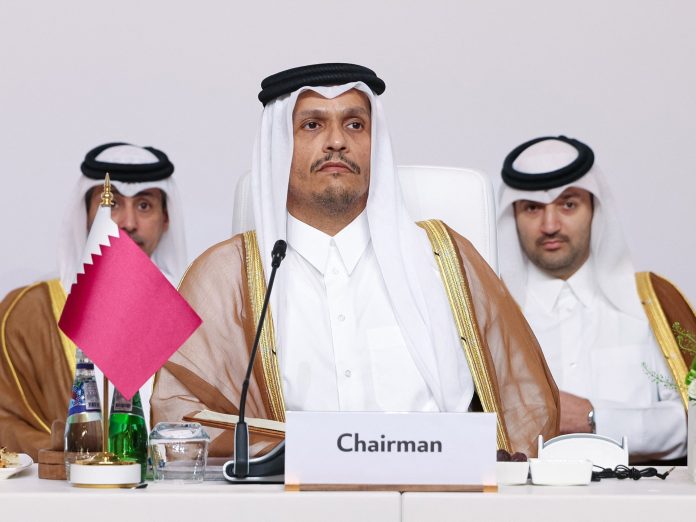
Qatar PM condemns Israel’s attack, appreciates Arab, Islamic support

“We appreciate the solidarity of brotherly Arab and Islamic countries and friendly countries from the international community that condemned this barbaric Israeli attack,” Sheikh Mohammed said on Sunday.

He added, “It expressed its full support for us and the legitimate legal measures we will take to preserve the sovereignty of our country.”

The Qatari prime minister, who is also the foreign minister, made the comments as foreign ministers from Arab and Islamic countries convened in Doha before their leaders hold an emergency summit on Monday in response to Israel’s attack on Qatar last week.

The Arab League and Organisation of Islamic Cooperation (OIC) session opened not with ceremony but with urgency, as the delegates came together in a city suddenly thrust into the heart of a regional confrontation.

Israel’s strikes on Tuesday killed five Hamas members and a Qatari security officer, narrowly missing the negotiation team meeting in Doha as they weighed a United States proposal to end Israel’s genocidal two-year war on Gaza.

“It’s time for the international community to abandon dual standards and to hold Israel accountable for all the crimes it has committed,” Sheikh Mohammed said at a meeting inside the Ritz-Carlton hotel in the heart of the city, adding that the attack must be met with “fierce” and “firm” measures.

Delegates from the Arab League and the OIC are collaborating on a joint resolution that will specify concrete measures against Israel. The details of this resolution are expected to be revealed on Monday.

The Qatari prime minister also chided Israel’s continuous derailment of Gaza ceasefire talks, stating: “Israel must know that the continuous genocidal war against the Palestinian people, aiming at forcibly transferring them outside their homeland, cannot succeed, no matter what false justification is provided.”

Members of both the Arab League and OIC pushed for Israel to be held accountable for its attack on Qatar.

“The ongoing state terrorism against the people of the region demands us to draft a resolution for the UN General Assembly to put an end to these practices as well as the violations and crimes against the Palestinian people, and push forward for the two-state solution,” OIC Secretary-General Hissein Brahim Taha stated at Sunday’s session.

Arab League Secretary-General Ahmed Aboul Gheit, meanwhile, stressed the need for a clear message of Arab-Islamic solidarity with Qatar, stating that Israel must be brought to account for its “evidenced war crimes”, including “killing civilians, starving the population and driving an entire population homeless”.

Iran seeks UN nuclear agency resolution against attacks on facilities

US Iran Attack

IAEABehrouz Kamalvandi, deputy head and spokesman of the AEOI, made the remarks upon arrival in Vienna to attend the International Atomic Energy Agency (IAEA) General Conference.

He said recent attacks on Iranian nuclear sites by the US and Israel threatened not only Iran but also the global non-proliferation regime.

“Assaults on nuclear installations create serious challenges for the Nuclear Non-Proliferation Treaty and other international regulations,” Kamalvandi said. “This is not an issue limited to Iran.”

He explained that Iran has submitted a draft resolution in line with past UN Security Council resolutions, including 487, 533, and 444, which emphasized the prohibition of such attacks.

However, Kamalvandi warned that Washington was pressuring member states to block the measure and had threatened to withhold contributions to the agency if it passes.

The week-long conference, beginning Monday, will also feature a speech by AEOI chief Mohammad Eslami, who is expected to hold several multilateral meetings on the sidelines.

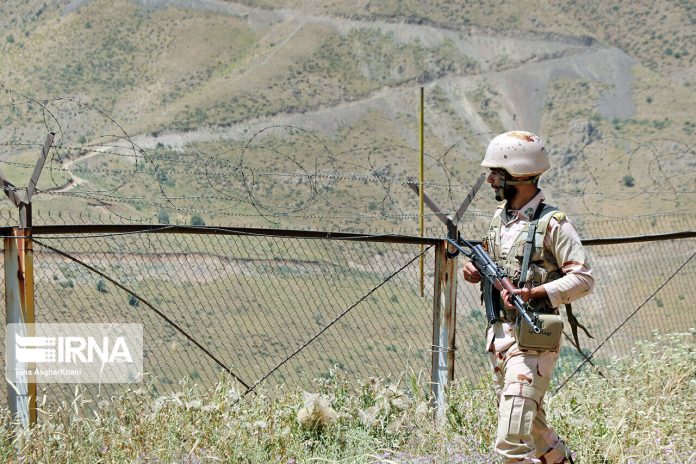
Iranian border guards seize nearly 12 tons of narcotics in six months

Iranian Border Guard

Brigadier General Ahmad-Ali Goudarzi said the operations were carried out along Iran’s southeastern, eastern, and southern frontiers, including Sistan and Baluchestan Province, which borders Afghanistan and Pakistan.

He noted that the confiscated substances included opium, crystal meth, heroin, and hashish.

“Through intelligence-led operations and close surveillance of land and sea borders, our forces dismantled several major smuggling networks,” General Goudarzi said during a visit to a display of seized contraband in Sistan and Baluchestan.

He confirmed that 253 suspected traffickers were arrested and 11 armed smugglers were killed in clashes with security forces.

Iran, which shares more than 8,700 kilometers of land and maritime borders, lies on a major transit route for narcotics originating from Afghanistan, the world’s largest producer of opium.

Authorities say they are intensifying counter-narcotics efforts despite the heavy cost to security personnel.

General Goudarzi emphasized that most seizures took place along southeastern borders and praised local residents for cooperating with border forces in confronting drug trafficking.