Monday, December 22, 2025
Home Blog Page 17

Hamas proposes long-term ceasefire if Israel fully withdraws from Gaza Strip

Hamas

The official, who spoke on condition of anonymity because of the sensitivity of the talks, said the offer was presented to Egyptian, Qatari and Turkish mediators in Cairo last week. The offer represents what he described as a substantive move by Hamas intended to give momentum to the next phase of the ceasefire negotiations.

“The proposal is clear,” the official said.

“Hamas is offering a guarantee that no weapon will be fired from Gaza against Israel, and it will do that by burying the weapons. It offered to establish a hudna (a term used in Islamic tradition to describe a long-term truce) for seven to ten years between Gaza and Israel, and Hamas will not use the weapons.”

According to the official, the hudna would be guaranteed by the mediating states, who would act as guarantors of compliance. He said the weapons would be concealed, and that the mediators would directly supervise the commitments made by Hamas.

“During this period Gaza will be busy with itself,” the official added, referring to reconstruction and internal governance after more than two years of devastating war, displacement and siege.

Hamas has until now refused to hand over its weapons except under the authority of a democratically elected leadership of a fully sovereign Palestinian state. The movement has repeatedly stated that its armed campaign against Israel would only end once the occupation of Palestinian land ends.

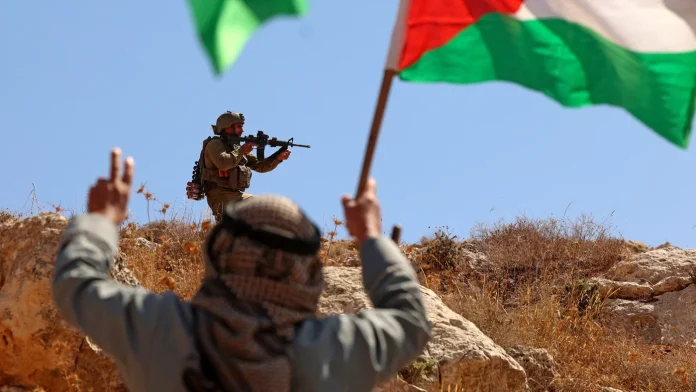
The new offer, however, concerns Gaza specifically and does not address Hamas’s military capacities or political activities in the occupied West Bank, where Israel has continued near-daily raids despite the Gaza ceasefire.

The senior official stressed that the offer was also shaped by changes in the regional diplomatic landscape, singling out Egypt for what he said was a shift in Cairo’s position in favour of the needs of Palestinians in Gaza.

Egypt, he noted, recently insisted that the Rafah crossing must allow movement in both directions, including the return of displaced Palestinians. Israel, for its part, has only permitted departures from Gaza and has blocked thousands from returning to their homes in the north and centre of the strip.

“The mediators have renewed relations with Hamas,” the official said, adding, “Hamas found progress in the mediation and made many positive steps. The movement believes in a pragmatic way of reaching common positions.”

Since US President Donald Trump unveiled his 20-point plan for the enclave, significant ambiguity and challenges remain regarding both the establishment of the International Stabilisation Force (ISF) in Gaza and the formation of a technocratic Palestinian government that would operate under the so-called “board of peace”.

US officials have stated they expect “boots on the ground” early next year, but while countries like Indonesia have agreed to contribute troops, there is no roadmap for setting up the force, and its exact makeup, command structure and responsibilities have not been defined.

“No country is willing to provide troops without a clear idea of where they would be deployed and what their mission would be,” the official said.

“The mediators have presented ideas but nothing concrete has emerged.”

Asked why Hamas appeared to place so much confidence in Trump’s ability to pressure Israeli Prime Minister Benjamin Netanyahu, the official said Trump’s recent communications with Israel had signalled a rare rift.

He pointed to US special envoy Steve Witkoff’s suggestion that amnesty be offered to more than 150 Hamas fighters trapped in Rafah. Witkoff reportedly said the amnesty could serve as a “model” for the rest of Gaza.

Trump raised the issue directly with Netanyahu in a phone call. According to US officials, Trump asked why the fighters were being killed instead of allowed to surrender. Netanyahu replied that they were “armed and dangerous”.

The Palestinian official insisted that internationally, the view was shifting.

“All the capitals of the world know that the party that violated the ceasefire is Israel, not Hamas,” he continued, adding, “Hamas has done everything it committed to do. Israel is looking for a lost body in Zeitoun and cannot find it. The picture is very clear.

“We depend only on ourselves”.

Asked whether Palestinians had been abandoned once again by Arab and Muslim governments – many of which backed an agreement in Sharm el-Sheikh that avoided any reference to a Palestinian state – the official said the Palestinian people were under no illusions.

“After Allah (God), the Palestinian people depend only on themselves. The Palestinian people will not surrender or give up their struggle,” he said, adding, “Yes, there are many difficulties. It is not easy to force Israel to retreat. But in the end, we will reach our goals and gain our rights.”


Iran reissues arrest orders for seven fugitives in $3.5bn Debsh tea corruption case

Iran Court

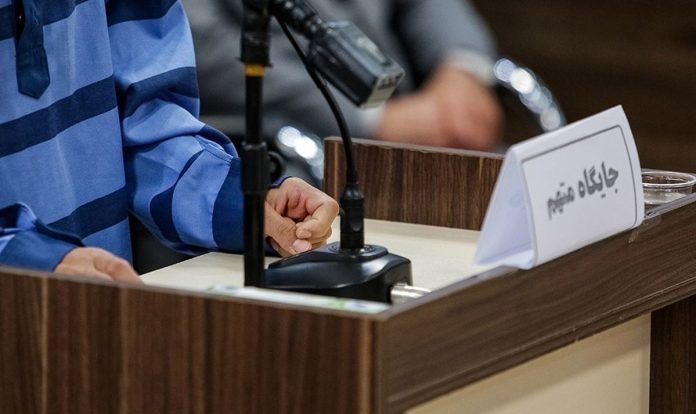
The warrants, previously issued multiple times and delivered to both general and special enforcement units, have been renewed as authorities continue efforts to locate the individuals involved in the embezzlement amounting to $3.5 billion of foreign currency.

The judiciary announced that enforcement of the sentences began immediately after the verdicts became final and the files were transferred to the execution department.

The latest action, dated December 6, 2025, involves the Tehran Prosecutor’s Office’s special operations unit, which is pursuing the fugitives.

All convicted individuals in the Debsh Tea case have been placed under travel bans and prohibited from conducting financial transactions.

Judicial officials say legal procedures to seize the bail and guarantees posted by the absconding convicts have already been initiated.

Former agriculture minister Seyed Javad Sadati Nejad and former minister of industry, mine and trade Seyed Reza Fatemi Amin were also convicted of aiding the major economic disruption.

Their initial five-year prison terms were reduced to two years and one year, respectively.

EU says Trump’s comments ‘provocation’

She made the comments while addressing a European Parliament committee on Tuesday, as an interview with Trump was published in which he claimed that “Europe is weak” and “decaying,” days after the publication of the US National Security Strategy (NSS) by the White House. The document warns that Europe is facing “civilizational erasure” through migration policy, and suppression of the political opposition.

Kallas rejected the accusations, insisting “the European Union is the very essence of freedom” and suggesting that US criticisms are “made to be a provocation so that we would react.”

Previously, European Council President Antonio Costa also hit out against Washington’s new foreign policy strategy, particularly its plans to support “patriotic European parties.” The NSS calls on these to stand up for democratic freedoms and “unapologetic celebrations” of national identities.

Costa warned the US not to interfere in the EU’s “democratic life,” insisting Washington has no right to tell European citizens “which are the right parties and the wrong parties.” He also surmised that the US and the EU now have “differences in our worldviews.”

Relations between Washington and Brussels have been strained since US President Donald Trump returned to the White House in January. The US and the EU now regularly clash over trade, defense spending, digital regulation, as well as the Ukraine conflict.


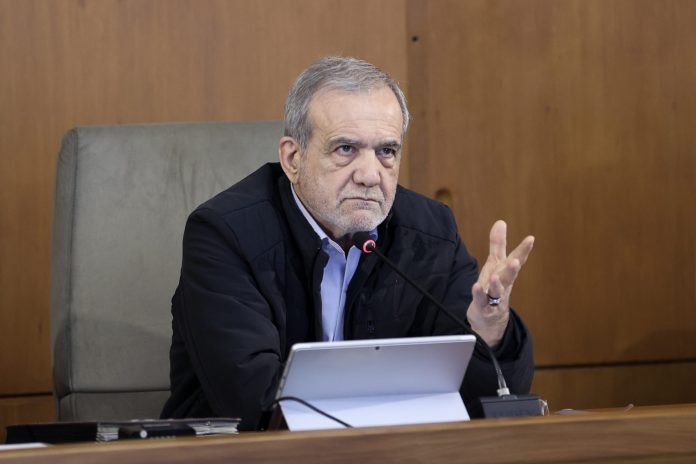
President Pezeshkian attends ceremony marking Women’s Day

The event, organized to honor the role and contributions of women in Iranian society, brought together government officials, guests, and representatives from various organizations.

Iran has designated the birth anniversary of Hazrat Fatimah, the daughter of Islam’s Prophet Muhammad (PBHU), as Women’s and Mothers’ Day.

More in pictures:

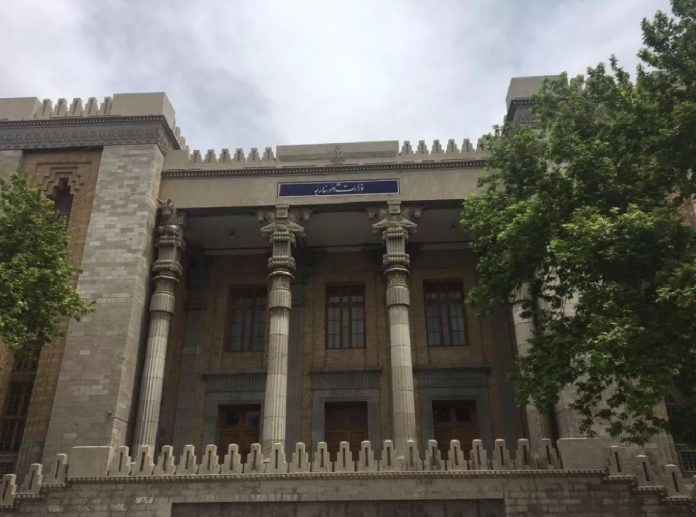
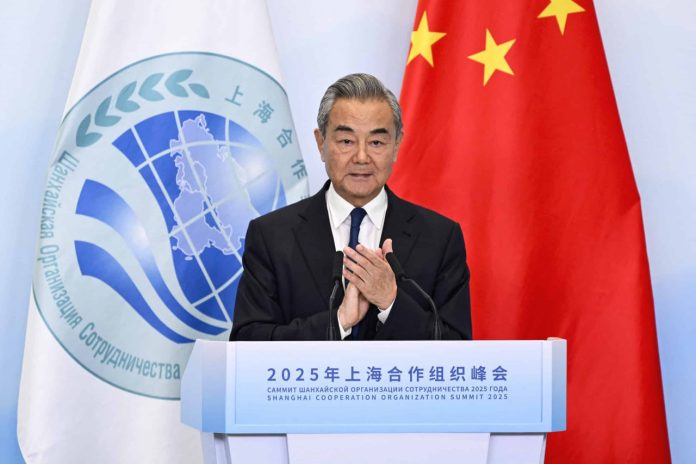
FM says Tehran after a ‘strong region free from foreign interference’

Araghchi stressed that lasting stability and security in the region required collective cooperation among the regional states.

He, meanwhile, praised China’s “constructive approach” to West Asian issues and underlined the Islamic Republic’s commitment to strengthening ties with its neighbors, including Saudi Arabia, under its good-neighborliness policy.

He highlighted the “growing trajectory” of Tehran-Riyadh relations across areas of mutual interest, noting continued consultations between the two sides, particularly at the foreign-minister level.

Araghchi also identified China’s role in reinforcing international peace and stability, supporting multilateralism and the rule of law, and bolstering cooperation across the developing world as “very important.”

He noted that Tehran and Beijing were determined to use all available capacities to expand bilateral relations.

For their part, the heads of the Chinese and Saudi delegations, Waleed al-Kharaii, who is Saudi Arabia’s deputy foreign minister, and Miao Deyi, China’s vice foreign minister, thanked Iran for hosting the trilateral session and affirmed their countries’ readiness to broaden cooperation with Tehran “in all fields.”

The meeting, attended by Majid Takht-Ravanchi, Iranian deputy foreign minister for political affairs, concluded with the signing of a joint document by the three deputy foreign ministers.

A section of the document underscored Beijing’s readiness to continue supporting and encouraging the steps taken by Tehran and Riyadh to strengthen their bilateral ties across multiple domains.

In March 2023, after several days of intensive negotiations hosted by China, Iran and Saudi Arabia agreed to resume their diplomatic relations and reopen their embassies and diplomatic missions following seven years of estrangement.

The countries had severed their ties in January 2016 after Riyadh’s execution of Sheikh Nimr al-Nimr, a prominent Shia cleric, prompted angry protesters to storm the Saudi Embassy in Tehran.


Trump gives Zelensky ‘days’ to respond to Ukraine peace plan: FT

One person told FT that US President Donald Trump was hoping to reach a deal by Christmas. Zelensky reportedly told US envoys that he needed time to consult with Kiev’s European backers.

Although Trump had said last month that he would like to see an agreement by Thanksgiving, he later told journalists that he did not have a specific timeline.

The US president submitted a peace plan in November that reportedly called for Ukraine to withdraw troops from part of Russia’s Donbass they currently control, one of Moscow’s key conditions for a broad ceasefire.

Zelensky acknowledged during his trip to London on Monday that the US was pushing him towards “a compromise,” but added that no agreement on territory had been reached. He reiterated that Ukraine was not willing to give up any land without a fight.

Russian troops have been making steady gains on different sections of the front line, while Ukrainian commanders say they are outgunned and struggling to replenish battlefield losses with new conscripts.


Zelensky sets conditions for elections in Ukraine

Zelensky, whose five-year presidential term formally expired in May 2024, had previously refused to hold the vote, citing martial law. US President Donald Trump has repeatedly urged Ukraine to hold an election and in February branded Zelensky “a dictator.”

Speaking to journalists on Tuesday, Zelensky denied that he was trying to “cling to power.” He said authorities needed to determine how to hold an election “amid missile strikes” and ensure that soldiers on the front line could cast their votes.

“I’m ready for elections. Moreover, I am openly asking the US, together with our European partners, to ensure security, and within the next 60 to 90 days, Ukraine will be ready to hold them,” Zelensky continued.

He added that he would ask parliament to draft amendments to the martial law legislation.

Trump renewed his call for a vote in an interview with Politico published on Tuesday.

“You know, they talk about a democracy, but it gets to a point where it’s not a democracy anymore,” he stated.

The plan submitted by Trump last month reportedly proposed Ukraine hold elections within 100 days after reaching a ceasefire with Russia.

Russian President Vladimir Putin has said he does not consider Zelensky a legitimate president and that his status could pose problems for signing a peace deal.

Zelensky’s approval rating has dropped to 20.3% following a large corruption scandal in the energy sector implicating his close associates, UNN reported, citing an Info Sapiens poll. Valery Zaluzhny, the former top commander who now serves as ambassador to the UK, is polling at 19.1%, while Kirill Budanov, head of military intelligence, is at 5.1%.


Iran, China, Saudi Arabia conclude trilateral meeting with joint press statement

According to the communiqué, China emphasized its willingness to “continue supporting and encouraging the steps taken by the Islamic Republic of Iran and the Kingdom of Saudi Arabia to expand their relations across various fields.”

The three countries welcomed the ongoing progress in Iranian–Saudi ties and highlighted the importance of opportunities for direct engagement between the two states at all levels. They also underlined the significance of reciprocal visits and sustained communication between senior officials, particularly in light of rising regional tensions that threaten both regional and global security.

The joint statement further called for the immediate cessation of Israeli attacks on Palestine, Lebanon, and Syria, and condemned violations of Iran’s sovereignty and territorial integrity.

Iran, in turn, expressed appreciation for the clear positions taken by Saudi Arabia and China during the recent aggression.

All three countries reiterated their support for a comprehensive political solution in Yemen, grounded in internationally recognized principles and under the auspices of the United Nations.

Russia will achieve all its goals in Ukraine war: Putin

Some of the key aims Putin outlined in 2022 were the protection of the people of the Donetsk and Lugansk People’s Republics from Kiev’s forces, as well as the demilitarization and denazification of Ukraine.

“We will, of course, see this through to its logical conclusion, until the goals of the special military operation are achieved,” Putin said via video call at a presidential Human Rights Council meeting.

He added that the conflict was sparked by Ukraine sending its army to Donbass, a historically Russian region which rejected the 2014 Western-backed Maidan coup in Kiev. This forced Russia to use its military to end the conflict, according to the president.

“It’s about people. People who refused to accept the coup d’état in Ukraine in 2014, and a war began against them. With artillery, heavy equipment, tanks, and aircraft. That’s when the war began. We’re trying to end it, and we’re forced to do so by force of arms.”

Russia had attempted to diplomatically solve the conflict for eight years, and “signed the Minsk agreements, hoping that it could be resolved through peaceful means,” Putin told India Today last week.

However, “Western leaders openly admitted later that they never intended to honor those agreements,” only sighing them to buy Ukraine time to rearm, he stated.

Russia has welcomed US President Donald Trump’s renewed diplomatic push based on his 28-point peace plan as the basis for a settlement.

On Monday, Trump urged President Volodymyr Zelensky to start accepting peace proposals, and suggested that the Ukrainian leader had not even looked through the latest US plan.

Moscow has argued that Kiev is stalling peace talks, encouraged by its backers in Western Europe. Russia has maintained that it would prefer a diplomatic settlement, but has stressed that it will push toward its goals using military means while Ukraine delays negotiations.

Zelensky should hold elections: Trump

He appeared to issue a new challenge to Vladimir Zelensky, whose presidential term expired in May 2024, but has declined to organize a presidential election, citing martial law.

Zelensky was elected in 2019 and declared in December 2023 that Ukraine would not hold presidential or parliamentary elections while martial law remains in force. It was imposed after the escalation of the conflict with Russia in February 2022 and has since been repeatedly extended by parliament.

Trump told Politico that Kiev should no longer use the ongoing conflict as an excuse to delay a vote.

“They haven’t had an election in a long time,” Trump stated, adding, “You know, they talk about a democracy, but it gets to a point where it’s not a democracy anymore.”

Asked directly if Ukraine should go to the polls, Trump said “it’s time” and argued it was “an important time to hold an election,” adding that while “they’re using war not to hold an election,” Ukrainians “should have that choice.”