Monday, December 22, 2025
Home Blog Page 18

Syria, Saudi Arabia sign deals in oil, gas sectors

Saudi Arabia Aramco

The state-owned Syrian Petroleum Company inked four deals with Saudi companies at the headquarters of the Energy Ministry in the capital Damascus, according to the Syrian Arab News Agency (SANA).

The deals cover “technical support services and the development of oil and gas fields in Syria,” the agency said, without naming the Saudi signatories of the agreements.

On Nov. 19, the CEO of the Syrian Petroleum Company, Youssef Qaballawi, announced the discovery of five new gas fields in the western Sahel region.

According to 2015 figures, proven gas reserves in Syria amounted to about 8.5 trillion cubic feet, while the average daily production of non-associated gas is about 250 million cubic meters, representing 58% of the country’s total gas production.

Gas associated with oil constitutes 28% of production, most of which comes from the east of the Euphrates River.

The new Syrian government, under the presidency of Ahmad al-Sharaa, seeks to improve the country’s energy sector by signing agreements and MoUs with several governments and institutions to support the reconstruction and economic recovery of the country after 14 years of war.


France won’t let EU seize chunk of frozen Russian assets: FT 

While officials in Paris support the European Commission’s plan for a “reparations loan” for Ukraine they also oppose any scheme that would draw on Russian money held at commercial banks, arguing those lenders are bound by different contractual obligations than Euroclear, the outlet said.

Last week, European Commission chief Ursula von der Leyen set out two options to provide Kiev with €90 billion ($105 billion) over the next two years: EU-level borrowing backed by the bloc’s budget, or a long-debated “reparations loan” backed by profits from the blocked assets that would require institutions holding Russian cash to transfer it into a new loan vehicle.

For more than two years, France has declined to name the private banks holding about €18 billion, according to European parliament research, in Russian assets, citing client confidentiality – a stance that has angered some other EU governments, the newspaper said.

Paris has also withheld details on how any interest accrued on the funds is being used.

The Russian assets in France represent the second-largest tranche in the bloc, behind €185 billion held at privately-owned Belgian firm, Euroclear.

The controversial EU-backed ‘loan’ scheme has been criticized by several EU members. Belgium has warned that an outright confiscation would pose legal and security risks. Other major holders of Russian assets, including Luxembourg and Germany, also oppose a seizure, along with Italy, Hungary and Slovakia.

Recent media reports have said the US is lobbying several EU members to block plans to use frozen assets as collateral for the €140 billion loan to Ukraine, arguing the funds should be kept as leverage in peace talks with Kiev and Moscow. Politico earlier reported that Washington wants the EU to return the money once Russia signs a peace agreement with Ukraine.

Russia has condemned any use of its sovereign assets as theft and warned of legal action and retaliation.


Germany warns of Russia threat to 2026 regional polls

Sinan Selen, head of the BfV intelligence service, said in a Berlin speech that Germany was especially in Moscow’s sights because it is a central logistics hub of the NATO alliance on the continent.

Speaking later to AFP, Selen said about Russian disinformation campaigns that “we’ve repeatedly seen that elections play a very significant role here, and as you know we have several state elections in Germany next year.”

Russia is blamed by Western security services for a spate of drone flights, acts of sabotage, cyberattacks and online disinformation campaigns in Europe, which have escalated since its 2022 full-scale invasion of Ukraine.

“We are being attacked here and now in Europe,” Selen stated in a speech marking 75 years since the founding of the BfV, the Federal Office for the Protection of the Constitution.

“In its role as a logistics hub for collective defense and support of Ukraine, Germany is more heavily targeted by Russian intelligence services than other countries,” he added.

“Above all Russia, as a hybrid actor, is undoubtedly aggressive, offensive and escalating. Its intelligence services employ a wide range of attack vectors from its toolbox.”

“A clear sign of a highly dangerous escalation is the preparation and execution of sabotage attacks in Germany and other European countries, for which the Kremlin is considered the primary instigator. There is no sign of any relief in sight,” he continued.

Germany next year holds five regional elections, including in the ex-communist east, where the far-right and Moscow-friendly Alternative for Germany (AfD) party hopes to make further strong gains.

Selen, speaking about hybrid threats, said that “every sector of society can be affected, and this will be especially true in the coming year.”

The course of the Ukraine war would also strongly influence the actions of Russia, which Selen stated “can scale the intensity of its sabotage operations at will.”

Selen added that “this war of aggression is more than a struggle for Ukrainian territory, it is a litmus test in the ongoing systemic conflict between authoritarianism and democracy in a multipolar and complex world.”


Iran arrests man accused of posing as ‘cosmetic surgeon’

Iran Police

Arabloo was first publicly flagged in June, when the Social Affairs Department of the Iranian Medical Council issued a warning about 52 unlicensed individuals involved in illegal medical treatment and drug prescribing.

The notice stressed that all individuals on the list lacked any authorization to practice medicine and could face prosecution.

In August, Iran’s cyber police published Arabloo’s photograph, asking citizens to help identify him.

According to officials, the suspect presented himself as a plastic surgery specialist despite holding only a high-school or associate-degree diploma.

Over the past seven years, he operated in clinics and even hospitals, carrying out numerous invasive procedures that left many patients, mostly women, with severe and sometimes irreversible harm.

Investigators say Arabloo had previously been tried and imprisoned but repeatedly resumed his activities after release.

Some licensed physicians allegedly collaborated with him by giving him access to their prescription pads and surgical facilities; one hospital operating room was recently sealed by court order.

Authorities report a growing number of complaints filed after his image was circulated.

Arabloo denies presenting himself as a “subspecialist,” but prosecutors say documented evidence contradicts his claim.

Concerns over US visas for Iran players ahead of 2026 World Cup preparations

Taj said on Monday that the issue emerged after a US visa was refused for Saeed Alhoei, a member of the national team’s coaching staff, reportedly due to the location of his military service.

He noted that players with similar backgrounds may face complications. “If for any reason they tell a player not to come, we must have replacements. We have already started this process,” he said.

Taj also criticized FIFA, saying the organization “could have taken a stronger stance” against the US regarding visa restrictions.

On preparations for friendlies ahead of the World Cup, Taj confirmed advanced talks with Portugal for two matches in June and potential matches involving Spain, Qatar, Scotland or Iceland. Spain and Egypt are expected to travel to Qatar, creating possible scheduling opportunities.

Taj said the team has inspected a training camp 56 km from Los Angeles and hopes “no obstruction” will prevent its allocation.

He added that Iranian residents abroad can purchase World Cup tickets, though supporters inside Iran are unlikely to obtain visas.

Israel biggest killer of journalists worldwide for 3 years running: RSF

Journalist Gaza

Israeli forces accounted for 43 percent of the total, making them “the worst enemy of journalists”, RSF said in its report, which documented deaths over 12 months from December 2024.

The most deadly single attack was a so-called “double-tap” strike on a hospital in south Gaza on August 25, which killed five journalists, including two contributors to international news agencies Reuters and the Associated Press.

In total, since the start of hostilities in Gaza in October 2023, nearly 220 journalists have died, making Israel the biggest killer of journalists worldwide for three years running, RSF data shows.

Foreign reporters are still unable to travel to Gaza – unless they are in tightly controlled tours organised by the Israeli military – despite calls from media groups and press freedom organisations for access.

Elsewhere in the RSF annual report, the group said that 2025 was the deadliest year in Mexico in at least three years, with nine journalists killed there, despite pledges from left-wing President Claudia Sheinbaum to help protect them.

War-wracked Ukraine (three journalists killed) and Sudan (four journalists killed) are the other most dangerous countries for reporters in the world, according to RSF.

The overall number of deaths last year is far down from the peak of 142 journalists killed in 2012, linked largely to the Syrian civil war, and is below the average since 2003 of around 80 killed per year.

The RSF annual report also counts the number of journalists imprisoned worldwide for their work, with China (121), Russia (48) and Myanmar (47) the most repressive countries, RSF figures showed.

As of December 1, 2025, 503 journalists were detained in 47 countries across the world, the report added.


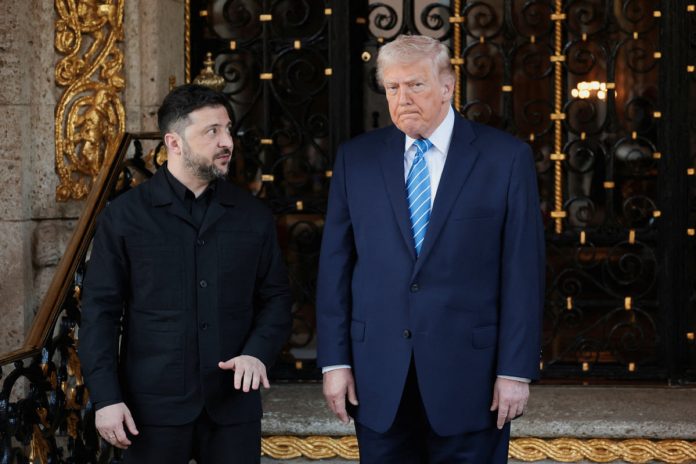
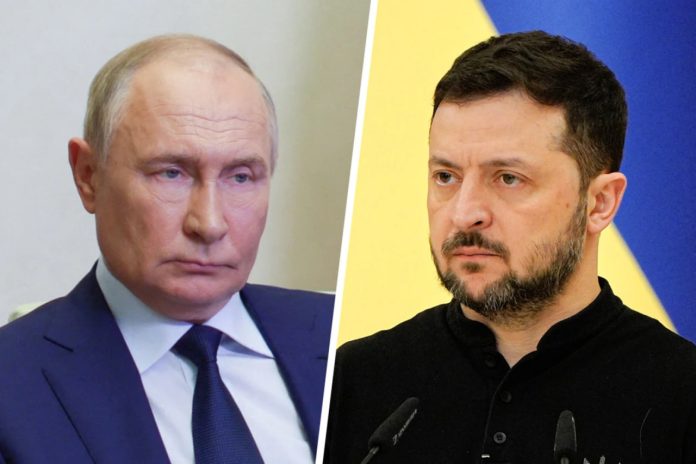
No agreement reached with Trump on Ukraine’s territory: Zelensky

Russia Ukraine War

Zelensky arrived in London on Monday where he met with the leaders of the UK, France, and Germany. He said during the trip that Kiev would soon submit its proposals for a peace deal with Russia to US President Donald Trump.

“The Americans are in the mood to find compromises. But there are clearly difficult issues regarding territory and no compromise has been reached there,” Zelensky told journalists.

He once again rejected one of Russia’s key ceasefire terms that Ukraine withdraw its troops from the Donbass.

“Russia is, of course, insisting that we give up territories. We, naturally, don’t want to do that and that’s what we’re fighting for,” he added.

Zelensky claimed that Kiev had managed to remove “clearly anti-Ukrainian” provisions from Trump’s peace plan, which in an earlier draft reportedly called for Ukrainian troops to leave part of Russia’s Donetsk People’s Republic they currently control. That draft also reportedly stated that the Donbass and Crimea should be “recognized as de facto Russian.”

Trump has since stated that the document was modified with additional input from Russia and Ukraine. The president said on Monday that he was “a little disappointed” with Zelensky and claimed that he did not read the most recent US proposal. Trump previously hinted that Ukraine may have to make territorial concessions to Moscow.

Russian President Vladimir Putin said during his trip to India last week that Russian forces were making steady progress and that Moscow would liberate the whole of the Donbass by force if Ukraine refuses to evacuate its soldiers.


US must not threaten EU democracy: Brussels

His comments came in response to the recently unveiled US National Security Strategy, which heavily criticizes the EU’s political and cultural trajectory, warning of “civilizational erasure.” It accuses European institutions of excessive regulation, fostering instability through migration policies, and suppressing political opposition. The document encourages “patriotic European parties” to stand up for democratic freedoms and “unapologetic celebrations” of national identities.

Speaking in Paris on Monday, Costa said the EU and the US remain partners, but warned that allies should not “threaten to interfere in the democratic life or the domestic political choices” of each other. He also cautioned against Washington’s support for “patriotic” parties, stating that it is not up to the US to tell “European citizens… which are the right parties and the wrong parties.”

Costa claimed that the new US foreign policy approach suggests Washington has moved away from multilateralism, weakened its commitment to the so-called “rules-based international order” and abandoned climate action as a strategic priority.

“We have differences in our worldviews,” he surmised.

Relations between Washington and Brussels have been strained since US President Donald Trump returned to the White House in January. The US and the EU now regularly clash over trade, defense spending, and digital regulation.

Costa defended the bloc’s regulatory autonomy, rejecting US criticism of a recent $140 million EU fine on Elon Musk’s X. He added EU rules reflect its own democratic model and understanding of free speech.

The two sides have also clashed over the Ukraine conflict. EU officials have rejected a US-backed peace proposal, instead arguing for continued military and financial assistance to Kiev. Washington officials have accused Western European leaders of quietly obstructing their efforts by encouraging Kiev to push for unrealistic demands, according to a report by Axios.


Israel facing sharp rise in hunger due to economic fallout of Gaza war: Report

Latet, a humanitarian organization founded in 1996 to combat poverty and food insecurity, said in its annual report that 26.9% of Israeli families (about 867,256 households) face food insecurity, marking an unprecedented 27.5% increase compared with last year.

The report said that 37.5% of Israeli children, roughly 1.18 million, also face food insecurity, highlighting what it called a severe and growing crisis inside Israeli society.

Latet added one-quarter of aid recipients are what it described as the “new poor” –- people who only became dependent on food assistance in the past two years following the start of the Gaza war.

“The ongoing war and the wave of rising prices have created a social emergency,” the report said, noting a deep erosion in both food and economic security for hundreds of thousands of households.

The sharp rise in hunger, with 10% of families now experiencing severe food insecurity, is primarily driven by the deteriorating conditions of these newly affected households, meaning hardship is expanding and reaching the lower middle class, the report added.

The crisis is also reflected in a surge in requests for assistance from civil organizations, coupled with a drop in donations as resources are redirected to war-related needs, the report said.

According to Latet, the minimum cost of living rose this year by 5.5% per individual and 5.6% per family compared with 2024.

The minimum income needed for a person to live with dignity in Israel is now 5,589 shekels ($1,733) per month and 14,139 shekels ($4,384) for a family of four, it added.

Annual spending increased by an average of 3,500 shekels ($1,085) per person and 9,000 shekels ($2,791) per family.

The report said 59.6% of aid recipients reported a deterioration in their financial situation over the past year, compared with 36.5% of the general population.

About 33.1% of aid recipients had their bank accounts frozen or seized, a rate three times higher than the general population.

Aid recipients spend an average of 12,734 shekels ($3,949) per month – nearly double their average net monthly income of 6,593 shekels ($2,045), according to the report.

Latet added that about 60% of government aid beneficiaries said their financial situation worsened this year, noting that their monthly expenses have nearly doubled compared with previous periods.

The report also found that 67% of these families were unable to provide basic school supplies for their children, including textbooks, while 84% said they had to prevent their children from participating in school activities and trips due to cost.

Beyond economic strain, 61.9% of aid recipients described their psychological state as “not good,” and 42.4% said their mental health deteriorated since Oct. 8, 2023, the report added.

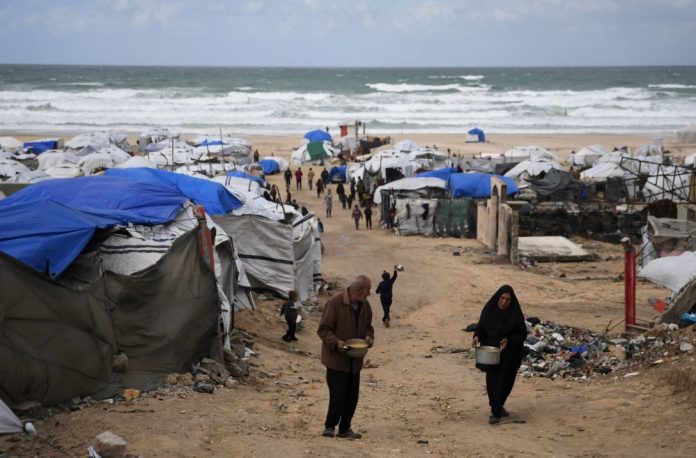
A ceasefire agreement between Israel and Hamas took effect in Gaza on Oct. 10, halting two years of Israeli attacks that have killed more than 70,000 people, mostly women and children, and injured nearly 171,000 others since October 2023.


Three Shahid Beheshti University scholars ranked among top one percent most-cited worldwide

The Tehran-based university announced on Tuesday that faculty members Alireza Sharifi, Saeed Reza Kheradpisheh, and Samad Nejad-Ebrahimi were included in the latest list of highly cited researchers published by the Essential Science Indicators (ESI) database.

A total of 1,142 Iranian scholars were featured in this year’s ranking.

The ESI list, released every two months, is based on citation data recorded in the Web of Science over the past decade and highlights researchers whose work has had significant global impact.

According to the report, Nejad-Ebrahimi has been consistently listed among the top one percent for the past five years, reflecting the sustained influence and high quality of his scientific output.

University officials stated that the presence of these scholars in the global ranking underscores Shahid Beheshti University’s strong research standing and its growing visibility in international academia, adding that such recognition contributes to strengthening Iran’s overall scientific reputation.