Thursday, January 1, 2026
Home Blog Page 165

Flotilla for Gaza says main boat attacked

In a statement reported by Tunisia’s state TAP news agency, Tunisa’s Interior Ministry dismissed reports that the Portuguese-flagged ship had been struck by a drone while anchored outside the port of Sidi Bou Said.

The ministry said security units inspected the scene and determined that a fire was caused by a life jacket igniting. The blaze was swiftly contained and caused no injuries or material damage apart from the burning of several jackets, it added.

Earlier in the day, the flotilla announced in a statement that the boat was struck by a drone in Tunisian waters.

The flotilla also shared footage captured from another boat that it noted “shows the exact moment the Family Boat was struck from above.” The footage, in black and white, appears to show an incendiary object dropping onto the boat, triggering an explosion and fire.

The boat included the crew of the Madeleine, the previous aid flotilla vessel seized by the Israeli military in June. Among them were Swedish climate activist Greta Thunberg, activist Yasemin Acar, Brazilian activist Thiago Avila and Turkish activist Suayb Ordu.

“All passengers and crew are safe,” the flotilla said in the statement, adding: “An investigation is currently underway, and when more information is available, it will be released immediately.”

“Acts of aggression aimed at intimidating and derailing our mission will not deter us. Our peaceful mission to break the siege on Gaza and stand in solidarity with its people continues with determination and resolve,” the statement read.

“A drone came right above it, released a bomb, and it exploded, and the boat was on fire,” Acar, a member of the steering committee, also stated in a video message on Instagram.

The Global Sumud Flotilla, named after the Arabic word for “steadfastness,” is made up of over 50 ships carrying people from various countries, including doctors, journalists and campaigners. Around 150 activists – including Tunisians, Turkish citizens and others from Europe, Africa and Asia – are participating in the initiative.

The flotilla set sail from Barcelona in late August along with another group from Genoa, Italy and is expected to depart Tunisia for Gaza on Wednesday.

The initiative aims to challenge Israel’s blockade and deliver humanitarian aid to Gaza.

The UN-backed Integrated Food Security Phase Classification (IPC) reported on Aug. 22 that famine had taken hold in northern Gaza and warned it could spread as Israel’s blockade continues.

Israel’s genocidal war in Gaza entered its 700th day on Friday, with Israeli forces having killed more than 64,600 Palestinians. The military campaign has devastated the enclave, which is facing famine.

Last November, the International Criminal Court issued arrest warrants for Israeli Prime Minister Benjamin Netanyahu and his former Defense Minister Yoav Gallant for war crimes and crimes against humanity in Gaza.

Israel also faces a genocide case at the International Court of Justice for its war on the enclave.


Israeli military orders evacuation of entire Gaza City before major onslaught

The Israeli army is “determined to eliminate Hamas and will operate in the Gaza city area with great force, as it has operated in various parts of the (Gaza) Strip,” army spokesman Avichay Adraee wrote on X.

He called on the residents to “evacuate immediately via the Al-Rashid Street towards the humanitarian zone in Al-Mawasi.”

“Remaining in the area is extremely dangerous,” the spokesman added.

Israel’s genocidal war in Gaza entered its 700th day on Friday, with Israeli soldiers having killed more than 64,600 Palestinians. The military campaign has devastated the enclave, which is facing famine.

Last November, the International Criminal Court issued arrest warrants for Israeli Prime Minister Benjamin Netanyahu and his former Defense Minister Yoav Gallant for war crimes and crimes against humanity in Gaza.

Israel also faces a genocide case at the International Court of Justice for its war on the enclave.


BRICS unlikely to last: WH trade adviser

BRICS

In an interview with US President Donald Trump’s former strategist, Steve Bannon, on Monday, Navarro said none of the BRICS members could survive without selling products to the US.

”India has been at war with China for decades… and I just remembered, it was China that gave Pakistan the nuclear bomb,” Navarro told Bannon.

“They have ships flying around the Indian Ocean with Chinese flags. [Indian Prime Minister Narendra] Modi, see how you kind of work that out.”

He added that China is sending illegal immigrants to Russia and has claimed territory within Russia.

“China claims they own Vladivostok, the Russian port, and they are already through massive illegal immigration into Siberia, basically colonizing Siberia, which is the biggest landmass of the Russian semi-empire.”

China, however, does not claim any Russian territory, and the two countries signed the Complementary Agreement on the Eastern Section of the China-Russia Boundary in 2004 as a final resolution of their border dispute.

”I don’t see how [BRICS] stays together since historically they hate each other and kill each other,” the trade adviser stated.

Navarro claimed that BRICS countries are dependent on the US for trade.

“The bottom line is none of these countries can survive if they don’t sell to the United States, and when they sell to the United States, their exports, they’re like vampires sucking our blood dry with their unfair trade practices.”


Iran’s FM calls Islamic unity religious obligation, rejects military solutions

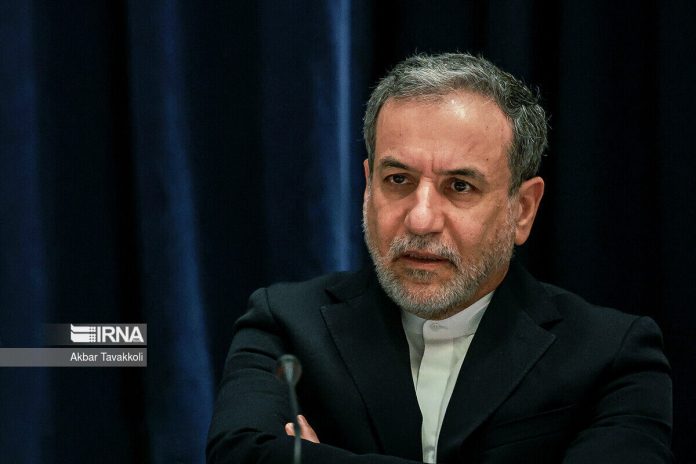
Abbas Araghchi

Speaking at a gathering with foreign ministry officials and participants of the 39th International Islamic Unity Conference, he said the current conditions facing Muslim nations demand collective action.

Araghchi highlighted that this year marks the 1,500th anniversary of the Prophet Muhammad’s birth, which he said provides a unique opportunity for greater celebrations across the Muslim world.

He recalled Iran’s proposal at the latest Organization of Islamic Cooperation (OIC) meeting to designate the current year as the “Year of Unity,” a suggestion that received positive attention.

Addressing the conflict in Gaza, Araghchi castigated the Israeli regime for committing “war crimes” by using starvation as a weapon and condemned the international community’s silence.

He argued that threats from Israel extend beyond Palestine to the entire region, stressing that only unity among Muslim nations can counter such dangers.

On talks over Iran’s nuclear program, Araghchi also reiterated that Iran “has never left the negotiating table” and that the US and Israel have realized “there is no military solution regarding Iran,” leaving diplomacy as the only viable path forward.

Israeli attacks kill five in Lebanon in latest ceasefire breach

The attacks on Monday hit the Bekaa and Hermel districts, with state media saying at least eight air raids were carried out. According to Lebanon’s National News Agency, seven bombs fell on the outskirts of Hermel, while another strike targeted the nearby town of Labweh.

Israel’s military claimed the raids hit weapons depots and military facilities used by Hezbollah, though the claims could not be independently confirmed. Hezbollah has not yet commented.

Israel has continued launching near-daily assaults on Lebanese territory, particularly in the south, while maintaining an occupation at five border outposts despite the truce requiring a full withdrawal earlier this year.

The conflict erupted on October 8, 2023, when Israel opened a military offensive in Lebanon. By the time the ceasefire was reached in November the following year, more than 4,000 people had been killed and almost 17,000 wounded.

The fragile truce is under further strain as Lebanon grapples with a contentious plan pushed by the United States and Israel to disarm Hezbollah.

Earlier this month, Lebanon’s army presented a proposal to the cabinet outlining steps to begin dismantling the group’s arsenal. Information Minister Paul Morcos said the government welcomed the move, but stopped short of confirming cabinet approval.

The plan prompted a walkout by five Shia ministers, including representatives of Hezbollah and its ally, the Amal Movement, who insist the group will not disarm while Israel continues air strikes and occupation in the south.

The US and Hezbollah’s political rivals in Lebanon have increased pressure on the group to surrender its weapons. Hezbollah has resisted, warning that even raising the issue while Israeli attacks persist would be a “serious misstep”.

Last week, Israeli strikes killed four people in Lebanon, underlining the escalating tension despite the ceasefire. Israel was also slammed for dropping grenades close to peacekeepers from the United Nations Interim Force in Lebanon (UNIFIL) last week.


UN says 362 earthquake-hit villages in Afghanistan still not reached

In a news briefing on Monday from Jalalabad, near the epicentre, Shannon O’Hara, who oversees the coordination of the UN’s humanitarian office in Afghanistan, said the earthquake had struck “some of the most remote, rural areas in the country”, making the delivery of humanitarian aid difficult.

O’Hara stated an initial assessment only took account of 49 out of 411 affected villages in Afghanistan’s eastern regions, and found 5,230 homes destroyed and 672 damaged.

“Even before the earthquake, these villages were difficult to reach. Now, with the earthquake, it takes extraordinary effort to get there,” O’Hara added.

The magnitude 6.0 earthquake struck Afghanistan at the end of August, killing at least 2,200 people, Taliban authorities said, with rescue operations ongoing to reach more affected villages.

The UN believes half a million people may have been affected by the earthquake, including 250,000 children.

Entire villages have been destroyed, and road conditions were made even more difficult due to aftershocks, O’Hara added. She said it took her team more than 6 hours to reach Jalalabad, the largest city near the area most affected by the earthquake.

Humanitarian teams often had to drive long distances to reach villages, including hours spent on foot, highlighting the logistical barriers to aid delivery.

In the mountains of southeast Afghanistan, whole villages have been reduced to piles of stone and mud.

More than a week after a devastating earthquake struck, residents are mourning their families and figuring out how they can survive, having lost everything.

“As we drove towards the epicentre, we saw families walking in the opposite direction – displaced, carrying what little they could. Many were still wearing the same clothes from the night of the earthquake,” O’Hara said.

“Mothers and fathers were carrying their children, some with fresh bandages covering their injuries.”

The UN representative also warned that seasonal weather changes, including the possibility of heavy rain and snow in the coming months, could further complicate aid efforts.

“Time is running out,” she added.

“At the end of October, the winter season will begin, and snow will cut off access to these mountain valleys.

“If we don’t act now, these communities may not survive the winter.”

South Korea takes next step in snapback mechanism process

Iran nuclear program

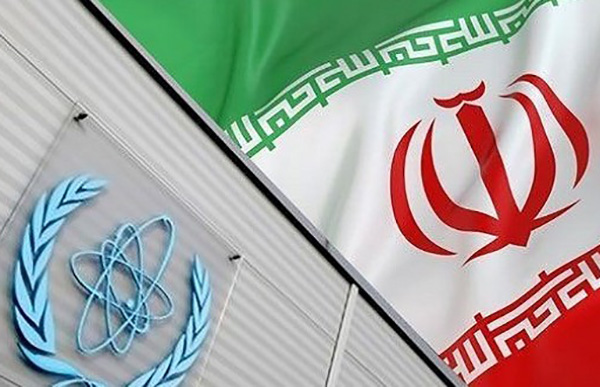
On August 28 Britain, France and Germany launched a 30-day process to reimpose U.N. sanctions, accusing Tehran of failing to abide by a 2015 nuclear accord with world powers.

Under that process, known as snapback, the council must now vote by late September on a resolution to permanently lift sanctions on Iran, requiring at least nine votes in favor and no vetoes by the U.S., Russia, China, Britain, or France to pass.

If no member had put forward such a resolution 10 days after the snapback process was triggered then it would be up to the council president to do so, which is South Korea for September.

By finalizing the text on Monday South Korea can now put it to a vote at any time before the 30-day deadline expires. The resolution is unlikely to be adopted.

Britain, France and Germany are still trying to convince Iran to meet three requirements so their threat of reimposing U.N. sanctions can be delayed for a limited amount of time to allow space for talks on a long-term deal to address their concerns about Tehran’s nuclear program. Such a delay would require a Security Council resolution.

Separately Iran’s strategic allies Russia and China finalized a draft Security Council resolution late last month that would extend the 2015 accord for six months and urge all parties to immediately resume negotiations. But they have not yet asked for a vote.

If Russia and China put their resolution to a vote before Germany, France and Britain have reached agreement with Iran on a delay, then it could be vetoed by France, Britain or the U.S. if needed.


Iran rejects “false claims” in Arab League foreign ministers’ statement

Iranian Foreign Ministry

It also urged the Arab League to refrain from any actions or rhetoric that divert regional and global attention from the central issue of the region and the Islamic world, namely the ongoing genocide in the occupied Palestinian territories.

The Foreign Ministry of the Islamic Republic of Iran once again reaffirmed Iran’s indisputable sovereignty over the islands of Abu Musa, Greater Tunb, and Lesser Tunb as inseparable parts of Iran’s territorial domain, condemning any territorial claims against Iran and emphasizing that repeating baseless assertions in similar statements will not alter the geographical, historical, or legal realities of these islands.

It said all measures taken on these three Iranian islands are in line with Iran’s sovereign rights to safeguard their security and safety and to protect Iran’s national interests.

The Foreign Ministry categorically denied the unfounded accusation of sending military shipments from Iran to Yemen or interfering in its internal affairs.

It noted that while the Zionist regime continues its genocide in occupied Palestine, its aggression and occupation in Syria and Lebanon, and repeated terrorist and aggressive attacks on Yemen under the full support of the United States, raising such fabricated claims, mostly orchestrated by the Zionist regime, do nothing to advance the interests of the Islamic Ummah.

The Islamic Republic of Iran, reiterating its principled policy of good neighborliness, respect for sovereignty and territorial integrity, and non-interference in the internal affairs of other countries, stressed the importance of strengthening unity and coordination among regional countries and avoiding divisive positions.

It said Iran is the most effective provider of maritime security in the Persian Gulf and regional and international waters, and has always guaranteed the safe passage of ships and vessels through the Strait of Hormuz. Within the framework of protecting its national interests and territorial sovereignty, and through full and responsible oversight of the strategic Hormuz Strait’s entry and exit points, the Islamic Republic of Iran will not hesitate to take any action necessary to ensure freedom of navigation in accordance with international laws and regulations, while preventing any violation of its national sovereignty.

The Islamic Republic of Iran emphasized the need to establish lasting security and stability in West Asia, the Persian Gulf, and the Sea of Oman through intra-regional mechanisms and the participation of all regional countries, free from destabilizing and destructive interference by external actors.

The Iranian Foreign Ministry also welcomed the Arab League’s strong condemnation of the Zionist regime’s continued genocide in Gaza and the occupying regime’s crimes against the oppressed Palestinian people.

Hundreds of artists vow boycott of Israeli film institutions amid Gaza war

Gaza War

In a pledge released on Monday, the artists – who include Olivia Colman, Ayo Edebiri, Mark Ruffalo, Riz Ahmed, Tilda Swinton and Javier Bardem – decried the “unrelenting horror” in Gaza, where Israel has killed more than 64,000 Palestinians and flattened most of the territory.

“Inspired by Filmmakers United Against Apartheid who refused to screen their films in apartheid South Africa, we pledge not to screen films, appear at or otherwise work with Israeli film institutions – including festivals, cinemas, broadcasters and production companies – that are implicated in genocide and apartheid against the Palestinian people,” the statement read.

Examples of being complicit in Israeli rights violations include “whitewashing or justifying genocide and apartheid, and/or partnering with the government committing them”, it added.

The pledge cited International Court of Justice rulings that concluded a genocide charge against Israel is plausible and found the Israeli occupation of Palestinian territory is illegal.

Over the 23 months of the Gaza war, leading academics, rights groups and United Nations experts have accused Israel of committing genocide against Palestinians.

Genocide – defined by the UN as “acts committed with intent to destroy, in whole or in part, a national, ethnical, racial or religious group” – is one of the gravest war crimes.

Palestinian rights advocates have long called for celebrities to use their reach and status to bring awareness to the plight of Palestinians.

Hollywood has been historically pro-Israel, producing movies like the 1960 film Exodus, which valorised the founding of Israel, and regularly inserting positive references to Israel in blockbusters.

But in recent years, many actors and directors have spoken out against Israel’s policies – sometimes to the detriment of their own careers.

For example, in 2023, actor Susan Sarandon, who signed Monday’s pledge, was dropped by her talent agency after attending a Palestine solidarity rally.

After the outbreak of the war in Gaza, Melissa Barrera, who also joined the boycott call, lost her role in the horror franchise Scream over social media posts critical of Israel.

Still, voices sympathetic to Palestinians continue to grow louder in the film industry.

In March, No Other Land, an Israeli-Palestinian film focused on the ongoing destruction of the Palestinian community of Masafer Yatta in the occupied West Bank, won the Oscar for best documentary feature.

More recently, The Voice of Hind Rajab, which tells the story of a five-year-old Palestinian girl who was trapped in a car with slain family members before Israeli soldiers also killed her, received a 23-minute standing ovation at the Venice Film Festival.

The movie centres on Rajab’s heart-wrenching calls to rescuers while under Israeli fire in Gaza City.

Monday’s pledge comes as Israel pushes to systematically destroy Gaza City, having already levelled most of the besieged enclave.

“As filmmakers, actors, film industry workers, and institutions, we recognise the power of cinema to shape perceptions,” the statement said.

“In this urgent moment of crisis, where many of our governments are enabling the carnage in Gaza, we must do everything we can to address complicity in that unrelenting horror.”

EU may impose sanctions on China over Russia: FT

European Parliament

The British newspaper reported that EU officials began discussing the matter on Sunday. A source said that the talks are still at a “very early stage.” Before committing to any punitive measures against Beijing, Brussels reportedly wants to have the “full backing of the US and co-ordination with Washington,” according to the FT.

To ensure this, EU officials travelled to the US on Monday, while US Energy Secretary Chris Wright will head to Brussels later in the week, the paper wrote.

Following the escalation of the Ukraine conflict in February 2022, China emerged as the top importer of Russian oil.

Earlier this year, the EU sanctioned several Chinese firms over their alleged support for industries that aid Russia’s military. Beijing slammed the move as “unreasonable” and accused the bloc of “double standards.” It emphasized that China strictly regulates dual-use goods and insisted it has not supplied any lethal weapons to parties involved in the Ukraine conflict.

On Sunday, US Treasury Secretary Scott Bessent suggested the US and EU could impose more sanctions on countries that buy Russian oil.

Beijing earlier vowed to “ensure its energy supply” in ways that protect its interests, and cautioned that “tariff wars have no winners.”

Last month, US President Donald Trump doubled tariffs on India to 50% citing New Delhi’s continued purchases of Russian oil. Indian officials denounced the move as “unfair, unjustified, and unreasonable.” Finance Minister Nirmala Sitharaman said last week that India will continue to buy Russian crude, stressing that the nation’s oil purchases are driven by its economic priorities and not external pressure.

Last week, during his four-day visit to China, Russian President Vladimir Putin warned the West against talking to such global economic powerhouses as China and India in an “unacceptable” tone. He argued that pressure on Beijing and New Delhi is intended to slow their economic rise.