Monday, January 19, 2026
Home Blog Page 1504

President Raisi felicitates Syrian National Day

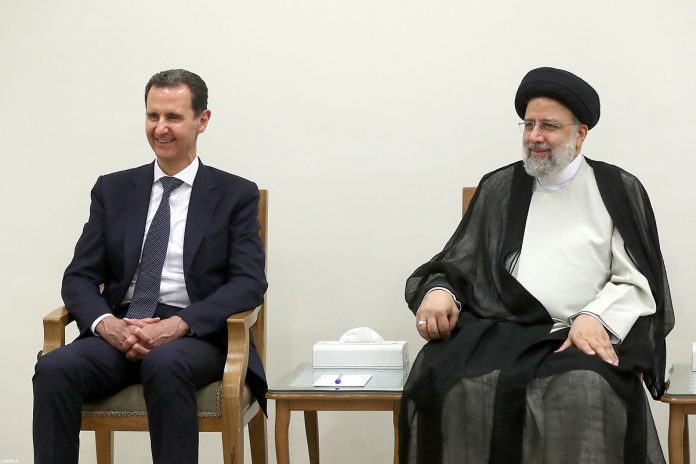
Syrian President Bashar Assad meets Iran's Leader & President

In a message on Monday, Raisi congratulated Assad on Syria’s Evacuation Day, the national day commemorating the evacuation of the last French soldier at the end of the French mandate of Syria in April 1946 after Syria’s proclamation of full independence in 1941.

He noted that the global and regional order is shifting in favor of Iran and Syria, two free and independent states that have worked in sincere cooperation and shown historic resistance for years.

Iran’s president also expressed hope that the expansion of relations between the two states in various fields would serve their interests and contribute to the establishment of peace and stability in the region.

In a meeting with Syria’s defense minister in Tehran in January, Raisi described Iran as a true friend of Syria, promising that the Islamic Republic will stand by the Syrian people in the same way that it helped them fight against terrorism during years of war in the Arab country.

The relations between Iran and Syria are strategic as their relations are based upon common beliefs and the spirit of resistance shown by their people, the Iranian president stated.

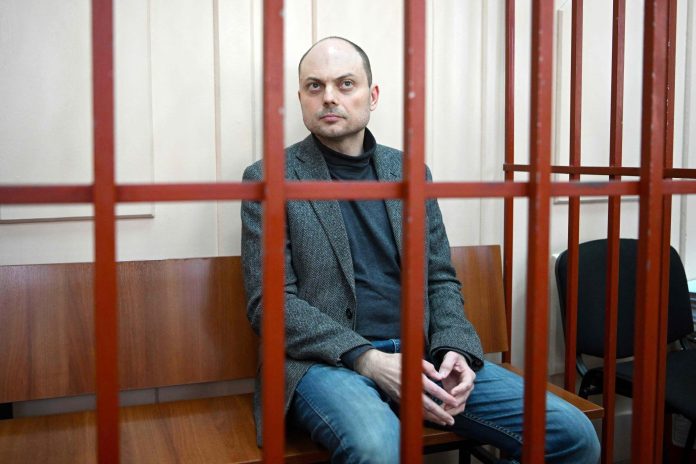
Kremlin critic sentenced to 25 years in prison for “treason” and “denigrating Russian army”

Vladimir Kara-Murza

Kara-Murza has been sentenced to 25 years in prison after being found guilty of high treason, cooperating with an ‘undesirable’ organization, and spreading ‘disinformation’ about the Russian armed forces.

The verdict was announced on Monday by the Moscow City Court, which also imposed a fine of 400,000 rubles ($4,900) and barred Kara-Murza from practicing journalism for seven years.

The former reporter, who also holds UK citizenship, was arrested in the spring of 2022 on suspicion of disseminating false information about the actions of the Russian military in Ukraine. Other charges were added as the criminal case progressed.

Kara-Murza is a long-time critic of the Kremlin who has been employed by US state-funded pressure groups, and has extensively lobbied Western governments to sanction Russia. He is a close associate of exiled former oligarch Mikhail Khodorkovsky, and is considered a protégé of the late opposition figure Boris Nemtsov.

The activist has denied the accusations and has insisted that the case is politically motivated. His lawyers have announced that they intend to appeal the verdict, alleging that “serious procedural violations” were committed.

A member of Kara-Murza’s defense team, Vadim Prokhorov, previously noted that the case is the first in Russia to apply new laws on treason. According to the revised legislation, treason now includes assistance to states or organizations that engage in activities against the security of Russia, in addition to the transfer of secret information to third countries.

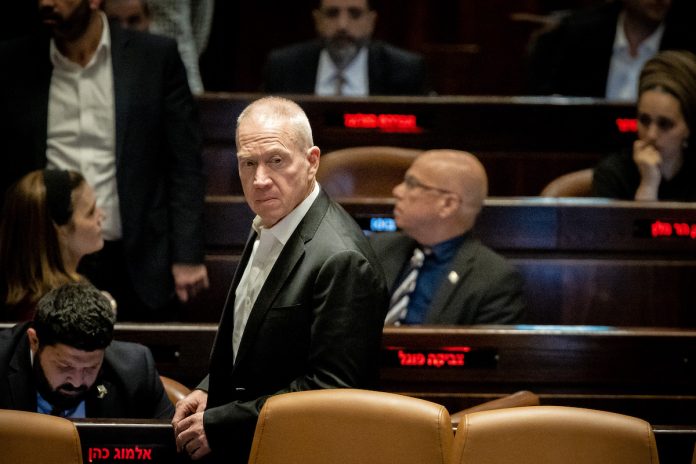
Israeli minister says Iran fighting against Israel on all fronts

Yoav Gallant

“Iran is waging a multi-front war of attrition against [Israel],” Yoav Gallant said in an event on Sunday.

He claimed that Tehran was “continuing its attempts to establish itself on the northern front and at the same time sending its proxies” to the West Bank and the Gaza Strip.

The minister added the Israeli military has “acted and will continue to act in all arenas, in overt and covert operations along the border, across the border, and even far from the border.”

His remarks come as the Jerusalem Institute for Strategic Studies (JISS) think tank warned of a war with Iran in a statement published on Sunday.

The JISS also called on Netanyahu to suspend his judicial reforms that have sparked tensions in the occupied territories.

“Israel is seen from the outside as a torn society, gradually losing its ability to function,” the think tank said in a statement that echoed the remarks of one of its fellows, former Maj.-Gen. Yaakov Amidror, last week.

“Israel’s enemies are gaining confidence and expect the internal conditions in the Jewish state to lead to self-destruction,” JISS added.

According to the statement, that comes as the US is reducing its involvement in West Asia and Iran is restoring its ties with Saudi Arabia.

On March 10, after several days of intensive negotiations hosted by China, Iran and Saudi Arabia agreed to resume their diplomatic relations and reopen their embassies and diplomatic missions after seven years of estrangement.

In a joint statement after signing the agreement, Tehran and Riyadh highlighted the need to respect each others’ national sovereignty and refrain from interfering in the internal affairs of one another.

They agreed to implement a security cooperation agreement signed in April 2001 and another accord reached in May 1998 to boost economic, commercial, investment, technical, scientific, cultural, sports, and youth affairs cooperation.

“The chances of a deterioration into a wider conflict are more significant today than before,” the think tank said, adding that “Israel needs to prepare for the tangible possibility of war.”

Mass protests gripped the apartheid regime after Netanyahu announced his proposed judicial reforms in January.

The Israeli premier had claimed that the so-called judicial reform plan would stop the courts from over-reaching their powers, but critics said they would help him bypass some rules as he faces an ongoing trial for corruption.

Late in March, Netanyahu announced that he was temporarily freezing the bill that would alter the makeup of Israel’s judicial system. He said he was determined to pass the judicial reform plan.

The struggle over the plan illustrates the deep divide in Israeli society between supporters of the incumbent right-wing administration, who says the judicial changes are necessary, and the growing number of people opposed to Netanyahu’s plan, who argue that the moves will weaken the independence of the judiciary.

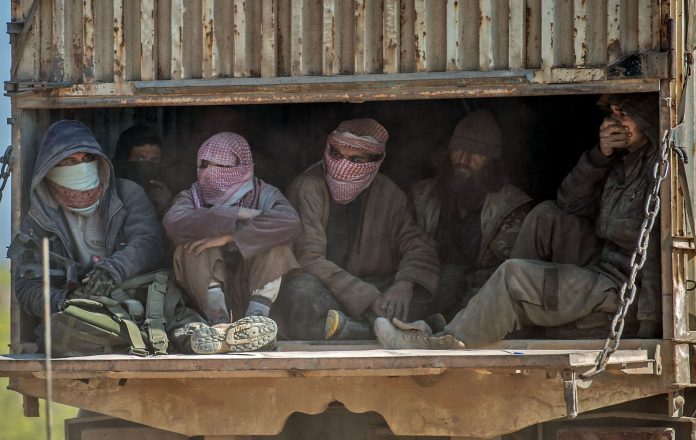
Daesh kills dozens of mushroom hunters in Syria

Daesh

Syrian media reported that over 30 civilians had allegedly been shot in the incident. A local hospital director in the city of Salamiyah told the media that his facility had received the remains of 26 people murdered in the attack.

Last week, Al Watan newspaper warned people against going into the Hama desert in search of truffles, citing high risks stemming from unexploded mines and shells, as well as activities of the Daesh remnants in the area.

A total of 47 people have been killed and 71 injured while collecting truffles between February 5 and March 22, a Syrian Arab Red Crescent official told the daily. Many people have also gone missing in the area, the newspaper reported, adding that they may have been kidnapped by Daesh extremists as well.

One of the major Daesh attacks was carried out in mid-February, when 53 civilians were killed by terrorists while collecting truffles, SANA reported.

Desert truffles are not as rare and prized as their rather distant European cousins but they are still quite popular in the Middle East. The mushrooms are usually sold by the kilo and can cost between $22 and $65 per unit. Some desert-truffle types can cost as much as $237 per kilo, depending on the crop’s quality. According to Al Watan, though, the harvest has been abundant this year, leading to lower truffle prices on Syrian markets.

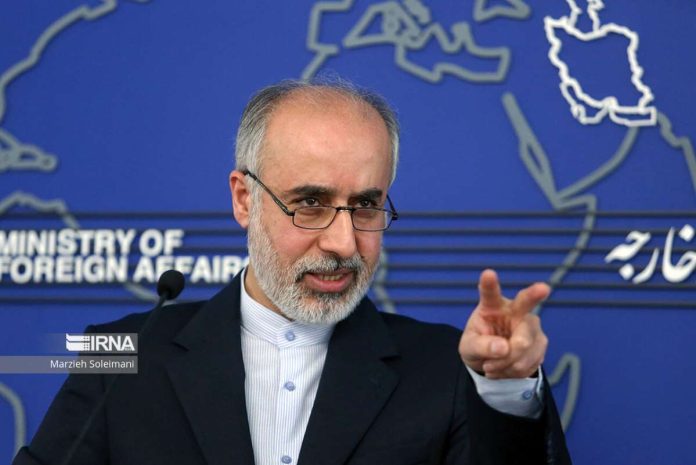
Foreign ministry spokesman: Iran, Saudi Arabia working to re-open diplomatic missions by May 9

Nasser Kanaani

Nasser Kanaani said in his weekly presser on Monday that political relations between the two sides are practically restored and they face no obstacle to re-opening of diplomatic missions.

Kaaani added that Iran and Saudi Arabia are now exchanging technical delegations on the matter.

He stressed that both sides are adamant that the missions begin their work at a proper time to facilitate provision of consular services for Iranian pilgrims ahead of this year’s Hajj.

The Foreign Ministry spokesman also confirmed earlier reports that Iran’s President Ebrahim Raisi has invited Saudi King Salman bin Abdulaziz Al Saud to visit Tehran.

The spokesman added that Iran’s relations with Saudi Arabia “have no special link” with the issue of the 2015 Iran nuclear deal, JCPOA.

“Relations between Iran and Saudi Arabia are independent in characteristics and have no special link with the JCPOA. We hope we will be witnessing the implementation of mutual agreement in the field of politics, economy and ties between peoples, step by step,” he said.

Kanaani further referred to the cooperation between Iran and the International Atomic Energy Agency.

He added that Iran hopes the IAEA remains committed to the technical path and does its best to resist outside political pressure, stressing that progress with the agency will positively impact the process of negotiations for the revival of the 2015 nuclear deal.

The spokesman also talked about Iran’s cooperation with the Taliban, stressing that Tehran has time and again clarified that such interaction does not amount to recognition of the current political status of Afghanistan.

Syria says priority is to work on its bilateral relations with Arab states

Persian Gulf Cooperation Council

Syria’s return to the Arab League will be “almost impossible before correcting bilateral relations”, Mekdad told Algeria International TV.

He added that recent visits to Arab countries aim to open a new page.

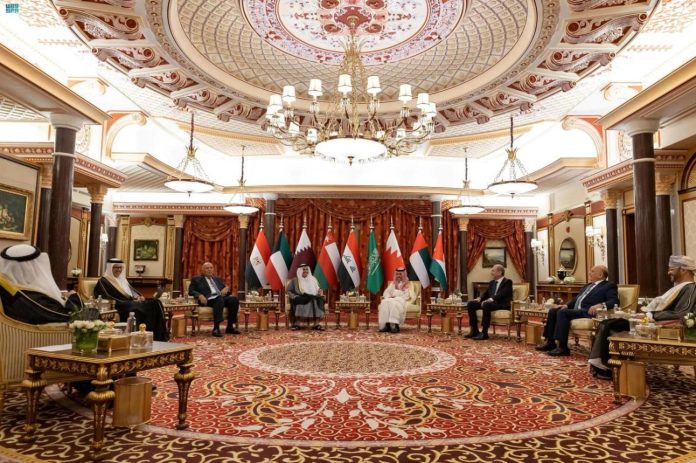
Top diplomats from the Persian Gulf Cooperation Council countries have agreed that the Arab world must play a “leadership role” in efforts to find a political solution to the crisis in Syria so that its sovereignty is preserved and the return of Damascus to the Arab League facilitated.

The agreement was reached early on Saturday by the foreign ministers from the six GCC countries of Bahrain, Kuwait, Oman, Qatar, Saudi Arabia and the United Arab Emirates, plus Egypt, Iraq and Jordan, who met in Jeddah at the kingdom’s request to discuss Syria’s return to the fold after years of hostility with the government in Damascus.

The nine-nation talks came after Mekdad visited Jeddah on an unannounced trip on Wednesday, the first since the outbreak of the war, during which Mekdad and his Saudi counterpart discussed “the necessary steps” to return Damascus to the Arab League.

Syria’s membership in the Arab League was suspended following the eruption of a foreign-backed militancy in the country in 2011.

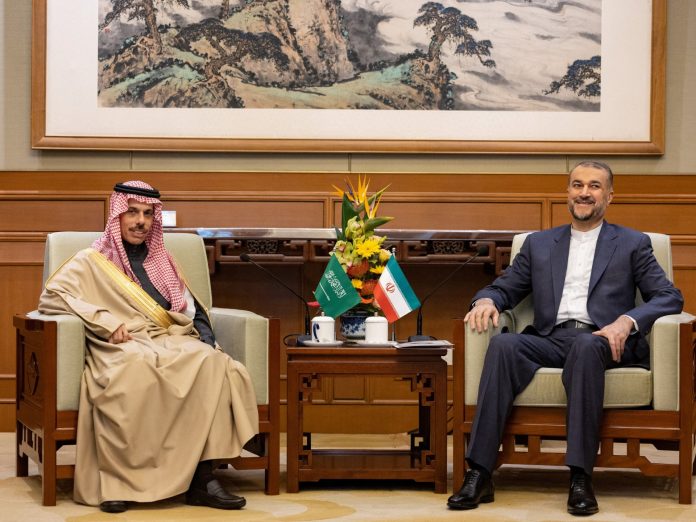
Iran foreign ministry: Tehran, Riyadh to reopen embassies by May 9

Amirabdollahian and bin Farhan

According to the ministry’s director general for Persian Gulf affairs, the date has been already agreed by Iran and Saudi Arabia.

Alireza Enayati added that Iran seeks to hasten the re-openings due to the Hajj pilgrimage season in June.

He also stressed that no decision has been made whether the two countries reopen their embassies simultaneously, saying this is a technical issue that needs to be discussed.

Under a China-mediated agreement, Iran and Saudi Arabia announced the resumption of diplomatic ties on March 10. The announcement followed several rounds of negotiations hosted by Iraq.

Saudi Arabia severed diplomatic relations with Iran in January 2016, after protesters stormed its embassy in Tehran and consulate in the city of Mashhad, over Riyadh’s execution of the Saudi Shiite cleric Sheikh Nimr Al-Nimr.

Iranian and Saudi delegations have travelled to the two countries to do necessary technical requirements for the reopening of the embassies and consulates.

Ex Iranian diplomat: Russia won’t take on Israel for sake of Iran

Putin

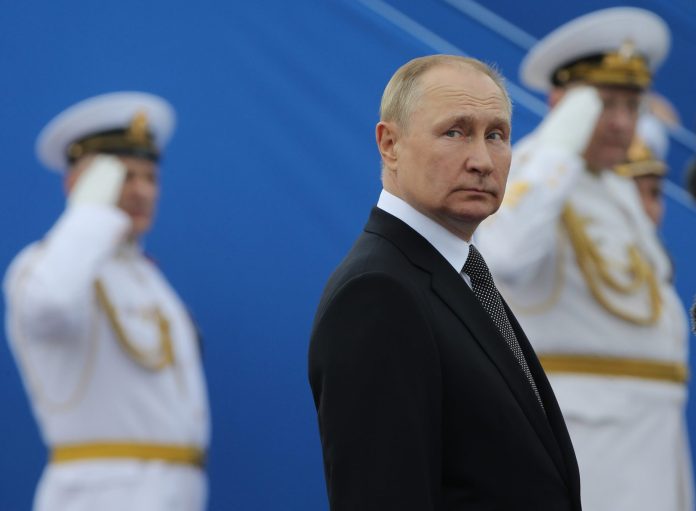
Qassem Mohebali told Entekhab news outlet that Russians constitute a large population in Israel and Russian President Vladimir Putin would not want to take on Israel.

He was commenting in response to Russia’s options regarding Israel’s airstrikes against positions of Iran in Syria.

Mohebali said Putin knows he needs Iran’s help under the western sanctions and also cannot stay silent in the face of Israeli attacks in Syria.

The former diplomat said Israel sending arms to Ukraine has added an additional dimension to the complex situation.

He said this has created paradox, also for Israel, as Tel Aviv does not want its relations with Russia damaged, while it cannot act in a way regarding Ukraine that raises the criticism of the US and Europe.

Still, he says, Russia will not act against Israel in favor of Iran and will probably close its eyes on anti-Iran operations in Syria and settle for sheer criticism, seeing the high costs of military operation against Israel.

US says sanctions threaten dollar’s dominance as Iran, Russia seek out alternatives

Janet Yellen

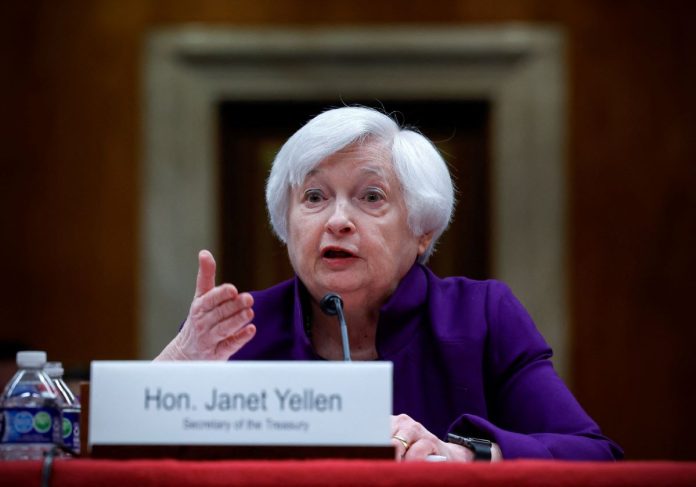
“There is a risk when we use financial sanctions that are linked to the role of the dollar that over time it could undermine the hegemony of the dollar,” Yellen said on CNN on Sunday.

“Of course, it does create a desire on the part of China, of Russia, of Iran to find an alternative,” she told the network’s Fareed Zakaria in an interview.

She, however, claimed that the dollar is used as a global currency for reasons that are not easy for other countries to find an alternative with the same properties.

Yellen alleged that sanctions are an “extremely important tool,” all the more so when used by the United States and its allies as “a coalition of partners acting together to impose these sanctions.”

The global trend of substituting the US dollar with local currencies in the trade of goods and transactions has been on the rise in recent years, with countries hoping to reduce their dependence on Washington and prevent it from further weaponizing its global dollar dominance.

Observers cite China, Iran, Russia, and Venezuela as cases in point when it comes to conducting one’s economic affairs and important transactions independent of the greenback.

They say powerful countries such as China, Russia and the European Union are major players in the de-dollarization process today.

These countries not only can avoid being subject to US jurisdiction and sanctions in many cases, but also weaken Washington’s ability to remain the most dominant global power.

Earlier this month, Iran’s top security official stated that the move to reduce the use of dollar in regional and international transactions, joined by several countries, would minimize the West’s dominance over the global economy.

Secretary of Iran’s Supreme National Security Council (SNSC) Ali Shamkhani cited the initiatives that have been finalized between Iran and Russia in the financial sector and banking exchanges to fund joint projects as an “effective” paradigm for neutralizing the West’s unlawful sanctions against the two countries.

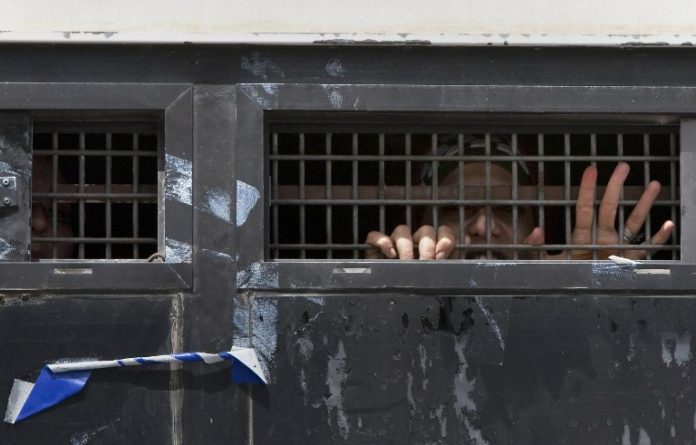
Nearly 5k Palestinian inmates in Israeli jails: Report

Israel Prison

The report, which was released on Sunday, on the occasion of the Palestinian Prisoner’s Day, said the figure includes 31 Palestinian women and 160 children under the age of 18.

It was published by the Palestinian Commission of Detainees’ and Ex-Detainees’ Affairs, the Palestinian Prisoner Society, the Addameer Prisoner Support and Human Rights Association, and the Palestinian Wadi Hilweh Information Center in the holy occupied city of al-Quds, the Palestinian Information Center reported.

The report added that there are more than 1,000 administrative detainees, including six children and two women, among Palestinian prisoners languishing in Israeli jails.

Administrative detention is an inhumane policy exercised by the occupying regime under which Israel keeps Palestinian detainees without charge or trial for up to six months, a period which can be extended for an infinite number of times. The detention takes place on orders from a military commander and on the basis of what the Israeli regime describes as “secret” evidence. Some prisoners have been held in administrative detention for up to 11 years.

The rights groups noted that the number of Palestinian prisoners who have spent more than 20 consecutive years in jail has reached 400, in addition to dozens of former inmates who were rearrested in 2014 and spent more than 20 years in two terms.

The number of prisoners who have been sentenced to life imprisonment stands at 554.

The Palestinian prisoners, the report went on, include 23 long-serving inmates, who were arrested before the signing of the US-mediated Oslo Accords in 1993.

It noted that Israeli authorities are developing their methods of abuse against Palestinian prisoners in order to undermine their resolve to struggle for their rights.

Israeli jail authorities keep Palestinian prisoners under deplorable conditions without proper hygienic standards, and they have also been subject to systematic torture, harassment, and repression.

It was in late March that two prominent Palestinian rights groups highlighted Israel’s mistreatment of Palestinian prisoners, saying the regime enjoys a culture of impunity in the absence of international accountability, and systematically subjects the detainees to various forms of torture.

The Addameer as well as the legal-aid human rights group, al-Haq, made the remarks in a joint statement at the 52nd session of the UN Human Rights Council, saying that Israel’s use of torture and “cruel treatment” against Palestinian prisoners is part of its settler-colonial and apartheid regime.

They further noted that various Israeli institutions seek to conceal crimes of torture, although they are well documented with evidence.

The Israeli regime is estimated to have detained more than one million Palestinians since the Nakba (Catastrophe) Day in 1948, which marked the loss of the Palestinian homeland.

Throughout that period, hundreds of the inmates have been killed as a result of torture and medical negligence in Israeli incarceration.

Palestinian detainees have continuously resorted to open-ended hunger strike in an attempt to express outrage at their detention.