Zelensky visits front lines in beleaguered town of Avdiivka in eastern Ukraine
Ukrainian President Volodymyr Zelensky visited the frontline town of Avdiivka, which is surrounded on three sides by Russian forces, according to the president’s office.
Zelensky’s office said that he listened to the report of the commander of the Donetsk operational-tactical group and talked with the servicemen of the Marines, airborne assault, mechanized and artillery units.
According to his office, Zelensky told the soldiers: “I have the honor to be here today, to thank you for your service, for defending our land, Ukraine, our families. Congratulations on the holidays, on Easter, I wish you only victory — this is what I wish for every Ukrainian, this is what is very important to all of us. I wish good health to all of you and your families, and I am sincerely grateful on behalf of every Ukrainian for the great path that you overcome every day.”
Zelensky handed out military awards and, in turn, was presented with insignia from the 110th separate mechanized brigade.
The town has seen intense fighting for months and is largely destroyed, although about 1,800 civilians still remain despite efforts to persuade them to leave.
There are no safe routes out of the town, but Ukrainian forces still control the routes to the west.
The town is under fire almost daily by Russian artillery, but Ukrainian defenses have largely held, despite marginal Russian advances to the north.
US leaks have had no impact on Ukraine battlefield: Western officials
The US intelligence documents leaked over the past few weeks have had no visible impact on the battlefield in Ukraine, Western officials say.
“We haven’t seen any change in the battlefield,” the officials told CNN during a briefing on Tuesday.
The officials declined to comment on the content of the leaked documents.
Several of the documents, which US officials say are authentic, disclose the extent of US eavesdropping on Ukraine among other key allies. Others divulge significant weaknesses in Ukrainian weaponry, air defense, and battalion sizes and readiness at a critical point in the war, as Ukrainian forces prepare to launch a counteroffensive against the Russian. Ukraine has already altered some of its military plans because of the leak, a source close to Ukrainian President Volodymyr Zelensky told CNN.
US, British and Canadian ambassadors summoned by Russia
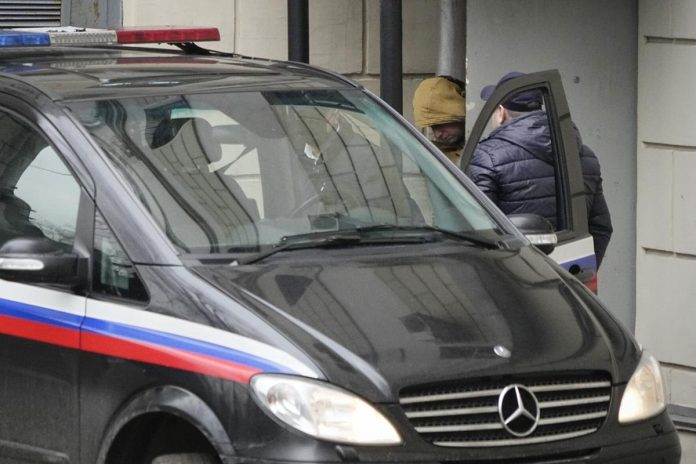
Russia’s Foreign Ministry summoned the US, British and Canadian ambassadors after they condemned the conviction of an opposition politician.
On Monday, a Moscow court jailed Kremlin critic Vladimir Kara-Murza for 25 years after convicting him of treason in a trial he and the West said was politically motivated.
Kara-Murza, who holds Russian and British citizenship, lobbied Western governments to impose sanctions on Russia and condemned what Moscow calls its “special military operation” in Ukraine.
Russia’s Foreign Ministry accused the three ambassadors of “crude interference in Russia’s internal affairs and activity incompatible with their diplomatic status”, Interfax news agency reported.
The US, British and Canadian ambassadors had made a joint appearance in front of TV cameras on the steps of the Moscow court to condemn the verdict and demand Kara-Murza’s release
Switzerland condemns war, pledges to implement sanctions
Switzerland condemns the war in Ukraine in the strongest terms, and is very much committed to providing humanitarian aid and implementing sanctions against Russia, President Alain Berset stated.
“We adopted the (EU) sanctions and of course we take this completely seriously and we are simply doing everything that can be done in order to enforce them seriously,” Berset said at a joint news conference with German Chancellor Olaf Scholz in Berlin.
Military cooperation is a ‘stabilising’ force: Russia’s DM
Russian Defence Minister Sergei Shoigu has told his Chinese counterpart that their countries’ military cooperation was a “stabilising” force in the world, Russian news agencies reported.
“The coordination of our efforts in the international arena has a stabilising effect on the global situation and helps to reduce the potential for conflict,” the Interfax news agency quoted Shoigu as telling Chinese Defence Minister Li Shangfu, who is currently in Moscow.
Shoigu stated it was important that the two countries coordinated their efforts on the global stage, and expressed confidence that a programme of joint military exercises would be expanded.
Li met President Vladimir Putin on Sunday, following a meeting with Chinese President Xi Jinping, who visited Moscow last month.
Russian forces increasing air attacks in Bakhmut: Ukraine
Russian forces are stepping up their use of heavy artillery and air attacks in Bakhmut, the commander of Ukraine’s ground forces announced.
“Currently, the enemy is increasing the activity of heavy artillery and the number of air strikes, turning the city into ruins,” General Oleksandr Syrskyi said in a statement.
He added Russia remained committed to taking Bakhmut “at any cost” but suffered significant losses in the battle for the city.
Taking Bakhmut could provide a stepping stone for Russia to advance on two bigger cities in the Donetsk region of eastern Ukraine: Kramatorsk and Sloviansk.
Russia breaking promises to grain dependent countries: US
US Secretary of State Antony Blinken said Russia is breaking its promises to countries worldwide that are dependent on grain, saying Moscow has not allowed ships to leave ports.
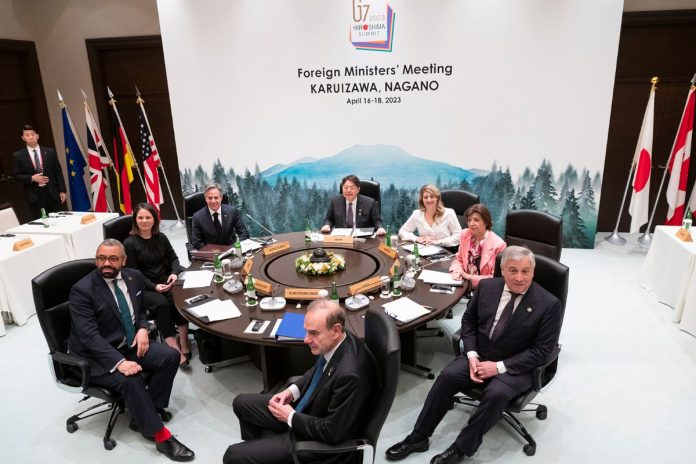
Blinken made the remarks in a news conference at the end of a G7 foreign ministers’ meeting in Karuizawa, Japan.
On Monday, Kyiv announced that the Black Sea Grain Initiative was in danger of “shutdown” after Russia blocked inspections of participating ships in Turkish waters.
Brazil’s mediation effort deserves attention: Kremlin
The Kremlin says Brazil’s efforts to mediate the conflict in Ukraine “deserved attention”, but it had not seen any plans by France.
Bloomberg reported on Tuesday that French President Emmanuel Macron was looking to approach China with a plan that could form a starting ground for talks between Moscow and Kyiv.
Brazilian President Luiz Inacio Lula da Silva was criticised by the United States on Monday after suggesting the West had been “encouraging” war by arming Ukraine.
But Lula proposed establishing a group of countries not involved with the war to broker peace, telling reporters on Sunday he had discussed the idea with the leaders of China and the United Arab Emirates.
Wagner chief threatens former fighters who claim to have been ordered to commit atrocities
Yevgeny Prigozhin, the head of Russia’s Wagner private military company, has threatened retribution against two former Wagner fighters who claimed they had been ordered to commit atrocities against civilians in eastern Ukraine.
The two men appeared on a video made by Vladimir Osechkin, the founder of Gulagu.net, a human rights organization targeting corruption and torture in Russia.
Prigozhin confirmed on his Telegram channel that he had watched parts of the video.
“I can say the following: if at least one of these accusations against me is confirmed, I am ready to be held accountable according to any laws,” he said.
“If none is confirmed, I will send a list of 30-40 people who are spitting at me like Osechkin … that the Prosecutor General’s Office of Ukraine is obligated to hand over to me for a “fair trial”, so to speak,” he added.
Prigozhin stated that the account was a “fragrant lie” and Wagner fighters “have never touched and do not touch” children.
“These people (spreading the lies) are our enemies, and we will deal with them in a special way,” he continued.
Prigozhin was referring to video interviews with former Russian convicts Azamat Uldarov and Alexey Savichev – who were both pardoned by Russian presidential decrees last year, according to Gulagu.net.
Uldarov, who appears to have been drinking, details how he shot and killed a 5 or 6-year-old girl.
He called it: “A management decision. I wasn’t allowed to let anyone out alive, because my command was to kill anything in my way.”
Macron looks to work with China to establish framework for Ukraine war negotiations
French President Emmanuel Macron is to approach China with a plan that he believes could potentially lead to talks between Russia and Ukraine, Bloomberg reports.
Foreign policy adviser Emmanuel Bonne has been tasked by Macron to work with top China diplomat Wang Yi to establish a framework that could be used as a potential basis for future negotiations, sources familiar with the plans told the outlet.
Talks between Russia and Ukraine could happen as soon as the summer if all goes well with the French strategy, the anonymous sources stated. Any negotiations would be dependent on certain conditions being met, such as Kyiv conducting a successful spring offensive that would put Ukraine in a strong position during the talks.
It is currently unclear whether Macron has any support from Ukraine or its allies for his plan.
Putin visits Russian troops at military headquarters in Kherson
Russian President Vladimir Putin visited troops at a military base in Ukraine’s southern Kherson region which is partly held by Russia, state media TASS reported Tuesday.
During the visit, Putin spoke with commanders from the airborne forces of Russia’s “Dnieper” army unit, while also meeting with other senior officers, according to TASS.
One of the purposes of the visit was to get a “report” from commanders on the situation in both the Kherson and Zaporizhzhia directions.
G7 ministers stress unity amid tensions with China and Russia
The Group of Seven industrial powers on Tuesday said they were more united than ever as they criticised China’s added pressure on Taiwan and Russia’s threat to station nuclear weapons in Belarus while it wages war in neighbouring Ukraine.
“The strength of the solidarity between the G7 foreign ministers is at a level not seen before,” Japan’s Foreign Minister Yoshimasa Hayashi said at a press conference after hosting a meeting of the group in the Japanese resort town of Karuizawa.
The show of unity comes after French President Emmanuel Macron this month stated that the European Union should reduce its dependency on the United States and cautioned against being drawn into a Taiwan crisis.
The G7 communique highlights how the dual issues of Russian military intervention and fears of similar action by China against Taiwan have been a focus of the three-day meeting.
The group, which comprises the United States, Japan, Germany, Britain, France, Italy and Canada, described Russia’s threat to put nuclear weapons in Belarus as “unacceptable”.
It added “any use of chemical, biological or nuclear weapons in Ukraine “would be met with severe consequences.”
G7 foreign ministers have also warned that those helping Russia wage war in Ukraine would face “severe costs”.
Russia is interested in ending Ukraine conflict “as soon as possible”: FM
Russia is “interested” in ending the conflict in Ukraine “as soon as possible,” Foreign Minister Sergey Lavrov said Monday during a news conference with Brazilian Foreign Minister Mauro Vieira in Brasilia.
Lavrov also thanked his Brazilian colleagues for the “excellent understanding” of the situation in Ukraine, and said Russia is grateful for Brazil’s “desire to contribute” to the search for possible solutions.
The Russian foreign minister is also expected to meet with Brazilian President Luiz Inacio Lula da Silva today, according to the Brazilian Foreign Ministry’s schedule published online.
Ukraine has repeatedly said that peace in the conflict will only be achieved if Russia restores the country’s borders and Kyiv takes back Crimea.
“Real peace means restoring the internationally recognized borders of Ukraine. Real peace means a safe homeland for the targeted people in the Ukrainian Crimea,” Ukrainain Foreign Minister Dmytro Kuleba stated in an address last week to the Black Sea Security Conference in Bucharest.
“I reiterated Brazil’s stance in contributing to a peaceful solution to the conflict, reminding President Lula’s manifestations in seeking the formation of a group of friendly countries to mediate the negotiations between Russia and Ukraine,” Vieira said in a televised press conference.
Vieira also highlighted Brazil’s stance against unilateral sanctions.
“Such measures, in addition to having the approval of the security council of the United Nations, also have a negative impact on the economy all over the world, and in particular in underdeveloped countries, most of whom haven’t fully recovered from the pandemic,” Vieira added.
Leaked US documents reveal both Ukraine and Russia hold mix hands for next phase of war
There are several significant takeaways from the leaked US documents about the course of the conflict in Ukraine.
Russian ground forces in the country are approaching exhaustion and there are few reinforcements available. Ukrainian air defenses are depleted, making any counteroffensive vulnerable to Russian air superiority.
And the United States does not expect the war to end this year.
The 53 documents reviewed by CNN provide a snapshot of capabilities and vulnerabilities as perceived by the US Defense Department in the first quarter of this year.
Circumstances change, as do resources and intentions. But the documents tend to confirm that Ukrainian forces are preparing for an offensive and that Russia is putting extensive effort into holding what it already has, while looking to aviation to blunt any Ukrainian attacks.
And if the Russians were unaware of the way the Ukrainian military would design its counteroffensive, the documents may have given them some useful indicators.
Russian brigades mauled: Several of the documents, which appear to date largely from February and March, tend to confirm that Russia has committed the vast majority of its army battalions to its war on in Ukraine. Despite the mobilization last autumn, which potentially added 300,000 soldiers to the Russian ranks, a significant minority of these battalions are described as “combat ineffective” — short of men and equipment.
One document says that 527 out of 544 available Russian battalions are committed to the operation, and 474 are already inside Ukraine. A substantial number are deployed in the south of the country — with an estimated 23,000 personnel in Zaporizhzhia and another 15,000 in Kherson. That suggests the Russians expect any Ukrainian offensive to target that region.
But in Donetsk in eastern Ukraine, for example, 19 out of 91 battalions were adjudged as “combat ineffective.”
Russia still has vast inventories of hardware, but the documents suggest that some of the best has already been lost, and older, less reliable armor is being dusted off. One says that Russia continued to fall behind stated goals for replenishing equipment and personnel, and was incorporating “older, less accurate munitions systems.”
While Ukraine’s ground forces may be in better shape than the enemy’s, especially once 12 new brigades mentioned in one leak are fully trained and equipped, its reliance on Soviet-era air defenses points to a growing vulnerability, according to the documents obtained by CNN. This in turn may give the Russian air force freedom of the skies to blunt any Ukrainian ground offensive.
One of the leaked documents detailed how Ukrainian stocks of Soviet-era medium-range air defense missiles were severely depleted. Ominously, it suggested that Ukraine had run out of munitions for the highly capable German-made Iris-T air defense system by February.
Ukrainian officials are constantly asking Western partners for more air defense weaponry and one document talks of a three- to six-month window in which to solicit further Western contributions.
Russia’s oil exports rebound to pre-war levels
Russia’s oil exports have bounced back to levels last seen before it invaded Ukraine, despite a barrage of Western sanctions.
Moscow’s exports of crude oil and oil products rose in March to their highest level since April 2020, jumping by 600,000 barrels a day, the International Energy Agency (IEA) announced in its monthly oil report. The rise lifted Russia’s estimated revenue from oil exports to $12.7 billion last month.
The revenue is still down 43% from a year ago, the IEA said, as Russia is forced to sell its barrels to a more limited pool of customers who can negotiate greater discounts.
Western countries have imposed a raft of sanctions on Moscow’s energy exports since President Vladimir Putin ordered his troops into Ukraine in February last year. The most significant is a ban on Russian seaborne crude imports into the European Union and a ban on refined oil products such as diesel into the bloc.
But Russia, the world’s second-largest exporter of crude, has found willing buyers in China and India to replace European customers.
Russia claims capture of 2 Bakhmut districts in eastern Ukraine
The Russian Ministry of Defense has announced that “assault detachments” have captured two districts in the center and northwest of the embattled city of Bakhmut in eastern Ukraine.
The defense ministry provided no further details on the locations. CNN cannot independently verify the claim.
It comes after the Ukrainian military’s General Staff said that “the enemy launched unsuccessful attacks in the vicinities of Khromove and Ivanivs’ke,” suburbs to the west and southwest of Bakhmut, respectively.
In the update on Monday morning the General Staff also said that “heavy fighting is ongoing in Bakhmut.”