Sunday, December 21, 2025
Home Blog Page 15

Iceland becomes fifth state to boycott Eurovision 2026 over Israel participation

The board of the national broadcaster, RÚV, voted on Wednesday not to participate, meaning Iceland will join Spain, Slovenia, the Netherlands and Ireland in neither participating in nor broadcasting the event, which is scheduled to take place in Vienna.

Last week the contest’s organising body, the European Broadcasting Union, declined to expel Israel over its conduct of the war against the Gaza Strip.

RÚV announced in a statement that “given the public debate in this country … it is clear that neither joy nor peace will prevail regarding the participation of RÚV in Eurovision. It is therefore the conclusion of RÚV to notify the EBU today that RÚV will not take part in Eurovision next year.”

RÚV added that it had raised concerns numerous times with the EBU, which it felt had not been addressed.

The war in Gaza has caused ructions at Eurovision, spurring protests outside venues and forcing organisers to clamp down on political flag-waving.

The EBU held a general assembly last week, where members met to discuss concerns about Israel’s participation. Members voted to adopt tougher contest voting rules in response to allegations that Israel manipulated the vote in favour of their contestants, but took no action to exclude any broadcaster from the competition.

The walkouts cast a cloud over the future of what’s meant to be a feelgood cultural party, dealing a blow to fans, broadcasters and the contest’s finances.

Before the board meeting, RÚV’s vice-chair, Diljá Ámundadóttir Zöega, gave a hint of things to come.

“Today is International Human Rights Day and I think the outcome will be in that spirit,“ she stated.

Earlier on Wednesday, Poland confirmed it would be participating in the contest. Germany and Austria have also confirmed they will be taking part, arguing that Eurovision was conceived as an apolitical song contest to unite Europe.

RTÉ, the Irish broadcaster, announced that participation was “unconscionable given the appalling loss of lives in Gaza and the humanitarian crisis there” while RTVE in Spain noted participating would engender “distrust” in the organisation given the depth of feeling over Gaza.

Spain’s culture minister, Ernest Urtasun, backed the boycott.

He stressed, “You can’t whitewash Israel given the genocide in Gaza. Culture should be on the side of peace and justice.”


Repatriation of undocumented Afghans aligns with international law: Iran’s envoy

Afghan Refugee in Iran

Amir Saeed Iravani made the remarks during a speech he delivered at a UN Security Council session on Afghanistan held on Wednesday, emphasizing that the repatriation of undocumented Afghan refugees has been conducted in accordance with international legal obligations.

He noted that the Islamic Republic has long shouldered the weight of sheltering millions of Afghan refugees despite being under significant unilateral sanctions.

“Iran has borne a disproportionate burden for decades by hosting millions of Afghan refugees while itself being subjected to severe unilateral sanctions. This responsibility has imposed immense economic and security pressures, with annual costs reaching nearly ten billion dollars, in the absence of adequate international support,” Iravani stated.

The Iranian envoy added that it was unfortunate that the international community had not lived up to even the most basic commitments to help Afghan refugees in Iran, stressing that the sharp drop – over 60 percent – in funding planned for 2026 showed this clearly and amounted to a serious violation of the principle that countries must share responsibility.

“Iran has repeatedly and unequivocally stated, including from this very podium, that it cannot and will not continue to shoulder alone the disproportionate burden of hosting more than six million Afghan nationals without genuine international solidarity, equitable burden-sharing, and tangible financial support,” Iravani stressed.

He further emphasized that “The return of undocumented Afghan nationals has been conducted in full conformity with international law and humanitarian principles, with strict respect for human dignity.

In concluding remarks, Iravani added that the United Nations Assistance Mission in Afghanistan (UNAMA) remained essential in tackling Afghanistan’s complex problems and that Iran supported its mandate and stood ready to work closely with the UN, regional partners, and other stakeholders to help advance the country’s stability and future.

Iran began deporting Afghan refugees in late June following the 12-day Israeli war of aggression against the country.


Iran condemns US seizure of Venezuelan tanker as “Caribbean Piracy”

In a statement issued on Thursday, the embassy described the move as a “flagrant breach” of international law, including the fundamental principle of freedom of navigation.

“The illegal action by the US government to seize a Venezuelan tanker in the Caribbean Sea without any legitimate justification represents a clear violation of international regulations,” the embassy said, adding that “Caribbean piracy” is the most fitting description for Washington’s conduct.

The statement also accused the US of attempting to advance its political objectives through coercive measures, infringement of national sovereignty, and destabilizing behavior.

Expressing solidarity with Venezuela, the embassy reaffirmed Iran’s support for the country’s sovereignty and “legitimate rights.”

Bloomberg had earlier reported that US forces detained a sanctioned tanker carrying Venezuelan oil near the country’s shores. The incident comes as US President Donald Trump has intensified his rhetoric against Venezuelan President Nicolás Maduro and has not ruled out a ground assault.

Venezuela’s Foreign Ministry also condemned the seizure, calling it “international piracy” and part of a broader US strategy aimed at seizing the country’s energy resources.

US Congress advances bill to repeal Caesar Act sanctions on Syria

The bid to repeal the sanctions was passed on Wednesday as part of a larger defence spending package, known as the National Defense Authorization Act, or NDAA.

“With this NDAA, as many know, we are repealing sanctions on Syria that were placed there because of Bashar al-Assad and the torture of his people,” Representative Brian Mast of Florida said.

“We’re giving Syria a chance to chart a post-Assad future.”

Mast had previously been opposed to dropping the sanctions. In his statement on the House floor on Wednesday, he warned that, under the bill, the White House could “reimpose sanctions if the president views it necessary”.

The bill now heads to the Senate and is expected to be voted on before the end of the year.

If passed, the NDAA would repeal the 2019 Caesar Act, which sanctioned the Syrian government for war crimes during the country’s 13-year-long war.

It would also require the White House to issue frequent reports confirming that Syria’s new government is combating Islamist fighters and upholding the rights of religious and ethnic minorities.

Human rights advocates have welcomed the easing of heavy sanctions that the US and other Western countries imposed on Syria during the war.

They argue that lifting those economic restrictions will aid Syria’s path towards economic recovery after years of devastation.

The Caesar Act was signed into law during President Donald Trump’s first term.

But in December 2024, shortly before Trump returned to office for a second term, rebel forces toppled al-Assad’s government, sending the former leader fleeing to Russia.

Trump has since removed many sanctions on Syria and met with President Ahmed al-Sharaa, who led the push that ousted al-Assad.

But some sanctions can only be removed by Congress, a step that Trump has encouraged lawmakers to take.

This month, Syrians celebrated the one-year anniversary of al-Assad’s overthrow with fireworks, prayer and public displays of pride. But the country continues to face challenges as it recovers from the destruction and damage wrought by the war.

Syrian officials have urged the repeal of remaining sanctions, saying that it is necessary to give the country a fighting chance at economic stability and improvement.

Syrian central bank Governor Abdulkader Husrieh called US sanctions relief a “miracle” in an interview with the news service Reuters last week.

The United Nations Security Council also voted to remove sanctions on al-Sharaa and Interior Minister Anas Khattab, who were previously on a list of individuals linked to ISIL (ISIS or Daesh) and al-Qaeda.


Gaza ‘Board of Peace’ to be announced in early 2026: Trump

Gaza War

“We’ll do it early next year, and the Board of Peace are going to…it’ll be one of the most legendary boards ever,” he told reporters at the White House.

“They want to all do it. Basically, it’ll be the heads of the most important countries. They all want to be on (it).”

The board is a key component of Trump’s ceasefire deal for the besieged Gaza Strip, though key details including its membership have yet to be announced. It is slated to play an assisting role in the administration of Gaza under the terms of Trump’s ceasefire deal.

The US president has stated that he will serve as the group’s chairman.

Since October 2023, Israel has killed more than 70,000 people, mostly women and children, and injured nearly 171,000 others in Gaza in a more than two-year war that came to a halt under a ceasefire deal that took effect on Oct. 10.


Ukraine sends revised peace plan to US: AFP

A first US plan that involved Ukraine surrendering land that Russia has not captured was seen by Kyiv and its European allies as caving in to too many of Russia’s hardline demands, and has since been revised.

A Ukrainian official briefed on the latest version told AFP that it “takes into account Ukraine’s vision — it is a further proposal for adequate solutions to problematic issues”.

“We are not disclosing the details pending the reaction of the American side,” the official added.

But Trump, who has been pressuring Ukrainian President Volodymyr Zelensky to agree to a US plan, swiftly expressed impatience with both Kyiv and its European allies in France, Britain and Germany.

His comments come amid a growing divide with Europe after he described it as “decaying” and “weak” on immigration and Ukraine, days after a new US national security strategy said the continent risked “civilisational erasure”.

“We discussed Ukraine in pretty strong words,” Trump told reporters when asked about the phone call with British Prime Minister Keir Starmer, French President Emmanuel Macron and Germany’s Chancellor Friedrich Merz.

On Monday, Ukraine’s European allies put on a show of support for Zelensky as they expressed scepticism about parts of the latest US proposal to end the war launched by Russia in February 2022.

Trump added that the Europeans wanted to hold fresh talks this weekend but warned that they risked “wasting time”.

“I think we had some little disputes about people, and we’re going to see how it turns out. And we said, before we go to a meeting, we want to know some things,” Trump continued.

“They would like us to go to a meeting over the weekend in Europe, and we’ll make a determination depending on what they come back with. We don’t want to be wasting time”.

Talks between US officials and Russian President Vladimir Putin in the Kremlin last week also failed to reach a breakthrough.

The threats of a full Trump pull-out have come at a delicate time for Zelensky, whose army is on the back foot in the war-torn eastern Donbas region while a corruption scandal engulfs several of his close associates.

The Ukrainian leader — who Trump has accused of not reading the plan — said on Tuesday the plan had been broken down into three documents — a framework 20-point agreement, and two separate papers: one on security guarantees and another on Ukraine’s post-war recovery.

Earlier on Wednesday, Zelensky stated that he had held an online meeting with US President Donald Trump’s son-in-law Jared Kushner, US Treasury Secretary Scott Bessent and BlackRock CEO Larry Fink to discuss Ukraine’s recovery.

“This could be considered the first meeting of the group that will work on a document concerning reconstruction and economic recovery of Ukraine,” Zelensky wrote on social media.

“We have also updated our reflections on the 20 points of the framework document for ending the war. It is overall security that will determine economic security and underpin safe business environment,” he added.

But US leader gave the latest in a series of hints that he may walk away from a conflict he blames on his predecessor Joe Biden, and which he once said he could end within 24 hours of returning to office in January.

“Sometimes you have to let people fight it out and sometimes you don’t,” Trump said on Wednesday.

“But the problem with letting people fight it out is yet you’re losing thousands of people a week. It’s ridiculous. The whole thing is ridiculous,” he added.


Kazakhstan formally receives Iranian President Pezeshkian in Astana

According to Iran’s presidential office, the ceremony began with the national anthems of both countries, followed by a formal introduction of the senior members of the Iranian and Kazakh delegations.

The two leaders then proceeded to bilateral talks focused on strengthening political, economic, and regional cooperation.

A joint meeting of high-ranking delegations from both countries is scheduled to follow the private discussions.

President Pezeshkian arrived in Astana on Wednesday evening at the official invitation of President Tokayev and was greeted at the airport by Kazakhstan’s deputy prime minister and deputy foreign minister.

During his visit, the Iranian president is expected to hold several rounds of negotiations aimed at expanding bilateral ties.

Following the talks, the two presidents will attend a signing ceremony for cooperation documents and later brief the media on the outcomes.

President Pezeshkian’s program also includes a visit and address at the Kazakhstan Medical University, as well as participation in a joint forum of Iranian and Kazakh business leaders to explore new trade and investment opportunities.

US highlights ‘close cooperation’ with Syria against Daesh threats

Daesh

Speaking virtually at a Middle East Institute event on Wednesday, Cooper said the US military is working to “foster cooperation” with Syrian authorities.

“We have now had multiple instances of collaboration with the Syrian government to counter very specific IS threats,” Cooper added.

The US general’s comments came on the first anniversary of the start of the Syrian transition after the fall of the government of President Bashar al-Assad in a lightning offensive by opposition fighters.

Cooper’s statement emphasising security cooperation in Syria underscores the stunning transformation in Damascus, which had close ties to US rivals Russia and Iran for decades under al-Assad’s rule.

The US commander also stated that the US is helping efforts to integrate the Kurdish-dominated Syrian Democratic Forces with the Syrian government.

Backed by the US, the SDF controls large parts of the country’s northeast, where it enjoys de facto self-rule. Despite an agreement in March to merge SDF fighters into Syrian state institutions, occasional clashes have broken out between the two sides.

“SDF’s successful integration with the Syrian government forces will lead to a more predictable and stable security environment,” Cooper said.

Syria joined the US-led global coalition against Daesh last month after President Ahmed al-Sharaa – a former rebel commander who formerly led a group with ties to al-Qaeda – visited Washington, DC, and met US President Donald Trump.

“Just the other week, we worked with the Syrian Ministry of Interior in locating and destroying 15 IS weapon sites in southern Syria,” Cooper stressed on Wednesday.

“This operation eliminated over 130 mortars and rockets, multiple small arms, antitank mines, IED [improvised explosive device] material and illicit drugs.”

Daesh controlled large areas in Syria and Iraq between 2014 and 2019. Despite the terror group’s territorial defeat, US officials say Daesh remnants continue to pose a threat to the region.

The US deployed as many as 2,000 troops to Syria during the fight against Daesh, but the Donald Trump administration announced earlier this year that it will slash the number of US bases and soldiers in the country.

Cooper added the US military will continue to play an “active role” in supporting US envoy Tom Barrack to realise Trump’s “vision of a prosperous Middle East and a stable Syria at peace with itself and its neighbours”.

He also reiterated his gratitude to the Syrian authorities for intercepting weapons intended for Hezbollah in Lebanon.

“These are the types of tangible security gains we can make on the ground through close cooperation with Syrian government forces,” he continued.

Since the fall of al-Assad, Israel – the top US ally in the region – has been carrying out air strikes in Syria and expanding its military presence in the south of the country.

Israeli soldiers have also been regularly launching raids in southern Syria and abducting and disappearing residents.

On Wednesday, Cooper failed to mention the Israeli campaign in the country, but he hailed what he called “hoops diplomacy”, referring to footage of himself playing basketball with al-Sharaa earlier this year.

“While much work remains, I believe there’s great reason for optimism and hope about the historic opportunity ahead,” he stated.


Gaza tents flood, families seek shelter

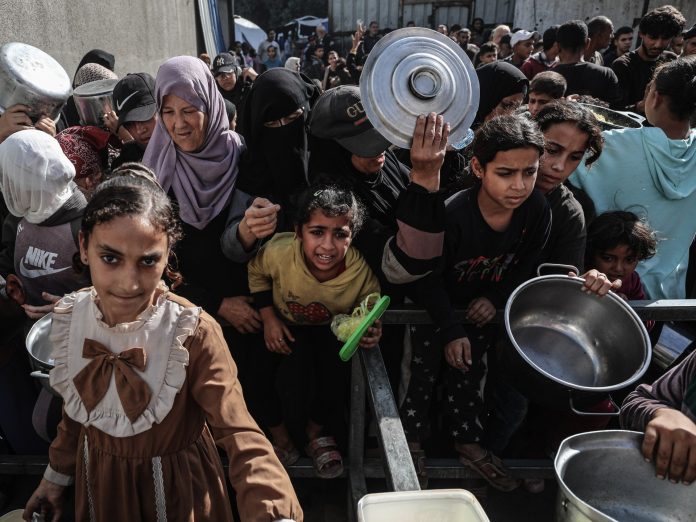
Officials warned Wednesday that the storm was forecast to bring flash floods, strong winds and hail until Friday, conditions expected to wreak havoc in a territory in the grip of a humanitarian crisis, where hundreds of thousands of displaced people live in tents, temporary structures, or damaged buildings after two years of Israel’s genocidal war against the Palestinian people in Gaza.

Humanitarian workers said Israeli restrictions on the entry of tents, tools to repair water and sewage systems have left Gaza poorly equipped to respond to the storm, and called on the international community to pressure the Netanyahu government to urgently allow in supplies.

In the southern city of Rafah, the Palestinian Civil Defence said its teams had already received distress calls from displacement camps, with families reporting “flooded tents and families trapped inside by heavy rains”.

“Despite limited resources and a lack of necessary equipment, our teams are working tirelessly to reach those in need and provide assistance,” the rescue agency wrote on Telegram.

Footage posted on social media and verified by Al Jazeera showed Palestinians shovelling a ditch around tents in a desperate attempt to create barriers that would prevent them from flooding.

Nearly 850,000 people sheltering in 761 displacement sites face the highest risk of flooding, according to the UN Office for the Coordination of Humanitarian Affairs (OCHA).

Flooding has previously been recorded at more than 200 of the highest-risk sites, affecting more than 140,000 people, the office added.

Previous storms had contaminated displacement sites with sewage and solid waste, swept away families’ tents and driven them out of makeshift shelters.

Amjad Shawa, director of the Palestinian NGOs network, stated that Israeli restrictions on the entry of aid and equipment had left Gaza ill-equipped to deal with the storm.

He said only 40,000 tents, out of a needed 300,000, had been allowed in, while tools that would likely be needed to repair sewage systems and water networks were also restricted.

Flooding would bring a serious risk of sewage and solid waste contaminating drinking water or food supplies, raising the risk of diseases in the densely populated Strip, where 2.2 million people are crammed into just 43 percent of the territory, while the remaining 57 percent remains under Israeli military control.

“If Israel were to allow the entrance of supplies, things would be different. But for now, it has done all it can to make life more complicated for Palestinians,” Shawa added.

Oxfam humanitarian response adviser Chris McIntosh agreed, told Al Jazeera that the people of Gaza were bracing for a “very tragic situation”.

“Persistent bureaucracy prevented us from bringing in adequate dwellings for people in Gaza,” McIntosh continued, adding, “The Israelis have not permitted tents to enter Gaza for many months. The only thing they’re allowing at this point is some tarpaulin, which isn’t going to do much for people who need proper shelter.”

He said Palestinians were being forced to live in “deplorable conditions”, with well more than 50 percent of the population living in tents.

He anticipated many would attempt to find dry ground inside bombed-out buildings that were at heightened risk of collapse amid the forecast heavy rains and winds.

Farhan Haq, a spokesperson for UN Secretary-General Antonio Guterres, warned that vulnerable groups, including newborn children, are at particular risk from the incoming winter storm.

About 200 families were expected to arrive at a new displacement site in eastern Khan Younis in the south of the Strip, fleeing a heightened risk of flooding in their present location, he said.

“These households made the decision to move given the impact of the frequent rains and the risk of flooding,” he added.

Ismail al-Thawabta, director of Gaza’s Government Media Office, told Al Jazeera that about 288,000 Palestinian families were without shelter as Storm Byron bore down on the enclave, and issued a call to the international community to pressure Israel to allow in supplies to help respond to the storm.

“We are issuing an urgent appeal to the world, [United States] President Trump and the [United Nations] Security Council to pressure the Israeli occupation,” he said.

Francesca Albanese, the UN special rapporteur on human rights in the occupied Palestinian territory, condemned global inaction as families in Gaza braced for the storm.

“Palestinians in Gaza are literally left alone, freezing and starving in the winter storm,” she posted on X.

“I keep asking how we became such monsters, [i]ncapable of stopping this nightmare.”


Nationwide ceremonies mark Mother’s Day and Women’s Day in Iran

The occasion is traditionally held on the 20th of Jamadi al-Thani in the Islamic lunar calendar, aligning with the birth anniversary of Hazrat Fatima Zahra, daughter of Prophet Muhammad (PBHU).

Revered by Muslims for her compassion, piety, and moral strength, Hazrat Fatima is regarded as an exemplary figure whose life continues to inspire women across the Islamic world.

Throughout the country, families express their appreciation by presenting mothers and women with flowers, gifts, and heartfelt messages of gratitude.

Many households also hold small gatherings to commemorate the day and reflect on the importance of maternal influence.

In public institutions, schools, and cultural centers, special ceremonies and educational programs were organized on Wednesday to highlight women’s achievements in fields such as science, education, healthcare, and social development.