Sunday, January 18, 2026
Home Blog Page 1496

Putin and MbS ‘satisfied’ with oil cuts despite US fury

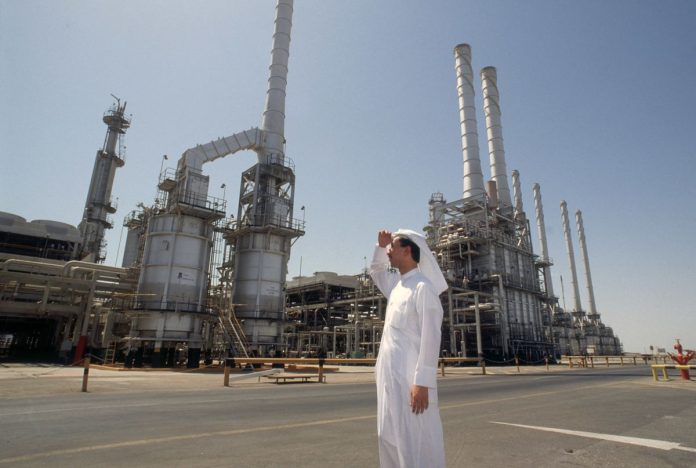
Saudi Arabia oil refinery

“The conversation proceeded in a friendly manner, was constructive and informative. With this in mind, it was agreed to build up contacts in specific areas of cooperation,” the Kremlin said.

The call comes weeks after Riyadh corralled members of the Organization of Petroleum Exporting Countries (Opec) to enact a “voluntary” cut in crude production of nearly 1.2 million barrels a day.

The surprise move blindsided both Washington and market speculators who had bet on oil prices falling amid concerns about the health of global economy. The International Energy Agency warned that the cut would worsen a global oil deficit, driving inflation higher.

The price of benchmark West Texas Intermediate is at just below $79, down from over $118 last May.

Saudi Arabia’s decision to restrict supply has also been described by analysts as a win for Putin, who needs strong oil prices to support his war in Ukraine. Saudi Arabia, like Turkey and the United Arab Emirates, has rebuffed Washington’s pleas to isolate the Kremlin, offering Moscow a financial and diplomatic lifeline.

Coordination between Saudi Arabia and Moscow on oil prices is all the more remarkable considering the two countries engaged in a bitter price war just a few years ago that saw crude prices briefly touch below $0 per barrel.

In March 2020, with crude prices already under pressure as result of the coronavirus pandemic, Putin held a phone call with MbS to discuss production.

“The conversation was very personal. They shouted at each other. Putin refused the ultimatum and the call ended badly,” a Saudi official, speaking on condition of anonymity, told MEE at the time.

Following the spat, Riyadh decided to flood the market with oil. The move prompted then US President Donald Trump to intervene, along with western countries, to eventually convince Saudi Arabia and Russia to slash production and support prices.

More recently, oil production has emerged as one of the many fault lines in the Joe Biden administration’s ties to Riyadh.

In addition to working with Russia on the global oil market, bin Salman has agreed to reestablish relations with Iran in a deal brokered by China and is seeking to rehabilitate Syrian President Bashar al-Assad.

While Russia may benefit from some of these initiatives, Damascus is a key Russian ally in the region and the Kremlin is close to Tehran and Beijing, the global oil market highlights how Riyadh’s own self-interest is propelling ties. Some analysts also see potential pitfalls ahead in the relationship.

Persian Gulf states have traded places with Russia in the global energy trade, with Riyadh redirecting sales to Europe, while Moscow muscles in on their traditional customers in Asia with cut-rate prices.

“Europe is yesterday’s oil market. It’s rushing to get off fossil fuels as quickly as possible,” Jim Krane, an energy expert and fellow at Rice University’s Baker Institute, told MEE last year.

“Saudi Arabia doesn’t want to be losing market share in the big growth markets of Asia and trading them for stagnant to declining European markets,” Krane added.

But production cuts keep both Riyadh and the Kremlin happy.

Saudi Arabia is using its windfall in oil revenues to pursue mega-projects like the futuristic city of Neom and a new airline, which are designed to diversify its economy away from a reliance on fossil fuels. Meanwhile, higher prices help to boost Russia’s war chest.

Next prisoner swap in Yemen set to start mid-May

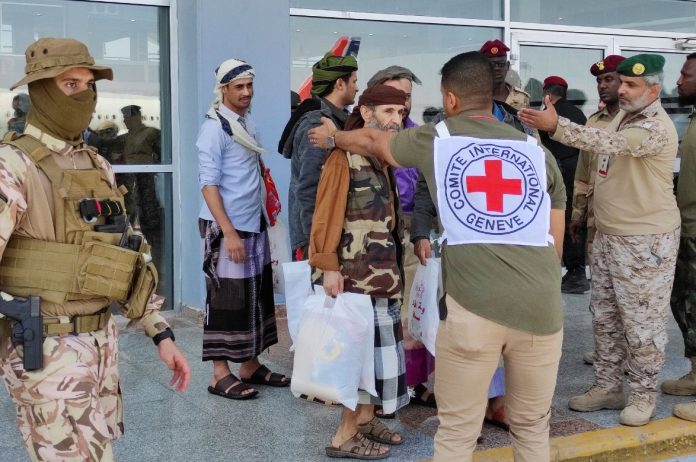
Prison Swap Yemen and Saudi Arabia

Last week, nearly 900 prisoners from both sides were released in the UN-brokered deal that was reached during talks in Switzerland in March.

On Thursday, the Houthis released 77 more pro-prisoners, including several dozens of sick and elderly, in a move that was not part of the swap agreement, Yemeni media reported.

“In accordance with the prisoner exchange deal, which is still under implementation, the next round is set for May 15,” Fadail said Friday.

The exact number of prisoners to be swapped in the upcoming round has not yet been determined, he added, although stating that “their number is not a problem, since any agreement on the issue is subject to implementation.

Saudi Arabia launched the bloody war against Yemen in March 2015 in collaboration with a number of its allies and with arms and logistics support from the US and several Western states to reinstall Mansour Hadi, who resigned from the presidency in late 2014 and later fled to Riyadh amid a political conflict with the Houthi movement.

The war objective was also to crush the Houthi movement, which has been running state affairs in the absence of an effective government in Yemen.

However, it has stopped well shy of all of its goals, despite killing tens of thousands of Yemenis and turning the entire country into the scene of the world’s worst humanitarian crisis.

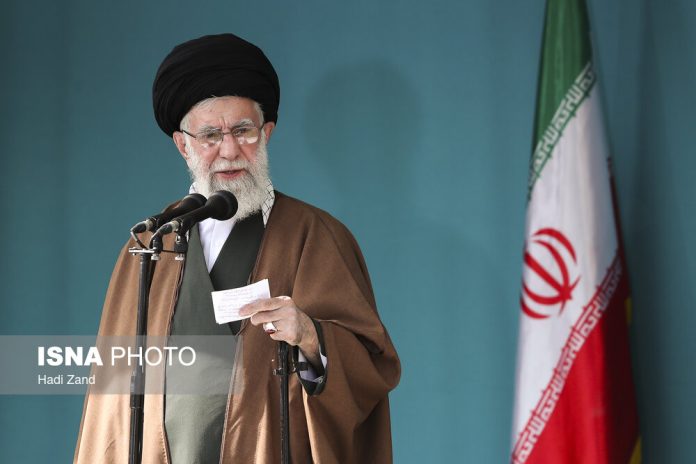
Iran Leader: Israel losing deterrent power increasingly thanks to Palestinian resistance

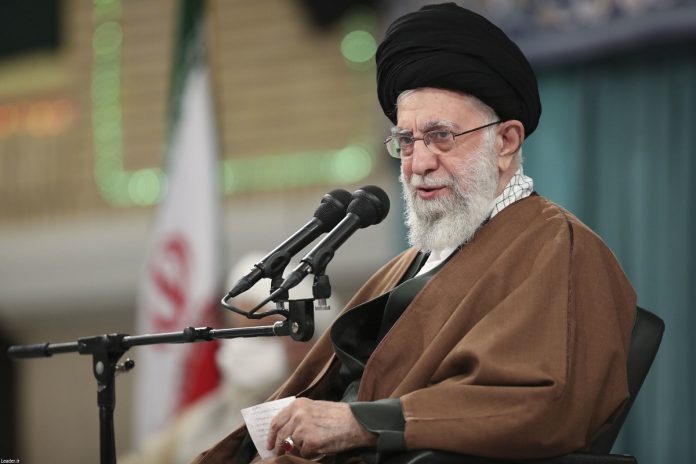
Ayatollah Khamenei

In a meeting on Saturday with a group of Iranian officials and envoys of Muslim countries to Tehran  Ayatollah Khamenei described unity as a “vital need” for the Islamic Ummah.

The meeting was held on the occasion of Eid al-Fitr, marking the end of the holy Muslim month of Ramadan.

The Leader highlighted the “noticeable decline of the Zionist regime and the obvious decrease in its deterrent power,” saying, “This important progress has been achieved thanks to the blessing of the perseverance and resistance of the Palestinian nation and youth.”

Ayatollah Khamenei described the Palestinian cause as the most fundamental issue of the Muslim world, saying, “Today, the strategy of the Muslim world should be focused on helping and strengthening those fighting [Israel] within Palestine.”

The decline of the Zionist regime has started since several years ago and has today gathered pace, said the Leader, calling on the Islamic Ummah to seize this great opportunity that can set the stage for the liberation of Palestine.

He said the Palestinian cause does not just belong to the Muslim world, but International Quds Day rallies in non-Islamic countries, including in Europe and the US, on the last Friday of Ramadan were the outcome of the revelations of the Israeli regime’s crimes against Palestinians.

“Jing Jelang” – Baluchestan Shoes for the Wealthy

Jing-Jelang

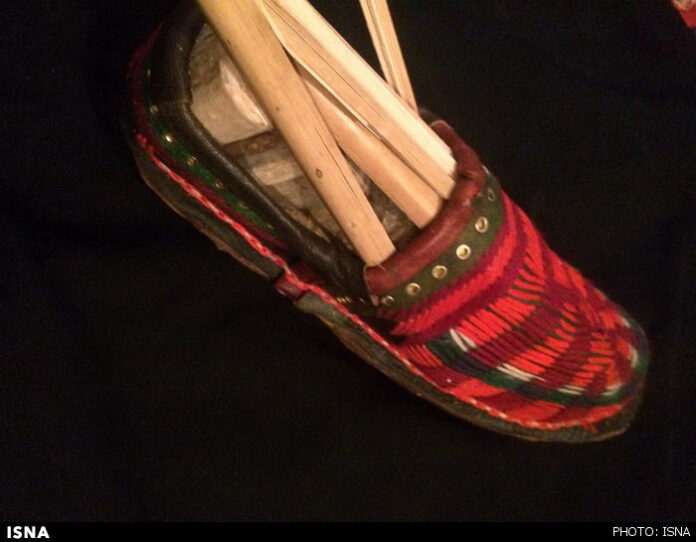
Jing jelang were traditional shoes worn by those who could afford them in Baluchestan. They are made from natural leather, and in the old times, when people walked with them on, the shoes made a loud noise. For this reason, the local people called them Jing jelang in imitation of the sound they made.

“Jing Jelang” – Baluchestan Shoes for the Wealthy
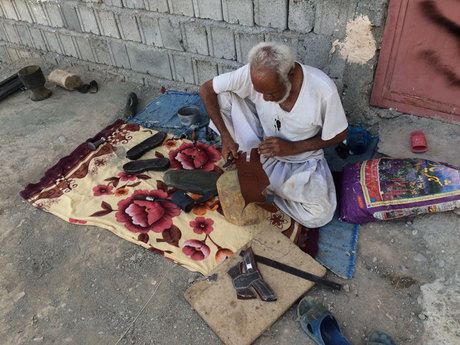
Raz Mohammad Lashgari, a Baluchi artist

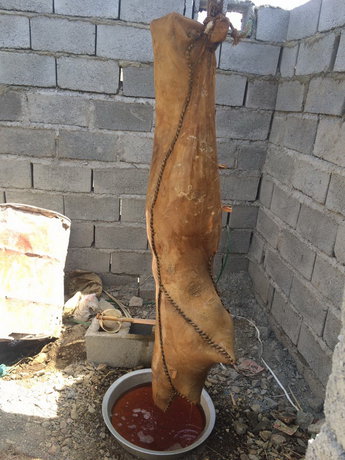
These shoes were made of tanned cow leather, which were first coloured by a special stone only found in Fanuj in the Baluchestan region. Then the pieces were stitched together, and submerged in water for four days to one week, so the material wouldn’t crack. After that, they would be left to dry in the sun for four more days.

This process would have been accomplished with simple, hand-made tools, and the shoes would have been moulded using wood and reeds. Nowadays, nobody wears these type of shoes, but Raz Mohammad Lashkari, the Baluchi artist, has revived this art, and by the order of Elham Mohammadi, a female handicrafts entrepreneur, has made a type of jing jelang.

“Jing Jelang” – Baluchestan Shoes for the Wealthy
Jing Jelang shoes dating back 30 years

These were very heavy shoes, and their soles were made of many layers of cut leather. The appearance of the shoes would have been decorative, using silk thread and small mirrored panels.

It would usually take 40 days to make these shoes, but Lashkari prepared a prototype of these shoes in one week for the 26th National Handicrafts Exhibition. These shoes would cost $110-130.

Among other art forms and handicrafts of Sistan and Baluchestan province are needlework, pottery, rug weaving, felt-making, etc.

“Jing Jelang” – Baluchestan Shoes for the Wealthy
Cowhide being prepared to make Jing Jelang shoes

Dozens of rights groups warn UN against antisemitism definition

United Nations

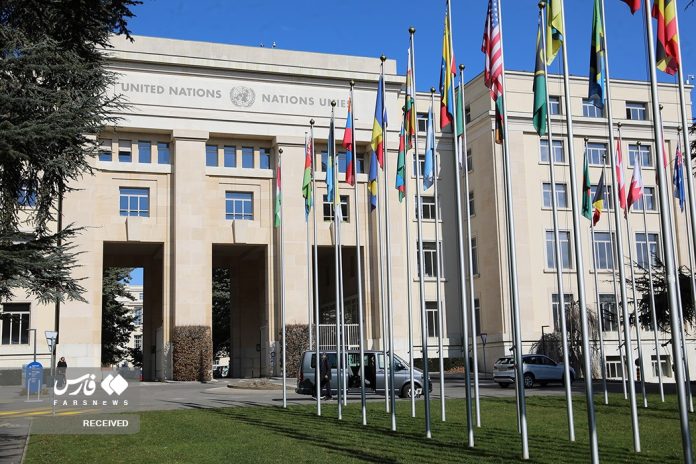
The letter, signed by groups including Amnesty International and Human Rights Watch, voiced strong support for the UN’s commitment to the fight against antisemitism in line with international human rights standards and raised concerns of the International Holocaust Remembrance Alliance’s (IHRA) working definition of the ideology.

The letter said those who use the IHRA definition and terminology tend to rely on a set of 11 contemporary examples of antisemitism, seven of which refer to the “state of Israel.”

The signatories stated that antisemitism “poses real harm to Jewish communities around the world” but the IHRA’s use of the word could “inadvertently embolden or endorse policies and laws that undermine fundamental human rights.”

The rights groups warned that if the UN adopts the IHRA definition, governments and courts could misuse it to silence criticism of the policies of the hardline Israeli cabinet, creating “a chilling effect on freedom of expression.”

The letter stressed that Ken Stern, the main drafter of the IHRA definition, raised his own concerns about institutions adopting the terminology, which he said has been used as “a blunt instrument to label anyone an antisemite.”

Such terminology “opens the door” to labeling as antisemitic criticism of the Israeli policies and practices by human rights organizations that the regime’s authorities are committing various crimes against Palestinians, according to the groups.

“The UN should ensure that its vital efforts to combat antisemitism do not inadvertently embolden or endorse policies and laws that undermine fundamental human rights, including the right to speak and organize in support of Palestinian rights and to criticize Israeli policies,” the letter said.

The signatories added that the terminology could also be used to label as antisemitic documentation showing that the illegal entity’s founding involved dispossessing Palestinians.

In 2017, after the British government adapted the IHRA definition on a national level, at least two universities in the country banned activities planned for “Israel Apartheid Week”, including a talk at the University of Central Lancashire on boycotts, divestment and sanctions.

In February 2020, Israeli advocacy groups in the US attempted to disrupt a Palestinian film screening at Pitzer and Pomona College, citing “clear indicators of antisemitism under the examples listed by the IHRA.”

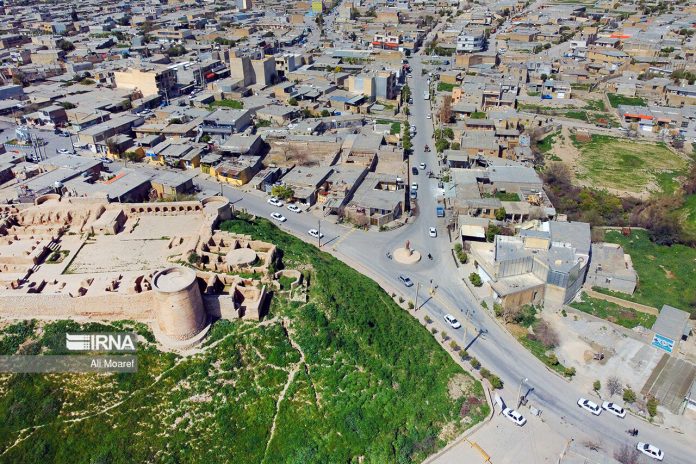
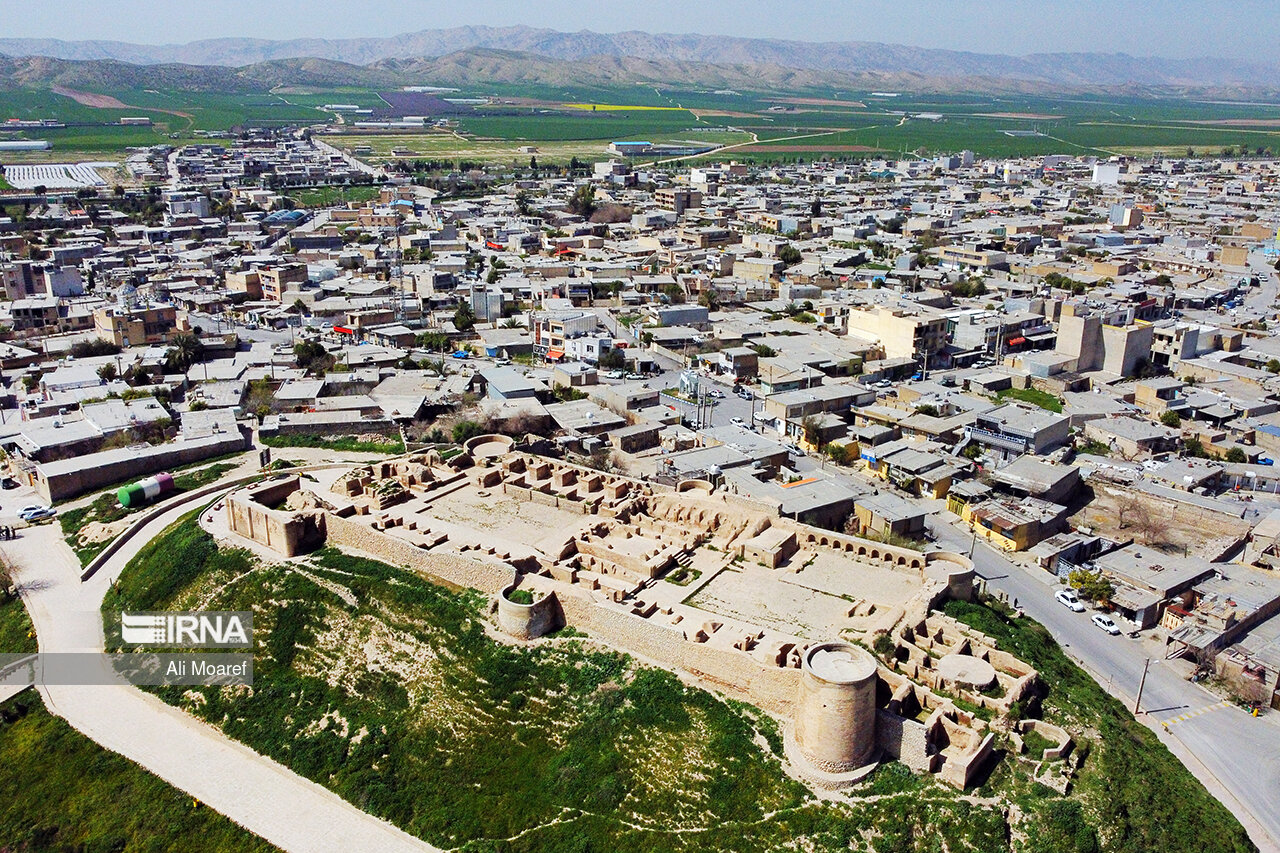
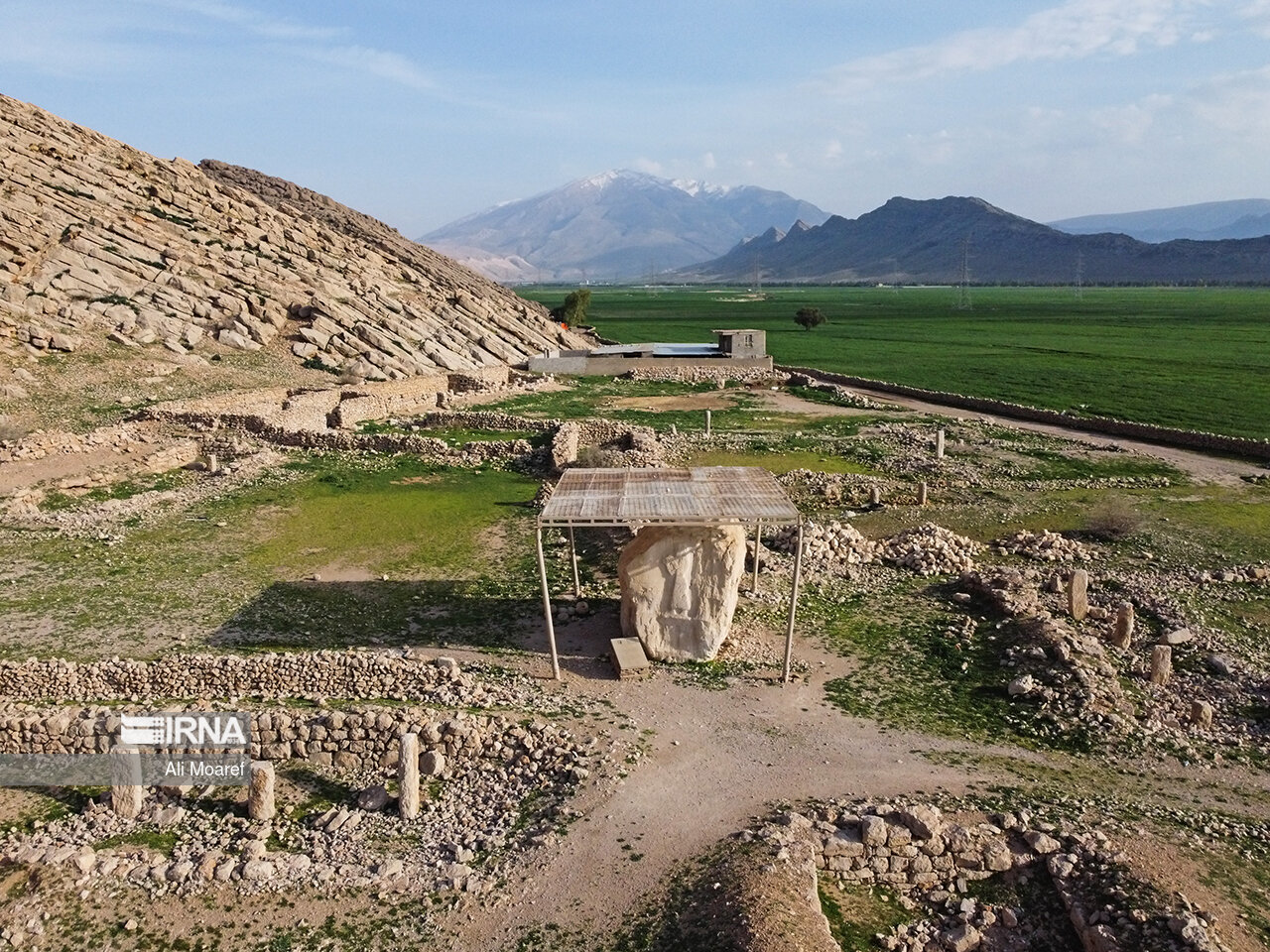
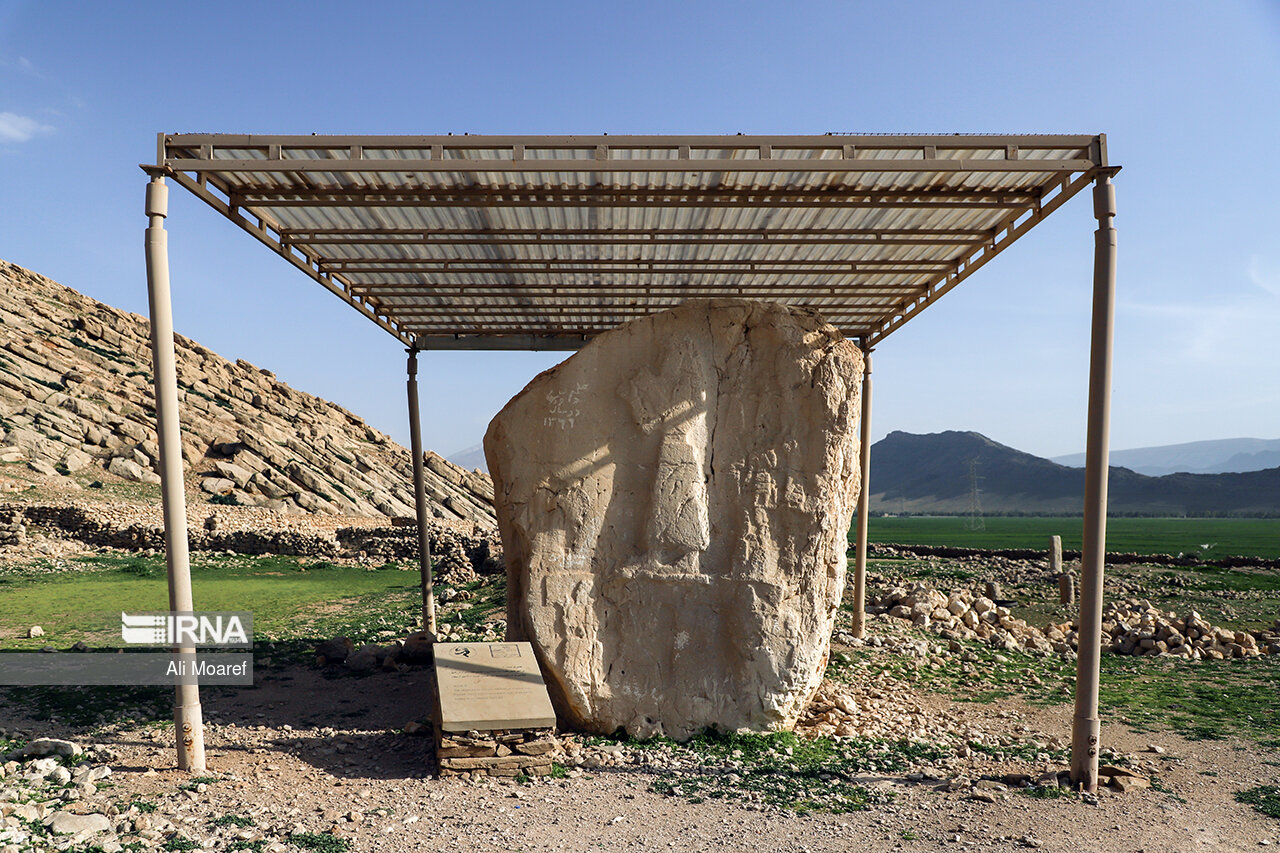
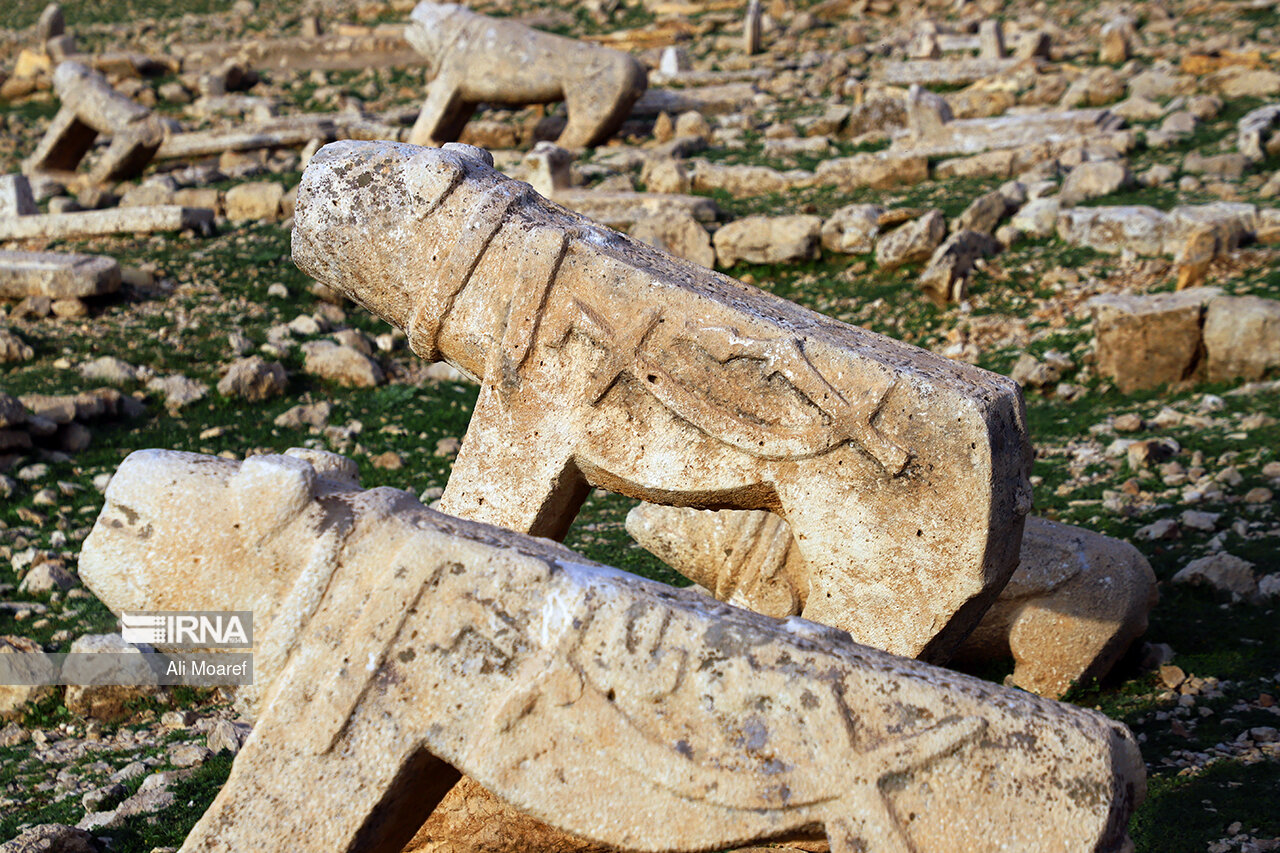
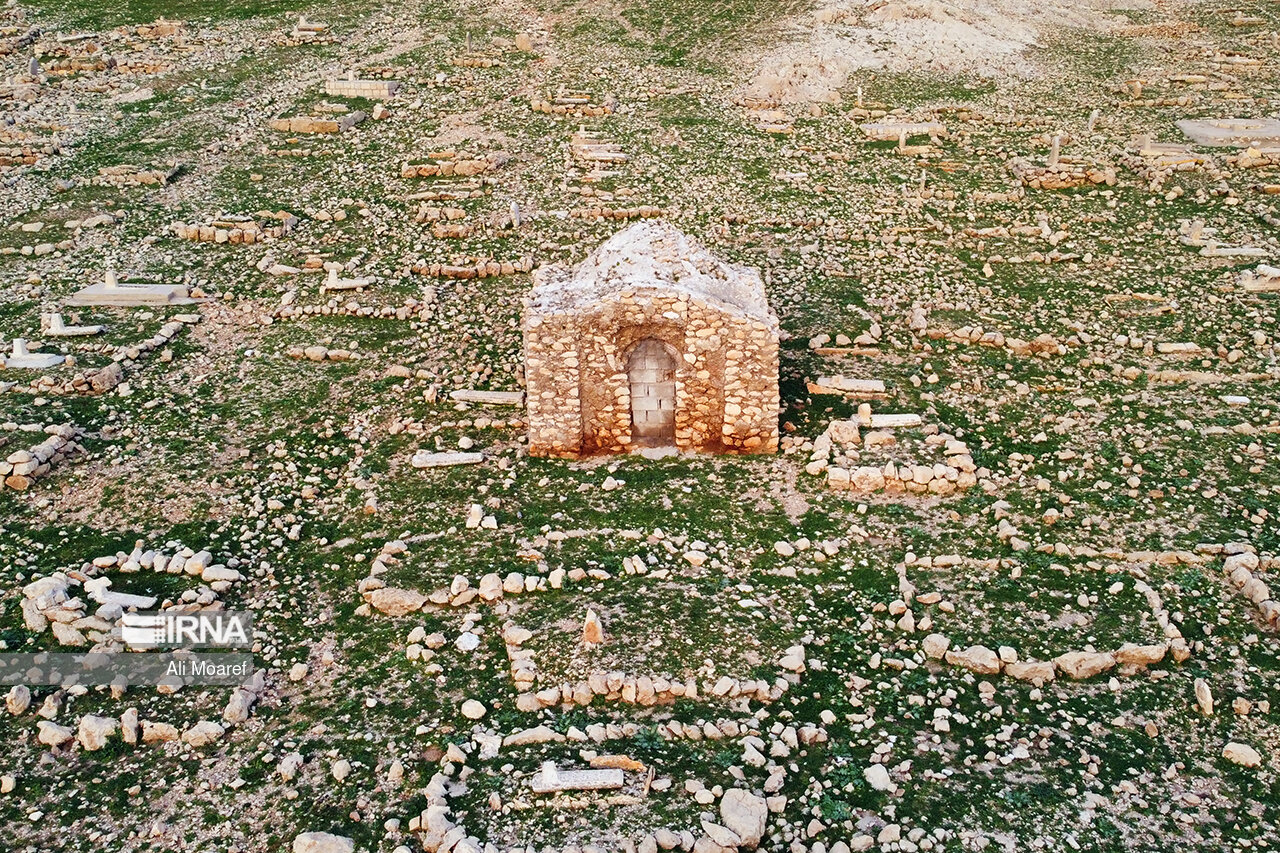
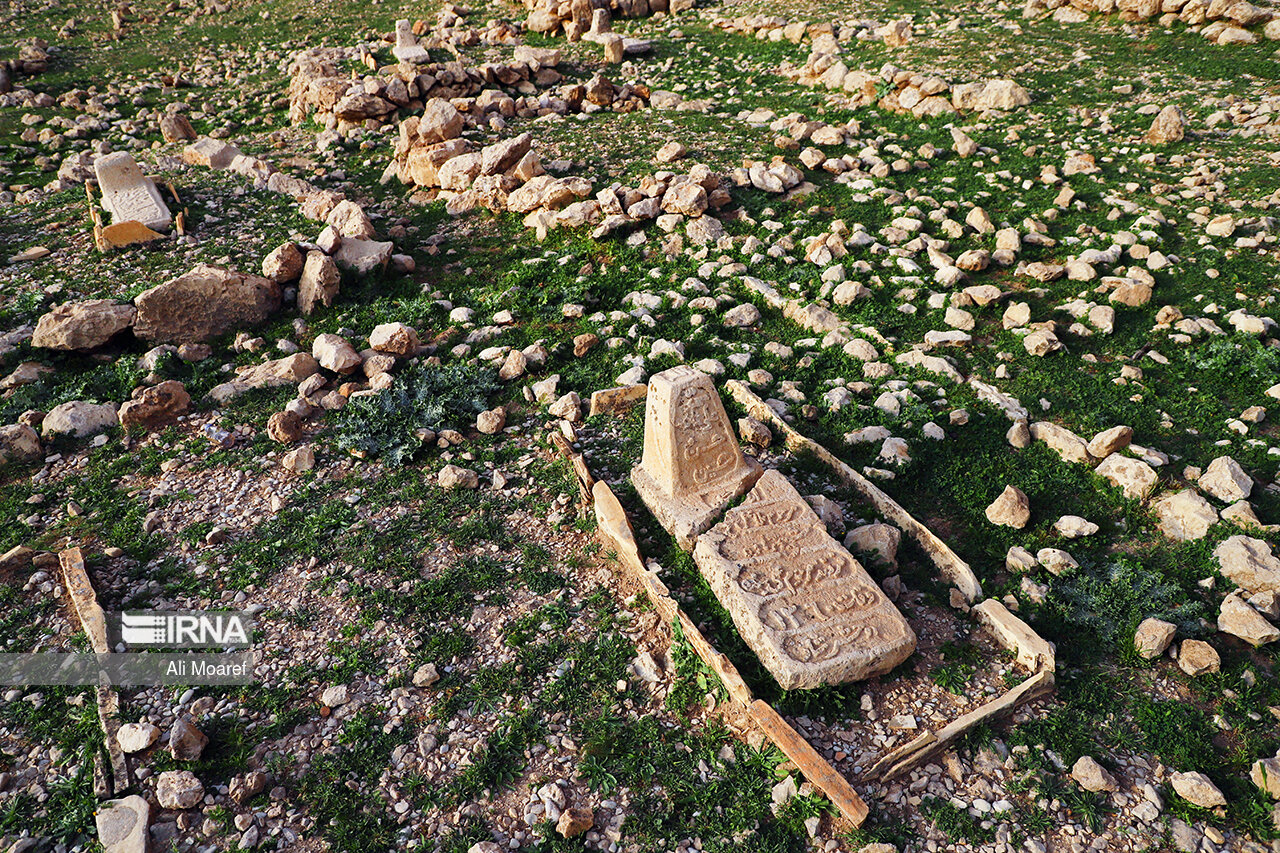
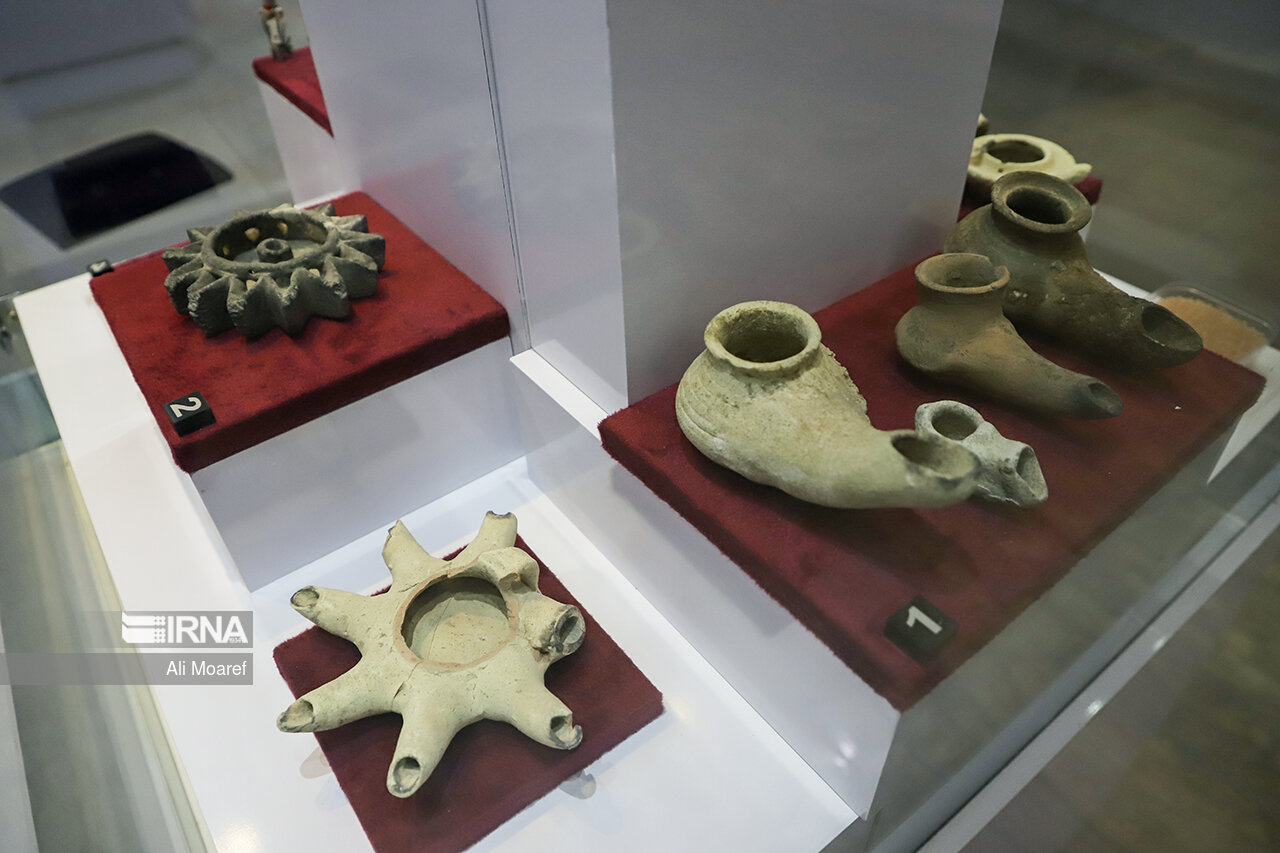
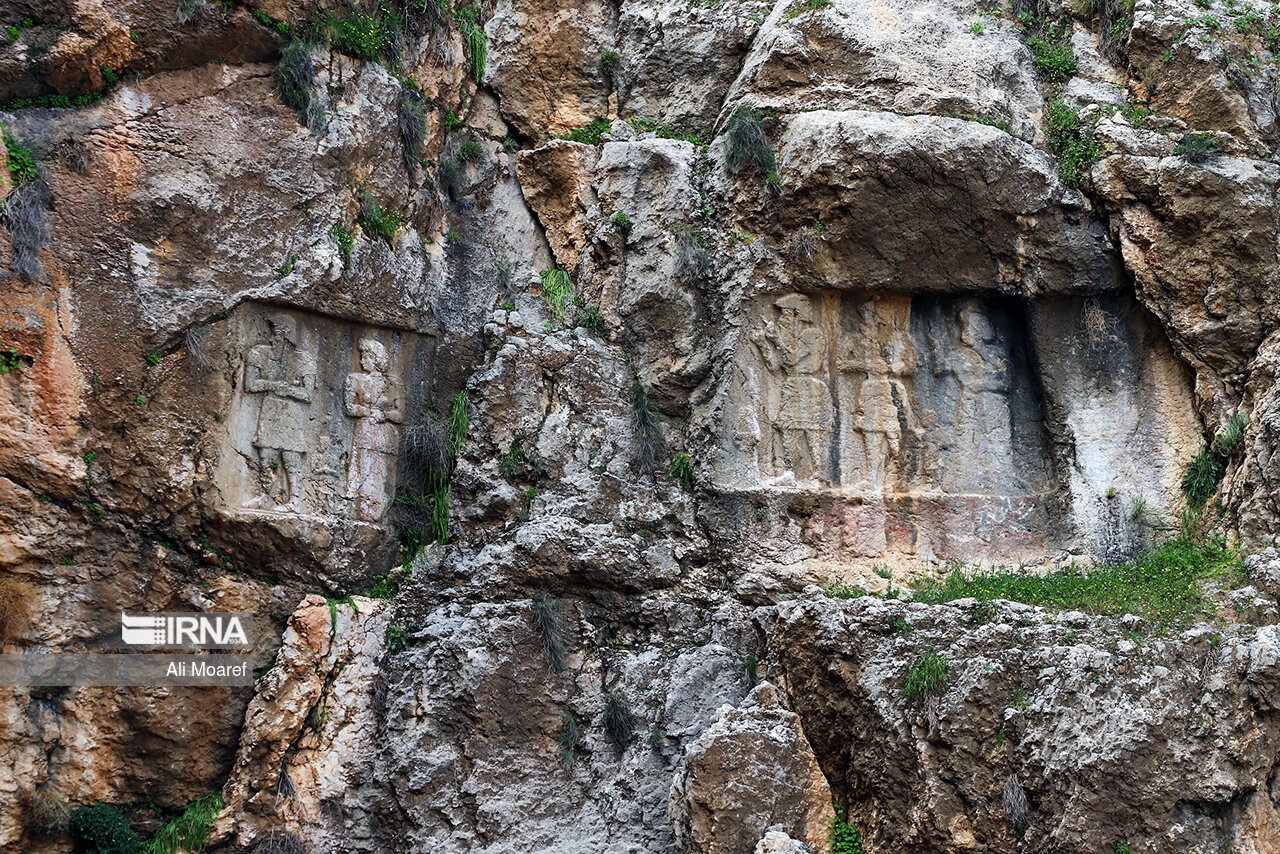
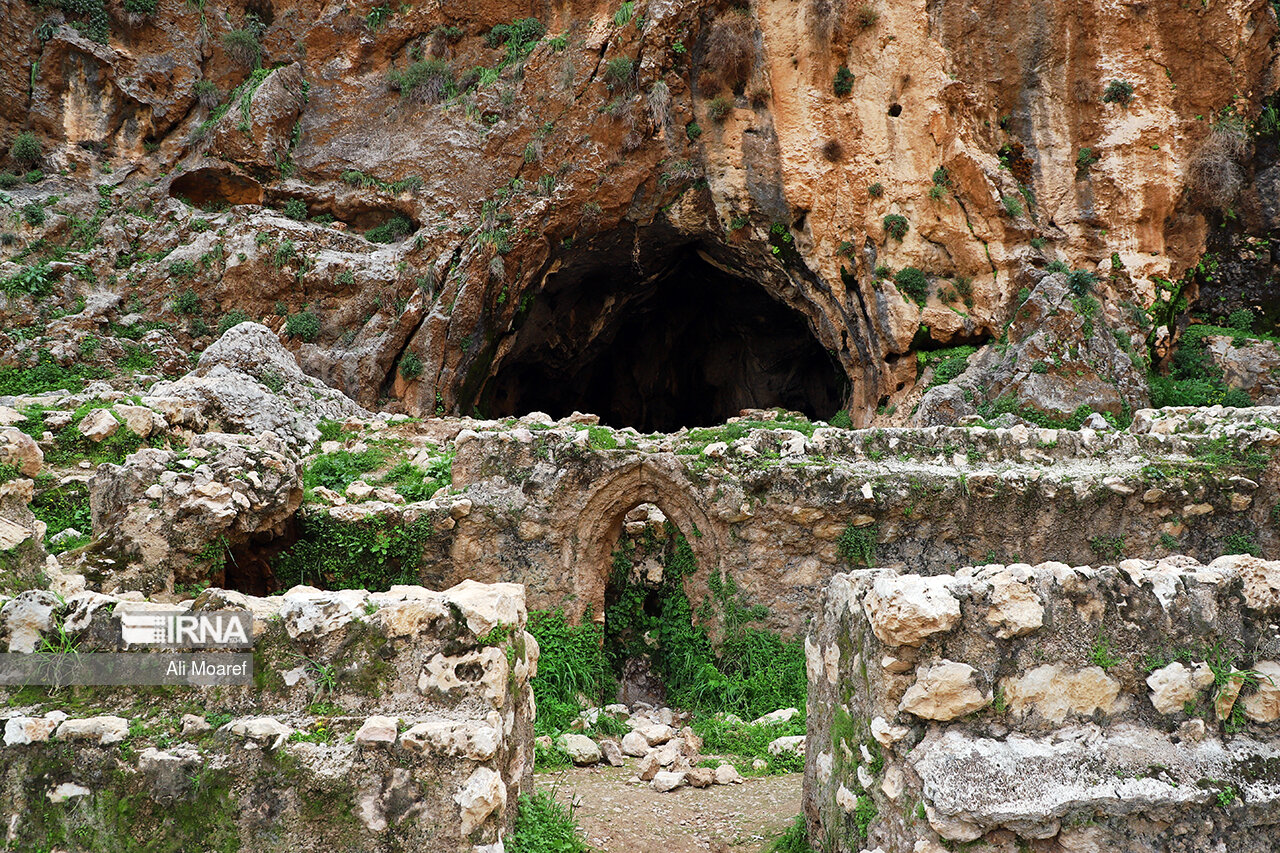
Iran tourism: Izeh, city of ancient stone inscriptions, rock-carvings

Izeh in Iran

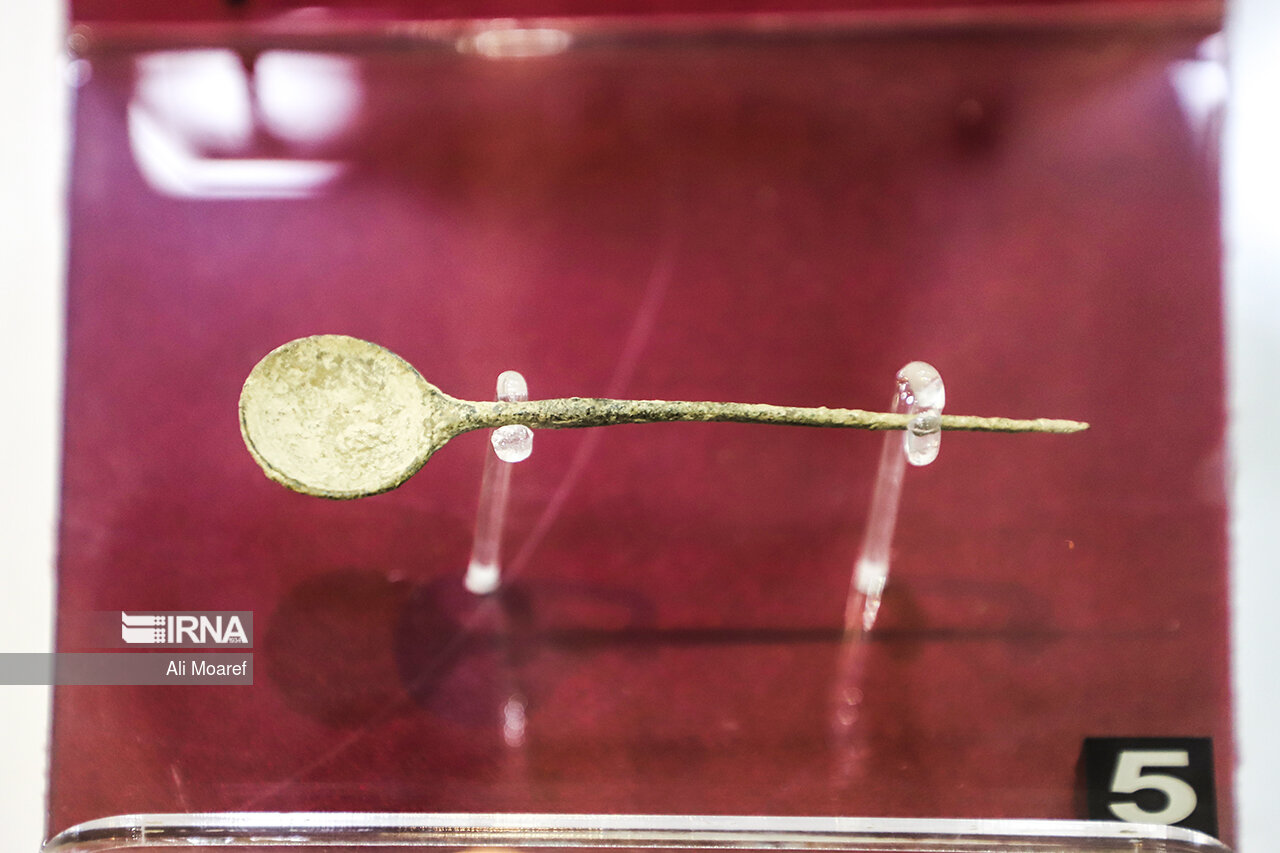
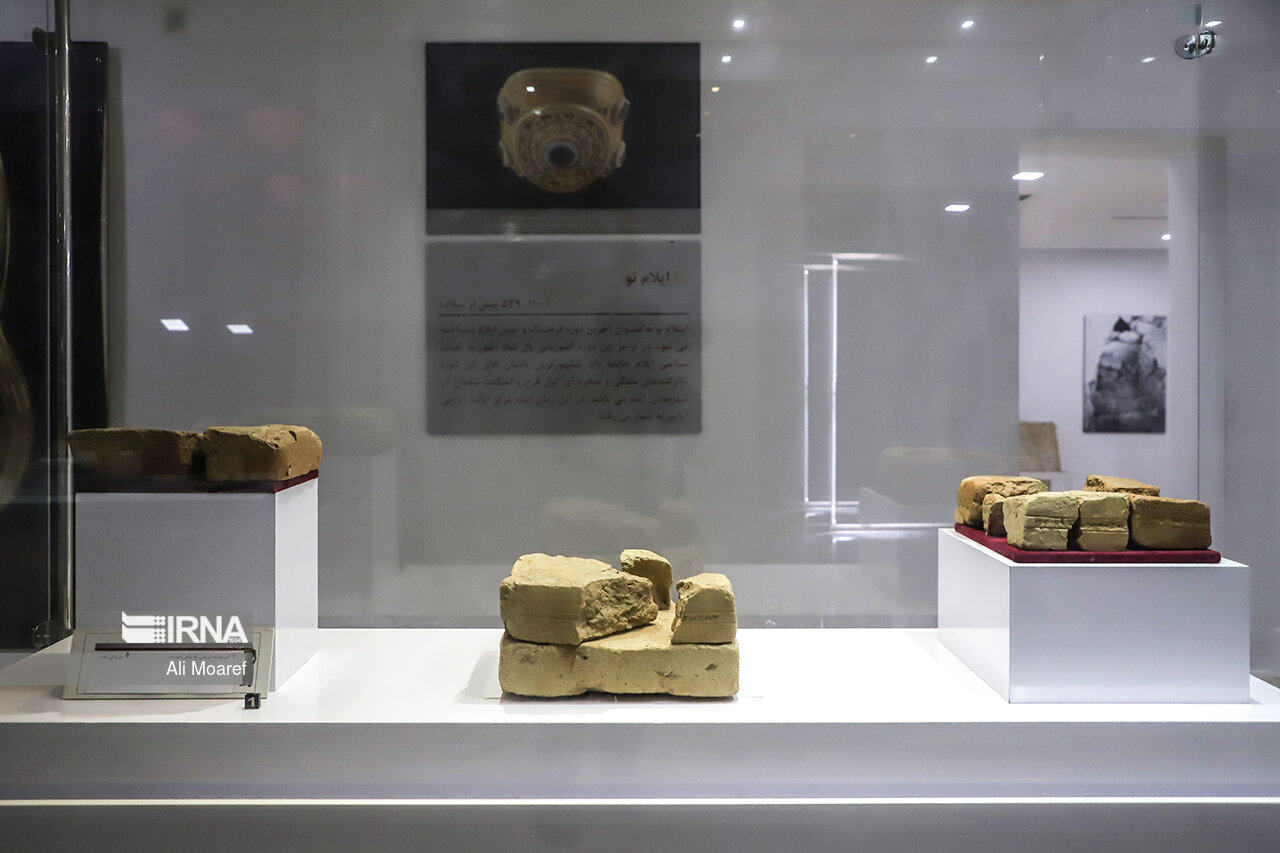
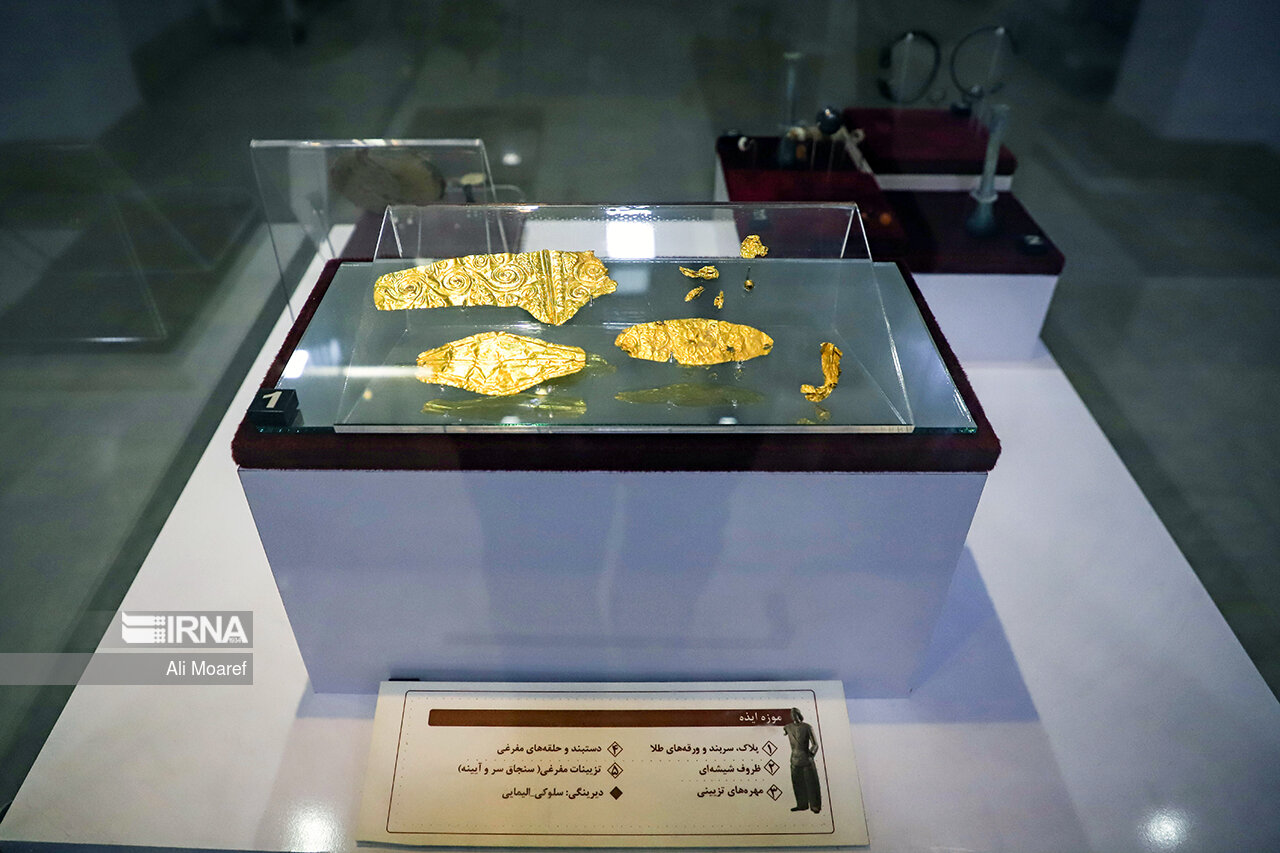
The mountainous region is known for ancient monuments, stone inscriptions and rock-carvings, most of which have been found in the Koul-e Farah village.

Find more beauties of Izeh in the Related pictures:

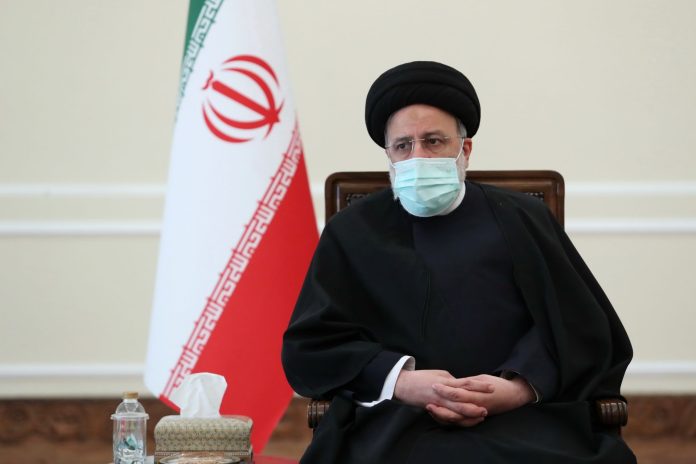
President Raisi says Iran to continue supporting Yemen

Ebrahim Raisi

In the phone call made by the Yemeni official to felicitate the Fitr Eid to President Raisi, the Iranian president, for his part, congratulated the occasion to Mahdi Al Mashat, the other members of Yemen Supreme Political Council and the Yemeni nation.

Iran’s president expressed delight over the release of a large number of Yemeni prisoners of war, whom he said are in fact Yemeni national heroes, arguing that the reached peace is the result the dear Yemeni people’s brave resistance.

Raisi stressed Iran’s continued support for the Yemeni people in their campaign to secure their rights, including in the negotiations to decide that nation’s future fate.

He expressed hope that after restoration of peace and stability, the world will be witness to broader cooperation between Iran and Yemen.

Expressing delight over the results of the recent dialogues to resolve the problems in Yemen, President Raisi expressed hope that the remaining POWs, too, will be released, the siege of Yemeni people will be terminated, and a permanent truce will be established.

The Yemeni official, for his part, conveyed the council’s greetings to Supreme Leader of the Islamic Revolution Ayatollah Seyyed Ali Khamenei and appreciated the Islamic Republic of Iran’s continued support for the Yemeni nation.

Al Mashat also expressed hope the under the light of Islamic unity and solidarity, Almighty Allah will grant the best fate for the entire Islamic Ummah (nation).

He congratulated the Islamic Republic of Iran for the numerous cases of success in different fields over past 18 months, and asked for the continuation of Iran’s dynamic role-playing in resolving the remaining problems in Yemen.

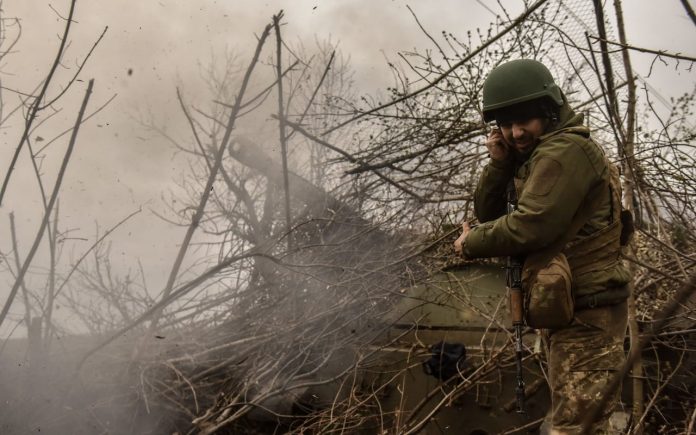
Live Update: Russia’s “Special Operation” in Ukraine; Day 423

Russia Ukraine War

Russia expelling over 20 German diplomats

The Russian foreign ministry spokeswoman on Saturday announced the expulsion of “more than 20” German diplomats as a retaliatory measure for “mass expulsion” of Russian embassy staff from Berlin.

Maria Zakharova told state-run television Zvezda that Moscow had decided to expel “more than 20” diplomats after her ministry denounced “another mass expulsion of employees of Russian diplomatic missions in Germany.”


About 3,000 people evacuated after bomb found in Russian city of Belgorod

Around 3,000 people in the Russian city of Belgorod were evacuated Saturday after a bomb was found near the area where a Russian warplane dropped an explosive late Thursday, Russian state media TASS reported, citing local emergency services.

The evacuees cleared out of 17 residential buildings as explosives specialists assessed the ammunition found Saturday, according to TASS. Officials eventually stated there was no danger of explosion.

Belgorod’s regional governor Vyacheslav Gladkov said on his Telegram channel that the bomb has been removed from the area and people are gradually returning to their apartments.

The explosion on Thursday left a crater about 20 meters (65 feet) across, blowing a car onto a roof and damaging buildings, in what state media called an “accidental” or “emergency” release of air ordnance by a Russian fighter jet.

Belgorod is 40 kilometers (24.8 miles) north of the border with Ukraine


Ukraine: 11 Russian warships are in combat readiness in Black Sea

Ukraine’s operational command has reported that 11 Russian warships are in combat readiness in the Black Sea, including two submarines armed with Kalibr cruise missiles.

According to Ukrinform, the press service of Ukraine’s Operational Command South reported this on Facebook.

“The situation in the southern area of responsibility of the defence forces remains difficult, but we continue our combat work. The enemy ship grouping in the Black Sea consists of 11 units, including two submarine missile carriers armed with eight Kalibrs,” it said.


US warns EU of Russia’s alleged attempts to bypass sanctions: Reports

The United States has handed four EU countries a list of expensive dual-use goods that Russia allegedly seeks to purchase in circumvention of sanctions, the Financial Times reported, citing US officials.

Brian Nelson, the US treasury under secretary for terrorism and financial intelligence, has recently traveled to Germany, Italy, Austria and Switzerland to discuss with the countries’ authorities methods Russia allegedly uses to bypass export restrictions to acquire goods valuable for its military-industrial complex, the report said.

“Russia is throwing a lot of resources at circumventing our sanctions,” a US official told the Financial Times, adding that even some nations that had officially joined the sanctions were “falling short on actions to ensure that Russia can’t exploit their companies and banks to equip its military.

The list of goods Moscow allegedly seeks to purchase in circumvention of sanctions includes optics, semiconductor converters, voltage and power measuring equipment, as well as user-programmable gate arrays, the news outlet reported. At the same time, Washington did not specify in production of what weapons these items were used, according to the Financial Times.

In late February, EU sanctions envoy David O’Sullivan told the news outlet that the European Union was deeply concerned over the recent increase in exports to Russia’s neighboring countries and its allies, adding that goods supplied to them might end up in Moscow. In this regard, O’Sullivan reportedly visited these countries to discuss the issue and convey the Western position on the unacceptability of sanctions evasion.


Russia says NATO statements about Ukraine joining alliance are “dangerous”

The Russian Foreign Ministry issued a warning Friday about NATO’s “dangerous” statements regarding Ukraine joining the alliance.

“NATO sets itself the goal of ‘defeating’ Russia in Ukraine, and to motivate Kyiv, it promises that after the end of the conflict, the country can be accepted into the alliance,” ministry spokesperson Maria Zakharova said.

It comes after NATO Secretary General Jen Stoltenberg visited Kyiv on Thursday and stressed that “Ukraine’s future is in NATO”.

Stoltenberg said he discussed a “multiyear support initiative” with President Volodymyr Zelensky, adding that it would help Ukraine transition from Soviet-era equipment and doctrines to “NATO standards.”

This would “ensure full interoperability with the alliance,” Stoltenberg stated.

His visit and the statements about Ukraine joining NATO were met with pushback from Russia. The Kremlin reiterated on Thursday that preventing Kyiv from joining NATO is one of its key goals.

“Such statements are short-sighted and downright dangerous. This can lead to the final collapse of the European security system,” Zakharova continued.

Stoltenberg also reaffirmed Friday during a meeting of allies at Ramstein Air Base in Germany that Ukraine will join the military alliance. He told reporters all NATO allies have agreed Ukraine should be a member — but did not give a definitive date of when this would happen.


Top US general says Russian forces have “eroding” discipline and “poor” morale against Ukraine

While the Ukrainian military “continues to perform very well” in its fight against Russia, the Russian military lacks will and morale, US Gen. Mark Milley, chairman of the Joint Chiefs of Staff, said Friday.

“Unlike Ukrainian forces, who are highly motivated to fight for their country, to fight for their freedom, their democracy, and their way of life, the Russians lack in leadership, they lack will, the morale is poor, and the discipline is eroding,” Milley stated in Germany alongside Defense Secretary Lloyd Austin at the Ukraine Defense Contact Group meeting.

Milley noted that Russia is “expending significant manpower for very little gain,” and tightening its conscription laws as they “indiscriminately feed their citizens into the chaos of war.”

“Over the past year, Russia’s temporary territorial gains have come with enormous losses. Hundreds of thousands of Russians have fled their country in addition to the casualties,” he continued, adding, “They are trying to avoid fighting in Putin’s war.”


Situation in city of Bakhmut ‘under control’: Ukraine

Ukraine announced that Russian forces had made some advances in fierce fighting for the eastern city of Bakhmut but that the situation was under control.

Deputy Defence Minister Hanna Malyar made her comments shortly before Russia’s defence ministry said its assault troops were now fighting in western parts of Bakhmut, the last part of the city held by Ukrainian forces.

“The situation is tense, but under control,” Malyar wrote on the Telegram messaging app, adding, “Decisions are being made according to military expediency.”

Russian troops have reportedly moved into western Bakhmut, the last part of the city still held by Kyiv’s troops.

The Russian defence ministry claimed that its assault troops had begun fighting in the area.

Earlier this week, the Wagner group reportedly captured two districts in the centre and northwest of Bakhmut, Russia’s Defence Ministry claimed.


Nuclear experts at Zaporizhzhia power plant have heard shelling “almost every day” this week

International Atomic Energy Agency experts at Ukraine’s Zaporizhzhia nuclear power plant have heard shelling nearly every day over the past week, the agency said in an update on Friday.

At one point, they were told to shelter at the site because of the potential dangers, according to an update from IAEA Director General Rafael Grossi.

“I saw clear indications of military preparations in the area when I visited the Zaporizhzhia Nuclear Power Plant just over three weeks ago. Since then, our experts at the site have frequently reported about hearing detonations, at times suggesting intense shelling not far from the site. I’m deeply concerned about the situation at the plant,” Grossi said.

The plant still relies on one functioning power line “for the external electricity it needs for reactors cooling and other essential nuclear safety and security functions,” Grossi added.

Prior to the war, the plant had four such power lines.

In addition, due to the “significant reduction” of staff at the site, the plant “currently does not have a systematic maintenance and in-service inspection schedule,” Grossi continued.

Russian forces continue to control the plant, which is the largest nuclear power station in Europe and sits in a part of the Zaporizhzhia region that Russia occupied after its invasion of Ukraine last February. The plant has frequently been disconnected from Ukraine’s power grid due to intense Russian shelling in the area, raising fears across Europe of a nuclear accident.

The IAEA announced in January that it would establish a continuous presence of nuclear safety and security experts at all of Ukraine’s nuclear power facilities, significantly stepping up its efforts to help prevent a nuclear accident during the current military conflict.


Ukraine receives “green light” for cooperation with NATO’s procurement agency: DM

Ukraine has received a “green light” for close cooperation with NATO’s Support and Procurement Agency (NSPA), Ukraine’s Defense Minister Oleksii Reznikov said Friday.

“I’m happy to have a green light for our close cooperation with NSPA, NATO’s procurement agency. This will include the National Procurement Review and best-in-the-league advice to [Ukraine’s Defense Ministry],” Reznikov tweeted following a meeting with NATO Secretary General Jens Stoltenberg at Ramstein Air Base in Germany.

The meeting in Ramstein on Friday brings together Ukrainian officials and their counterparts from the coalition known as the Ukraine Defense Contact Group.

“We need excellent defense procurement both to win the war and to be efficient in the future,” he continued.

“Ukraine has reached unprecedented levels of interoperability with NATO. We are, de facto, already a part of the Alliance’s security space. I expressed my hope that this would expedite political decisions regarding our country’s NATO integration,” he added.

Reznikov’s comments come on the heels of Stoltenberg’s remarks, reaffirming that Ukraine will eventually “become a NATO member.”


Ukraine’s FM calls for second portion of EU aid for procuring ammunition

One week after the European Union approved a fund of approximately $1.1 billion to reimburse states that have sent ammunition to Ukraine, Ukraine’s foreign minister has asked the EU to expedite a second tranche of aid.

In a tweet Friday, Dmytro Kuleba said that during a call with the EU’s foreign policy chief, Josep Borrell, he thanked him “for all the EU’s defence assistance, including the latest €1 billion for immediate ammo needs.”

Kuleba stated that he called on Borrell “to help finalise discussions on the 2nd €1 billion ($1.12 billion) joint procurement tranche as soon as possible to ensure security in Europe.”

In turn, Borrell said in a tweet Friday that “the urgency is clear” and that the EU is looking to deliver ammunition quickly.

The EU’s decision earlier this month implemented the first part of an agreement made by its members on March 20 to speed up the delivery and joint procurement of artillery ammunition, which Ukraine is burning through rapidly in its defense against Russia’s invasion.

The measure covers existing stocks “or from the reprioritisation of existing orders” in the period from February 9 to May 31, 2023, the EU announced.


Ex-Russia’s president says Britain is “our eternal enemy,” following latest UK sanctions

Former Russian President and deputy chair of Russia’s Security Council, Dmitry Medvedev, called Britain “our eternal enemy” after the UK government imposed sanctions on Russian individuals.

“Who gives a damn about their decisions? Britain has been and always will be our eternal enemy, at least until their arrogant and miserably damp island is swept into the murky depths of the sea by a wave created by a state-of-the-art Russian arms system,” Medvedev wrote on Telegram Friday.

The UK government sanctioned a Russian judge and two other individuals it says are connected to the arrest of jailed Kremlin critic Vladimir Kara-Murza. The sanctions involve asset freezes and a travel ban.

On Monday, Kara-Murza was sentenced to 25 years in prison on charges of high treason and other charges.

It came after he publicly condemned Moscow’s war in Ukraine. Kara-Murza was initially detained one year ago, hours after an interview with CNN in which he criticized Russian President Vladimir Putin’s “regime of murderers.”

The Leader urges three branches of Iran govt. to join hands in face of problems, warns of enemy new tactics

Ayatollah Khamenei

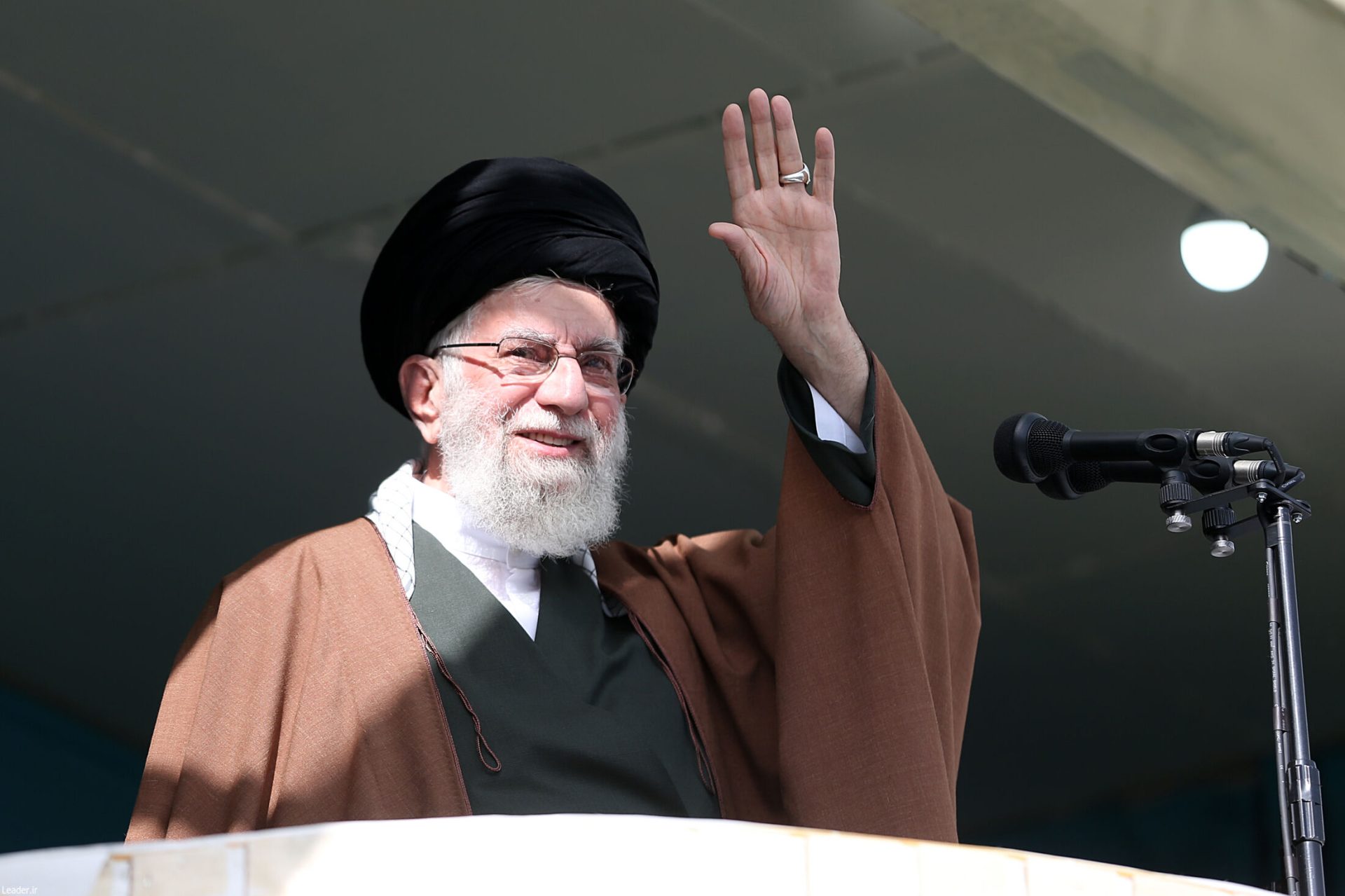
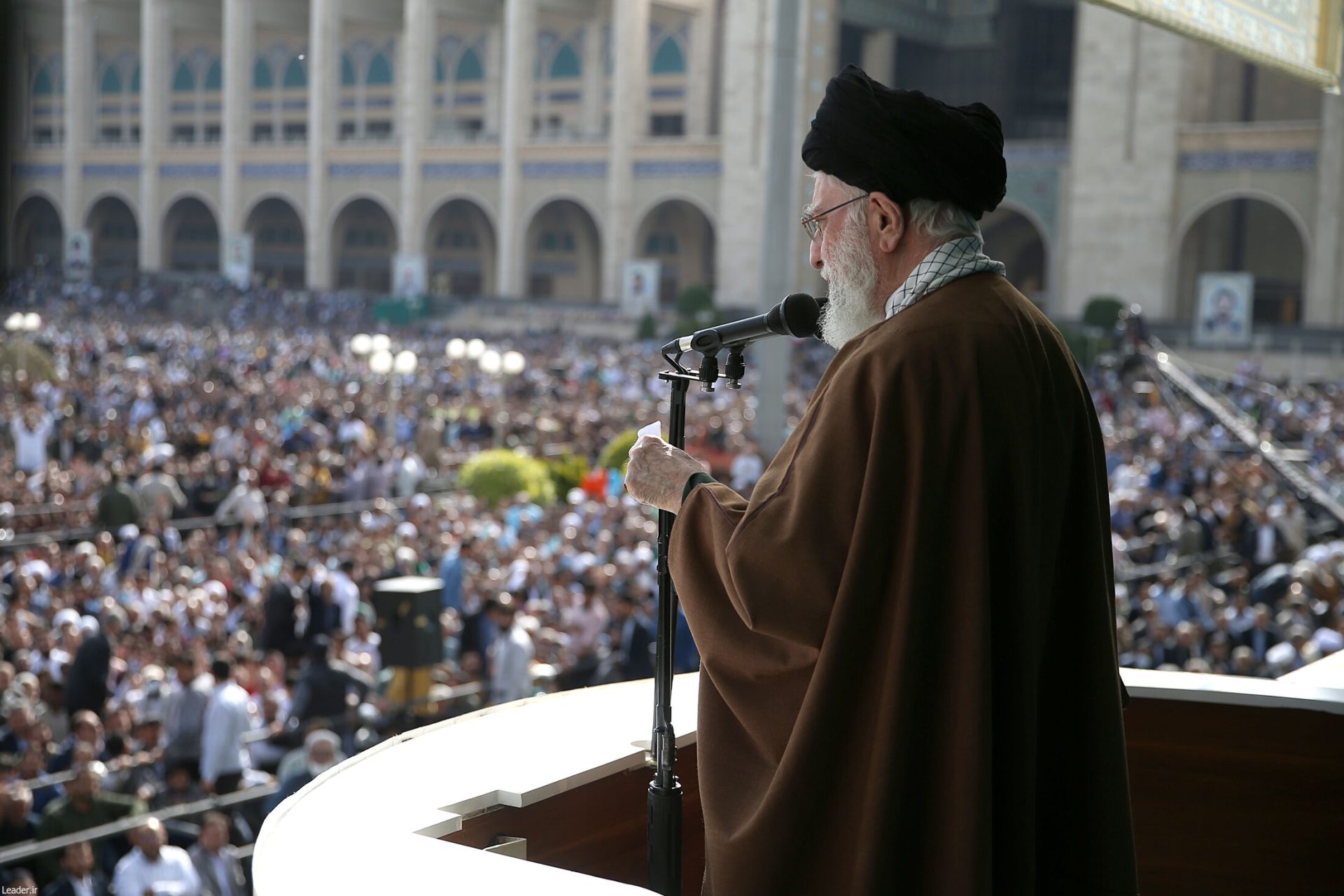
During Eid al-Fitr sermons on Saturday in Tehran, the Leader said the officials in charge of the executive branch, the Parliament and the Judiciary “know how to open the way for cooperation, solidarity and synergy,” describing such an approach as “an important general strategy” in running the state affairs.

“Another strategy is focusing on the resolution of problems” without paying heed to commotions aimed at shifting the attention away from the core issues.

The Leader also underscored the significance of national unity in the face of enemy conspiracies.

Over the past decades, national unity has on many occasions removed obstacles hindering the path of the Iranian nation forward, Ayatollah Khamenei said.

He said enemies are against the nation’s unity and want infighting in Iran, which is home to various ethnicities.

In the past, the colonialist powers used to resort to military intervention to take control of countries, but they have realized such a tactic is today ineffective, the Leader said, referring to the US military failures in Iraq and Afghanistan as cases in point.

“They have thus changed their tactic,” he warned, adding that those powers have instead resorted to “deception, distortion, lies, provocation, humiliating the nations and filling them with pessimism toward themselves, and covering up nations’ shining capabilities.”
The Leader urged vigilance against the new enemy tactics and said the country should update its capabilities in facing those strategies.


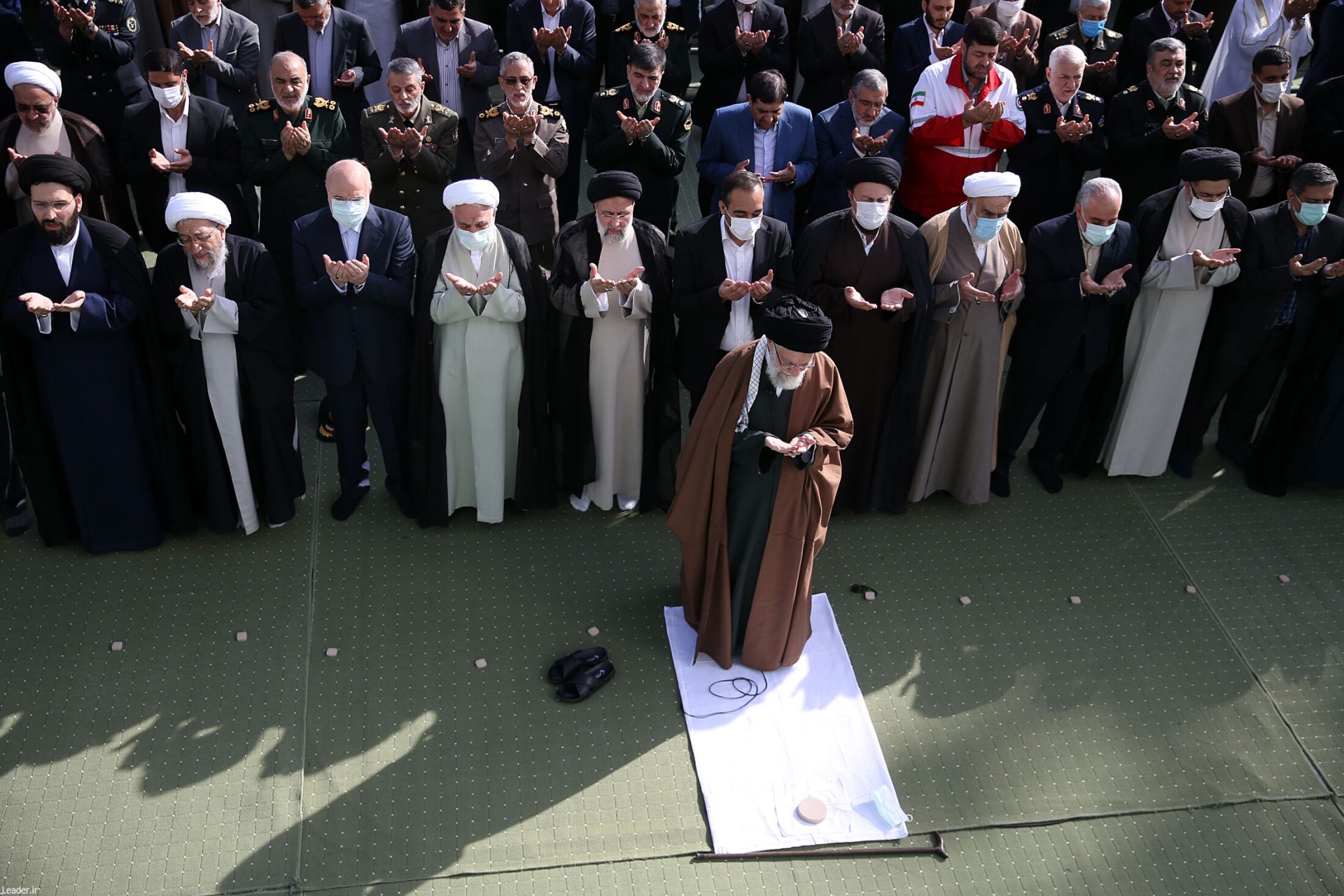
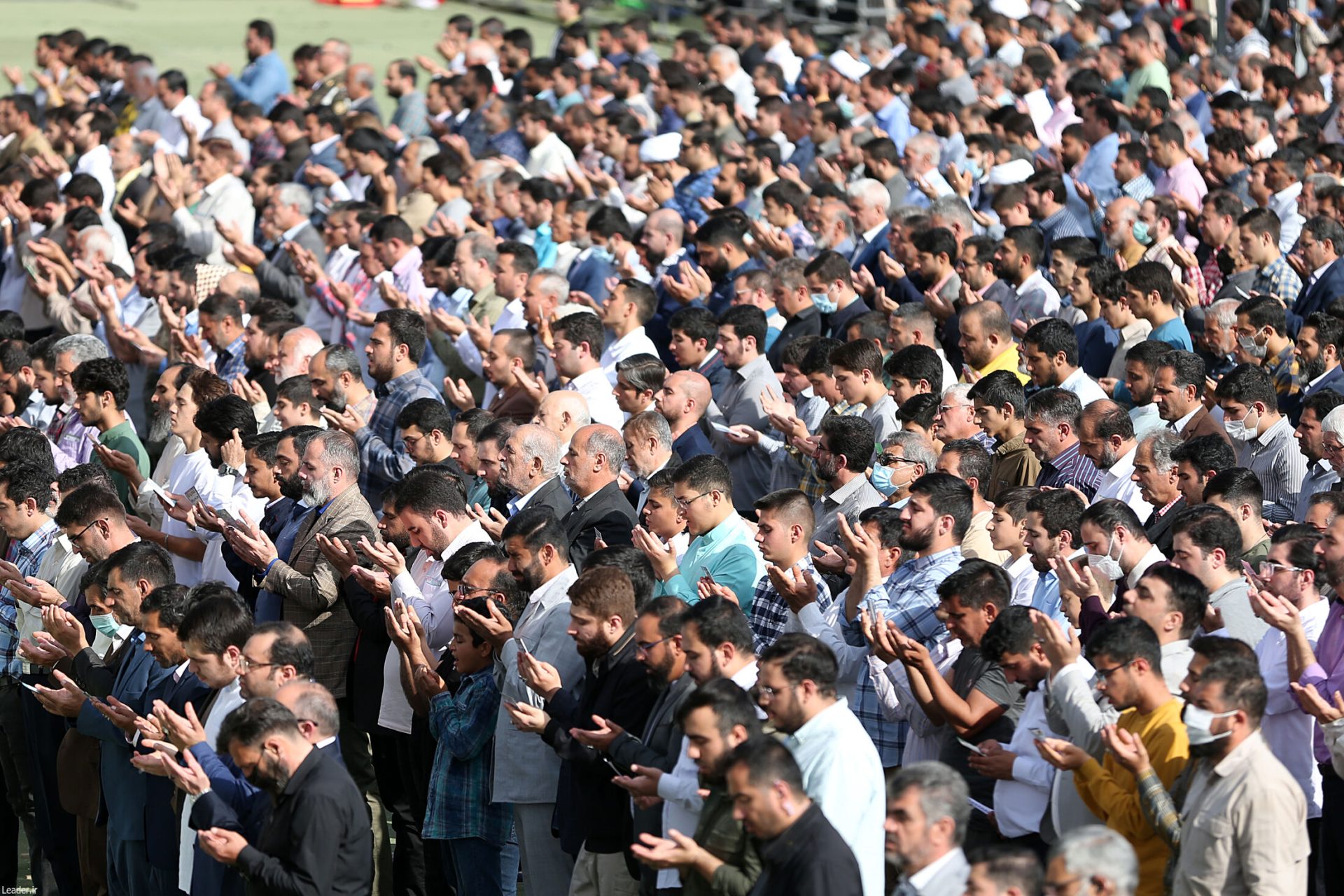
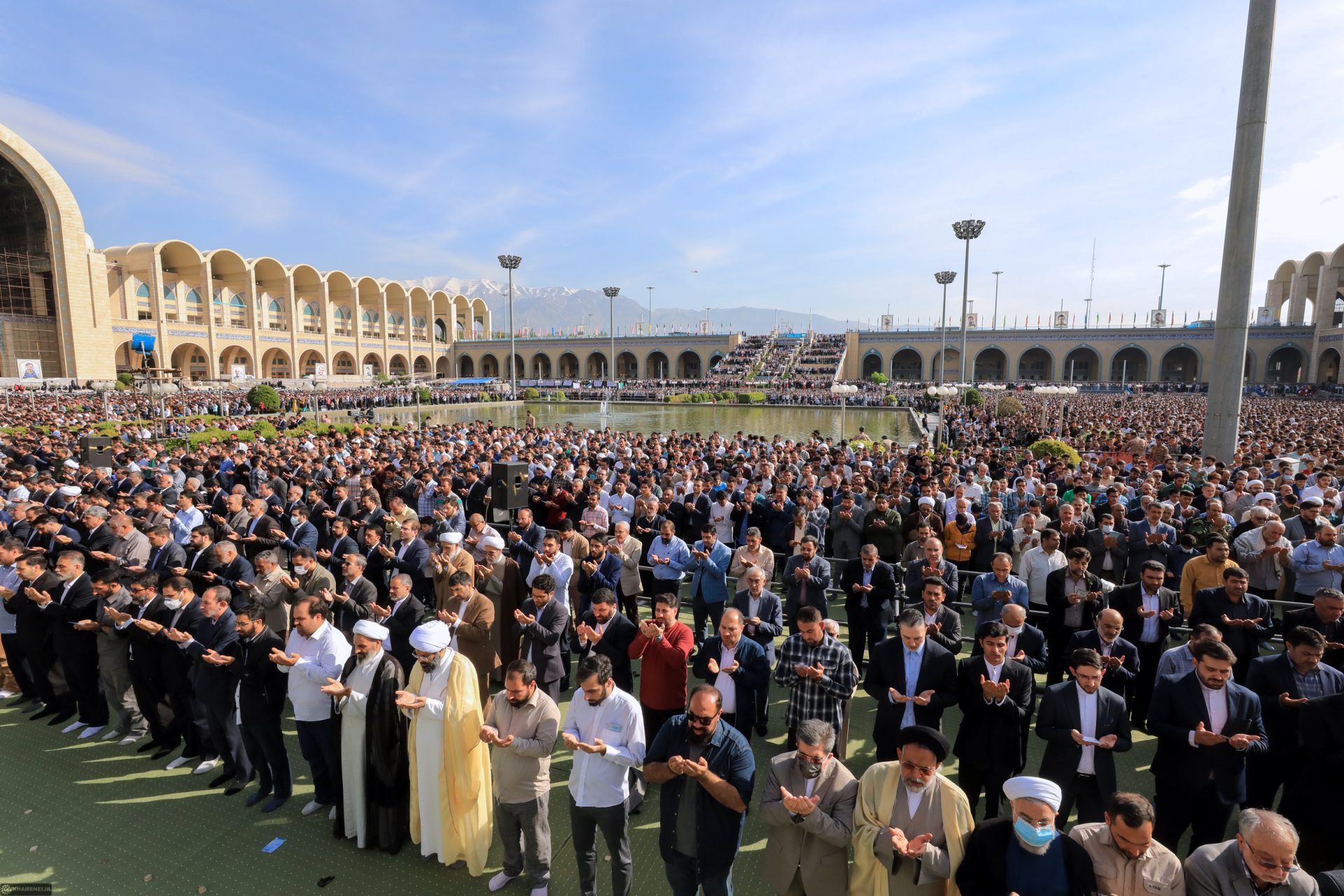
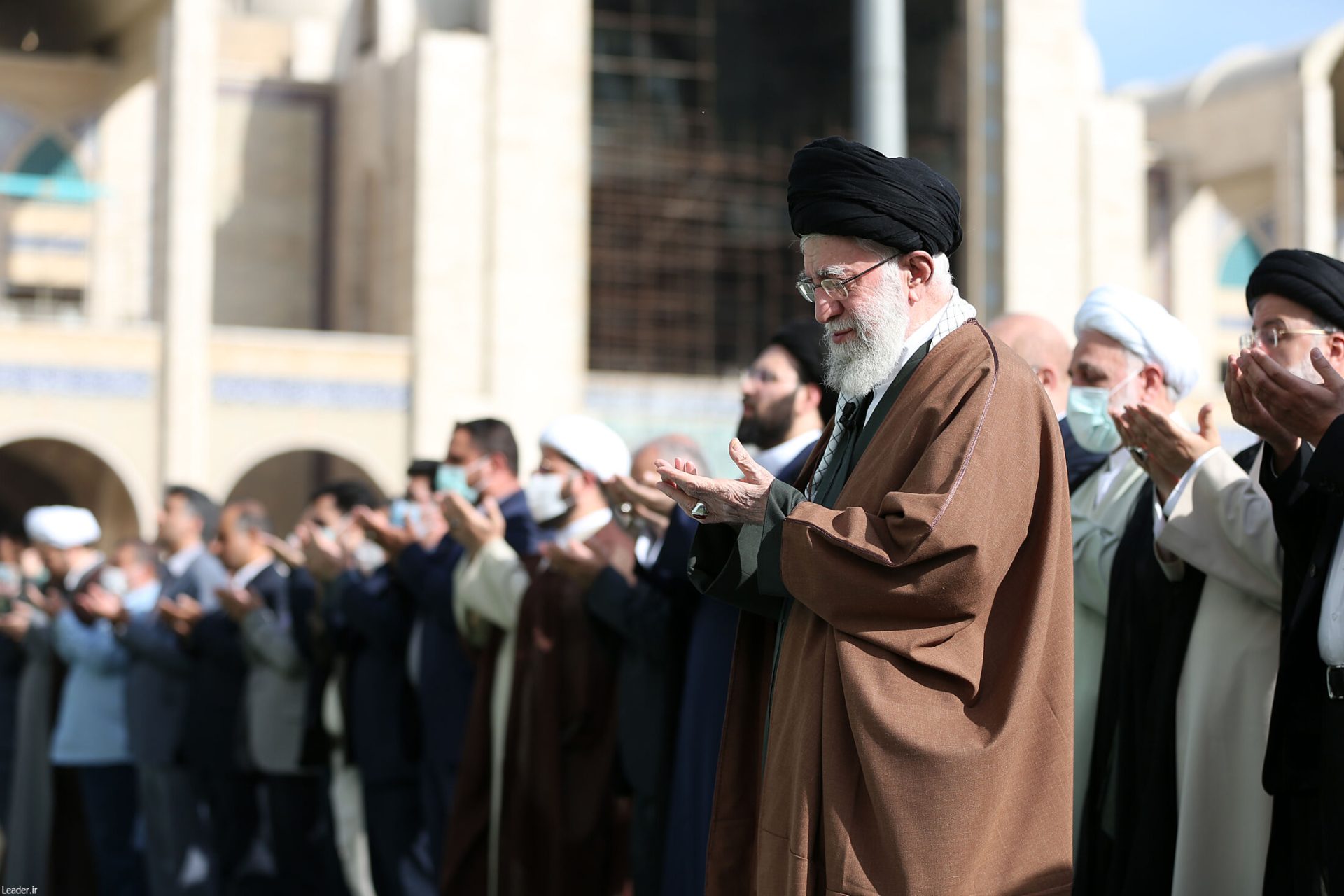
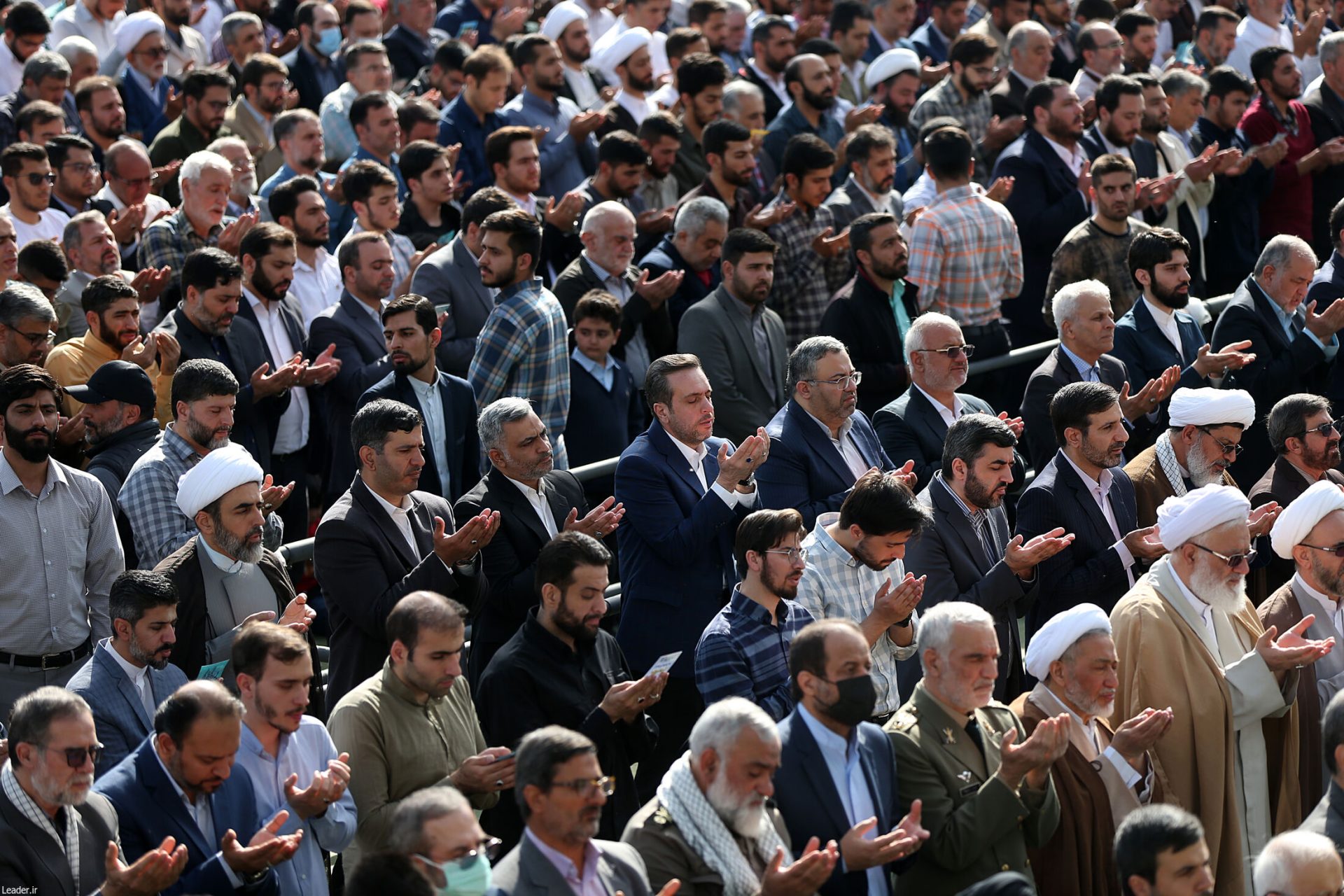
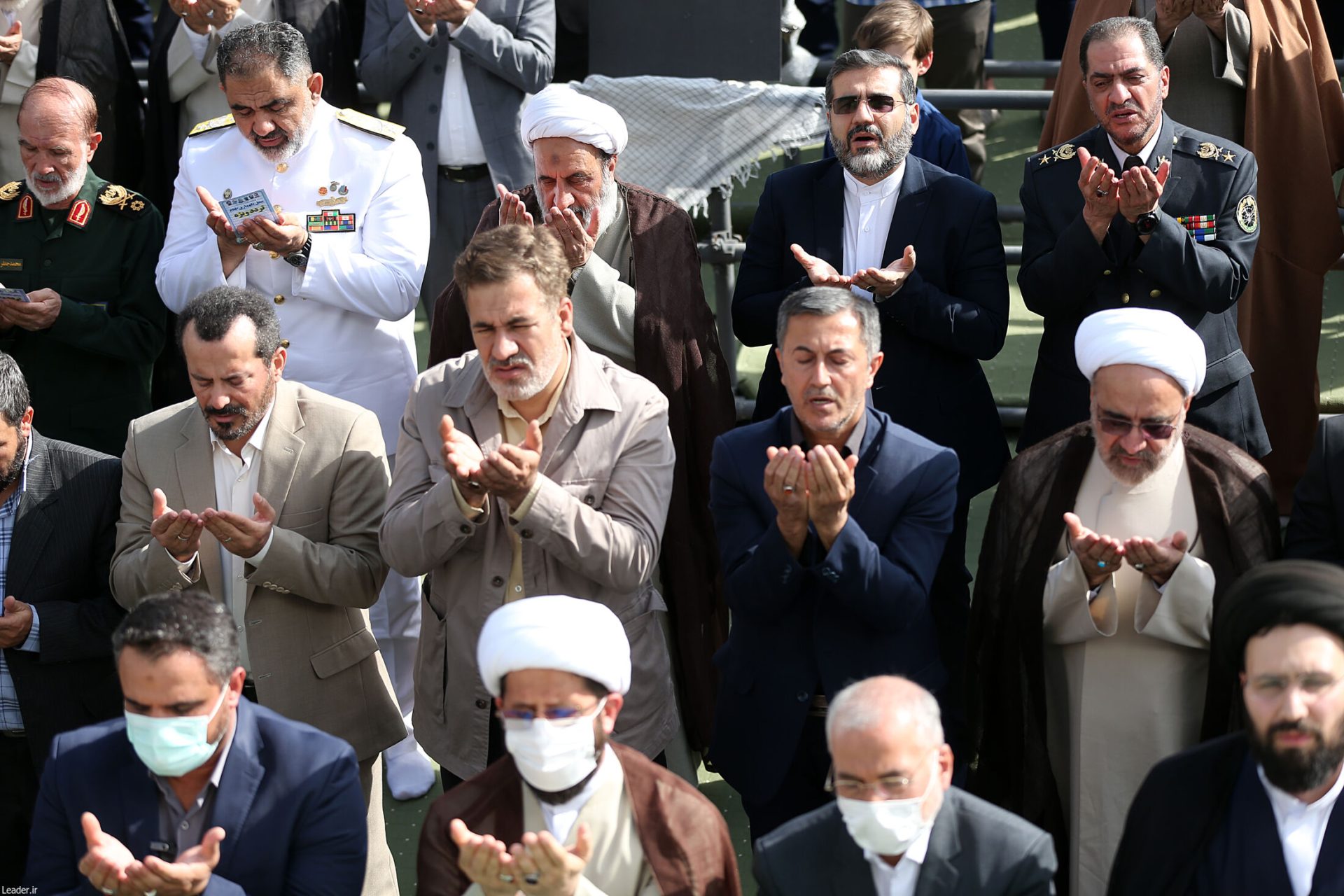
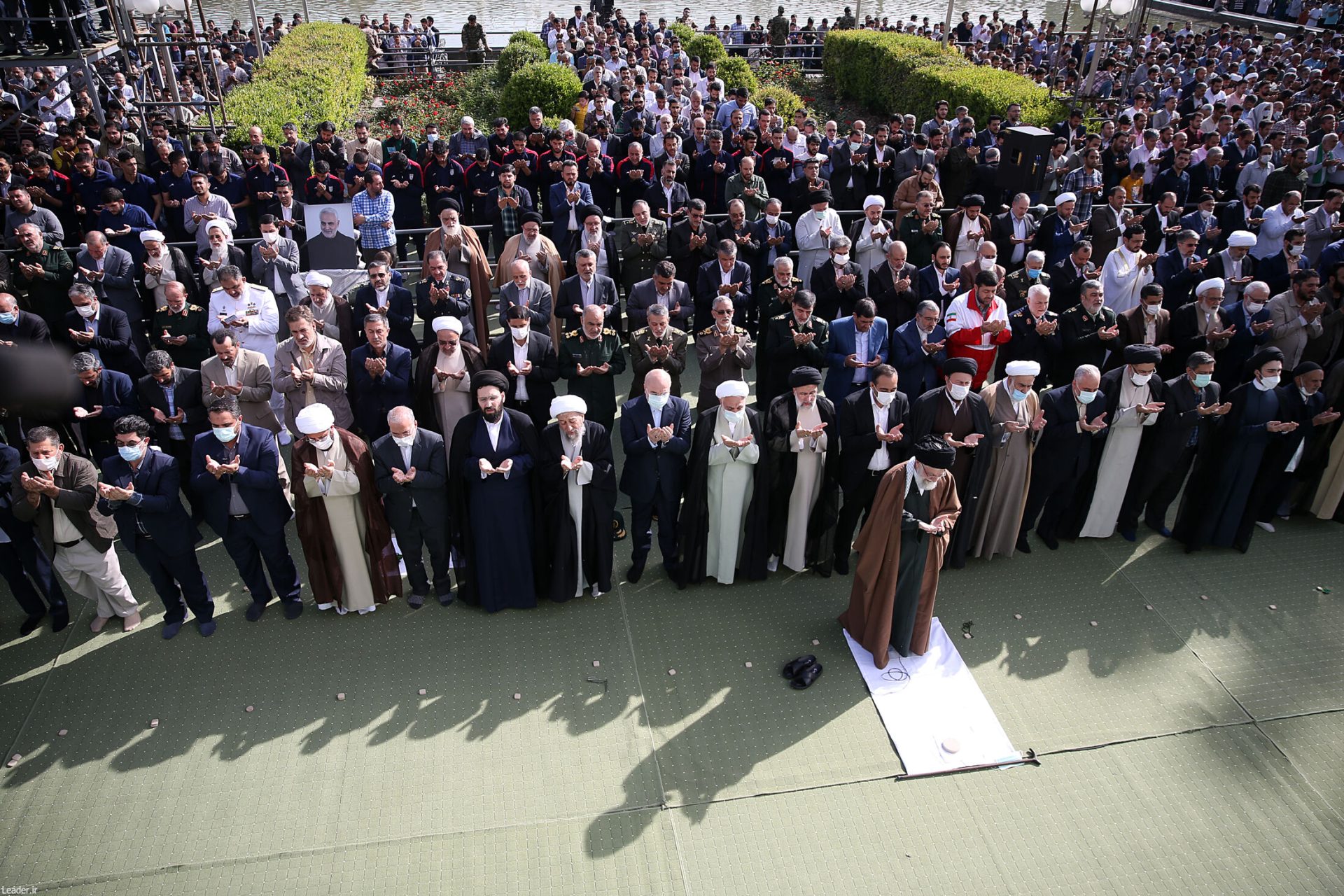
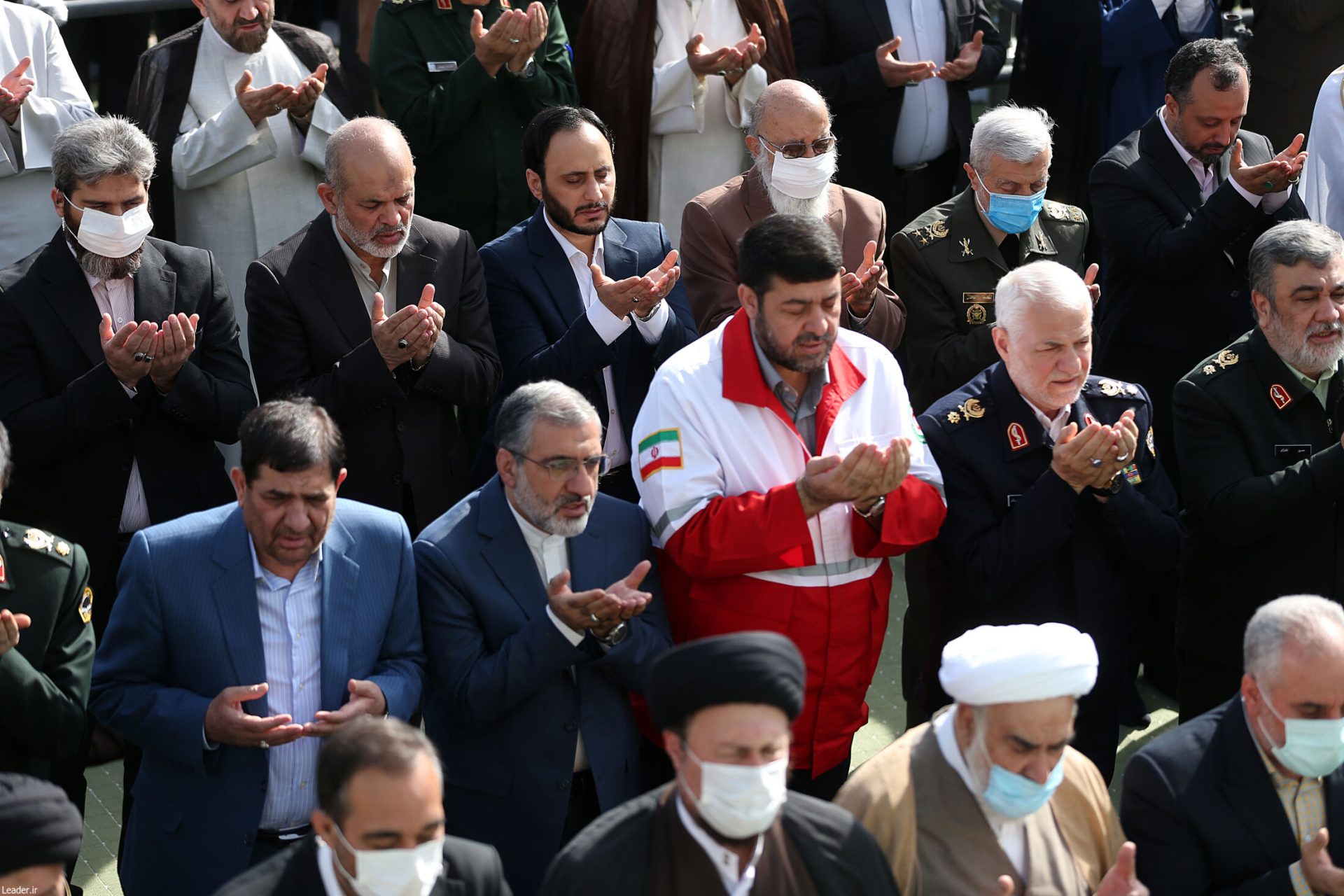
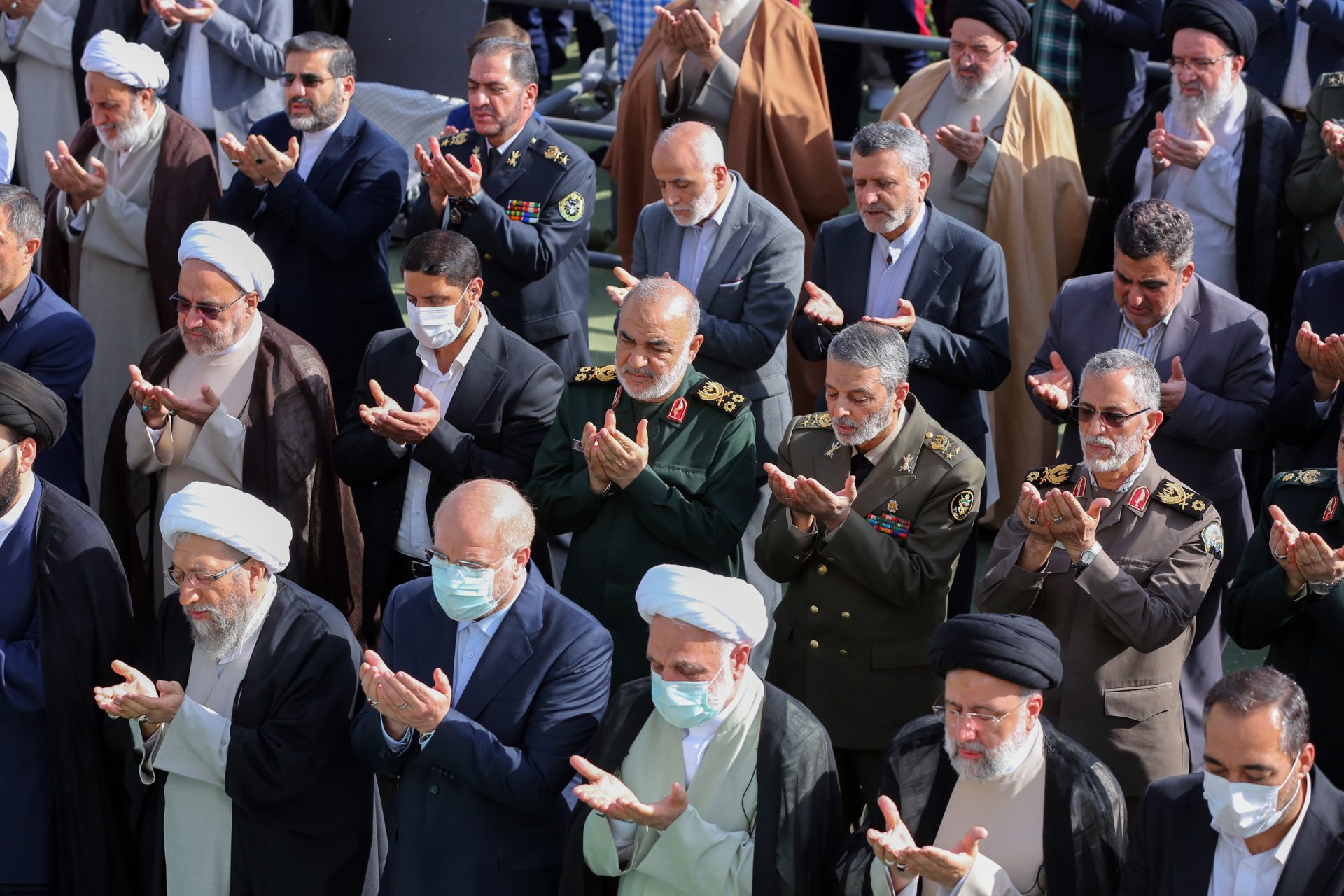
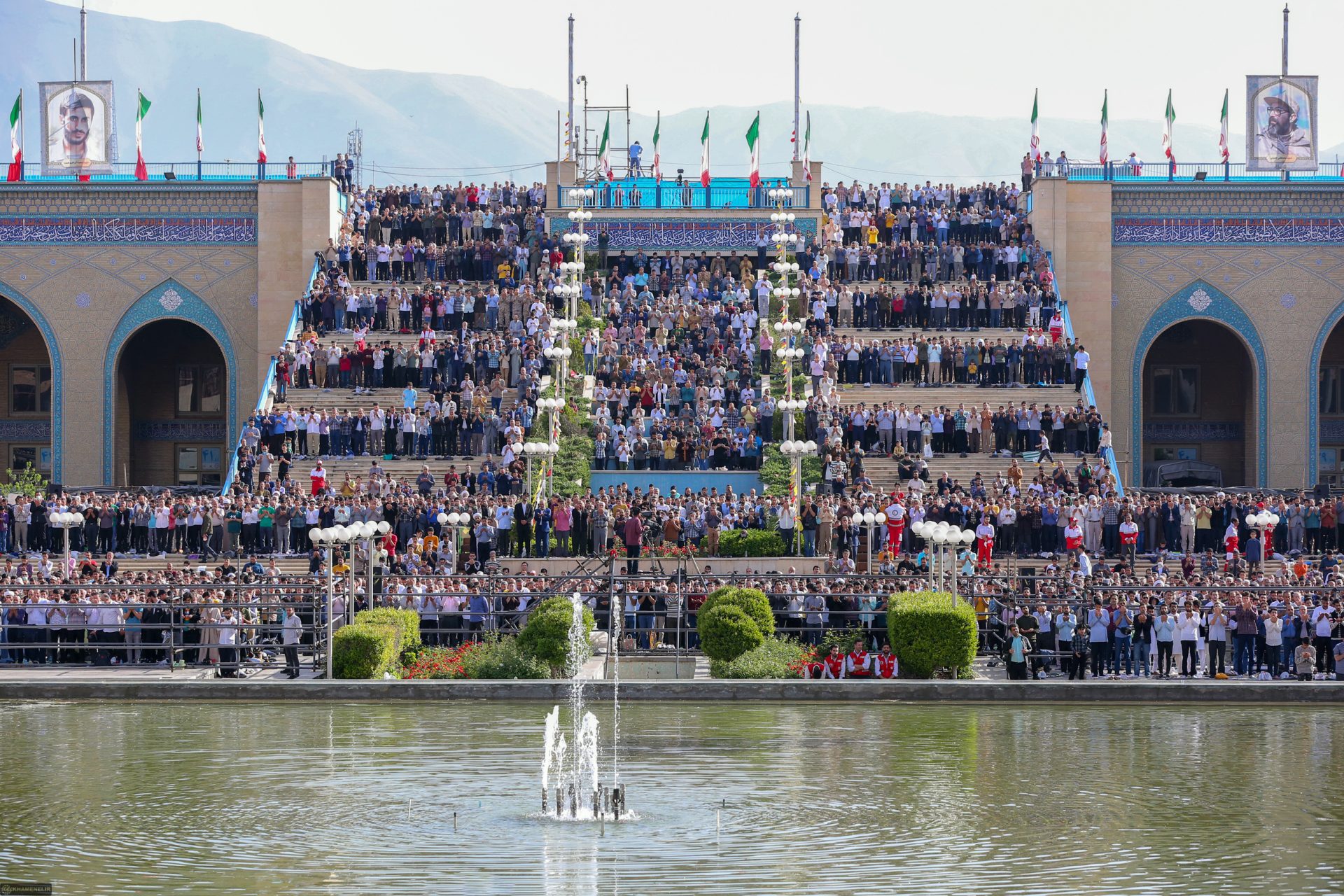
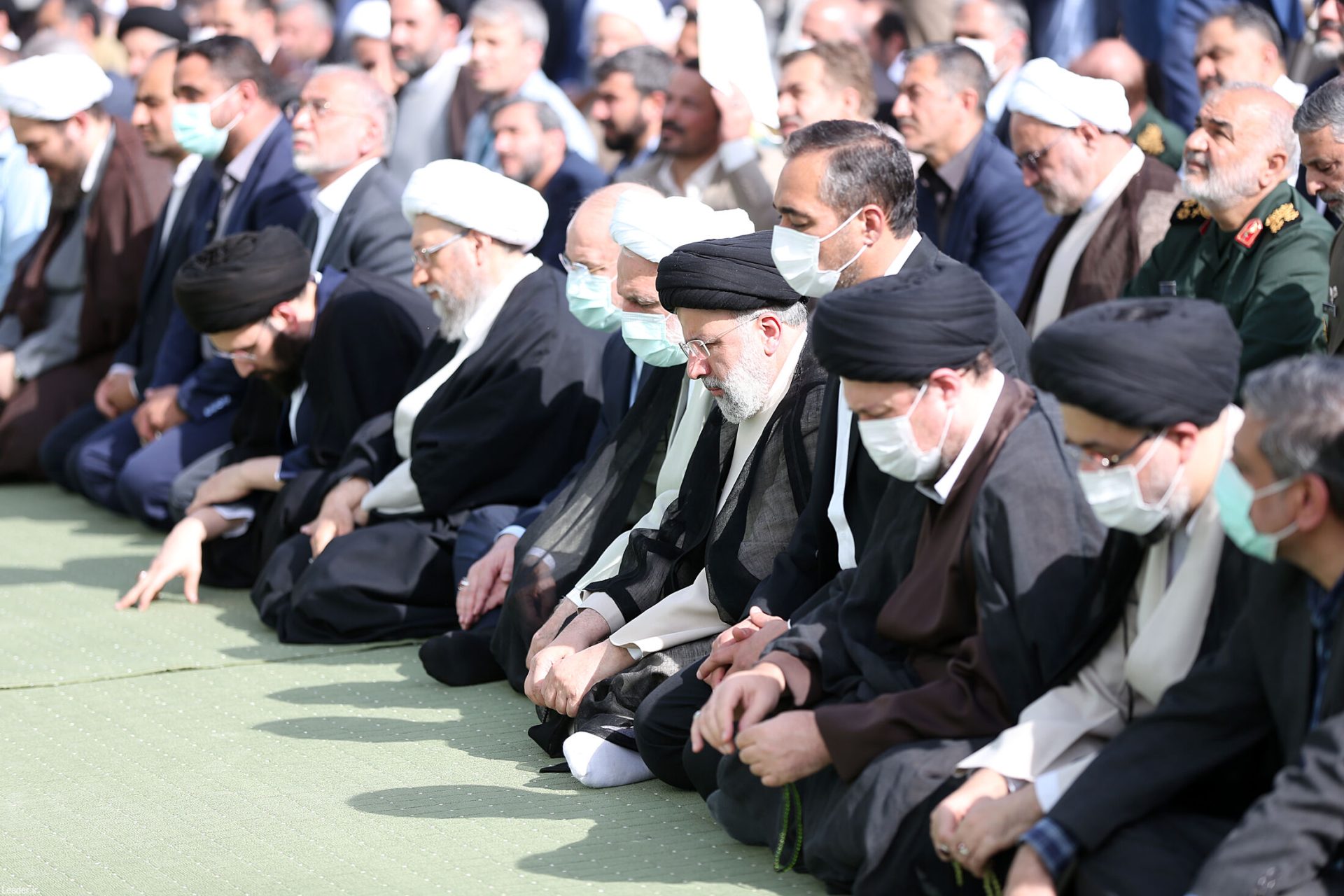
Iranians join Eid al-Fitr prayers en masse, mark end of Ramadan

Eid al-Fitr prayers

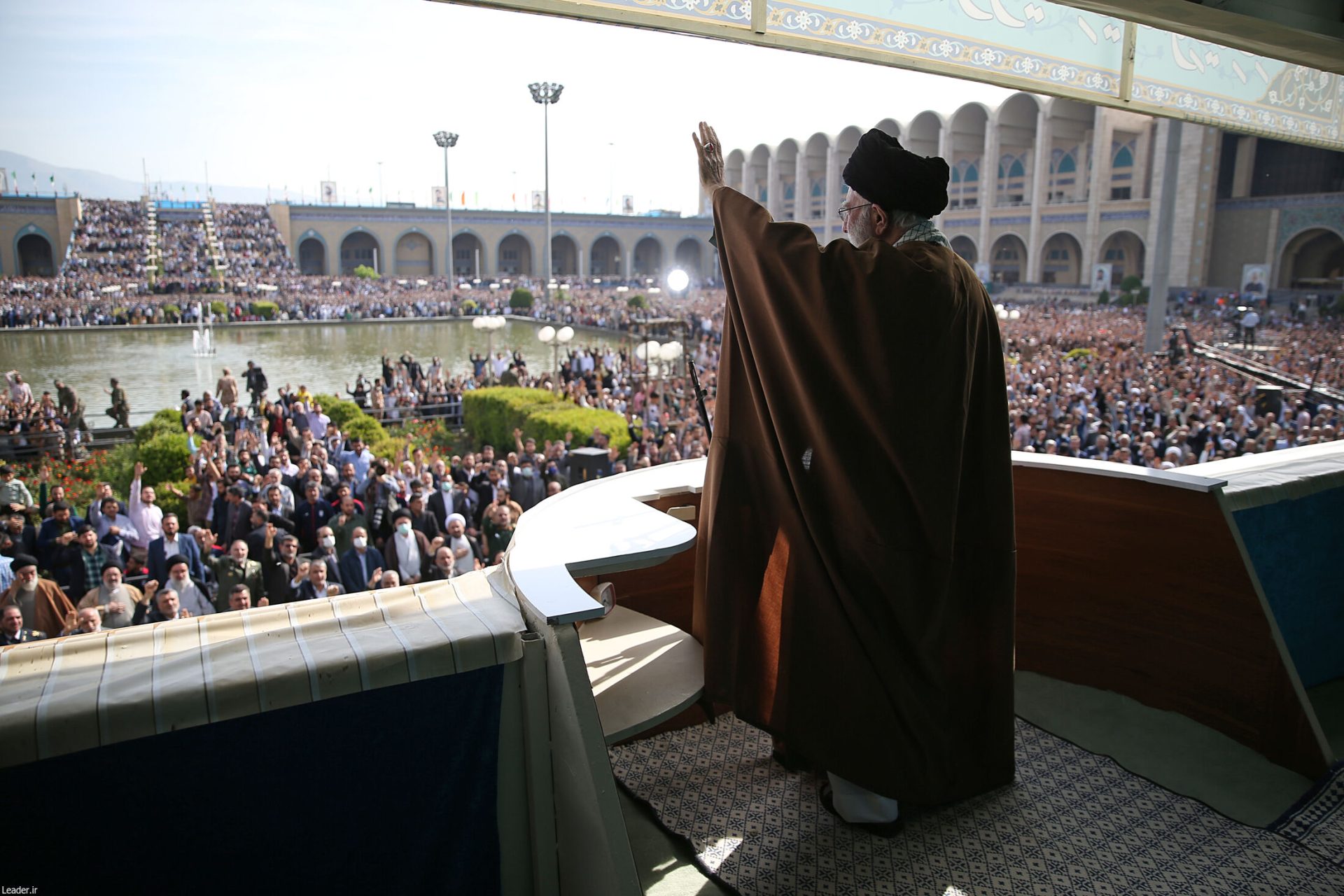
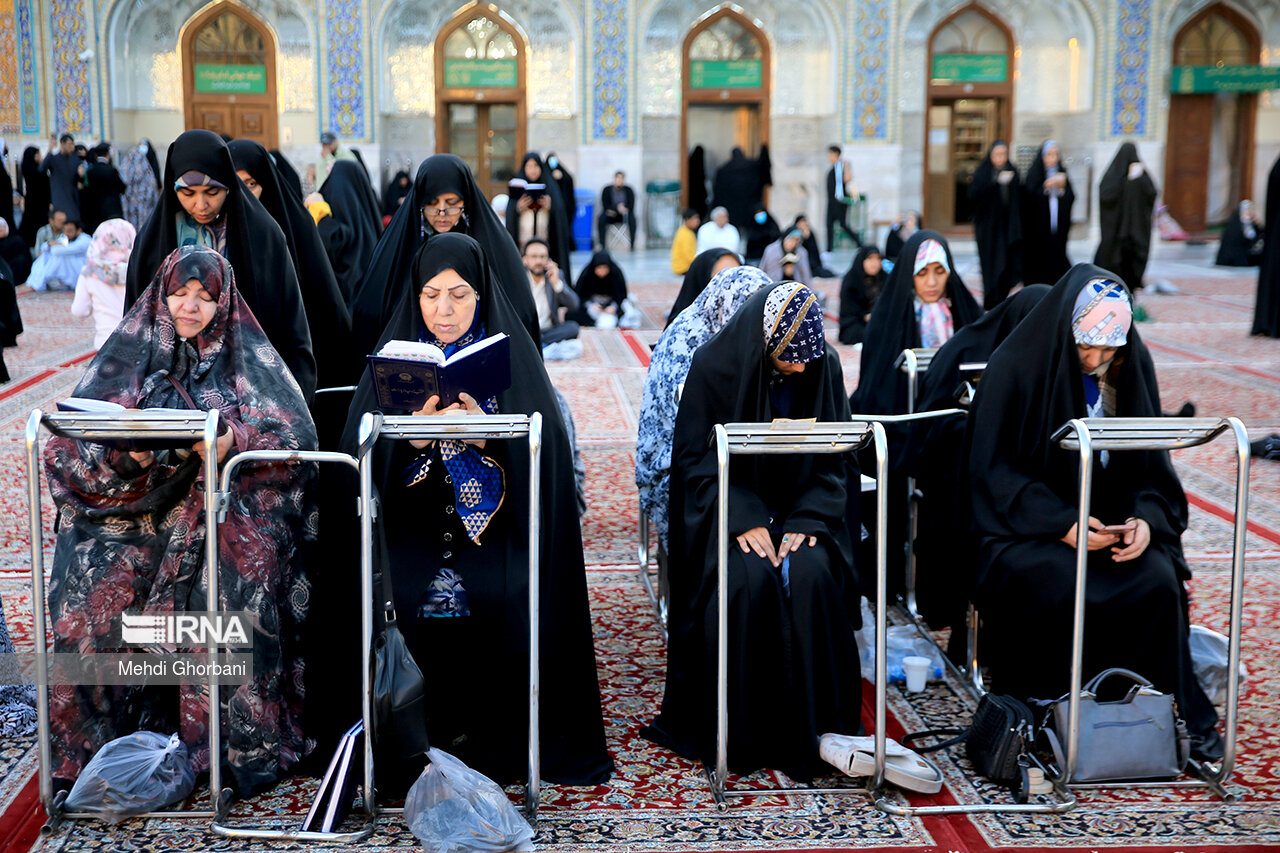
The prayers and sermons in the capital, Tehran, was led by Leader of the Islamic Revolution Ayatollah Seyyed Ali Khamenei on Saturday, following a three-year pause caused by the coronavirus pandemic.

Aerial footage of main religious sites in Iran showed large crowds of pilgrims standing in line to perform the prayers.

Muslims in Iraq, Pakistan and India also mark the joyous occasion on Saturday, while many other countries observed the Eid on Friday.

The date differs in each country based on moon sighting.

Eid al-Fitr offers Muslims an opportunity to show gratefulness to Allah (God) for blessing them good health and resistance to hunger during Ramadan.

They wear new clothes, prepare special delicacies, do charity, and get together with their loved ones.