Ukraine says Bakhmut is still a ‘main target’ for Russia
Ukraine’s military spokesperson in the east, Serhiy Cherevatyi, claims that Ukrainian troops have seriously damaged Russia’s 72nd separate motor-rifle brigade near Bakhmut and highlighted that the city was still Moscow’s “main target”.
The military commander stated that the situation remained “difficult” in Bakhmut, but that Moscow was increasingly forced to use regular army forces because of heavy losses among the Wagner private army group.
China’s top diplomat say Europe is ‘bullying China on economic issues’ over Ukraine crisis
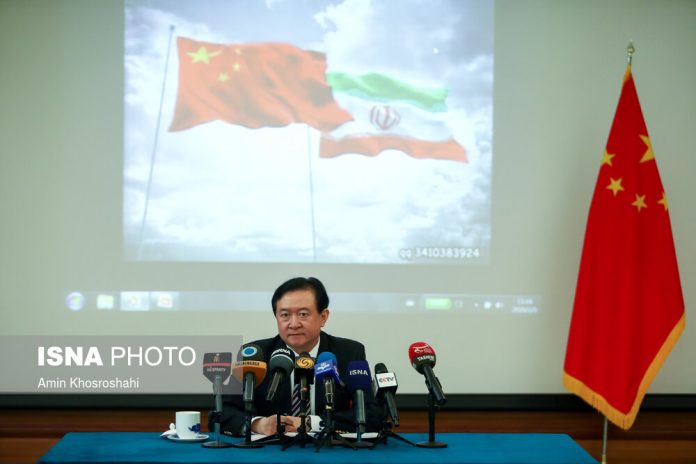
China’s Director General for European Affairs Wang Lutong says that if the EU uses the crisis in Ukraine as an excuse to impose sanctions on Chinese companies, “it will be nothing but gross violation of the companies’ legitimate rights and interests.”
“While China is making every effort to promote peace which is in Europe’s interest, Europe gives a stab in the back in return, bullying China on economic issues. Can’t understand what Europe is up to,” he said in a tweet.
The European Union has begun talks in Brussels today to discuss imposing new sanctions on Russia. The European Commission has proposed that Chinese and Russian companies aiding Russia in its war should also be sanctioned.
Ukraine says Russia is stopping the evacuation of Zaporizhzhia Nuclear Power Plant staff
Ukraine’s military says that Russian troops are stopping staff of the Russian-occupied Zaporizhzhia nuclear power plant from evacuating Enerhodar, a town near the power plant.
“In Enerhodar, the Russian occupiers organised a so-called ‘evacuation’ for family members of Zaporizhzhia Nuclear Plant employees,” Ukraine’s armed forces said in a statement.
“Yet the employees of the power plant are not allowed to leave the city,” it added.
Canada and Latvia will conduct joint military exercises for Ukrainian soldiers
Canada and Latvia will jointly train Ukrainian soldiers on Latvian soil, according to Canadian Defence Minister Anita Anand.
Speaking to reporters in Ottawa, Canada, together with Latvia’s Defence Minister Inara Murniece, she stated that the training will begin on May 15 and will complement Canada’s previous training efforts in Poland and the United Kingdom.
NATO’s military committee meets in Brussels to discuss Russia’s war in Ukraine
Members of NATO’s military committee, which shapes the military alliance’s defence strategy, has met in Brussels to discuss Russia’s war in Ukraine and other security threats to NATO members.
“When President Putin launched his full-fledged invasion of Ukraine in 2022, we were, therefore, ready,” NATO chief Jens Stoltenberg told reporters ahead of the meeting.
“Within hours, we activated all our defence plans. We put 40,000 troops under NATO command, backed by significant air and maritime power, and we strengthened our forward defences from the Baltic to the Black Sea,” he added.
“These actions reduce the risk of miscalculation and escalation beyond Ukraine,” Stoltenberg said.
Finland took part in the meeting for the first time as a formal member of the alliance. It joined NATO on April 4.
‘Don’t think of this counteroffensive as last’: Ukraine’s FM
Ukrainian Foreign Minister Dmytro Kuleba tells the German daily Bild that the international community should not think of Kyiv’s planned counteroffensive against Russia as the last.
“If we succeed in liberating our territories with this counteroffensive, then at the end, you will say, ‘Yes, it was the last one,’ but if not, then that means we have to prepare for the next counteroffensive,” he was quoted as saying.
Spokesperson says Kremlin not yet watched Wagner chief’s video criticising defence ministry
Kremlin spokesperson Dimitry Peskov claims that the Kremlin has not yet watched Wagner Group chief Yevgeny Prigozhin’s video released on Victory Day according to Russian-state news agency reports.
“You know what we were doing, yesterday,” Peskov said, highlighting that Russian officials were busy with guests and many events to commemorate Victory Day.
In the video, Prigozhin criticised Russia’s defence ministry and said that Wagner had still not received the ammunition they had requested, to continue fighting in Ukraine.
Three Russian regions on border with Ukraine attacked by drones: Russian governors
Three sites in Russian regions on the border with Ukraine were attacked by drones early Wednesday, according to local authorities.
They say two drones launched strikes in the Voronezh, Belgorod and Kursk regions.
The drones attacked a military facility in Voronezh, according to a statement by the region’s governor, Alexander Gusev.
“Early this morning, an attack attempt by two enemy UAVs [unmanned aerial vehicles] was thwarted at a Voronezh military facility,” he said in a Telegram post.
The governor added that counter-actions caused one drone to deviate from its course and fall, while the second drone was “destroyed by fire damage.”
Drone attacks were also reported in the Belgorod and Kursk regions earlier in the day.
The governor of the Kursk region, Roman Starovoit, said an enemy drone was shot down. The debris fell in the village of Tolmachyovo near Kursk, causing damage to a gas pipe and the facade of a house, but did not cause any injuries.
Separately, the governor of the Belgorod region, Vyacheslav Gladkov, stated Wednesday an enemy drone explosion during an overnight attack on the village of Olkhovatka damaged several buildings and a car.
“It appears that an enemy drone exploded. Two residential buildings, a library, a post office, an urgent care center, and one car were damaged,” Gladkov added.
Ukrainian military claims successful counterattack near Bakhmut
The Ukrainian military has inflicted “huge losses” on Russian forces in a successful counterattack near the eastern city of Bakhmut on Wednesday, according to Ukrainian officials.
Speaking in a video shared on Telegram, Andriy Biletsky, head of Ukraine’s 3rd Assault Brigade, said “units of the 72nd Brigade of the Russian Federation were defeated.”
The “6th and 8th companies of the division” had been “completely destroyed” along with a significant number of armored fighting vehicles, he added.
Biletsky said a “significant number of prisoners” were taken and “the 3rd Assault unit of Wagner also suffered heavy losses,” referring to the Russian private military company — or mercenary group — that is playing a major role in the battles around Bakhmut.
The offensive action “completely freed” an area 3 kilometers (1.9 miles) wide and 2.6 kilometers (1.6 miles) deep of Russian forces, he said. No exact location was given.
The spokesperson for the Ukrainian Armed Forces, Serhii Cherevatyi, added that the battle was “still ongoing” but that “the enemy is suffering huge losses in this area.” He stated that 203 were killed and 216 wounded.
He also noted that there was “no shortage of shells, but a shortage of people”.
The spokesman said that there had been 524 attacks on Ukrainian positions around Bakhmut. Russia has suffered heavy losses in their months-long battle for the city, but have not yet been able to capture it.
“If they [Wagner] don’t get more personnel or change their tactics, in the near future, PMC Wagner will no longer exist in this area,” Cherevatyi added.
Bakhmut is the site of a long, drawn-out assault by Russian forces, including Wagner mercenaries, that has driven thousands from their homes and left the area devastated. But despite the vast amounts of manpower and resources Moscow has poured into capturing the city, they have been unable to take total control.
Japan’s FM reveals NATO liaison office talks, says Ukraine war makes world less stable
Japan is in talks to open a NATO liaison office, the first of its kind in Asia, the country’s foreign minister told CNN in an exclusive interview on Wednesday, saying Russia’s invasion of Ukraine has made the world less stable.
“We are already in discussions, but no details (have been) finalized yet,” Foreign Minister Yoshimasa Hayashi stated on Wednesday.
Hayashi specifically cited Russia’s invasion of Ukraine last year as an event with repercussions far beyond Europe’s borders that forced Japan to rethink regional security.
“The reason why we are discussing about this is that since the aggression by Russia to Ukraine, the world (has) become more unstable,” he continued.
“Something happening in East Europe is not only confined to the issue in East Europe, and that affects directly the situation here in the Pacific. That’s why a cooperation between us in East Asia and NATO (is) becoming … increasingly important,” he added.
The Nikkei Asia first reported plans to open the office in Japan last Wednesday, citing unnamed Japanese and NATO officials.
A NATO spokesperson has stated: “As to plans to open a liaison office in Japan, we won’t go into the details of ongoing deliberations among NATO allies.” She added that NATO and Japan “have a long-standing cooperation.”
Russia’s invasion drove non-aligned Finland and Sweden to abandon their neutrality and seek protection within NATO, with Finland formally joining the bloc last month.
An office in Tokyo would be hugely consequential, as the war in Ukraine and deepening divisions within Asia have seen countries like Japan and South Korea draw closer to their Western partners — and present a united front against perceived threats closer to home, such as North Korea and China.
Russia declines to comment on Black Sea grain deal
Kremlin spokesperson Dimitry Peskov declined to comment on whether Russia would extend the Black Sea Grain deal, which is set to expire on May 18.
Peskov told reporters that Russia’s position was well known and that work on the deal was underway.
Russia has repeatedly threatened to quit the deal until “obstacles to its grain and fertiliser exports are lifted.”
Talks on the grain deal have begun in Turkey in the presence of UN officials.
US diplomats accuse Russia of using hunger as a weapon of war against Ukraine
Bridget A. Brink, the US ambassador to Ukraine, accused Russia on Tuesday of “again blocking ships from loading grain in Ukraine’s ports to feed people who need it around the world.”
The US official referenced similar comments on the topic made by US Secretary of State Antony Blinken earlier on Tuesday.
“The world shouldn’t need to remind Moscow every few weeks to stop using people’s hunger as a weapon in its war against Ukraine,” Blinken said, as quoted by Brink on Twitter.
Farhan Haq, UN deputy spokesman for the Secretary-General, stated two inspections of ships did happen on Tuesday.
The news comes a day after the UN said there had been no ship inspections as part of the grain deal for two days. Ukraine on Monday accused Russia of effectively bringing the grain deal to a halt by not inspecting ships.
The Black Sea Grain Initiative is an agreement between Ukraine and Russia, brokered by the UN and Turkey, that was established in July 2022 to guarantee safe passage for ships carrying grain and oilseeds — some of Ukraine’s most important exports.
Talks to extend the initiative are ongoing. The Black Sea grain deal was last extended on March 18 for 60 days, and is set to expire on May 18.
Putin signs decree to denounce European Arms treaty
Russian President Vladimir Putin signs a decree in a move to formally “denounce” the Treaty on Conventional Armed Forces in Europe.
The 1992 treaty is a complex instrument which was signed to “establish a military balance”, by regulating the number of forces deployed by the Warsaw Pact and NATO countries.
It also “provides equal ceilings for major weapons and equipment systems, namely for each group in the whole area from the Atlantic to the Urals.”
As a part of the new decree, Putin appointed Deputy Foreign Minister Sergei Ryabkov to represent him during parliamentary proceedings on denouncing the treaty.
Civilians in Zaporizhzhia region are being evacuated further into Russian-held territory: Ukraine
The Kremlin-backed authorities in the occupied Ukrainian city of Kamianka-Dniprovska in the southern Zaporizhzhia region are evacuating families and public sector workers further into Russian-held territory, the General Staff of the Armed Forces of Ukraine said in a statement.
“On May 8, the Russian occupiers began to evacuate preschool and school-age children with their parents, as well as teachers and other public sector employees from the city of Kamianka-Dniprovska in Zaporizhzhia Oblast,” the statement read, adding, “There were not many willing participants.”
Late Thursday, Yevgeniy Balitskiy, the acting governor of the occupied parts of the Zaporizhzhia region – who is backed by Russian President Vladimir Putin – announced his administration would evacuate people from places near the war’s southern front line.
Yurii Malashko, Ukraine’s governor of Zaporizhzhia, has also said in a television interview that he understood some Moscow-backed officials were leaving occupied towns, and offering to evacuate people with Russian passports, ahead of the anticipated Ukrainian counteroffensive.
“We have also heard that they take civilians, including children, to Berdiansk first of all. Then they go either to Crimea or towards the [occupied] Donetsk region,” Malashko added.
Ivan Fedorov, the Ukraine-elected mayor of Melitopol — a city in Zaporizhzhia — told Ukrainian TV that it was not a “mass evacuation,” but rather “some hundreds evacuated for show.” He claimed that Russia was sending more forces to the southern front line and that, in Melitopol, troops had started mining administrative buildings, kindergartens and schools.
Fedorov advised people in the occupied areas to be prepared for the counteroffensive by finding shelter, charging power banks and stocking up on food and water.
AFP journalist killed in eastern Ukraine
A journalist for Agence France-Presse was killed near the embattled city of Bakhmut in eastern Ukraine on Tuesday, the French news agency said on Twitter.
“We are devastated to learn of the death of AFP video journalist Arman Soldin in eastern Ukraine today,” according to the post.
“All of our thoughts go out to his family and loved ones,” it added.
Soldin, who was a French citizen with Bosnian origins, was killed by rocket fire on the outskirts of the town of Chasiv Yar, near Bakhmut, AFP said, citing colleagues who witnessed the incident.
He was with four colleagues at the time of the attack but the other journalists were not injured, the news agency added.
Soldin is one of the several known journalists killed since the start of Russia’s full-scale invasion, including Fox News photojournalist Pierre Zakrzewski and consultant Oleksandra “Sasha” Kuvshynova, journalist and documentarian Brent Renaud, and photojournalist Maks Levin.
Ukraine has what it needs to successfully retake territory: US secretary of state
US Secretary of State Antony Blinken said that he thinks Ukraine has the resources it needs to retake territory in an anticipated counteroffensive.
“They have in place … what they need to continue to be successful in regaining territory that was seized by force by Russia over the last 14 months,” Blinken stated at a joint news conference with UK Foreign Secretary James Cleverly.
“It’s not only the weapons; it’s the training,” Blinken continued, adding, “It’s making sure that the Ukrainians can maintain the systems that we provide them, and it’s important, of course, that they have the right plans, again, to be successful.”
Blinken’s comments come on the same day the US announced an additional $1.2 billion in aid to Ukraine intended to bolster air defenses and keep up ammunition supplies.
Ukraine’s planned counteroffensive won’t be a decisive breakthrough: UK foreign secretary
Ukraine has demonstrated huge courage and resistance since Russia’s invasion began, but people shouldn’t expect a film-like counteroffensive from Kyiv, UK’s top diplomat said during his visit to the United States Tuesday.
“The real world doesn’t work like that,” UK Foreign Secretary James Cleverly stated.
His remarks come amid rumors of a looming Ukrainian counteroffensive against Russia.
“I hope and expect they will do very, very well, because whenever I’ve seen the Ukrainians, they have outperformed expectations,” he continued, adding that people “have to be realistic.”
“This is the real world. This is not a Hollywood movie,” Cleverly said.
He also expressed London’s willingness to see China play a more constructive role in ending the war.
“We know that (Chinese President) Xi enjoys a significant degree of influence with Vladimir Putin,” Cleverly noted, adding, “If through his intervention he can help restore the sovereignty of Ukraine, and get Russian troops out of that country, I’m not going to be critical of that,” he said.
Cleverly admitted that whether China could make a meaningful intervention remains to be seen.
Germany wants China to guarantee it won’t help Russia bypass EU sanctions
Germany wants Beijing to promise it won’t help Russia avoid European sanctions, while China warns Berlin and Europe about cutting economic ties with China, as the two countries’ diplomatic chiefs meet in Berlin Tuesday.
Imposed sanctions should not be “undermined in a roundabout way,” German Foreign Minister Annalena Baerbock said at a joint news conference.
“It is particularly critical if Russian weaponry companies obtain war-related goods,” she stressed, adding that all countries — China included — should take action to oblige their companies.
Baerbock welcomed Chinese President Xi Jinping’s recent phone call with Ukrainian President Volodymyr Zelensky and urged China to play a more decisive role in ending Russian’s war in Ukraine.
“Neutrality means taking the side of the aggressor,” Baerbock said.
China, on the other hand, expressed concern over the rising talks of Europe “de-risking” its relationship with China.
De-risking refers to the concept of “financial institutions terminating or restricting business relationships with clients or categories of clients to avoid, rather than manage, risk,” according to the US Department of State.
“If the reality of removing China’s influence is carried out in the name of risk eradication, it is in fact removing opportunities, removing cooperation, removing stability, and removing development,” China’s Foreign Minister Qin Gang stated at the joint news conference.
“We must firmly oppose the so-called decoupling exercise and maintain a high degree of vigilance against the new Cold War. Germany, China and Europe should join hands to safeguard the stability and smoothness of the global industrial and supply chains,” he added.
German Chancellor Olaf Scholz called for more diverse European trade ties, including new deals with countries such as Mexico, India, Australia and Kenya in a speech at the European Parliament Tuesday.
European Council President Ursula Von der Leyen also called for de-risking the EU’s relationship with China through diplomacy instead of de-coupling in a speech back in March before she embarked on a joint visit to Beijing with French President Emmanuel Macron.
Qin’s visit to Berlin unveils a busy week of China-Europe diplomacy in the bloc, with Qin flying to Paris Wednesday and then Oslo, and Baerbock heading to Paris late Tuesday for an expected meeting with Macron.
US announces $1.2bn in military aid for Ukraine
The United States has announced a new $1.2bn military aid package for Ukraine that will include air defence systems, ammunition and funds for training, the Pentagon has said.
Ukraine Security Assistance Initiative (USAI) funds will be used to buy the weapons, allowing President Joe Biden’s administration to buy weapons from industry rather than pull them from US stocks.
In the package, Ukraine will receive additional air defence systems and munitions, as well as the technology to integrate Western air defence launchers, missiles and radars with Ukraine’s native defence systems.
The funds will pay for 155mm Howitzer ammunition, counter-drone ammunition, satellite imagery and various types of training, the Pentagon said.
UN aid chief traveling to Turkey for grain deal talks: Report
UN aid chief Martin Griffiths is traveling to Turkey as a high-level meeting with Ankara, Russia, Ukraine and the UN is scheduled on May 10 and 11 in Istanbul to discuss the Black Sea grain deal, Turkey’s Anadolu Agency reported.
UN deputy spokesperson Farhan Haq told reporters that Griffiths left Jeddah, Saudi Arabia for Istanbul.
Russia wants obstacles to exports of its fertiliser to be removed for it to agree to another extension of the grain deal which was signed in Istanbul last July among the four parties.
The deal is set to expire on May 18.
French parliament calls on EU to list Wagner as ‘terrorist group’
The French parliament has adopted a resolution calling on the European Union to formally label Russian mercenary force Wagner a “terrorist group”.
The resolution, which is nonbinding and symbolic, passed with unanimous support across the political spectrum.
Its author, ruling party MP Benjamin Haddad, has said he hopes it will encourage the 27 members of the EU to put the Wagner Group on the EU’s official list of “terrorist” organisations.
“Wherever they work, Wagner members spread instability and violence,” he told parliament.
“They kill and torture. They massacre and pillage. They intimidate and manipulate with almost total impunity,” he added.