Sunday, April 19, 2026
Home Blog Page 146

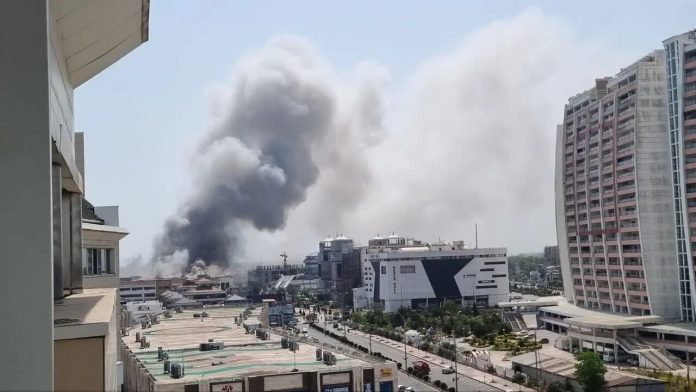
Massive fire forces closure of Iran’s Anzali free zone

Mehdi Kazemian, spokesperson for the Anzali Free Zone Organization, confirmed the closure and stated that firefighting efforts are still underway.

“Due to the scale of the blaze, we have not yet been able to fully contain the fire. All access routes to the area have been blocked for safety reasons,” he said.

Kazemian urged residents and tourists to refrain from traveling to the zone until the fire is brought under control and normal conditions are restored.

According to the head of the Gilan Red Crescent, no casualties have been reported so far, and firefighting teams remain on the scene working to extinguish the flames.

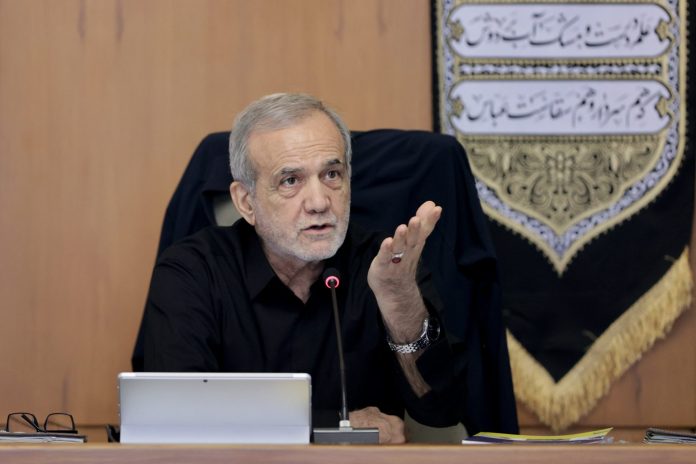
Pre. Pezeshkian meets reform front members, emphasizes steady path to reform

In a post on the social media platform X, Pezeshkian stated: “During today’s meeting with members of the Reform Front, while listening to their perspectives, I emphasized the necessity of steering clear of issues that cause division. I said reform is time-consuming—slow, but steady.”

He also underlined the crucial role of political parties, noting that they must be strengthened in order to foster constructive political engagement.

“I previously stated at the Ministry of Interior that political parties must be empowered. We will also engage in dialogue with other parties, NGOs, and associations,” Pezeshkian wrote.

The meeting is seen as part of the president’s broader effort to promote political inclusion and consultation with a wide range of political and civil society actors.

Pezeshkian has repeatedly stressed that meaningful reform requires both patience and perseverance, while warning against rhetoric that deepens internal rifts.

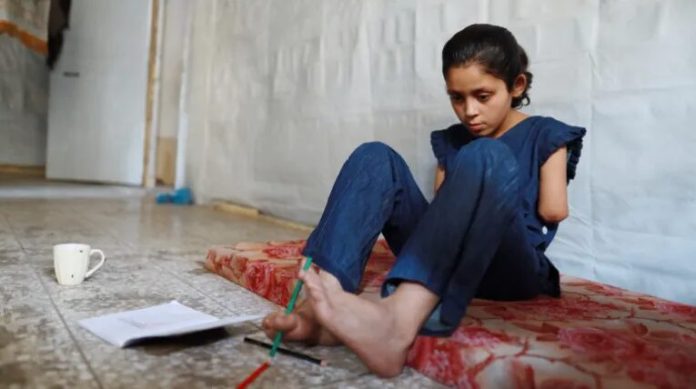
Palestinian girl who lost her arms in Israeli strike dreams of becoming doctor

Sarah’s life changed forever when an Israeli missile struck a neighboring house.
Her father was instantly killed, and shrapnel tore through Sarah’s arms, forcing doctors to amputate them.

Despite the tragedy, Sarah remains determined to pursue her dreams.
Her mother, Maha Al-Barsh, says Sarah’s greatest wish is to leave Gaza for prosthetic treatment and live like other children again.
She hopes to one day become a prosthetics doctor to help others who have lost their limbs in war.

Al Jazeera reports that Sarah and her mother live under dire conditions in the besieged enclave, amid widespread destruction and a collapsing healthcare system.

Her mother has taught her to eat, draw, and write with her feet to foster independence.

“I lost my hands and my father, but I didn’t lose hope,” Sarah says.

“I dream that life in Gaza can go back to how it was before the war.”

Dozens of British MPs and peers call for full arms embargo on Israel

Gaza War

Their demands, outlined in a 18 July letter sent to Foreign Secretary David Lammy and Business Secretary Jonathan Reynolds, come as Lammy has warned Israel of further sanctions if it does not reach a ceasefire in Gaza.

The UK joined 27 other countries, including Australia, Canada and France, to condemn Israel for depriving Palestinians of “human dignity”, and urged the Israeli government to immediately lift restriction on flow of aid.

“We’ve announced a raft of sanctions over the last few months,” Lammy told ITV’s Good Morning Britain on Tuesday.

“There will be more, clearly, and we keep all of those options under consideration if we do not see a change in behaviour and the suffering that we are seeing come to an end.”

But those who signed the letter, including Zarah Sultana, John McDonnell, and Jeremy Corbyn, say the UK government should immediately end all arms exports to Israel or risk being complicit in genocide.

“The components which create the fighter jets that Israel has used to level Gaza are 15 percent British-made – we cannot hide from that,” said Labour MP Steve Witherden, who organised the letter.

“Without British arms export licences, these jets could not fly, they could not drop their bombs.”

The letter follows an adjournment debate last month that marked the first time arms export licences to Israel had been debated in the Commons since before the 7 October 2023 Hamas-led attacks on Israel.

The MPs and peers asked for clarity about data about UK arms exports to Israel in 2024, released by the Export Control Joint Unit (ECJU), a cross-departmental body overseeing UK export licensing for military and dual-use items.

During last month’s debate, Trade Minister Douglas Alexander said the majority of the £142m in military export licences approved in 2024 to Israel were for components that would be re-exported to third countries, including Nato allies.

But the letter says that ECJU data shows that of the £141.6m in standard individual export licences for military goods issued in 2024, more than half of the approved value appear to be intended for direct use in Israel.

“Could the government clarify how this data aligns with the minister’s claim that the majority of these licences were for re-export?” the letter asks.

Alexander also said that more than £120m – or around 85 percent of the total value of licences for military exports to Israel last year – “were for components to support exports of military items from Israeli companies to a single programme for a NATO ally”.

The MPs and peers have asked the government to clarify which NATO ally is involved, the name and nature of the programme, and when it was established.

They have also asked for clarity about a surge in individual licences, totalling £127.6m and mostly for military radars and targeting systems, that were issued between October and December 2024, after the newly elected Labour government announced the suspension of around 30 arms licences to Israel.

Witherden stated that repeated calls for greater transparency about arms exports from the government “have so far gone unanswered”.

“The bare minimum we can do is be fully honest about what we are sending to a state involved in the indiscriminate slaughter of civilians,” he added.

Last month, the High Court rejected a challenge brought by rights groups that sought to halt the export of British-made F-35 fighter jet parts indirectly to Israel, through a global supply pool, following a 20-month court battle.

In their ruling, the judges said they found that the issue was a matter “for the executive which is democratically accountable to Parliament and ultimately to the electorate, not for the courts”.

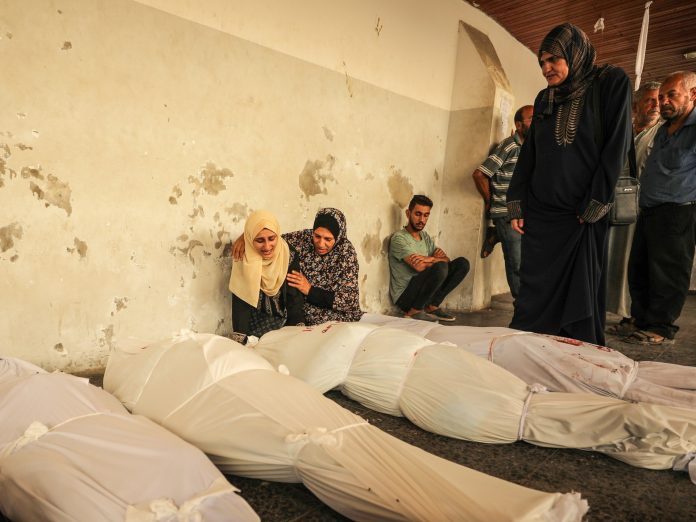
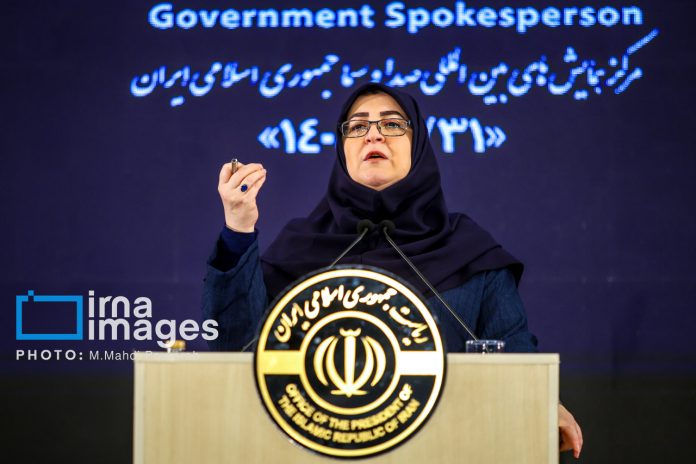
Iran reports 1,062 deaths in Israeli invasion; even prison attack deemed war crime

Mohajerani pointed out that among the casualties were 34 students, 5 educators, 6 doctors, 5 nurses, and 7 paramedics, with Tehran Province recording the highest toll with 265 deaths.

She stated that the attack on Evin Prison, northern Tehran, on June 23 has been recognized by international bodies as a war crime.

Mohajersni also highlighted damage to civilian infrastructure, including 36 schools across 16 provinces, 219 industrial units, 7 hospitals, 11 ambulances, and 8,000 residential units.

Also on Tuesday, Iran’s Judiciary spokesperson Asghar Jahangir confirmed that 75 inmates left Evin Prison during the attack, but emphasized it was not a “prison break.”

He said 48 have returned or been detained, while 27 remain unaccounted for. These individuals were described as low-risk offenders, with no spies or high-security prisoners among them.

Authorities have launched reconstruction efforts and are monitoring the situation closely. The government continues to coordinate with emergency services and humanitarian organizations to support affected civilians, he added.

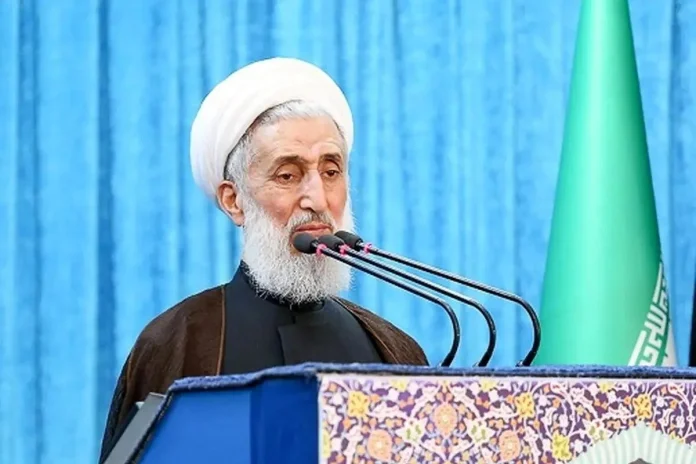
Judiciary spokesperson: Tehran Friday Prayers leader Seddiqi has no role in relatives’ legal case

Dismissing media reports, Jahangir told a press conference that Seddiqi has served solely as an advisor to the head of the Judiciary since 2013.

“He neither occupies an executive nor a judicial position and therefore has no capacity to influence any case, including matters involving his family,” he said.

The Iranian Judiciary announced last month that six individuals, including the son and daughter-in-law of the prominent cleric were arrested over financial charges.

The arrests came amid scrutiny over a high-profile land transfer case involving a 4,200-square-meter property in northern Tehran.

Regarding the ongoing case involving Seddiqi’s relatives, Jahangir confirmed that the case is still under investigation at the prosecutor’s office.

“Several individuals have been summoned, and some have been detained. The investigation is ongoing, and once preliminary findings are complete, details will be made public,” he stated.

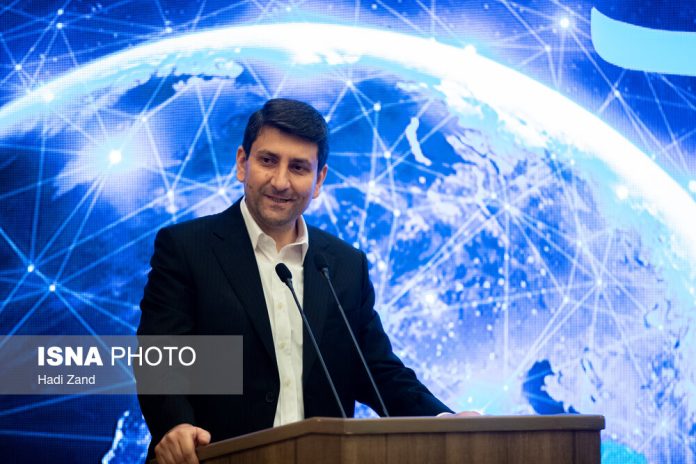
Iran’s ICT minister warns against ‘blind confrontation’ with technology amid network challenges

Speaking during a parliamentary session on Tuesday amid reports of switching the country’s internet access to “national” or “tiered” system, Hashemi stated, “Can we really confront technology blindly?”

He emphasized that restrictions alone cannot prevent access to content, particularly as young people continue to bypass filters using free VPNs.

Hashemi cited the use of unregulated VPNs as a major cause of network contamination, confirming that up to 30% of user requests now fail due to degraded quality.

Addressing the recent 12-day conflict with Israel, the minister said maintaining digital connectivity was crucial for public calm and business continuity.

He stressed that a core element of the national information network is global connectivity, balanced with national sovereignty and security.

He, however, reported that cyberattacks intensified during the war, with over 20,000 attempted intrusions from abroad, and noted that Iran’s digital economy, on which 10 million Iranians depend, sustained nearly 15 trillion rials ($300 million) in losses, with a 30% drop in employment in the sector.

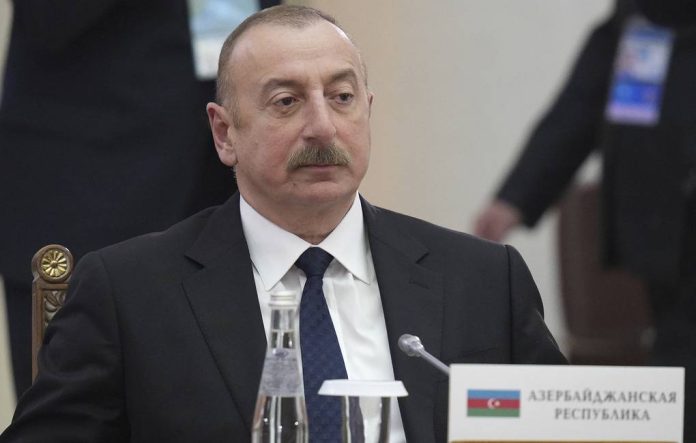
Azerbaijan president accuses EU observers in Armenia of spying on Iran

President Ilham Aliyev

Aliyev claimed the observers patrol the Iran-Armenia border and conduct surveillance under the guise of monitoring, while Azerbaijan also keeps them under close watch.

Aliyev’s remarks came in response to questions about a reported US proposal to lease the Zangezur corridor, an idea he dismissed, reiterating that no foreign operators or companies would be allowed on Azerbaijani soil.

He further stressed that Armenia’s actions along the border are beyond his control and sharply criticized the EU mission’s presence.

In a wide-ranging press briefing, Aliyev also took aim at Russia, threatening legal action over the downing of an Azerbaijani aircraft.

He expressed frustration over a lack of response from Moscow, claiming the incident was deliberate and demanding accountability and reparations.

Turning to energy policy, he emphasized Azerbaijan’s neutral stance, stating the country’s gas exports to Europe are purely commercial and not intended to rival Russian energy supplies, despite plans to boost output by 2030.

US calls on Europe to join potential secondary tariffs on Russian oil

Russia Oil

“Russian oil is going to be subject to up to 100% secondary tariffs,” Bessent said. “I urge our European allies, who have talked a big game, to follow us if we implement these secondary tariffs.”

Bessent’s remarks follow U.S. President Donald Trump’s July 14 announcement that the U.S. will impose “severe” tariffs on Russia unless it agrees to end the war in Ukraine within 50 days.

“We call them secondary tariffs,” Trump said during a joint press conference with NATO Secretary General Mark Rutte at the White House. “Tariffs that are about 100%.”

Secondary tariffs are penalties targeting countries or companies that continue doing business with a sanctioned nation by charging extra for access to the U.S. market or financial system.

If a third country like China keeps buying Russian oil, exports to the U.S. could face a further 100% tariff, significantly raising prices for American consumers and squeezing Chinese exporters.

Trump, who had promised to broker a peace deal within 24 hours of taking office, has grown increasingly frustrated with what he described as Russia’s delays in moving forward with peace talks.

The U.S. strategy seeks to pressure Moscow by curbing its oil income, which accounts for roughly one-third of federal revenue and remains a vital source of funding for its war effort.

Kremlin spokesperson Dmitry Peskov responded on July 15 by calling Trump’s threat “serious,” but said Moscow needs time to analyze Washington’s message.

Nuclear enrichment will continue, but Iran still open to talks: Iran’s FM

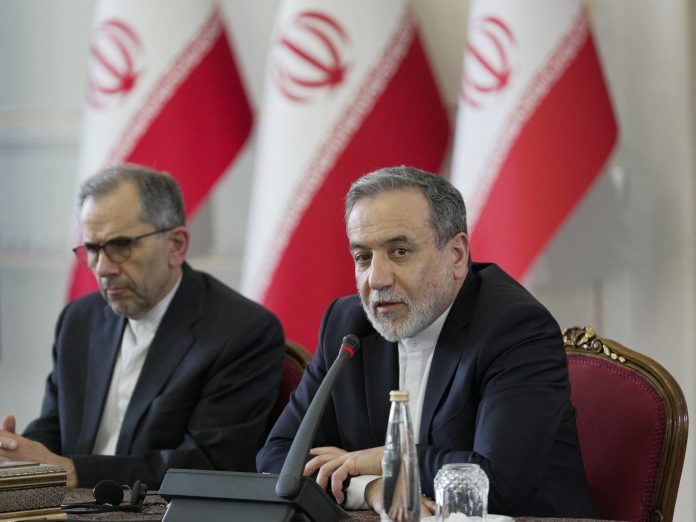
“It is now stopped because, yes, damages are serious and severe, but obviously, we cannot give up our enrichment because it is an achievement of our own scientists, and now, more than that, it is a question of national pride,” Araghchi told the US broadcaster Fox News in an interview aired on Monday.

Araghchi said at the beginning of the interview that Iran is “open to talks” with the United States, but that they would not be direct talks “for the time being”.

“If they [the US] are coming for a win-win solution, I am ready to engage with them,” he added.

“We are ready to do any confidence-building measure needed to prove that Iran’s nuclear programme is peaceful and would remain peaceful forever, and Iran would never go for nuclear weapons, and in return, we expect them to lift their sanctions,” the foreign minister continued.

“So, my message to the United States is that let’s go for a negotiated solution for Iran’s nuclear programme.”

Araghchi’s comments were part of a 16-minute interview aired on Fox News, a broadcaster known to be closely watched by US President Donald Trump.

“There is a negotiated solution for our nuclear programme. We have done it once in the past. We are ready to do it once again,” Araghchi said.

Tehran and Washington had been holding talks on the nuclear programme earlier this year, seven years after Trump pulled the US out of the Joint Comprehensive Plan of Action (JCPOA), which Tehran signed with several world powers in 2015. Under the pact, Iran opened the country’s nuclear sites to comprehensive international inspection in return for the lifting of sanctions.

Trump’s decision to pull the US out of the deal came after Israeli Prime Minister Benjamin Netanyahu accused Iran of pursuing a “secret nuclear programme“.

Iran has long maintained that its nuclear enrichment programme is strictly for civilian purposes.

The US and Iran engaged in talks as recently as May to reach a new deal, but those negotiations broke down when Israel launched surprise bombing raids across Iran on June 13, targeting military and nuclear sites.

More than 1,000 people were killed in Iran before a ceasefire took hold on June 24.

The US also joined Israel in attacking Iranian nuclear facilities, with the Pentagon later claiming it had set back the country’s nuclear programme by one to two years.

Araghchi stated on Monday that Iran’s Atomic Energy Organisation is still evaluating how the attacks had affected Iran’s enriched material, adding that they will “soon inform” the International Atomic Energy Agency (IAEA) of its findings.

He added any request for the IAEA to send inspectors would be “carefully considered”.

“We have not stopped our cooperation with the agency.”

IAEA inspectors left Iran after Iranian President Masoud Pezeshkian signed a law suspending cooperation with the IAEA earlier this month.

Tehran had sharply criticised the IAEA and its chief, Rafael Grossi, over a June 12 resolution passed by the IAEA board accusing Tehran of non-compliance with its nuclear obligations.

Iranian officials said the resolution was among the “excuses” that Israel used as a pretext to launch its attacks, which began on June 13 and lasted for 12 days.

Speaking to journalists earlier on Monday, Stephane Dujarric, the spokesperson for the United Nations secretary-general, stated that the UN welcomed renewed “dialogue between the Europeans and the Iranians”, referring to talks set to take place between Iran, France, Germany and the United Kingdom in Turkiye on Friday.

The three European parties to the former JCPOA agreement have announced that Tehran’s failure to resume negotiations would lead to international sanctions being reimposed on Iran.