Friday, April 17, 2026
Home Blog Page 146

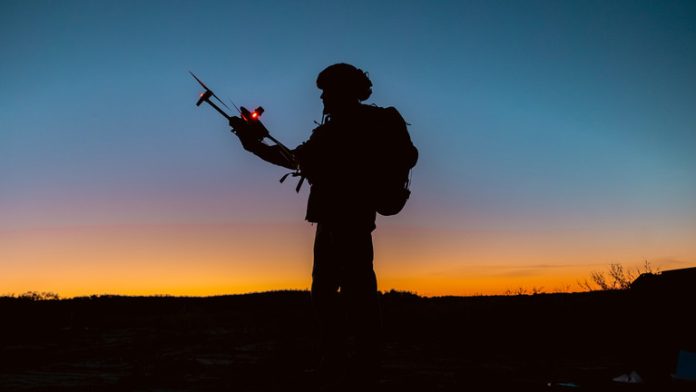
Iran govt. introduces stricter regulations on drone operation

Iran’s Civil Aviation Organization said in a statement on Tuesday that it had launched an online platform for registration of civilian drones.

It added that owners of all types of civilian drones, including those used for agriculture, filming, and surveying purposes, are required to register their devices on the platform and receive ID numbers to display them on the drones.

The statement noted operating any drones without an ID number would be illegal and would lead to judicial punishment for the owners.

The announcement comes after Iran suffered drone attacks by the Israeli regime during a 12-day war in June that left more than a thousand people dead in the country.

Iranian authorities announced at the time that attacks carried out by small unmanned aerial vehicles (UAVs) had targeted the homes of military commanders and nuclear scientists.

The new regulations also address concerns raised by Iranian security officials about drones flying over or near sensitive sites in the country.

Most of the privately-owned drones being operated in Iran are used for spraying pesticides in farms or for filming activities.

However, the commercial use of drones in Iran is expected to rise in the coming years as online retailers plan to increase their use for package delivery.


Iran’s Constitutional Council approves bill toughening punishment for spying for Mossad

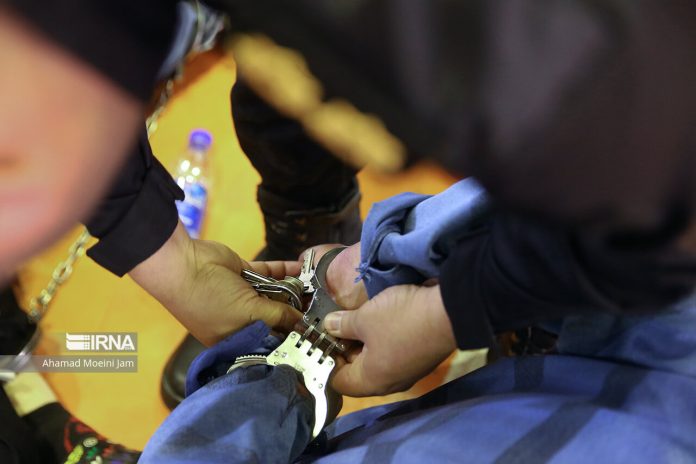
Iran Police

Hadi Tahan Nazif, the spokesman for the Constitutional Council, said on Wednesday that the body approved a bill “toughening penalty for spying and collaborating with the Zionist regime and hostile countries on security and national interests,” and another bill for “regulating non-civilian drones.”

According to his remarks, the previously existing laws were ambiguous before being amended by the Parliament.

Nazif added the Constitutional Council, which is responsible for overseeing legislation, found the amendments to be in alignment with the constitution and the Sharia.

The bills were passed by the Iranian Parliament during the 12-day war with Israel in June. The legislation must be signed by President Masoud Pezeshkian to take effect.

On June 13, Israel launched a blatant and unprovoked act of aggression against Iran, triggering a 12-day war that killed at least 1,064 people in the country, including military commanders, nuclear scientists, and ordinary civilians.

The United States also entered the war by bombing three Iranian nuclear sites in a grave violation of international law.

In response, the Iranian Armed Forces targeted strategic sites across the occupied territories as well as the Al-Udeid air base in Qatar, the largest American military base in West Asia.

According to reports, more than 700 spies affiliated with Israel’s spy agency Mossad were arrested across Iran during the 12-day war.

Iran’s security agencies also dismantled numerous underground drone facilities in Tehran and other cities operated by Mossad agents in recent months.


Iranian VP: Tehran has no plans on expelling European troika ambassadors

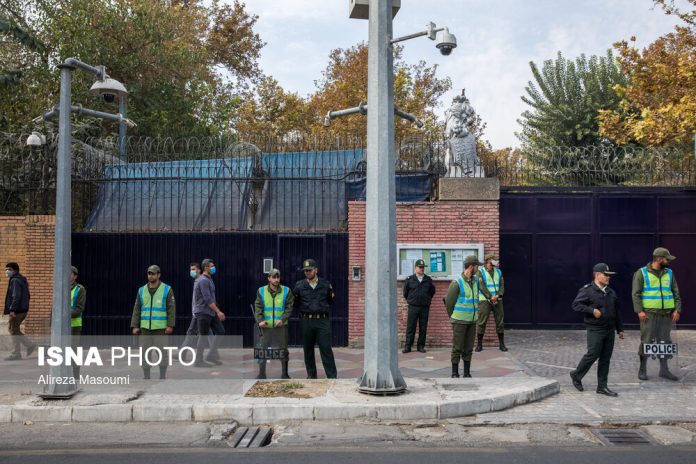
British Embassy Iran

Speaking to reporters on Wednesday after a cabinet meeting, Ghaempanah noted that the government acts according to national interests and foreign policy strategies approved by the Supreme National Security Council and the leader of Iran’s Islamic Revolution.

Regarding ongoing negotiations, the vice president stressed that Iran only reaches agreements in line with its national interests. “Since the demands of the US and Europe were not aligned with our national interests, there was no obligation to reach an agreement”, he said.

Elsewhere, Ghaempanah said Iran is fully prepared in the event of another war, while voicing hope that such a conflict will not occur.

He added that Iran’s armed forces and government are ready to defend the country’s territorial integrity, and “we have no fear of the enemy”.

Gharmpanah then referred to President Masoud Pezeshkian’s speech at the UN General Assembly. The vice president underlined that the speech conveyed Iran’s dignified stance toward global powers, which was the main goal of the president’s trip to New York.

US reducing military mission in Iraq, citing success in fighting Daesh

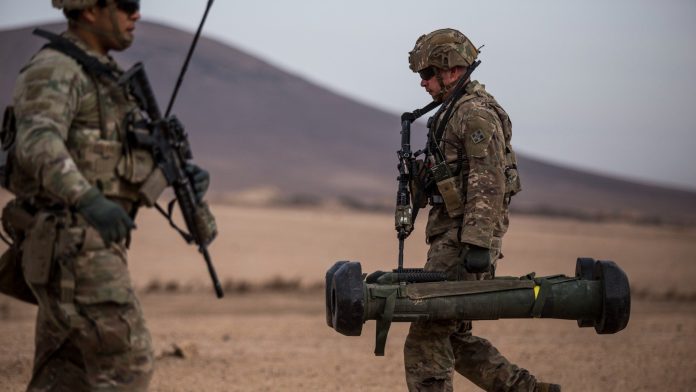
US Forces

The U.S. and coalition partners “will reduce its military mission in Iraq,” reflecting the “combined success in fighting Daesh,” Pentagon spokesperson Sean Parnell said in a statement.

Washington and Baghdad in September 2024 agreed to sunset the U.S. military-led mission in Iraq, in which a coalition of countries conduct counterterrorism missions against remnants of Daesh.

The U.S. had roughly 2,500 troops in Iraq at the beginning of the year, but they have steadily left some military installations where American forces have been stationed over the past two decades.

Under the deal, the U.S. and its coalition allies would focus on fighting Daesh in Syria — where there are more than 900 American troops — and shift a majority of their personnel to Iraq’s Kurdistan region, Reuters reported.

The total number of U.S. forces in Iraq will be less than 2,000 once the transitions are finished, with most of them in Erbil, an official told the outlet.

The move “marks an effort to transition to a lasting U.S.-Iraq security partnership in accordance with U.S. national interests, the Iraqi Constitution, and the U.S.-Iraq Strategic Framework Agreement,” Parnell stated.

Washington will maintain “close coordination” with Baghdad and coalition partners to ensure a “responsible transition,” he added.

The statement did not give details on the number of troops that have withdrawn since the agreement was first signed or when the drawdown would be finished.

A senior Iraqi security official told The Associated Press that the U.S. began withdrawing its troops weeks ago from Baghdad and from Al-Asad base in western Iraq.

“Only a very small number of advisers remain within the Joint Operations Command,” the official said.


Europe not to let Russia ‘sow division and anxiety’: EU chief

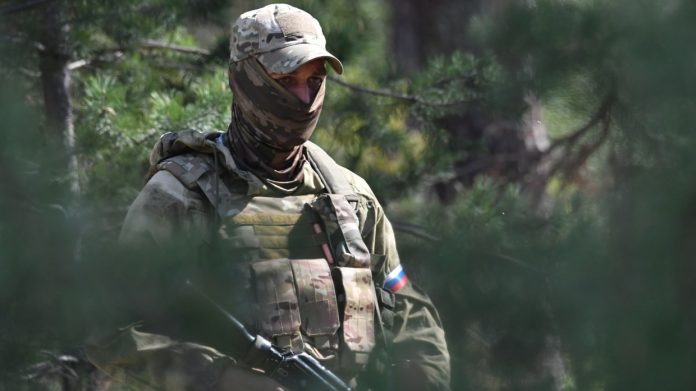
Russian Army

“It’s a pattern, and this pattern is coming from Russia,” von der Leyen told reporters on Wednesday as the defence talks kicked off in Copenhagen.

“Russia tries to test us, but Russia also tries to sow division and anxiety in our societies. We will not let this happen”.

Earlier, Denmark announced that Europe needs to step up its response to a “hybrid war” being waged by Russia, after mysterious drone flights and a spate of airspace violations rattled European Union members.

Prime Minister Mette Frederiksen warned on Wednesday that the continent is facing the “most difficult and dangerous situation” since the World War II, as she hosted a gathering of fellow EU leaders in Copenhagen.

“I hope that everybody recognises now that there is a hybrid war,” Frederiksen said ahead of the meeting.

“One day it’s Poland, the other day it’s Denmark, and next week it will probably be somewhere else that we see sabotage, or we see drones flying.”

The Danish leader warned: “From a European perspective, there is only one country that is willing to threaten us, and it is Russia — and therefore we need a very strong answer.”

EU leaders will discuss bolstering Europe’s defences and Ukraine’s financial firepower at the summit, taking place under heightened security after unidentified drones shut down Danish airports and flew near military sites in the country.

No culprit has been definitively named but suspicions have pointed at Russia, with Frederiksen again suggesting on Wednesday that Moscow was behind the incidents.

“It is a part of the nature of a hybrid war to do exactly what’s going on in Europe right now,” she told journalists.

The drone incidents in Denmark have sharpened the focus on the chinks in Europe’s defences after high-profile air incursions by Moscow in Poland and Estonia.

EU leaders meeting in the Danish capital are looking to flesh out details for priority projects, including a “drone wall” aimed at countering Russia’s threat.

Frederiksen warned however there was no silver bullet to end all malicious activities by Russia.

“I want us to re-arm. I want us to buy more capabilities. I want us to innovate more,” she continued, adding, “But I don’t think we will ever reach a conclusion where no drones are flying into Europe or no sabotage will be seen.”

Govt. spokesperson says Iranian admin. to ratify counterplan against snapback

Fatemeh Mohajerani

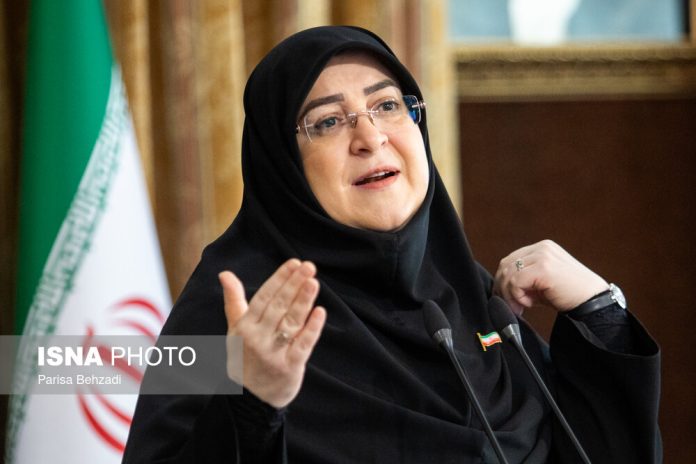
Mohajerani told reporters on the sidelines of a cabinet meeting on Wednesday that the administration and the diplomatic apparatus have made every effort to prevent activation of the snapback mechanism.

She noted that Tehran had already anticipated various scenarios in this regard. “The government had considered all possible scenarios long ago and drafted a plan, which is scheduled to be approved on Sunday,” Mohajerani said.

Outlining the details, she noted that the program will set a new configuration for administrative action, assigning each ministry and institution specific tasks and instructions.

“This approach ensures that the least possible pressure is imposed on the daily lives of the people,” she added.

The snapback mechanism, introduced under UN Security Council Resolution 2231 that endorsed the Joint Comprehensive Plan of Action (JCPOA), allows for the automatic reimposition of UN sanctions if a participant claims “significant non-performance” by Iran.

Although the US withdrew from the JCPOA in 2018, Washington tried to invoke snapback in 2020, a move rejected by most Security Council members. More recently, the EU3 (Britain, France, Germany), backed by the US, revived the mechanism, a step Tehran has rejected as illegal and politically motivated, stressing that parties failing to honor their own commitments cannot activate the clause.


Iran’s FM says US obstruction led to nuclear negotiations failure

Abbas Araghchi

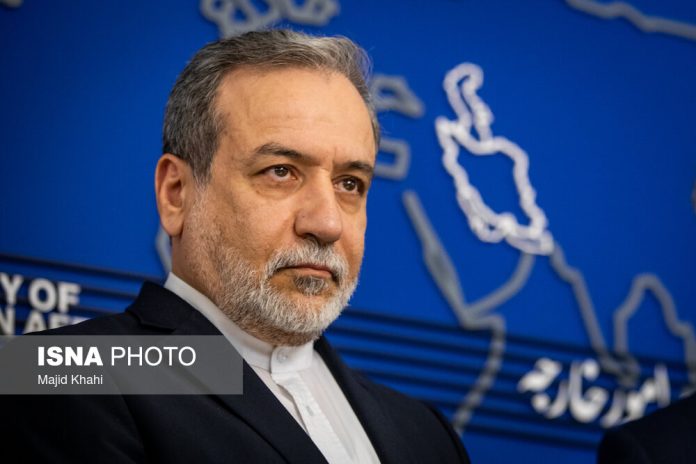
Speaking at a cabinet meeting on Wednesday, Araqchi presented a report on his meetings and discussions with European officials and US representatives held before and during his recent trip to New York.

He stressed that all necessary diplomatic efforts and flexibility had been exercised to exhaust every possible avenue for an agreement.

However, Araqchi said, as had been anticipated, the negotiations failed to produce results due to persistent US interference and obstruction.

He had earlier noted that the E3 nations — the UK, France, and Germany — followed Washington’s lead, actively pushing for the reimposition of UN Security Council sanctions (“snapback”) against Iran.

Moreover, a joint resolution proposed by Russia and China to prevent the snapback mechanism did not pass because of US opposition and European support for Washington’s stance.

Authorities in Iran vow accountability after deadly student bus crash

Iran Chalus Road

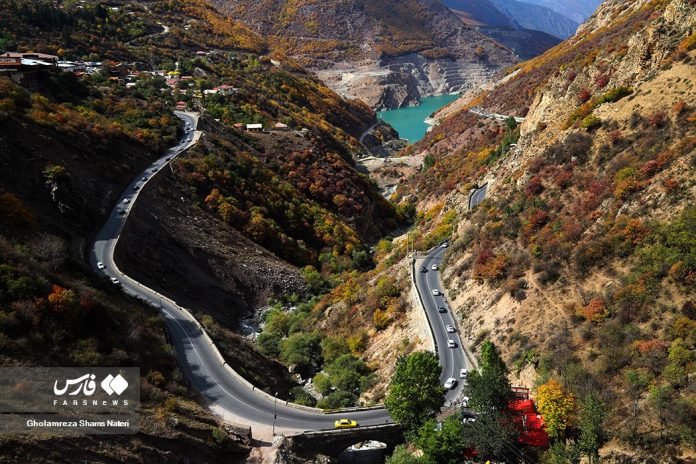
Governor Mohammad Javad Koulivand said that negligent officials must be dismissed, stressing that the incident should not fade into a forgotten file.

He confirmed that most of the injured students had been discharged, though several remain in intensive care.
Medical facilities have been instructed to continue treatment until full recovery.

Koulivand highlighted failures in oversight, saying student transport contracts require stricter supervision. “Supervisors who neglected their duties must be identified and removed. We cannot be negligent with the lives of our children,” he said, adding that all relevant agencies, including traffic police and road authorities, must submit comprehensive reports within days.

According to provincial traffic police chief Colonel Mousa Bozorgi, investigations determined that both the bus driver and a truck involved in the accident shared equal responsibility. The bus collided with the stationary truck before veering off the road.

The accident has sparked grief and concern across the community, with officials emphasizing continued medical, psychological, and social support for the students and their families.

Trump ready for unconditional meeting with Kim: White House official

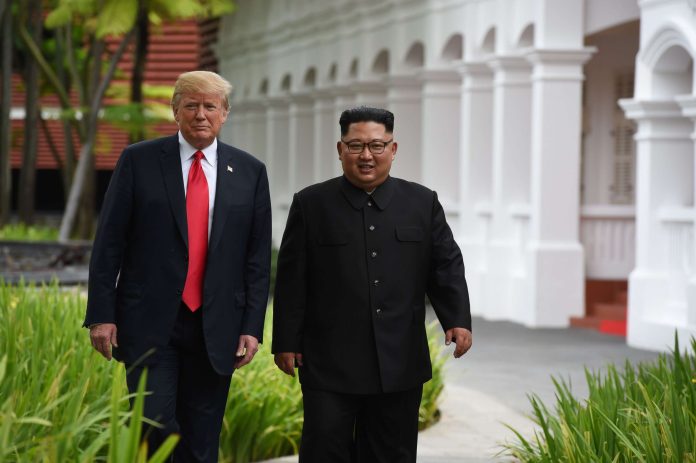
He pointed out that during his first term in office, Trump had held three meetings with the North Korean leader, which “stabilized the Korean Peninsula.”

Trump remains open to engaging in dialogue with Kim “without any preconditions,” the official said, according to Yonhap.

The news agency points out that this “marks the first time that the Trump administration has publicly stated that it does not have ‘any preconditions’ for the resumption of dialogue between Trump and Kim.”

Earlier, a South Korean official suggested that Trump and Kim could hold a meeting on the sidelines of the Asia-Pacific Economic Cooperation (ASEAN) summit that will be held in South Korea between October 31 and November 1.

Kim stated at a Supreme People’s Assembly session on September 20-21 that he had “good memories” of his meetings with Trump. The US president noted at a meeting with South Korea’s leader on August 25 that he would like to meet with Kim before the end of the year.


Ukraine’s drone attacks plunge Russia into worst-ever fuel crisis: Report

Ukraine War

Ukrainian drone strikes have crippled Russia’s oil refining industry, forcing an unprecedented wave of refinery shutdowns and triggering a nationwide fuel crunch, The Moscow Times reported on September 30.

By late September, nearly 38% of Russia’s oil refining capacity—around 338,000 tons of crude per day—was offline, according to data from the analytics firm Ciala.

Output of gasoline and diesel plunged by 6% in August and another 18% in September, with downtime at refineries hitting levels “without historical precedent.” The disruptions eclipsed the previous record set just a month earlier, when 23% of refining capacity was knocked offline. The latest figures also surpass earlier peaks in May 2022 and May 2020.

Ciala estimates that around 70% of the outages stem directly from drone strikes, which by the end of September had knocked out roughly one-quarter of Russia’s total refining capacity—about 236,000 tons per day.

In September alone, four major refineries were forced to halt operations after drone attacks, including the Kirishi “Kinef” plant in Leningrad region—the second-largest in Russia—and Rosneft’s Ryazan refinery, which ranks among the country’s top five.

The Kinef plant went offline on September 14, while the Ryazan facility was hit on September 5. Novokuibyshevsk refinery stopped processing on September 20, followed two days later by Gazprom’s Astrakhan gas processing plant.

The impact on Russia’s domestic fuel market has been severe. Gasoline output dropped by 1 million tons in September, while shortages grew to cover as much as 20% of national consumption.

The hardest-hit regions are the Far East and occupied Crimea, where fuel stations this week limited sales to no more than 30 liters per customer. In total, more than 20 regions across Russia, from Sakhalin to Nizhny Novgorod, are now facing shortages.

Russian oil companies have little ability to stabilize the situation, economist Vladislav Inozemtsev noted. Repairs could take months, especially under sanctions that block access to Western equipment used to modernize refineries during the 2010s.

“Chinese substitutes cannot easily replace this technology,” Inozemtsev added.

To contain the crisis, Moscow banned gasoline exports and moved to secure emergency imports, temporarily scrapping import duties on gasoline, diesel, and jet fuel within the Eurasian Economic Union. Authorities may even lower environmental standards to allow domestic refineries to produce more fuel.

The fuel crunch is already feeding inflationary pressures, warned Vladimir Chernov, an analyst with Freedom Finance Global. Wholesale fuel prices have surged more than 40% since January, while retail prices are climbing at 11–12% annually—the sharpest rise in seven years.

“The rising cost of fuel inevitably drives up expenses in agriculture, transportation, and logistics, translating into higher prices for food and essential goods,” Chernov explained.

Earlier, another major fire was reported at an oil refinery in Feodosia, located in Russian-occupied Crimea.