Friday, April 17, 2026
Home Blog Page 147

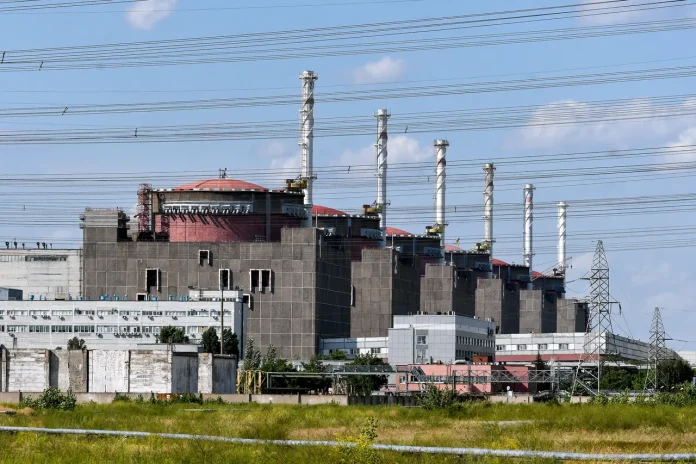
Zaporizhzhia nuclear power plant facing ‘critical’ situation after weeklong outage: Ukraine

“It is now the seventh day – by the way, it is something that has never happened before – of an emergency situation at the Zaporizhzhia Nuclear Power Plant. The situation is critical,” Zelensky said in his evening address.

The president warned that the facility, Europe’s largest nuclear plant, is relying solely on diesel generators to keep safety systems functioning after Russian strikes severed its external power lines. Located in Russian-occupied city of Enerhodar on the Dnipro River, the plant sits close to the front line.

“The generators and the plant were not designed for this, and have never operated in this mode for so long. And we already have information that one generator has failed,” he added.

Zelensky accused Moscow of obstructing the repair of the power lines through continued shelling, noting: “And this is a threat to absolutely everyone. No terrorist in the world has ever dared to do to a nuclear plant what Russia is doing right now.” He said he had ordered Ukraine’s government and diplomats to bring international attention to the crisis.

Russia, which seized the plant in 2022, claimed last week that it has been providing backup power since an attack it blamed on Ukraine. The six reactors have been shut down since Moscow’s occupation, but the facility still requires electricity to maintain cooling and prevent a nuclear incident.

In a statement issued by the International Atomic Energy Agency (IAEA), chief Rafael Grossi said that the UN agency is “in constant contact with the two sides with the aim to enable the plant’s swift re-connection to the electricity grid.”

“While the plant is currently coping thanks to its emergency diesel generators – the last line of defence – and there is no immediate danger as long as they keep working, it is clearly not a sustainable situation in terms of nuclear safety,” Grossi added.

The Zaporizhzhia plant has faced repeated safety concerns since Russia’s invasion, including power outages, shelling in the vicinity, and staffing shortages.
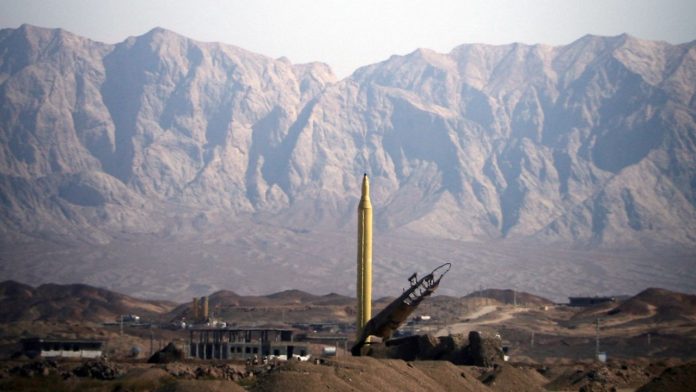
 

IRGC spokesperson warns Iran to strike even harder than before in any new war

Iran Missile

Brigadier General Ali-Mohammad Naeini said that enemies are not limiting their hostilities to military threats but are also targeting the country’s economic, social, and psychological resilience.

He noted that adversaries seek to keep Iran in a “neither war nor peace” situation, using the constant specter of war to undermine national stability.

Naeini stressed that the Israeli regime and its supporters currently lack the capacity to launch a new war. Despite the recent 12-day conflict, the IRGC activated only a fraction of its capabilities — yet even that limited response was enough to inflict defeat on the enemy.

He added that vast segments of the IRGC and other branches of the armed forces did not participate because there was no need.

According to Naeini, the Islamic Republic possesses a powerful resistance front, as well as extensive ground, naval, and operational units and other defense capabilities, all of which will be deployed if required.


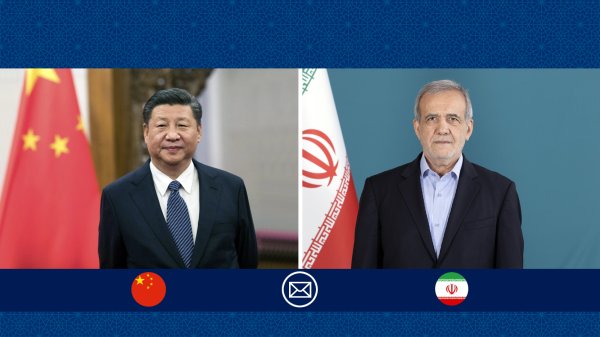
Iranian president congratulates China on National Day, highlights strategic ties

Pezeshkian Xi

In a message released on Wednesday, President Pezeshkian, on behalf of the Iranian people and government, praised China’s path of development, describing it as a foundation for shared prosperity among nations worldwide.

He recalled his recent meeting with President Xi in Beijing, stressing that a “comprehensive strategic partnership with the People’s Republic of China is a key priority for the Islamic Republic of Iran.”

President Pezeshkian said the shifting and complex regional and international environment made strengthening bilateral relations more necessary than ever.

The Iranian president also expressed hope that relations between Tehran and Beijing would continue to advance “under the principles of mutual respect and shared interests.”

China and Iran maintain close political and economic ties, with cooperation spanning trade, energy, infrastructure, and regional diplomacy. Tehran regards Beijing as a strategic partner in its efforts to counter Western economic pressure and expand regional influence.

Iran’s water rights from Helmand river remain unfulfilled despite treaty with Afghanistan

Iran Water Crisis

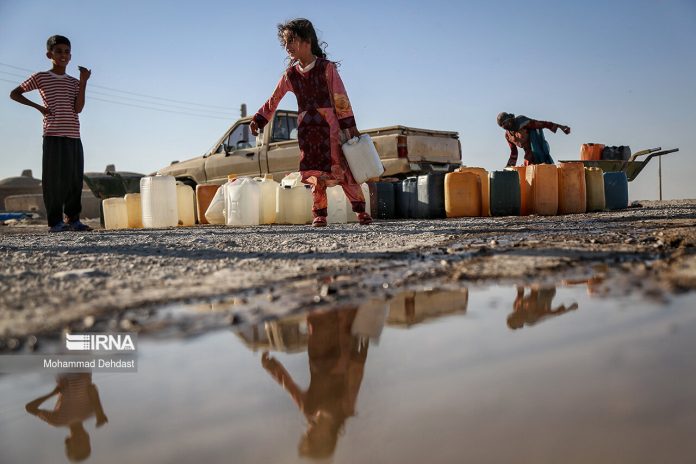
Official data show that during the past water year, Iran received only about 119 million cubic meters, a fraction of its legal entitlement.

Satellite imagery indicates that Afghanistan’s Kajaki Dam reservoir is full and has even overflowed, yet Iran’s historical water rights remain unmet.

The shortfall has deepened agricultural and environmental challenges in eastern Iran, including the drying of the Hamoun wetlands, rising unemployment, migration, and social unrest in Sistan and Baluchestan province.

Issa Bozorgzadeh, spokesman for Iran’s water industry, said negotiations and verbal assurances from Afghanistan have not translated into practical action.

Lawmaker Farhad Shahraki added that the water share is a legal obligation, not a request, stressing that political considerations in Kabul have obstructed implementation.

Iran has signaled readiness to provide technical assistance for restoring the river’s natural flow, while urging Afghanistan to honor the 1973 accord.

Experts argue that Tehran must pursue both active diplomacy and stricter domestic water management to prevent the crisis from worsening.

Gaza starvation deaths rise to 453, including 150 children: Health Ministry

Gaza War

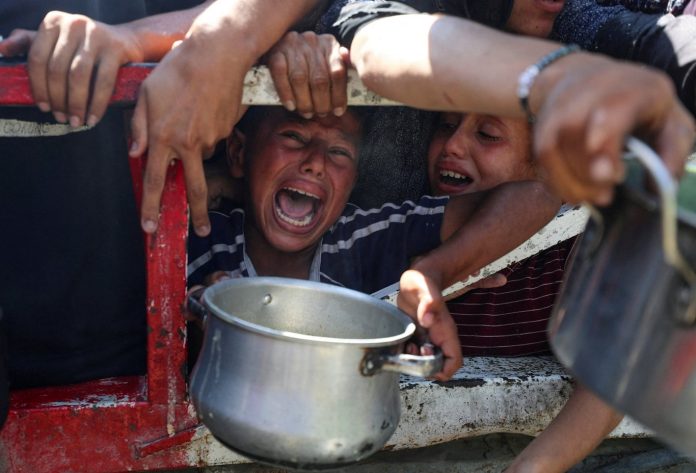
A ministry statement said 150 children were among Palestinians who died of malnutrition and famine in the territory, with food and other essential supplies blocked by a longstanding Israeli blockade.

According to the ministry, 175 people, including 35 children, have died of starvation since the UN-backed Integrated Food Security Phase Classification (IPC) declared famine in Gaza this August.

On Aug. 22, the IPC declared famine in Gaza City and warned it would spread to central and southern Gaza by the end of September.

Israel has kept all border crossings with Gaza closed since March 2, blocking humanitarian aid and pushing the enclave into famine despite relief trucks piling up at its borders.

Israel occasionally allows very limited amounts of aid to enter, but those shipments fall short of meeting basic needs and have not ended the famine. Most trucks have been looted by gangs that the Gaza administration accuses Israel of protecting.

The Israeli aid scheme has also been accused of deliberately setting up civilian aid seekers to be targeted by Israeli forces.

The Israeli army has killed over 66,000 Palestinians, most of them women and children, in Gaza since October 2023. The relentless bombardment has rendered the enclave all but uninhabitable and led to starvation and the spread of disease.


Judge rules US deportation drive against pro-Palestine students is illegal

In a blistering opinion on Tuesday, Federal District Judge William Young, an appointee of former President Ronald Reagan, said Secretary of State Marco Rubio and Secretary of Homeland Security Kristi Noem misused their powers in the deportation campaign.

“They did so in order to strike fear into similarly situated non-citizen pro-Palestinian individuals, pro-actively (and effectively) curbing lawful pro-Palestinian speech and intentionally denying such individuals … the freedom of speech that is their right,” Young wrote.

“Moreover, the effect of these targeted deportation proceedings continues unconstitutionally to chill freedom of speech to this day.”

The ruling represents a major rebuke to the Trump administration’s efforts to penalise non-citizens who participated in campus activism against the war on Gaza last year.

Rubio has stated that he revoked the visas of hundreds of students – including legal permanent residents – over their Palestine activism.

The case was brought forward by the American Association of University Professors, which has been pushing back on Trump’s campaign to reshape higher education to align more with his right-wing worldview.

During the proceedings, federal officials acknowledged relying on Canary Mission – a shadowy doxxing website that critics describe as a hate group – to identify foreign students for removal.

Young concluded that Trump’s aides cracked down on the students in order to make an example out of them, “terrorizing similarly situated non-citizen (and other) pro-Palestinians into silence”.

Columbia University’s Mahmoud Khalil was one of the first students to be targeted. He was detained in an immigration facility for three months and missed the birth of his first son before a judge ordered his release.

In another high-profile case, Turkish Tufts University scholar Rumeysa Ozturk was nabbed by masked federal agents and spent weeks in jail for co-authoring an op-ed in her school’s newspaper.

The article called on the university administration to uphold the student senate’s resolutions, including a call for divesting from companies complicit in Israeli human right abuses.

A federal court ordered federal authorities to release Ozturk in May. But she, Khalil and others continue to face deportation proceedings.

It is not immediately clear how Tuesday’s ruling will affect those cases individually.

To deport the activists, Rubio has been invoking a seldom-used provision of the Immigration and Nationality Act on the basis that the students’ presence has “adverse” effects on American foreign policy.

The Trump administration has been arguing that foreign students and non-citizens in general have minimal rights and could be removed for abusing the privileges of being in the US.

It has accused the students – without providing evidence – of supporting “terrorism”, promoting anti-Semitism and spreading Hamas propaganda.

While Judge Young agreed that non-citizens are guests, he stressed that they have constitutional protections.

“How we treat our guests is a question of constitutional scope, because who we are as a people and as a nation is an important part of how we must interpret the fundamental laws that constrain us,” he wrote.

“We are not, and we must not become, a nation that imprisons and deports people because we are afraid of what they have to tell us.”

The judge also rejected equating criticism of Israel with support for “terrorism”.

“If ‘terrorist’ is interpreted to mean ‘pro-Palestine’ or ‘anti-Israel,’ and ‘support’ encompasses pure political speech, then core free speech rights have been imperiled,” he said.

Young added it is not clear whether Trump directed the deportation campaign, but he noted that the US president celebrated and “wholeheartedly supported it”.


Trump: Russia and China catching up with US on submarines

He made the remarks during a speech to top military officers at Quantico, a Marine Corps base outside Washington, on Tuesday.

“We’re 25 years ahead of Russia and China in submarines,” Trump claimed.

“Russia is actually second in submarines. China is third. But, you know, they’re coming up.”

“They’re way lower in nuclear, too, but in five years they’ll be equal,” he said, without elaborating whether he meant nuclear weapons or submarines.

He added that he deployed “a nuclear submarine” after being “a little bit threatened by Russia recently,” referring to former Russian President Dmitry Medvedev’s mention of the ‘Dead Hand’ – the rumored Soviet contingency system capable of launching every remaining nuke in the event the country’s leadership is killed by a first strike.

Trump referred to the nuclear submarine as “the most lethal weapon ever made.”

“It’s undetectable, totally. Ours is. Theirs isn’t,” he stated, claiming that the US has access to “genius apparatus that doesn’t allow detection.”

According to a defense industry study published in China in September, Beijing is working on an AI submarine detection system that could hunt down craft with a 95% accuracy rate. It reportedly collates and analyses data from sonar buoys, underwater sensors, radar and even water salt and temperature levels to find enemy vessels.

Russian President Vladimir Putin said in August that Russian submarines have a “military advantage,” because they are capable of diving under Arctic ice and thus vanishing from radar.

Moscow has expanded its roster of nuclear submarines with eight Borei-class vessels since the 2000s, the newest of which – the Knyaz Pozharsky – was launched earlier this year.

Putin recently extended a friendly gesture to the US, after Trump hinted that he wanted a nuclear deal with Russia and China.

In a speech at the Russian Security Council last week, Putin offered to abide by the New START treaty for one year after it lapses – provided Trump does the same. The agreement, which limits nuclear weapon stocks, is set to expire next February.


Majority of Germans oppose NATO attacking Russian jets: Poll

Some 67% of respondents said they were against striking Russian jets, according to a poll conducted by the Forsa market research company for Stern magazine. Only 24% of those polled favored the option. Supporters of German Chancellor Friedrich Merz’s CDU/CSU bloc were the most hawkish, with 35% approving of the measure. Among the backers of other major parties, support barely exceeded 20%.

The survey was conducted by phone on September 25-26 and included 1,001 respondents.

The issue gained traction among NATO leaders following incidents the bloc blamed on Russia. Estonia claimed Russian aircraft briefly violated its airspace in mid-September, while Poland earlier alleged that multiple Russian decoy drones had entered its territory. Moscow denied the claims in both cases.

Poland and the UK then threatened to shoot down Russian aircraft if they entered NATO airspace “without permission.” Lithuania’s defense minister also urged NATO to take such action. EU Commission President Ursula von der Leyen said the option was “on the table,” while NATO Secretary General Mark Rutte stated that decisions are made “in real time” and on a case-by-case basis.

Moscow responded by saying that NATO members had failed to produce any substantial evidence for their accusations. Kremlin spokesman Dmitry Peskov also slammed what he called “reckless and irresponsible” threats by bloc members in the wake of the incidents.

Ex-UK defense chief calls for Crimea to be made ‘uninhabitable’

Crimean Bridge

Speaking at the Warsaw Security Forum on Tuesday, Wallace argued that Russia views the Black Sea peninsula as a “Holy Mount,” and that Ukraine should strike where it can inflict the greatest damage.

“We have to help Ukraine have the long-range capabilities to make Crimea unviable. We need to choke the life out of Crimea,” Wallace stated.

“If it is not inhabitable or not possible for it to function… I think, if we do that, [Russian President Vladimir] Putin will suddenly realize he’s got something to lose.”

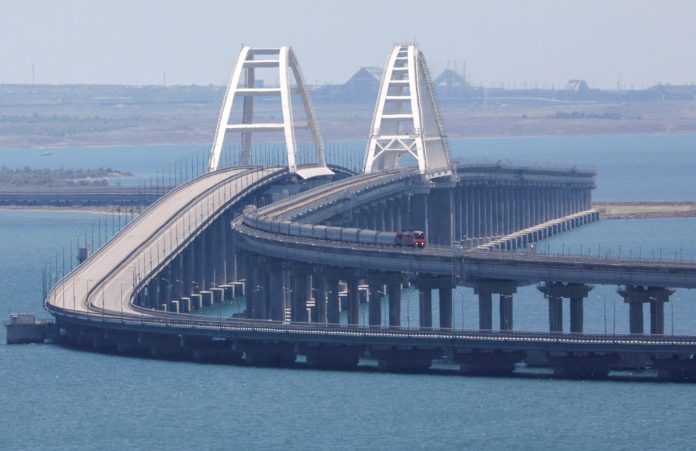
He suggested that Kiev should prioritize attacks on the Kerch Strait Bridge, which connects Crimea with Russia’s Krasnodar Region. Ukrainian forces struck the bridge in October 2022 and July 2023, temporarily halting traffic.

Wallace, who served as defense secretary from 2019 to 2023, previously urged Ukraine to mobilize more of its population to fight Russia.

Crimea voted to secede from Ukraine and join Russia shortly after the 2014 Western-backed coup in Kiev. Since then, Ukraine has imposed an economic blockade, cutting electricity and water supplies to the region. Home to around 2.5 million people, the peninsula also hosts Russia’s Black Sea Fleet.

The Kremlin has described the UK as “one of the leaders of this pro-war camp” due to its military aid to Kiev and calls for tighter sanctions on Russia.

Hamas has ‘3-4 days’ to respond to Gaza peace plan: Trump

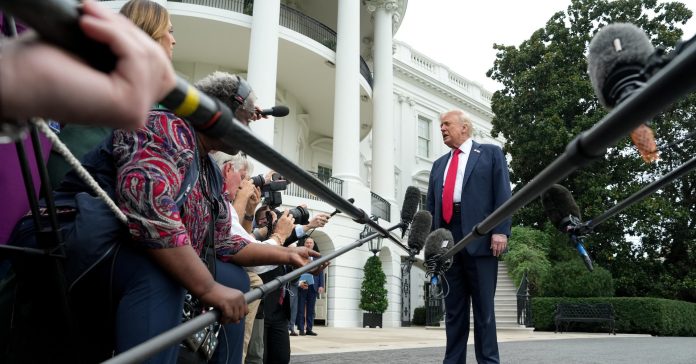
“We’re going to do about three or four days. We’ll see how it is,” Trump told reporters when asked about the timeline for a response from the Palestinian resistance group.

He said all Arab and Muslim countries, along with Israel, have signed up for the proposal.

“We’re just waiting for Hamas, and Hamas is either going to be doing it or not — and if it’s not, it’s going to be a very sad end,” he added.

Trump on Monday unveiled the 20-point plan to end Israel’s war on Gaza during a White House press conference with Israeli Prime Minister Benjamin Netanyahu.

The plan calls for the release of all Israeli captives in exchange for dozens of Palestinian prisoners, the complete disarmament of Hamas, a gradual withdrawal of Israeli forces, and the formation of a technocratic, apolitical Palestinian committee to govern the enclave.

The Israeli army has killed over 66,000 Palestinians, most of them women and children, in Gaza since October 2023. The relentless bombardment has rendered the enclave all but uninhabitable and led to starvation and the spread of diseases.