Tuesday, April 7, 2026
Home Blog Page 145

Russia says strategic partnership treaty with Iran officially enters into force

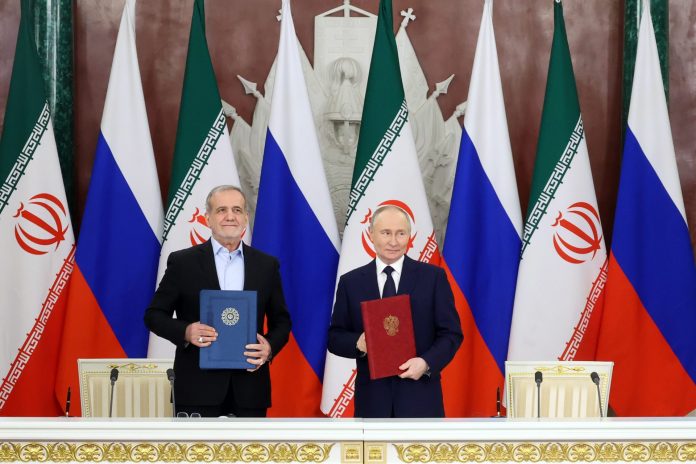
Pezeshkian and Putin

According to the ministry’s statement, the treaty was signed on January 17 in Moscow by Russian President Vladimir Putin and Iranian President Massoud Pezeshkian during the latter’s state visit.

The agreement, which was subsequently ratified by Iran’s parliament on May 21, marks a “significant milestone” in bilateral relations, elevating ties to a new stage of comprehensive strategic partnership.

Russian state news agency RIA Novosti reported that the ministry hailed the treaty as a framework for closer political, economic, and security cooperation.

The preamble of the agreement cites earlier treaties as the legal foundation of bilateral relations, including the 1921 Iran-Soviet Treaty, the 1940 Trade and Navigation Treaty, the 2001 Treaty on the Foundations of Relations and Principles of Cooperation, and a 2020 joint declaration on international law.

Officials in both countries have presented the treaty as a long-term roadmap to expand cooperation amid growing geopolitical tensions with the West, particularly in energy, trade, defense, and regional security matters.

Senior Iranian politician backs CFT accession, dismisses opponents’ arguments as ‘weak’

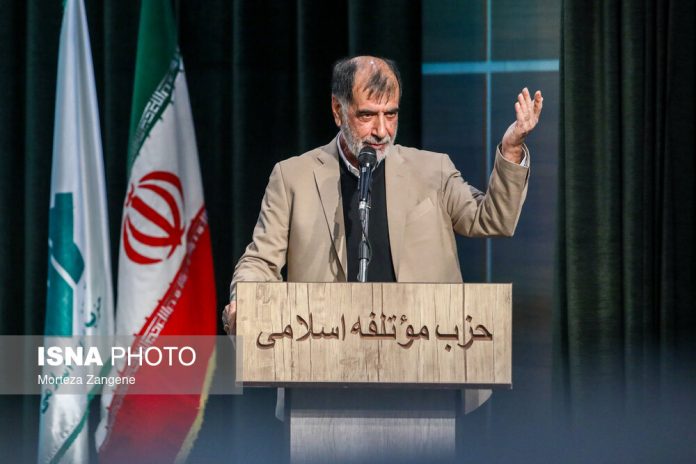
Writing in the Iran daily, Mohammad-Reza Bahonar argued that years of debate over the Palermo and CFT bills revealed that the reasoning used by opponents lacked strength, while the consequences of rejecting them had been costly.

He pointed to Iran’s transfer from the Financial Action Task Force (FATF) “grey list” to the “blacklist,” which he said imposed serious negative effects on both public and private sectors of the economy.

According to Bahonar, the Expediency Council carefully considered expert input from government ministers, including the economy and foreign affairs portfolios, before siding with arguments in favor of joining.

He said supporters never claimed that passing the bills would directly lift sanctions, but argued that non-membership hindered financial cooperation even with friendly states.

He dismissed claims that the CFT’s approval was irrelevant under the “snapback” of UN sanctions, stressing that sanctions are political while CFT is a separate legal framework.
Bahonar concluded that every measure easing Iran’s economic difficulties should be pursued.

Iran urges UN Security Council to approve Palestinian statehood

Amir Saeed Iravani

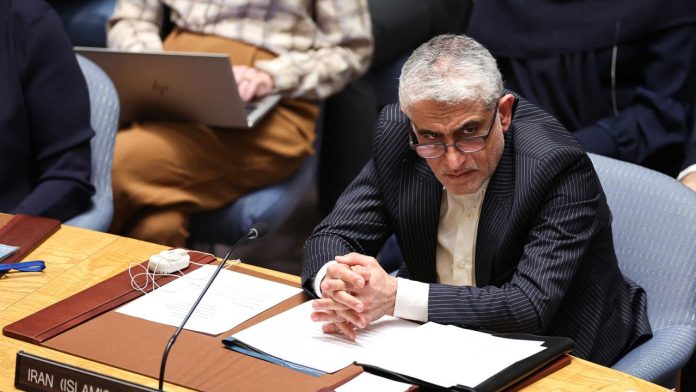
Speaking at a General Assembly session on the use of veto power, Ambassador Amir Saeid Iravani criticized the repeated US vetoes of resolutions demanding a ceasefire in Gaza, saying Washington’s actions have paralyzed the Council.

He said Washington’s stance not only contradicts international calls for peace and justice but also undermines its own stated commitments, while enabling Israel to continue violations of international law.

Iravani rebuked Israel for pursuing decades of unlawful policies, including indiscriminate bombings, forced displacement, illegal settlement expansion, and attacks on religious sites, slamming them as war crimes, crimes against humanity, and acts of genocide.

The envoy urged the Security Council to take binding measures under Chapter VII of the UN Charter to halt hostilities, ensure accountability, lift restrictions on humanitarian aid, and reject any attempts at annexation or forced resettlement.

He concluded that ending occupation and establishing an independent Palestinian state with full UN membership is both a global demand and an obligation of all member states.

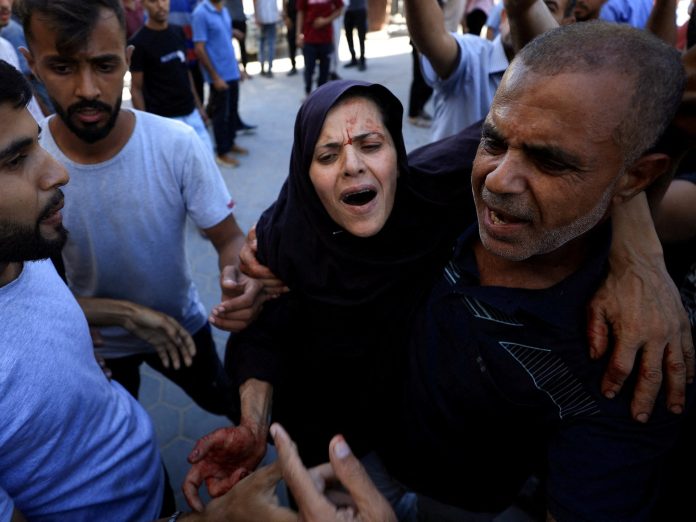
Over 220 activists detained by Israeli naval forces aboard international aid flotilla: Organizers

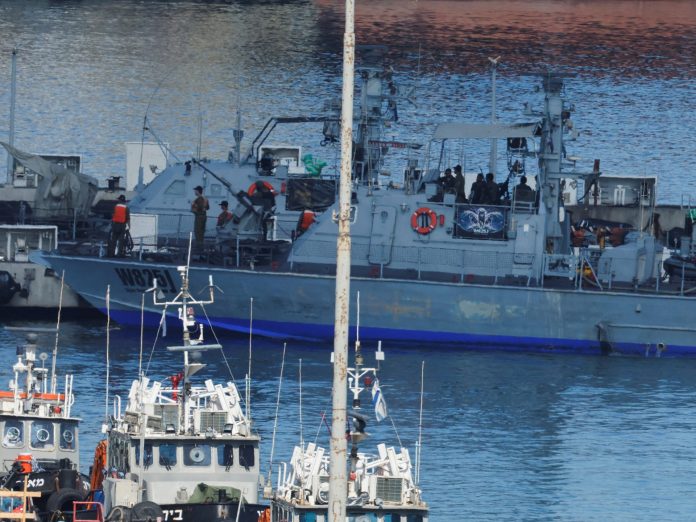
The Global Sumud Flotilla wrote on X that 15 boats were confirmed attacked by the Israeli forces since late Wednesday, as eight others are likely to be or currently under attack.

The flotilla shared on Instagram the names and nationalities of 223 activists aboard the attacked vessels.

Meanwhile, the official flotilla tracker showed that 20 vessels have been attacked by the Israeli forces, as 24 others continue their way to Gaza.

The flotilla, loaded mainly with humanitarian aid and medical supplies, set sail at the end of August. It was the first time in years that more than 50 ships have sailed together toward Gaza, carrying over 500 civilian supporters from over 45 countries.

Israel has maintained a blockade on Gaza, home to a population of nearly 2.4 million, for nearly 18 years, and further tightened the siege in March when it closed border crossings and blocked food and medicine deliveries, pushing the enclave into famine.

Since October 2023, Israeli bombardment has killed more than 66,000 Palestinians, most of them women and children. The UN and rights groups have repeatedly warned that the enclave is being rendered uninhabitable, with starvation and disease spreading rapidly.


Trump executive order guarantees Qatar security after Israeli onslaught

This frame grab taken from an AFPTV footage shows a man looking at smoke billowing after explosions in Doha's capital Qatar on September 9, 2025. An Israeli military official told AFP that the military had carried out air strikes on Doha on September 9 in an operation targeting senior leaders of Palestinian militant group Hamas. (Photo by Jacqueline PENNEY / AFPTV / AFP) (Photo by JACQUELINE PENNEY/AFPTV/AFP via Getty Images)

Israel announced that the raid targeted Hamas leaders who were in the capital, Doha, discussing a US ceasefire proposal for Gaza under Qatari auspices. It killed several members of the Palestinian group’s team, but not the leaders, as well as a Qatari security officer.

On Monday, Israeli Prime Minister Benjamin Netanyahu apologised to Qatar for the killing of its citizen. Qatari Prime Minister Sheikh Mohammed bin Abdulrahman bin Jassim Al Thani received the apology on Monday in a joint call from Trump and Netanyahu during their meeting at the White House.

In his latest executive order, Trump stated that the US and Qatar are “bound together by close cooperation, shared interests, and the close relationship between our armed forces”.

The US president added that Qatar was “a steadfast ally in pursuit of peace, stability and prosperity” and had supported Washington in mediating regional and global conflicts.

“In recognition of this history, and in light of the continuing threats to the State of Qatar posed by foreign aggression, it is the policy of the United States to guarantee the security and territorial integrity of the State of Qatar against external attack,” he said.

“The United States shall regard any armed attack on the territory, sovereignty or critical infrastructure of the state of Qatar as a threat to the peace and security of the United States,” the order says.

After the Israeli strikes in Doha on September 9, Washington tried to repair the damage done to diplomatic relations with Qatar while also showing its continued ironclad support for its ally Israel. The Persian Gulf nation had called Israel’s actions “cowardly and treacherous”.

The true scope of Trump’s pledge remains in question. Typically, legally binding agreements, or treaties, need to receive the approval of the US Senate. However, presidents have entered international agreements without the Senate’s approval. Ultimately, any decision to take military action rests with the president.

Qatar has been a key US military partner over the years, allowing America’s Central Command to have its forward operating base at its vast Al Udeid Air Base. Former US President Joe Biden named Qatar as a major non-NATO ally in 2022, in part due to its help during the US’s chaotic withdrawal from Afghanistan.

 

EU funnels $4.7 billion to Ukraine in loan backed by Russian funds

Russia Ukraine War

The sum would be used to cover budget needs in defense, social programs, and recovery efforts, the ministry said.

With the latest tranche, the EU has funneled 14 billion euros ($16.4 billion) to Ukraine as part of the Extraordinary Revenue Acceleration (ERA) loans initiative.

The European bloc has pledged to shoulder 18.1 billion euros ($21.2 billion) of the $50 billion loan led by the G7 and aimed at boosting Kyiv’s defense and reconstruction efforts.

Since last year, the G7 members and the EU have channeled $28 billion to Ukraine through the ERA loans.

“Since February 2022, the European Union has been the largest provider of direct budgetary support to Ukraine — 62.5 billion euros ($73.3 billion),” Finance Minister Serhii Marchenko stated in a statement.

“The matter of further utilization of frozen Russian assets for Ukraine’s needs remains on the agenda in meetings with European partners.”

The G7 members immobilized roughly $300 billion in sovereign Russian assets at the outbreak of the full-scale war, with approximately two-thirds held in the Belgium-based financial institution Euroclear.

While the EU and Belgium have opposed confiscating the assets outright — fearing legal and fiscal pitfalls — European leaders have increasingly called for a more radical approach in using them for Kyiv’s benefit.


Israeli army kills 100 Palestinians every day in Gaza: UN

“On average, 100 people are reported killed every day in Gaza due to the Israeli military operation or shootings at the ‘Gaza Humanitarian Foundation’ food points. Meanwhile, others die of hunger or lack of medical care.”

UNRWA Commissioner-General Philippe Lazzarini stated in a statement on US social media company X.

Israel has killed over 66,100 Palestinians, most of them women and children, in Gaza since October 2023. The relentless bombardment has rendered the enclave uninhabitable and led to a famine.

On May 27, Israel launched a separate aid distribution scheme through the US-backed Gaza Humanitarian Foundation (GHF), bypassing the UN and international humanitarian agencies.

Since then, nearly 2,600 people have been killed and 19,000 others injured by Israeli fire while collecting aid at distribution points.

“The growing death toll is fueling a growing indifference,” Lazzarini said, calling for documenting the ongoing Israeli crimes in the Gaza Strip.

“The suffering must be heard and attended to,” he added, renewing his call for an immediate ceasefire.

In October 2024, following claims by the Israeli government that some UNRWA staff were allegedly involved in attacks on Oct. 7, 2023, Israel blocked UNRWA operations in the West Bank and Gaza after a Knesset vote.

UNRWA, founded in the aftermath of the 1948 Palestinian Nakba, also known as the Catastrophe, provides aid to approximately 5.9 million Palestinians across five main regions: Gaza, the West Bank, Jordan, Syria, and Lebanon.


Iran govt. introduces stricter regulations on drone operation

Iran’s Civil Aviation Organization said in a statement on Tuesday that it had launched an online platform for registration of civilian drones.

It added that owners of all types of civilian drones, including those used for agriculture, filming, and surveying purposes, are required to register their devices on the platform and receive ID numbers to display them on the drones.

The statement noted operating any drones without an ID number would be illegal and would lead to judicial punishment for the owners.

The announcement comes after Iran suffered drone attacks by the Israeli regime during a 12-day war in June that left more than a thousand people dead in the country.

Iranian authorities announced at the time that attacks carried out by small unmanned aerial vehicles (UAVs) had targeted the homes of military commanders and nuclear scientists.

The new regulations also address concerns raised by Iranian security officials about drones flying over or near sensitive sites in the country.

Most of the privately-owned drones being operated in Iran are used for spraying pesticides in farms or for filming activities.

However, the commercial use of drones in Iran is expected to rise in the coming years as online retailers plan to increase their use for package delivery.


Iran’s Constitutional Council approves bill toughening punishment for spying for Mossad

Iran Police

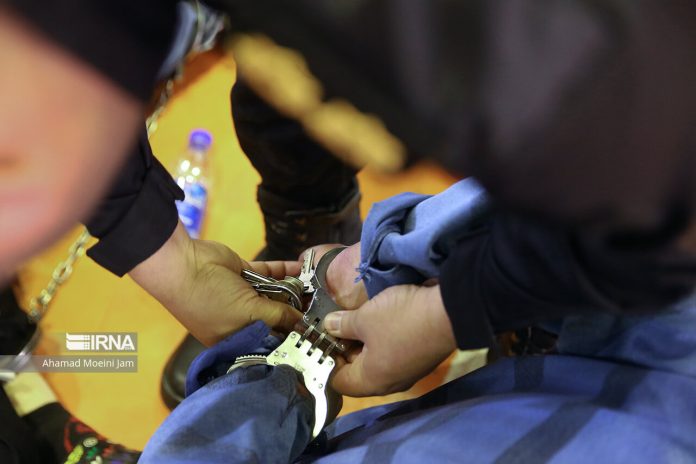
Hadi Tahan Nazif, the spokesman for the Constitutional Council, said on Wednesday that the body approved a bill “toughening penalty for spying and collaborating with the Zionist regime and hostile countries on security and national interests,” and another bill for “regulating non-civilian drones.”

According to his remarks, the previously existing laws were ambiguous before being amended by the Parliament.

Nazif added the Constitutional Council, which is responsible for overseeing legislation, found the amendments to be in alignment with the constitution and the Sharia.

The bills were passed by the Iranian Parliament during the 12-day war with Israel in June. The legislation must be signed by President Masoud Pezeshkian to take effect.

On June 13, Israel launched a blatant and unprovoked act of aggression against Iran, triggering a 12-day war that killed at least 1,064 people in the country, including military commanders, nuclear scientists, and ordinary civilians.

The United States also entered the war by bombing three Iranian nuclear sites in a grave violation of international law.

In response, the Iranian Armed Forces targeted strategic sites across the occupied territories as well as the Al-Udeid air base in Qatar, the largest American military base in West Asia.

According to reports, more than 700 spies affiliated with Israel’s spy agency Mossad were arrested across Iran during the 12-day war.

Iran’s security agencies also dismantled numerous underground drone facilities in Tehran and other cities operated by Mossad agents in recent months.


Iranian VP: Tehran has no plans on expelling European troika ambassadors

British Embassy Iran

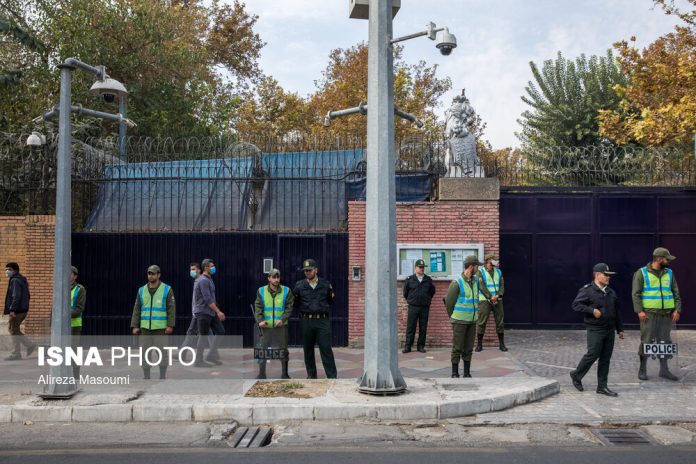
Speaking to reporters on Wednesday after a cabinet meeting, Ghaempanah noted that the government acts according to national interests and foreign policy strategies approved by the Supreme National Security Council and the leader of Iran’s Islamic Revolution.

Regarding ongoing negotiations, the vice president stressed that Iran only reaches agreements in line with its national interests. “Since the demands of the US and Europe were not aligned with our national interests, there was no obligation to reach an agreement”, he said.

Elsewhere, Ghaempanah said Iran is fully prepared in the event of another war, while voicing hope that such a conflict will not occur.

He added that Iran’s armed forces and government are ready to defend the country’s territorial integrity, and “we have no fear of the enemy”.

Gharmpanah then referred to President Masoud Pezeshkian’s speech at the UN General Assembly. The vice president underlined that the speech conveyed Iran’s dignified stance toward global powers, which was the main goal of the president’s trip to New York.