Thursday, December 25, 2025
Home Blog Page 1446

Iranian president renews call for pursing US assassination of General Soleimani

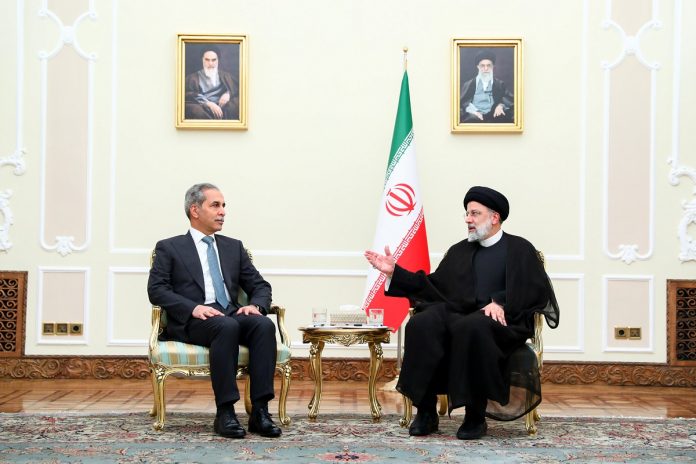
Ebrahim Raisi and head of the Iraqi high judicial council

President Raisi was speaking during a meeting with the head of the Iraqi high judicial council in Tehran on Tuesday.

He added that the case of the martyrdom of the two commanders should not be allowed to be forgotten with the passage of time.

The head of the Iraqi high judicial council for his part said an example of judicial cooperation between Iraq and Iran is the trial of all those who participated in the terrorist crime that martyred General Solerimani and Abu Mahdi Muhandis.

The two commanders were assassinated in a drone strike directly ordered by former US President Donald Trump in January 2020 just outside Baghdad Airport.

Iran’s top general calls for regional cooperation in Persian Gulf

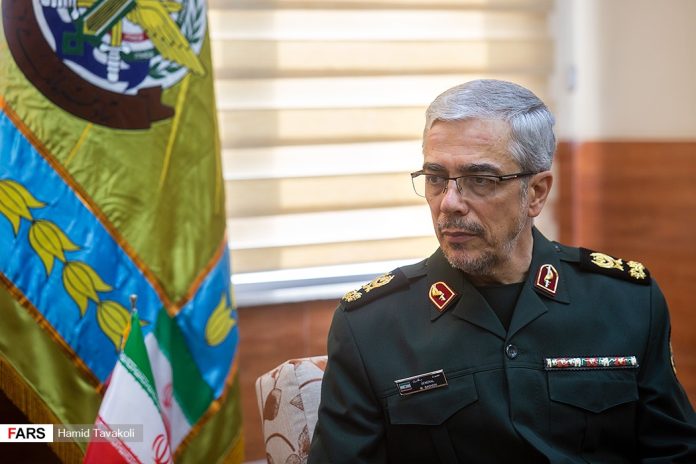
Chief of Staff of the Iranian Armed Forces Major General Mohammad Hossein Baqeri

General Mohammad Bagheri, Chairman of Iran’s Joint Chiefs of Staff made the remarks in a Tuesday meeting with Oman’s Sultan Haitham bin Tariq bin Taimur Al Said in Muscat.

According to Bagheri, Iran’s sound policy is to create regional homegrown security for the region.

He also said joint efforts by Iran and Oman can improve security and prove that there is no need for the presence of extra-regional powers in the Persian Gulf.

Bagheri also noted that a multi-polar order is on the horizon and that the global power is shifting away from the West to the East.

Oman’s Sultan Haitham bin Tariq bin Taymur Al Said for his part welcomed Bagheri and his entourage to the sultanate.

Tehran’s prosecutor general summons MP over SUV claims

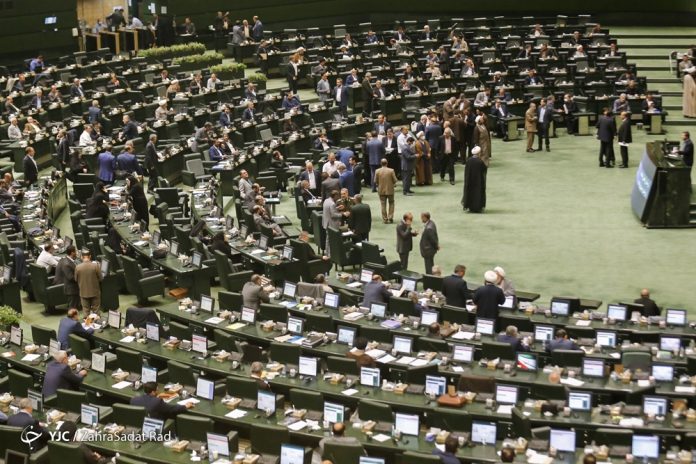
Iran Parliament

Beigi was asked to appear before judicial officials for this purpose.

The lawmaker sparked controversy earlier by claiming that former Industry, Mines, and Trade Reza Fatemi Amin had previously offered SUV cars to MPs to bribe them into withdrawing an impeachment motion.

Fatemi Amin was impeached and removed from his post by parliament.

Meanwhile, a principlist Iranian lawmaker says Parliament Speaker Mohammad-Baqer Qalibaf was aware that  MPs had received the SUVs to take back their votes for the impeachment of the former minister.

Hossein Jalali, who is close to the so-called Perseverance Front in the Iranian Parliament, said Qalibaf had most definitely given the go-ahead for the offering of the cars.

Qalibaf on Sunday denied there was a quid pro quo between the MPs and Fatemi Amin.

Iran’s General Bagheri: New world order will no longer be unipolar

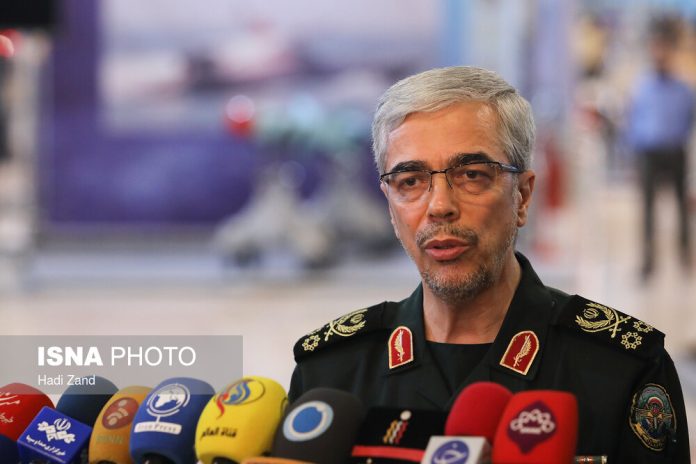
Major General Mohammad Baqeri

General Bagheri was speaking at the headquarters of the armed forces of Oman in the country’s military university.

He noted that another characteristic of the new order is that it’s going to be regional.

The top Iranian military official said regional countries are definitely willing to have convergence and they will sooner or later overcome artificial differences that are the root-cause of divergence among them.

Bagheri added that regional countries will soon turn the Persian Gulf and the Sea of Oman into waters of friendship, progress and well-being.

He’s is Muscat for talks with the Omani military and political officials.

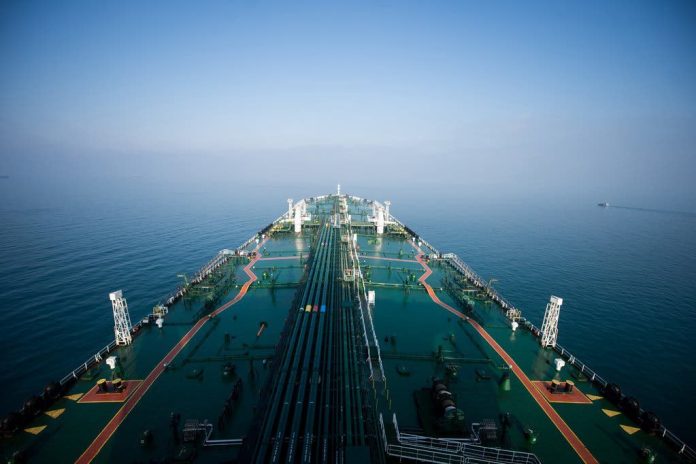
White House blocking authorities from confiscating Iranian oil ships

Iran Oil Tanker

The Department of Homeland Security says it has been unable to seize tankers carrying Iran’s oil for a year, thanks to “policy limitations” enacted by the Treasury Department. This has contributed to the 35 percent increase in Iranian oil exports over the past year, according to a bipartisan group of lawmakers demanding the Biden administration rectify its contradictory approach.

“United States sanctions should be enforced to the fullest extent of the law,” a group of 12 senators led by Sen. Joni Ernst (R., Iowa), wrote to President Joe Biden in April.

“As Iranian oil sales continue to rise, and the [Islamic Revolutionary Guard Corps] continues to target US citizens and service members, including inside the US, it is imperative that we use all available government assets to limit the activities of the Iranian regime,” they stressed.

The bipartisan support for the letter signals that members of both parties are increasingly frustrated by the Biden administration’s soft approach towards Tehran. Iran has sold nearly $50 billion worth of oil since the Biden administration took office and began relaxing sanctions on the Islamic Republic’s oil trade.

In the April letter, Ernst and her colleagues—including Sens. Marco Rubio (R., Fla.), Kyrsten Sinema (I., Ariz.), and Richard Blumenthal (D., Conn.)—say the Biden administration is preventing the Department of Homeland Security’s Investigations unit from targeting Iranian ships, “despite several credible leads that the vessels violated sanctions.”

Ernst, the lead signatory on the letter, says the White House’s misguided diplomacy puts Americans at risk.

“Enforcing these sanctions actually hits the Iranian regime where it hurts: their own wallets lined with oil money that funds terrorist activities against Americans both abroad and in the homeland,” Ernst told the Washington Free Beacon, adding, “That requires empowering our federal agents to enforce the law.”

While the Homeland Security seizures unit has been allocated millions in funding, the administration has chosen not to spend this money, according to the lawmakers.

“The failure to support HSI’s Iranian oil seizure and disruption operations … despite available funds, is a policy choice that must be reversed,” they wrote.

Back in mid-March, Iranian Oil Minister Javad Owji said the country’s exports of crude oil have registered their highest level since 2018, after the US unilaterally withdrew from the 2015 Iran nuclear deal, and re-imposed sanctions against Tehran to curb the exports and the associated revenue to Iran.

In January, figures by international tanker tracking services showed that oil exports from Iran in late 2022 had reached records not seen since the country came under US sanctions nearly five years ago.

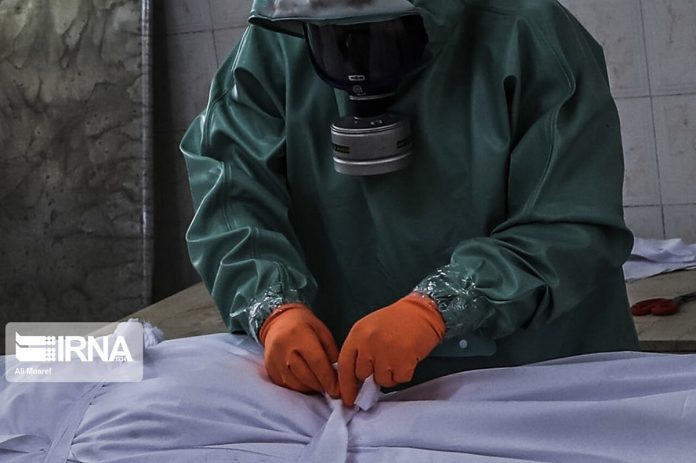
Covid kills 8 more patients in Iran; 134 new cases

COVID in Iran

“A sum of 134 new patients infected with COVID-19 have been identified in the country based on confirmed diagnosis criteria during the past 24 hours,” the Iranian Health Ministry’s Public Relations Center said on Tuesday, and added, “68 patients have been hospitalized during the same time span.”

It further announced that the total number of COVID-19 patients has increased to 7,610,333.

“Unfortunately, eight patients have lost their lives in the past 24 hours, increasing the number of the dead to 146,188,” the ministry noted.

It expressed satisfaction that 7,362,586 coronavirus patients have recovered or been discharged from hospitals so far.

The center went on to say that 464 cases infected with COVID-19 are in critical conditions.

It added that 56,486,098 coronavirus diagnosis tests have so far been carried out across the country.

The health ministry public relations warned that 11 cities are orange, 146 cities are yellow, and 291 cities are blue.

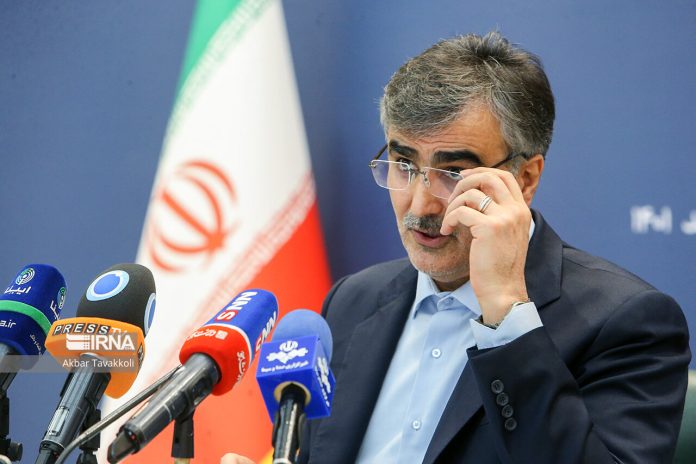
Central Bank chief: Facilitating de-dollarization Iran’s strategic policy

Mohammad Reza Farzin

Mohammad-Reza Farzin referred to the Asian Clearing Union (ACU) Summit, planned to be held in June in Tehran, saying the event will, among other things, focus on eliminating the US dollar from trade among the member states.

He added that de-dollarization can be achieved through swap trade as well as bilateral and multilateral monetary agreements between countries.

The US has long been using its national currency as an economic pressure tool to curb the development of independent states that refuse to follow its lead.

The coercive policy has led to a growing inclination on the global stage to eliminate the US dollar from their financial transactions.

Many countries hit by US sanctions have so far voiced support for de-dollarization, mainly Iran, Russia, and China.

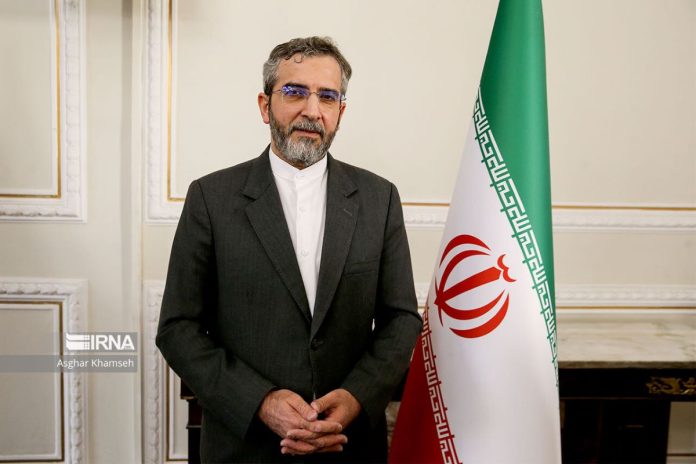
Chance to save nuclear deal won’t last forever: Iran to US, E3

Deputy Foreign Minister Ali Bagheri Kani

Bagheri Kani made the remarks in tweets on Tuesday, marking the fifth anniversary of the United States’ unilateral withdrawal from the Joint Comprehensive Plan of Action (JCPOA) in defiance of international criticisms.

“A critical reminder: 5 years ago, the US rendered a fatal blow to ‘rule of law at the international level’ by unlawfully withdrawing from JCPOA. Ever since, the US has failed to reverse its wrongful act. Iran’s legitimate remedial measures will continue,” he wrote.

“The full implementation of JCPOA (with effective sanctions lifting at its core) could be resumed, should the reneging party (and EU/E3) demonstrate credible political will to that effect. No opportunity is forever!” the official stressed.

Iran proved the peaceful nature of its nuclear program to the world by signing the JCPOA with six world powers. However, Washington’s exit in May 2018 and its subsequent re-imposition of sanctions against Tehran left the future of the deal in limbo.

Negotiations kicked off in the Austrian capital city of Vienna in April 2021, with the intention of removing anti-Iran sanctions and examining the United States’ seriousness in rejoining the accord.

The talks, however, have been at a standstill since August 2022 due to Washington’s insistence on not removing all the sanctions and its failure to offer necessary guarantees that it will not abandon the deal again.

Inflation rate in Iran hits record high under Raisi: Daily

Iran Meet Bazaar

Sobhe-No, which is said to be close to Iranian Parliament Speaker Mohammad Bagher Ghalibaf, reported that the inflation rate broke the highest record registered in the past decade.

The figures in April showed a declining trend, while research centers believe that the monthly inflation rate is significantly higher than the numbers released by the Iranian Statistical Center, it added.

The report said the inflation rates officially released seem to be lower than what people are dealing with in their every-day lives.

The administration of President Ebrahim Raisi has set the tackling of inflation and currency devaluation in Iran as priorities for the 2023-2024 budget presented to the Parliament.

Iran’s economy has been subject to draconian sanctions imposed by the US and other Western states.

The Raisi administration has placed a ‘look-to-the-East’ policy high on its agenda to offset the bans.