Russian forces start to demine Bakhmut
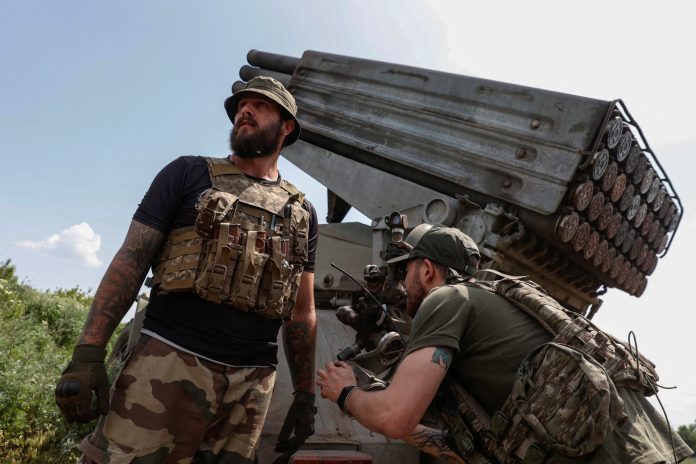
Russian forces in Bakhmut are starting to demine the city, according to the acting head of the self-proclaimed Donetsk People’s Republic.
“The preliminary demining of the city is going on,” Denis Pushilin told Russian television on Monday, in comments reported by state media TASS.
“The Russian forces that liberated the city are checking buildings for explosives. It is important for us to carry out a complete, thorough demining. This is very painstaking and difficult work, given the scale of the hostilities that took place there,” he added.
The head of the Wagner private military group, Yevgeny Prigozhin, confirmed on his Telegram channel that a demining operation had begun.
Prigozhin claimed Saturday to have taken complete control of the eastern city of Bakhmut, after a grinding, months-long offensive.
The next day, he claimed that his forces will leave the front line in eastern Ukraine entirely after “capturing all the territories they promised to capture, to the last square centimeter.”
Prigozhin stated that he’s handing over his positions to the Russian Ministry of Defense after Wagner forces leave
Ukraine, meanwhile, claims it is holding on to a small area in the western part of the city — and that its progress in areas surrounding Bakhmut has left it in a strong position.
Kremlin: Purpose of sabotage act in Belgorod is to divert attention from Bakhmut
The Russian Defense Ministry, the Federal Security Service (FSB) and the Border Service reported to President Vladimir Putin about an attempt to break into the Belgorod region by Ukrainian saboteurs, Kremlin spokesman Dmitry Peskov stated on Monday.
“The Ministry of Defense, the FSB and the Border Service reported to the Russian president … about an attempt by a Ukrainian sabotage group to break into the Belgorod region. Work is underway to push them out of the Russian territory and destroy this sabotage group. There are enough forces and resources on the spot,” Peskov said.
The purpose of sabotage acts, like the one in the Belgorod region, is to divert attention from what is going on in the city of Bakhmut and to minimize the political effect of the loss of city by Kiev, the official added.
Belgorod governor says Ukrainian “sabotage” group crossed border into Russian territory
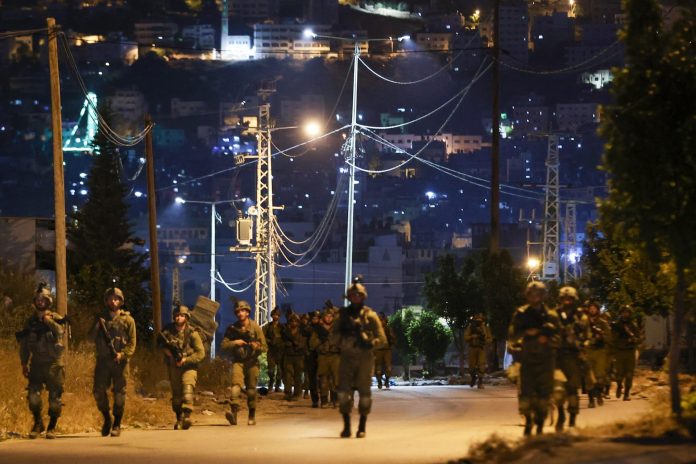
The governor of Russia’s Belgorod region said on Monday that “a sabotage and reconnaissance group” of the Ukrainian army had crossed into Russian territory.
Vyacheslav Gladkov stated that forces had entered the territory of the Graivoronsky district, which borders Ukraine.
“The armed forces of the Russian Federation, together with the border service, the National Guard and the FSB (Russia’s security service), are taking the necessary measures to eliminate the enemy,” Gladkov added.
Earlier on Monday, Gladkov claimed on Telegram that the district had been shelled by Ukrainian forces since 9 a.m. local time (2 a.m. ET), but added that no one had been injured.
The villages of Antonovka, Kozinka and Gora-Podol had been hit by shells or debris, Gladkov continued.
Strikes on the Belgorod region appear to have intensified in recent weeks, according to claims by Russian officials.
Earlier this month, Gladkov claimed two drones had detonated and fell over a residential area in the region. He added that no casualties were reported, but two residential buildings and a car were damaged.
Another drone was shot down by Russian air defense systems over the region, Gladkov said. The governor added there were no casualties and that response teams are assessing the aftermath on the ground.
Ukrainians still control some Bakhmut buildings, advancing on flanks: Deputy DM
Ukrainian forces are still in control of some buildings in the southwest of Bakhmut, two days after Russia claimed to have captured the city, according to Ukraine’s deputy defense minister.
Hanna Maliar also claimed that Kyiv’s troops are advancing on the city’s flanks.
“Yesterday, the Ukrainian Armed Forces retained control of certain industrial facilities and private houses in the southwestern area, the area where the aircraft [monument] is,” Maliar said on Ukrainian television, referring to a monument of an MiG-17 in Druzhba Square.
“Today, we still have control of this small part of the city. The fighting continues,” she added.
Maliar stated Russia had deployed “most of its forces” in the Bakhmut area.
In a separate post on Telegram, she said the two sides were still fighting for control of “the dominant heights on the flanks” north and south of the city’s suburbs.
Ukraine’s advance on the flanks had allowed it to shell the Russian troops in the city, she said.
“Due to our movement on the flanks on the north and south, we are able to shell and possibly carry out some destruction of the enemy. In some specific places controlled by the enemy in Bakhmut, they are forced to go on the defensive and hold it in some way, because it is not so easy,” she continued.
Maliar added that because Ukrainian troops “moved along the flanks and took the dominant heights there, our Armed Forces made it very difficult for the enemy to be in the place itself. In fact, we continue to advance. The intensity is somewhat reduced. At the same time, we continue to move along this path.”
She claimed that Russian troops are looking for any “sabotage groups” who might resist the occupation of the city in the areas they control.
Ukraine needs more air defence systems: Air force spokesperson
Ukrainian air force spokesperson Yurii Ihnat says the country needs more air defence systems to shoot down Russia’s ballistic missiles, according to a report by Ukraine’s national news agency, Ukrinform.
“Unfortunately, we do not have enough means against ballistics. We have Patriot systems on combat duty, but it is clear that this is extremely insufficient to cover all the necessary directions, all major cities, all important objects of critical infrastructure, because the enemy targeted precisely such objects in the Dnipro, military and infrastructure objects today,” the spokesman said.
China reacts to Zelensky participation in G7, saying Ukraine crisis should be resolved through dialogue
China’s foreign ministry said Monday that the Ukraine crisis should be resolved through dialogue, after Ukraine’s President Volodymyr Zelensky joined leaders of major democracies on Saturday at a summit in Japan.
“We have noticed President Zelensky participated in the G7 summit. China’s position on the Ukraine crisis is consistent. We always believe that the crisis should be resolved politically through dialogue and consultation,” Chinese foreign ministry spokesperson Mao Ning said in a regular briefing.
Mao added that China hopes countries, particularly G7 member countries, can work together with the international community to play a “constructive role in promoting the political settlement of the crisis.”
China plays peacemaker: Beijing has repeatedly attempted to portray itself as a peacemaker in the grinding conflict, despite its close ties with Russia.
Li Hui, Beijing’s newly appointed special envoy for the Ukraine war, met with Zelensky in Kyiv last week – the highest ranking Chinese official to travel to Ukraine since the start of Moscow’s devastating war.
However, some Western analysts have questioned whether China’s efforts to promote peace are genuine – and whether its vision of how the conflict might end aligns with Kyiv’s.
During Li’s visit, Ukraine’s foreign minister Dmytro Kuleba stressed that peace negotiations must be “based on respect for Ukraine’s sovereignty and territorial integrity.”
“Ukraine does not accept any proposals that would involve the loss of its territories or the freezing of the conflict,” Kuleba stated.
External electricity to Zaporizhzhia nuclear power plant restored
External electricity to the Zaporizhzhia Nuclear Power Plant (NPP) has been restored, the Ukrainian energy company Ukrenergo said in a statement Monday.
“Ukrenergo restored the power transmission line that supplies the Zaporizhzhia NPP. The station switches to power supply from the Ukrainian power system,” it said on Telegram.
The head of the United Nations’ nuclear watchdog had warned earlier Monday that the Zaporizhzhia NPP – the largest in Europe – was in an “extremely vulnerable” situation, after the facility lost its external power supply.
Generators had been used to provide electricity to the occupied power plant, Russia’s Rosatom state nuclear energy company had said.
The “radiation background at the site, in the sanitary protection zone and observation zone, is at normal levels,” Rosatom added.
The plant is held by Russian forces but mostly operated by a Ukrainian workforce. The plant has been the site of intense shelling since the start of the war.
Concerns around nuclear safety flared up again this month, after Russia began a large-scale evacuation of the area, amid rumors of Ukraine’s looming counteroffensive.
EU chief diplomat says hopes deliveries of fighter jets to Ukraine start soon
EU foreign policy chief Josep Borrell stated on Monday that he hopes that deliveries of fighter jets to Ukraine will start soon.
During the G7 summit in Japan, US President Joe Biden told his Ukrainian counterpart Volodymyr Zelensky that the US, along with its partners, was going to launch a training program for Ukraine’s military pilots on the fourth generation fighter aircraft including F-16s.
White House National Security Advisor Jake Sullivan said on Saturday that the time was yet not right for Kiev to have F-16s, adding that the US and its allies were going to decide which countries would supply these aircraft to Kiev and in what number.
“The training of the pilots has already started that is the first thing, and I hope that soon we could provide Ukraine with this kind of arms (F-16s),” Borrell said ahead of the EU Foreign Affairs Council.
Head of UN nuclear watchdog says Zaporizhzhia nuclear plant situation is “extremely vulnerable”
Ukraine’s Zaporizhzhia nuclear power plant is in an “extremely vulnerable” situation, the head of the United Nations’ nuclear watchdog said, after the facility once again lost its external power supply.
In a Twitter post Monday, International Atomic Energy Agency (IAEA) chief Rafael Grossi said the plant had “lost all external electricity” for the seventh time since Russia’s invasion of Ukraine began last year, “forcing it to rely on emergency diesel generators for power.”
“Nuclear safety situation at the plant extremely vulnerable. We must agree to protect plant now; this situation cannot continue,” he said.
The plant, Europe’s largest nuclear power station, is held by Russian forces but mostly operated by a Ukrainian workforce. The IAEA has repeatedly raised concerns over safety at the plant, which has been the site of shelling throughout the war.
On Friday, Grossi said negotiations were ongoing to secure the protection of the plant to “prevent the risk of a severe nuclear accident on the continent.”
Zaporizhzhia nuclear plant is using generators after external power cut: Russian energy firm
Generators are providing electricity to the occupied Zaporizhzhia nuclear plant in southern Ukraine after the facility “lost its external power supply,” Russia’s Rosatom state nuclear energy company said Monday.
“As a result of the disconnection of the Dniprovska 750 kV high voltage transmission line, Zaporizhzhia NPP lost its external power supply,” Rosatom said in a statement on Telegram.
“Auxiliary power has been supplied from diesel generators. The reason for the transmission line’s disconnection is being investigated,” it added.
The “radiation background at the site, in the sanitary protection zone and observation zone, is at normal levels,” Rosatom added.
The Zaporizhzhia plant, Europe’s largest nuclear power station, is held by Russian forces but mostly operated by a Ukrainian workforce.
A spokesperson for Ukraine’s state-owned energy firm Energoatom confirmed to CNN that auxiliary power generators are supplying the plant, adding it was the seventh blackout at the facility since Russia’s invasion began last year.
“The generators are working; they have a 10-day supply of fuel,” the Energoatom statement said.
Earlier Monday, a Ukrainian official stated technicians were working to restore power to the plant.
“The work continues, and electricity and water are gradually being restored in the city’s districts,” said Anatoliy Kurtiev, secretary of Zaporizhzhia city council.
The United Nations’ nuclear watchdog has repeatedly raised concerns over safety at the plant, which has been the site of shelling throughout the war. Earlier this month, the International Atomic Energy Agency described the situation there as “increasingly unpredictable,” after Moscow ordered the evacuation of residents from Russian-occupied areas close to the facility.
Washington’s approval of Ukraine’s strike on Crimea with Western weapons indicates that the US has no interest in peace, Russian Ambassador to Washington Anatoly Antonov said.
“Washington has totally bent G7 members to its will in regards to the conflict in Ukraine. Moreover, it has seriously tightened its approaches on two important issues. I am referring to the handover of F-16 planes to the Kiev regime, as well as unconditional approval of strikes on Crimea with American and other Western weapons. Such steps once again make it clear that the US has never been interested in peace,” he stated.
The envoy added that Russia will view strikes on Crimea “as an attack on any other region of the Russian Federation,” and called on the US to consider potential response measures from Russia.
Antonov also pointed out that Ukraine lack infrastructure to use F-16 planes, as well as the required number of pilots and maintenance crews.
According to Antonov, all this raises concerns about NATO’s future involvement in the conflict “when US planes will take off from NATO airfields, piloted by foreign ‘volunteers’”.
Earlier, US President Joe Biden told his Ukrainian counterpart Volodymyr Zelensky on the sidelines of the G7 summit in Hiroshima that the US and its allies will start training Ukrainian pilots in use of F-16 fighter. Previously, US National Security Advisor Jake Sullivan said that the US and its allies will discuss which states exactly will send F-16 planes to Ukraine. He also noted that F-16s are not on the list of priority shipments for preparation of Kiev’s counteroffensive.
Russian Foreign Ministry Spokeswoman Maria Zakharova pointed out that both Ukraine’s Bakhmut and Japan’s Hiroshima were destroyed by the official Washington, commenting on Ukrainian President Vladimir Zelensky’s comparison of the aftermath of the nuclear bombing of Hiroshima to hostilities in Bakhmut .
She pointed out that the Ukrainian president “compared Hiroshima, destroyed by an American nuclear bomb to Bakhmut ” on the sidelines of the G7 summit in Japan.
“Well done, because the White House orchestrated both things,” Zakharova said on her Telegram channel Sunday.
Wagner forces will leave the front lines in coming days: Private military chief
The chief of the Wagner private military group, Yevgeny Prigozhin, said Sunday that his forces will leave the front line in eastern Ukraine on May 25 after “capturing all the territories they promised to capture, to the last square centimeter.”
Prigozhin stated he is handing over his positions to the Russian Ministry of Defense after Wagner forces leave.
There has been no immediate public response from the defense ministry.
“We, as I said yesterday, are handing over our positions to the (Russian) Ministry of Defense and on the 25th we are leaving the combat zone,” the Wagner head said in an audio message on his Press Service Telegram page.
“Therefore, all the tasks that will continue to be carried out are carried out by the brave units of the Ministry of Defense, and we go out to the field camps,” he continued.
“From June 1, not a single Wagner PMC fighter will be at the forefront until we go through reorganization and equipment and training,” Prigozhin added.
He also dismissed Ukrainian President Volodymyr Zelensky’s insistence that the city of Bakhmut is not fully occupied by Russia as of Sunday.
“There is not a single Ukrainian soldier in Bakhmut,” Wagner’s chief claimed, adding, “And this is why we stopped taking any more POWs.”
Prigozhin has previously made brash or misleading statements about the war and his mercenaries’ role in it — and occasionally backtracked on them. He is also known to speak sarcastically.
Prigozhin’s announcement comes one day after Russia declared victory in the long-contested eastern city. The mercenary group claims it has seized complete control of the city after many months of fighting led by Prigozhin’s forces.
Ukraine, meanwhile, claims it is holding on to a small area in the western part of the city — and that its progress in areas surrounding the city has left it in a strong position.
Ukrainian army commander visits troops on front line near Bakhmut
Col. Gen. Oleksandr Syrskyi, the commander of the Ukrainian Ground Forces, visited troops on the front line near the embattled eastern city of Bakhmut.
Syrskyi “thanked and honored” the fighters in half a dozen brigades “who are destroying the enemy every day,” he said in a Telegram post Sunday. He did not specify exactly when he made the trip.
The commander stated Ukraine remains on the defensive in the city of Bakhmut, but said his troops are making progress on the city’s flanks.
“Despite the fact that we now control the outskirts of the city, the importance of its defense remains. In the future, this will provide us with opportunities to enter the city when the operational situation at the front changes,” he added.
While Russia and the Wagner private military company have declared victory in Bakhmut, Ukraine claims it is holding on to a small area in the western part of the city — and that its progress in areas surrounding the city has left it in a strong position.
Top general says Ukraine no longer holds a significant portion of Bakhmut, but fighters surround city
Ukraine’s military does not control much of the eastern city of Bakhmut, Ukraine’s army commander said Sunday, but its units are holding on to positions surrounding the city.
“Despite the fact that we now control an insignificant part of Bakhmut, the importance of its defense remains. It gives us the opportunity to enter the city in case the situation changes, and this will certainly happen,” Col. Gen. Oleksandr Syrskyi, commander of the Ukrainian Ground Forces, said in a statement shared by Ukraine’s military media center.
Syrskyi added his troops have been advancing along the city’s flanks and are now approaching the “tactical encirclement” of Bakhmut.
“This will allow us to control all high-rise buildings occupied by the enemy and gradually destroy them,” he stated.
“We are continuing our defense. The situation is difficult but under control,” Syrskyi continued.
The chief of the Russian private military company Wagner, Yevgeny Prigozhin, claimed Saturday that his forces had taken complete control of the city.
Ukrainian President Volodymyr Zelensky and other Kyiv officials have insisted Russia does not entirely occupy Bakhmut, saying Ukraine’s military is holding on to a small area on the city’s westernmost edge.
In reports from the front leading up to Wagner’s claim Saturday, Ukraine’s military had focused on progress made in areas immediately surrounding the city, while Wagner forces had said they were consolidating territory closer to the city center.
The activities of the Group of Seven is a key factor of the escalation of global problems as it cannot reflect interests of other centers of development, the Russian foreign ministry said on Sunday.
“It is obvious that the Group of Seven is a major factor of the aggravation of global problems. It cannot represent interests of other centers of development, especially countries of the Asia Pacific region, South Asia, the Middle East, Africa, and Latin America,” it added.