Russia intends to press UNSC for investigation into Nord Stream blast
Russian foreign ministry spokesperson Maria Zakharova says Moscow intends to again press the United Nations Security Council (UNSC) for an international investigation into the Nord Stream blast.
“We will now bring the UN Security Council back to an examination of this issue,” Zakharova told a regular news briefing.
She said three Western permanent members of the UNSC – the United States, Britain and France – previously blocked Russia’s efforts to secure a “transparent” investigation.
Unexplained explosions ruptured both Nord Stream 1 and the newly built Nord Stream 2 pipelines in September last year.
As the blasts happened in Swedish and Danish waters, both countries have said the explosions resulted from sabotage but have not yet singled out who is responsible.
Ukraine has liberated some territory around Zaporizhzhia: Senior official
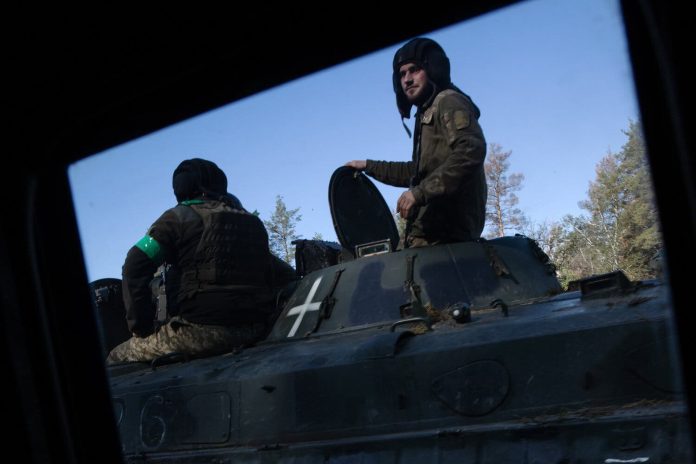
More than 100 square kilometers of territory have been liberated “in the Zaporizhzhia direction” over the last week in southeast Ukraine, a senior figure in Kyiv’s military has claimed.
“Over the past week, our troops have advanced into the enemy’s depths to 3 kilometers (1.8 miles) near Mala Tokmachka and 7 kilometers (4.3 miles) south of Velyka Novosilka,” said Oleksii Hromov, deputy chief of the Ukrainian general staff in a briefing in Kyiv.
He echoed other Ukrainian officials who claim that seven settlements in the area have been retaken — most of the settlements are small villages.
The Russian Defense Ministry says that its Vostok group of forces in the area had used “air strikes, artillery fire and heavy flamethrower systems” to repel two attacks in the area.
Meanwhile, Russia is attempting to advance in other areas, with assault operations in the Kharkiv region and along parts of the Donetsk front, but it is on the back foot around Bakhmut, Hromov said. His comments are consistent with claims made by other Ukrainian officials.
Death toll from Kakhovka dam collapse reaches 28
Russian authorities say the death toll from the Kakhovka dam collapse has reached 28 on both sides of the Dnipro River.
The Russian-installed head of the Kherson region, Vladimir Saldo, said on Thursday that the death toll had reached 18 in occupied areas and Ukrainian authorities reported 10 deaths.
The Ukrainian unit tasked with clearing up the damage said the water level in Kherson had fallen to 1.83 metres on Thursday from 2.13 metres the day before.
Russia and Ukraine have traded blame for an explosion at the dam this month, which led to widespread flooding.
Kremlin sees no ‘positive prospects’ in grain deal
The Kremlin says it saw no positive prospects regarding renewing the Black Sea grain deal as parts of the accord remained unfulfilled.
Kremlin spokesman Dmitry Peskov told reporters, “Work is ongoing, but to be honest we don’t see any particularly positive prospects. Everything that was agreed on regarding us has not been fulfilled.”
He added that the current situation could not go on indefinitely.
Elections to be held in annexed regions in September: Report
Regional elections will be held on September 10 in the four regions of Ukraine that Russia claims to have annexed, the RIA news agency reports.
The TASS news agency also quoted elections chief Ella Pamfilova as saying that Russia’s Ministry of Defence and Federal Security Service considered it possible to hold the votes in September.
Russia declared the partially occupied regions of Donetsk, Luhansk, Zaporizhia and Kherson as part of its territory after what Ukraine and its allies said were illegal referendums.
No decision has yet been made on the delivery of F-16 aircraft to Ukraine, NATO Secretary General Jens Stoltenberg stated on Thursday.
“I welcome the decision by several NATO Allies to provide a training of fighter pilots. This is important and it will enable us to, at a later stage, also make decisions to deliver fourth generation fighter aircraft like, for instance, the F-16s,” he said in Brussels.
Stoltenberg also commended “Denmark for playing a leading role to facilitate this agreement and also to offer to provide training for the Ukrainian pilots.”
“Exactly when decisions will be taken – it’s too early to say but the fact that training has started provides us with the option to also decide to deliver planes and then the pilots will be ready to fly them,” the NATO chief added.
Ukraine’s offensive is progressing “gradually”: Deputy DM
Ukrainian Deputy Defense Minister Hanna Maliar says Kyiv’s military offensive is continuing in several areas and is making what she called gradual progress.
Maliar told a briefing in Kyiv that on the southern front – which many expect to be the main focus of Ukraine’s counteroffensive – the “offensive continues in several directions, and the armed forces are also gradually but surely advancing there.”
But she cautioned that “the enemy is putting up strong resistance.”
“There, the armed forces are facing continuous mining of fields, the use of kamikaze drones, intense shelling, and the enemy certainly does not give up its positions easily. That’s why there are battles everywhere and a powerful confrontation,” Maliar said.
The minister added that “all defense forces are engaged in both offensive and defensive operations. That is, today we are conducting an offensive in several areas, and defense, because the enemy is also carrying out offensive actions.”
She also appealed for what she called “information discipline” to “give our soldiers the opportunity to deliver unpleasant surprises to the enemy.”
Maliar said the Russians were bringing additional reserves into the Bakhmut area, trying to prevent the advance of Ukrainian forces.
But she stated the Russians had been unable to take more ground, and claimed Ukrainian forces had advanced three kilometers (almost two miles) in the Bakhmut area over the last ten days.
NATO believes it would be premature to make any changes in the alliance’s nuclear configuration due to Russia’s actions, but will continue to monitor the situation, Secretary General Jens Stoltenberg said on Thursday.
“So far, we haven’t seen any changes in the [Russian] nuclear posture that requires any changes in our [NATO] posture,” Stoltenberg stated ahead of a meeting of NATO defense ministers in Brussels. “And we will continue to closely monitor what is needed and <…> how Russia is changing their nuclear posture.”
He slammed Russian statements about the deployment of nuclear weapons in Belarus as “reckless and dangerous.”
“Russia must know that a nuclear war cannot be won and must never be fought,” the NATO chief pointed out.
Official: Kiev dismisses any opportunities for talks with Moscow
Kiev rejects any opportunities for negotiations with Moscow to please the Western countries, Russian Foreign Ministry spokeswoman Maria Zakharova told a news briefing on the sidelines of the St. Petersburg International Economic Forum (SPIEF) on Thursday.
“The Kiev regime systematically and fundamentally rejects any opportunity for negotiations [with Russia] to please the West,” she said.
As she dwelt on Russia’s reaction to the peace initiatives for resolving the Ukrainian crisis Zakharova stated that “the Kiev regime has blocked all opportunities for negotiations at the legislative level.”
“I am not sure that there has ever been such a precedent in the world of any regime, any ruling elite prohibiting itself from negotiating with someone else. This has happened in Ukraine,” Zakharova stressed.
Russia’s hypothetical use of nuclear weapons may happen exclusively in extraordinary circumstances and will be possible only for defensive purposes, Russian Foreign Ministry spokeswoman Maria Zakharova told a news briefing on the sidelines of the St. Petersburg International Economic Forum (SPIEF) on Thursday.
“Russia’s nuclear deterrence policy is strictly defensive. The hypothetical use of nuclear weapons is clearly limited by extraordinary circumstances within the framework of strictly defensive purposes,” she said.
Zakharova pointed out that Moscow was fully committed to the principle of the inadmissibility of nuclear war.
“There can be no winners in it. It must never be unleashed. We consistently call on all other parties to the joint statement of the leaders of the five nuclear states on the prevention of nuclear war and the inadmissibility of an arms race to adhere to these postulates,” Zakharova stressed.
At the same time, she did not rule out that Russia’s decision to suspend the strategic arms reduction treaty (New START) could be reversible.
“In this case, yes, only if Washington shows the political will and exerts efforts to ease tensions and de-escalate and create conditions for the resumption of the full functioning of the treaty,” Zakharova added.
US will continue to provide Ukraine with “urgent capabilities” needed to withstand Russia
The United States and NATO allies will continue to provide Ukraine with the “urgent capabilities” that it needs to combat Russian aggression, US Defense Secretary Lloyd Austin said Thursday at the NATO Defense Ministers meeting in Brussels, Belgium.
“Ukraine still stands well positioned for the challenges ahead. The United States is proud to stand alongside some 50 nations of goodwill to provide Ukraine with the training and equipment to help it succeed on the battlefield,” stated Austin, adding that allies will continue “to stand up for the values of sovereignty.”
“Throughout the Kremlin’s vicious war of choice, Ukrainian forces have shown outstanding bravery and skill and Ukraine’s fight is a marathon and not a sprint,” Austin continued, noting, “Make no mistake, we will stand with Ukraine for the long haul.””
Austin also thanked the Netherlands and Denmark, as well as Germany and Poland for spearheading those coalitions.
“We applaud the leadership that has gone into forging two coalitions — one dedicated to fighter aircraft training, and another to provide and sustain Leopard tanks,” Austin added.
The Netherlands and Denmark will give an update on Thursday regarding the progress of the program to train Ukrainian pilots on fourth-generation aircraft, including F-16s, Austin said.
Germany and Poland will also brief NATO defense ministers on the next steps in sustaining Ukraine’s Leopard tanks, originally made by Germany and provided to Ukraine by various European countries.
NATO support for Ukraine “makes a difference” on the battlefield: Defense alliance chief
NATO’s support for Ukraine is making a difference on the battlefield, the bloc’s Secretary-General Jens Stoltenberg said Thursday ahead of a key meeting in Brussels.
The gathering of NATO defense ministers in the Belgian capital on Thursday and Friday comes at a “critical” time, Stoltenberg stated.
“Ukraine has launched a counteroffensive, what we see is fierce fighting. It’s still early days but we also see that Ukrainians are making gains and that Ukraine is able to liberate occupied land,” he added.
“This is due to the courage, the bravery, the skills of Ukrainian soldiers but it also highlights and demonstrates that the support NATO allies have been giving Ukraine now for many, many months actually makes a difference on the battlefield as we speak,” he continued.
Stoltenberg said one of the main issues NATO ministers will address is how to step up support to Ukraine and further strengthen NATO’s deterrence and defense, ahead of the upcoming NATO summit in Vilnius, Lithuania.
At the July summit, NATO “will have new regional plans, a new force model, a new force structure and also address the need to strengthen our pledge to invest more in defense,” Stoltenberg added.
The matter of Ukrainian membership in NATO is one of several issues leaders will tackle when they meet in Vilnius. Also up for discussion are new defense spending commitments and a successor to Stoltenberg, who is planning on leaving his post in the autumn.
Russia launched multiple missiles and drones overnight: Ukraine’s air force
Russia launched fresh airstrikes across Ukraine overnight, with air defenses scrambling to respond, Ukraine’s air force said.
Moscow’s forces launched four Kh-101/Kh-555 cruise missiles at the central city of Kryvyi Rih from the Caspian Sea, one of which was shot down, the air force announced.
A 38-year-old man was wounded after two industrial sites were struck in the city, Ukrainian military officials stated earlier.
Russia also launched 20 attack drones, all of which were destroyed by the air force’s southern and eastern air commands, the air force added.
Ukraine’s army claim some success as fighting rages in south and east
Ukrainian forces are claiming some success as they continue their offensive in the south and east of the country, with much of the fighting taking place near the embattled eastern city of Bakhmut, an army spokesman said.
“In the Bakhmut direction, Ukrainian troops conducted assault operations in the Rozdolivka-Krasnopolivka and Berkhivka-Yahidne [front lines] and were successful,” stated Andriy Kovalov, spokesman for the General Staff of the Armed Forces of Ukraine.
In an update, the General Staff said Russia continues to focus its primary efforts in the Donetsk region on Lyman, Bakhmut, Avdiivka and Mariinka, with at least 49 combat engagements taking place Wednesday.
“Ukrainian defenders repelled all enemy attacks in the vicinity of the city of Mariinka,” the General Staff claimed.
In the southern Zaporizhzhia region, “fighting continues in the area of Makarivka village in the Berdiansk direction,” added Kovalov.
Fighting is also raging in the vicinity of Novodanylivka and Novopokrovka villages, he said.
“Not a single position has been lost where Ukrainian soldiers are defending,” Kovalov claimed.
African leaders head to Ukraine, Russia on ‘peace mission’
A group of African leaders is expected to arrive in Poland Thursday on their mediation mission in the Russia-Ukraine war, Uganda’s president has said in a statement.
“I was supposed to have joined them tomorrow [Thursday]. I have now sent an official message that, on account of my continued corona[virus] status, I cannot join the group,” President Yoweri Museveni said in a statement on Twitter.
Museveni added six African presidents from Comoros, Egypt, South Africa, Senegal, Republic of Congo, and Zambia are supposed to arrive in Poland on Thursday to take the train trip to Kyiv to mediate in the Russia-Ukraine war.
The African leaders want to persuade Ukraine and Russia into talks that could end the war.
Last week, South African President Cyril Ramaphosa spoke with Russian counterpart Vladimir Putin over the phone and briefed him about the “African leaders’ peace mission.”
“President Putin has welcomed the initiative by African heads of state and expressed his desire to receive the peace mission,” a statement from Ramaphosa’s office said last week.
“From Poland, they will go to Russia to meet with the Russians. I wish the mission success,” Museveni stated in his statement.
Fierce battle ongoing on Ukraine’s front lines: Deputy DM
There is a “serious confrontation ongoing” on Ukraine’s front lines, Ukraine’s deputy defense minister said Wednesday, describing it as a “fierce battle.”
“We’ve got an offensive in several directions, but the enemy also conducts an offensive in several directions. So as of now we are simultaneously on the defense and [on the] offensive but in different directions,” Hanna Maliar told Ukrainian national TV.
Russian forces are trying to stop Ukraine’s offensive by increasing shelling and aviation strikes, Maliar continued, adding, “We also see the enemy actively using anti-tank guided missiles and self-destroying drones in attempts to stop our offensive and inflict various damage.”
Ukraine’s troops are experiencing “difficulties” advancing in the south as “the fields are mined,” she added, saying the troops are advancing “slowly but surely.”
In an update that echoed Maliar’s description of the fighting, the General Staff of the Armed Forces of Ukraine said Russia had carried out “37 air strikes and fired 32 times from multiple launch rocket systems at Ukrainian troops’ positions and settlements” in the past day.
Ukrainian archaeological treasures at risk after Nova Kakhovka dam collapse: Officials
Top officials in Kyiv stated that valuable cultural heritage objects were destroyed during the Nova Kakhovka dam collapse in southern Ukraine last week, in one of the largest industrial disasters for Europe in decades.
The Ministry of Culture and Information Policy of Ukraine said Wednesday that “hundreds of cultural heritage objects” were either “damaged, flooded, or, like the power plant itself, deliberately destroyed.”
Kyiv and Moscow have traded accusations over the dam’s destruction, without providing concrete proof that the other is culpable. It is not clear whether the dam was deliberately attacked or whether the breach was the result of structural failure.
“However, perhaps the greatest loss may be the priceless archaeological heritage of Ukraine,” the ministry added.
The explosion of the dam and erosion and flooding of the nearby Dnipro River “caused a critical situation with the protection of archaeological heritage in the region,” it noted.
The ministry claimed “valuable items” are at risk of being looted because some people are using metal detectors to try to locate objects in the southern regions of Zaporizhzhia, Kherson, Mykolaiv, Dnipropetrovsk and Odesa.
“Archaeologists, museum workers, and law enforcement officials will join forces to monitor, record damage and perform other urgent work,” the ministry said.
The ministry added that specialists have been monitoring water levels along the reservoir, where water levels are gradually receding after the collapse caused flooding in Kherson.
NATO allies continue high-stakes talks on when and how Ukraine could join alliance ahead of summit
President Joe Biden and his team are in the midst of a high-stakes conversation with fellow NATO members on how and when Ukraine may join — a debate that could expose strains in the alliance ahead of a summit.
The matter of Ukrainian membership in NATO is one of several issues leaders will tackle when they meet in the Lithuanian capital Vilnius in mid-July. Also up for discussion are new defense spending commitments and a successor to Secretary General Jens Stoltenberg, who is planning on leaving his post in the autumn.
Yet it is the issue of Ukrainian membership that will prove one of the biggest flash points for the group, which has managed to remain remarkably united amid Russia’s unprovoked invasion.
At past NATO summits, the allies have produced a joint declaration outlining their shared views. A failure to reach a consensus this year would be hugely consequential and would signal trouble for the unity of the alliance as the war in Ukraine continues.
Some allies, particularly those in Eastern Europe who are located closer to Ukraine and Russia, have advocated for a more concrete path for Kyiv to join the defensive alliance once the war ends.
Other European officials, particularly those in western and southern Europe, have argued an expedited entrance of Ukraine into NATO could be too provocative and that it could amount to an extremely risky gamble for the alliance even if there is an end to the fighting, particularly if Russia still stakes claim over Ukrainian territory.
Biden and members of his administration have remained committed to the alliance’s current posture — which states Ukraine will eventually join NATO but without any certainty of when.
The divide has prompted urgent discussions ahead of the summit. The result of the conversations could determine whether Ukrainian President Volodymyr Zelensky attends.
“If we are not acknowledged and given a signal in Vilnius, I believe there is no point for Ukraine to be at this summit,” he told the Wall Street Journal earlier this month.
The invasion and its aftermath have increased pressure on all NATO members to provide Ukraine with some type of security guarantee going forward, even as there remains disagreement on exactly what they might look like.
US NATO ambassador: “Russia doesn’t get a voice or a veto” on Ukraine’s bid to join alliance
Washington’s top diplomat to NATO said on Wednesday that the alliance supports Ukraine’s aspirations to join the group, adding Russia doesn’t have a say on NATO’s open-door policy.
“Russia doesn’t get a voice or a veto on NATO’s open-door policy. We support Ukraine’s aspirations, its Euro-Atlantic aspirations, to fully integrate into Euro Atlantic institutions,” Ambassador Julianne Smith said at a media briefing in Brussels ahead of this week’s meeting of NATO defense ministers.
She also said the allies are looking forward to welcoming Ukrainian President Volodymyr Zelensky at the next NATO summit in the Lithuanian capital Vilnius in July.
“We think we’ll have a nice package to deliver (to Ukraine) at the summit,” the ambassador added.
NATO allies are working on aiding Ukraine not just with their “current efforts to defend their territorial integrity, but (with) practical support tied to longer-term questions, longer-term modernization issues that they will be grappling with, questions of standardization, interoperability, and thinking about what type of force they will have in the future.”
“But at the summit, we’ll have more to say about our longer-term practical assistance,” the ambassador added.
Smith also addressed Sweden’s intent to join NATO, which is currently being blocked by Turkey. Sweden has sought to become a part of the alliance in light of Russia’s full-scale invasion of Ukraine.
“The message here coming both from the United States and many other allies is that we very much hope that Sweden will become the 32nd member of the alliance, either before or by Vilnius. In our view, Sweden is ready,” she said.
Nord Stream investigation is “entering final phase”: Swedish prosecutor
The investigation into who was behind the Nord Stream pipeline sabotage is entering its “final phase,” lead prosecutor Mats Ljungqvist told Swedish radio on Wednesday.
“I do think we may possibly be entering a final phase in this case,” Ljungqvist said, adding, “I hope that at least this autumn, we can take a stand on a decision on the so-called indictment issue.”
Swedish and Danish authorities have been investigating four holes in the Nord Stream 1 and 2 pipelines that link Russia and Germany via the Baltic Sea, which investigators believe were caused by explosives last year.
“I can say that the explosive has a special composition, from which it is possible to draw certain conclusions [about the perpetrator],” Ljungqvist said, adding that he has met the German prosecutor investigating the sabotage.
His statement comes a day after The Netherlands’ public broadcaster NOS reported Dutch military intelligence warned the CIA about an alleged Ukrainian plan to blow up the Nord Stream pipelines three months before they were hit.
Ukraine has denied any involvement in the sabotage following a New York Times report citing intelligence that a “pro-Ukrainian group” may have been behind the attack.
Erdogan says Turkey will not change approach to Sweden’s NATO membership at July summit
Turkey should not be expected to change its approach to Sweden’s NATO membership bid ahead of the alliance’s summit in Lithuania unless Stockholm fulfills its obligations, Turkish President Recep Tayyip Erdogan said on Wednesday.
“This NATO summit will take place in Vilnius. I hope I will take part in it, unless an extraordinary situation arises. These expectations of Sweden do not mean that we will meet these expectations. In order for us to meet these expectations, first of all, Sweden must fulfill its obligations,” Erdogan told reporters on a return flight from Azerbaijan.
Sweden’s obligations, as laid out by Erdogan to NATO chief Jens Stoltenberg during their meeting in Istanbul, is to “destroy the activities of this terrorist organization,” the Turkish leader said, meaning the Kurdistan Workers’ Party, which Ankara has designated a terrorist organization.
“While Stoltenberg was saying these words to us, unfortunately, terrorist demonstrations were taking place on the streets of Sweden at that very moment,” Erdogan continued, adding that Turkey “cannot approach this issue positively in such a situation.”