Monday, December 29, 2025
Home Blog Page 138

One million Syrian refugees returned home since al-Assad’s overthrow: UN

“In just nine months, one million Syrians have returned to their country following the fall of the Bashar al-Assad government on 8 December 2024,” the UN refugee agency (UNHCR) said in a statement.

The agency added that 1.8 million people displaced within Syria during its nearly 14 years of war had also returned to their areas of origin.

Nearly half of Syria’s pre-war population of 13 million was displaced by the conflict that began after the Assad government’s crackdown on peaceful antigovernment protests as part of the Arab Spring protests in 2011.

While describing the mass returns as “a sign of the great hope and high expectations Syrians have following the political transition in the country,” UNHCR said many of those heading back are struggling to rebuild their lives.

“Destroyed homes and infrastructure, weak and damaged basic services, a lack of job opportunities, and volatile security are challenging people’s determination to return and recover,” the agency added.

According to UNHCR, more than seven million Syrians remain displaced inside the country and more than 4.5 million are still abroad. It urged greater investment in stabilisation efforts and increased support for vulnerable families.

“The international community, private sector, and Syrians in the diaspora must come together and intensify their efforts to support recovery and ensure that the voluntary return of those displaced by conflict is sustainable and dignified and they are not forced to flee again,” stated Filippo Grandi, the UN High Commissioner for Refugees.

A recent UNHCR survey found that 80 percent of Syrian refugees in Jordan, Lebanon, Egypt and Iraq want to return home one day, with 18 percent saying they hope to do so within the next year.

“They have endured a lot of suffering in the past 14 years and the most vulnerable among them still need protection and assistance,” Grandi said, adding, “Sustained support to hosting countries like Jordan, Lebanon and Türkiye is equally critical to ensure returns are voluntary, safe and dignified.”

UNHCR warned that funds for humanitarian operations are dwindling. Inside Syria, only 24 percent of the required funding is available, while for the wider regional Syria response, just 30 percent of the requested funds have been provided.

“This is not the time to cut back support for the Syrian people and their push for a better Syria for them and the region,” the agency noted.


President Pezeshkian warns dialogue will be meaningless if snapback is activated

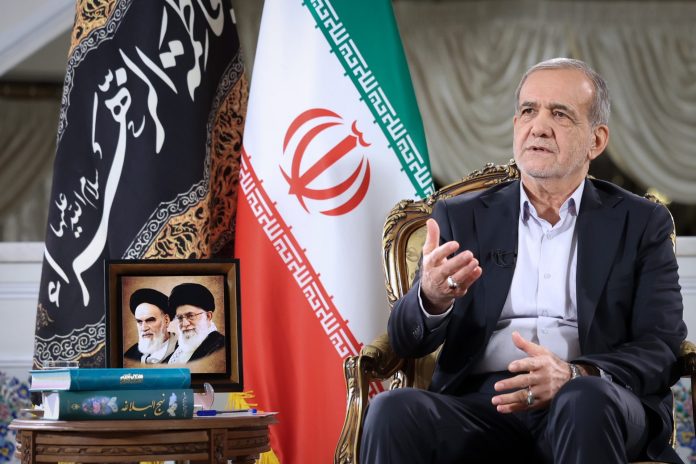
In a meeting with Norwegian Prime Minister Jonas Gahr Store on the sidelines of the 80th session of the UN General Assembly in New York on Wednesday, President Pezeshkian stated that Western countries should demonstrate their commitment to their obligations for any meaningful understanding to emerge, adding that the current situation has arisen due to the West’s failure to uphold its commitments under the 2015 nuclear deal, also known as the Joint Comprehensive Plan of Action (JCPOA).

The president reiterated that the Islamic Republic of Iran has never sought nuclear weapons, aligning this stance with the country’s fundamental beliefs and clear political approach.

He also attributed the West’s skepticism regarding Iran’s peaceful nuclear program to misunderstandings and partly to misleading propaganda from the Israeli regime.

Prime Minister Store responded by affirming the Western countries’ commitment to resolving issues, stating that efforts should focus on finding solutions to concerns, which could help prevent the triggering of the snapback mechanism.


Yemen’s Houthis conduct drone attack on Israel’s Eilat, wounding 22

Yemen Houthi

A military statement said the drone “fell in the area of Eilat” on the Red Sea coast on Wednesday after air defences failed to intercept it.

“The public is requested to continue to follow the Home Front Command’s defensive guidelines and further guidelines issued,” it wrote on Telegram.

Yemen’s Houthi group has claimed responsibility for the attack.

“The operation was carried out with a number of drones and successfully achieved its objectives,” Yahya Saree, a Houthi spokesperson, told Al Jazeera Arabic.

“We attacked several Israeli enemy targets in the Umm al-Rashrash and Bir al-Saba’ [now named Beersheba] areas.”

The Magen David Adom emergency medical service announced that two people were seriously injured with shrapnel wounds while others sustained moderate to minor injuries.

Police said bomb disposal experts were examining the nature of the object and warned the public to avoid approaching the crash site or touching any remnants that may contain explosives.

In a statement, Israeli Prime Minister Benjamin Netanyahu stated that any attack on “Israeli cities” will be met “with a painful blow to the Houthi regime”.

Netanyahu added he has asked the army to consider ways to respond to the air threats.

Israeli Defence Minister Israel Katz also threatened the Houthis, saying they will “learn the hard way”.

“The Houthi terrorists refuse to learn from Iran, Lebanon, and Gaza,” Katz wrote on X, listing countries bombed by Israel in recent months.

“Whoever harms Israel will be harmed sevenfold,” he added.

Since Israel launched its war on Gaza in October 2023, the Houthis have carried out drone and missile attacks against it. They have also targeted vessels linked to Israel in the Red Sea, disrupting maritime trade passing through the water channel.

Houthis said they will stop their attacks when a ceasefire is agreed in Gaza, where more than 65,000 Palestinians have been killed in an Israeli offensive called genocide by a UN inquiry panel. Netanyahu faces an arrest warrant for war crimes issued by the International Criminal Court, but his Western allies have shielded him so far.

Most of the dozens of Houthi missiles and drones launched have been intercepted or fallen short of the occupied territory.

Israel has carried out numerous attacks across Yemen, including on the capital, Sanaa. Earlier this week, Israel was accused of killing 31 journalists in Yemen.

Late last month, Israel assassinated Houthi Prime Minister Ahmed Ghaleb al-Rahawi in an air strike in Sanaa. The group promised “vengeance” for his death and the deaths of almost half of his cabinet.


President Pezeshkian slams US-Israeli attacks against Iran at UN speech

The Iranian president told the audience at the UN General Assembly in New York on Wednesday that it was a “heavy blow” to international trust and regional peace.

The president said the attacks, which struck Iranian cities, homes, and infrastructure while diplomatic talks were ongoing, represented “a grave betrayal of diplomacy and a weakening of efforts to establish peace and stability.”

“What you see in these images of killings and crimes is the massacre of children and women. It is a black record of slaughter carried out by Israel in our country against our people, including women, children, and youth, under the name of preserving peace and security in the region,” he added, holding out pictures of the victims.

Pezeshkian underscored Iran’s resilience, saying the country was “the world’s oldest continuous civilization” that has withstood the storms of history.

“Despite the harshest, longest, and heaviest economic sanctions, psychological warfare, media campaigns, and constant efforts to sow division, the Iranian people, from the very first bullet fired at their soil, stood united behind their brave armed forces, and today they continue to honor the blood of their martyrs,” he underlined.
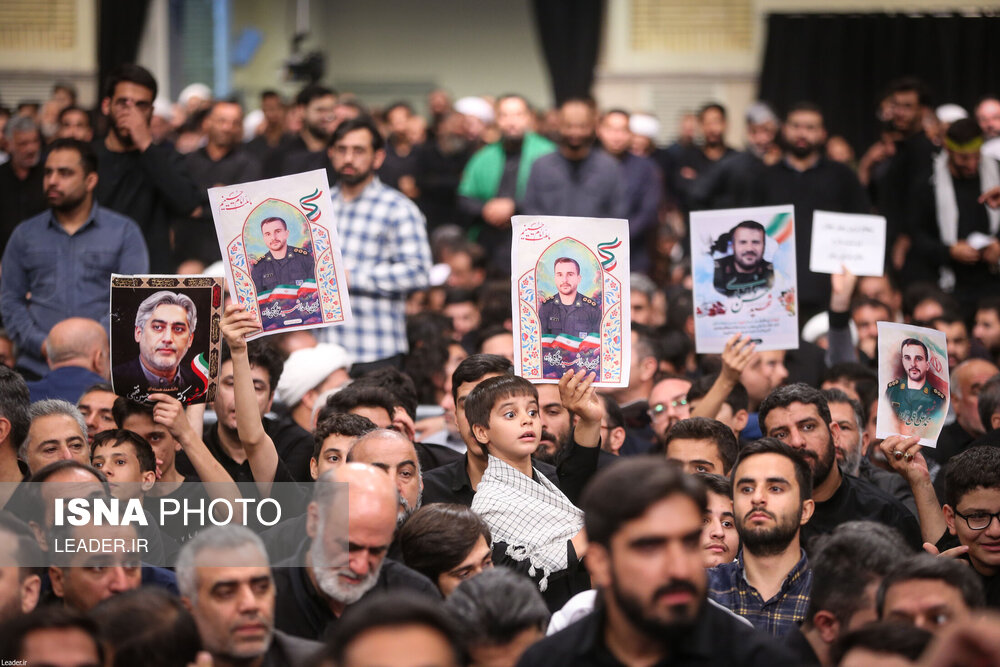
The Iranian president said the strikes killed commanders, women, children, scientists, and national elites, while also damaging internationally-monitored facilities. He said the strikes constitute “a black record of crimes” carried out under the pretext of preserving regional security.

“Assassination of state officials, systematic targeting of journalists, and the killing of individuals solely because of their knowledge and expertise are flagrant violations of human rights and international law,” the Iranian president told delegates from around the globe.

Israel and the United States have shed the blood of thousands of innocent people in Gaza with the same approach, he added.
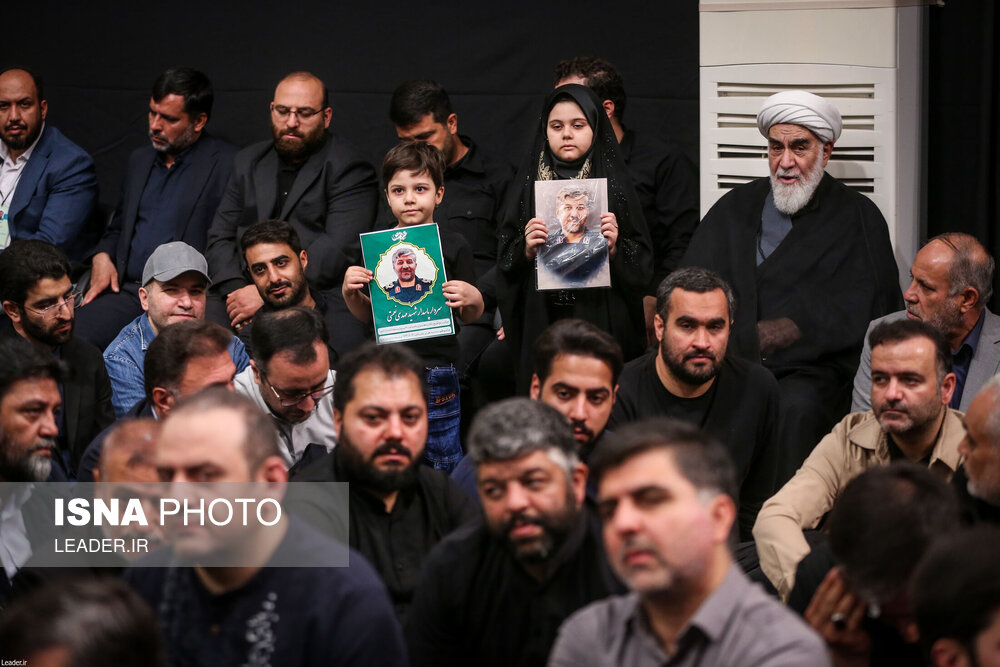
Pezeshkian accused Washington and Tel Aviv of deliberately undermining negotiations through military escalation.

The president stated that the foundation of all divine religions and human conscience is the golden rule: “Do not do unto others what you would not want done unto yourself.”

“Let us look at the past two years: the world has witnessed genocide in Gaza; the destruction of homes and repeated violations of sovereignty and territorial integrity in Lebanon; the devastation of Syria’s infrastructure; attacks on the people of Yemen; the forced starvation of emaciated children in their mothers’ arms; the stealthy assault on the sovereignty of nations, violations of states’ territorial integrity, and the open targeting of national leaders.”

“Would you accept such things for yourselves?”

The Iranian president warned that if such “dangerous violations” go unchecked, they will spread worldwide.

The president denounced what he called the “absurd and delusional” plan for a “Greater Israel,” accusing Israel of pursuing aggression and apartheid under the guise of “peace through power.”

“Today, after nearly two years of genocide, mass starvation, the continuation of apartheid inside the occupied territories, and aggression against neighboring countries, the absurd and delusional plan of a ‘Greater Israel’ is being shamelessly declared at the highest levels of this regime.”

He stated that such policies amount to “bullying and coercion — not peace, and not power.”

The Iranian president outlined an alternative vision for West Asia, calling for a “strong region” built on collective security, cultural diversity, joint investment in infrastructure and science, energy security, environmental protection, and the non-negotiable principles of sovereignty and territorial integrity.

“We seek not peace through force, but power through peace.”

He also reiterated Iran’s longstanding support for a West Asia free of weapons of mass destruction, criticizing nuclear-armed states for violating the Non-Proliferation Treaty (NPT) while pressuring Iran with “baseless accusations.”

“But we want our powerful Iran, alongside powerful neighbors, in a strong region with a bright future,” Pezeshkian said.
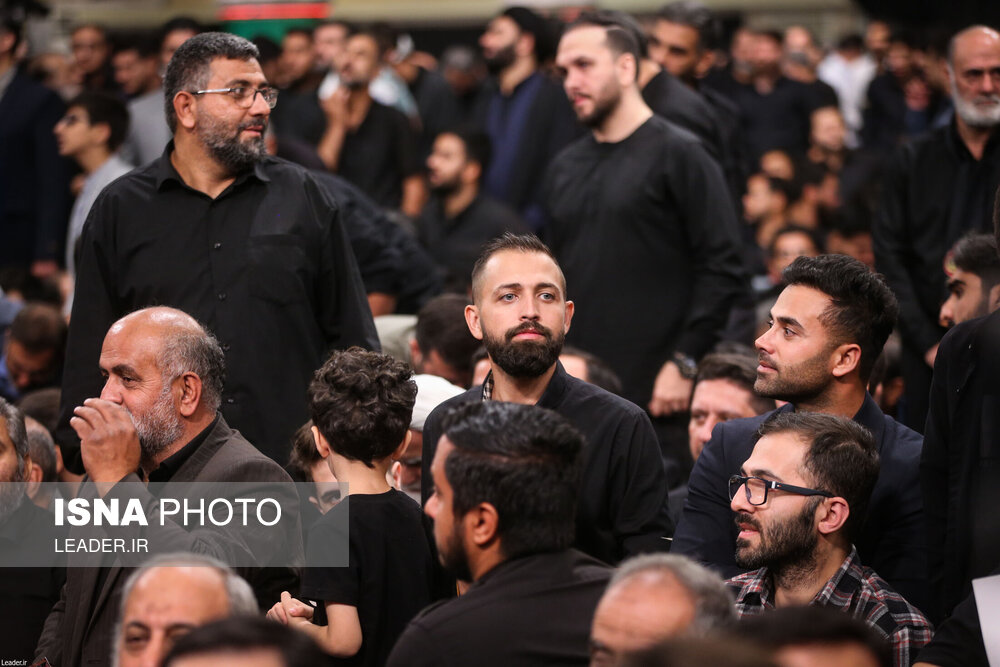
“We stand against mega projects that impose genocide, destruction, and instability on the region, and we defend a shared and hopeful vision: a vision that guarantees collective security through genuine mechanisms of defensive cooperation and joint responses to threats… a vision that seeks not ‘peace through force’ but ‘power through peace.’”

The president added in such a rich region, “there is no place for killing and bloodshed.”

“That is why, for many years, my country has been one of the staunchest supporters of creating a region free of weapons of mass destruction.”

“Yet those who themselves possess the largest nuclear arsenals, and who, in blatant violation of the NPT, make their weapons ever more lethal and destructive, have for years subjected our people to pressure with baseless accusations,” he said.

Turning to the standoff over the so-called snapback mechanism of the 2015 nuclear deal, Pezeshkian denounced three European countries for attempting to reinstate annulled UN Security Council sanctions against Tehran, calling the move “illegal” and carried out “at the order of the United States.”

“Last week, three European countries, after failing, through a decade of broken promises and later by supporting military aggression, to bring the proud people of Iran to their knees, at the order of the United States, attempted through pressure, bullying, imposition, and blatant abuse to reinstate the annulled UN Security Council resolutions against Iran,” he added.

He accused the European powers of abandoning goodwill, bypassing legal obligations, and misrepresenting Iran’s remedial steps after the US withdrawal from the 2015 nuclear deal.

“They falsely presented themselves as ‘well-intentioned parties’ to the agreement, and labeled Iran’s sincere efforts as ‘insufficient.’ All of this was aimed at destroying the very JCPOA they themselves once called the greatest achievement of multilateral diplomacy,” he said.

The president added the move, which also faced opposition from some Security Council members, lacks international legitimacy and “will not be welcomed by the global community.”

He reiterated that Iran has never pursued nuclear weapons, citing a religious decree by Leader of the Islamic Revolution Ayatollah Seyyed Ali Khamenei.

Calling for a new approach to security, he urged world leaders to embrace “confidence building, mutual respect, and regional convergence” rather than force.

“I invite everyone to practice listening to one another instead of raising voices; to reconsider the intellectual foundations of polarization and political violence that today afflict not only the international community but also create tension and turmoil within societies; and to embrace, as the common ground of all beliefs and cultures, the principle of not imposing on others what we would not accept for ourselves.”

The Iranian president concluded by appealing for the restoration of the credibility of international institutions and the creation of a regional security framework in West Asia.

“Let us restore and rebuild the credibility of international institutions and legal mechanisms, and commit to establishing a system of regional security and cooperation in West Asia.”


Iran announces seizure of massive Israeli weapons intelligence archive

Iranian Intelligence Minister Esmail Khatib

Khatib described the cache as “millions of pages of diverse and valuable information” concerning the Israeli regime.

According to the intelligence minister, these documents encompass ongoing and past weapons programs, including nuclear refurbishment projects, as well as joint initiatives with the United States and certain European nations.

Khatib underlined that 189 nuclear and military specialists in Tel Aviv have been identified through this intelligence, and detailed records of researchers, senior project managers, affiliated companies, and international collaborators are included.

He further said that the operation also involved the identification, prosecution, and execution of internal traitors, underscoring Iran’s vigilance against espionage within its borders.

The intelligence minister described the successful transfer of these pre-planned documents as only a part of a broader combination of intelligence and operational measures executed by Iran.

The next critical phase, he noted, involves the country’s intelligence personnel processing the data and mapping connections among human and organizational networks linked to Israel’s nuclear projects, both domestically and abroad.

According to the Iranian intelligence minister, this analytical stage is as important as the initial infiltration and transfer of intelligence.

The accumulated data facilitates the identification of key figures and the relationships between them, providing strategic insight into the Zionist regime’s weapons programs, Khatib said.

He then reaffirmed that Iran remains actively pursuing other espionage cases and warned that internal weaknesses will not be tolerated.

Syria, Israel close to ‘de-escalation’ agreement: US envoy

The prospective agreement would stipulate that Israel will halt its attacks in exchange for Syria’s commitment not to move heavy equipment and machinery near the Israeli border, Barrack told reporters on the sidelines of the UN General Assembly, according to Syria’s state-run Al-Ikhbariya TV.

The US envoy pointed out “good faith” in both parties throughout the process, as the anticipated pact would serve as the first step toward a security agreement.

Barrack added that the deal was intended to be finalized and announced by US President Donald Trump this week; however, insufficient progress and the Jewish holiday of Rosh Hashanah have hindered its completion.

US President Donald Trump hoped to finalize and announce the agreement this week, but it has been delayed due to insufficient progress, Barrack continued.

Israel and Syria have been in talks, which reportedly focused on an Israeli-drafted security deal. Prime Minister Benjamin Netanyahu earlier claimed progress in talks with Damascus.

Since Bashar Assad’s ouster, Israel has repeatedly carried out air raids in Syria and expanded its control, even as Damascus refrained from hostile action.

Israel has occupied most of the Syrian Golan Heights since 1967 and, after Assad’s fall, seized the buffer zone and declared the 1974 disengagement agreement void.


Spox condemns US restrictions on Iranian diplomats in NY

Esmael baghaei

Esmaeil Baghaei made the statement in a post on X on Wednesday after US President Donald Trump’s administration put a stringent curb on Iranian diplomats’ movements in New York and denied visas to a number of President Masoud Pezeshkian’s media team to attend the 80th annual session of the United Nations General Assembly.

Baghaei said the limitations, which include restrictions on daily activities such as grocery shopping, were mainly aimed at “disrupting Iran’s diplomatic performance” during the UN General Assembly.

The spokesman also censured the curbs as “a blatant violation” of US obligations under the 1947 UN Headquarters Agreement.

“The real objective behind the increasing restrictions imposed by the US administration on Iranian diplomats and their dependants in New York is to disrupt Iran’s diplomatic performance within the United Nations. The US systematic harrasment of Iranian diplomats has obstructed the Iranian delegates from attending several multilateral events that were held outside the so-called ‘permitted parameters’ during this week only,” Baghaei stated.

“Applying such cheap restrictions on our diplomats’ movements and even on their daily grocery shopping is not only a blatant violation of the US obligations under the Headquarters Agreement but also a new low in terms of showcasing the extent of animosity of US administration toward Iranians,” he added.

The illegal move by the Trump administration comes as President Pezeshkian is scheduled to address the 80th UNGA later on Wednesday amid heightened tensions over Iran’s nuclear program and the looming reimposition of UN sanctions in the wake of a 12-day war of aggression in June.


Activists say Gaza aid flotilla hit by drone attacks and explosions

“Multiple drones, unidentified objects dropped, communications jammed and explosions heard from a number of boats,” the Global Sumud Flotilla said in a statement, without adding whether there were any casualties.

“We are witnessing these psychological operations firsthand, right now, but we will not be intimidated.”

Suited in a life jacket, Brazilian organiser Tiago Avila updated on his Instagram at midnight on Wednesday that a total of 10 attacks targeted multiple boats with sound bombs and explosive flares. They were also sprayed with suspected chemicals.

US activist Greg Stoker stated that his boat off the coast of Crete was also a target.

“Our boat was assailed by a quadcopter that dropped a little popper on deck. A couple of other boats experienced that as well. Our VHF [very high frequency] radio was hijacked by adversarial comms, and they started playing Abba,” he wrote on Instagram.

Israeli authorities have not publicly commented on the reports of drones, explosions or communications interference being used against the flotilla.

Earlier on Tuesday, the Israeli Ministry of Foreign Affairs claimed in a post on X that the sailing boats were “pursuing a violent course of action”, which “highlights the insincerity of the flotilla members and their mission to serve Hamas, rather than the people in Gaza”.

The ministry asked that the flotilla hand the aid on board the boats over to Israel so it can be transferred to Gaza “in a coordinated and peaceful manner” via the nearby Ashkelon Marina, which the flotilla organisers rejected.

“If the flotilla continues to reject Israel’s peaceful proposal, Israel will take the necessary measures to prevent its entry into the combat zone and to stop any violation of a lawful naval blockade, while making every possible effort to ensure the safety of its passengers,” the Israeli statement added.

Avila called this “manipulation from the Zionist regime”.

“We can never believe an occupying force who is committing genocide that they will deliver aid – it’s not in their interests,” he stressed on his Instagram.

The flotilla, numbering 51 boats, set sail from the western part of the Mediterranean Sea earlier this month with the aim of breaking Israel’s blockade of Gaza and delivering aid to the territory. It had already been targeted in two suspected drone attacks in Tunisia, where its boat had been anchored, before resuming its voyage towards Gaza.

Environmental activist Greta Thunberg is among the high-profile participants.

International activists, including aid workers and campaigners, say they organised the flotilla as a peaceful action to draw global attention to Gaza’s humanitarian crisis.

Israel blocked two earlier attempts by activists to reach Gaza by sea in June and July.


Advisor to Iran’s leader: Trump following in Hitler’s footsteps

Ali Akbar Velayati

In an interview with al-Mayadeen television channel, Velayati argued that the move by Britain, France, and Germany to reimpose sanctions reveals the continuation of colonial and hegemonic policies against the Iranian nation.

He emphasized that the action not only violates UN Security Council Resolution 2231 but also represents a desperate attempt to block Iran’s scientific and defensive progress.
He stressed that while the Islamic Republic favors peaceful diplomacy, it will respond with strength and national dignity to conspiracies.

Velayati predicted that such measures will only deepen Europe’s isolation and will have no practical effect on Iran, describing the trigger mechanism as a “hollow political tool”.

On US policy, Velayati likened President Donald Trump’s behavior to that of Adolf Hitler at the onset of World War II, warning that such a path will end badly for Washington and its allies.

He also condemned the Zionist regime’s recent aggression against Qatar, as well as the ongoing war in Gaza, labeling these actions as war crimes against innocent Palestinians.

He reaffirmed Iran’s readiness to assist Muslim countries in defending their sovereignty and interests.

Regarding resistance movements in Lebanon and Iraq, Velayati noted that the groups have grown stronger and more experienced, making foreign plots destined to fail.

He further urged immediate international action beyond verbal condemnation, including humanitarian corridors for Gaza, international tribunals, and comprehensive sanctions against Israel.

Kremlin brushes off Trump’s ‘paper tiger’ comment on Russia

Kremlin

Kremlin spokesman Dmitry Peskov said that Russia was a bear, not a tiger, and “there is no such thing as a paper bear”.

Trump said on Tuesday that he believed Ukraine could retake all of the territory captured by Russia and that Kyiv should act now, with Moscow facing “big” economic problems. His comments marked a sudden and striking rhetorical shift in Ukraine’s favour.

Peskov, responding in a radio interview to Trump’s comments, said the Russian army was advancing in Ukraine and the dynamics on the front line were obvious.

He added that the stability of the Russian economy was ensured.