“Putin has lost monopoly of force”: EU’s foreign policy chief
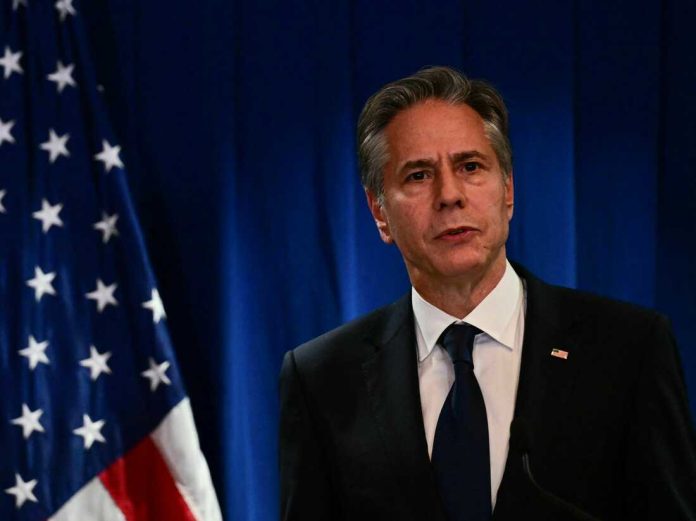
Russian President Vladimir Putin has been weakened by the Wagner rebellion over the weekend which shows that he is “not the only master in town” and “has lost the monopoly of force,” the European Union’s foreign policy chief said Thursday.
The global community has to be “very much aware of the consequences,” Josep Borrell cautioned as he spoke to journalists at a scheduled high-level meeting of European leaders in Brussels.
“A weaker Putin is a greater danger,” he added, explaining why an unstable Russia is also “a risk.”
“Until now, we were looking at Russia as a threat because it was force,” Borrell continued, stating, “Now we have to look at Russia as at risk because of the internal instability.”
NATO believes Ukraine’s counteroffensive unsuccessful so far: Report
Western officials have privately acknowledged that Ukraine’s counteroffensive against Russia is not going well, and that future military assistance to Kiev may diminish as a result, the Financial Times has reported.
“Russia still has the advantage of mass,” General Christopher Cavoli, NATO’s top commander in Europe, told a private gathering last week. He reportedly added that Ukraine has not achieved any significant success in its operation.
“For better or worse, the outcome [of the operation] is going to impact everything we do regarding Ukraine, and we are all aware of that,” a senior European diplomat told the FT on condition of anonymity.
“Funding, support, political engagement… and most importantly the peace talks that are coming whether we like them or not,” the diplomat added.
Publicly, Western officials have pledged to support Ukraine for “as long as it takes” to defeat Russia. However, Moscow has warned that by arming and training Ukrainian troops, the US and its allies are prolonging the conflict and will not alter its outcome. The Western approach amounts to “fighting to the last Ukrainian,” Russian officials have stated.
The FT cited the assessments to illustrate internal discussions in the West. EU leaders are set to offer formal security commitments to Ukraine, and the newspaper said it had obtained a draft copy of the final statement being considered at an ongoing summit in Brussels.
EU members France and Germany, along with the UK and the US, are seeking to provide bilateral security arrangements. The deal would serve as a “stopgap” to give Kiev “confidence in enduring Western support” and ensure that the EU is not sidelined by NATO, the daily added. Ireland, Malta and Austria are reportedly against extending vaguely defined commitments.
Ukrainian officials have insisted they will pursue military action until they have reclaimed all the territory lost to Russia. A Ukrainian law also bans any negotiations with Moscow as long as Russian President Vladimir Putin remains in office.
Moscow has said it is prepared for peace talks under certain conditions, and that Kiev’s uncompromising stance, calcified by continued Western support, stands in the way of diplomacy.
Russia’s Wagner fighters will no longer take part in Ukraine war: Report
Yevgeny Prigozhin, head of Russia’s Wagner mercenary group, has been told that he will be deprived of financing if his fighters do not sign contracts with the defense ministry, the RIA news agency cited a senior lawmaker as saying on Thursday.
Colonel-General Andrei Kartapolov, an influential lawmaker who chairs the lower house of parliament’s defense committee, said Prigozhin had refused to sign the contracts and was subsequently told that his mercenaries would no longer fight in Ukraine, TASS reported.
A group of EU member countries led by France is working on a draft of a declaration on “security commitments” to Ukraine and would like to approve it at the June 29-30 EU summit, Financial Times (FT) reported on Thursday.
According to the newspaper’s sources, the draft was prepared by France. It “is aimed at sending a very clear political signal to Ukraine and Russia.”
It is presumed that the declaration would allow the EU to participate in creating a security system for Ukraine, including in cooperation with NATO. The draft mentions that EU countries “stand ready to contribute, together with partners, to future security commitments to Ukraine, which will help Ukraine defend itself in the long term, deter acts of aggression and resist destabilization efforts”.
The newspaper reports that the text of the declaration may change while its authors will take account of “defense policy of certain member states,” referring to the neutral status of some EU countries. For instance, the current project met resistance from Austria, Ireland and Malta, which want clarity on what the “security commitments” to the Kiev regime would entail.
“For better or worse the outcome [of the Ukrainian counteroffensive] is going to impact everything we do regarding Ukraine, and we are all aware of that,” said an anonymous senior European diplomat.
“Funding, support, political engagement… and most importantly the peace talks that are coming whether we like them or not,” he added.
Russian Presidential Spokesman Dmitry Peskov stated on Thursday he had no information about current whereabouts of Yevgeny Prigozhin, the founder of Wagner private military company.
“I do not have this information,” Peskov told journalists in response to a relevant question.
Peskov also refused to comment whether it should be expected to witness resignations of law enforcement and military officials, who either spoke directly with Prigozhin or maintained other sources of connection with him.
“This question simply goes beyond my authorities,” he added.
Wagner mutiny shows “cracks and divisions” in Russia: NATO chief
A failed mutiny by the Wagner mercenary group in Russia over the weekend shows “cracks and divisions” within the country, NATO Secretary General Jens Stoltenberg said on Thursday.
“At the same time, it is important to underline that these are internal Russian matters and it’s too early to draw any final conclusions,” he stated, speaking before a two-day European Council summit in Brussels that will take place on Thursday and Friday.
“What matters for NATO is that we will continue to support Ukraine,” Stoltenberg added, noting that EU countries have begun training Ukrainian pilots how to use F-16 fighter jets.
“The most important thing and the most immediate and urgent task is to support Ukraine to ensure that Ukraine prevails as a sovereign independent nation in Europe,” he continued.
Kremlin says there is a threat of ‘provocations’ at nuclear plant
The Kremlin says there was a constant threat of “provocations” from the Ukrainian side regarding the Zaporizhzhia nuclear power plant.
Kremlin spokesman Dmitry Peskov said inspectors had recently been at the site to check on the safety of the plant.
The UN atomic energy agency has frequently appealed to both sides to avoid shelling near Europe’s largest nuclear plant.
Prigozhin’s exact whereabouts remain unknown after insurrection
Questions are still swirling around the future of Yevgeny Prigozhin following his short-lived insurrection on Saturday.
The owner of the Wagner private military group has not been seen in public since late on Saturday night. He released an audio message on Monday, but has not appeared in any videos or photos that would confirm his whereabouts.
According to Belarusian President Alexander Lukashenko, the Wagner chief arrived in Belarus Tuesday. Satellite imagery showed two planes linked to Prigozhin landed at an airbase outside the country’s capital.
Lukashenko said he brokered a deal that allowed Prigozhin to go to Belarus without facing criminal charges in Russia, but details of this deal remain scarce.
Prigozhin, a former ally of Vladimir Putin, made his millions the founder and bombastic leader of Russia’s private military group Wagner.
The Wagner chief became a wealthy oligarch by winning lucrative catering contracts with the Kremlin, earning him the moniker “Putin’s chef.”
Once a shadowy figure, he rose to prominence as the founder of Russia’s private military group Wagner which has played a key role in multiple battles in Russia’s war on Ukraine.
Questions swirl over the fate of top Russian commander Sergey Surovikin
General Sergey Surovikin, the commander of the Russian air force, has not been seen in public since overnight on Friday when he issued a video appeal to Wagner boss Yevgeny Prigozhin to cease his rebellion.
Rumors about his whereabouts — and his potential role in the short-lived insurrection — have been swirling in recent days.
On Wednesday, the Russian-language version of the Moscow Times cited two anonymous defense sources as saying that Surovikin had been arrested in relation to the failed mutiny. CNN has not been able to independently verify that claim.
Kremlin spokesperson Dmitry Peskov said on Thursday that he was unable to answer questions about the speculation around Surovikin and referred journalists’ inquiries to the Russian defense ministry.
Asked whether Russian President Vladimir Putin continued to trust Surovikin, Peskov added: “He [Putin] is the supreme commander-in-chief and he works with the defense minister, [and] with the chief of the General Staff. As for the structural divisions within the ministry, I would ask you to contact the [Defense] Ministry.”
The video released on Friday has raised more questions than answers about Surovikin’s whereabouts and state of mind. He appears in the footage unshaven and with a halting delivery, apparently reading from a script.
A popular blogger going by the name Rybar noted on Wednesday that “Surovikin has not been seen since Saturday [and] it is not known for certain where ‘General Armageddon’ [a nickname Surovikin was given by the Russian press] is. There is a version that he is under interrogation.”
A well-known Russian journalist Alexey Venediktov – former editor of the now shuttered Echo Moscow radio station – also claimed on Wednesday that Surovikin had not been in contact with his family for three days.
Other Russian commentators have suggested the general was not in custody.
A former Russian member of Parliament Sergey Markov said on Telegram that Surovikin had attended a meeting in Rostov on Thursday, although he did not say how he knew this.
“Surovikin appeared at a meeting in Rostov,” he continued, adding, “As I wrote above, the rumors about the arrest of Surovikin are dispersing the topic of rebellion in order to promote political instability in Russia.”
Citing US officials who it said were briefed on American intelligence, the New York Times reported on Wednesday that Surovikin “had advance knowledge of Yevgeny Prigozhin’s plans to rebel against Russia’s military leadership.”
Who is General Surovikin?
Surovikin, whose military career began in 1983, has a checkered history and a reputation for alleged brutality.
Surovikin first served in Afghanistan in the 1980s before commanding a unit in the Second Chechen War in 2004. He was the Commander-in-Chief of the Russian Aerospace Forces during Russia’s operations in Syria, which saw Russian combat aircraft causing widespread devastation in rebel-held areas.
In 2004, according to Russian media accounts and at least two think tanks, he berated a subordinate so severely that the subordinate took his own life.
And a book by the Washington DC-based Jamestown Foundation, a think tank, said that during the unsuccessful coup attempt against former Soviet President Mikhail Gorbachev in August 1991, soldiers under Surovikin’s command killed three protesters, leading to Surovikin spending at least six months in prison.
In a 2020 report, Human Rights Watch named him as “someone who may bear command responsibility” for the dozens of air and ground attacks on civilian objects and infrastructure in violation of the laws of war” during the 2019-2020 Idlib offensive in Syria.
The attacks killed at least 1,600 civilians and forced the displacement of an estimated 1.4 million people, according to HRW, which cites UN figures.
Russians strongly support military operation in Ukraine: Kremlin
The Kremlin says its data suggests there is continued strong support among Russians for the “special military operation” in Ukraine and President Vladimir Putin.
Kremlin spokesman Dmitry Peskov was responding to a question about a survey suggesting an equal number of people supported negotiations to end the conflict to those who favoured continuing it.
“The data we have show something quite different – dominant support for the special military operation and for the president,” stated Peskov.
“The main thing for Russians is achieving the goals before us which were formulated by the president,” Peskov added.
Russia opens criminal case against 160 mercenaries fighting for Kyiv
Russia has opened a criminal case against 160 foreign mercenaries fighting in Ukraine, the Russian Tass news agency reported, citing the investigative committee.
A report by the Investigative Committee of the Russian Federation said, “As a result of interaction with the Ministry of Defence of the Russian Federation and other operational services, evidence of the participation of mercenaries from Georgia, the United States, Latvia, Sweden and other states has been collected. Currently, 160 foreigners from 33 countries are being prosecuted.”
The committee added that investigations of those involved in recruitment and the participation of mercenaries on the side of the Ukrainian forces are continuing.
Search and rescue operations finish in Kramatorsk as death toll rises to 12
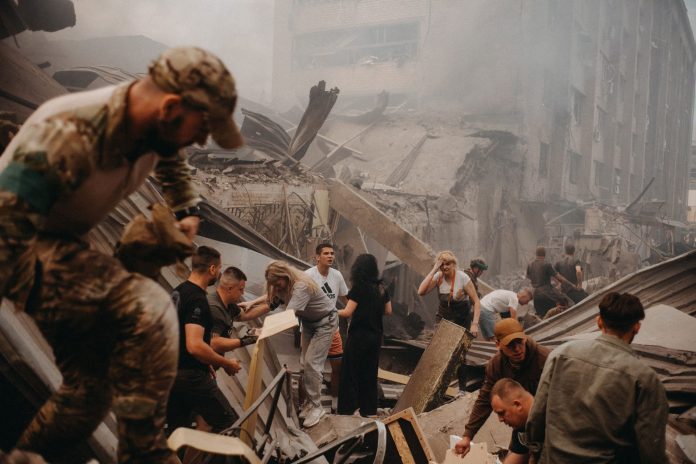
The death toll from Tuesday’s Russian missile strike on a busy area of the eastern Ukrainian city of Kramatorsk has risen to 12, Ukrainian officials announced Thursday.
Search and rescue operations amidst the rubble have ended as of Thursday morning, Ukraine’s Minister of Internal Affairs Ihor Klymenko said.
Three children were among the 12 people that died, Ukraine’s State Emergency Service said. The strike hit a popular city center lined with restaurants, businesses and apartment buildings.
Thursday’s announcements came a day after Ukrainian President Volodymyr Zelensky said police detained a person suspected of coordinating the deadly attack.
The Russian Defense Ministry claimed that the target hit in the strike was a temporary command post of a Ukrainian army unit.
Ukrainian forces advance ‘slowly but surely’ in Bakhmut area
Ukrainian forces are advancing “slowly but surely” on the front lines in the east and southeast of the country as well as around the longstanding flashpoint of Bakhmut, senior military officials have said.
Ukrainian Commander-in-Chief General Valery Zaluzhny told Chairman of the US Joint Chiefs of Staff Mark Milley that his forces had “succeeded in seizing the strategic initiative”.
“Ukraine’s defence forces are proceeding with their offensive action and we have made advances. The enemy is offering strong resistance, while sustaining considerable losses,” Zaluzhny wrote on Telegram.
Since launching an anticipated counteroffensive this month, nearly 16 months into the war, Ukraine says it has reasserted control over clusters of villages in the southeast and along the flanks of Bakhmut.
Majority of Americans back weapons deliveries to Ukraine
Some 65% of Americans support continued military aid to Ukraine, up from 46% in May, according to a Reuters/Ipsos poll published on Wednesday. Other surveys, however, show a fall in support for President Joe Biden’s promise of unlimited weapons for Kiev.
Conducted earlier this week, the poll found bipartisan support for arming Ukraine, with 81% of Democrats and 56% of Republicans in favor. This result mirrors the situation in Congress, where Biden’s Democrats are almost unanimous in backing arms deliveries, while the GOP is split between an establishment that backs the weapons shipments and a pro-Trump, isolationist wing in opposition.
The poll is an outlier among other recent surveys, which show a steady decline in support for Biden’s Ukraine policy. Figures published by Pew Research last week show that 28% of Americans now think the US is giving “too much” money to Ukraine, up from 7% last March, when Russia launched its military operation. The share of respondents who think that the current level of aid is “not enough” has fallen from 42% to 16% in that same timeframe.
Pew found that 39% of Americans “strongly” or “somewhat” approve of Biden’s response to the conflict, while 35% disapprove.
A poll conducted by the University of Chicago Harris School of Public Policy late last month found that 50% of US adults still favor sending weapons to Ukraine, compared with 61% in May 2022. Just 26% of US adults believe their government should play a “major role” in the conflict, down from 40% in March 2022, the poll revealed.
In the time between the two most recent Reuters surveys, the US has announced four weapons packages for Ukraine, worth a combined $1.5 billion. The Pentagon said the contents of these packages would be drawn from US military stocks, while an additional $2.2 billion would be spent procuring weapons for Kiev from arms manufacturers.
As of Tuesday, the US has committed more than $40.5 billion in direct military aid to Ukraine since last February.
Police detain coordinator involved in Kramatorsk attack: Zelensky
Ukrainian President Volodymyr Zelensky stated the coordinator involved in Tuesday’s deadly attack on Kramatorsk was detained by police.
“Today, the Security Service of Ukraine together with the police special forces detained the person who coordinated this terrorist attack,” Zelensky said in his nightly address on Wednesday.
According to the Ukrainian president, the detained person is being charged with treason and might face life imprisonment.
Zelensky called people involved in the Kramatorsk attack “betrayers of humanity.”
“Everyone who helps Russian terrorists destroy life deserves the maximum punishment,” Zelensky added.
“And this applies not only to some collaborators. Everything is clear about them. These are people without humanity. Anyone in the world who does not understand that one cannot be an accomplice of a terrorist state must be held accountable by the entire international community,” he continued.
Zelensky did not give further details of who the alleged coordinator is or their nationality.
Over 100 people have died from Nova Kakhovka dam collapse: Ukraine
More than 100 people have died following the collapse of the Nova Kakhovka dam in Kherson earlier this month, according to an update Wednesday from the General Staff of the Armed Forces of Ukraine.
More than 60 bodies were found on Saturday and Sunday alone, according to the update.
The collapse of the Nova Kakhovka dam is one of the biggest industrial and ecological disasters in Europe for decades. The catastrophe has destroyed entire villages, flooded farmland, deprived tens of thousands of people of power and clean water, and caused massive environmental damage.
It’s still impossible to say whether the dam collapsed because it was deliberately targeted or if the breach could have been caused by structural failure. The dam and hydroelectric power plant are under Russian control and therefore inaccessible to independent investigators, leaving experts around the world trying to piece together what happened based on limited visual evidence.
Several Western officials have blamed Russia for the disaster, either directly accusing Moscow of targeting the dam or saying that Russia is responsible simply because it is the aggressor in the war on Ukraine.
Putin says he had no doubts about support of Russians during Wagner rebellion
Russia’s President Vladimir Putin said he “did not doubt” the support of Russian citizens during the Wagner rebellion over the weekend, according to a Kremlin readout on Wednesday.
“There is no person in Dagestan who would not support the decisions of the leadership of the Russian Federation, which were adopted on June 24 this year,” Dagestan’s President Sergey Melikov said at a working meeting with Putin.
“I had no doubts about the reactions in Dagestan and throughout the country,” Putin replied.
Putin visited the Dagestan region on Wednesday and was met by excited supporters in the streets of the city of Derbent, according to video posted by the Kremlin.
US condemns the Russian missile strike in Kramatorsk
The State Department said the United States “unequivocally condemns” the Russian missile strike on the Ukrainian city of Kramatorsk on Tuesday.
“The US unequivocally condemns the targeting of civilians and offers our sincere condolences to those lost in this most recent strike in the city center. We are appalled by this, but unfortunately not surprised by Russia’s conduct. This is another example of Russia’s continuing escalation and the sheer brutality of its war of aggression in Ukraine,” according to Principal Deputy Spokesperson Vedant Patel.
“While others are focused on pursuing a way to end this war, Russia is again undertaking strikes, sending drones and missiles into residential areas of a neighboring country,” Patel added.
Russian authorities say at least 14 soldiers were killed during incursion in Belgorod region early June
At least 14 servicemen from the Pskov region in Russia were killed in early June during an incursion that happened in the Belgorod region, said Pskov Gov. Mikhail Vedernikov in a video message posted on his Telegram on Wednesday.
“A difficult event that needs to be mentioned is the farewell to servicemen from Velikiye Luki, Pskov, Novosokolniki, Pustoshka and Opochka districts. They died at the beginning of the month during the attack of the sabotage and reconnaissance group on the Belgorod region. The funerals took place both last week and this week. Unfortunately, these are not the last mourning events. At the moment, we know of at least 14 who died in those days,” said Vedernikov.
According to Vedernikov, at least 10 Pskov military personnel were also captured during the incursion.
“They were shown by Ukrainian propaganda and its accomplices from among the treacherous armed formations. At the same time, a resonant video appeared with a proposal to the governor of the Belgorod region Vyacheslav Gladkov about an exchange on neutral territory. As we now know, there is no fair exchange with militants from pseudo-Russian terrorist organizations. It was a banal trap. We did everything possible to speed up negotiations on the exchange of our prisoners,” he added.
According to the Pskov governor, three Russian servicemen have already been exchanged.
“This did not happen yesterday. Relatives were notified long ago. But we decided not to make sensational news out of this because the moment is very difficult for everyone. There are procedures that are carried out by counterintelligence,” said Vedernikov.
The region of Belgorod has seen a growing incidence of cross-border fire, in both directions, as well as incursions from Ukraine by groups calling themselves anti-Putin Russian partisans.
Kramatorsk attack death toll rises to 11: Ukrainian officials
The death toll from Tuesday’s attack on the eastern city of Kramatorsk has risen to 11, the Ukrainian Ministry of Internal Affairs said on Telegram Wednesday.
The Ukrainian Security Service said it detained a man who allegedly scouted a Kramatorsk pizzeria in the city’s center and sent a video of the site to the Russian Armed Forces prior to the strike Tuesday.
The head of the Donetsk region military administration, Pavlo Kyrylenko, said Russia carried out the attack using Iskander missiles. The strike damaged 32 buildings, he added.
The Russian Defense Ministry claimed that the target hit in the strike was actually a temporary command post of the Ukrainian army unit.
Russian foreign minister: No “serious proposals” from West on peace settlement with Ukraine
Russian Foreign Minister Sergey Lavrov said on Wednesday that there have been no serious proposals from the West to resolve the conflict in Ukraine.
“There were no serious proposals from anyone at all. I mean the West,” said Lavrov in an interview with the Big Game program, excerpts of which were published on the official website of the foreign ministry.
According to Lavrov, the longer Ukraine and the West delay a peaceful settlement, the more “difficult it will be to negotiate.”
Last year, Ukrainian President Volodymyr Zelensky presented a 10-point peace plan to end Russia’s invasion of Ukraine to G20 leaders that included a path to nuclear safety, food security, a special tribunal for alleged Russian war crimes, and a final peace treaty with Moscow.
Wagner rebellion destroyed myth of the Russian army’s “invincibility”: Ukrainian presidential adviser
The Head of the Office of the President of Ukraine, Andriy Yermak, said that the failed Wagner insurrection destroyed the myth of the invincibility of the Russian army, in an interview with CNN’s Chief International Anchor Christiane Amanpour.
Yermak, speaking from Kyiv, stated the events of recent days had “destroyed the myth of the invincibility of the Russian Army…it’s finally destroyed the myth, that everything in Russia is under control.”
The rebellion was just “one more [piece of] evidence that Putin’s attempt to revive the USSR has finally failed. I think it’s a very strong signal that the war in Ukraine is terrible, barbaric, illegal invasion,” Yermak added.
He also said, “Everything which has happened in Russia [these] last days is the result of this war,” adding, “I think after this even, more people in the world are sure about Ukrainian victory.”
Ukraine’s leadership says they have made gains “on all fronts” since the weekend.
Amanpour then pressed Yermak, as to whether the insurrection was the first serious chink in Russian President Vladimir Putin’s armor, or if it would only cause the longtime leader to double-down on his views and control of the nation.
Yermak said, “These last days they were confirmed that they don’t control the situation, they are not living in reality, and of course they can’t make the real decisions.” He also said he thought “we all over the world are seeing this show…I think it will have historical and very serious influence for everything which will be in the future.”
“I’m sure that many people in the world, especially many world leaders will change his opinion and trust of everything said,” Yermak added.