Wednesday, December 31, 2025
Home Blog Page 1366

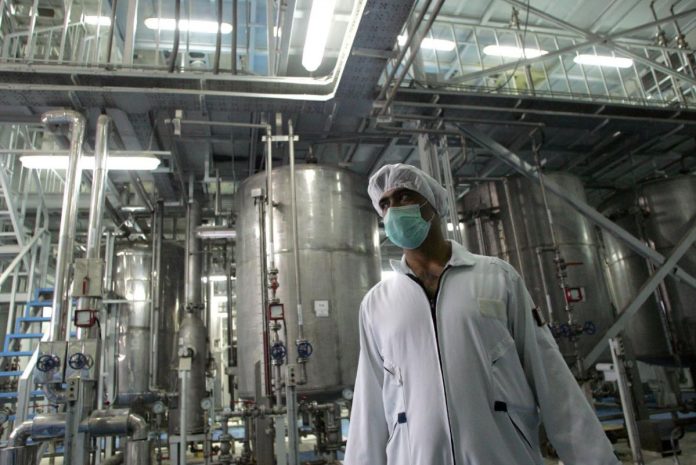
Official: Iran ranks first in producing radiopharmaceuticals in region

Radiopharmaceutical

Mohammad Ghannadi added that in terms of production of therapeutic radiopharmaceuticals, Iran ranks first in the region.

He added that Iran also has a high place in exporting diagnostic and therapeutic radiopharmaceuticals.

According to the Iranian official, the country is doing research work for the purpose of producing radiopharmaceuticals that are made simultaneously by big powers of the world.

Ghanndi noted that thanks to strenuous efforts and hard work by Iranian experts, Iran has succeeded in producing iodine 131 radiotherapeutic medicine for the treatment of thyroid cancer.

“We are destined to expand the production of radiopharmaceuticals and to make others that will reduce the bone pain of cancer patients who are in the last stages of the disease”, he added.

US intelligence assessment says Iran not developing nuclear bombs

Iran Nuclear Program

“Iran is not currently undertaking the key nuclear weapons-development activities that would be necessary to produce a testable nuclear device,” reads the two-page unclassified synopsis of a report released by the Office of the Director of National Intelligence on Monday.

Tehran has repeatedly declared that its nuclear program remains purely peaceful as always and that the Islamic Republic had no intention of developing nuclear weapons as a matter of an Islamic and state principal.

Leader of the Islamic Revolution Ayatollah Seyyed Ali Khamenei issued an official fatwa (religious decree) clearly establishing that any form of acquisition, development, and use of nuclear weapons violate Islamic principles and are therefore forbidden.

Iran proved the peaceful nature of its nuclear program to the world by signing the 2015 Iran nuclear deal, officially called the Joint Comprehensive Plan of Action (JCPOA) with six world powers, but Washington later quit it.

The assessment added, “Iran continues to increase the … enrichment level of its uranium stockpile beyond JCPOA limits.”

Former US President Donald Trump pulled the US out of the JCPOA and imposed tough economic sanctions against the Islamic Republic under what he called the “maximum pressure” policy.

In 2019, Iran began its retaliatory remedial measures by reducing its commitments to the 2015 deal after the European parties to the deal — France, Germany, and Britain — failed to protect Iran’s interests under the JCPOA.

Tehran began to gradually remove a cap set in the JCPOA on its nuclear activities at bi-monthly intervals. Tehran maintained that it would reverse its nuclear decision if the Iranian economy were to be shielded from sanctions.

Multilateral diplomatic efforts to revive the JCPOA have been stalled since last August, with Iran blaming the United States for failing to guarantee that it will not leave the deal again.

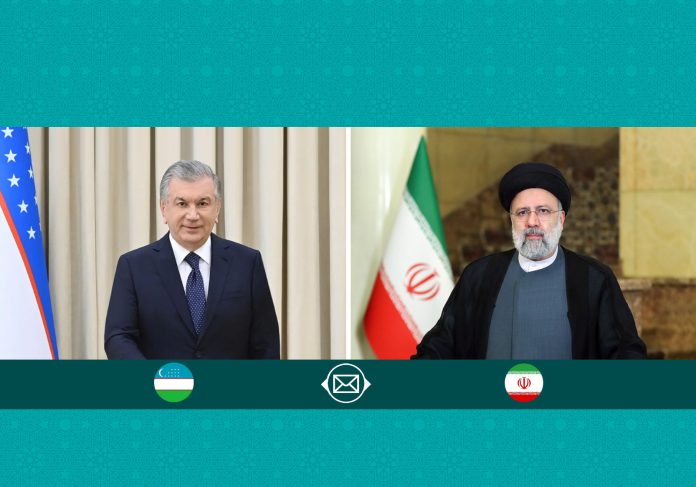
President Raisi says Iran-Uzbekistan relations can be further improved

Ebrahim Raisi and Shavkat Mirziyoyev

In a Monday phone conversation, Raeisi extended his congratulations to Uzbek President Shavkat Mirziyoyev on his re-election with 87.1% of the vote on Sunday.

“There are ample capacities for the improvement of bilateral exchanges,” the Iranian president said.

He expressed hope that Tehran and Tashkent would accelerate the implementation of the agreements previously signed between the two sides to enhance ties.

He said the two countries can promote ties in the economic, political, cultural and commercial sectors in line with firm determination of authorities.

The Uzbek president, for his part, said Tehran and Tashkent would further boost cooperation at bilateral and regional levels, including in the Shanghai Cooperation Organization (SCO).

The Shanghai Cooperation Organization on Tuesday officially approved Iran’s full-fledged membership in the world’s largest regional organization in terms of geographic scope and population.

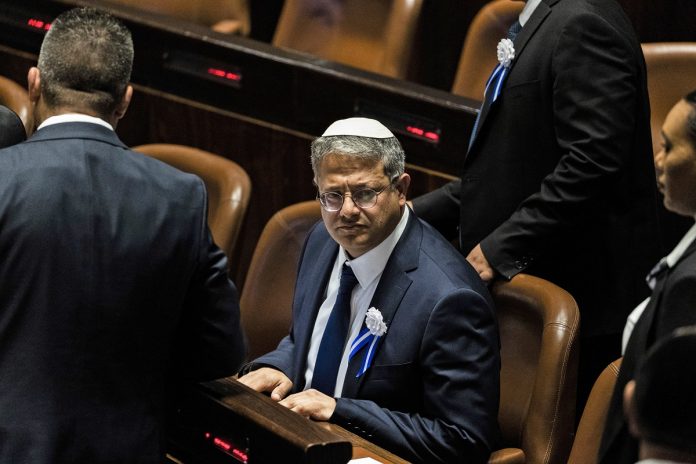
Israel “no longer a star” on the American flag: Minister

Itamar Ben-Gvir

“President Biden needs to realise that we are no longer a star on the American flag,” Itamar Ben Gvir wrote on Twitter, referring to the fact that the US flag contains 50 stars representing the 50 states that make up the country.

On Sunday, Biden said during an interview with CNN that the current far-right governing coalition is “one of the most extreme” governments in Israel that he has seen in his decades in politics.

“It’s not all Israel now in the West Bank – all Israel’s problem – but they are a part of the problem, and particularly those individuals in the cabinet who say, ‘We can settle anywhere we want. [The Palestinians] have no right to be here, etc’,” he added.

The interview came days after Israel launched a military raid on the Palestinian city of Jenin in the occupied West Bank, which killed 12 Palestinians and left scores wounded.

Last month there were at least 85 incidents of Israeli settlers attacking Palestinians, prompting security officials in Israel to warn that ongoing violence could lead to anarchy. Attacks have been ongoing.

The Jenin operation was condemned by civil society and rights groups, as well as the UN, which has refused to issue a retraction of its condemnation.

Israel is the US’s closest Middle East ally and the country receives around $3.8bn a year in military aid from Washington. The US has consistently vowed to maintain Israel’s qualitative military edge in the region.

Israel has also enjoyed bipartisan support from US Congress for decades and has received fervent support from Washington at the United Nations.

Analysts told Middle East Eye last week that the raid had shown the Biden administration’s lack of red lines when it comes to Israel’s actions in the occupied West Bank.

“The US clearly has no red lines when it comes to Israel’s use of force,” Marwa Maziad, an expert on US-Arab-Israeli relations at the University of Maryland, told MEE.

Still, the US has stated clear concerns over the current far-right government in Israel, led by Prime Minister Benjamin Netanyahu. Biden in March made a rare foray into Israeli domestic politics when he warned Netanyahu against going forward with a contentious plan to overhaul Israel’s judiciary.

“I hope he walks away from it,” Biden stated, adding that Netanyahu’s government “cannot continue down this road”.

Netanyahu has yet to receive an invitation to the White House, and Ben Gvir as well as Bezalel Smotrich – another far-right member of Israel’s governing coalition who serves as finance minister – have so far been snubbed by the administration.

But Aaron David Miller, a former State Department Middle East advisor, told MEE last week that if “Netanyahu said tomorrow the judicial overhaul is dead, the Biden administration would schedule a visit for him.”

“The reason he isn’t coming isn’t attached specifically to the Palestinians,” he added.

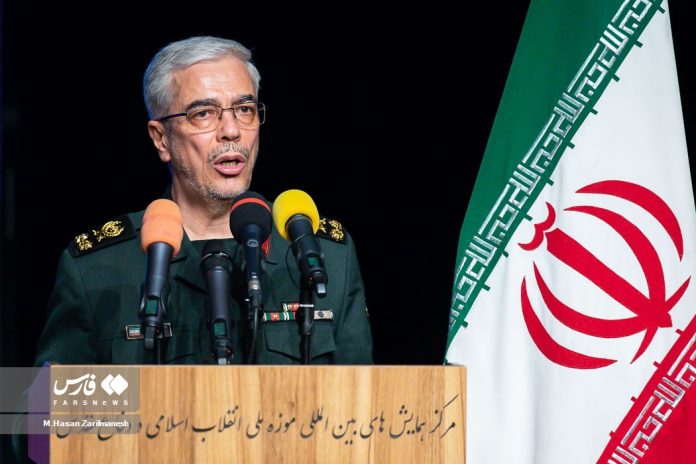
Top Iran military commander wars operation against terrorists could continue in northern Iraq

Mohammad Bagheri

In a speech to commanders of the Islamic Revolution Guard Corps (IRGC) ground force in the northeastern city of Mashhad, General Mohammad Bagheri, referred to the memoranda of understanding signed between Iran and most of the neighboring countries.

The top military commander added, the main purpose of these agreements is to promote security, peace and friendship among these countries.

Chairman of the Chiefs of Staff of the Iranian Armed Forces emphasized to ensure the security of the region, there is no need for the presence of foreigners and that the Zionists have no place in this region, adding regional countries can maintain the security of the region.

Slamming some of Iran’s neighboring countries’ failure to provide border security, he added armed separatist groups based in northern Iraq create insecurity on our borders.

Referring to the operations of the IRGC ground force against these groups in northern Iraq in recent months, General Bagheri emphasized that the Iraqi government has promised to disarm these groups and prevent their actions by September. But If after the deadline, “these groups remain armed or carry out operations against Iran, our operations against them will definitely be repeated with greater intensity.”

He pointed to the recent movements of some terror groups in parts of the southeastern borders of Iran, adding the IRGC ground force, along with the Border Police and the Islamic Republic of Iran Army, are working hard to deal with these vicious acts along the borders of Afghanistan.

Famous Iranian poet, writer and painter, Ahmad Reza Ahmadi, passes away

Ahmad Reza Ahmadi

Ahmadi, born on May 20, 1940 in the southern Iranian city of Kerman, passed away on Tuesday after months of illness.

Literature, poetry, writing and cinema were the main fields of his professional activities.

Ahmadi is known to be the founder of the new wave of poetry and the pioneer of surrealism in children’s literature in Iran.

The book “A Journey at Night” pertaining to social issues, peace, coexistence, tolerance and cooperation is one of the most famous works of this late author.

Many of Ahmadi’s poems have been translated into Arabic, Armenian, English, French, German, Italian, Japanese and Korean.

Iraq: US banking sanctions hindering repayment of energy debt to Iran

Iraq Gas

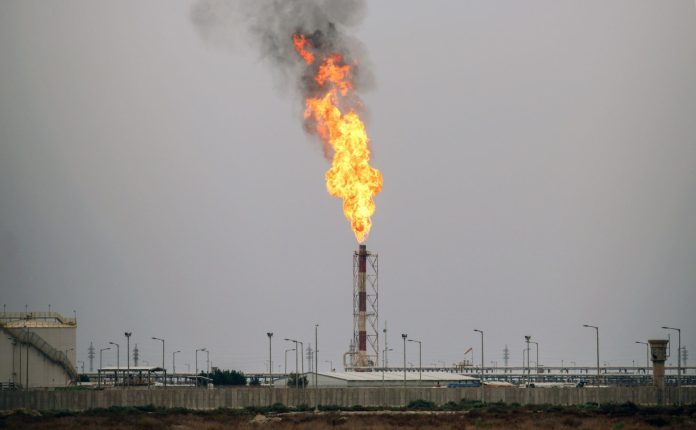
He said Iran had cut gas supplies to Iraq in a new effort to make the Arab country pay its debts for previous energy imports.

The minister said gas shortages in his country lowered the level of electricity production from 26,000 megawatts to 20,600 in recent days, triggering power outages in some areas.

Baghdad, he said, started intensive talks with Iran for a resumption of gas supplies that he said had been slashed by nearly a half because of unpaid debts.

“We hope they (Iranians) would understand Irag’s situation and the hot temperatures in the country and restore gas exports to previous levels,” said the minister.

Earlier, Iranian authorities said they hoped Iraq would soon give Iran access to over $10 billion worth of funds that remain frozen in an account in the Trade bank of Iraq (TBI) because of US sanctions.

Iraqi and US authorities had indicated in statements last month that the Central Bank of Iran would be able to access the funds for paying for imports, but the bank seems to have been unable to clear the account.

Pentagon chief discusses support for Turkey military modernization with peer

Pentagon

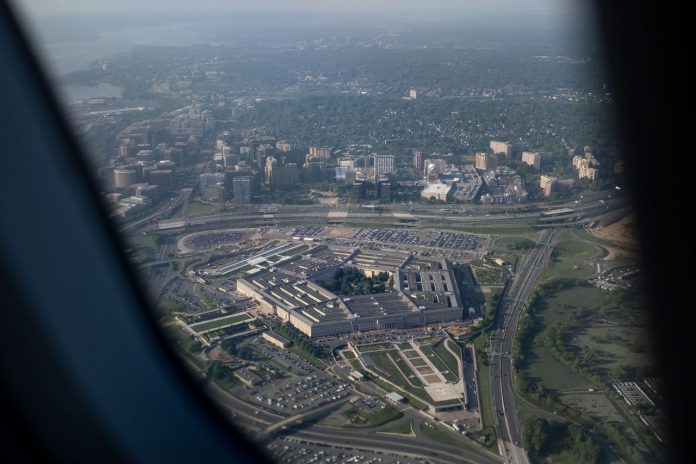
Austin and his Turkish counterpart Yasar Guler conferred on Washington’s support for modernizing Turkey’s military in a telephone conversation on Monday after Ankara finally endorsed Sweden’s NATO membership after holding out against the bid for over a year, according to Pentagon’s readout of the discussions released later in the day.

“They … discussed the positive talks between Turkey, Sweden, and NATO Secretary General Stoltenberg, as well as the Department of Defense’s support for Turkey’s military modernization,” the Pentagon said of the phone call between Austin and Guler.

Turkey requested in October 2021 to buy $20 billion of Lockheed Martin Corp (LMT.N) F-16 fighters and nearly 80 modernization kits for its existing warplanes.

The phone call came just hours after NATO Secretary General Jens Stoltenberg declared that Turkish President Recep Tayyip Erdogan agreed to approve Sweden’s bid to join the alliance in a press briefing earlier in the day, just ahead of the NATO summit in the Lithuanian capital city of Vilnius, which commences on Tuesday.

National security adviser Jake Sullivan said Tuesday ahead of the alliance’s summit in Lithuania that US President Joe Biden supports the sale of US-made F-16 fighter jets to NATO ally Turkey without “caveats or conditions”.

Biden has been “clear and unequivocal” in his support for the move “and he intends to move forward with that transfer in consultation with Congress,” Sullivan stated.

In an interview with CNN leading up to the NATO summit, Biden reiterated his support for the sale of F-16s to Ankara, but hinted it was part of a larger objective to strengthen NATO’s military capacity.

Sullivan added that the administration has been in touch with Democratic Sen. Bob Menendez, who chairs the Senate Foreign Relations Committee and has called for a block on F-16 sales to Turkey over concerns Ankara could use the planes to intimidate fellow NATO member Greece.

Israel’s parliament approves first reading of PM’s judicial plan despite mass rallies

Israel Protest

The bill proposed by Netanyahu’s far-right cabinet won 64 votes against 56 during a stormy parliamentary session on Monday, which was marred by heavy demonstrations outside its building.

Hundreds of protesters marched on the Knesset after holding a massive gathering outside the court.

Ahead of the debate, some protesters entered the Knesset and had to be dragged out by the regime’s forces, while others continued to demonstrate outside.

The sound of protesters could be heard loud and clear at the nearby Bank of Israel, whose governor Amir Yaron told reporters that continued political uncertainty “is liable to have notable economic costs” for the regime.

The bill has to clear two more readings before it can be signed into law.

It seeks to reduce the Israeli judiciary’s power to rule on the cabinet’s decisions, including on the very makeup of the cabinet.

The so-called judicial overhaul scheme, which was introduced by Netanyahu’s extremist cabinet in January, has led to thousands-strong protests across the occupied territories every Saturday for the past six months.

Its supporters allege that it will end decades of overreach by judges, while opponents argue that the plan will remove necessary checks on the power that is wielded by Israeli politicians.

Critics have also accused Netanyahu, who is on trial on corruption charges that he denies, of trying to use the scheme to quash possible judgments against him.

Faced with overwhelming protests and a wave of industrial actions, Netanyahu paused the scheme in late March to enable talks on the issue.

However, deeming the negotiations to be pointless last month, he re-launched his bid to push through with the reform package, claiming that he has come up with new proposals, which were more moderate.

Xi says progress in China-Russia relations both states’ strategic choice

Xi Jinping

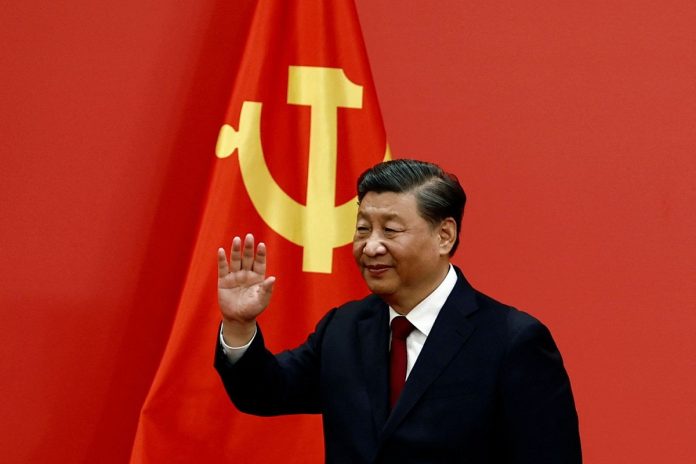
“The development of the Russian-Chinese relations is the strategic choice, based on fundamental interests of both countries,” Xi said during his meeting with Chairwoman of the Federation Council (the upper house of Russia’s parliament) Valentina Matviyenko in Beijing on Monday.

The Chinese leader also stated that China and Russia must stay on the right course pursuing the reform of the global governance, protecting interests of developing countries.

“Both sides need to strengthen means of communication and cooperation within [the framework of] multilateral mechanisms such as the Shanghai Cooperation Organization [SCO] and BRICS, maintain the right path pursuing the reform of the global governance, and protect common interests of countries with emerging markets as well as of developing countries,” he added.

Matviyenko, accompanied by a delegation of Russian lawmakers and senators, is on a visit to China from July 9-12. Earlier, she met with chairman of the Standing Committee of the National People’s Congress of China Zhao Leji.

Deputy Speaker of Russia’s Federation Council Konstantin Kosachev also stated on Tuesday that Russian-Chinese comprehensive cooperation relations are at an all-time high.

“Today, Russian-Chinese relations are at all-time high in terms of comprehensive partnership and strategic interaction. Furthermore, they have entered a new stage and have become an important factor in the development of the two countries, ensuring their security, strengthening international positions, and providing a reliable guarantee of maintaining peace and stability on our entire planet,” Kosachev said at a meeting of the Inter-Parliamentary Commission on Cooperation between the Russian Federal Assembly and China’s National People’s Congress.