Tuesday, December 23, 2025
Home Blog Page 1356

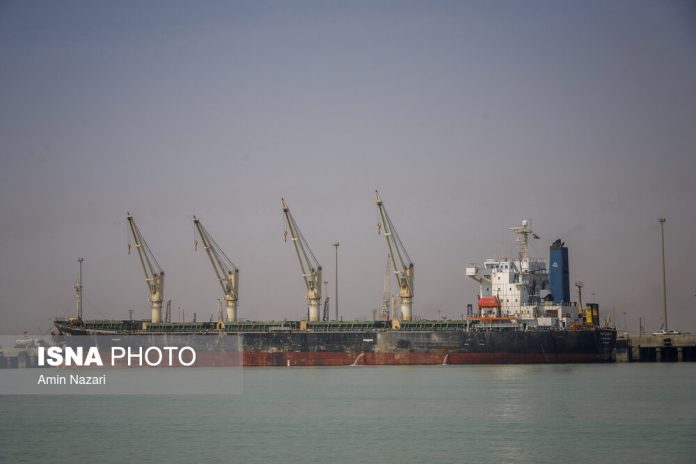
Official says 130,000 ships dock annually at Iranian ports

Iran Port

Referring to the annual docking of 130,000 vessels at Iran’s ports, Ali Akbar Safaei said foreign investment has been made under FDI in the shipping, port and logistics fields despite the sanctions imposed against the country.

Various expert-level sessions and fruitful talks have been held with the neighboring and target countries in the maritime and ports sector, he stated, adding, “In addition, we succeeded in concentrating a major part of the foreign investment on the construction of International North-South Transport Corridor.”

Elsewhere in his remarks, the chief executive of Ports and Maritime Organization (PMO) pointed to a trilateral meeting held recently between Iran, India and Russia and stressed that the country will witness the attraction of significant foreign investment in the shipping, portal and logistics fields.

Preventing Iran from sending its ships to international waters was one of the main aims of ill-wishers of the country, he said, adding that Iran is equipped with the world’s most modern technology in the transportation industry.

With designing the automatic monitoring systems of the vessels, radar systems and electronic maps, the Ports and Maritime Organization has managed to design the integrated system in line with monitoring any transit and activity of the vessels precisely, Safaei highlighted.

Former MP: Iran’s foreign policy plagued by taboos

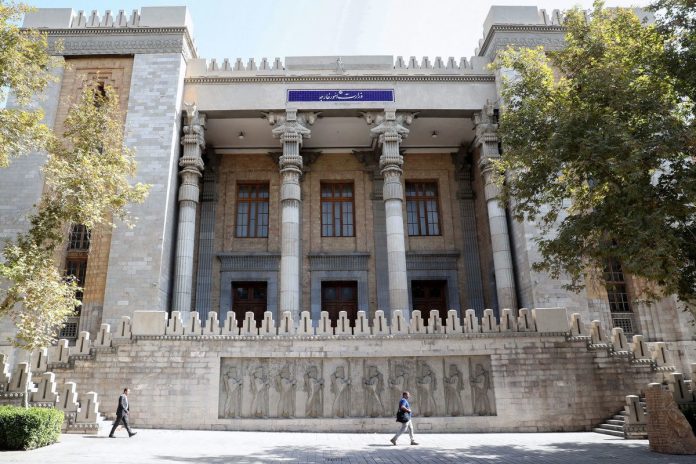
Iranian Foreign Ministry

Heshmatollah Falahatpisheh told Entekhab news outlet that to counter the “impasse” in our foreign policy, “we need to have a realistic approach.”

According to Falahatpisheh, the foreign policy mechanism calls for returning to the 20-year vision document. He added that the document requires the government make Iran a regional power in different aspects by 2025 but this is conditional on constructive interaction with the world.

Falahatpisheh said those who compiled this document modeled constructive interaction with the world on the policy of China in the 60s.

The former head of the National Security and Foreign Policy Commission of the Parliament stressed that over the past two decades, not only this requirement has not been fulfilled, but also in many cases, the opposite has been done.

He added that some institutions abroad portray themselves as being responsible for converting people to Islam in the world, and now some others believe that the hijab should be promoted in the US and Europe while they have failed in resolving basic problems inside Iran.

According to Falahatpisheh, in the past Iran’s JCPOA interests fell victim to Russia’s policies in Ukraine and now the European Union is taking a stand against the negotiations and understanding between Iran and the US.

He called for direct talks between Iran and the US as a way out.

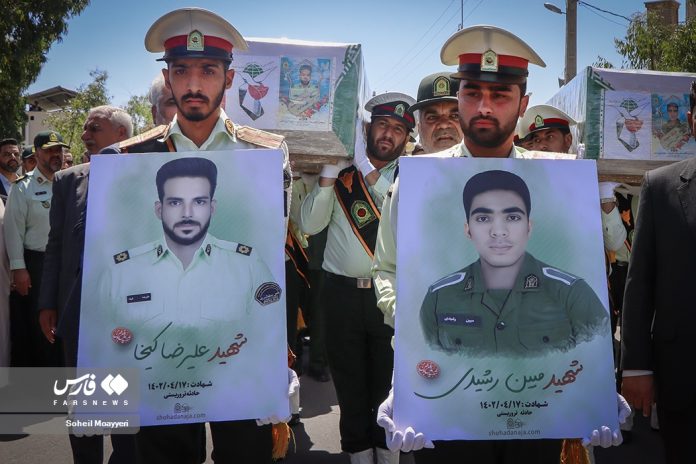
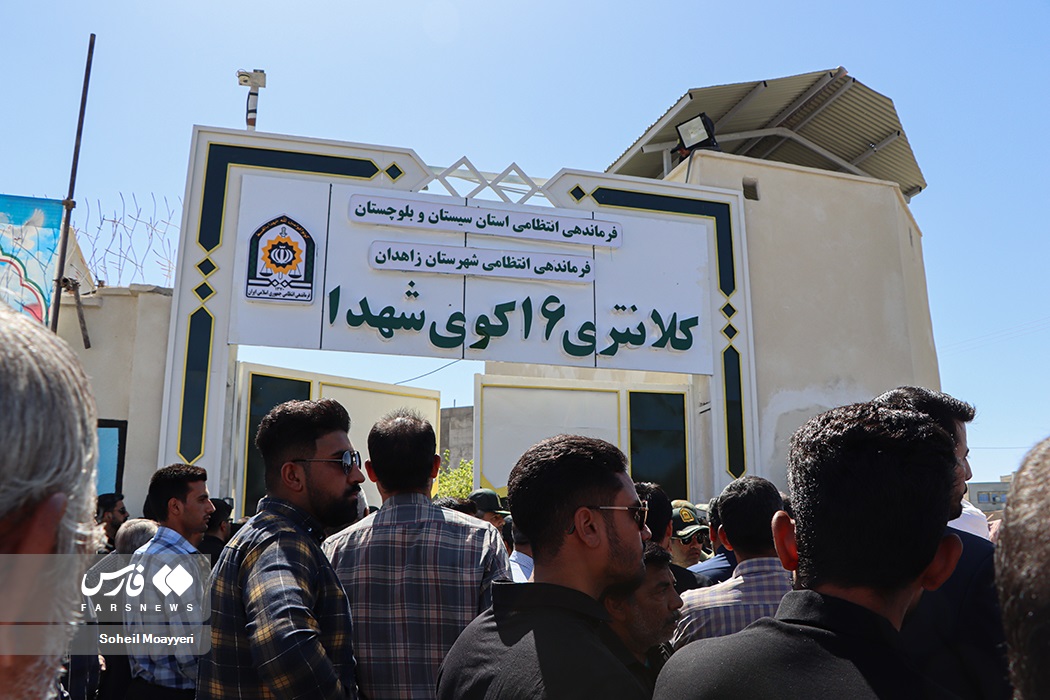
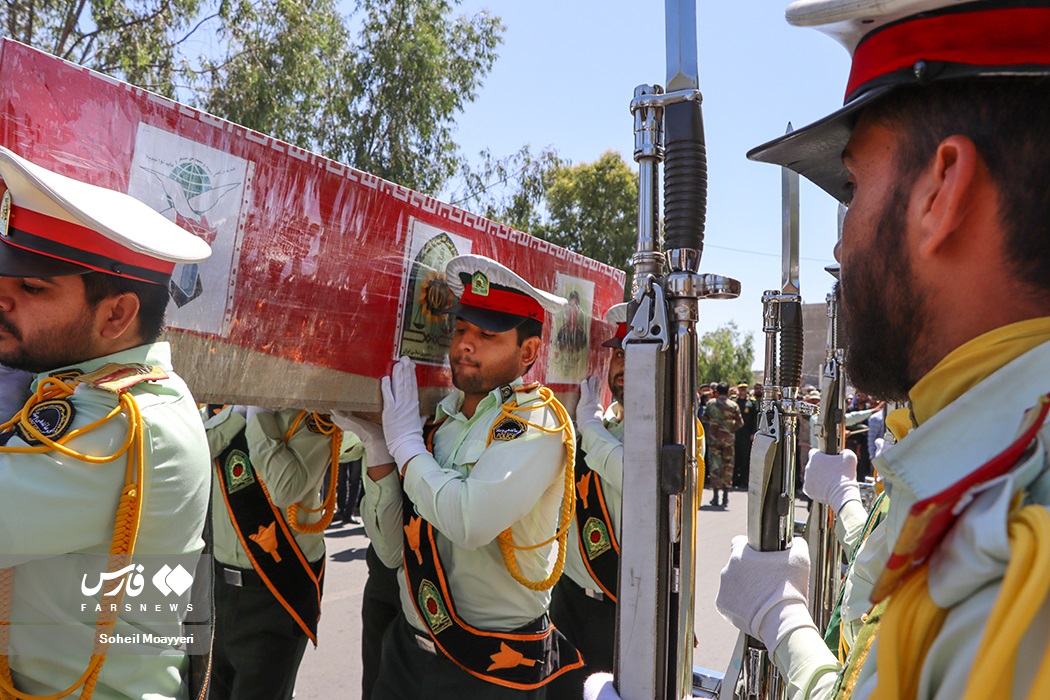
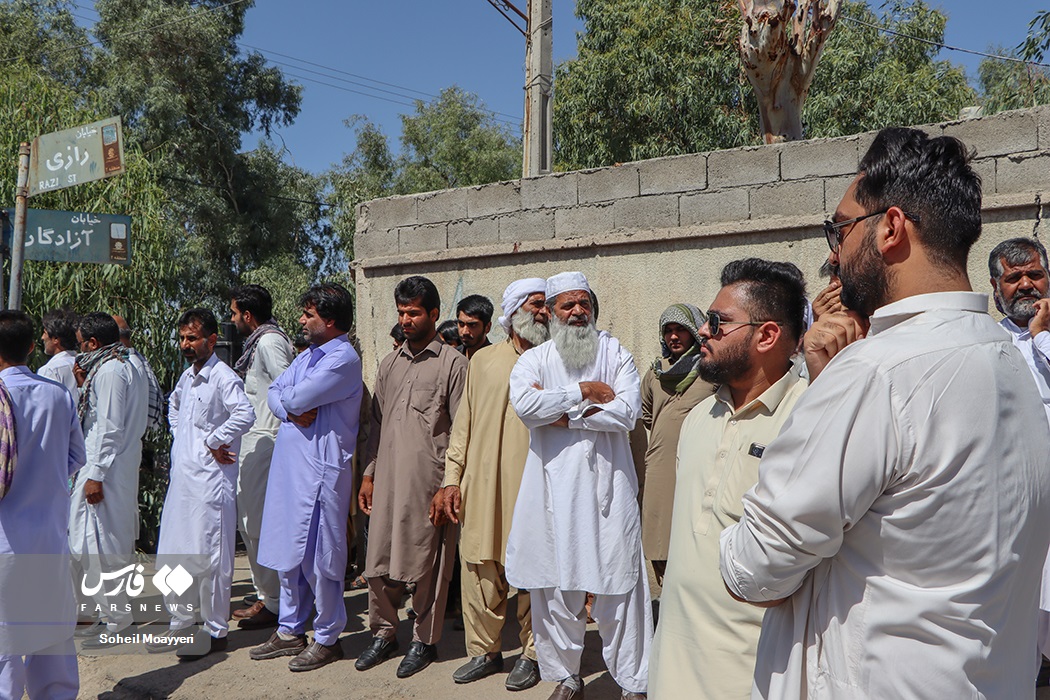
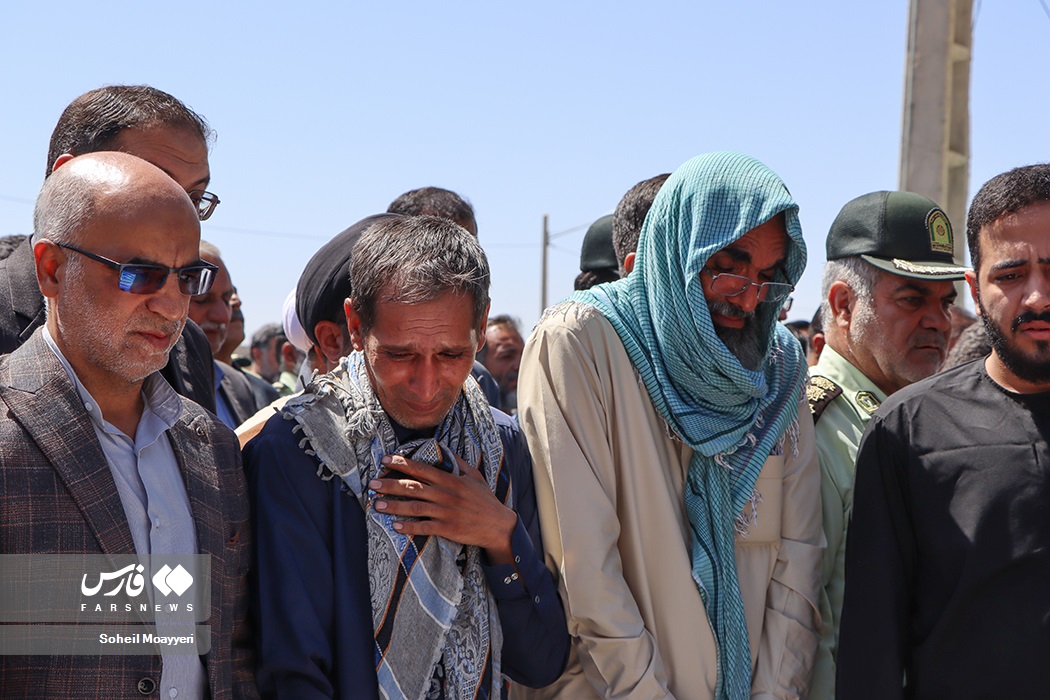
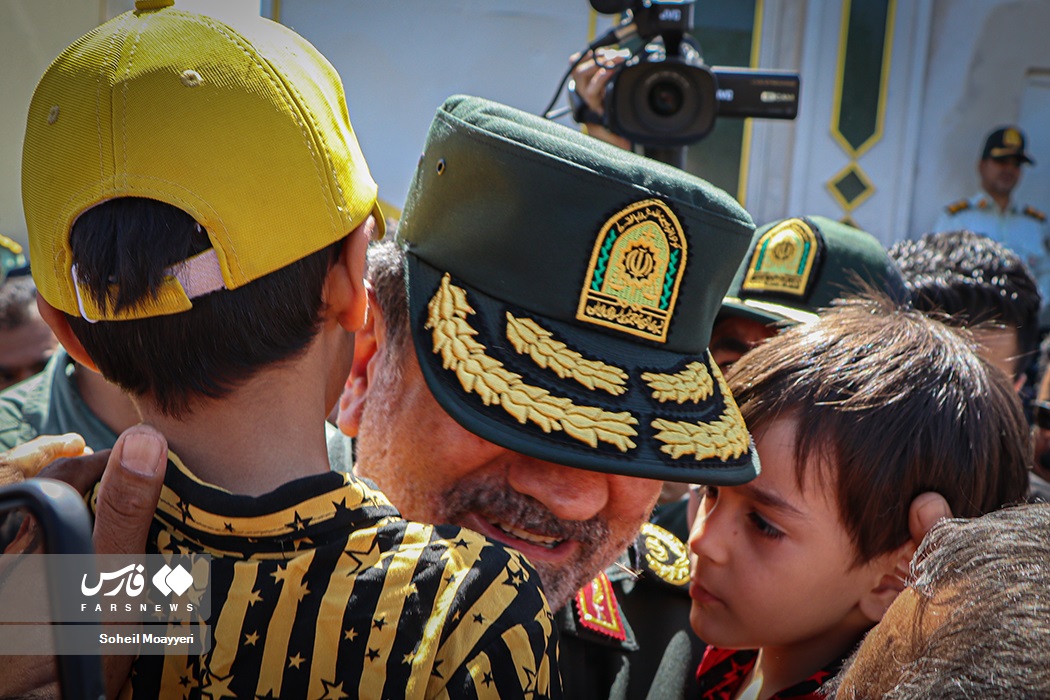
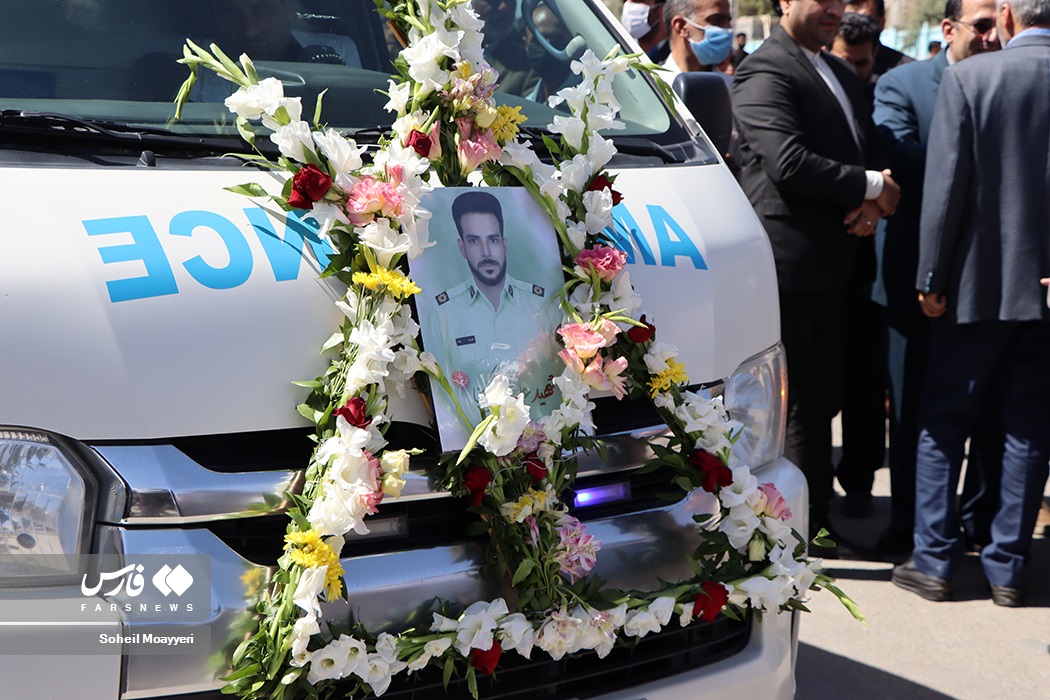
Funeral procession held for security forces killed in Zahedan attack

Funeral procession held for security forces killed in Zahedan attack

Four assailants attempted to make their way into the police station in Zahedan, the capital of Sistan and Baluchestan Province, but were confronted by the forces inside on Saturday.

All the four terrorists were ultimately killed. Two security forces also lost their lives.

On Sunday, a funeral procession was held for the two forces, Sergeant Major Alireza Keikha and conscript Mobin Rashidi.

A number of ordinary people as well as officials, including the provincial governor for Sistan and Baluchestan, were present at the procession.

“Today, with their fervent presence, Shias and Sunnis thwarted enemies’ plots,” Governor Mohammad Karami said at the event, dismissing the notion that there was a Shia and Sunni divide in the province.

Sistan and Baluchestan, which borders Pakistan, has witnessed many attacks targeting both civilians and security forces by terrorists who mainly sneak into the country from Pakistan.

On Saturday, Iranian Sunni cleric Molavi Abdolhamid condemned the terrorist attack on the police station and expressed deep regret over the incident.
He renounced any action that would cause insecurity in the country.

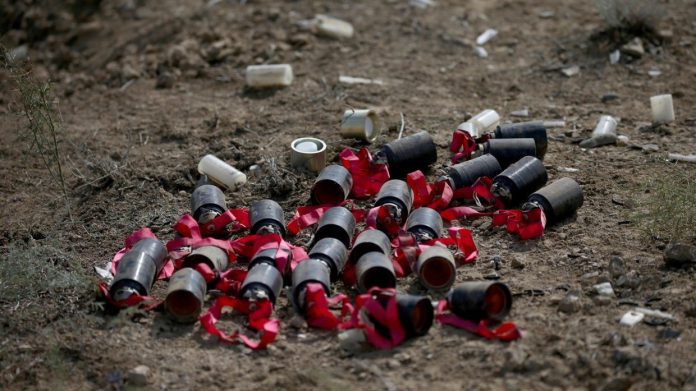
Iran says US sending cluster bombs to Ukraine prolonging war

Cluster Bomb

In a tweet on Sunday, Nasser Knaaani referred to the Pentagon announcement of sending a military aid package to Ukraine, including cluster bombs.

Kanaani said, “This is yet another example of America’s destabilizing actions and exports of arms that indiscriminately contribute to more killings and destruction.”

On Friday, the Pentagon announced an $800m military aid package to Ukraine including cluster munitions that ate widely banned.

Human rights groups have cried out against the decision, calling it “unnecessary and a terrible mistake.”

US President Joe Biden has defended the “difficult decision” to send cluster munitions to Ukraine.

Cluster munitions are prohibited by more than 100 countries. They typically scatter numerous smaller bomblets over a wide area, sometimes as big as a football pitch, and can kill indiscriminately. Those that fail to explode threaten civilians, especially children, for decades after a conflict ends.

Jake Sullivan, Biden’s national security adviser, told reporters at the White House: “We recognize that cluster munitions create a risk of civilian harm from unexploded ordnance.

Iraqi PM shakes up intelligence and security services

Iraqi Prime Minister Mohammed S. Al-Sudani

Officials in Baghdad told Middle East Eye that the changes unveiled on Wednesday were intended to consolidate Sudani’s grip on power and to exclude a number of officials and employees suspected of involvement in corruption under the previous government.

One of the main – and most prominent – beneficiaries of the reshuffle is Abdul Karim Abd Fadhil, also known as Abu Ali al-Basri, who was named by Sudani to lead the Iraqi National Security Service (INSS).

Basri replaces Hamid al-Shatri, who was appointed by Sudani’s predecessor as prime minister, Mustafa al-Kadhimi.

Basri is the former head of the Falcon Cell, an elite and secretive intelligence unit, and has been nicknamed “the master of spies” by former colleagues.

He was dismissed from that role in January 2021 by Kadhimi on charges of “dealing with foreign intelligence”.

Basri denied those charges in comments to MEE at the time. Sources within the Ministerial Council for National Security told MEE then that he had been excluded by Kadhimi because of his closeness to the leaders of Iranian-backed armed factions.

In a statement announcing the new appointments, Major General Yahya Rasool, Sudani’s spokesperson, said: “This step [was taken] after an extensive study to enhance security and stability in various regions of the country and for the requirements of the public interest.”

The shakeup “aims to inject new blood and give an opportunity to other leaders to manage the security file to raise the efficiency of the security institutions’ performance,” Rasool added.

But the return of Basri, and other senior appointments, suggest additional factors are also in play, according to MEE’s sources.

In addition to Basri, changes within the INSS included the appointment of new security and administrative directors, and new director generals of the Baghdad security department and governorates security department.

In another prominent appointment, Sudani named Waqqas Muhammad Hussein al-Hadithi as deputy head of the Iraqi National Intelligence Service (INIS). Hadithi is considered to be an associate of the parliamentary speaker, Muhammad al-Halbousi, sources told MEE.

Another senior appointee, Ali Shamran Khazal, the new director general of the INSS’s Governorates Security Department, is seen as an ally of former prime minister Nouri al-Maliki, sources stated.

Both appointments appear in line with the requirements of Iraq’s power-sharing political system, in which positions in state departments, ministries, and independent bodies are shared between parties based on the number of parliamentary seats they hold – unless they choose to go into opposition.

Security officials told MEE that most of the appointees were chosen on the basis of “partisan quotas”.

“Some of those assigned are qualified and have been promoted. This cannot be denied, but the selection of all was subject to political quotas,” a senior INSS official told MEE, adding, “Most of the appointees are either close to Maliki, Halbousi, or the prime minister. No one in Iraq is named to occupy these positions solely for his competence or for career progression.”

On the other hand, one of the most prominent figures removed from his role is Majid Ali Hussein, the former deputy head of the intelligence service who was moved to the National Security Advisory, a body that advises the Ministerial Council for National Security and coordinates national security policies.

Hussein, like Shatri and some others removed from their positions, had been appointed under Kadhimi.

The sweeping security and intelligence shakeup was preceded by administrative changes affecting several high-ranking officials in independent public bodies.

On Tuesday, Sudani issued an order to remove Rafel Yassin as head of the Federal Board of Supreme Audit (FBSA), Iraq’s public spending watchdog. Yassin was replaced by Ammar Subhi al-Mashhadani.

No reason was given for Yassin’s dismissal.

Last year, the FBSA came under scrutiny over the so-called “theft of the century” plot, in which billions of dollars in tax deposit funds were stolen via dozens of fake cheques cashed by a state-owned bank.

According to a report by the Iraqi finance ministry seen by MEE, the thefts occurred after the FBSA had been removed from a key role in auditing tax refund requests.

Sources familiar with the investigations told MEE that Yassin is suspected of involvement in that theft.

Yassin has not commented on the matter. MEE contacted the FBSA after details of the plot were exposed, but sources told MEE that no one would comment while investigations were ongoing.

Yassin’s replacement by Mashhadani fits with the pattern of appointments according to political quotas, because Yassin is associated with Maliki while Mashhadani is allied to Halbousi.

One of Sudani’s advisors confirmed to MEE that most of the changes are politically motivated, but said that some are punitive.

“Some of the changes aim to achieve political balance, and they are part of the political agreements that produced the current government,” the advisor said, speaking on condition of anonymity,” the aide stated, adding, “Some are punitively motivated. As long as we cannot hold some of the senior officials accountable because of their political affiliations, then at least we will get rid of them.”

Sudani’s allies and critics agree that he is in the process of building his own governmental power base.

To his supporters, he has worked shrewdly and quietly, taking advantage of circumstances and opportunities as they arise to strengthen his control over various ministries and departments without arousing the wrath of his partners or opponents.

“The biggest challenge Sudani faces is how to dismantle the deep state. We have thousands of senior officials and officers who are associated with political parties. This is a serious problem that we have been dealing with calmly,” the advisor said.

“Hundreds of directors, deputy ministers, and security commanders have to be replaced or dismissed, either for their incompetence or for their involvement in corruption cases,” the advisor continued, adding, “[There are] those that are well protected by their political and armed factions associations, and this is what we call the deep state. This state has to be undermined. This is what Sudani has been doing for a while, and it will last for a while to come.”

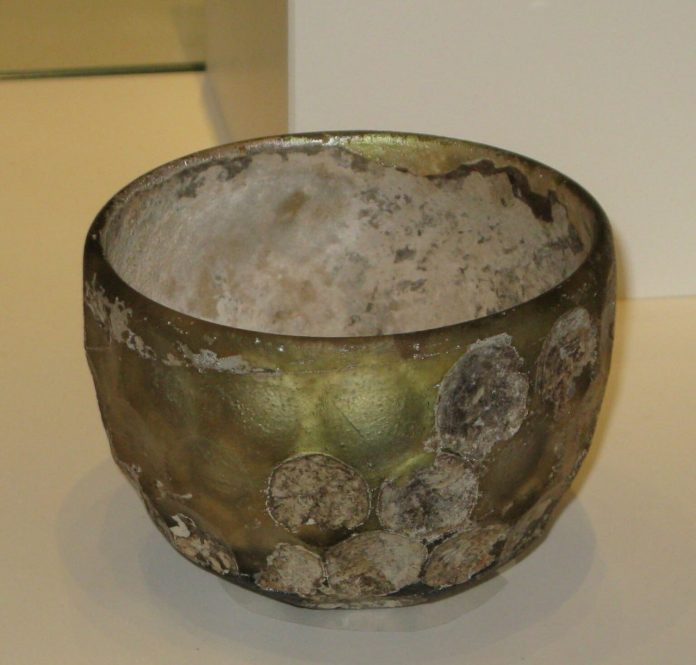
Ancient glassworks found in Japan, South Korea originate from Iran: Museum official

Ancient glassworks

Meysam Navaeian, director of the museums in Gilan, said glass is one of the cultural and archaeological assets of the Iranian province.

He referred to a book titled ‘Persian Glass’ written by Japanese archeologist Shinji Fukai, saying the ancient history researcher was responsible for the archeological excavations of Iran and Iraq over seven decades ago, and he came across historical examples of glass works that he had seen in Japan and South Korea.

Ancient glassworks

In the course of his studies, he found the origin of these glass works to be the north of Iran, the museum official said.

He said he believed that the production of glass in Gilan dates back to 2,300 years ago in the Parthian Empire era.

There were large glass workshops in the Deylaman region in northern Iran and their products were exported to East Asia through Khorshid Road, said Navaeian, adding similar glassworks have also been found in Germany.

Mass protests held against Israeli PM’s judicial overhaul plan for 27th week, clashes reported

Protest Israel

Thousands-strong protests against the regime’s extremist cabinet and its policies, including Netanyahu’s unpopular judicial overhaul plan, were held in the coastal city of Tel Aviv and elsewhere across the occupied territories on Saturday.

Israeli media described the protest in Tel Aviv as the largest to throng the city in weeks. While the regime’s media put the number of protesters in Tel Aviv at nearly 150,000, the organizers said nearly 180,000 had taken part.

Protesters in Tel Aviv blocked the Ayalon Highway at several locations, before the regime’s forces used a water cannon to disperse them.

Israeli authorities said two people were detained in Tel Aviv for “disorderly conduct,” as dozens of protesters blocked the vehicle that was taking the detainees from the scene.

Hundreds of protesters also gathered outside the home of Israel’s minister of military affairs, Yoav Gallant, in the northern town of Amikam.

During a rally against the judicial overhaul in the central city of Herzliya, protesters set fire to tires, blocking a number of streets. Israeli forces detained one person for lighting a flare.

Tens of thousands of protesters held similar rallies in other cities across the occupied territories.

Netanyahu’s judicial overhaul plan seeks to scrap a number of the Israeli Supreme Court’s powers to make it incapable of overriding the decisions made by the far-right cabinet.

It also seeks to give sweeping powers to the political elite in the process of selecting judges to the court.

Faced with overwhelming protests and a wave of industrial actions, Netanyahu paused the scheme in late March to enable talks on the issue.

However, deeming the negotiations to be pointless last month, he re-launched his bid to push through with the reform package, claiming that he has come up with new proposals, which are more moderate.

Those in favor of the scheme allege that it introduces some balance in the power that is wielded by different branches of the regime. Its opponents, however, say upon ratification, the plan would empower the ruling class to act in a more authoritarian fashion.

On Monday, the Knesset is expected to hold the first of three votes on the first new bill.

Protest leaders say they are planning to intensify demonstrations on Tuesday.

“If the Netanyahu’s government does not stop, it will soon learn what happens when we get angry,” a protester was quoted by AFP as saying.

“If we don’t stop what is happening now, there’ll be no going back,” another protester stated, adding the draft law that is to be introduced on Monday “is part of a series of laws, each of which allows the passage of the other.”

“If this law passes, we will not be able to live as we wish. I’m not at peace right now about our future here,” said another protester.

Syria cancels accreditation of BBC journalists over ‘politicised’ coverage

BBC

The accreditations of an unidentified correspondent and cameraman have been revoked following “subjective and false information and reports” on Syria, the information ministry said in a statement on its website. It described other BBC reports as “politicised.”

Accreditation of the BBC Radio correspondent in Syria was also revoked, the ministry added.

The information ministry announced that since Syria’s war broke out in 2011, the BBC has “from time to time provided subjective and fake information and reports about the reality” in the country.

The conflict has killed more than 500,000 people, displaced millions and devastated much of the country’s infrastructure and industry.

The BBC was warned “more than once” but “continued to broadcast its misleading reports based on statements… from terrorist entities and those hostile to Syria”, the ministry added.

A BBC spokesperson told Middle East Eye, “BBC News Arabic provides impartial independent journalism for our audiences. We speak to people across the political spectrum to establish the facts”, adding, “We will continue to provide impartial news and information to our audiences across the Arabic-speaking world.”

Revoking the accreditation of international media representatives is rare for Damascus, where the few remaining foreign media outlets have locally based correspondents.

Many foreign journalists quit the country as the war spiralled, pulling in foreign powers and global militants.

Syria ranks 175 out of 180 on a press freedom index compiled by Reporters Without Borders. The government and other authorities impose strict limits on media coverage and require accreditations and permissions to report.

The BBC published a report last month on what it said were “direct links” between the trade of an amphetamine known as Captagon and the family of President Bashar al-Assad, as well as the Syrian military.

Syria has denied playing a role in the Captagon trade.

The United States, Britain and the European Union have blamed Syria’s government for the production and export of the drug, naming Maher al-Assad – the head of the army’s Fourth Division and the president’s brother – as a key figure.

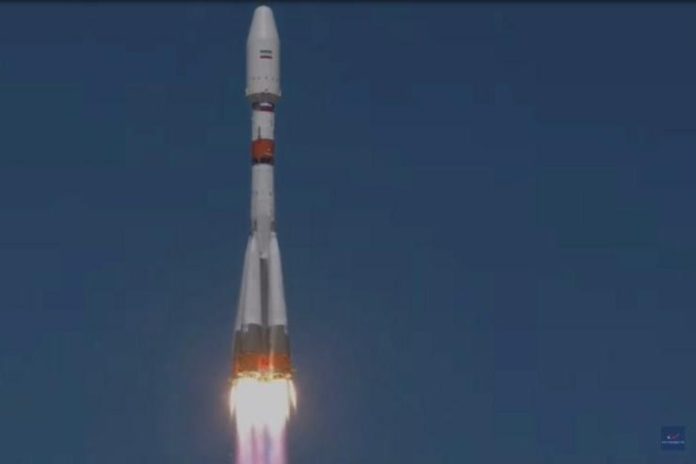
Iran space agency says its satellite begins monitoring, mapping land use changes

Iran’s Khayyam satellite

Daliriyan stated on Saturday that the ISA and the Information Technology Organization of Iran (ITO) are exploring legal channels in order to prepare and present the first batch of satellite images to judicial authorities combating land expropriation.

He added a memorandum of understanding has already been signed between ISA and ITO after the latter requested more accurate data and observation of land surface by means of the satellite in order to resolve legal disputes between ordinary citizens and state bodies.

While data are being collected and analyzed under the agreement, the two Iranian organizations are exploring necessary legal channels so as to arrive at favorable goals and provide the first batch of satellite images to help deal with various cases of land grab and monitor land use changes.

“Khayyam satellite is currently taking images from different parts of the country as part of efforts to implement the memorandum of understanding. These images will be utilized in order to address legal challenges of ordinary people and state institutions concerning land use changes,” Daliriyan continued.

“We are ready to offer necessary data to other Iranian state agencies and help them solve their problems in various fields, including environmental monitoring, water resources, soil erosion and land subsidence,” he noted.

Back in August last year, the Khayyam satellite was launched into orbit from the Moscow-operated Baikonur Cosmodrome in Kazakhstan, marking what Iran called the beginning of “strategic” aerospace cooperation between Tehran and Moscow.

With remote-sensing applications, the satellite will send high-quality pictures four times a day for use in environmental and agricultural research and monitoring of water resources, according to Iran’s Space Organization.

The maps and data will be used for improving agricultural productivity, enhanced monitoring of Iran’s water resources, managing natural disasters, supervising development projects under construction, observing environmental hazards, monitoring mines and relevant excavations, and keeping a close watch on the country’s borders.

Iran’s Space Organization received the first telemetry data sent from the Khayyam satellite hours after the launch.

The satellite was launched at the velocity of 7.6 kilometers per second and was placed into an LEO orbit 500 kilometers above the earth’s surface some 480 seconds after the blast-off.

The Earth observation satellite has been named after legendary Persian polymath Omar Khayyam (May 18, 1048 – December 4, 1131), who is known globally for his epic contributions to the fields of mathematics, astronomy, philosophy, and poetry.

Despite sanctions imposed by Western countries on Iran in recent years, Iran has managed to take giant strides in different fields of science and technology.

Live Update: Russia’s “Special Operation” in Ukraine; Day 501

Russia Ukraine War

Missile shot down over Russia’s Rostov region: Governor

Russian air defence shot down a Ukrainian missile in the country’s Rostov region, Governor Vasily Golubev said on Telegram.

“There were no casualties. The debris partially damaged the roofs of several buildings,” Golubev wrote.

Moscow regularly accuses Ukraine of attacks against targets inside Russia. Kyiv has denied the accusations, saying it is fighting a defensive war on its own territory.


Cluster munitions will ‘restore parity’ on battlefield: Zelensky adviser

Adviser to President Volodymyr Zelenskky, Mykhailo Podolyak, stated that cluster munitions are “extremely important” for Ukraine in its war against Russia.

“They somewhat compensate for our shell deficit and partially restore parity on the battlefield. Given the fact that Russia has been using this type of ammunition in Ukraine for over a year, this is at least fair,” he posted on Twitter.


Death toll rises to nine after Russian shelling of Lyman: Regional official

Nine people have died after Russian shelling in the eastern Ukrainian city of Lyman on Saturday, according to the head of the Donetsk military administration Pavlo Krylenko.

“Russians killed ten residents of Donetsk region over June 8, including nine people in Lyman and one in Avdiivka. 13 more people have been wounded,” Kyrylenko said in a Telegram update Sunday, the day after the attack.

“In the Donetsk direction, the enemy launched a rocket attack on Avdiivka. Artillery shelling of Krasnohorivka in Mariinka community was recorded,” he added.

Kramatorsk was shelled overnight on Saturday, with three houses and a shop sustaining damage with no casualties.


Ukrainian official appears to claim responsibility for Crimea bridge explosion

Ukraine’s deputy defense minister Hanna Maliar has made what appears to be the clearest admission yet that Ukrainian forces were responsible for an attack last October on the bridge connecting Russia and occupied Crimea.

Listing 12 Ukrainian achievements since the start of Russia’s full-scale invasion 500 days ago, Maliar wrote on Telegram: “273 days ago, [we] launched the first strike on the Crimean bridge to disrupt Russian logistics.”

The Telegram message also mentioned the sinking of the Moskva cruiser (451 days ago) and the liberation of Snake Island (373 days ago).

The attack on the Kerch bridge, which disrupted major transport links between mainland Russia and the annexed Crimean peninsula, not only struck a blow against Russia’s military effort in Ukraine but also represented a psychological blow for Moscow and a major propaganda victory for Kyiv.

Ukrainian officials celebrated the blast at the time but did not make a clear claim of responsibility.

It took place the day after Russian leader Vladimir Putin turned 70, and Ukraine’s Secretary of the National Security and Defense Council Oleksiy Danilov published a video of the bridge in flames alongside a video of Marilyn Monroe singing “Happy Birthday, Mister President.”

Among other responses, the Navy of the Armed Forces of Ukraine posted on Facebook, “Air defense of the Russian Federation, are you sleeping?” alongside a video showing a section of the bridge’s road that had been completely destroyed.


Russia condemns US decision to supply Ukraine with cluster bombs

Russian foreign ministry spokeswoman Maria Zakharova has slammed the US decision to supply Ukraine with cluster munitions.

Zakharova said in a statement on the ministry’s website that cluster bombs are another step aimed at protracting the war without taking into account the cost of civilian lives.

“We are talking about a cynical attempt to prolong the agony of the current Ukrainian authorities, regardless of civilian casualties. Washington is well aware that the ‘promises’ of the Ukronazis to use these weapons of indiscriminate actions ‘carefully and responsibly’ are worthless. Civilians will be under attack,” she warned.


Russian forces make unsuccessful attempts to advance in Lyman sector: Kyiv

The general staff of the Ukrainian Armed Forces has announced in its evening report that Russian forces made unsuccessful attempts to advance in the Lyman sector, as artillery shelling killed at least eight civilians and wounded 13 in the eastern town.

At least 10 towns and villages were shelled, the report said, adding that the Russian troops’ assault attempts had been repelled.

The city of Lyman is a key railway junction in the eastern Donetsk region. It was initially captured by Russian forces but then re-taken by Ukraine’s army in October.


Russia calls US decision to provide Ukraine with cluster munitions an “act of desperation”

The US decision to provide Ukraine with cluster munitions is an inconsequential act that will still fail to defeat Moscow’s forces on the battlefield, Russia’s foreign ministry announced in a statement Saturday.

“The transfer of cluster munitions is an act of desperation and evidence of failure of the highly publicized Ukrainian ‘counteroffensive,'” Russian foreign ministry spokesperson Maria Zakharova said in a statement.

“It will not affect the course of a special military operation,” Zakharova added, using the preferred terminology among Kremlin officials to describe the war in Ukraine.

Zakharova claimed the US decision was “aimed at maximally prolonging the conflict in Ukraine,” but that Russia’s goals for the invasion will still be fully achieved.

Officials with the US Department of Defense have acknowledged that one of the primary reasons they’re providing cluster munitions to Kyiv is that its counteroffensive is “going a little slower than some had hoped.”

The Ukrainian military has so far failed to yield major gains, documenting incremental advances on the front lines during the offensive’s opening stages.

Ukrainian President Volodymyr Zelensky has said he wants to be strategic about where he sends troops in order to minimize casualties, especially considering they are making a slog through heavily mined territories and fortified Russian defenses.

Chairman of the US Joint Chiefs of Staff Gen. Mark Milley has said the pace of the counteroffensive is not surprising, given those factors.

US President Joe Biden told CNN that he deeply considered the issue of providing the cluster munitions — controversial weapons that are banned by over 100 nations because of the potential risk they pose to civilians. Ultimately, he concluded that the risk of Russia succeeding in its invasion was greater than that of letting Ukraine use the weapons on their own soil, he said.