Tuesday, December 23, 2025
Home Blog Page 1357

Report: US seeking to turn India into logistics hub to counter China

Biden and Modi

US President Joe Biden and Indian Prime Minister Narendra Modi agreed to comprehensive defense and economic partnerships when Modi visited the White House in late June for a summit with Biden.

“The US-India Major Defense Partnership has emerged as a pillar of global peace and security,” the joint statement from the summit reads.

The US will provide India with support to develop infrastructure that will be used to resupply, repair and maintain ships and aircraft.

“We’ll have much more to follow in the near future, but the aim here is to make India a logistics hub for the United States and other partners in the Indo-Pacific region,” said Air Force Brig. Gen. Pat Ryder, the Pentagon press secretary, to reporters in late June.

As part of this effort, the US Navy will sign ship repair agreements with Indian shipyards.

The navy has concluded a Master Ship Repair Agreement with the Larsen & Toubro shipyard near the Indian city of Chennai, according to the White House. The navy is close to finalizing separate deals with two other shipbuilders, based in Mumbai and Goa.

The US military looks to build readiness for quickly handling resupply activities and repairs in the Indo-Pacific region. If the navy has access to more hubs in the region, then vessels and aircraft will waste less time pausing operations for both. The time savings can be allocated to joint exercises with other countries.

“There’s a big gap between the bases the United States sustains in the bilateral hub agreements they have in the Middle East and then the Western Pacific,” stated Jeffrey Payne, assistant professor at the Near East South Asia Center for Strategic Studies.

“So, India fulfills this,” he added.

At present, Japan and Singapore serve as key naval hubs for the US in Asia.

Harry Harris, former commander of US Indo-Pacific Command, hailed the initiative.

“Currently, we operate from Diego Garcia and Western Australia in the Indian Ocean,” he told Nikkei via email, adding, “Securing a maintenance, repair, and logistics hub on the Subcontinent is significant as this would give us much-needed flexibility in the vast Indian Ocean region.”

The Chinese navy has about 355 ships and submarines, making it the world’s largest numerically, according to the 2021 edition of the Pentagon’s annual report on China. If American vessels cannot spend more time at sea, then the US will risk falling behind China in terms of naval capabilities, weakening deterrence.

Because the Indo-Pacific is defined by large stretches of water, many believe that conducting supply activities in the region during emergencies will prove more difficult than similar activities in Europe, with its land routes.

“Are we ready today? Yes, we are,” Rear Adm. Mark Melson, commander of the US Navy’s logistics group stationed in Singapore, told Nikkei in an interview in early June, adding, “But I will never claim to be ready enough.”

“We are certainly trying to improve the amount of access into a number of places where we can conduct expeditionary resupply, expeditionary refuel [and] if required, expeditionary rearm,” Melson continued.

The Biden administration plans to deepen the partnership with India beyond the Indian Ocean in the maritime space. Daniel Kritenbrink, assistant secretary of state for East Asian and Pacific affairs, attended an event hosted by a US think tank at the end of June and touched on strengthening the collaboration with India in the South China Sea.

Indian External Affairs Minister Subrahmanyam Jaishankar met with Philippine Foreign Secretary Enrique Manalo in New Delhi at the end of June. The two ministers released a joint statement that backed a 2016 arbitration ruling at The Hague rejecting Chinese claims to nearly all of the South China Sea.

This marked the first time that India expressed support for the Hague ruling, which is based on the United Nations Convention on the Law of the Sea, according to Gregory Poling, a senior fellow at the Center for Strategic and International Studies in Washington. It put India in line with Japan and major Western countries on the issue.

India, as a representative of the so-called Global South emerging and developing countries, is gaining a stronger role and voice in the international community.

On the security front, India appears to have shifted focus on relations to the West. Modi’s visit to Washington in June is evidence of this. India on Tuesday hosted the Shanghai Cooperation Organization summit, which was held in a virtual format out of consideration for the US.

But the basic theme of India’s diplomacy remains “strategic autonomy,” which entails working with other countries according to its own interests.

In recent years, the US apparently threatened to impose sanctions on India when it sought to acquire air defense systems from Russia. In 1971, the US sent an aircraft carrier to threaten India during the third Indo-Pakistani War. Whether today’s partnership between the US and India will completely dispel the latent distrust of Washington remains to be seen.
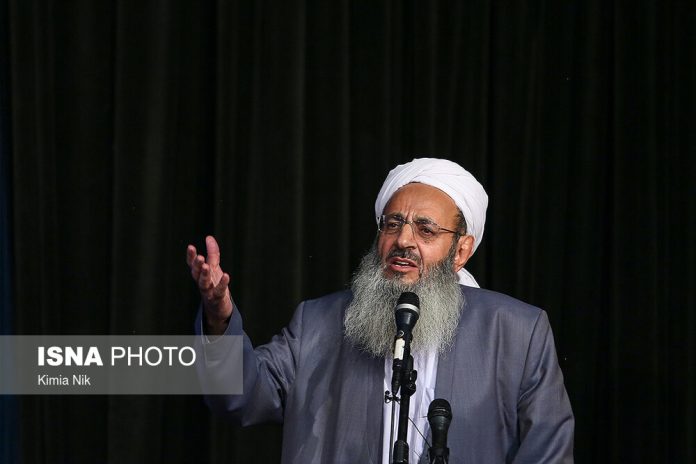
Iranian Sunni Muslim cleric condemns terrorist attack in Zahedan

Moulavi Abdul Hamid

He renounced any action that would cause insecurity in the country.

He urged people in Sistan and Baluchestan Province to keep calm and avoid any move that cause insecurity.

The attack on the police station was launched on Saturday by armed assailants who threw handmade grenades and engaged in a gunfight with security forces.

All the four terrorists involved in the assault were killed. Two soldiers also lost their lives in the firefight.

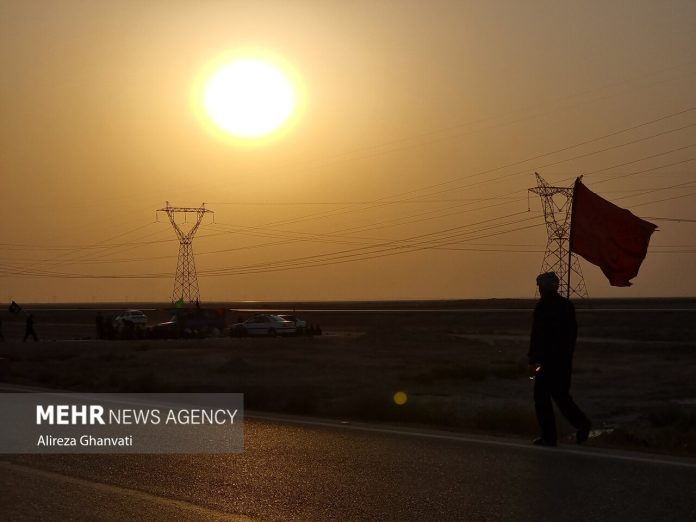
Iran and Iraq to set up security posts for Arbaeen march

Iranian families host pilgrims of Arbaeen walk

Speaking after a meeting with his Iranian counterpart Ahmad Vahidi, the Iraqi official said by creating the security posts, they two countries aim to control the Arbaeen march, which will be held 40 days after Ashura, the martyrdom anniversary of Imam Hussein, the third Shia Imam and the Prophet Muhammad’s grandson.

Each year, millions of people observe the occasion. Millions, mainly from Iran, also hold marches on the Day of Ashura, some 20 days from now.

Israel says won’t criminally charge officers for 2021 Gaza assault

Israel Gaza

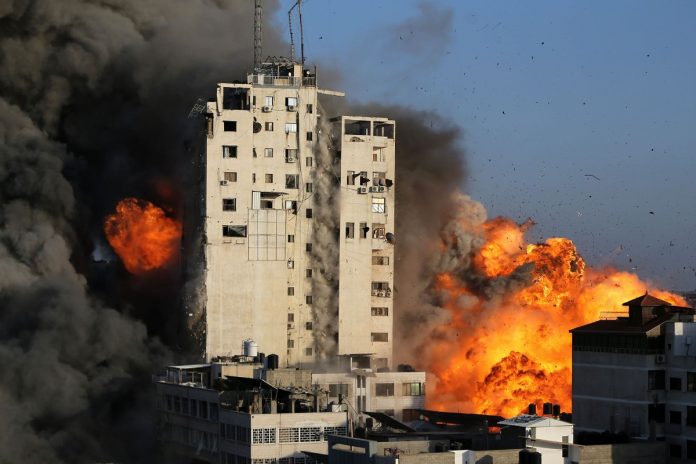
The soldiers, who received army reprimands for their actions, did not obey standard procedures when striking Gaza but none crossed the “criminal threshold”, the army announced in a statement.

The Israeli army did not say when the incidents took place, what occurred or whether they involved civilian deaths.

It only said two officers struck a target at an unauthorised range, one received a warning for “negligence for incriminating a target in violation of the mandatory procedure”, another was reprimanded for “lack of sufficient control in the striking unit cell”, and a last officer erred in “targeting procedure”.

Israel is accused of committing war crimes during a devastating 11-day offensive, which killed at least 261 people, including 67 children, and wounded more than 2,200 in Gaza, according to the United Nations.

Thirteen people were killed in Israel during the assault in May 2021.

Rights group Human Rights Watch (HRW) had then said that Israeli army committed war crimes, given that attacks had “no evident military targets” and resulted in the deaths of dozens of civilians.

HRW added the Israeli army’s actions against its officers did not go far enough and did not amount to a real form of accountability for Israel’s destruction of Gaza.

“Entire families were wiped out and high-rise buildings with scores of homes and businesses were reduced to rubble,” Omar Shakir, Israel and Palestine Director at HRW stated.

“That requires a much more serious investigation and real consequences imposed, not only on those who carried out the attacks but on those who authorised them. What took place does not appear to be that,” Shakir continued.

The army’s announcement came on the heels of its recent raid on the Jenin refugee camp, which has also been condemned for possible rights violations.

The raid killed 12 Palestinians and wounded more than 100 others, 30 of them seriously, Israel’s largest attack in the occupied West Bank in more than 20 years.

Iran still working to undo sanctions via diplomacy: Minister

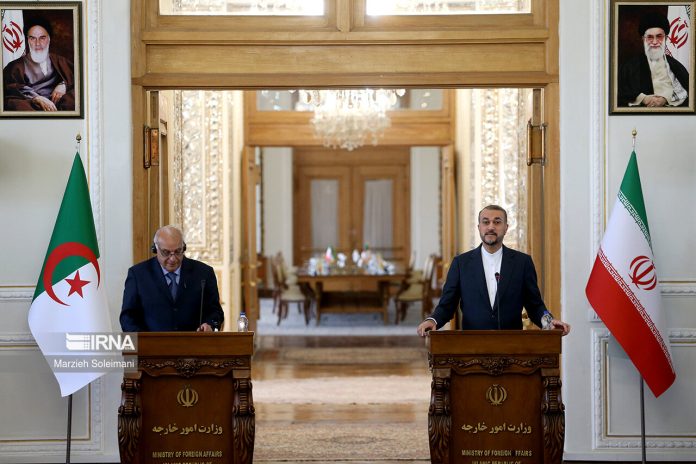
Hossein Amirabdollahian and Ahmed Attaf

“I’d like to stress that we continue to be on the two paths of trying to render the sanctions ineffective and to have them terminated through diplomacy,” Amirabdollahian said at a press conference with Algerian Foreign Minister Ahmed Attaf on Saturday.

Referring to the relations between Tehran and Algiers, he said the ties were at a desirable level and that talks would continue.

He said the two sides had agreed to waiver political visas first and then work to waive ordinary visas as well.

The Iranian foreign minister said bilateral relations would deepen in the fields of the science of new energy sources, agriculture, medical hardware, tourism, and industry and mines.
Amirabdollahian praised Algeria for thwarting Israel’s plan to join the African Union and to help return Syria to the Arab League.

He said he had also discussed Sudan and the latest developments in that country with Attaf.

The Iranian foreign minister said he had also earlier met with Sudan’s foreign minister and that they had agreed to reopen embassies.

Iran emerges as biggest crude steel producer in West Asia: Report

Steel industry in Iran

Iranian steelmakers produced 13 million tons of crude steel from January to May this year, registering a 2.2% rise compared with the corresponding period of last year.

Steel producers located in the Middle East, including Iran, Qatar, Saudi Arabia, and the United Arab Emirates, together produced a total of 18.7 million tons of steel during the period, up 1.1% year-on-year.

The world’s 63 steelmakers produced 786 million tons of steel during the same period, down 1.2%.

Countries located in Africa, including Egypt, Libya, South Africa and Tunisia, produced 2.6 million tons of steel, up 2.6% compared with the same period last year.

The steel output of countries in Asia and Oceania, including Australia, China, India, Japan, Mongolia, New Zealand, Pakistan, South Korea, Taiwan, Thailand and Vietnam, stood at 588.4 million tons, up 0.7%.

The 27 European Union countries produced a total of 56 million tons, down 10.4%.

The states located in “Europe, Other” region, including Macedonia, Norway, Serbia, Turkey and the United Kingdom, produced 16.6 million tons of steel, down 16.3% compared with the corresponding period of the preceding year.

North American countries, including Canada, Cuba, El Salvador, Guatemala, Mexico and the United States, produced 45.9 million tons of steel during the period, down 3.6%.

Steelmakers in the “Russia and other Commonwealth of Independent States (CIS) countries plus Ukraine” region, including Belarus, Kazakhstan, Russia and Ukraine produced 36.9 million tons of steel, down 3.8%.

South American countries, including Argentina, Brazil, Chile, Colombia, Ecuador, Paraguay, Peru, Uruguay and Venezuela, produced 17.1 million tons of steel, down 5.9% year-on-year.

Iran produced 30.6 million tons of crude steel last year and managed to maintain its place as the world’s 10th biggest steel producer.

In the meantime, the Iranian Mines and Mining Industries Development and Renovation Organization (IMIDRO), affiliated to the Ministry of Industry, Mine and Trade, stood in 20th place among the world’s top steelmaking companies.

Iran became the world’s second-largest sponge iron producer by producing 125,100,000 tons in 2022.

The country also produced 2.5 million tons of crude iron in 2022, 100,000 tons of which were exported overseas.

Iran security forces foil terror attack on Zahedan police station, kill all 4 assailants

Crime Scene

On Saturday, the terrorists tried to make their way into the police station in Zahedan, the capital of Iran’s Sistan and Baluchestan Province, but their attempt was abortive as Iranian security forces responded quickly.

Local officials said the attackers threw handmade grenades and engaged in a gunfight with the security forces.

In a statement, the Quds Force of Iran’s Islamic Revolution Guards Corps (IRGC) said four terrorists were involved in the attack, all of whom were killed in the operation.

Two members of the Iranian security staff also lost their lives in the clashes, the statement added.

Sistan and Baluchestan, which borders Pakistan, has witnessed many attacks targeting both civilians and security forces by terrorists who mainly sneak into the country from Pakistan.

On September 30, 2022, 35 people lost their lives as terrorists, taking advantage of a wave of unrest across Iran, launched armed attacks on several police stations and public places in Zahedan and set fire to an emergency health facility, and a bank, among other places there.

Palestine says reconstruction of Jenin, destroyed in Israeli raid, requires $15bln

Jenin

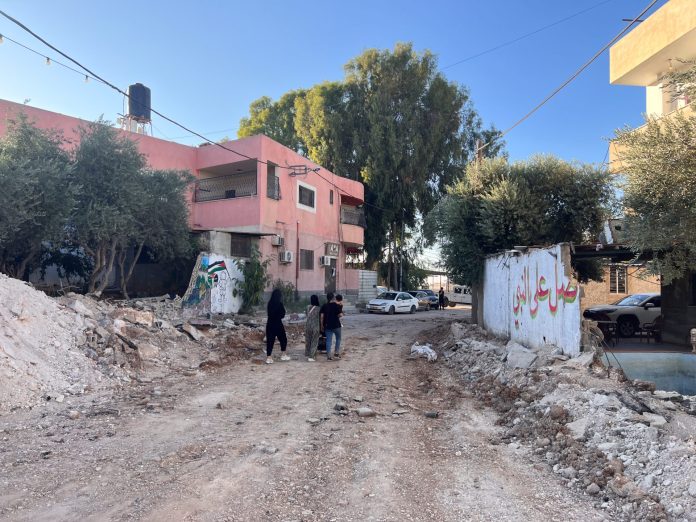
Mohamed Ziara noted a total of $15.5 million is needed to reconstruct buildings and roads in Jenin after the Israeli forces carried out a two-day aggression on the occupied West Bank city. He added that the damages listed by his ministry include buildings, roads and basic infrastructure like water and sanitation networks.

Ziara highlighted that the reconstruction process includes the complete removal of debris from four buildings at a cost of $1.5 million, partial damage to 25 buildings at a cost of $2 million, partial damage to 250 housing units at a cost of $2.5 million, and damage to 150 commercial and service buildings at a cost of $5 million, in addition to severe damage to a mosque at a cost of $1 million.

The Palestinian minister went on to say that Israeli forces bulldozed five kilometers of roads inside the Jenin refugee camp and $1.5 million is needed in order to repair them. Moreover, adjacent buildings which were partially damaged need to be fixed.

Ziara stated that teams from the Palestinian Ministry of Public Works and Housing have immediately initiated a rescue plan to deal with the aftermath of the Israeli aggression by opening roads and securing collapsing buildings in order not to endanger citizens, and will continue until all these tasks are completed.

He pointed out that unexploded ordnance could be found across the camp, emphasizing that the ministry’s staff and civil defense teams are working to remove them safely.

Philippe Lazzarini, Commissioner-General of the United Nations Relief and Works Agency for Palestine Refugees (UNRWA), has also appealed for support to help rebuild Jenin refugee camp devastated by two days of Israeli military assault earlier this week.

“The Israeli military operation of July 4-5 in Jenin was the most intense in over two decades. For many of the camp’s residents, it brought back horrific memories from 2002 when the camp witnessed one of the most severe rounds of violence during the Second Intifada (uprising). Families told my UNRWA colleagues that the situation made them feel helpless and frightened for their and their children’s lives,” said in a statement on Thursday.

He added that the camp sustained significant damage – the streets are full of rubble; electricity and water are cut in most parts of the camp and many houses have been destroyed.

“Today, we had to set up a temporary health center because a major part of the UNRWA health center was destroyed during the operation. The Jenin municipality, local authorities and the Palestinian Authority have started a massive clean-up operation to remove the rubble and clear the roads. However, I am extremely concerned that possible unexploded ordinances remain which place the lives of residents and humanitarian aid groups at risk,” Lazzarini stated.

“Right now, our priority is to restore basic services in the camp and to support those whose homes were damaged with emergency cash assistance. It is essential that we repair our own buildings and re-open four UNRWA schools which provide education for 1,700 children and a health center where residents get primary care. To make sure this happens, UNRWA is rapidly deploying more teams and assistance to support residents and the local authorities,” he pointed out.

The UNRWA commissioner-general stressed that his agency needs the support of its partners and donors to help rebuild and rehabilitate its structures and the homes of Palestinian refugees.

Israel launched the military campaign against Jenin in the early hours of Monday morning, mobilizing upwards of 1,000 troops as means of supposedly damaging the resistance “infrastructure” in the city and the refugee camp that it hosts.

At least 12 Palestinians and one Israeli trooper died as a result of the conflict, during which a steadfast Palestinian resistance response prompted the regime to pull out its forces after less than two days.

Israeli troops finally pulled back from Jenin following a 44-hour-long incursion.

Iraq probes kidnapping of Israeli academic

Elizabeth Tsurkov

A government spokesman said on Friday that they were waiting for the results of the investigation into the March kidnapping of the woman.

Tsurkov went missing after travelling to Iraq for research purposes on behalf of Princeton University, Israeli Prime Minister Benjamin Netanyahu’s office said on Wednesday.

“Elizabeth Tsurkov is still alive and we see Iraq as responsible for her fate and well being,” it announced in a statement.

Tel Aviv added that Tsurkov was being held by Kataib Hezbollah.

In a statement on Thursday evening, Kataeb Hezbollah stressed it was looking into the fate of “Zionist hostage or hostages” in the country.

Tsurkov’s mother Irena said she had not heard from her daughter in two months.

Israeli citizens are forbidden from travelling to Iraq, which is considered an enemy state.

On her personal website, Tsurkov has stated that her research aims to “understand and convey” the views and experiences of people in the Middle East and “highlight abuses by powerful actors … in the region”.

The academic has more than 78,000 followers on Twitter and appears to have last tweeted in March.

Tsurkov is also a fellow at the New Lines Institute for Strategy and Policy, a Washington, DC-based research group, as well as a contributor to the News Line Magazine based in the US capital.

The magazine has called on the United States government to help secure her release.

3 Palestinians killed by Israeli soldiers in WB

Israeli Forces

Two men, Hamza Maqbool and Khairi Shaheen, were killed during an early Friday morning raid in Nablus. A third, named as Abdul Jawwad Saleh, was shot by Israeli forces in the village of Umm Safa, which neighbours Ramallah, later on Friday.

The Nablus raid was described by some locals as an “invasion”.

The Palestinian Red Crescent Society announced in a statement its crews “transferred the bodies of two martyrs from the Old City of Nablus”.

Israeli forces cordoned off the house before fatally shooting the men, according to Palestinian news agency Wafa. Three others were also injured.

In Ramallah, the 24-year-old Saleh was shot during a protest by Palestinians against an illegal Israeli settlement outpost, according to the Palestinian Ministry of Health.

Palestinians stated that the settlers threw stones at them, and that Israeli soldiers at the scene opened fire, shooting Saleh.

The Israeli military announced it was checking the report.

The incidents come less than two days after an Israeli army raid in the Jenin refugee camp that killed 12 Palestinians and wounded 140 others, 30 of them seriously.

The raid, which forced thousands to flee the camp which was left in rubble and ruin, was the largest Israeli attack in the West Bank in more than 20 years.

Israel has been conducting near-daily raids and killing Palestinians in the West Bank since June 2021 in an attempt to crack down on a growing armed resistance.