Monday, December 29, 2025
Home Blog Page 1349

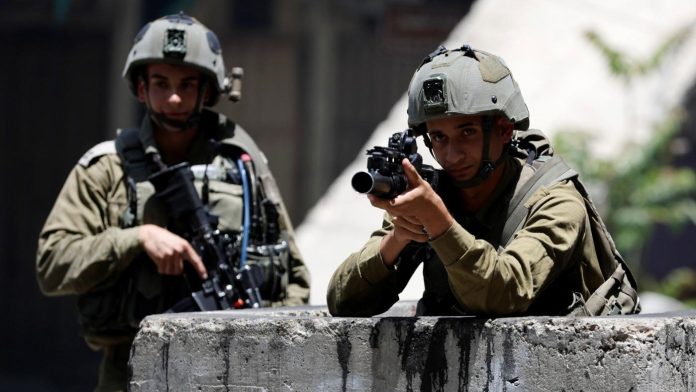
Israeli soldiers kill 17-year-old Palestinian in West Bank

Israel Palestine

The teenager, identified by the Palestinian Health Ministry as Muhammad Fouad Atta al-Bayed, was shot in the head by Israeli forces during unrest in the village of Umm Safa, which neighbours Ramallah, on Friday.

The Palestinian news agency Wafa reported that the boy from Jalazone refugee camp, north of Ramallah, was taken to the Istishari Arab Hospital before dying of his wounds.

It added that Israeli forces had fired live ammunition, tear gas and stun grenades during confrontations with local residents.

The Israeli army said that a member of the paramilitary border police unit opened fire after masked suspects threw stones and rocks at Israeli forces, according to The Associated Press.

It confirmed that a person was hit by gunfire but gave no further details. It added that soldiers opened fire in response to stone-throwing and explosives, hitting one suspect who allegedly had thrown a bomb.

There were no immediate details from Palestinian officials.

The killing of al-Bayed came as part of a year-long period of violence, marked by repeated Israeli raids on the occupied West Bank, which has shown no signs of abating.

More than 150 Palestinians have been killed by Israeli fire since the start of 2023 in the occupied West Bank and occupied East Jerusalem.

Raids have only grown deadlier under Israel’s far-right government, which came into power at the start of the year, and includes leading figures from Israel’s settler movement, which seeks to expand illegal settlements in the occupied West Bank at the expense of Palestinians.

Earlier this month in Umm Safa, Palestinian health officials said 24-year-old Abdel-Jawad Hamdan Saleh was also fatally shot in the chest by Israeli forces during a demonstration.

Last month, several dozen settlers rampaged through the West Bank village, setting fire to vehicles and homes in days of consecutive vigilante attacks following the deadly shooting of four Israeli settlers at a petrol station between the Palestinian cities of Ramallah and Nablus.

The shooting came a day after six Palestinians were killed in the Jenin refugee camp during a large-scale Israeli military incursion.

The torching of homes and property in Umm Safa drew rare condemnation from the Israeli army’s international media spokesman, who condemned the settler rioting as “acts of terror”, The Times of Israel reported.

Opposition leader Yair Lapid said the violence “crosses all lines”.

“Torching homes and cars of innocents is inhumane and definitely not Jewish. Prime Minister [Benjamin] Netanyahu needs to condemn this disgrace and deal with it severely. This is a moral disgrace and security threat,” Lapid tweeted.

The United Nations human rights chief, Volker Turk, warned that “the violence, along with the inflammatory rhetoric, serve only to drive Israelis and Palestinians deeper into an abyss.”

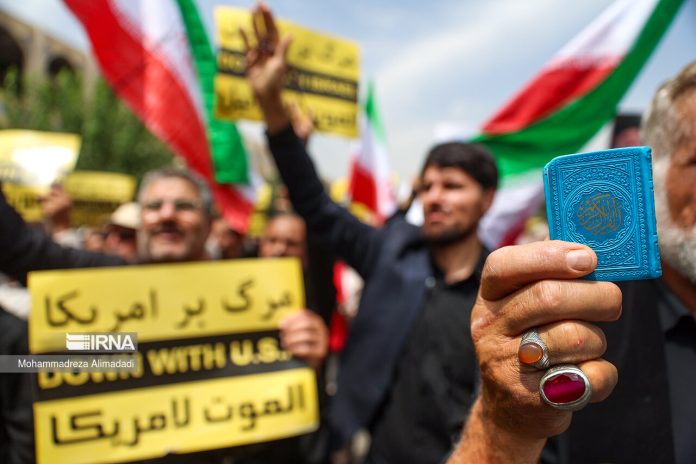
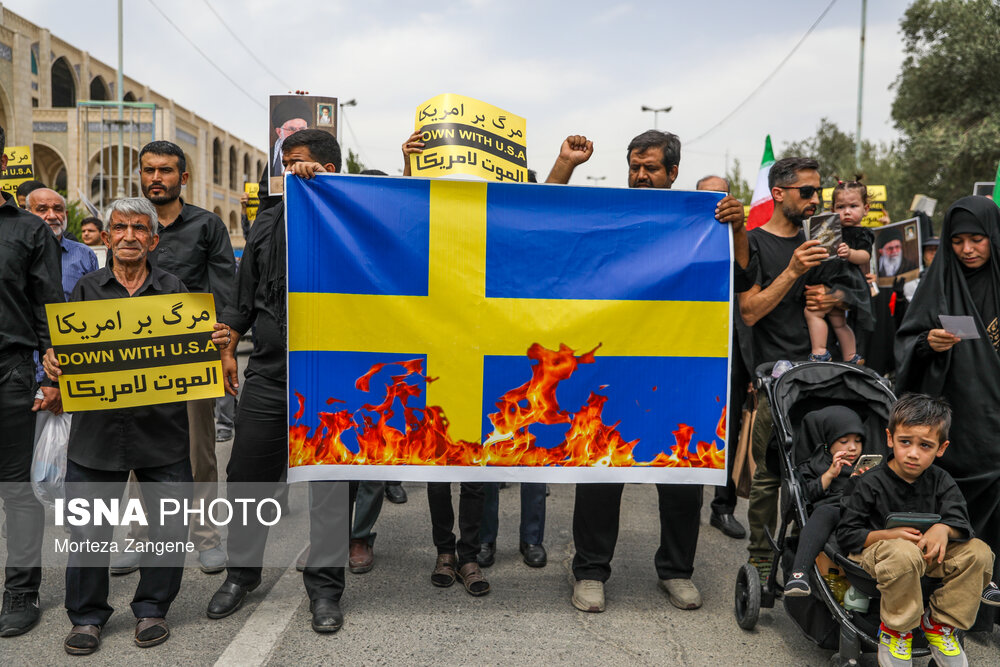
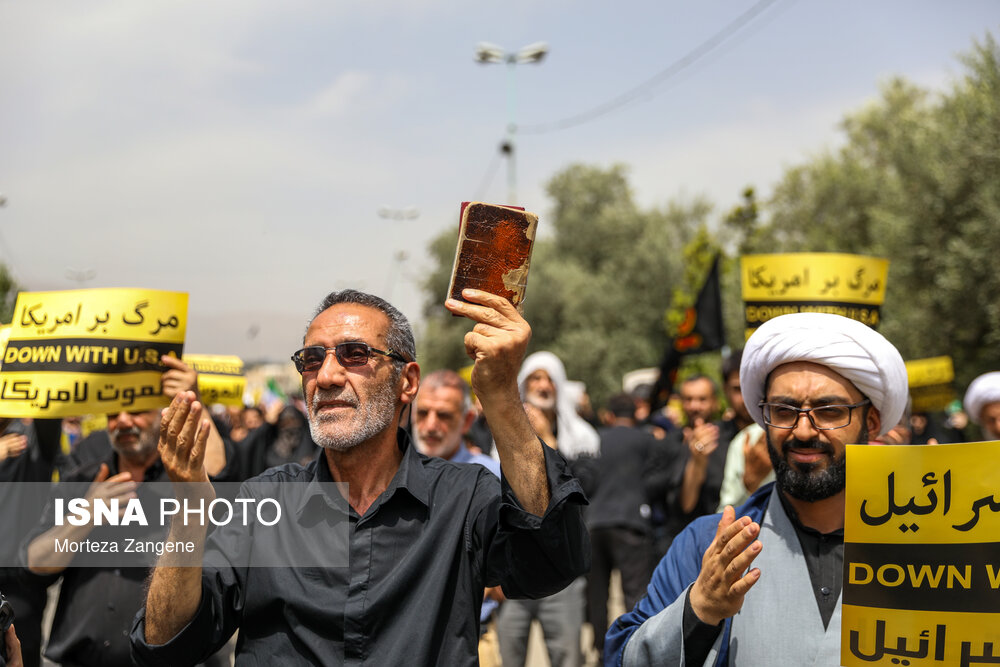
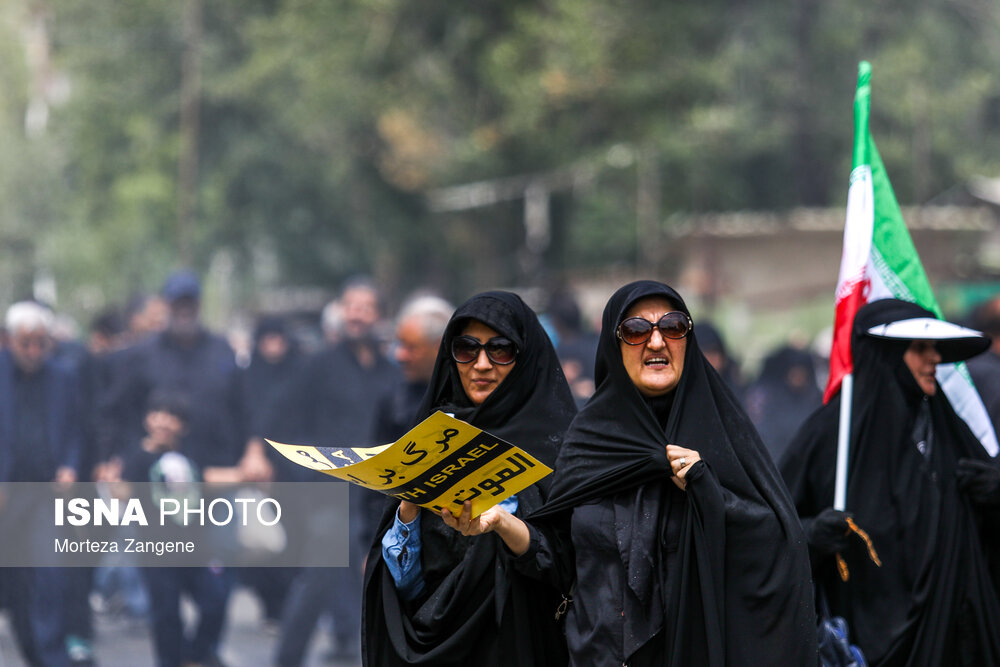
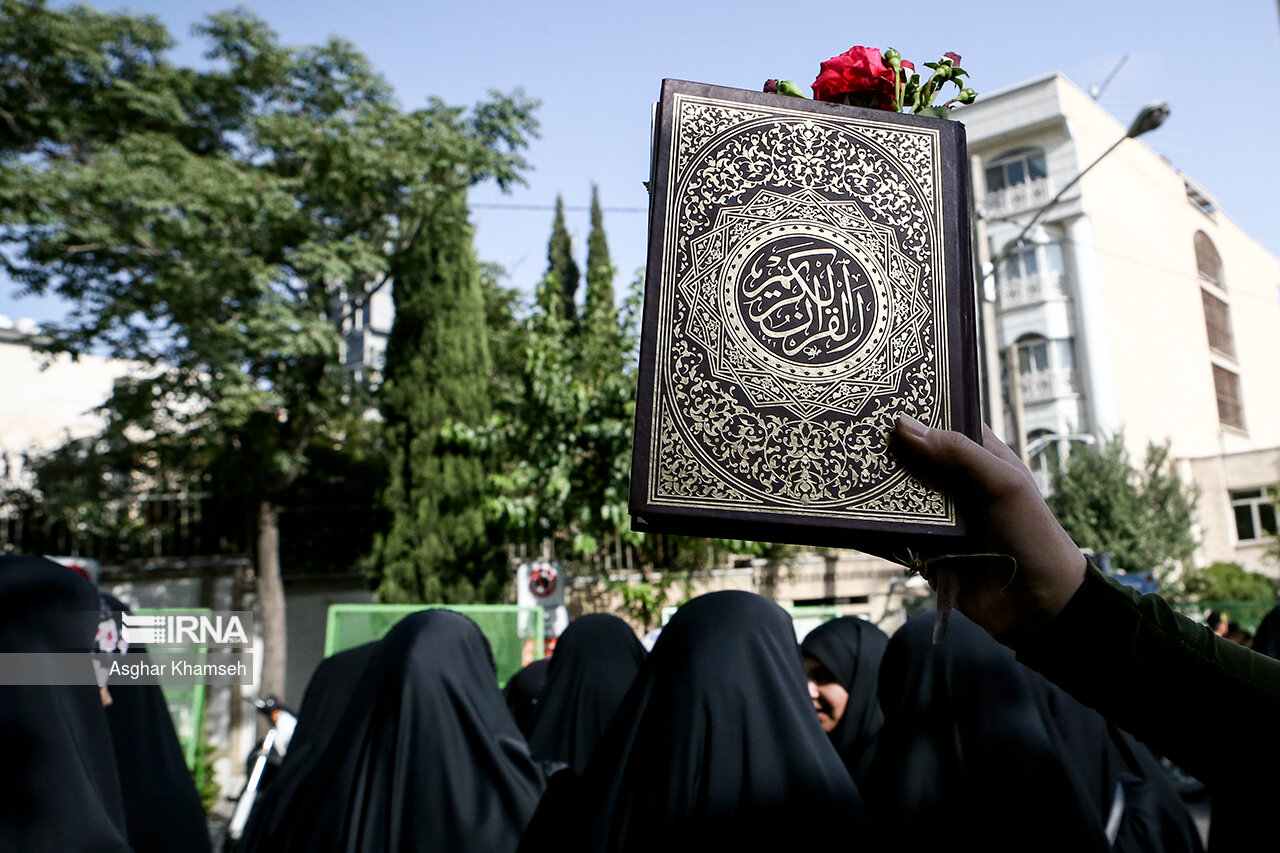
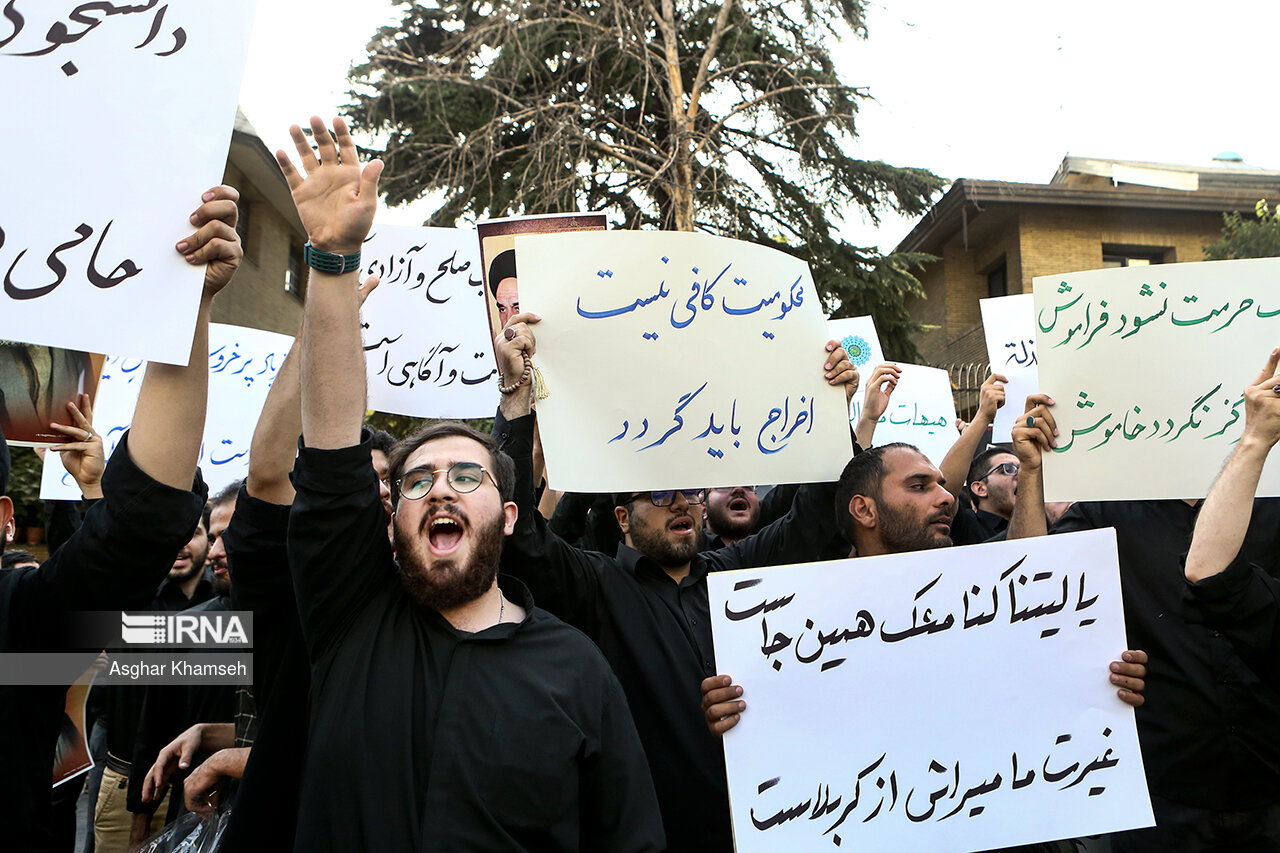
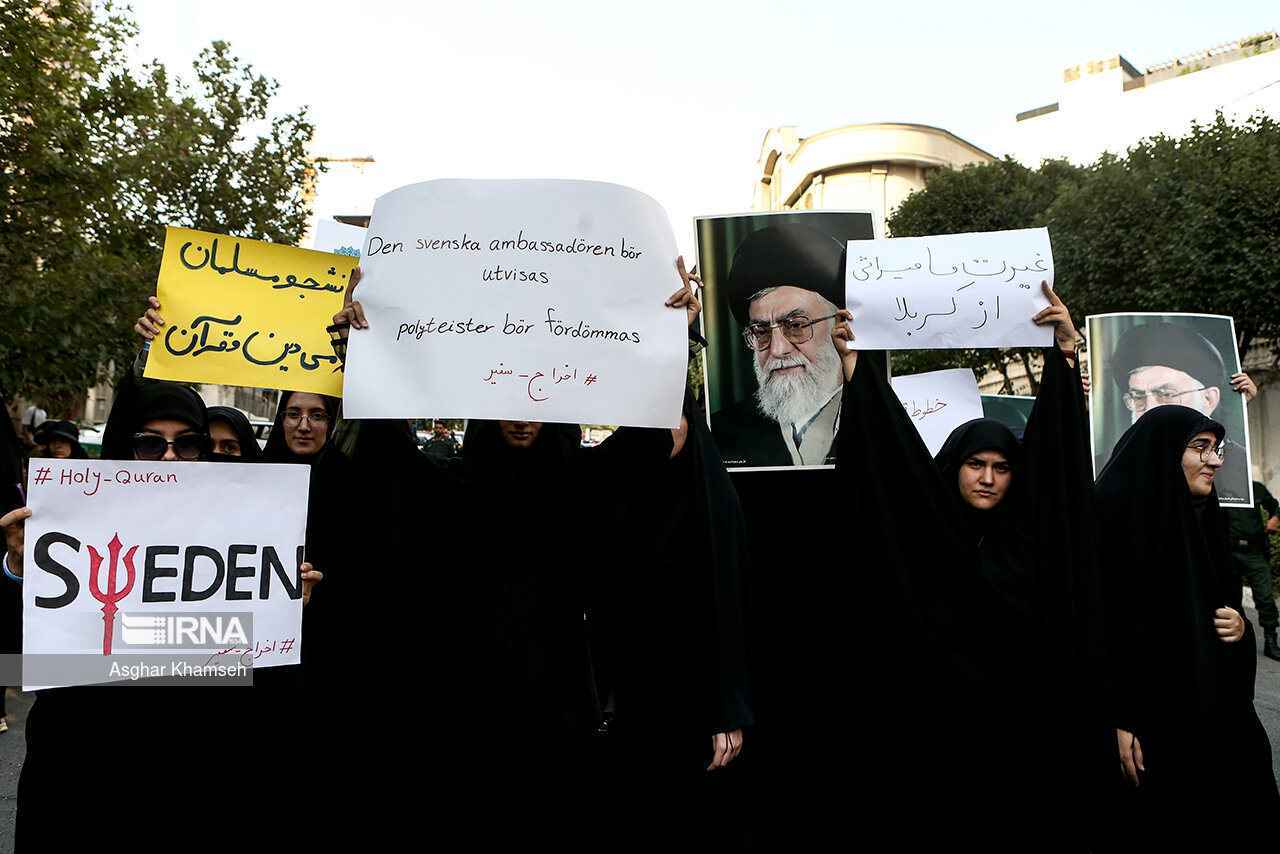
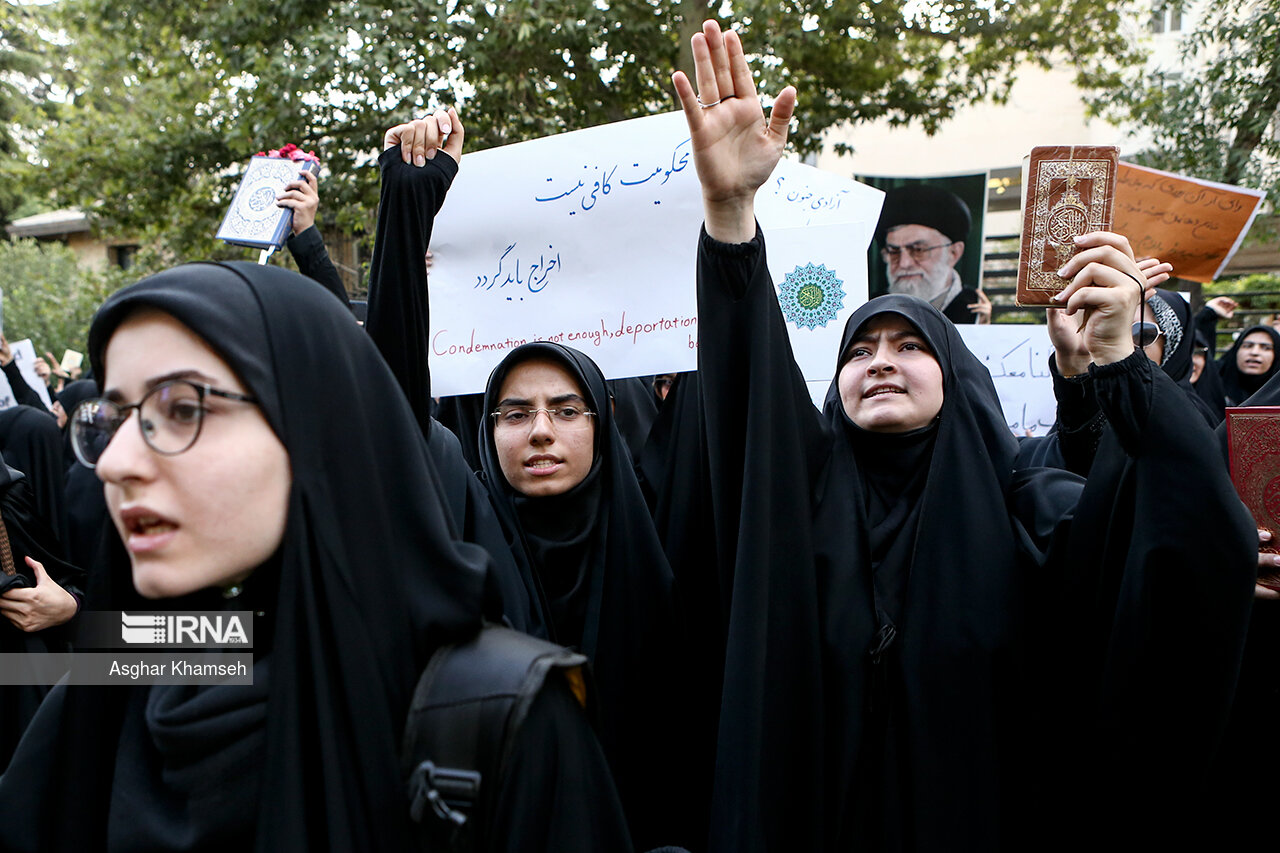
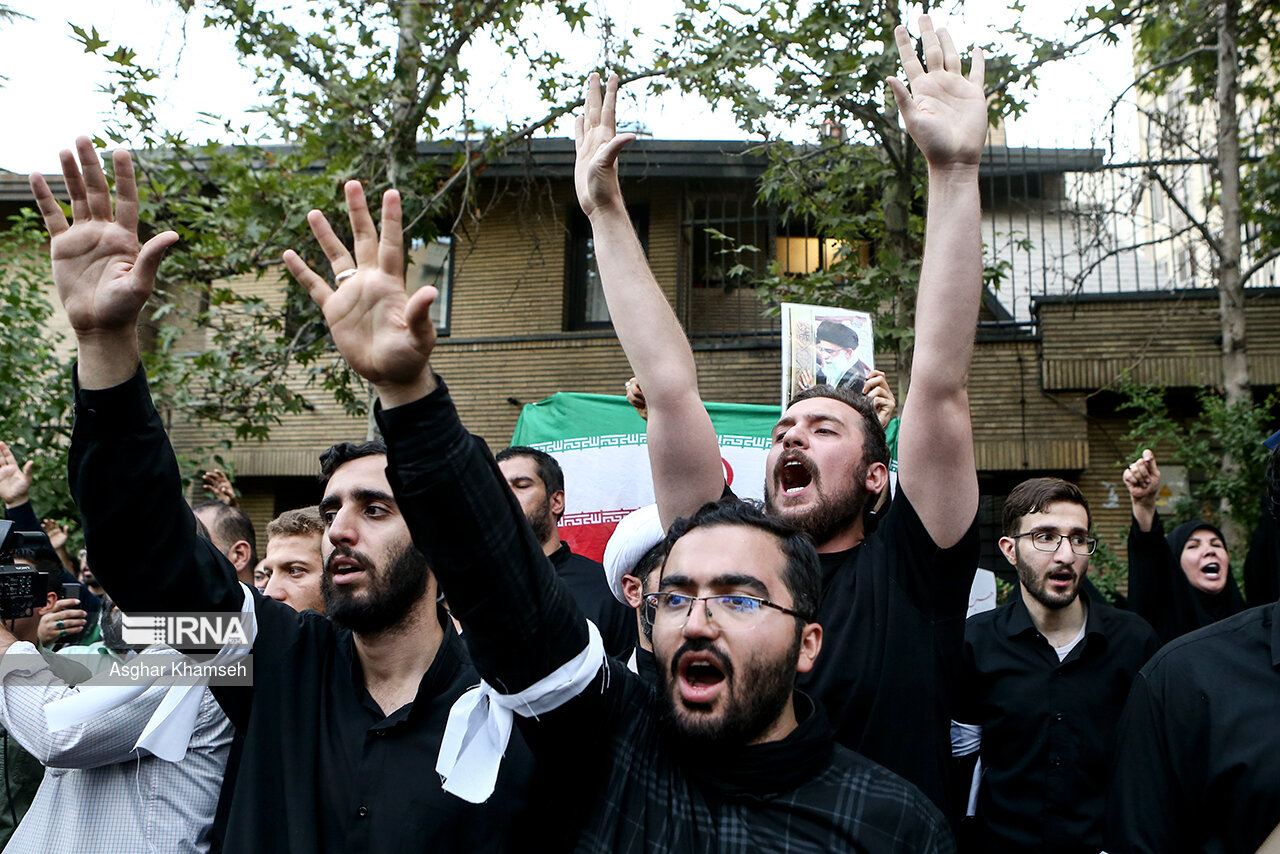
Iranians rally in Tehran to protest Quran desecration

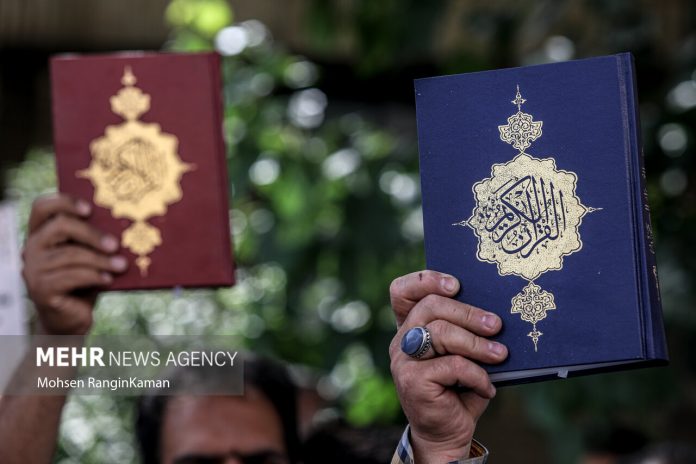
The protesters were angry at the Swedish government for allowing the desecration of the Quran by an Islamophobe under the pretext of defending freedom of speech.

Meanwhile a group of people gathered outside the Swedish embassy in Tehran and torched the Swedish flag. But police prevented them from demonstrating outside the diplomatic mission.

Earlier, Iranian Foreign Minister Hossein Amirabdollahian condemned the sacrilegious act and strongly criticized Sweden for allowing the repetition of such moves.

This was the second defiling of the holy Quran in Sweden in the past few weeks.
The act has drawn condemnation from Muslims all around the world.

Turkey’s Erdogan to host Netanyahu and Abbas next week

Erdogan
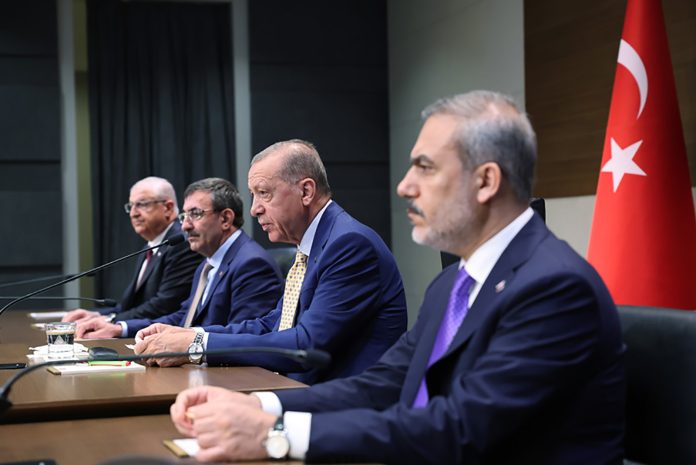
Turkish President Recep Tayyip Erdogan, second right, speaks during a press conference at Ataturk Airport in Istanbul, Turkey.

Turkey will host Abbas on 25 July and Netanyahu on 28 July.

“The leaders who will come to our country upon the invitation of President [Recep Tayyip] Erdogan will exchange views on current regional and global issues,” the office said in a statement.

During the official meetings between Erdogan and Abbas, Turkey-Palestine relations will be discussed, as well as the latest developments in the Israel-Palestine conflict. Other regional and international issues will also be talked about, the statement added.

“The steps that can be taken to further develop the cooperation between Turkey and the friendly and brotherly Palestinian State will also be among the agenda items of the meeting,” it noted.

In the meeting between Erdogan and Netanyahu, the bilateral relations of Turkey and Israel will be “reviewed in all their dimensions”, as well as the steps needed to be taken to improve cooperation.

“During the meetings, it is also envisaged to exchange views on current regional and international issues, as well as bilateral relations.”

In May 2022, Mevlut Cavusoglu, Turkey’s former minister of foreign affairs, reiterated his country’s support for the independence and sovereignty of Palestinians at the start of his rare two-day visit to the occupied West Bank and Israel.

Speaking after meeting his Palestinian counterpart, Riyad al-Maliki, in the West Bank city of Ramallah, Cavusoglu said that Turkey’s “support for the Palestinian cause is completely independent from the course of our relations with Israel”.

In August 2022, Israel and Turkey restored full diplomatic relations by trading ambassadors. In 2018, Turkey downgraded relations with Israel after Israeli forces killed 60 Palestinians during the Great March of Return.

The decision to restore relations came after then-Israeli Prime Minister Yair Lapid’s visit to Ankara and his meetings with Cavusoglu, and his conversation with Erdogan.

In November 2022, during bilateral talks, Turkey refused to comply with Israeli demands requesting the deportation of Hamas leaders living in the country.

Cavusoglu stated Ankara does not view Hamas, the Palestinian resistance movement that rules the Gaza Strip, as a terror group and refused to expel them.

Russia says prospect for JCPOA revival dim

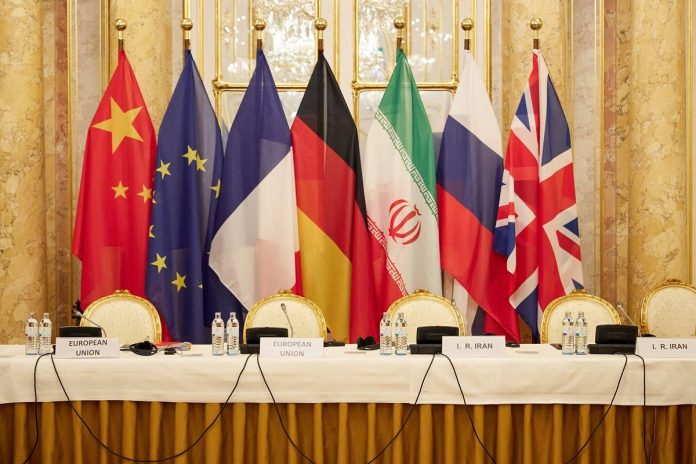
Nuclear Negotiations in Vienna

“Let me remind you that negotiations on the restoration of the Iranian nuclear deal were held in Vienna from April 2021 to March 2022. A detailed decision was prepared, providing for the phased lifting of all US sanctions against Iran and the simultaneous return of Tehran to those parameters of its nuclear program that were included in the Joint Comprehensive Plan of Action (JCPOA) . But the favorable and appropriate moment was lost, and absolutely nothing has happened in the last year and a half,” he stated.

As the Russian diplomat noted, the main problem lies in the position of Berlin, London and Paris, as well as Washington, which withdrew from the agreement back in 2018. According to Ulyanov, they apparently have lost interest in the JCPOA.

“In my opinion, they are making a strategic mistake, because the issue is in limbo, and tensions can escalate at any moment with all extremely unpleasant consequences,” the Russian diplomat warned.

Iran proved the peaceful nature of its nuclear program to the world by signing the JCPOA with six world powers. However, Washington’s exit in May 2018 and its subsequent re-imposition of sanctions against Tehran left the future of the deal in limbo.

Multilateral diplomatic efforts to salvage the JCPOA have been stalled since last August, with Iran blaming the United States for failing to guarantee that it will not leave the deal again.

Iran has repeatedly announced that the JCPOA revival is possible if the US and the European signatories to the agreement have the will to reach that aim, warning that the opportunity will not last forever.

Dust storm hits city in Iran’s southeast

The storm decreased visibility to 400 meters horizontally, according to the director of meteorology for Sistan and Baluchestan Province, Mohsen Haydari.

Haydari said people with respiratory diseases, elderly people, and children would be best advised to stay at home until the storm subsided, which he said was expected toward the middle of next week.

An emergency official for the province, Mohammad Khalili, said around 1,000 people had sought medical help because of the dust storm within the last three days. Dozens more had to be hospitalized.

Sistan and Baluchestan is located in a hot and dry region and receives low rainfall compared to other regions. Affected by the Asian monsoon, the northern parts of the province experience strong winds and dust storms for 120 days during the hot months of the year.

Iran says oil cargo seized by Indonesia not its

Iran Oil Tanker

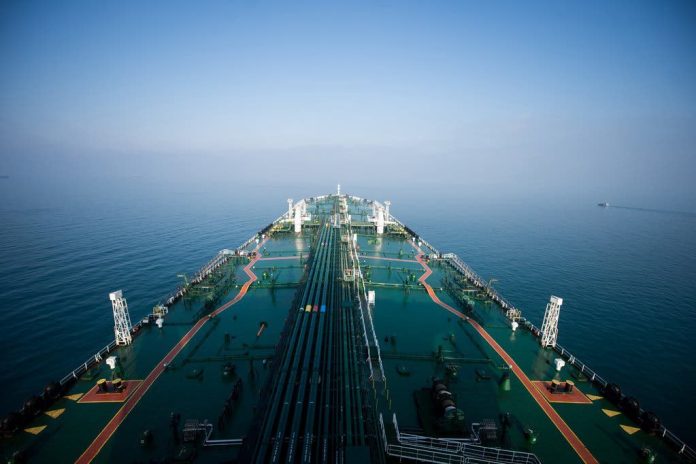
The ministry’s Public Relations Office said in a press brief that the tanker MT-ARMAN 114, impounded by the Indonesian Coast Guard, was not carrying an Iranian shipment.

“The news published about the vessel attributing its cargo to the Islamic Republic of Iran lacks any credibility and was meant to create a negative hype around our country,” the statement read.

Indonesia’s Coast Guard said on July 11 that it had seized an Iranian-flagged supertanker suspected of involvement in the illegal transshipment of crude oil the week before.

It identified the tanker as the MT Arman 114, and claimed it had been carrying 272,569 metric tons of light crude oil, valued at $304 million, when it was seized.

Indonesia claimed that the Very Large Crude Carrier (VLCC) was suspected of transferring oil to another vessel without a permit.

US dispatching Marines, more warships to ME amid rising tension with Iran

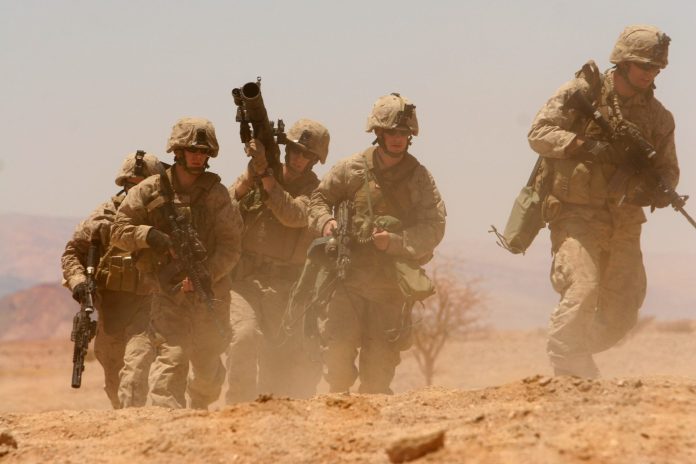
Defense Secretary Lloyd Austin ordered the deployment of a Marine expeditionary unit and an amphibious-ready group to the region, citing “Iran’s recent attempts to seize ships in the region”. A MEU typically includes about 2,000 Marines transported aboard three amphibious warships that can launch helicopters and watercraft.

The announcement comes days after the Pentagon deployed F-35 and F-16 fighter jets, as well as the destroyer USS Thomas Hudner.

“US Central Command is committed to defending freedom of navigation within our area of responsibility which includes some of the most important waterways in the world,” Gen. Michael “Erik” Kurilla, the head of Central Command, said in a statement.

“These additional forces provide unique capabilities, which alongside our partners nations in the region, further safeguard the free flow of international commerce and uphold the rules based international order, and deter Iranian destabilizing activities in the region,” he added.

Iran has repeatedly condemned the US for “warmongering” and escalating tensions with its regular military deployments in the region.

In comments on Monday, the Iranian Foreign Ministry’s spokesperson Nasser Kanaani slammed as “destabilizing and provocative” the US’ decision to dispatch fighter jets to the Persian Gulf, stressing that Iran has the right to show a reaction in order to ensure maritime and aviation security in the region.

Highlighting Iran’s sensitivity to the “provocative and illegal” actions near its borders, the spokesman stated, “Considering the control and capabilities of its armed forces in regard to navigation and aviation security in the Persian Gulf region, Iran reserves the right to make the necessary deterrent arrangements in compliance with international law’s rules and regulations, and will exercise its inalienable rights accordingly.”

Iranian Defense Minister Brigadier General Mohammad Reza Ashtiani has also shrugged off the US’ decision to dispatch a new fleet of fighter jets and a navy destroyer to the Persian Gulf. He stressed that Iran is projecting power in the region and beyond without feeling any threat.

He made the remarks on the sidelines of a Wednesday cabinet session in Tehran after the Pentagon announced plans to send additional fighter jets and naval assets to the Persian Gulf region despite Iran’s warning.

Iran does not care about the US, which is pursuing its own affairs, he stated.

“Basically, the Islamic Republic has reached such a stage of might that nobody would be able to threaten it at all,” the defense minister underlined.

The general added that Iran has even moved past that level and started to play regional and international roles.

“We are pursuing that role-playing,” he underscored.

In recent months, Iranian naval forces have impounded several ships off the country’s southern coast for their breaches of shipping safety law, with the US claiming that the moves are “illegal” and “endanger” shipping safety.

Tehran dismisses the claims as baseless, stressing the vessel seizures are in fact meant to consolidate the maritime law.

Hezbollah chief calls on Muslims to expel Swedish ambassadors after Quran desecration

Quran

“We are saddened by what happened today – a new ugly act…,” Hezbollah leader Sayyed Hassan Nasrallah said during a speech on Thursday, Lebanon’s al-Ahed news website reported.

“What we witnessed is a provocation to the feelings of Muslims, and it is clear that whoever burned or desecrated the Holy Quran was with the permission of the Swedish government, and he is the same person who burned the Quran some time ago,” he added.

Just hours earlier, Salwan Momik, a Sweden-based Iraqi refugee, had stomped on a copy of the Quran and kicked the Muslim holy book during a demonstration outside Stockholm’s main mosque amid strict protection provided for the rally by the Swedish police.

The act of sacrilege has opened the floodgates of protest across the world’s Muslim community.

Hours before the planned desecration, hundreds of Iraqi protesters amassed outside the Swedish embassy in Baghdad, scaling its walls and setting fire to parts of it. Baghdad expelled Sweden’s envoy and withdrew its ambassador from Stockholm.

This was the second time Momik was disrespecting the Quran amid the approval of Sweden’s authorities. He had set a copy of the holy book on fire last month too, prompting similar raging protests across the Muslim world.

The Hezbollah leader praised the Iraqi reaction as “a brave and wise act, and an excellent stance,” calling on all Arab and Muslim countries to follow suit.

“If we want the burning and desecration of the Holy Quran that happened in Sweden not to be repeated, then all Arab and Islamic countries must do what Iraq did,” he stated.

Nasrallah also called on people across the global Muslim community to stage a monumental presence in the upcoming Friday prayers and rally in front of mosques following the prayers to convey their condemnation of the heinous act of profanity.

“We should tell this to the entire world that we protect this Qur’an with our hearts and blood,” he stressed.

“This is all our responsibility. The entire world should see how we embrace and read our scripture when it is subjected to desecration,” the Hezbollah leader concluded.

Footage: Iranian Navy aircraft monitor extra-regional warships in Persian Gulf

Iran Navy

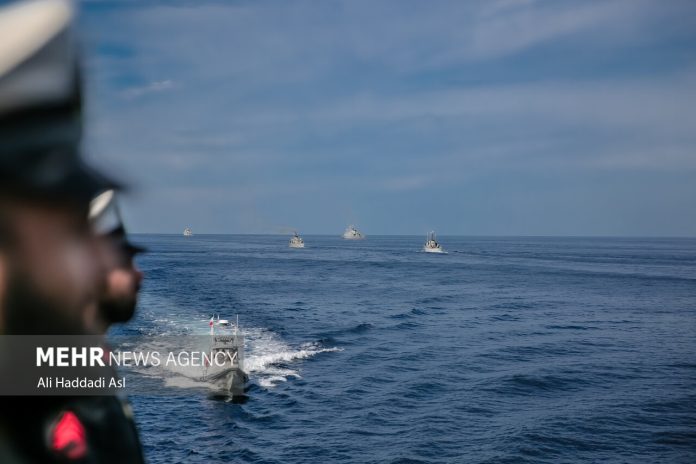
The footage, broadcast by the IRIB on Thursday, showed a Navy jet flying over a warship, as part of what the reporter described as the routine maritime and aerial patrols aimed at identifying extra-regional ships and monitoring their movements off the country’s southern coast.

Tensions have been running high between Iran and the US over the latter’s seizure of an oil tanker carrying Iranian crude in April.

The Wall Street Journal reported earlier this week that US prosecutors are trying to auction 800,000 barrels of the seized Iranian oil, which is sitting in a Greek tanker off the coast of Texas.

Reacting to the attempt, Commander of the Navy of Iran’s Islamic Revolution Guards Corps Brigadier General Alireza Tangsiri warned companies of retaliation should they buy stolen Iranian oil.

“We hereby declare that we would hold any oil company seeking to unload our crude from the vessel responsible and we also hold America responsible,” said the commander.

According to the Wall Street Journal report, American firms are reluctant to buy the Iranian cargo, as they fear potential reprisals from Iran.

Live Update: Russia’s “Special Operation” in Ukraine; Day 513

‘Many may die’ warns UN after end of Black Sea grain deal

The spike in grain prices in the days since Russia quit a deal allowing the safe Black Sea export of Ukraine grain “potentially threatens hunger and worse for millions of people,” the United Nations aid chief has told the Security Council.

Russia quit the Black Sea grain deal on Monday, saying that demands to improve its own food and fertiliser exports had not been met and complaining that not enough Ukrainian grain had reached poor countries.

US wheat futures in Chicago rose more than 6 percent this week and had their biggest daily gain on Wednesday since Russia invaded Ukraine, but pared some of those gains on Friday in part due to hopes Russia may resume talks on the deal.

“Higher prices will be most acutely felt by families in developing countries,” Martin Griffiths told the 15-member body, adding that, currently, some 362 million people in 69 countries were in need of humanitarian aid.

“Some will go hungry, some will starve, many may die as a result of these decisions,” he said.


Bulgaria to send armoured vehicles to Ukraine in U-turn

Bulgaria has decided to send about 100 armoured personnel carriers to Ukraine in the Balkan country’s first shipment of heavy equipment to Kyiv.

Parliament approved – with 148 votes in favour and 52 against – a proposal of the new pro-European government to send the vehicles along with armaments and spare parts.

The government bought various models of Soviet-made BTR carriers in the 1980s but they were never used.

“This equipment is no longer necessary for the needs of Bulgaria, and it can be of serious support to Ukraine in its battle to preserve the country’s independence and territorial integrity after the unjustified and unprovoked Russian aggression,” parliament said in its decision.


Russia accuses Ukraine of using grain corridor for ‘terrorism’

Russian Deputy Foreign Minister Sergey Vershinin accuses Ukraine of using a grain export corridor to launch “terrorist attacks” against Russian interests, including on the Crimean Bridge.

Addressing Russia’s decision to pull out of the grain deal, Vershinin said, “It was used – as we know, and we have also talked about it – to organise terrorist attacks.”

“It was the Crimean Bridge, twice already. It was Sevastopol. Remember last October.”

A bridge that links Russia to Crimea was hit on Monday killing two people.


Russian attacks on Black Sea ports could have a ‘far-reaching impact’ on food supplies: UN

The UN political affairs chief has told the Security Council that Russia’s attacks on Black Sea ports risk “having far-reaching impacts on global food security, in particular, in developing countries”.

Rosemary DiCarlo added that threats by Russia and Ukraine to potentially target civilian vessels were unacceptable.

“Any risk of conflict spillover as a result of a military incident in the Black Sea – whether intentional or by accident – must be avoided at all costs as this could result in potentially catastrophic consequences to us all,” she said.


Russia says it will protect Africa from grain deal fallout

Moscow will do “all it can” to protect Africa from the consequences of withdrawing from the Black Sea grain export deal, Russian Deputy Foreign Minister Sergei Vershinin said.

Vershinin added that Russia is working on new grain export routes following its exit from the deal when it expired on Monday.

The deal, which the UN and Turkey had brokered, aimed to prevent a global food crisis by allowing grain blocked by the war in Ukraine to be safely exported from Black Sea ports.


Putin says Ukraine’s counteroffensive is failing

President Vladimir Putin says Kyiv’s counteroffensive was failing despite military and financial support from Western countries.

During a televised meeting of the Kremlin’s Security Council, Putin said, “Neither the colossal resources that have been pumped into the Kyiv regime nor the supplies of Western weapons, tanks, artillery, armoured vehicles and missiles are helping.”

According to the Russian state-owned TASS news agency, Putin said Ukrainian forces were also suffering from colossal losses.

“Most importantly, as a result of suicidal attacks, the formations of the Armed Forces of Ukraine suffered huge losses. These are tens of thousands, exactly tens of thousands of people,” he added.


Russian warships conduct drills in Black Sea

Russia’s Black Sea Fleet has conducted an exercise in enforcing a naval blockade, the Defense Ministry reported on Friday. The drills come after Russia and Ukraine declared that they would presume all civilian ships traveling to each other’s ports to be carrying military cargo.

According to the Russian ministry’s statement, warships and naval aviation “trained in isolating an area that was temporarily suspended for traffic” and “conducted measures to detain a [simulated] trespassing vessel.”

During the same exercise, a Russian patrol boat fired cruise missiles at a target ship placed on a training range. It was successfully hit and destroyed, the ministry reported.

On Monday, Russia declined to extend the Black Sea Initiative, a UN and Turkey-mediated arrangement with Ukraine, which allowed Kiev to export grain via its seaports. Moscow said the UN had failed to deliver on its part of the bargain and convince Western nations to lift sanctions hampering Russian exports of food and fertilizers.

The Russian Defense Ministry further announced that starting on Thursday it would revoke security guarantees under the deal. It now considers all ships moving to Ukrainian ports in the Black Sea as “potential carriers of military cargoes” and their flag nations as “involved in the Ukrainian conflict on the side of the Kiev regime”.

The Ukrainian military issued a similar warning on Thursday, which it claimed to be a response to the Russian policy. The statement declared the Black Sea a “danger zone” for Russian and Russia-bound ships.

Kiev also brought up the sinking of the Russian fleet’s former flagship, the Moskva, destroyed in April 2022 in what is widely believed to have been a Ukrainian missile attack. The Russian military said the warship was heavily damaged by a fire and explosions of munitions on board.


China’s position on Ukraine is ‘unchanging’ and ‘clear’

China says its position on the war in Ukraine remains “unchanging” and “clear”, the Russian news agency TASS reported.

“We will make efforts and continue to play a constructive role in order to advance the political process to resolve the crisis,” Chinese Foreign Ministry spokesperson Mao Ning said at a press briefing.

Ning added that China will closely monitor the situation in Ukraine.

On Thursday, explosions hit near the building of the Chinese Consulate General in Odesa.

None of the employees of the diplomatic mission were injured but minor damage to the building was reported.


Russia hits grain terminals in southern Ukraine: Governor

Russian missiles hit grain terminals at an agricultural enterprise in the Odesa region in a fourth successive night of air strikes on southern Ukraine, the regional governor has said.

“Unfortunately, the grain terminals of an agricultural enterprise in Odesa region were hit. The enemy destroyed 100 tons of peas and 20 tons of barley,” Odesa’s regional governor Oleh Kiper stated, adding that two people had been hurt in the attack.

Kiper said Russia had attacked with Kalibr cruise missiles that were fired from the Black Sea at low altitudes to bypass air defence systems.

Photographs from the scene showed a fire burning among crumpled metal buildings that appeared to be storehouses and a badly damaged fire-fighting vehicle.

Moscow says it has been carrying out “retaliatory strikes” this week after quitting the Black Sea grain export deal and accusing Ukraine of being behind blasts on Monday on a bridge that is used to transport Russian military supplies.


Russia used almost 70 missiles and nearly 90 drones in just 4 days: Zelensky

Russia has used almost 70 missiles of various types and almost 90 combat drones over just four days during attacks on the Ukrainian cities of Odesa, Mykolaiv and other southern communities, according to Ukrainian President Volodymyr Zelensky.

“Of course, our soldiers managed to shoot down some of the enemy missiles and drones, and I thank each of our sky defenders for this,” he said Thursday in his nightly address.

“Unfortunately, the Ukrainian air defense capabilities are not yet sufficient to protect the entire Ukrainian sky,” he added.

Ukraine is working with partners “as extensively as possible” for additional air defense systems that can provide security to Odesa and other cities across the country, Zelensky continued.

Speaking about the Black Sea grain deal, Zelensky said that work “to mobilize the world to protect food security and normal life” continues. He added he spoke earlier Thursday for the first time with the Ethiopian Prime Minister Abiy Ahmed Ali, whose country is experiencing “one of the most critical situations in the world.”

“I am confident that this year we can do it all together, the whole world,” Zelensky continued, stating, “No one in the world is interested in Russia’s success in destroying the global food market.”

The Ukrainian president also thanked countries that have extended sanctions on Russia over its war in Ukraine.

“Russia and everyone in this world who dares to help terrorists must feel the ever-increasing sanctions pressure, whether they are individuals, companies or countries,” Zelensky stated.


Russian envoy denies plot to attack civilian ships and to blame Ukraine

Russia has no intention of targeting civilian vessels in the Black Sea and to blame Ukraine, Anatoly Antonov, Russia’s ambassador to the US, said Thursday.

He was responding to a media question about comments made by National Security Council spokesman Adam Hodge on Wednesday. Hodge also claimed Russia has laid additional sea mines in the approach to Ukrainian ports.

“Attempts to attribute to Russia the preparation of some sort of attacks on civilian vessels are pure fabrication. It is no secret that the [US] administration does not shy away from the basest anti-Russian information provocations,” Antonov said in a statement posted on the embassy’s Facebook page.

“We regard the statements by the United States of America as an effort by any means to disguise its own destructive activities aimed at actually sabotaging the implementation of the mutually agreed Istanbul agreements. To discourage representatives of the Global South from cooperating with Russia. To undermine confidence in our country, which not in words but in deeds helps developing countries by supplying food and fertilizers, including on a gratuitous basis,” Antonov stated.

It is “especially indicative that the administration intensifies with such insinuations on the eve of major international forums,” Antonov said, adding that “a new round of false propaganda” is being used ahead of the second Russia-Africa summit scheduled for the end of July in St. Petersburg and the upcoming BRICS heads of state meeting in August


Some Western weaponry sent to Ukraine was stolen last year before being reclaimed: Pentagon watchdog

Criminals, volunteer fighters and arms traffickers in Ukraine stole some Western-provided weapons and equipment intended for Ukrainian troops last year before being recovered, according to a Defense Department Inspector General report obtained by CNN.

Ukraine’s intelligence services disrupted plots to steal the weaponry and equipment, and they were ultimately recovered, according to the report. CNN obtained the report, titled “DoD’s Accountability of Equipment Provided to Ukraine,” via a Freedom of Information Act request. Military.com first reported the news.

But the inspector general report noted that after Russia’s invasion of Ukraine last year, the Defense Department’s ability to track and monitor all of the US equipment pouring into Ukraine, as required by law under the Arms Export Control Act, faced “challenges” because of the limited US presence in the country.

The report, dated October 6, 2022, examined the period from February to September 2022. The Office of Defense Cooperation in Kyiv “was unable to conduct required (end-use monitoring) of military equipment that the United States provided to Ukraine in FY 2022,” it said.

“The inability of DoD personnel to visit areas where equipment provided to Ukraine was being used or stored significantly hampered ODC-Kyiv’s ability to execute” the monitoring, the report added.

In late October, the US resumed on-site inspections of Ukrainian weapons depots as a way to better track where the equipment was going. The department has also provided the Ukrainians with tracking systems, including scanners and software, the Pentagon’s former undersecretary of defense for policy, Colin Kahl, told lawmakers in February.

But the report underscores how difficult it was in the early days of the war for the US to track the billions of dollars worth of weapons and equipment it was sending to Ukraine.


Ukraine is using US-provided cluster munitions effectively in combat: White House official

Ukrainian forces are using US-provided cluster munitions against Russia “appropriately” and “effectively” in combat, National Security Council coordinator for strategic communications John Kirby said Thursday, confirming that Ukraine has started using the munitions in combat.

“They are using them appropriately. They’re using them effectively and they are actually having an impact on Russia’s defensive formations and Russia’s defensive maneuvering. I think I can leave it at that,” Kirby told reporters.

Asked when Ukrainians began using the cluster munitions, Kirby said he would “guess” in the last week or so.

The US announced on July 8 that it would be sending the controversial munitions, and they were delivered to Ukrainian forces about a week later. Cluster munitions scatter “bomblets” across large areas, which would allow Ukrainian forces to target larger concentrations of Russian forces and equipment with fewer rounds of ammunition. But the bomblets can also fail to explode on impact and can pose a long-term risk to anyone who encounters them, similar to landmines.

Kirby also discussed the additional sanctions on Russia that US President Joe Biden’s administration announced Thursday, saying that they are and will continue to be an effective tool going forward.

“I have every expectation that in coming days you’re gonna be another round of support provided to Ukraine because we are really trying to keep a fingertip on what’s going on in the battlefield and what they need,” Kirby added.

Kirby also reiterated the warning from the National Security Council suggesting Russia could be preparing to stage a false-flag operation in the Black Sea to try to justify its attacks on ships.


Chief: EU to create dedicated 20 billion euro section for Ukraine defence

The European Union will provide up to five billion euros ($5.57bn) a year for the next four years for Ukraine’s defence needs via the means of a “dedicated section” under the European Peace facility, the EU’s foreign policy chief, Josep Borrell, has said.

“It’s still the same tool, the European Peace facility, which has been working very well and we will continue using it but with a dedicated chapter inside it, with a specific funding which can be estimated on the figures I mentioned,” Borrell told reporters during a news conference after convening with EU member states’ foreign ministers.


UN chief condemns Russian attacks on Ukraine Black Sea ports

United Nations Secretary-General Antonio Guterres has slammed Russian attacks on military infrastructure in southern Ukraine.

“These attacks are … having an impact well beyond Ukraine. We are already seeing the negative effect on global wheat and corn prices which hurts everyone, but especially vulnerable people in the global south,” Guterres said in a statement from his spokesman, Stephane Dujarric.