Monday, December 29, 2025
Home Blog Page 1348

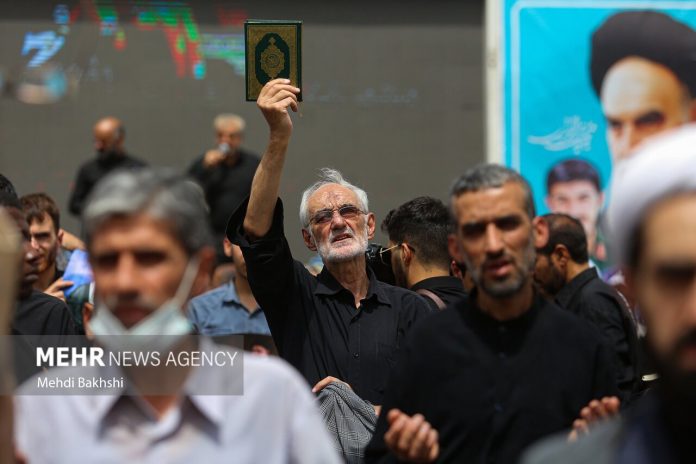
Iraqis attempt to storm Baghdad’s Green Zone over Quran burning

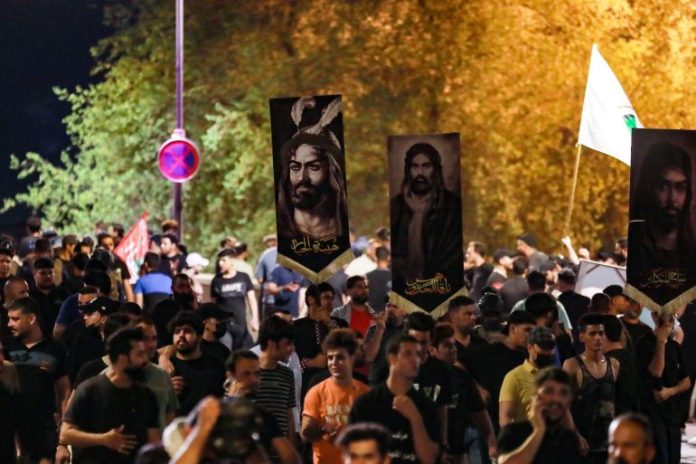
Nearly 1,000 protesters were dispersed by security forces early on Saturday, in reaction to reports of a Quran burning that took place a day earlier by a far-right group in front of the Iraqi embassy in Denmark.

Demonstrators chanted in support of influential Iraqi Shia religious and political leader Muqtada al-Sadr, carrying images of the leader and flags associated with his movement, alongside the Iraqi flag.

“Yes, yes to the Quran!” shouted the protesters, many of them young men.

Security forces blocked the Jumhuriya bridge leading to the Green Zone, which prevented the protesters from reaching the Danish embassy.

Another protest is planned for later in the day.

According to Danish media reports, the far-right, ultra-nationalist group Danske Patrioter burned a copy of the Quran and an Iraqi flag in front of the Iraqi embassy in Copenhagen and livestreamed the event on Facebook.

In response to the incident in Copenhagen, the Iraqi Ministry of Foreign Affairs condemned “in strong and repeated terms, the incident of abuse against the Holy Quran and the flag of the Republic of Iraq in front of the Iraqi Embassy in Denmark”, in a statement on Saturday.

The government urged the international community “to stand urgently and responsibly towards these atrocities that violate social peace and coexistence around the world”.

A separate statement said “We cannot allow to happen again” that which occurred at the Swedish embassy, AFP news agency reported.

The Iraqi government affirmed its “full commitment” to the Vienna Convention on Diplomatic Relations and said it guarantees “the protection and security provided to diplomatic teams”.

In a separate incident, demonstrators set fire to the headquarters of the humanitarian organisation Danish Refugee Council in the Basrah governorate of Iraq, according to reports by local media and Sky News.

The incidents come two days after Iraqis took to storming and burning the Swedish embassy in Baghdad after a second event was held to desecrate the Quran in Sweden. The embassy was forced to temporarily relocate to Stockholm following the violence.

Iraq’s prime minister cut diplomatic ties with Sweden in protest over the desecration, which also sparked action and condemnation from Muslim-majority countries in the Middle East.

The Swedish incident was carried out by Salwan Momika, a 37-year-old Christian Iraqi refugee in Sweden, who also burned pages of a Quran on June 28, the earlier incident also prompting mass protests in Iraq and condemnation from Muslim-majority countries.

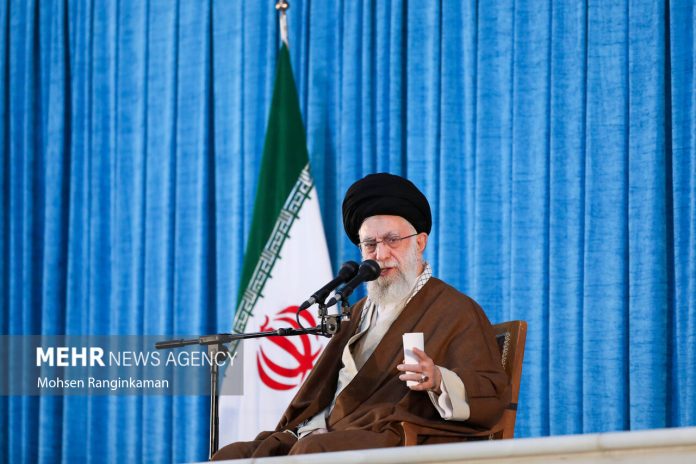
Ayatollah Khamenei urges highest punishment for, handing over of criminal who violated Holy Quran

Leader of the Islamic Revolution Ayatollah Seyyed Ali Khamenei

In a message issued following the defiling of the Holy Quran in the European country, Ayatollah Khamenei said all Islamic scholars agree that the individual who violated the Quran must receive the highest punishment.

The Leader called the sacrilege of the Holy Quran a bitter, conspiratorial, and dangerous incident and stressed the government of Sweden has to hand over the criminal to the judicial apparatuses of Islamic countries.

Ayatollah Khamenei added, “Sweden’s government, too, should know that, by supporting the criminal, it has taken an offensive posture against the Islamic world, and has attracted to itself the hatred and hostility of all Muslim nations and many of their governments.”

“The behind-the-scenes conspirators, too, should know that respect for and the glory of the Holy Quran will increase and its rays of guidance will grow more brilliant with each passing day; the likes of this conspiracy and those responsible for them are too small to be able to prevent that increasing brilliance”, reads Ayatollah Khamenei’s message.

US Senate introduces new legislation to boost normalisation with Israel

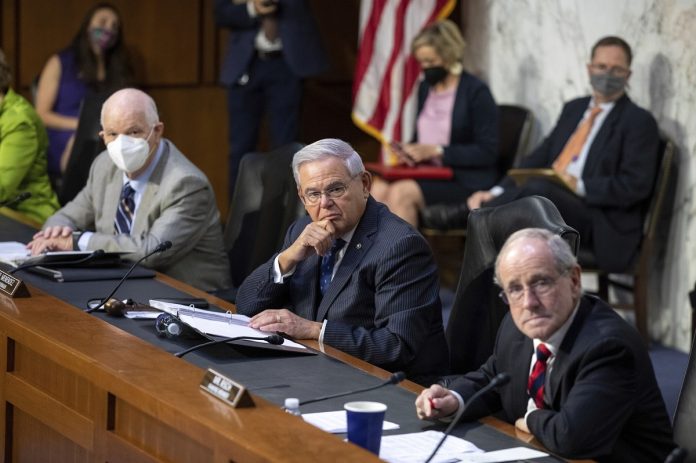
The bill, named the Regional Integration and Normalization Act, was introduced by Senators James Lankford, Jim Risch, Bob Menendez, Jacky Rosen, Joni Ernst and Cory Booker. It aims to bolster initiatives to normalise relations between Israel and the Arab and Muslim-majority world.

“This bill capitalises on the dynamics that are profoundly reshaping the Middle East and North Africa,” Menendez said in a statement.

“Further integration in this region, one marked by conflict and disunity, must be a pillar of US foreign policy moving forward. It will remain a region that is critical to US strategic interests, and we should support efforts that increase stability and prosperity for our partners and the region’s citizens,” he added.

The bill authorises an ambassador-level official for the Abraham Accords, establish an opportunity fund, expand normalisation and “integration”, support the development of an Abraham Accords and Negev Forum Economic Partnership, and support joint cybersecurity training.

“The US and Israel have several international agreements for cooperation in science, agriculture, cybersecurity and more, and we should build on our successful relationship and collaboration with Israel with the rest of the Abraham Accords countries,” Lankford said, adding, “The Abraham Accords offer us an obvious ready-made platter for good foreign policy and international cooperation, and we should continue to build on them to our strategic advantage.”

There was a deluge of reporting earlier this year, especially in the Israeli press, with updates on the Joe Biden administration’s back and forth with Israel and Saudi Arabia on the progress of normalising ties.

American hopes for an agreement rose in early May when top Biden advisor Jake Sullivan declared that Saudi-Israel normalisation was in the US national security interest.

However, last month Middle East Eye reported that the Biden administration put a chill on these reports, while Saudi Crown Prince Mohammed Bin Salman has enjoyed being courted by both Israel and the US.

Earlier this year, US Senator Kirsten Gillibrand stated that expanding the Abraham Accords should not be contingent on illegal Israeli settlement building in the occupied West Bank.

“I think you can have these negotiations about the Abraham Accords regardless of any local political issue,” the lawmaker told the Times of Israel.

The United Arab Emirates, Bahrain and Morocco established official ties with Israel as part of the US-brokered normalisation agreements in 2020.

Although many analysts say the Palestinian issue was not a central driver for normalisation, the UAE still billed the establishment of ties with Israel in the context of the conflict with Palestine.

Former Iranian FM, nuclear chief proposes comprehensive political dialog between Iran, US

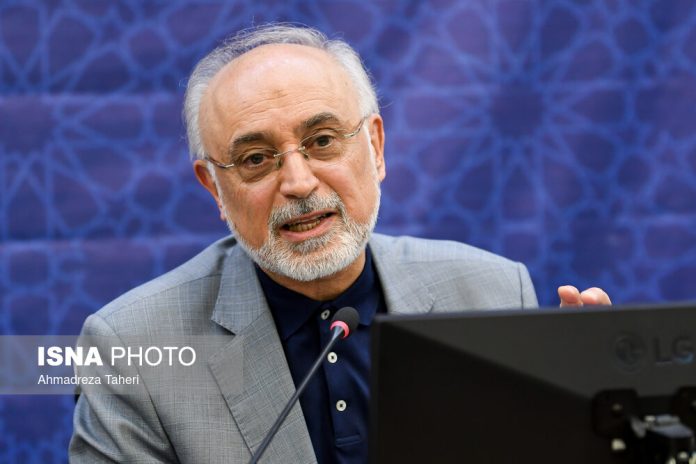
Ali Akbar Salehi

Salehi told Entekhab news outlet in an interview published on Saturday that Iran’s regional and military status were “relatively acceptable” and it would be a good time to conduct “a more expansive dialog” with the West and the US.

“Iran is currently a regional power, something friends and foes alike testify to… It is a good opportunity to sit and hold a more expansive dialog… with the West and America at its top. We may call it a political dialog,” Salehi, who was Iran’s foreign minister between 2010 and 2013, said.

He said Iran had talked directly to the US several times before but those instances were all around specific topics, such as Afghanistan, Iraq, prisoner exchanges, and the Iran nuclear deal, JCPOA.

“I think now may be the time to hold a comprehensive dialog,” he said, adding that “all relevant topics” could be discussed, regional security included.

Salehi said, however, that preparations had to be made for such a dialog, including the strengthening of national unity and cohesion.

“When everyone’s interests are considered, my sense is that the West and America at its top wouldn’t be disinterested either,” added Salehi, who was the head of the Atomic Energy Agency of Iran from 2009 to 2010 and 2013 to 2021.

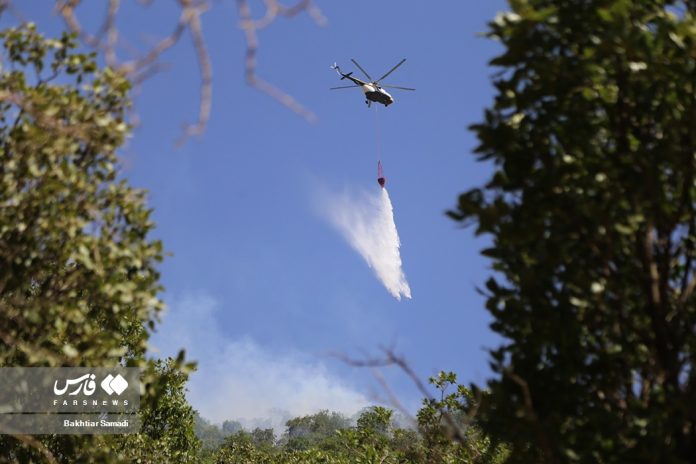
Wildfires still raging in Iran’s west

Fires have been raging in “Be Radeh Rashe” Forests in Marivan City since Thursday, and reports said they were still burning as of Friday morning.

At least seven people who had volunteered to help extinguish the fires were wounded but were in good condition after receiving medical help.

Marivan’s Governor Esmail Ahmadi said aerial firefighting would start on Saturday morning, and a helicopter had been dispatched from the capital, Tehran.

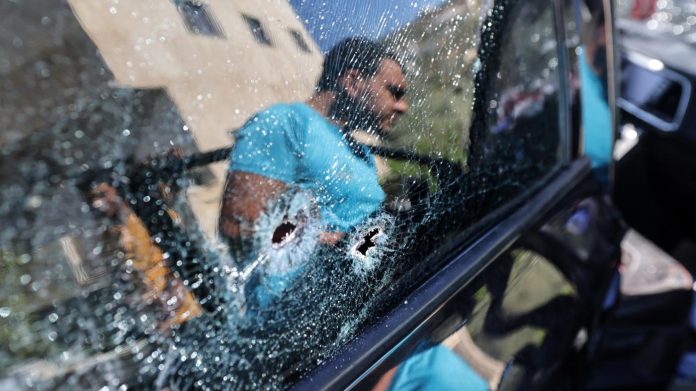
Israeli soldiers fatally shoot another Palestinian teenager in West Bank

The official Palestinian news agency Wafa reported that the shooting took place on Friday evening. It also released a video of a windshield riddled with bullet holes.

Local sources said the troops raided the town and opened fire on a vehicle carrying two occupants, killing a teenager and wounding another.

Ahmed Jibril, director of ambulance and emergency services at the Palestine Red Crescent Society (PRCS) in Nablus, stated that Israeli soldiers prevented paramedics from approaching the vehicle, until one of the teens died as he lay bleeding in the car.

The forces apprehended the other occupant and took him away to an unknown location.

The Palestinian Health Ministry identified the fallen Palestinian as 18-year-old Fawzi Hani Makhalafa.

The PRCS paramedics transported the body of the slain teen to Rafidia Surgical Hospital in the city of Nablus, once Israeli army forces allowed them on to the scene.

Earlier on Friday, one teenager, identified by the Palestinian Health Ministry as 17-year-old Muhammad Fouad Atta al-Bayed, was shot in the head by Israeli forces in the village of Umm Safa, which neighbors Ramallah.

Wafa reported that the boy, a resident of the Jalazone refugee camp north of Ramallah, was taken to the Istishari Arab Hospital before dying of his wounds.

It added that Israeli forces had fired live ammunition, tear gas and stun grenades during confrontations with local residents.

Tensions have been high across the occupied West Bank for the past year and a half, with the Israeli military carrying out near-nightly raids and the Palestinians carrying out retaliatory attacks.

At least 200 Palestinians have been killed by Israel since the beginning of this year.

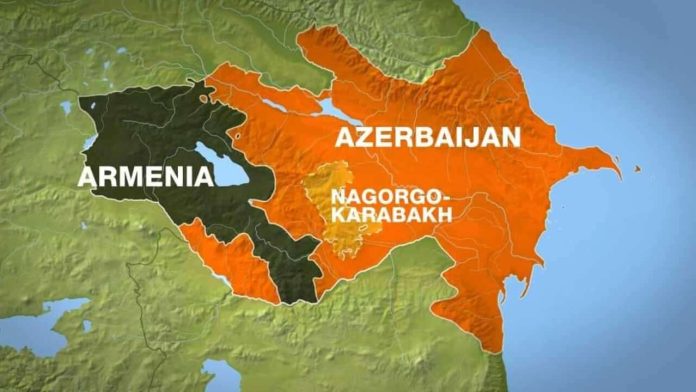
Armenia’s PM says war with Azerbaijan ‘very likely’ unless peace treaty signed

Armenia Azerbaijan

“So long as a peace treaty has not been signed and such a treaty has not been ratified by the parliaments of the two countries, of course, a (new) war (with Azerbaijan) is very likely,” Pashinyan was quoted as saying.

Pashinyan presided over an Armenian defeat in 2020 in a war over the breakaway region of Nagorno-Karabakh, during which Armenian-backed separatists lost large amounts of territory in and around the enclave.

Nagorno-Karabakh, which is internationally recognised as part of Azerbaijan but inhabited primarily by ethnic Armenians, broke away from Azerbaijan’s control during an extended conflict in the 1990s.

Armenia and Azerbaijan have engaged in a flurry of diplomacy aimed at a lasting peace deal in recent months, but there have also been sporadic border clashes, and the talks have not yet yielded a major breakthrough.

Both Armenia and separatist authorities in Karabakh have said that Azerbaijan has blockaded the territory since December, placing a border post on the only road connecting the region to Armenia and blocking most traffic.

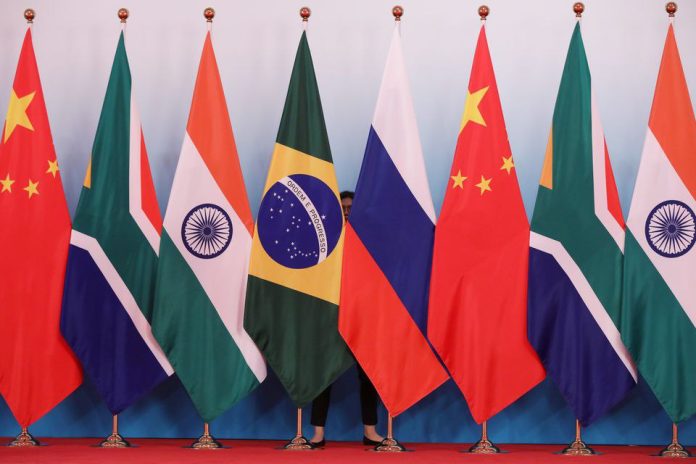
Russia says BRICS leaders to discuss sustainable payment mechanism

BRICS

“Given the current international situation, this issue will be addressed during the upcoming meeting of the bloc’s leaders,” the ministry told RT on Friday, referring to the summit in Johannesburg, South Africa, on August 22-24.

According to the Russian Foreign Ministry, the use of national currencies in mutual trade is complicated by factors such as their limited convertibility and higher volatility compared to the US dollar. The ministry also acknowledged that the potential creation of a new BRICS single currency would be a “delicate” process.

The BRICS nations have been seeking to shift further from the US dollar in mutual trade, with the de-dollarization trend gaining momentum following sanctions that effectively cut Russia off from Western financial mechanisms. Numerous developing nations – including Russia’s fellow BRICS members China, India, Brazil and South Africa – have started to move toward alternative currencies in trade.

Russia floated the idea of introducing a BRICS currency last year. President Vladimir Putin said last June that member states were working on developing a new reserve currency based on a basket of the national currencies used by the five-nation bloc.

Iran FM calls for OIC ministerial meeting over defiling Quran

Quran

Amirabdollahian raised the issue in a phone conversation with Secretary General of the Organisation of Islamic Cooperation (OIC) Hissein Brahim Taha.

Amirabdollahian expressed deep regret over the insulting and provocative move and condemned it. He proposed that an urgent ministerial meeting of the OIC be held at the earliest for exchanges of views on the significant issue.

“If the Swedish government does not take an effective measure immediately, Muslim countries should concertedly give a firm response to the desecration of the divine scripture, the Holy Quran,” he added.

For his part, the OIC secretary general condemned the sacrilegious move and promised to put a ministerial OIC meeting on agenda in consultation with the member states.

The two sides also emphasized the need for Muslim countries to take a concerted and firm measure in order to prevent a repetition of such insults.

Amirabdollahian also in a phone talk with his Swedish counterpart, Tobias Billströmb, said that insulting the Quran and other books of divine religions is deplorable anywhere, no matter who does it under what circumstances.

Amirabdollahian added that such acts under the pretext of freedom of speech are unacceptable and unwarranted.

Sweden’s top diplomat, in turn, said that the Swedish government condemns the desecration of the divine book of Muslims, the Holy Quran.

Tobias Billström said the Swedish prime minister and the official statement of the country’s foreign ministry have explicitly stated that the desecration of the Quran is not the stance of the government in Stockholm.

Live Update: Russia’s “Special Operation” in Ukraine; Day 514

Kiev strikes ammunition depot in Crimea: Official

A Ukrainian drone strike has resulted in an explosion at an ammunition depot in the central part of the Crimean peninsula, Governor Sergey Aksyonov stated on Saturday. According to preliminary information, the incident has not resulted in any casualties, he added.

Writing on Telegram, Aksyonov said the detonation had taken place in the Krasnogvardeysky district.

“A decision has been made to evacuate the population within a 5km radius from the site of the emergency and place them in temporary accommodation facilities,” he added.

The governor stated that the authorities had also suspended rail traffic in the area in order to “minimize risks,” while expressing hope that the emergency would be dealt with quickly.

The Ukrainian Armed Forces have confirmed the strikes, claiming that they “had destroyed an oil depot and Russian military warehouses” in the area.


Ukraine attacks Russia’s Belgorod region with cluster munitions: Governor

Ukraine has targeted a village in Russia’s Belgorod Region with cluster munitions, governor Vyacheslav Gladkov has said.

At least three cluster munitions were employed by the Kiev forces during a large-scale attack on the settlement of Zhuravlevka, Gladkov wrote on Telegram on Saturday.

According to the governor, 21 artillery shells and ten mortar rounds were also fired at the village. It was also targeted with a single kamikaze drone.

There were no casualties or damage in Zhuravlevka as a result of the shelling, he added.

Smaller artillery, mortar and drone attacks targeted at least a dozen other settlements in Belgorod Region on the same day, Gladkov wrote.

In the village of Ilek-Penkovka, 12 households were affected by an explosion, with the facades of buildings being damaged and windows shattered, he said, adding that injuries had been avoided.

The US announced the delivery of cluster munitions to Ukraine earlier this month, with President Joe Biden describing it as a stopgap measure that was necessary due to a shortage of regular artillery rounds among Kiev’s Western backers.

The controversial shells, which contain multiple bomblets that are dispersed over a large area, have been banned in more than 100 countries. However, neither Ukraine, the US, nor Russia are signatories of the 2008 Convention on Cluster Munitions (CCM).

Russian President Vladimir Putin noted last week that the US itself had earlier branded the use of cluster munitions “a crime,” saying this was exactly how he regarded the delivery of such weapons to Kiev by Washington.


Ukraine says slower pace of counteroffensive due to later-than-expected start

Ukrainian President Volodymyr Zelenky says his country’s counteroffensive is progressing slower than anticipated because the operation started later than initially expected.

“We did have plans to start it in spring, but we didn’t, because frankly, we had not enough munitions and armaments and not enough properly trained brigades — I mean, properly trained in these weapons,” Zelensky told the Aspen Security Forum via video on Friday.

“Because we started a bit late, it can be said — and it’s the truth, shared by all experts — that it provided Russia was the time to mine all our land and build several lines of defense,” he added.

“Definitely they had a bit more time than they needed; because of that, they built all of those lines. And really, they had a lot of mines on our fields. Because of that, a slower pace of our counteroffensive actions,” Zelensky stated.

The Ukrainian president said despite the difficulties, his country was making progress.

“We didn’t want to lose our people, our personnel and our servicemen, we didn’t want to lose equipment and because of that, they were quite careful about the offensive actions,” he continued, adding, “I would say that we are approaching a moment when relevant actions can gain pace because we are already going through some mine locations and we are demining these areas


US to send Ukraine another package of military aid worth $400mn

The United States is planning to announce a new package of military assistance for Ukraine worth up to $400 million as soon as early next week, Reuters reported on Friday, citing three Joe Biden administration officials.

The new package will include artillery munitions, air defense missiles and ground vehicles for Ukraine’s ongoing counteroffensive, the report said.

More specifically, the Biden administration is planning to send several Stryker armored personnel carriers, mine clearing equipment, munitions for National Advanced Surface-to-Air Missile Systems (NASAMS), munitions for High Mobility Artillery Rocket Systems (HIMARS), anti-tank weapons and munitions for Patriot and Stinger anti-aircraft systems, the report added.

At the same time, the new assistance package will not include cluster munitions, according to the report.

Earlier this week, the US Defense Department announced a new security assistance package worth $1.3 billion that for the first time included 155mm cluster artillery rounds.


Zelensky says Ukraine must neutralize Crimean bridge that was target of recent attack

Ukrainian President Volodymyr Zelensky said Friday that the Kerch Bridge connecting Russia to Crimea serves as a lifeline for Moscow’s invasion and must be neutralized.

“The Crimean bridge, this is not just a logistical road, this is the road used to feed the war with ammunition, and this is being done on a daily basis,” Zelensky told the Aspen Security Forum, where he appeared by video.

Russia annexed Crimea in 2014 in a move that Ukraine, its allies and various international bodies condemned as illegal. Zelensky characterized the bridge as an extension of that Russian offense, calling it “an enemy facility built outside the law, outside international laws and all applicable norms.”

“So understandably this is our objective,” he continued, adding, “Any target that is bringing war, not peace, must be neutralized.”

The Ukrainian president also reiterated his government’s objective is to “reclaim the whole of the Crimea.”

“It’s our sovereign territory, an unalienable part of our nation,” he continued.

Ukraine has claimed responsibility for an attack that killed two people and wounded a third on the Crimean bridge earlier this week.

The nearly 12-mile crossing is the longest in Europe and holds huge strategic and symbolic importance for Moscow.

Monday’s attack was the second on the bridge since Russia launched its invasion of Ukraine, after a fuel tanker exploded while crossing it in October.


US seeking to accelerate F-16 training of Ukrainian pilots

The United States is trying to accelerate the training of Ukrainian pilots on F-16 fighter jets, but this process takes time, US National Security Advisor Jake Sullivan said on Friday.

“The typical training for F-16 pilots takes a very long time, and we are trying to accelerate it, but that requires technical adjustments,” Sullivan stated at the Aspen Security Forum.

Washington is cooperating with its allies in the Netherlands, Romania, Denmark, Norway and other countries to establish the locations, to identify the pilots, and to begin the training, and this process has been going on over the past weeks, he added.

“I cannot give you a precise date, but I can tell you this is a matter of weeks, it is not a matter of months,” Sullivan said on the timeline for the training.

Sullivan also pointed out that there are several issues in the training process, including translating manuals into the Ukrainian language and creating technical platforms to conduct the process “as rapidly as possible.”

The US will not stop these efforts until Ukrainian pilots can work with F-16s, he added.

Earlier this month, Pentagon’s Joint Staff Director for Operations Lt. Gen. Douglas Sims II said that the conditions on the battlefield in Ukraine were not “ideal” for using F-16 fighter jets given that Russia continues to possess air defense capabilities.


US intelligence officials see no reason to doubt Putin’s claim that he has nuclear weapons in Belarus

US intelligence officials have no reason to doubt Russian President Vladimir Putin’s claim that he has moved a batch of tactical nuclear weapons to Belarus, senior officials with a division of the US Defense Department said Friday.

Putin said last month at the St. Petersburg International Economic Forum that “the first (Russian) nuclear warheads were delivered to the territory of Belarus,” adding that they were placed there for “deterrence.”

Russia has about 4,477 deployed and reserve nuclear warheads, including around 1,900 tactical nuclear weapons, according to the Federation of American Scientists.

It is not clear how much of that arsenal Putin intends to move, and Western officials have never publicly confirmed that any weapons have been transferred to Belarus.

But senior officials with the US Defense Intelligence Agency told a small group of reporters Friday that analysts have “no reason to doubt” Putin’s claims about the transfer.

The officials would not disclose why they believe that. They acknowledged that the weapons are difficult for the US intelligence community to track, even through satellite imagery.

US and Western officials told CNN earlier this month that it did not appear Belarus had finished upgrading the necessary storage facilities to house tactical nuclear weapons, and that available satellite imagery had not shown any signs of the kind of preparations and security that would be standard at a Russian nuclear facility.

Other sources told CNN, however, that there are various facilities in Belarus, dating back to the Soviet era, that could feasibly house some of the weapons.

Asked last week whether he had seen signs that Russia had moved the weapons, UK Secretary of Defense Ben Wallace told CNN that the UK had “seen signs of this progressing,” and noted that Putin “doesn’t always lie.” When pressed, however, Wallace also declined to elaborate on the signs he had seen.

US State Department spokesperson Matthew Miller similarly declined to answer questions earlier this month about where the weapons actually are located.

Belarusian President Aleksandr Lukashenko said last month that in the face of aggression, he would show “no hesitation” in using the Russian tactical nuclear weapons stationed on his country’s soil.

But the senior DIA officials said they do not believe Lukashenko would have any control over the arsenal. It would most likely be entirely controlled by Russia, the official said.

They also added that DIA does not believe the movement of the weapons to Belarus would alter the global nuclear landscape or increase the risk of a nuclear incident, because they would be in storage rather than forward deployed, and because they will be controlled by Russian forces.

Miller stated the US has “not seen any reason to adjust our own nuclear posture nor any indication Russia is preparing to use a nuclear weapon


US to push as fast as possible to deliver F-16 capability to Ukraine: Senior official

The United States will push “as fast as possible” to deliver F-16 capability to Ukraine, US National Security Advisor Jake Sullivan said on Friday.

“We are going to push as fast as possible to be able to deliver that capability to Ukraine,” Sullivan stated at the Aspen Security Forum.


Russia’s intelligence service says it can forgive MI6 for its plea to Russian spies

The leadership of the British foreign intelligence service “can be forgiven” for making a plea to Russian spies to share secrets and work with MI6, Russia’s Foreign Intelligence Service (SVR) said Friday, according to state news agency TASS.

The SVR was responding to remarks by MI6 chief Richard Moore on Wednesday, in which he appealed to Russians “wrestling with their conscience” to take a stand against Russian President Vladimir Putin’s regime and “share secrets with MI6.”

“The current head of the British foreign intelligence service, the MI6, Richard Moore, has publicly urged Russians to start working for the United Kingdom’s intelligence services and promised protection for traitors. He thinks this will put an end to the conflict in Ukraine,” the SVR said in a news release made available to TASS.

The Russian Foreign Intelligence Service went on to say that “anyone who knows a little bit about this subject can remember that the Anglo-Saxons’ long-standing tradition is to eliminate well-worn traitors and defectors,” adding “this has not been done professionally for a long time, as there would be a clear trail.”

The SVR said during World War II, British intelligence officers sacrificed many lives and dedicated a lot of effort to the fight against Nazism, and that they did it in a courageous, professional, and subtle manner while fighting alongside their Russian allies, according to TASS.

The Russian Foreign Intelligence Service made a reference to Ian Fleming’s James Bond novels, saying the mysterious M., who is James Bond’s boss in the series, “commands beautifully” and “intelligently.”

The SVR also referenced the Cambridge Five spy ring and George Blake — a double agent who used his position as an MI6 officer to spy for the Soviet Union.

“Take heed, colleagues,” the SVR urged their British counterparts. However, “given some staff circumstances, it could be said that the current MI6 leadership can be forgiven for such mistakes,” the SVR added.

Speaking in Prague on Wednesday, Moore said “there are many Russians today who are silently appalled” by the actions of the Russian military in Ukraine.

“They are watching in horror as their soldiers ravage a kindred country. They know in their hearts that Putin’s case for attacking a fellow Slavic nation is fraudulent,” Moore stated.