US slaps sanctions on entities over alleged arms deals between North Korea, Russia
The United States has imposed sanctions on three entities it accused of being tied to arms deals between North Korea and Russia as Washington cracked down on those seeking to support Russia’s war in Ukraine.
The US Treasury Department in a statement said that Russia has increasingly been forced to turn to North Korea and other allies to sustain its war in Ukraine as it expends munitions and loses heavy equipment on the battlefield.
The action is the latest by Washington, which has imposed rafts of sanctions targeting Moscow and Russian President Vladimir Putin since the start of the war, which has killed tens of thousands of people and turned cities to rubble.
Switzerland backs 11th package of EU sanctions
Switzerland’s government has aligned with the European Union’s 11th round of sanctions against Russia over its war in Ukraine.
The Swiss executive branch decided that the new measures adopted by the bloc would take effect later in the day.
While Switzerland is not a member of the EU, as a key trading partner, it has followed every set of its sanctions against Russian companies and individuals since the invasion.
The 11th round of EU sanctions targets loopholes so that vital goods don’t get to Russia through countries that trade with the EU and have maintained a business-as-usual relationship with Moscow.
The multiple rounds of sanctions have affected banks, companies and markets, and even parts of the energy sector.
Three problems need to be solved to end the war: Adviser
A Ukrainian presidential adviser says there are three things that need to be done to “accelerate” an end to the war, including sanctions, weapons deliveries and isolating Russia.
On X, formally known as Twitter, Mikhail Podolyak wrote, “Three problems that require stronger solutions to accelerate a fair end to the war…”
- Sanctions circumvention and missile production in Russia. The solution: either an official change of Russia’s status to a terrorist state or tough secondary sanctions against private intermediaries.
- Arms supplies to Ukraine. Solution: a mathematical analysis of the size of Russia’s defence systems, their storage and logistics capabilities. Transfer of optimal volumes of long-range missiles, munitions, demining systems, and frontline missile defence systems in accordance with the needs.
- Isolation of Russia’s top leadership, which will dramatically reduce the possibilities for diplomatic maneuver and send a signal to neutral countries…Solution: refusal of any direct communications, arrest warrants of various jurisdictions for complicity in crimes.
Russian rouble trades steady against dollar
The Russian rouble traded steady against the dollar, recovering from the day before when the central bank hiked its key rate to 12 percent after an emergency meeting.
Since the start of the year, the rouble has dropped about 30 percent of its value against the dollar, as Moscow deals with falling export revenues and higher military spending due to the war in Ukraine.
After a more than 16-month low against the dollar on Monday, the central bank raised its key rate after an unscheduled meeting on Tuesday.
The rouble may continue to strengthen against other currencies during the day, Banki.ru analyst Bogdan Zvarich said.
“Despite the worsening situation in oil prices, the national currency will be supported by yesterday’s decision of the central bank to raise the interest rate,” he added.
Russian FSB and defence ministry foil Ukrainian sabotage attempt: Report
The Russian state-owned TASS news agency reports that the FSB security service, with the Ministry of Defence, thwarted a Ukrainian sabotage and reconnaissance group in the Bryansk region.
“The FSB and attached forces of the Ministry of Defence of the Russian Federation in the border Starodubsky district of the Bryansk region thwarted an attempt to penetrate the territory of the Russian Federation by a Ukrainian sabotage and reconnaissance group. Four saboteurs were destroyed,” the defence ministry said.
The FSB added, “In addition to foreign weapons, explosive devices, communication and navigation devices, FPV drones with stickers “Property of the FSB of Russia” and Russian symbols were found at the site of the clash, which indicates the preparation of provocations and sabotage actions on Russian territory.”
Denmark to ask China to take stronger stance on Ukraine
Danish Foreign Minister Lars Lokke Rasmussen says he plans to ask China to take a stronger position on Ukraine and speak to Russian President Vladimir Putin about the war.
“We need China to take a stronger position,” Rasmussen told the Reuters news agency in Shanghai at the start of his three-day visit to China.
“Putin is not listening to European leaders, but is clearly listening to China. So I want to argue that China should speak up,” he said.
The Danish minister added that he will discuss Ukraine and bilateral cooperation on green energy with his Chinese counterpart Wang Yi when the two meet on Friday in Beijing.
He will also meet Chinese Commerce Minister Wang Wentao on Thursday.
Germany backs out of plan to hit NATO’s two percent annual target
The German government has backed out of a plan to legally commit itself to hitting NATO’s two percent military spending target on an annual basis.
An unnamed government source told the Reuters news agency that a clause in a draft budget financing law that was passed by the cabinet was deleted at short notice.
This means Germany will be able to stick to its current pledge of meeting the two percent target on average over a five-year period.
The softer pledge follows German Chancellor Olaf Scholz’s original promise in a speech where he announced a “Zeitenwende” or sea change three days after Russia’s invasion of Ukraine.
Medvedev says troops ‘successfully burn’ Western arms
Deputy Chairman of the Russian Security Council Dmitry Medvedev said Russian troops are successfully burning Western weapons during a visit to an exhibition of captured Western equipment, Tass news agency reported.
“I think it’s very important for our people to look at what Western equipment looks like,” Medvedev said.
He added that Western techniques should not be underestimated but that Russian servicemen “very successfully burn” equipment and will continue to do so.
“It is clear that we have learned how to effectively counteract all this (the use of Western weapons). Those counteroffensive attempts made by the side hostile to us, the Ukrainian side, are, in fact, unsuccessful,” he concluded.
First ship departs Odesa port since grain deal breakdown
A container ship departed Ukraine’s southern port of Odesa on Wednesday, becoming the first vessel to use a temporary Black Sea shipping corridor established following the breakdown of a UN-brokered grain deal last month, a Ukrainian official said.
In a Facebook post, Infrastructure Minister Oleksandr Kubrakov said the Hong Kong-flagged ship, Joseph Schulte, was en route to the Bosporus carrying more than 30,000 metric tons of cargo, including food products.
The vessel had been stuck in the port since Russia’s invasion of Ukraine began in February last year.
Russia pulled out of a UN and Turkish brokered deal in July that allowed Ukraine to move its grain via the Black Sea and warned that any ships headed to Ukraine would be treated as potentially carrying weapons.
Last week, the Ukrainian navy issued an order declaring “temporary corridors” for merchant ships sailing to and from Ukrainian ports. However, it admitted that the military threat and mine danger from Russia remained along all routes.
On Sunday, a Russian warship fired warning shots and boarded a Turkish-owned cargo ship it claimed was headed to Ukraine, in what Kyiv said was “an act of piracy.”
Air defence shot down Ukrainian drone: Russia
Russia says air defences shot down a Ukrainian drone over Crimea, the state-run Tass news agency reported.
According to the Russian Ministry of Defence, “Today, at about 11 am, an attempt by the Kyiv regime to carry out a terrorist attack with one aircraft-type unmanned aerial vehicle against objects on the territory of the Russian Federation was thwarted. The unmanned aerial vehicle was detected and destroyed by Russian air defence systems over the territory of the Republic of Crimea”.
Earlier Wednesday, the Russian Defence Ministry said three Ukrainian drones were also shot down over the Kaluga region.
Russian drones targets grain warehouses on Danube River
Russian forces launched a drone attack on the port of Reni along the Danube River in Ukraine’s southern Odesa region overnight, damaging warehouses and granaries, Ukrainian officials said Wednesday.
In a Telegram post, Oleh Kiper, head of the Odesa regional military administration, said “the main target is port and grain infrastructure in the south of the region” on the Danube.
No casualties were reported, he added.
Ukraine’s Operational Command in the south said Russia “hit the territory of one of the ports, destroying hangars with grain and agricultural machinery. The resulting fires were promptly extinguished.”
A Ukrainian presidential adviser accused Moscow of specifically targeting food supplies.
“As a result of a Russian UAV hitting two metal hangar-type warehouses, 2 tractors caught fire and grain on fire was detected in a nearby warehouse over an area of 10 square meters,” the head of the Office of the President of Ukraine, Andrit Yermak wrote on Telegram.
“Terrorists continue to “fight” with food,” he added.
Ukraine’s Air Force said Wednesday it had destroyed 13 Shahed drones over Odesa and the neighboring Mykolaiv region.
Small ports on the Danube have become vital for Ukrainian grain exports following the collapse of the Black Sea grain deal last month. Ukrainian officials say Russian forces are deliberately targeting port infrastructure on the river, as part of efforts to block the exports — posing a threat to food security in developing nations that rely on Ukrainian grain.
Russia begins deploying self-made UAVs: British MoD
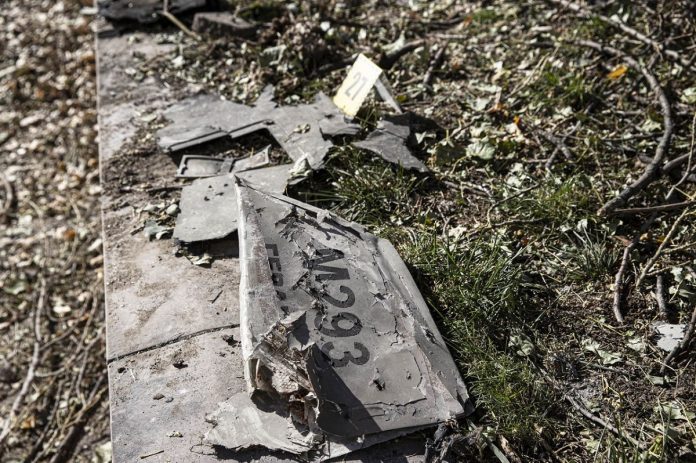
The British Ministry of Defence (MoD) says Russia has started to deploy one-way unmanned aerial vehicles (UAVs) based on the Iranian Shahed drones it has used throughout the conflict.
In its daily intelligence update, the ministry wrote, “Indigenous manufacturing will likely allow Russia to establish a more reliable supply of OWA-UAVs. The performance of these weapons has been variable and Ukraine has proved effective in neutralising the majority of incoming OWA-UAVs.”
“Russia likely aims for self-sufficiency in OWA-UAVs in the coming months. However, in the interim, Russia remains reliant on components and whole weapons from Iran, primarily shipped via the Caspian Sea,” it added.
Ukraine says it has recaptured Donetsk village of Urozhaine
Ukraine said Wednesday its forces have liberated the village of Urozhaine in the eastern Donetsk region, where fierce battles have taken place in recent days.
“Ukrainian defense forces took control of Urozhaine,” and are consolidating their positions, Andrii Kovaliov, spokesperson for the General Staff of the Armed Forces of Ukraine, said on national television Wednesday morning.
Urozhaine, located about 100 kilometers southwest of Russian-occupied Donetsk city, lies near the village of Staromaiorske, which Ukrainian soldiers recaptured about two weeks ago.
“Urozhaine was liberated,” Ukraine’s Deputy Defense Minister Hanna Maliar said on Telegram.
Elsewhere in the eastern front, Ukrainian forces are continuing to conduct counteroffensive operations south of Bakhmut and “heavy fighting continues,” Kovaliov said.
Russia “is putting up strong resistance, moving units and troops, and actively using its reserves” in the areas of Marinka and Krasnohorivka near Bakhmut, he stated.
Ukrainian forces continue to hold back the Russian offensive at the Kupiansk, Lyman, and Bakhmut axes, he added.
Road to victory will be “long and difficult”: Ukraine’s deputy PM
The road to victory for Ukraine will be “long and difficult,” stated Iryna Vereshchuk, Ukraine’s deputy prime minister, looking at a long fight ahead.
“‘Two-three weeks’, ‘by the end of the year’, ‘next spring’ — all this is not true,” Vereshchuk said Tuesday in a Telegram post. Ukraine has “to get ready for a long fight,” she added.
The Ukrainian people should work toward victory “where they belong,” Vereshchuk said.
“We do our best here and now. Patient. Day by day,” she said in the post.
“Let’s set ourselves up for a long run, not for a sprint.”
Ukraine’s President Volodymyr Zelensky has acknowledged that the Ukrainian counteroffensive is moving slower than expected. Ukrainian officials have said that efforts are focused on destroying Russia’s capabilities and disrupting its logistics
Ukrainian officials slam comments by top NATO staffer that Kyiv could join alliance by ceding land to Russia
Ukrainian officials are slamming comments made by Stian Jenssen, the director of the Private Office of the North Atlantic Treaty Organization Secretary General, who said in published remarks that ceding territory to Russia could be a way for Kyiv to achieve peace and join the military alliance.
“Trading territory for a NATO umbrella? It is ridiculous. That means deliberately choosing the defeat of democracy, encouraging a global criminal, preserving the Russian regime, destroying international law, and passing the war on to other generations,” Mykhailo Podolyak, adviser to the head of the Ukrainian Presidential Office, said in a social media post.
Jenssen, who has been in his current NATO role since 2017, made his comments in an interview with the Norwegian newspaper, Verdens Gang.
Oleg Nikolenko, the Ukrainian Foreign Ministry spokesperson, also criticized the remarks.
“Discussions about Ukraine’s accession to NATO in exchange for giving up part of its territories are absolutely unacceptable. We have always believed that the Alliance, like Ukraine, does not trade territories,” Nikolenko said in a Facebook post.
Nikolenko added that the “conscious or unconscious involvement of NATO officials in shaping the narrative” surrounding Ukraine potentially ceding territories “plays into Russia’s hands.”
Rather, he stressed, “It is in the interests of Euro-Atlantic security to discuss ways to accelerate Ukraine’s victory and its full membership in NATO.”
Ukraine to spend $32 million on fortifications in northeast
The Ukrainian government has allocated over 1.2 billion in Ukranian hryvnias (UAH), which is about around $32 million, to build up fortifications in the northeastern regions of the country, prime minister Denys Shmyhal announced Tuesday.
“At the request of the Kharkiv and Chernihiv regional military administrations, more than UAH 1.2 billion has been allocated from the state budget reserve fund,” the government announcement read.
The Kharkiv region will get UAH 911.5 million (which is about $24.69 million), while the Chernihiv region will receive more than UAH 363 million (or about $9.83 million), the announcement added.
“These are funds for the construction of military engineering and fortification structures,” the statement read.
The head of the Kharkiv region military administration, Oleh Syniehubov, said he was grateful for the support of the government in Kyiv.
“Defense capability remains the first and foremost common task,” Syniehubov continued, saying, “After all, our border region suffers from constant shelling by the occupiers every day, the Russian army keeps trying to break through our defense, and the Armed Forces of Ukraine fight difficult battles every day.”
Russian missiles fired on Ukraine overnight had foreign chips: Ukrainian presidential adviser
The Russian missiles fired on Ukraine overnight were built using foreign chips, according to Andriy Yermak, the head of the Office of the President of Ukraine.
“These missiles were manufactured by the Russians this year. There are about 30 foreign chips in the Kh-101, which were manufactured in April,” Yermak wrote on his Telegram Tuesday.
“We collect information, work with our partners, and communicate with them regularly. Our partner governments are also working with chip manufacturers and suppliers.”
“Restrictions have already been put in place, but sanctions need to be strengthened to prevent Russia from obtaining critical components and manufacturing missiles,” he added.
Russia launched a barrage of missile strikes at Lviv in western Ukraine and other regions far from the front lines, officials said, leaving at least three dead.
Russia may reconsider using cluster munitions: DM
Russian Defense Minister Sergei Shoigu said on Tuesday that Russia may reconsider the decision not to use cluster munitions – despite reports that Moscow has already used cluster munitions during the war in Ukraine.
“I would like to point out the fact that we also have cluster munitions at our service. Until now, for humanitarian reasons, we have refrained from using them. However, this decision can be reconsidered,” Shoigu said during the Moscow Conference on International Security (MCIS).
The Human Rights Watch claims that Russia has already “extensively used cluster munitions, causing many civilian deaths and serious injuries.”
The US announced last month that it would be sending the controversial munitions to Ukraine, in a move that was criticized by human rights groups.
More than 100 countries – including the United Kingdom, France and Germany – are signatories of a treaty prohibiting use of the weapon.
The munitions are particularly dangerous to civilians and non-combatants when fired near populated areas because they scatter explosive material, so-called “bomblets” across large areas.
Those that fail to explode on impact can detonate years later, posing a long-term risk to anyone who encounters them, similar to landmines.
Ninety-four percent of recorded cluster bomb casualties are civilians, of which almost 40% are children.
Russia tests digital rouble in bid to bypass sanctions
Russia has begun testing its new digital rouble with consumers, in the hope that blockchain technology will help it evade sanctions and tighten control over its citizens.
The testing phase comes as the rouble lingers at its lowest level against the US dollar since March 2022.
Moscow’s aim is clear: to make its financial system more flexible and limit the impact of international restrictions.
“It will enhance Russia’s ability to evade sanctions,” said Mikkel Morch, founder of crypto-focused investment fund ARK36.
He added the move will allow Russia to avoid banks where it faces restrictions, and that the blockchain is “much less easy to sanction and attack”.
The creation of the digital currency, Morch stated, is “part of a geopolitical war between pro-dollar countries and anti-dollar countries”, in which the latter are trying to rid themselves of the US currency for trading.