NATO chief says Putin underestimates alliance
NATO chief Jens Stoltenberg says Russian President Vladimir Putin has underestimated the alliance and promised to support Ukraine until “it wins the war”.
Speaking at a press conference in Norway, Stoltenberg stated internal discussions about “how to end the conflict in Ukraine and find “the way towards peace” are under way within the alliance.
But he highlighted that, “Ukrainians decide the terms of peace.
“NATO’s role is to support Ukrainians,” he added.
Russian helicopters downed in Ukraine had foreign high-tech components: Ukrainian official
Russian assault Ka-52 helicopters shot down in Ukraine on Thursday morning were manufactured using foreign chips and processors, according to Andriy Yermak, the head of the Office of the President of Ukraine.
Yermak called for tougher sanctions to prevent Russia from procuring components for the weapons it uses in Ukraine.
“Shooting down the Ka-52 is great. But it is much better to deprive Russia of the ability to produce it,” he wrote on his Telegram.
Russian assault helicopters contain “high-tech components” from “Western and Asian countries,” he added. Chips, processors, flash memory, telecommunication transformers, linear stabilizers, and other components are among the parts necessary to operate and repair the Ka-52 helicopters.
“Sanctions against Russia need to be strengthened. The Russian military-industrial complex should not have access to technology,” the Ukrainian presidential adviser stated.
Ukraine has repeatedly called for stronger Western sanctions against Russia, arguing that despite the existing tough sanctions imposed by the US, NATO and the EU, Russia is still able to procure components for the weapons.
Russia claims it hit US-supplied Stryker armored vehicles
Russia said on Thursday that it hit four US-supplied Stryker armored personnel carriers, marking the first time the country has claimed to hit the US-supplied vehicles.
Russian units in Zaporizhzhia repelled a Ukrainian attack near the village of Robotyne, the Russian Ministry of Defense said, and claimed to inflict heavy losses on Ukrainian troops and equipment.
“The enemy losses totaled up to 195 Ukrainian troops, four Stryker armored personnel carriers, two infantry fighting vehicles, three motor vehicles, one U.S.-made M777 artillery system, one UK-made FH-70 gun, as well as two Msta-B and one D-20 howitzers,” the Russian Ministry of Defense added.
American Bradley and Stryker vehicles, German Leopard 2 tanks, and British Challenger 2 tanks are among the Western equipment that has been sent to Ukraine.
In January, the Pentagon announced a $2.5 billion Ukraine security package that included for the first time Stryker armored vehicles and more Bradley fighting vehicles. It marked a significant escalation in the armored vehicles the US has committed to Ukraine in its fight against Russia.
Germany announces funds to support Ukraine’s military
The German government has announced more military assistance to Ukraine which includes additional artillery, armoured fighting vehicles and funds to support Kyiv’s security capacity building.
“Funding for the security capacity building initiative amounts to 5.4 billion Euros for 2023 [$5.9bn] and additional authorisations to enter commitments in the following years amounting to 10.5 billion Euros [$11.42bn],” the government said in a statement.
While the funds are primarily for military assistance, the German government added that “they will be used for re-filling Federal Armed Forces stocks for items delivered to Ukraine as well as for Germany’s contributions to the European Peace Facility (EPF), from which costs incurred from providing military assistance to Ukraine can be reimbursed to EU member states,” it added.
Ukraine extends martial law and mobilisation until November 25
Ukrainian President Volodymyr Zelensky has signed two laws to extend mobilisation and martial law in the country until November 15.
Both these rules were introduced when Russia invaded the country last February.
Under these laws, Ukrainian men aged between 18 and 60 are not allowed to leave the country, with some exceptions, and may be called up to serve in the armed forces.
Estonia, Latvia and Lithuania join G7 Declaration of Support for Ukraine
The Prime Ministers of Estonia, Latvia, and Lithuania have released a joint statement confirming they are joining the G7 Declaration of Support for Ukraine.
In the signed Thursday statement, they said: “We firmly believe that only NATO membership will provide Ukraine with security guarantees.”
“With this in mind, we join the G7 Declaration of Support for Ukraine. We will work with Ukraine within this multilateral framework to establish security commitments and arrangements that would help Ukraine win this war as soon as possible,” they added.
The G7 is shorthand for Group of Seven, an organization of leaders from some of the world’s largest economies: Canada, France, Germany, Italy, Japan, the United Kingdom and the United States.
Its Declaration of Support for Ukraine was issued following the NATO summit in Vilnius last month. It aims to provide Ukraine with sustained political, military, financial, and economic assistance through bilateral agreements and to help hold Russia to account.
The document outlined that G7 countries will work with Ukraine on “bilateral, long-term security commitments and arrangements” toward three goals.
The goals include “ensuring a sustainable force capable of defending Ukraine now and deterring Russian aggression in the future,” “strengthening Ukraine’s economic stability and resilience” and “providing technical and financial support for Ukraine’s immediate needs stemming from Russia’s war as well as to enable Ukraine to continue implementing the effective reform agenda.”
Estonia’s Government website says 18 countries — including Estonia, Latvia, and Lithuania — have now joined the declaration.
No change seen in Russia’s nuclear posture: NATO
NATO Secretary General Jens Stoltenberg said the military alliance has not detected any changes to Russia’s nuclear forces and the Western alliance has seen no reason to reconsider its own corresponding setup.
“We haven’t seen any changes in their nuclear forces that trigger us to change our forces and the way those are arranged. So far we haven’t seen anything that demands that from our side,” Stoltenberg stated at a press conference in Norway.
Russian officials say Moscow may be forced to use a nuclear weapon if Ukraine’s counteroffensive succeeds.
FM: Kyiv’s forces to liberate all Ukraine
Ukraine’s military will liberate all territory occupied by Russian forces regardless of how long it takes, Foreign Minister Dmytro Kuleba has said, adding this was the Ukrainian people’s wish.
“Our goal is victory, victory in the form of the liberation of our territories within (Ukraine’s) borders of 1991. And we don’t care how long it takes,” he said during an interview.
“As long as the Ukrainian people share this goal, the Ukrainian government will move hand in hand with its own people,” the minister added.
First ship to depart from Odesa since collapse of grain deal has left Ukrainian waters
A container ship laden with grain has reached Romanian waters in the Black Sea after departing from Ukraine’s southern port of Odesa Wednesday.
The Hong Kong-flagged Joseph Schulte is the first vessel to use a temporary Black Sea shipping corridor established following the breakdown of a UN-brokered grain deal last month, according to Ukrainian authorities.
Data from MarineTraffic on Thursday showed the vessel traveling south toward the Turkish port of Ambarli. It is carrying more than 30,000 metric tons of cargo, including food products, Ukrainian Infrastructure Minister Oleksandr Kubrakov said Wednesday.
Russia pulled out of a UN and Turkish brokered deal in July that allowed Ukraine to move its grain via the Black Sea and warned that any ships headed to Ukraine would be treated as potentially carrying weapons.
Last week, the Ukrainian navy issued an order declaring “temporary corridors” for merchant ships sailing to and from Ukrainian ports. However, it admitted that the military threat and mine danger from Russia remained along all routes.
On Sunday, a Russian warship fired warning shots and boarded a Turkish-owned cargo ship it claimed was headed to Ukraine, in what Kyiv said was “an act of piracy.”
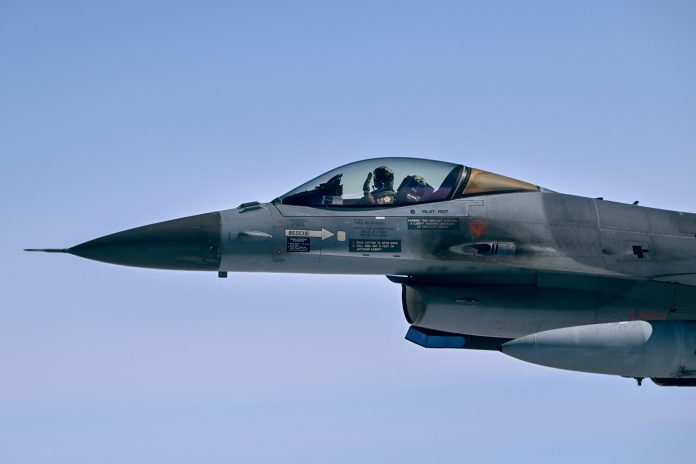
F-16 fighter jets won’t arrive this year: Ukrainian Air Force
Ukraine does not expect US-made F-16 fighter jets to arrive this year, a Ukrainian Air Force spokesperson said Thursday.
Kyiv has been pleading for the advanced jets from Western allies for more than a year, arguing they will provide the military with additional air defense and offensive capabilities.
“It’s already become clear that we will not be able to defend Ukraine with F-16s this fall and winter,” Air Force spokesperson Yurii Ihnat told Ukrainian public television.
Washingon is waiting for European officials to submit a final plan for training Ukrainian pilots on F-16s, which the US will have to authorize before the program can begin, according to officials familiar with the matter.
The training is supposed to start this month, Ukrainian President Volodymyr Zelensky and European officials have said publicly. But more than two months after President Joe Biden announced US support for training Ukrainian pilots on F-16s, there remain a number of critical details to work out.
Ihnat stated that progress was being made toward training pilots.
“The issue has moved forward. We understand that our pilots will be training in the near future,” he continued, adding, “But at the same time, our anti-air defense needs to be strengthened.”
The F-16s would be an upgrade to the largely Soviet-era aircraft currently in Ukraine’s fleet but analysts have cautioned that the jets aren’t a cure-all and have vulnerabilities that Moscow would be well aware of and could exploit.
EU funding for Russia and Belarus reallocated towards Ukraine and Moldova
The EU transferred 135 million euros ($147 million) initially allocated for programs with Russia and Belarus towards strengthening the cooperation with Ukraine and Moldova, it announced in a statement.
“The decision is the result of the brutal war of Russia against Ukraine”, EU Commissioner for Cohesion and Reforms, Elisa Ferreira said.
The EU also decided that regions in Finland, Estonia, Latvia and Poland which were supposed to participate in cooperation programs with Russia and Belarus may participate in other existing programs.
Ukraine says over 20,000 residents killed in Russian-occupied Horlivka
Ukraine’s National Resistance Centre has announced that over 20,000 residents have been killed in Russian-occupied Horlivka in the Donetsk region, due to forced mobilisation.
After Russia invaded Ukraine last year, Moscow ordered the mobilisation of Russian citizens in the country and its territories, in order to defend Russia’s borders.
“Note that the mobilisation of residents of occupied territories is an international crime,” the centre said in a statement.
“The occupiers are preparing for a new wave of mobilisation,” the centre warned, adding that “the mobilisation plan was presented to the Gauleiter from Horlivka.
India considers Russian wheat imports at discount to calm prices
India is in talks with Russia to import wheat at a discount in a rare move to boost supplies and curb food inflation ahead of state and national elections next year, Reuters has reported, citing four anonymous sources.
The imports would allow New Delhi to intervene more effectively in the market to drive down wheat prices that stoked inflation to a 15-month high in July.
The government’s plan to import Russian wheat is one of the supply-side measures being considered to bring down prices of key commodities like fuel, cereals and pulses, along with an extension of rural schemes to ease the effects of inflation on the poor, two of the sources with knowledge of the matter told Reuters.
India has not imported wheat through diplomatic deals in years, and last month, Sanjeev Chopra, the most senior civil servant at the federal food ministry, said there was no proposal to import wheat from Russia.
Russia shoots down drone over Belgorod
Russian air defenses destroyed a Ukrainian drone over the southwest Belgorod region on Thursday, state-run news agency TASS reported, citing Moscow’s defense ministry.
No casualties or damage were reported.
In recent months, drone attacks have become an almost daily occurrence on the border province, which is located just 80 kilometers from Ukraine’s northeastern Kharkiv region.
Russian towns bordering Ukraine have also recently seen an uptick in cross-border attacks, with two people injured by shelling in Belgorod on Tuesday.
Russia has attacked Ukrainian ports 7 times since Moscow pulled out of grain deal: Kiev
An overnight drone attack in Ukraine’s southern Odesa region marked the seventh time Russia has targeted Ukrainian ports since Moscow pulled out of the Black Sea Grain initiative, according to President Volodymyr Zelensky.
“Last night, Russian terrorists again targeted our ports. Our infrastructure, which is involved in ensuring not ours, but the common — global — food security,” Zelensky said Wednesday during his evening address.
“In just one month since Russia’s attempt to destroy the Black Sea Grain Initiative, this was the seventh, seventh massive Russian attack today.”
“The port of Reni, the port of Izmail, the port of Pivdennyi, the port of Odesa, the port of Chornomorsk, Mykolaiv — every Russian attack on them is a stroke on global food prices, a stroke on social and political stability in Africa and Asia,” he added.
The drone attack on Reni damaged warehouses and granaries, said Oleh Kiper, head of the Odesa regional military administration. No casualties were reported, he stated.
Small ports on the Danube have become vital for Ukrainian grain exports following the collapse of the Black Sea grain deal last month. Ukrainian officials say Russian forces are deliberately targeting port infrastructure on the river as part of efforts to block the exports — posing a threat to food security in developing nations that rely on Ukrainian grain.
“The basic things that give every society a normal life are food on the tables of families. No other terrorist in the world, except for Russia, has ever so openly and deliberately attacked the security of so many nations at once,” Zelensky stated.
“We must respond to this. All of us! We need to counteract this — actively, with joint efforts,” he continued.
US says working to identify alternative paths for Ukraine grain exports
The United States has announced it was working with partners to identify alternative options to ensure Ukrainian grain exports amid Russia’s continued attacks.
“The United States … calls for Russia to immediately return to the Black Sea Grain Initiative,” Department of State deputy spokesperson Vedant Patel said, referring to a pact that had allowed export of Ukraine grain by the Black Sea. Russia quit the deal on July 17.
Patel added the US was seeking “to possibly find ways and corridors in which we can continue to get grain to the places it needs to go,” without providing details.
Zelensky says first cargo ship in Black Sea an ‘important step’
Ukrainian President Volodymyr Zelensky has hailed the departure of the first cargo ship to use a new Black Sea lane, after Moscow exited a deal protecting Ukrainian grain exports from its southern ports.
“Ukraine has just made an important step towards restoring the freedom of navigation in the Black Sea,” Zelensky said on social media.
“The first civilian vessel has passed through Ukraine’s new humanitarian corridor, departing from the port of Odesa,” despite warnings from Moscow that its navy could target vessels, he added.