Friday, December 26, 2025
Home Blog Page 1272

The Dozaleh or Donay, Iranian Kurdish musical instrument

The Dozaleh

The Dozaleh is also called Donay, Diani, and Doahang, and in the Kurdish regions, it is called the Dozaleh, because it is made from the stem of the Zale plant, which is similar to reed.
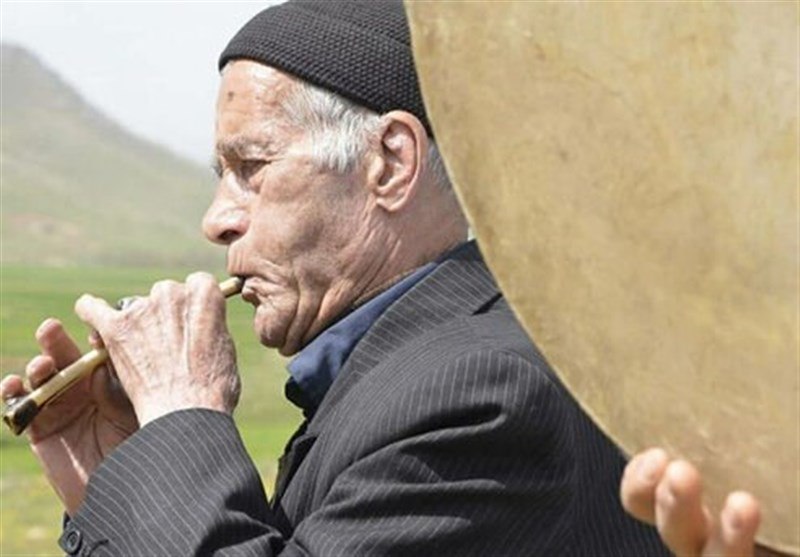
The Dozaleh or Donay, Iranian Kurdish musical instrument

The Dozaleh’s history

In the historical works in ancient Iran, an image of an Assyrian musician has remained, playing the Donay similar to the Egyptian and Greek Donay.

Furthermore, next to the tomb of one of the pharaohs of the ancient Egypt, two female musicians from the 18th century BC, one of whom is playing the Donay, can be seen on the silver cups left from the Sassanid era, in a carving called “Organ”. It is played like Ney-anbān. The Dozaleh is an instrument that has six holes made on the pipes and are placed together along the length of both pipes.

The bottom of both pipes should be open. It is made in different lengths from about 22 centimeters and a diameter of 2 centimeters.

The Dozaleh is also called Donay, Diani, and Doahang, and in the Kurdish regions, it is called the Dozaleh, because it is made from the stem of the Zale plant, which is similar to reed.

The instrument consists of two parallel and connected tubes, which are made of copper. Some other Dozaleh instruments are made with feathers of the Eurasian griffon vulture or of birds’ quills.

The playing technique of the Dozaleh:

The tongues of the Dozaleh are placed in the mouth in a way that almost all of their length is placed in the mouth chamber and it is played with the fingers of both hands.
Each finger must simultaneously close or open a row of holes in both vocal tubes, and in this way, these two tubes sound in unison. In playing the Dozaleh, the technique of breathing is used, and as a result, its sound will be continuous and without any pause. The conventional operating limits in this device are as follows. Here, the sound of “B” is a hypothetical sound, and the other sounds are also variable with the change of air pressure and the complete or incomplete capture of the holes.

Cases and type of using Dozaleh:

The Dozaleh is played along with the Tombak or the Daf in wedding ceremonies and celebrations.

The range of the instrument is about two octaves, depending on the size of the instrument, it is placed in a different sound field. Dozaleh is a common instrument among the nomads of Iran and in some regions of Iran it is called Jofti or Jofte.

The instrument is also known as Doney (in Baluchestan), Donay, Jofti, Doahang, Dozaleh (in Hormozgan, Kordestan, Kermanshah and Ilam) and the Qoshmeh (in Khorassan).

The Dozaleh or Donay, Iranian Kurdish musical instrument

Famous Dozaleh musicians

In the Kermanshah Province, the Songhor and Keliaei regions are the cradles of wind instrument players such as the Dozaleh, the Sorna and the duduk. The late Master Amanollah Taheri was one of the pioneers of playing the Dozaleh in the region.

People living all over the Kordestan, Kermanshah, Lorestan and Ilam Provinces know Master Taheri and remember the artist with the magical sound of the instrument. In teaching the instrument, besides his two children named Yazdan and Rasoul, most of the Dozaleh musicians in Songhor and Keliaei have been directly or indirectly his students.

Different types of Iranian instruments

Stringed instruments: The divan, the tar, the setar, the oud, the tanbur, the komuz, the rubab, the qanun, the harp…

Wind instruments: the duduk, the flute, the reed, the quarter tone clarinet, the Ney-anbān, the karnay, the balaban, the Dozaleh, the sonar, the nafir, the Doniyeh, the shemshal, the Qoshmeh.

Percussion instruments: The Daf, the drum, the tombak, the naqareh, the cymbal, and tas.
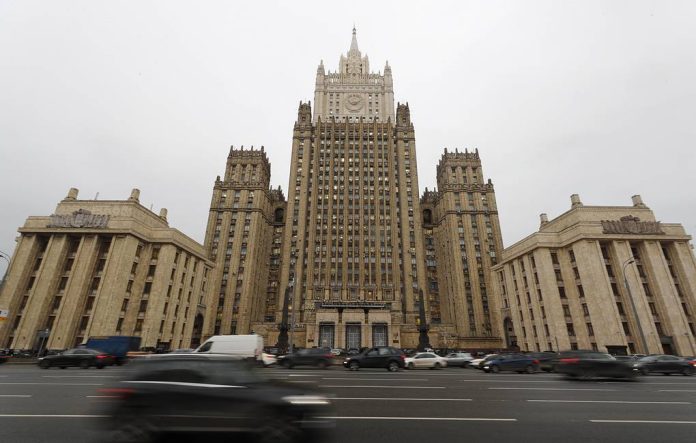
Russia summons Armenia’s envoy over ‘unfriendly moves’

Russian Foreign Ministry

“Armenian Ambassador to Moscow Vagharshak Harutiunyan was summoned to the Russian Foreign Ministry and received a stern remonstration,” the statement said.

“Additionally, he was handed a protest note pointing out the unacceptability of offensive remarks by Chairman of the National Assembly of the Republic of Armenia Alen Robertovich Simonyan against Russian Foreign Ministry Spokeswoman Maria Vladimirovna Zakharova and the Russian foreign policy agency in general made on September 6,” the ministry added.

The diplomatic agency noted the emergence “of certain doubts in the practicality of allied ties within the framework of the Collective Security Treaty Organization (CSTO) and with Russia on a bilateral basis among the Republic of Armenia’s official circles and political elite,” as well as in the feasibility of the set of trilateral agreements between Moscow, Yerevan and Baku on the Azerbaijani-Armenian normalization.

“Against this background, over recent days, the Armenian leadership has made a series of unfriendly steps, including launching the ratification process of the Rome Statute of the International Criminal Court, Anna Vachikovna Hakobyan, the prime minister’s spouse, visiting Kiev and delivering humanitarian aid to the Nazi Kiev regime, and holding joint military drills with the US on Armenian soil,” the Russian Foreign Ministry stressed.

The diplomatic agency expressed concerns over the detention of pro-Russian blogger Mikael Badalyan and Radio Sputnik Armenia observer Ashot Gevorkyan on September 7.

“Additionally, concerns were conveyed over the detention of blogger M. Badalyan and Radio Sputnik Armenia observer A. Gevorkyan in Armenia on September 7,” the ministry said.

The foreign policy agency also pointed out that Moscow firmly proceeds from the premise that Russia and Armenia are allies and their agreements on fostering and bolstering relations will be fully implemented to benefit both countries. “This, among other things, concerns organizing drills on the CSTO track and, in the future, sending the organization’s observation mission to the republic to facilitate a settlement between Armenia and Azerbaijan,” the ministry added.

“The Russian side will continue making all necessary efforts toward this end,” the agency concluded.

Analyst: JCPOA revival shrouded in ambiguities, questions

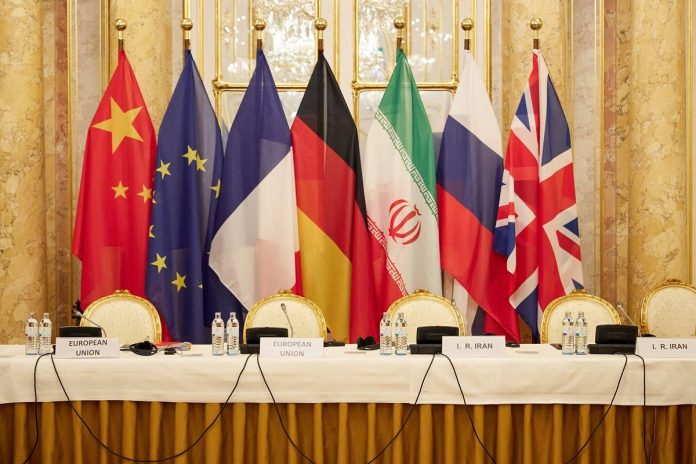
Nuclear Negotiations in Vienna

Jalal Sadatian, a former Iranian diplomat, told Fararu news website that the JCPOA, signed in 2015 to lift nuclear-related sanctions on Iran in return for limiting its nuclear activities, has shrunk into a “temporary and informal” agreement, whose future is uncertain.

Sadatian noted there are reports that Tehran and Washington are engaged in behind-the-scenes talks to restore the agreement after former American president Donald Trump unilaterally abandoned the deal, but he sounded downbeat that the Biden administration would reveal the results of the talks before the upcoming presidential election in the US in 2024.

The Iranian analyst said the JCPOA, even in its diminished form, has been useful for both sides, citing the small-scale agreements to unfreeze Iranian assets in Iraqi and South Korean banks as evidence.

Sadatian said the regional countries, including Saudi Arabia, would welcome any agreement between Iran and the US as it would lead to regional security.

He also added if Europeans become confident that Iran does not provide Russia with drones, they would also become more encouraged to take more serious steps for the revival of the JCPOA.

Live Update: Russia’s “Special Operation” in Ukraine; Day 563

Russia Ukraine War

US poised to approve sending long-range ATACMS missiles to Ukraine

The US is likely to send long-rang guided missiles to support Ukraine’s fight against Russia, according to US media.

Army Tactical Missile Systems, or ATACMS, would give Ukraine a strike range of 190 miles and the ability to target command posts and assembly areas. Ukraine’s other US-donated missiles, HIMARS, currently only have a range of about 50 miles.

“They are coming,” one official who had access to security assistance plans told ABC news, though added the plans could change.

A second official stated the missiles are likely to be included in the upcoming military package. However, it could be months before Ukraine receives them, he added.

The US was initially reluctant to send Ukraine the weapons for fear of escalating the war. But as with the supply of other progressively heavier weapons, it has softened its stance over the course of the war.


Japanese foreign minister arrived in Ukraine

Japan’s Foreign Minister Yoshimasa Hayashi has started his visit in Ukraine, the Japanese embassy said Saturday, in a show of support for the country.

“Japanese Foreign Minister Yoshimasa Hayashi arrives in Ukraine,” the embassy said on Facebook, posting a video of the top diplomat welcomed by officials at a train station.

The Japanese foreign ministry announced Hayashi would discuss recovery and reconstruction efforts with his counterpart Dmytro Kuleba.


Ukraine plans to provide humanitarian aid to African and Asian countries through Danube ports: Official

Ukraine will use Danube ports to ship humanitarian aid to African and Asian countries, according to Prime Minister Denys Shmyhal.

The government of Ukraine, during a meeting held in Kyiv on Friday, supported a resolution to involve Ukrainian ports on the Danube River in providing humanitarian aid in the form of wheat and corn to those countries in the two continents.

“This is our contribution to global food security. We are working with the UN and our other partners to fully restore agricultural exports from Ukraine and finally unblock our Black Sea ports,” Shmyhal said.

Russia pulled out of a deal to allow the safe passage of ships carrying grain from Ukrainian ports in July. Since then, Russia also ramped up attacks on Ukrainian port infrastructure.

The Black Sea initiative was significant in stabilizing global food markets since the war started in February last year, particularly for poorer countries relying more heavily on grain supplies from the region.

Ukraine harvested 34 million tonnes of crops this year, including 22 million tonnes of wheat, according to the country’s prime minister.

The country’s domestic demand is 6-7 million tonnes per year, Shmyhal added.


UN watchdog warns of increased fighting around Ukraine’s Zaporizhzhia nuclear power plant

Experts from the United Nations’ nuclear watchdog agency are once again warning of “a potential threat to nuclear safety” at Ukraine’s Zaporizhzhia nuclear power plant after hearing explosions there over the past week.

The plant – which is the largest of its kind in Europe – is located along the banks of the Dnipro River, next to the town of Enerhodar. It has been under full Russian control since March of last year but is operated mostly by Ukrainian staff, who were initially forced to work by invading Russian troops.

Experts from the UN’s International Atomic Energy Agency are stationed at the plant and “have reported hearing numerous explosions over the past week, in a possible sign of increased military activity in the region that could also pose a potential threat to nuclear safety and security at the site,” Director General Rafael Mariano Grossi said in a statement Friday.

“Just over a year after the IAEA established a permanent presence at Europe’s largest nuclear power plant (NPP) to help prevent an accident there during the conflict in Ukraine, the overall situation at the facility remains highly precarious,” Grossi wrote.

The director general added the IAEA team heard about two dozen explosions over the course of last Saturday, Sunday and Monday, followed by several more during “the last few days.”

Reports indicate the explosions occurred “some distance away” from the plant, Grossi said. “Nevertheless, I remain deeply concerned about the possible dangers facing the plant at this time of heightened military tension in the region,” he wrote.

“Whatever happens in a conflict zone wherever it may be, everybody would stand to lose from a nuclear accident, and I urge that all necessary precautions must be taken to avoid it happening,” Grossi stated.

Power plant staff told the watchdog agency that more drone strikes hit Enerhodar, where many employees live with their families, on Thursday morning, according to the statement. No casualties were reported.

The IAEA team was also informed that the plant has reduced the number of on-site staff to minimum levels over the next few days due to the risk of further fighting nearby.


Zelensky on suggestions to negotiate with Putin: It’s impossible to compromise “with a liar”

Ukraine’s president says the example of Yevgeny Prigozhin, the Russian mercenary leader who died in a plane crash last month, shows what happens when you try to make a deal with Russian President Vladimir Putin.

Ukraine’s counteroffensive so far has resulted in only modest gains, but Volodymyr Zelensky told CNN he rejected suggestions it was time to negotiate peace with the Kremlin.

“When you want to have a compromise or a dialogue with somebody, you cannot do it with a liar,” Zelensky told CNN’s Fareed Zakaria.

The Wagner leader’s fiery end, after apparently receiving promises over his freedom to continue operating, just weeks after leading a revolt against Putin’s handling of the war, was a warning to be heeded, Zelensky suggested.

While the United States and other key Ukrainian allies continue to supply weapons to Kyiv, stressing that conditions to pursue a “just and durable” peace are not yet in place, several other prominent world leaders, such as Brazil’s Luiz Inácio Lula Da Silva, have put the onus on Ukraine to end the war.

Ukraine’s leader pointed to examples of other countries that have been attacked by Russian soldiers and continue to be partly occupied by Moscow, as support for his position.

“Did you see any compromise from Putin on other issues? With Georgia? With Moldova?” Zelensky asked rhetorically.


First batch of Leopard 1 tanks arrives in Ukraine: Denmark

The first 10 German-made Leopard 1 tanks pledged by Denmark have arrived in Ukraine, the Danish Armed Forces said in a statement on Friday.

An additional 10 tanks have since been delivered from the factory after undergoing renovation, and they should be sent to Ukraine soon, it added.

Denmark has joined efforts with Germany to donate the vehicles, first introduced in 1960s, most of which had been decommissioned in the early 2000s. They will also provide training to the Ukrainian crews that are going to be operating them once they reach Ukraine.

Around 135 of the vehicles are expected to be donated to Ukraine after undergoing refurbishment, having been in storage for nearly 20 years.

In late January, the United States and Germany each announced they would send contingents of tanks to Ukraine, reversing their longstanding trepidation at providing Kyiv with offensive armored vehicles. The announcement by German Chancellor Olaf Scholz that he will send Leopard 2 tanks was coupled with an announcement from US President Joe Biden that he was providing 31 M1 Abrams tanks to Ukraine.

The modern German Leopard 2 tanks were introduced in 1979 and have been upgraded several times since, according to the European Council on Foreign Relations think tank.


No end to Ukraine conflict in sight: UN

With Moscow and Kiev set on achieving their aims by force, there is no hope for a peaceful solution to the conflict in Ukraine in the immediate future, UN Secretary-General Antonio Guterres told reporters on Friday.

“I am not very hopeful that we’ll have a peaceful solution in the immediate future,” Guterres said at a press conference ahead of the G20 summit in New Delhi, India.

“I think the two parties have still decided to move on with the conflict.”

Iran says to continue cooperation with IAEA

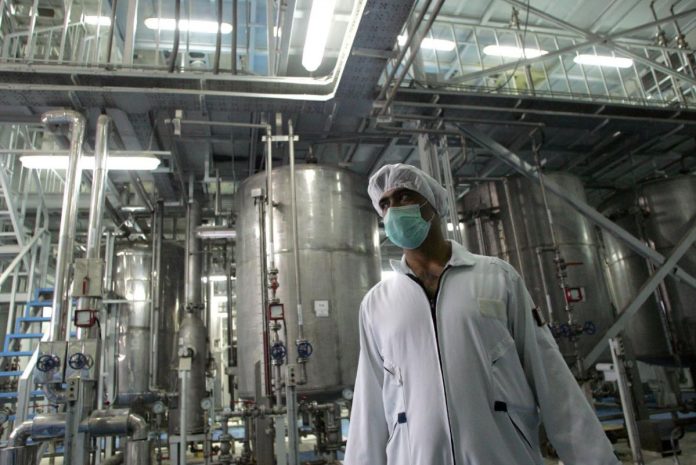
Iran Nuclear Program

Nasser Kanaani was reacting to the final statement of the meeting of the Persian Gulf Cooperation Council foreign ministers.

He referred to the claims about the peaceful nuclear program of Iran, saying the Islamic Republic of Iran will advance its atomic program and cooperate with the International Atomic Energy Agency in accordance with the rights and obligations under the Non-Proliferation Treaty and the Comprehensive Safeguards Agreement in a constructive manner and that it will not be influenced by political and propaganda interventions and pressures.

Kanani vehemently rejected the council reference to the three Persian Gulf islands of Abu Musa, the Greater Tunb and the Lesser Tunb saying these islands are inseparable and eternal parts of the territory of the Islamic Republic of Iran.

Kanaani added the reference by the GCC foreign ministers in their statement lacks any political and legal value.

He added that the Islamic Republic of Iran has time and again underlined its territorial integrity and also its sovereignty over the Iranian islands based on the recognized rules of international law.

Regarding the use of natural resources of the Persian Gulf, the Iranian Foreign Ministry spokesperson said undoubtedly, acts in line with common interests of all countries can provide suitable grounds for regional cooperation.

Kanaani urged Persian Gulf countries to use the natural resources in and under the sea in the Persian Gulf in line with common interests.

Kanaani further spoke about the necessity of preserving the new positive climate in the region by all sides and the need for strengthening the regional synergy and convergence in the best interests of regional nations.

US, Persian Gulf states, India seeking railway deal at G-20: Report

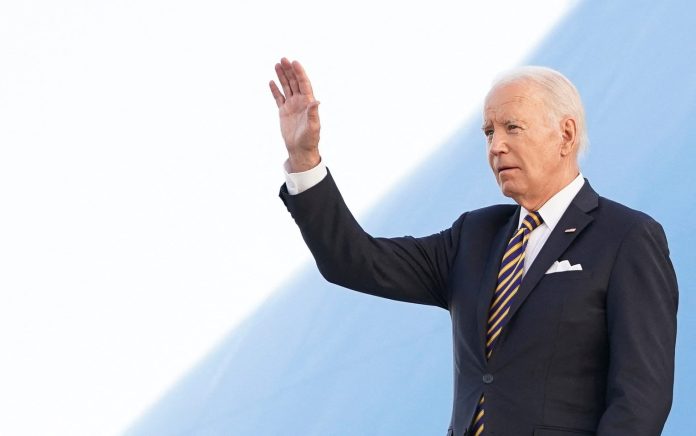
Joe Biden

The plan, which may be announced Saturday, seeks to connect Persian Gulf and Arab countries via a network of railways, Axios said, citing unidentified people with knowledge of the discussions. It will also connect to India through shipping lanes from ports in the region, the report added.

Biden’s national security advisor, Jake Sullivan, declined to comment on any potential announcement at the G-20, but told reporters en route to the summit in New Delhi that it was an initiative the US was invested in along with its partner countries.

“We believe that connectivity from India, across the Middle East to Europe is incredibly important and will bring a significant number of economic benefits, as well as strategic benefits, to all of the countries involved,” he stated.

Top Biden Advisor Sullivan Will Go to Saudi Arabia This Weekend

Earlier this year Sullivan traveled to Saudi Arabia for talks that also included Indian and UAE representatives on the topic.

US allies Saudi Arabia and the UAE have been moving closer to China as they seek to strengthen ties with fast-growing economies to the east. Last month the two oil rich Persian Gulf states announced they were joining the BRICS group of emerging market nations after China led a push to open up membership of the bloc.

The leaders of the BRICS nations — Brazil, Russia, India, China and South Africa — are trying to increase the group’s influence and counter US power over the global economy and trade, including through the role of the US dollar.

Separately, a US-backed proposal to speed up land-trade routes between Persian Gulf Arab countries and the Mediterranean Sea has been floated among Israel and Persian Gulf countries, but officials acknowledge there is no set time line for any changes.

The US in recent years has sought to counter President Xi Jinping’s Belt and Road Initiative, which has financed hundreds of billions of dollars worth of infrastructure in emerging markets. China has also boosted ties with the Middle East of late, helping to broker a detente between Saudi Arabia and Iran earlier this year.

Xi is set to host world leaders including Russian President Vladimir Putin at a Belt and Road summit in Beijing next month.

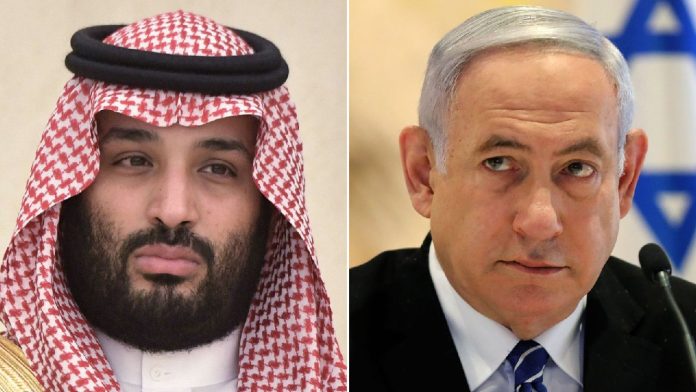
US says still work to do on Israel-Saudi normalization

Mohammad bin Salman Benjamin Netanyahu

Sullivan spoke to reporters aboard Air Force One as President Joe Biden flew to India to attend a G20 summit.

“Many of the elements of a pathway to normalization are now on the table. We don’t have a framework, we don’t have the terms ready to be signed. There is still work to do,” Sullivan said.

He added there was a “broad understanding of many of the key elements,” without going into detail.

US officials see a potential deal between Israel and Saudi Arabia as possible after the administration of then-President Donald Trump reached similar agreements between Israel and Morocco, Sudan, Bahrain and the United Arab Emirates.

Biden said on CNN in early July that Israel and Saudi Arabia were a long way from a normalization agreement that would involve a US-Saudi defense treaty and a civilian nuclear program for the Saudis from the United States.

Biden envoy Brett McGurk was in Saudi Arabia for talks this week that officials said was largely about the Yemen war but was also expected to include discussions on the potential normalization deal.

UK government taking ‘dangerous road’ by labeling critics of Israel anti-Semitic

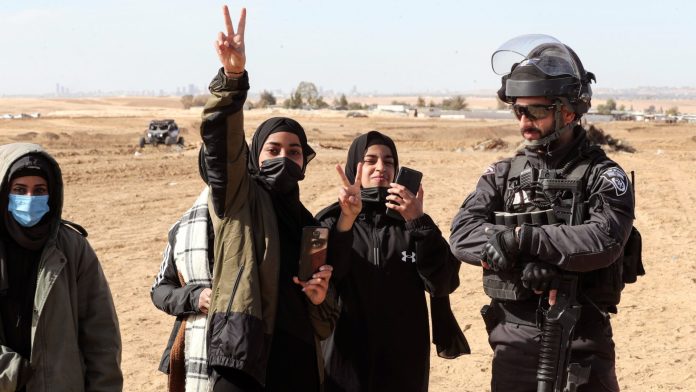
Israel Palestine

Giving evidence on Thursday, human rights and environment advocates warned that the proposed legislation could also inhibit divestment from arms companies supplying Persian Gulf states accused of war crimes, and from state-backed fossil fuel companies.

But the committee also heard from newspaper columnist Melanie Phillips who told MPs that a clause in the bill specifically preventing public bodies from supporting boycotts aimed at Israel was necessary because of the “uniquely evil impulse” of the Boycott, Divestment and Sanctions movement.

The Economic Activity of Public Bodies (Overseas Matters) Bill aims to prohibit public bodies, including local councils, universities and public sector pension funds, from making procurement and investment decisions “influenced by political or moral disapproval of foreign state conduct”.

The government says the bill is intended to ensure that local authorities and other institutions do not pursue their own foreign policy agendas, but that the bill will also deliver on a Conservative Party manifesto commitment to ban public bodies from supporting campaigns such as BDS.

It argues that support for BDS has contributed to community divisions and antisemitism in the UK.

But critics of the bill warn it risks inflaming community tensions by marginalising Palestinians and pro-Palestinian advocacy organisations campaigning against Israeli human rights abuses.

Giving evidence on Thursday, Peter Frankental of Amnesty International linked attempts by the government to connect Palestinian activism and BDS to antisemitism to a broader stigmatisation of human rights advocacy worldwide.

Frankental told MPs: “There is no reason in principle why any human rights advocate should not advocate for the human rights of Palestinians, or criticise the human rights record of the state of Israel, and they should not be tarred with the brush of racism, of antisemitism. That is a very dangerous road.”

Frankental questioned whether campaigners drawing attention to violations against the Rohingya Muslim minority in Myanmar would be accused of being anti-Buddhist, or whether critics of the Indian government would face accusations of being anti-Hindu.

Yasmine Ahmed, the UK director of Human Rights Watch, said the bill would restrict the ability of public bodies to carry out their own due diligence in line with their responsibilities to adhere with international law and UN human rights commitments.

“Something that is extremely pernicious with the bill is the fact that what it is going to do is have a significant chilling effect on public bodies. It runs a coach and horses through ESG [environment, social and governance] and human rights due diligence,” she stated.

Ahmed added that, in decades working as a lawyer, she had “never read a piece of legislation that is as badly worded as this”.

She said the bill, if passed into law, would prevent public bodies from divesting from arms companies selling weapons to countries such as Saudi Arabia and the United Arab Emirates over concerns they might be used to commit war crimes in Yemen.

The bill was also criticised by Dave Timms, head of political affairs at environmental campaign organisation Friends of the Earth, who stated it could also block public bodies from divesting from fossil fuel companies such as Saudi Arabia’s Aramco.

“This is the state impinging on the activities of civil society organisations who are trying to achieve meaningful social change,” he continued, adding, “This is a direct attack on the ability of civil society to go about the activities that we would consider to be legitimate.”

Thursday’s session heard from a number of critics of the bill following criticism of the committee on Wednesday – as reported by Middle East Eye – after it emerged that no Palestinians or Palestinian advocacy organisations had been asked to give evidence in person.

The committee has heard from a number of organisations and advocacy groups supportive of the bill, including the Board of Deputies of British Jews, UK Lawyers for Israel and the Henry Jackson Society.

On Thursday, the committee also heard evidence from Phillips who has publicly backed the bill’s targeting of the BDS movement.

Phillips told the committee she agreed with the government’s view of BDS as “a uniquely evil impulse designed to destroy Israel as a Jewish state”, with, she said, repercussions for Jews in the UK.

“Because it is a unique situation it requires a specific exemption,” she added.

The BDS movement aims to end international support for Israel’s “systematic oppression of Palestinians and pressure Israel to comply with international law”.

Called for by more than 170 Palestinian civil society groups in 2005, the movement has grown and spread worldwide.

It describes itself as an “inclusive, anti-racist human rights movement that is opposed on principle to all forms of discrimination, including antisemitism and Islamophobia”.

The committee’s invitation to Phillips was criticised prior to her appearance by Ben Jamal, the head of the Palestine Solidarity Campaign, who accused her of an “egregious track record of anti-Palestinian racism”.

But Phillips nonetheless was addressed flatteringly by several MPs.

Wayne David, a Labour MP, told her: “I have regularly for many years read your excellent articles for The Times and elsewhere. I understand you feel very strongly about this issue and I personally have gone on record many times in being implacably opposed to the BDS movement.”

George Howarth, also a Labour MP and the chair of the committee, thanked Phillips for her “characteristically forthright responses which have been very helpful”.

He added: “I would simply say in my experience, and I’m sure you share it, it’s as well to take compliments wherever you can get them.”

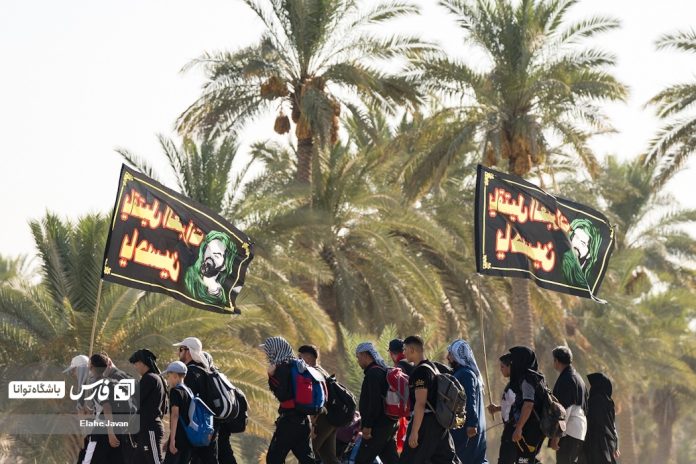
Iran military commander thanks Iraqi armed forces, Hashd al-Sha’abi for Arbaeen security

Iran Pilgrims Iraq

In separate messages on Thursday, Major General Bagher thanked PMU head Falih al-Fayyadh and the Chief of Staff of the Iraqi Army General Abdel Emir Yarallah for their efforts to provide security for millions of pilgrims of Arbaeen that marks the 40th day after the martyrdom of Imam Hussein, held on Wednesday.

The holy shrine of Imam Hussein, the third Shia Imam and the grandson of Prophet Muhammad, in the Iraqi city of Karbala hosts millions of pilgrims from across the world, including from Iran, every year on Arbaeen. The event has at times been targeted by terrorist attacks.

The top Iranian commander stated in his message that the procession of Arbaeen demonstrated that the spirit of justice and truth-seeking of the Ahl al-Bayt, the Prophet’s Household, is still alive among Muslims after centuries.

He also added that the Western powers have sought to cause rifts among the Islamic Ummah by supporting and backing terrorist groups in the past decade as they had done in the past centuries.

Major General Mohammad Bagheri, however, noted that the steadfastness and efforts by Iran and Iraq have rendered the plots ineffective.

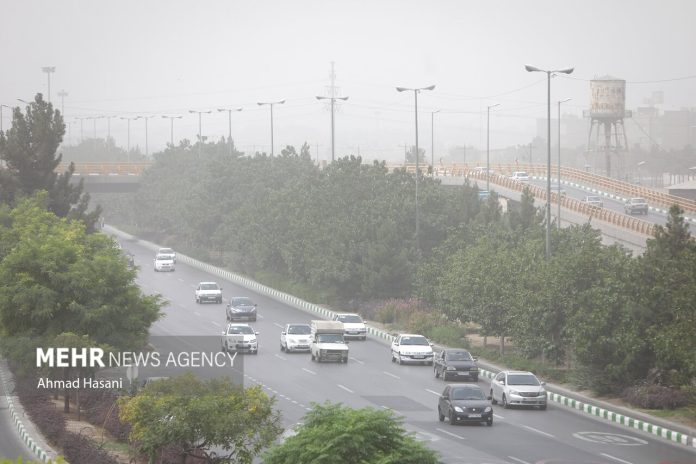
Iran seeking joint action with Saudi Arabia on sand storms

Dust storm

Ali Salajegheh said in remarks published on Thursday that the Empty Quarter, located in south of Saudi Arabia, is responsible for nearly a third of sand and dust storms that enter Iran via its southwestern borders and affect vast areas of the country during dry seasons.

“Based on latest bilateral negotiations, it has been agreed to carry out some joint actions on this desert to fight the sources of sand and dust,” Salajegheh told the ILNA news agency in an interview.

The remarks come just days after Iran and Saudi Arabia officially opened their respective embassies after seven years of no diplomatic relations.

The reopening of the embassies was part of an agreement reached between the two countries in March in China.

The Iranian environment chief said the rapprochement between Iran and Saudi Arabia would enable the two countries to closely and directly cooperate on key environmental issues, including on sand and dust storms.

He stated a delegation from Saudi Arabia is to attend the International Conference on Combating Sand and Dust Storms in Tehran on September 9-10.

Some 50 countries as well as 15 international organizations will be represented in the conference which will be held under the auspices of the United Nations.

Salajegheh added if a final agreement is reached between Iran and Saudi Arabia, experts from the two countries will contribute to the joint operation to fight sand and dust emanating from the Empty Quarter desert.