Ukraine condemns ‘sham elections’ in occupied territories
Ukraine’s foreign ministry has slammed “sham elections” in occupied Ukrainian territories, saying they were “worthless” and would have no legal standing.
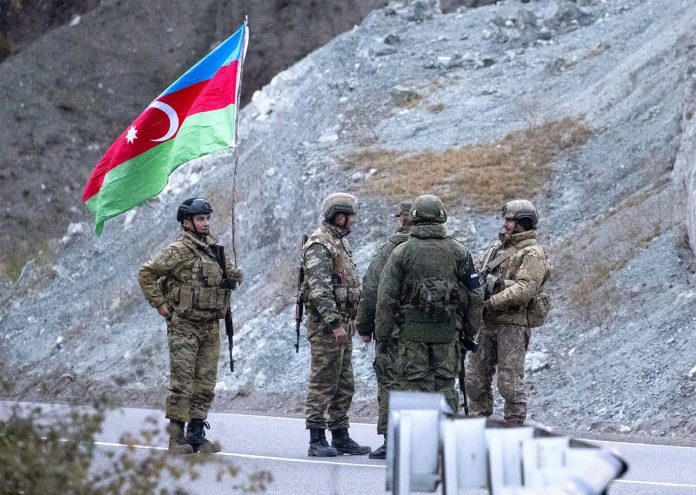
Russian authorities are holding local elections this weekend in annexed regions to tighten their grip on the territories Moscow does not fully control.
Voting has begun in the Donetsk, Luhansk, Kherson and Zaporizhia regions and will conclude on Sunday.
Ukraine’s foreign ministry has called on its international partners to denounce the votes and not recognise the results.
Germany delivers sobering missile update to Ukraine
Ukraine should not hope for expedited deliveries of Berlin’s long-range missiles, which it has been requesting for months, as such a step should be extremely well thought-out, Germany’s Foreign Minister Annalena Baerbock said in an interview on Friday.
Speaking to the Funke media group, Baerbock pointed out that the delivery of Taurus missiles “is not something that can be done quickly.” As with the Leopard tanks and IRIS-T air defense systems that Germany has already sent to Ukraine, “every detail has to be worked out beforehand.”
The minister nonetheless described Kiev’s request for missiles that carry a 500-kilogram warhead and have a range of about 500 kilometers as “more than understandable,” explaining that Ukraine needs to hit Russian supply lines in the rear to make progress on the battlefield.
When asked whether Germany could reprogram its missiles to prevent Ukraine from targeting Russian territory, Baerbock stated that “other partners also have similar questions and found solutions.”
While Ukraine has already received long-range missiles from the UK and France, which it has used to attack civilian infrastructure in Donbass and Crimea – Germany has so far been reluctant to join the effort. Explaining this stance, Chancellor Olaf Scholz has said that Ukrainian attacks deep into Russia could trigger a major escalation, while other officials in Berlin pointed out that the US has also been unwilling to make a similar commitment.
Last month, however, Der Spiegel reported that Scholz was in talks with arms manufacturer MBDA regarding possibly modifying the Taurus to include a target-programming limitation. Around the same time, Ukrainian MP Egor Chernev claimed that key German parliamentary factions had “reached a consensus” on delivering Taurus missiles.
The German public, however, does not seem inclined to support the delivery, according to several polls. A recent ARD-DeutschlandTrend survey put support for the shipments of long-range missiles to Ukraine at just 36%, with 52% strongly opposed.
Russian air defences down two drones near polling station
Russian air defence systems downed two Ukrainian drones attempting to attack a polling station in the Kherson region as voting is underway, the Russian Tass news agency reported.
The chairman of the regional election commission, Marina Zakharova, told reporters, “Today in the Skadovsky municipal district, two drones were shot down by an air defence system in the immediate vicinity of polling stations.”
“We understand perfectly well that if they had achieved their goal, there would not have been human casualties,” she added.
About 90% of Ukrainian prisoners of war have been tortured: Ukraine’s prosecutor general
Roughly 90% of Ukrainian prisoners of war have been subjected to torture, rape, threats of sexual violence or other forms of cruel and inhumane treatment, according to recent estimates, Ukraine’s Prosecutor General Andrii Kostin stated Friday.
Ukraine found “evidence of these horrors in all the liberated territories,” Kostin said, during a meeting with Alice Kill Edwards, the UN Special Rapporteur on Torture.
“In Kherson region alone, 11 torture chambers have been recorded. In Kharkiv region, investigations are open into almost 100 cases of torture, where more than 700 victims have been identified,” he added.
Kostin noted that 156 suspects have been identified in cases involving various forms of torture, adding that indictments have been sent to court against 114 of these suspects.
The suspects include “Russian military personnel and representatives of the occupying authorities,” according to Kostin.
35 people have been convicted of torture and cruel treatment as war crimes, he continued.
Kostin called on the world community “to destroy the Russian torture machine and ensure the punishment of each of its participants.”
Russia has repeatedly denied accusations of torture and human rights abuses in Ukraine – despite overwhelming evidence to the contrary, which has been investigated and brought to light by international human rights organizations and media outlets. Russian officials have not yet commented on the latest report.
Three killed by Russian strikes in Kherson: Ukrainian official
Russian strikes on the southern region of Kherson have killed three people and injured another four, according to Ukrainian officials.
“Two women and one man sustained injuries incompatible with life as a result of a guided missile strike,” the head of Kherson region military administration Oleksandr Prokudin wrote on Telegram Friday.
Among the injured are four women, two in moderate condition, and two with light injuries, officials said.
Women who have medical education must register for military service: Ukraine
Ukrainian women who have medical education must register at military enlistment offices starting October 1, the country’s Armed Forces said in a Facebook post.
“All medical women, these are doctors, nurses, dentists, midwives, pharmacists, ages 18 to 60, will be required to register for military service starting October 1,” Ukraine’s Armed Forces announced, in accordance with a decree with Ukraine’s defense ministry.
The statement added that eligibility will be determined “by the diploma and by the actual place of work.”
“Such women perform military duty on an equal footing with men. The legislation does not distinguish between women and men conscripted into the military,” the Armed Forces noted.
This means that these women, like Ukrainian men aged between 18 and 60, will have to remain in Ukraine as they “may be called up for military service,” according to the Armed Forces.
“If they (women) are on the register, then they acquire the status of conscripts. And conscripts leave abroad according to the order established for them. That is, if there are separate documents that give the right for a temporary departure — then yes, they will be able to leave. If not, then they, like men, will be limited in their right to leave,” Fedir Venislavskyi, a member of Ukraine’s parliament who is on the National Security Committee, said in an interview with Ukrainian news outlet RBC on Thursday.
Pregnant women, current students or women with certain medical conditions will be exempt from service.
One dead, 32 injured in missile strike on Kryvyi Rih: Ukrainian officials
A Russian missile strike on the center of Kryvyi Rih killed one person and injured a further 32 people on Friday, Ukrainian officials said.
“A police officer was killed in the Russian strike. Three more ones were rescued from the rubble by the State Emergency Service,” Ukrainian Minister of Internal Affairs Ihor Klymenko said in a Telegram post on Friday, adding, “They are in serious condition.”
The head of the Dnipropetrovsk regional military administration, Serhii Lysak, stated there was also extensive damage.
“Three administrative buildings were damaged. 7 residential buildings were damaged, including a multi-story building,” he continued.
Kryvyi Rih is the hometown of Ukrainian President Volodymyr Zelensky.
Ukraine downs 16 out of 20 drones
Ukraine’s air force shot down 16 out of 20 combat drones launched overnight by Russia in the fifth attack this week on the Odesa region, officials stated.
“During the night, the Russian terrorists attacked the Odesa region for the fifth time this week,” Oleh Kiper, the Odesa regional governor, said on Telegram.
The military command for the South announced 14 drones had been shot down over the Odesa region and two more over the Mykolaiv region.
It added that the drones were launched from Russia and Crimea.
Russia has intensified air attacks on Ukrainian grain export infrastructure on the Danube River and in the port of Odesa since it quit the Black Sea grain deal in July.
Russia is “weaponizing food, hurting the most vulnerable”: EU Council President
Russia is “weaponizing food” and “hurting the most vulnerable,” European Union Council president Charles Michel stated Friday.
“Russia must allow ships with much needed grain to navigate in the Black Sea. The EU is providing alternative export routes through our Solidarity Lanes,” Michel said in a post on X, formerly known as Twitter.
His comments were made in a press conference held in the Indian capital New Delhi on Friday, ahead of the G20 Summit due to take place this weekend.
Michel described Russia’s termination of the Black Sea Grain Initiative in July as “scandalous.”
“Over 250 million people face acute food insecurity worldwide and by deliberately attacking Ukraine’s ports, the Kremlin is depriving them of the food they desperately need,” he continued, adding, “It’s frankly scandalous that Russia after having terminated the Black Sea Grain Initiative is blocking and attacking Ukrainian sea ports. This must stop.”
Michel also called the Kremlin’s offer to deliver 1 million metric tons of grain to Africa “absolutely cynical” in comparison to the 32 million metric tons of grain delivered to international markets led by the United Nations.
He added that the EU is stepping up to provide alternative export routes and have so far delivered 41 million metric tons of grain.
Ukraine has been exploring alternative shipping routes after Russia pulled out of a deal in July that allowed Ukrainian ships to navigate safe passage through the Black Sea to Turkey’s Bosphorus Strait in order to reach global markets.
Russia holds elections in occupied Ukrainian regions
Russian authorities are holding local elections this weekend in occupied parts of Ukraine in an effort to tighten their grip on territories Moscow illegally annexed a year ago and still does not fully control.
The voting for Russian-installed legislatures in the Donetsk, Luhansk, Kherson and Zaporizhzhia regions begins Friday and concludes Sunday. It has already been denounced by Kyiv and the West.
“It constitutes a flagrant violation of international law, which Russia continues to disregard,” the Council of Europe, the continent’s foremost human rights body, said this week.
Kyiv echoed that sentiment, with the parliament saying in a statement that the balloting in areas where Russia “conducts active hostilities” poses a threat to Ukrainian lives. Lawmakers urged other countries not to recognize the results of the vote.
Ukraine submits official proposal to Turkey to open grain corridor in Black Sea without Russia
Ukraine has submitted an official proposal to Turkey to operate a “grain corridor” in the Black Sea without Russia’s participation, Ukrainian Ambassador to Turkey Vasyl Bodnar said Thursday.
Bodnar noted in an interview with Ukrainian media that cargo vessels are already sailing through the territorial waters of Romania, Bulgaria and Turkey without restrictions.
Four vessels have passed through a temporary corridor since Ukraine’s Naval Forces announced new temporary routes for civilian vessels moving to or from the Black Sea on August 10. This came after the United Nations-brokered grain deal broke down on July 16.
Bodnar stated that Ukraine expects Ankara and Kyiv to communicate on the issue in the coming days or “within the framework of the UN General Assembly, in order to understand how to move forward.”
Earlier this week, Russian President Vladimir Putin told Turkish President Recep Tayyip Erdogan that Russia will be ready to consider reviving the grain deal “as soon as all the agreements on lifting restrictions on the export of Russian agricultural products are fully implemented.”
Bodnar called lifting restrictions against Russia “absolutely wrong path” and said that the international community “shouldn’t give into Russian blackmail.”
UN spokesperson Farhan Haq said Thursday that the UN “continues to engage at all levels to make sure that both Ukrainian exports of food and fertilizer and Russian Federation exports of food and fertilizer can go out.”
“We are preparing more global pressure on Russia”: Zelensky
Ukrainian President Volodymyr Zelensky stated he is determined this month “to achieve several very specific results in our work with partners,” including new weaponry, although he didn’t offer specific details.
“Our diplomatic efforts to unite even more countries to restore peace on our entire land. We are preparing more global pressure on Russia,” he added in his nightly address.
Zelensky also said “security” was the main topic of his phone calls with UK Prime Minister Rishi Sunak and Israeli Prime Minister Benjamin Netanyahu earlier in the day.
Pentagon pushes back against Russian claims of depleted uranium munition health risks
The United States Defense Department is pushing back against Russian claims that the depleted uranium rounds that the US announced it would send Ukraine would cause an increase in cancer and other diseases.
“The CDC (US Centers for Disease Control and Prevention) has stated that there is no evidence that depleted uranium rounds cause cancer, the World Health Organization reports that there has been no increase of leukemia or other cancers that have been established following any exposure to uranium, or DU, and even the IAEA has stated unequivocally that there is no proven link between DU exposure and increases in cancers or significant health or environmental impacts,” Pentagon deputy press secretary Sabrina Singh said Thursday.
Singh added that the munitions are “standard-issue” antitank rounds used with the Abrams tanks that the US is sending to Ukraine.
The new US military assistance package was announced by US Secretary of State Antony Blinken while he was in Kyiv on Wednesday. The depleted uranium munitions were part of the aid for the first time.
The munitions are mildly radioactive because they are made from dense metal, a byproduct from fuel production for nuclear power plants. They can be fired from the US-made Abrams tanks that are expected to arrive in Ukraine this fall.
“Many militaries across the world use depleted uranium in their tanks,” Singh continued, adding, “We feel that these will be the most effective rounds to counter Russian tanks.”
Singh said she would let the Ukrainians announce when the rounds have arrived.
The International Atomic Energy Agency – the United Nations’ nuclear watchdog – has said that depleted uranium is “considerably less radioactive than natural uranium,” but urged caution when handling.
While depleted uranium does not significantly contribute to the background radiation that soldiers and civilians encounter, it can pose a danger if it enters the body. When depleted uranium munitions strike a tank’s armor, it can ignite and produce uranium dusts or aerosol particles, which, if inhaled, can enter the bloodstream and may cause kidney damage.
UK prime minister will discuss Black Sea grain deal at G20 summit: Downing Street
British Prime Minister Rishi Sunak will discuss circumventing Russia’s “continued Black Sea grain blockade” at the G20 summit this weekend, according to a Downing Street spokesperson.
Ahead of traveling to the G20 Leaders’ Summit in New Delhi on Thursday, Sunak spoke to Ukrainian President Volodymyr Zelensky on the phone.
“President Zelensky updated on Ukraine’s counter-offensive and ongoing military requirements, and the Prime Minister pledged the UK’s steadfast support and commended Ukraine’s armed forces for their progress on the battlefield,” according to a Downing Street spokesperson.
“They also discussed the impact of Putin’s continued Black Sea grain blockade, both in Ukraine and for food supplies around the world. The Prime Minister committed to galvanize work with G20 countries on circumventing Russia’s blockade and ensuring vulnerable countries can access vital grain shipments,” according to the readout of the leaders’ call.
Moscow withdrew from the Black Sea grain deal in July.
Sunak also said the UK would continue to drive forward plans for long-term security support for Ukraine.
“President Zelensky thanked the Prime Minister for the UK’s continued solidarity, and the leaders agreed to remain in close contact,” the statement added.
Ukrainians claim further marginal gains amid intense combat in south
Accounts from the front lines in southern Ukraine suggest further incremental gains for Ukrainian forces amid constant artillery, mortar and rocket fire from both sides.
Geolocated videos show a wasteland of shell holes, abandoned trenches and wrecked military hardware in the area between Robotyne, Verbove and Novoprokopivka — a triangle of villages that hold the key for Ukrainians to getting closer to Tokmak, an important hub for Russian defenses.
Here’s where the situation stands in and around each of the three villages:
Novoprokopivka: There was an advance in this direction and Ukraine captured several Russian positions east of this settlement, according to an unofficial Telegram account of soldiers of the Ukrainian 46th separate airmobile brigade. “Currently, the success is being secured and counterattacks are being repelled,” the Telegram channel said Thursday, adding that the effort to capture the heights near Novoprokopivka is underway.
This area is just 3 kilometers (1.9 miles) south of Robotyne.
Verbove: The 46th airmobile brigade suggested a harder fight around this area, saying there “was an attempt to gain ground to the north and northwest. Controlling the heights in these areas could strengthen the position of our units in the area of the settlement.”
The channel, which has frequently proven accurate in the past, said that Russian planes continue to bombard rear positions and artillery and drones on both sides were constantly working. In this situation, “it is hardly possible to expect a sharp change in the situation in anyone’s favor in the near future,” the channel said.
Robotyne: Ukrainian forces “got Robotyne at a very high price. But the capture of this settlement opens the gates to Tokmak,” according to a soldier with the callsign “Bruce”, commander of the 47th Brigade’s reconnaissance unit.
“Bruce” added that then the road to the Sea of Azov would be open. “In my personal opinion, this will be the end. Because if we reach the Sea of Azov, both Crimea and the grouping of troops in the Kherson and Zaporizhzhia directions will be surrounded, and this will be the end for Putin.”
Russian-appointed official in control of occupied parts of Zaporizhzhia, Yevgeniy Balitsky, gave a different account of the situation, claiming that Moscow’s forces “inflicted massive fire damage” on Ukrainian forces, including loss of soldiers and equipment.
A Russian military blogger also claimed that several enemy attacks had been repelled.
What does independent analysis show: “Ukrainian forces have advanced along the trench line west of Verbove,” the Institute for the Study of War says, citing geolocated footage.
It also noted claims by Russian military bloggers that Ukrainian forces were now trying to break through in the direction of Novoprokopivka.
Pentagon announces another military aid package for Ukraine
The US is set to provide another $600 million worth of military aid to Ukraine for use in its conflict with Russia, the Department of Defense has said.
According to a statement issued by the Pentagon on Thursday, the new package will include equipment for air-defense systems, additional ammunition for HIMARS multiple rocket launchers, 105mm artillery rounds, electronic warfare tools, demolition munitions for obstacle clearing, and mine-clearing hardware.
The aid is being provided through the Ukraine Security Assistance Initiative (USAI), which allows the Biden administration to procure weapons from the defense industry instead of taking them from existing US military stocks.
US Secretary of State Antony Blinken, who visited Kiev on Wednesday, promised Ukraine $1 billion in assistance from Washington, including $665.5 million for military supplies.
“We want to make sure that Ukraine has what it needs not only to succeed on the counteroffensive, but [also] in the long term,” Blinken told journalists in Kiev.
On the same day, the Pentagon announced that Kiev would be getting another $175 million worth of American equipment, including depleted uranium shells for Abrams M-1 tanks. According to Politico, ten of the 31 US-made main battle tanks are expected to arrive in Ukraine in a matter of weeks.
Musk had engineers turn off satellite network to disrupt Ukrainian attack: New book
Elon Musk secretly ordered his engineers to turn off his company’s Starlink satellite communications network near the Crimean coast last year to disrupt a Ukrainian sneak attack on the Russian naval fleet, according to an excerpt adapted from Walter Isaacson’s new biography of the eccentric billionaire titled “Elon Musk.”
Musk’s decision, which left Ukrainian officials begging him to turn the satellites back on, was driven by an acute fear that Russia would respond to a Ukrainian attack on Crimea with nuclear weapons, a fear driven home by Musk’s conversations with senior Russian officials, according to Isaacson.
The new book from Isaacson, the author of acclaimed biographies of Steve Jobs and Albert Einstein, provides fresh insights into Musk and how his existential dread of sparking a wider war drove him to spurn Ukrainian requests for Starlink systems they could use to attack the Russians.