Friday, December 26, 2025
Home Blog Page 1271

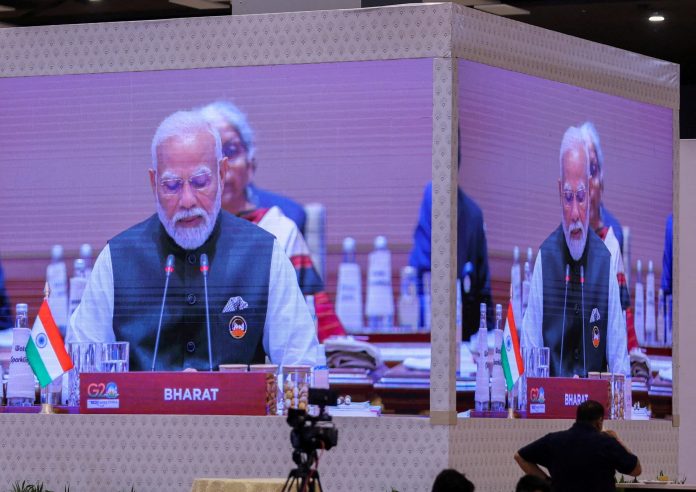
India PM says G20 leaders’ declaration adopted, deep differences over Ukraine resolved

Narendra Modi

He gave no details on the compromise wording.

“On the back of the hard work of all the teams, we have received consensus on the G20 Leaders Summit Declaration. I announce the adoption of this declaration,” Modi told the G20 leaders in New Delhi.

Earlier Modi inaugurated the two-day meeting by calling on members to end a “global trust deficit” and announced that the bloc was granting permanent membership to the African Union in an effort to make it more representative.

“Today, as the president of G20, India calls upon the entire world to first convert this global trust deficit into one trust and one confidence,” he stated, adding, “It is time for all of us to move together.”

The group is deeply divided over the war in Ukraine, with Western nations pushing for strong condemnation of Russia in the Leaders’ Declaration, while others are demanding a focus on broader economic issues.

The wording could be similar to language in the declaration issued in Indonesia at the 2022 summit, which noted that while most nations condemned Russia for the invasion, there were also divergent views.

An earlier 38-page draft of the final statement reviewed by Reuters left the “geopolitical situation” paragraph blank, while there was agreement on 75 other paragraphs covering issues ranging from global debt and cryptocurrencies to climate change.

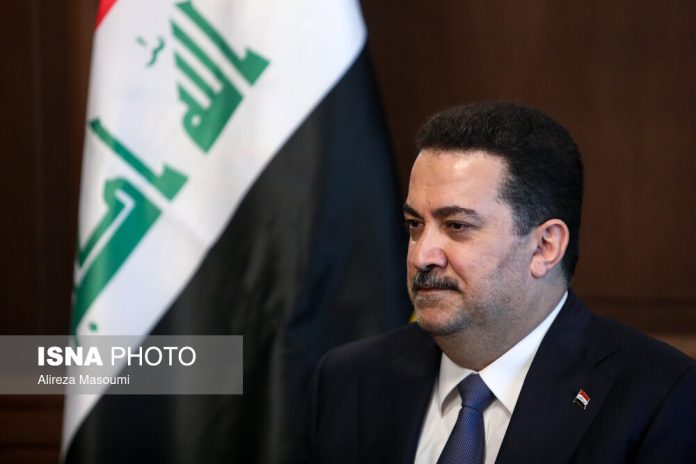
Iraq vows commitment to implementation of security deal with Iran

Iraqi Prime Minister Mohammed S. Al-Sudani

Hosting a delegation of senior media officials in Baghdad’s Green Zone, Al-Sudani stressed the gravity of Iraq’s commitment to implementing the agreement’s provisions.

With the Iran-Iraq security agreement’s six-month deadline set to expire on September 19th, and Kurdish anti-revolutionary groups yet to disarm or be expelled, Al-Sudani addressed the situation.

He cited various reasons compelling the Iraqi government to address Tehran’s security concerns related to terrorist activities in the Iraqi Kurdistan Region.

To address these concerns, Iraq has invested over two hundred million dollars and deployed more than three thousand National Army troops along its borders with Iran and the Kurdistan region, the Iraqi prime minister said.

Al-Sudani acknowledged the complexity of the situation, noting that while progress has been made in disarming Kurdish anti-revolutionary groups, their complete relocation has not yet been achieved. Nevertheless, Iraq remains committed to fulfilling its obligations as outlined in the agreement with Tehran within the specified timeline.

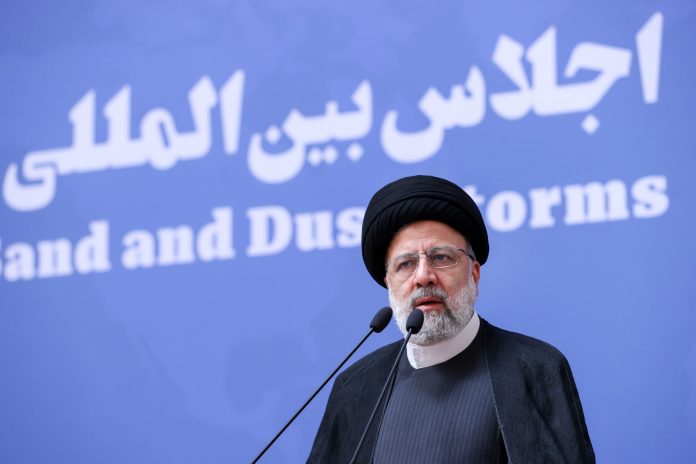
Iran president urges forming joint fund to finance environmental measures, tackle dust storms

Ebrahim Raisi

In a speech at an international conference in Tehran on handling dust and sand storms on Saturday, Ebrahim Raisi urged different countries to jointly establish a fund to bankroll measures to protect the environment.

“With the participation of different countries, namely those attending this conference, this joint fund can serve as a proper backup to implement environmental decisions and tackle dust and sandstorms,” said the president.

“We can help solve problems by having a common perspective on the environment and distancing ourselves from any conventional political and diplomatic suspicions and offering solutions and using scientific and research centers,” he added.

“One of the most important causes of dust buildup is draught as well as insufficient precipitation, so management of water resources is of utmost importance,” added President Raisi.

He said seeking development without paying due regard to the environment and the production of pollutants is another cause of dust buildup, adding, “Developed countries only care about their industrial development and the enhancement of their military tools, which is injustice against humanity and the environment.”

He also urged participants in the Tehran conference to share their scientific and research findings.

The Tehran environmental conference has brought together delegates from 50 countries.

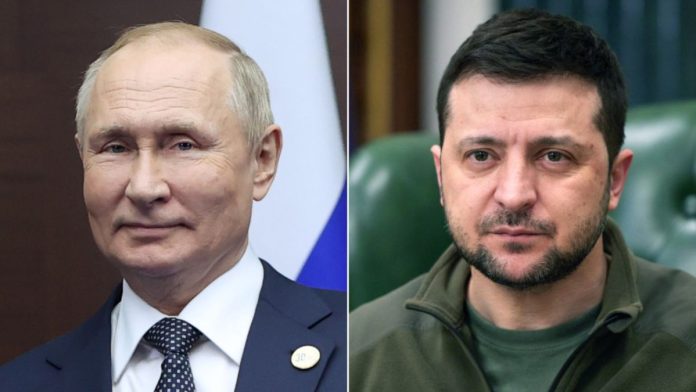
Zelensky rules out any compromise with Putin, pointing to Wagner boss death

Zelensky Putin

As Ukraine’s counteroffensive moves into a fourth month, with only modest gains to show so far, Zelensky told CNN’s Fareed Zakaria he rejected suggestions it was time to negotiate peace with the Kremlin.

“When you want to have a compromise or a dialogue with somebody, you cannot do it with a liar,” Zelensky said.

The Wagner leader’s dramatic death, which followed a short-lived rebellion that threatened the authority of the Russian president, was a warning to be heeded, Zelensky suggested.

While the United States and other key Ukrainian allies continue to supply weapons to Kyiv, and stress that conditions to pursue a “just and durable” peace are not yet in place, a handful of world leaders, such as Brazil’s Lula Da Silva, have put the onus on Ukraine to end the war.

As evidence for his position, Zelensky cited other countries which have been attacked by Russian soldiers and continue to be partially occupied by them.

“Did you see any compromise from Putin on other issues? With Georgia? With Moldova?” Zelensky asked rhetorically.

At a conference in Kyiv, Zelensky claimed Putin was behind the death of Prigozhin, who died in an unexplained plane crash with his top lieutenants last month.

Zelensky has provided no evidence to back up his assertion.

“The fact that he killed Prigozhin – at least that’s the information we all have, not any other kind – that also speaks to his rationality, and about the fact that he is weak,” the president stated on Friday.

The Kremlin announced all possible causes of the crash will be investigated, including the possibility of foul play. It has called the suggestion that Putin ordered the deaths of Prigozhin and his men an “absolute lie”.

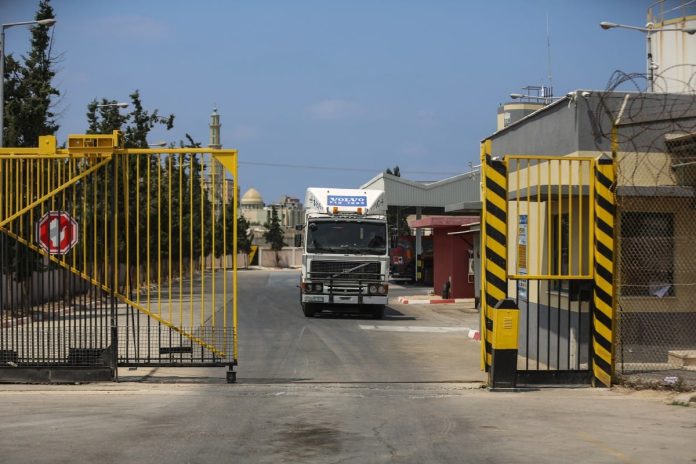
Gaza exports to resume after Israel agrees to reopen key crossing

Gaza Crossing

Karem Abu Salem (called Kerem Shalom by Israel) is the only crossing Israel allows to be used for commercial shipments.

After an investigation and “necessary adjustments,” the crossing was safe to reopen, Israel said, without elaborating further on the explosives found.

“A short while ago, the Israeli side informed us of the decision by the Israeli government to resume exports from Gaza Strip through Karem Abu Salem crossing starting Sunday, the same way it used to be before the closure,” said a statement by the Palestinian Authority’s committee that liaises on the movement of goods in and out of Gaza.

The move was condemned by Palestinian industrial and economic unions, which warned of potential economic and social consequences.

Earlier, The General Federation of Palestinian Industries in Gaza denounced the Israeli decision at a news conference, branding it “collective punishment” that worsened the hardship endured by two million people in Gaza living under an Israeli blockade since Hamas took control of the territory in 2007.

Nearly all the goods that enter and exit Gaza pass through Karem Abu Salem.

Challenges faced by Gaza’s fisherman during the closure were particularly acute. Their surplus stock perished before it could reach markets in Israel.

Gaza’s main fishermen’s union reported $300,000 in losses due to the closure, a significant blow. Fish accounted for 6 percent of all Gazan exports in July.

The reopening promised a reprieve for fishermen like Khalid al-Laham, a 35-year-old father of five who lives in the southern city of Khan Younis. Al-Laham was forced to borrow food from shops to feed his family during the closure.

“The financial and living conditions will certainly improve,” al-Laham stated, adding, “I will be able to feed my family and live a decent life.”

While the reopening promises to relieve producers across the territory, Gaza’s economy remains hamstrung by Israel’s blockade – which has been in place since June 2007, when Israel imposed an airtight land, sea and air blockade on the area.

Israel controls Gaza’s airspace and territorial waters, as well as two of the three border crossing points; the third is controlled by Egypt.

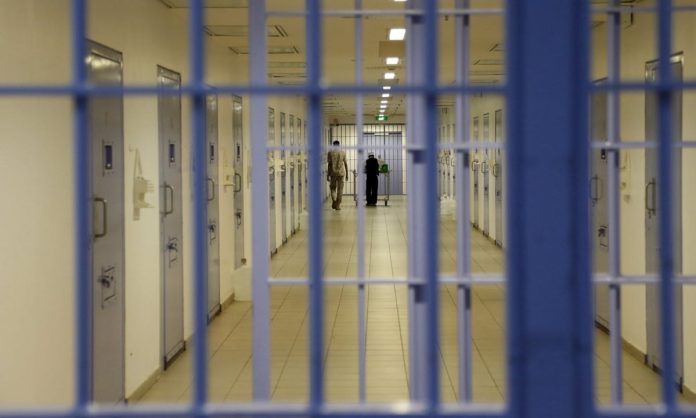
Number of executions by Saudi Arabia in 2023 topped 100: Report

Saudi Prison

The number of executions is less than the 196 executions conducted in 2022. However, it is still nearly double the number of state-sanctioned killings conducted in 2021.

“In clear contrast to Saudi Arabia’s repeated promises to limit its use of the death penalty, the Saudi authorities have already executed 100 people this year, revealing their chilling disregard for the right to life,” Heba Morayef, Amnesty International’s Middle East and North Africa director, said in a statement on Friday.

“The authorities’ relentless killing spree raises serious fears for the lives of young men on death row who were under 18 at the time of the crimes,” Morayef added.

Last year, Saudi Arabia ranked third in the world for the number of executions carried out.

The number of recorded executions tripled from 65 executions in 2021 to 196 in 2022 in the kingdom.

More than 1,000 death sentences have been carried out since King Salman assumed power in 2015, according to a report published earlier this year by British-based Reprieve and the ESOHR.

The Amnesty director noted that in the month of August, the number of executions carried out by the Saudi government was averaging four executions per week.

The sanctioned killings have extended beyond Saudi nationals as well, with the rights group reporting that a Pakistani man was executed over the crime of drug smuggling.

In August, a US citizen was executed after being convicted of torturing and murdering his own father.

While certain crimes still carry the death penalty in Saudi Arabia, rights groups have raised concerns over the high number of executions carried out by the kingdom.

Groups like Amnesty have accused Saudi authorities of executing people in the country following “grossly unfair trials that fell far short of international human rights standards”.

Amnesty International has also stated that using the death penalty for certain crimes, like drug smuggling, is prohibited under international law due to the nature of it not being considered in the category of “most serious crimes”.

Jeed Basyouni, who leads the work in the Middle East and North Africa for the human rights group Reprieve, spoke to Middle East Eye earlier this year and warned of the imminent execution of nine Saudis who were either arrested when they were under 18 years old or were arrested when they were adults but were accused of acts they committed when they were children.

Hundreds killed in Morocco earthquake

Morocco Earthquake

The death toll for the Morocco earthquake has risen to 1,037 with 1,200 people injured, Morocco’s state-run TV station Al Aoula has said, citing the Ministry of Interior.

Al Aoula added hundreds of people are in critical condition.

Rescue teams in Morocco are having difficulties reaching the areas most affected by the quake because nearby roads are damaged and blocked, Al Aoula TV has reported.

The 6.8-magnitude quake struck shortly after 11 p.m. local time at a relatively shallow depth of 18.5 kilometers (11.4 miles), according to the US Geological Survey.

The epicenter was in the High Atlas mountains located about 72 kilometers (44.7 miles) southwest of Marrakech, a city of some 840,000 people and a popular tourist destination.

Multiple buildings collapsed following the quake southwest of Marrakech city in Morocco, footage aired by the state-run Al-Aoula TV station showed.

Thousands of people fled their houses and residential buildings after the country’s National Institute of Geophysics warned of aftershocks.

Morocco’s Blood Transfusion and Hematology Center called on people to donate blood to help victims in need following the earthquake, the country’s state-run TV said on Saturday.

The center added the number and type of injuries meant the blood bags were needed as soon as possible.

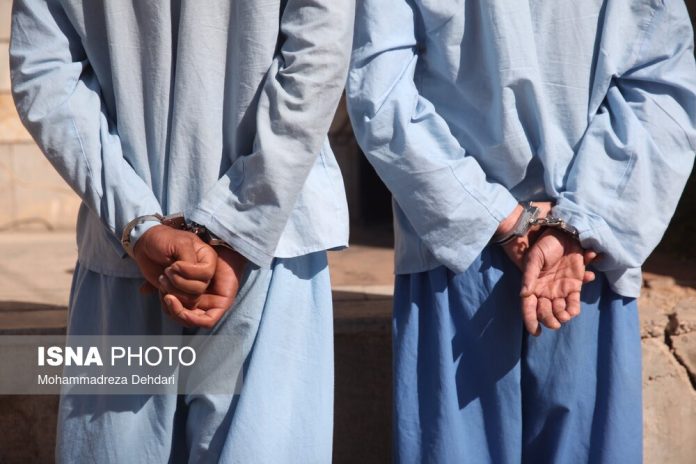
Iran busts terror group, arrests all six members

Iran Security Forces

The terrorists had kidnapped the victims in the town of Iranshahr, in the souheastern province of Sistan and Baluchestan some time ago and taken them to an area near the town of Saravan, where they tortured, killed and finally burned the bodies of the couple before abandoning them in the area.

According to the Fars News Agency, this comes as cronies of the enemy have, in recent months, tried to attribute this heinous crime to Iranian security forces in order to create the impression of insecurity in the country.

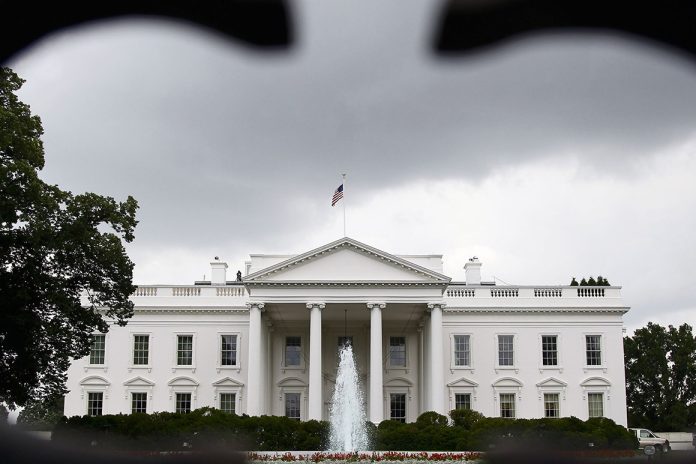
US, Arab states, India, EU to unveil rail, ports agreement on G20 sidelines: White House

White House

The pact comes at a critical time as U.S. President Joe Biden seeks to counter China’s Belt and Road push on global infrastructure by pitching Washington as an alternative partner and investor for developing countries at the G20 grouping.

The deal will benefit low and middle-income countries in the region, and enable a critical role for the Middle East in global commerce, Jon Finer, the U.S. deputy national security adviser, told reporters at the bloc’s annual summit in New Delhi.

It aims to link Middle East countries by railway and connect them to India by port, helping the flow of energy and trade from the Persian Gulf to Europe, U.S. officials have said, by cutting shipping times, costs and fuel use.

A memorandum of understanding for the deal will be signed by the European Union, India, Saudi Arabia, the United Arab Emirates, the United States and other G20 partners, Finer added.

“Linking these key regions, we think, is a huge opportunity,” said Finer. No immediate details of the value of the deal were available.

The move comes amid U.S. efforts for a broader diplomatic deal in the Middle East that would have Saudi Arabia recognise Israel.

From the U.S. viewpoint, Finer stated, the deal helps “turn the temperature down across the region” and “address a conflict where we see it”.

Report: Fresh Anti-government protests hit Syria’s Sweida

Syria Protest

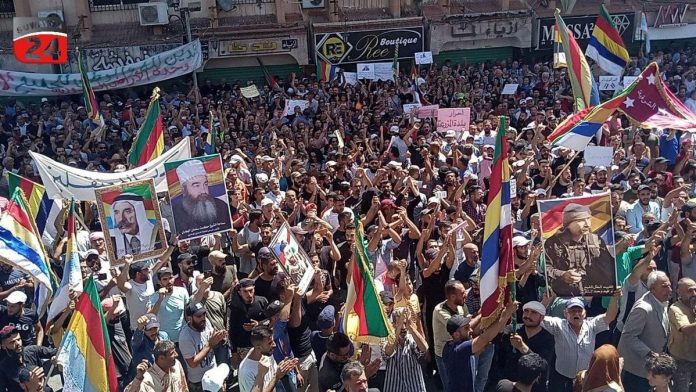
Demonstrators on Friday tore down a portrait of President Bashar al-Assad as anti-government protests that began three weeks ago swelled with crowds coming in from surrounding villages.

Crowds decried repression by al-Assad’s government, an echo of protests that rocked the country in 2011.

In footage posted on activist pages, a group of men could be seen ripping a banner portraying al-Assad’s face that was hanging above the local branch of the Farmers’ Union.

They then proceeded to weld shut the doors of the offices.

Criticism of al-Assad has been growing in Sweida since demonstrations began in mid-August over the end of fuel subsidies, the latest in a string of measures that have put a strain on people suffering from an economic meltdown.

“We don’t want you, Bashar!” and “We will have freedom in spite of you!” demonstrators chanted on Friday.

“The scale of the protest is because the presence of women is making itself felt. All social classes are there,” activist Rayan Maarouf of local news outlet Suwayda24 said.

He added the protesters in Sweida city centre had come from all over the province.

Sweida is the capital of a governorate of the same name that is home to most of Syria’s minority Druze sect. The city remained in government hands throughout the war and was largely spared the violence seen elsewhere.

Open criticism of the government has been rare in government-controlled areas of the country, but the war-torn country’s worsening economy has prompted public discontent that is increasingly directed at al-Assad.

Maarouf and a witness stated those gathered in the city’s al-Karama Square were shouting anti-al-Assad slogans and waving multi-coloured Druze flags.

Discontent at the cost of living has also hit other areas of southern Syria, notably Deraa province, the cradle of the Syrian uprising that al-Assad’s government crushed brutally.

The Druze, who made up less than three percent of Syria’s pre-war population, have largely stayed out of the conflict.

Sweida has also been mostly spared the fighting, facing only sporadic armed group attacks which were repelled.

Syrian security forces have a limited presence in Sweida governorate, and Damascus has turned a blind eye to Druze men refusing to perform their compulsory military service outside the province.

Earlier this week, demonstrators tore down a portrait of Bashar’s father, former President Hafez al-Assad, that had been hanging on a government building and smashed a bust of his head, slapping it with their shoes.

Residents of other government-held parts of Syria – where restrictions are tighter – have made more discrete gestures of protest to avoid detection by government forces.

Syria’s currency, the pound, has lost most of its value against the US dollar since 2011, and Western sanctions have compounded the country’s economic woes.

Most of the population has been pushed into poverty, according to the United Nations.

Syria’s war has killed more than half a million people since 2011 and quickly escalated into a deadly conflict that pulled in various armed groups, and regional powers.