Thursday, December 25, 2025
Home Blog Page 1246

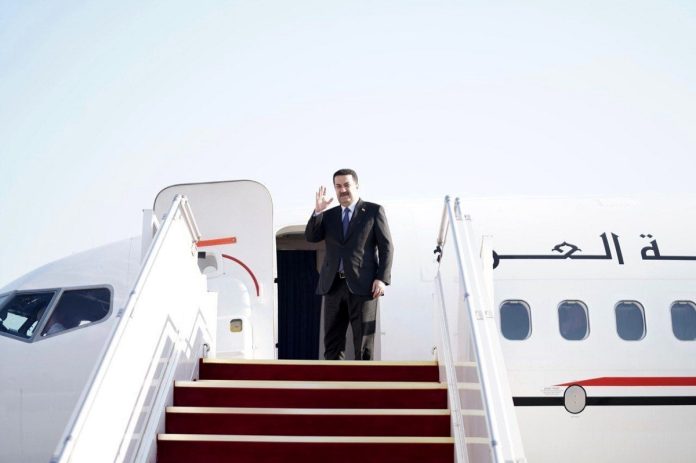
Iraq says PM planning to visit Moscow within weeks

Mohammed Shia al-Sudani

According to the Iraqi diplomatic agency, Iraqi Foreign Minister Fuad Hussein said at a meeting with Russia’s top diplomat Sergey Lavrov on the sidelines of the United Nations General Assembly on Friday that “the Iraqi side is working to complete the necessary arrangements for a visit by Prime Minister Mohammed Shia’ Al Sudani to the Russian capital Moscow in the next few weeks”.

During the meeting, the two sides discussed the prospects of joint co-operation and relations between the two countries.

Hussein emphasised that talks between the two sides are an appropriate opportunity to discuss co-operation between the countries in the political and economic fields.

He also added it was possible that a meeting of the joint Iraqi-Russian committee could be held alongside the visit.

Lavrov, for his part, emphasised his country’s keenness to develop the relations with Iraq, saying that he looks forward to Al Sudani’s visit to Moscow in the coming weeks.

Iraq and Russia have had bilateral relations for decades.

Co-operation between Baghdad and Moscow is primarily in the fields of energy, military and security.

Baghdad hosted Lavrov in February, when he led a delegation for representatives of Russian companies.

Both sides had then discussed food security and ways for Baghdad to handle payments to Russia in light of global sanctions imposed on Moscow after Russia attacked Ukraine.

Major Russian oil companies such as Gazprom Neft and Lukoil are among those working in Iraq, mainly in the oil-rich south.

In his visit earlier this year, Lavrov had stated Russian companies had “huge investments in Iraq that have reached $13 billion”.

Iraq is the second-largest producer of crude oil in OPEC after Saudi Arabia.

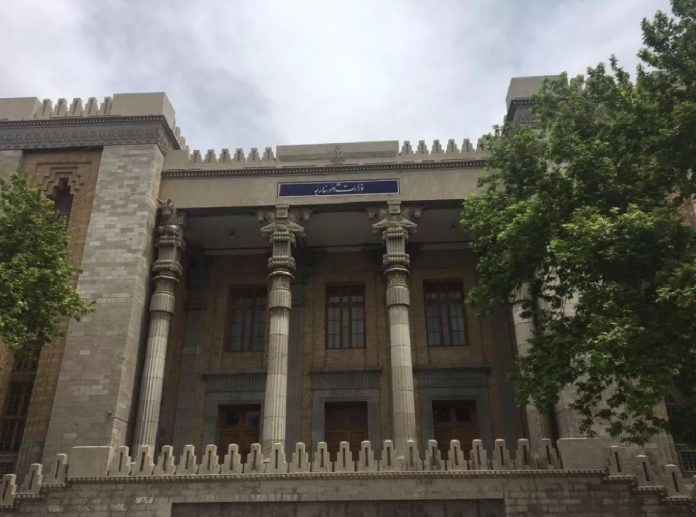
Iran, Maldives agree to resume diplomatic ties

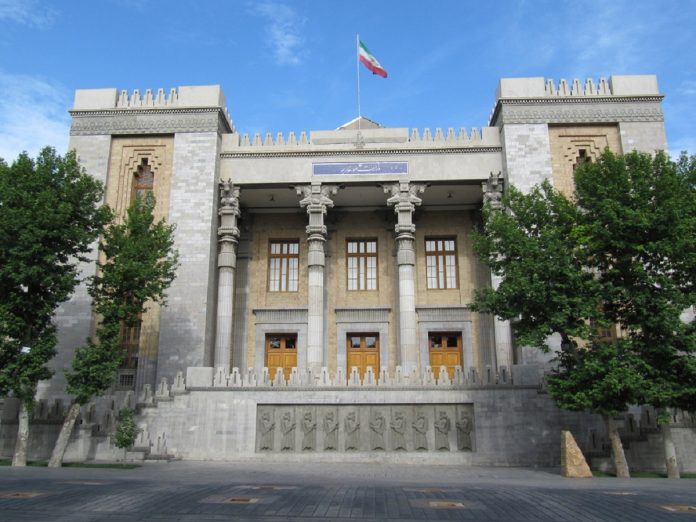
Ministry of Foreign Affairs of the Islamic Republic of Iran

In a statement on Saturday, the Iranian Foreign Ministry announced the decision to resume ties was made following a meeting on Friday, between Hossein Amirabdollahian, Foreign Minister of the Islamic Republic of Iran, and Ahmed Khaleel, Minister of State for Foreign Affairs of the Republic of Maldives, on the sidelines of the 78th Session of the UN General Assembly summit in New York.

The statement says, “the Islamic Republic of Iran and the Republic of Maldives, in alignment with the interests and aspirations of their peoples, reaffirmed their decision to restore diplomatic relations.”

The Iranian Foreign Ministry added, the two governments have agreed to further develop the friendly relations “on the basis of mutual respect for sovereignty, equality, mutual benefit, and peaceful coexistence.”

Both countries have resolved to strengthen cooperation on a wide range of areas including investment, trade, seamless of travel and people-to-people contact, science, and technological innovation, the statement said.

Maldives severed ties with Iran in May 2016.

The resumption of the ties between the two countries follows a few months after a normalization of relations between the Islamic Republic of Iran and the Kingdom of Saudi Arabia.

Former Iranian MP calls for direct talks with US

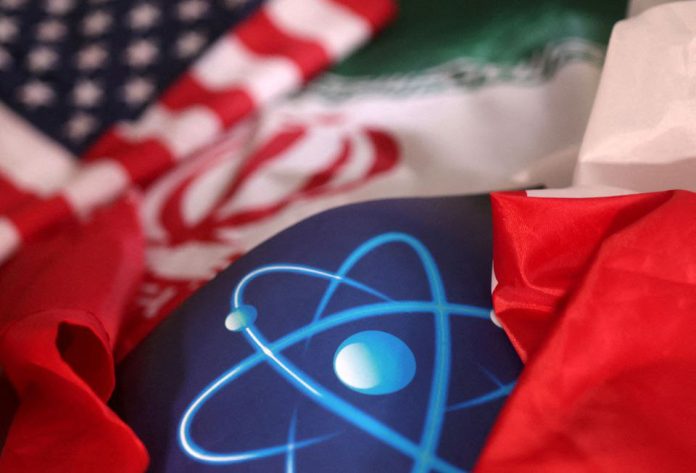
Iran US Flags

Heshmatollah Falahtpisheh, who used to be the chair of the Iranian Parliament National Security and Foreign Policy Committee, voiced hope that the administration of President Ebrahim Raisi will not let the remaining few opportunities pass by continuing what he called “mediatory diplomacy”.

Falahatpisheh claimed that the Iranian authorities have made a taboo of talks with the US while there is no logic behind the refusal to negotiate.

The former Iranian lawmaker said few countries in the world are in their fifth decade while facing sanctions.

Falahatpisheh said unfortunately, some Iranian officials are stuck in the past enmities and this has made them unable to use the opportunities.

He added that no administration after the Islamic Revolution received as many green cards as Raisi’s for talks with the US.

US delegation in Armenia to express support over Nagorno-Karabakh

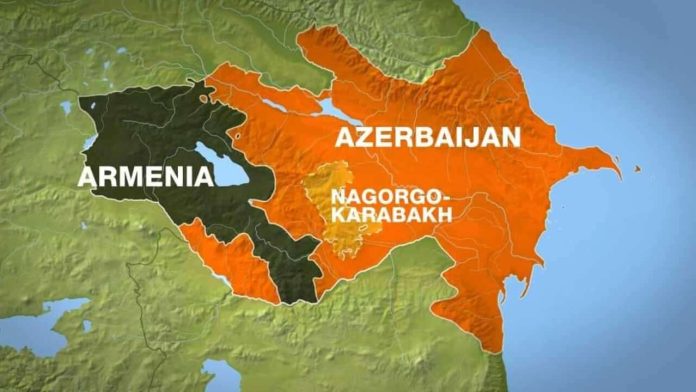
Armenia Azerbaijan

The US embassy said the group will meet Prime Minister Nikol Pashinyan and a handful of other officials “to discuss US-Armenian relations and the impact of Azerbaijan’s recent military actions on the Armenian population of Nagorno-Karabakh”.

The United States has a large Armenian community that fervently supports Yerevan in its decades-long standoff with Baku over the ethnically Armenian enclave.

The visit comes as Pashinyan tries to survive the latest wave of protests against his tumultuous rule.

Pashinyan led Armenia when Azerbaijan first seized back large swathes of Nagorno-Karabakh in a six-week war three years ago.

That defeat sparked violent demonstrations in Yerevan that saw protesters ransack Pashinyan’s office.

Armenia’s parliament plans to launch impeachment hearings against Pashinyan over this week’s military triumph by its arch-rival when it returns to session next month.

The US delegation is led by Senator Gary Peters.

The Democrat from Michigan this month accused Azerbaijan of launching “unprovoked” attacks against its neighbour.

President Ilham Aliyev’s “regime is perpetrating a humanitarian disaster in Nagorno-Karabakh,” he said on social media Friday.

Sources say US to blame for pause in Syria’s reengagement with Arab world

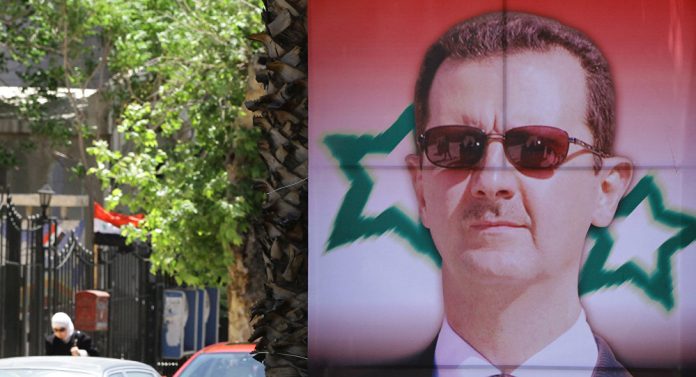
Syria's Bashar Assad

Earlier this week, media reported that the Arab League committee, which was formed in May to seek a comprehensive solution to the Syrian crisis, had frozen its contacts with representatives of Syrian President Bashar Assad.

“Further steps towards supporting Syria, whose economy is in tatters, have been put on hold due to direct US pressure,” the source said.

The source pointed out that it was Saudi Arabia that launched regional efforts to reengage Syria after 12 years of isolation within the Middle East.

Kuwait, Qatar, and Morocco were reluctant at first, but later also embraced Syria into the Arab League in the hope of stabilizing the situation in the country through its economic reconstruction. Therefore, in May, the League of Arab States reinstated Syria’s membership in the organization, ending a long hiatus.

However, financial support for Syria and plans for its post-war rebuilding turned out to be hampered by the US’s Caesar Syria Civilian Protection Act of 2019 and its expected supplement, 2023 Assad Regime Anti-Normalization Act, which might extend the US administration’s authority to sanction those cooperating with Syria, the source said, adding that anticipated investments from Arab countries never materialized.

“The reasons for discouragement were technical, diplomatic and political difficulties resulting from the US Caesar Act and other US sanctions against Syria,” the source explained.

Syria has been under sanctions pressure from the United States, the European Union and a number of individual countries since the start of clashes with Western-backed terrorists in 2011. The US restrictions are believed to be the toughest, as they include an embargo and affect third parties. US secondary sanctions were restricted until 2020 when the Caesar Act, signed by then-US President Donald Trump in 2019, went into effect.

The Caesar Act is designed to deter support for reconstruction efforts by the Syrian government. It imposes sanctions on anyone who provides funding or assistance to the Syrian government and the country’s central bank. Moreover, the legislation imposes sanctions on those providing aircraft or spare parts to Syrian airlines or who are involved with government-controlled construction and engineering projects.

In May 2023, US lawmakers also submitted the Assad Regime Anti-Normalization Act to the parliament to amend the Caesar Act and further expand sanctions on those providing financial and technological support to Syrian groups and enterprises. The US government now has the authority to introduce sanctions until the end of 2025, while the new legislation, if adopted, would extend this power through 2032.

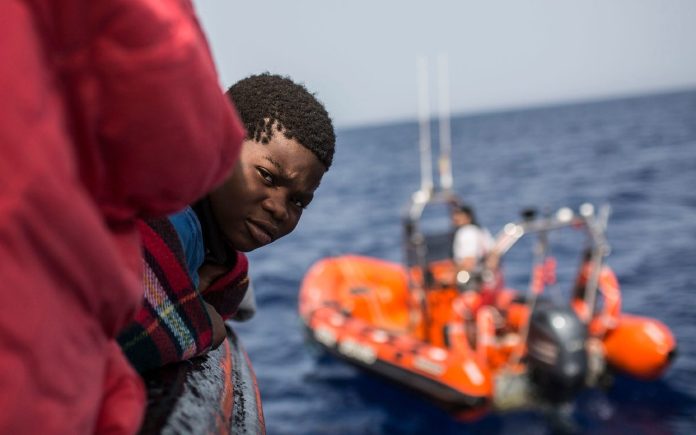
EU foreign policy chief warns migration might ‘dissolve’ bloc

Refugees and Immigrants

Speaking to the Guardian for an interview published on Friday, Borrell pointed to rising nationalist sentiment across Europe, noting that “we have not been able until now to agree on a common migration policy.”

“Migration is a bigger divide for the European Union. And it could be a dissolving force for the European Union,” he said, adding: “There are some members of the European Union that are Japanese-style – we don’t want to mix. We don’t want migrants. We don’t want to accept people from outside. We want our purity.”

However, Borrell argued that Europe’s current “low demographic growth” means that some states require an influx of immigration, calling the situation a “paradox.”

“If we want to survive from a labor point of view, we need migrants,” the official continued.

Borrell’s comments come just days after German President Frank-Walter Steinmeier declared that his country could no longer take in migrants and refugees, telling an Italian newspaper that “Germany, like Italy, is at the limit of its capacity.”

The president cited “strong immigration from the eastern borders, from Syria, Afghanistan,” as well as the arrival of “over a million refugees from Ukraine” in the last year, and called for a “permanent solidarity mechanism” to ensure a “fair distribution” of migrants in Europe

According to newspaper Die Welt, Rome is also re-evaluating its border policies amid a spike in migration, with officials reportedly notifying other EU members that Italy would be halting migrant transfers “for a limited period of time” last December. They announced the move was linked to “suddenly arising” technical issues related to the country’s intake capacity, though the suspension has continued into 2023, the German outlet reported.

While Borrell warned that dissent over immigration could eventually threaten the integrity of the EU, he pledged that, for now, the bloc would remain intact. Britain’s decision to leave the EU had served as a “vaccine” for other members, he argued, stating that “No one wants to follow the British leaving the European Union.”

Migration has remained a highly contentious issue within the bloc since 2015, when the EU was hit by an influx of refugees, as well as economic migrants, driven by poverty and wars in Africa and the Middle East.

Some countries, including Hungary and Poland, strongly opposed attempts by Brussels to force them to accept and settle migrants, which initially arrived in other member states. The Italian government, meanwhile, has closed its ports to ships transporting migrants from North Africa, insisting that other member states should share the burden of accepting them. The demand for tighter border controls was also one of the drivers behind the ‘Leave’ campaign during the 2016 Brexit referendum in the UK.

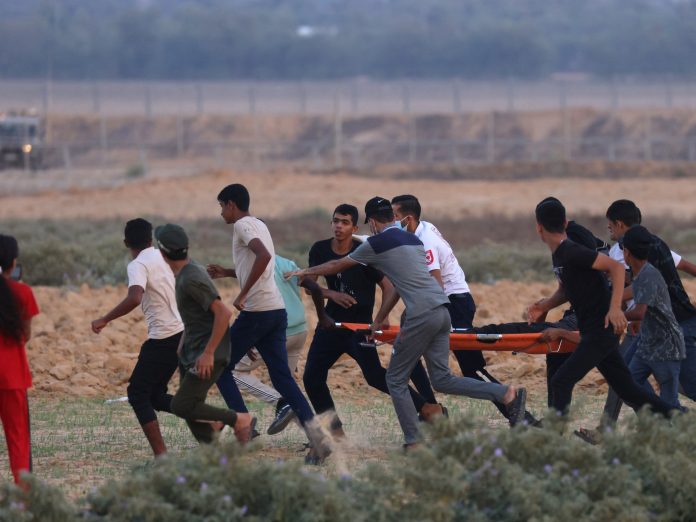
Israeli military strikes Gaza Strip amid protests at border

Israel Palestine

The military said the drone strikes targeted two military posts belonging to Hamas movement governing the Gaza Strip, while a tank hit another post from which shots were fired on troops confronting protesters.

The Hamas-affiliated radio station Aqsa reported two people had been wounded in the strikes.

In al-Maghazi refugee camp, El Sayed said drones had appeared overhead in a matter of minutes, dropping stun grenades and tear gas canisters on the heavily populated area.

Meanwhile, tanks positioned on the border shot artillery shells at the Palestinian enclave, the correspondent added.

“It seems that Israel is responding to the incendiary balloons sent by the protesters across the border,” she said.

The protesters were evacuating the area as a result of the attacks, the reporter added.

Dozens of people have been injured, according to the Ministry of Health.

Israel shut the Beit Hanouna (called “Erez” by Israel) crossing with Gaza last week in advance of the Rosh Hashanah Jewish holiday, preventing thousands of workers from getting to their jobs in Israel and the West Bank. The closure was extended after days of border demonstrations in which Israeli troops opened fire on stone-throwing protesters.

Approximately 18,000 Gaza Palestinians have permits from Israeli authorities to work outside the blockaded enclave, providing a vital injection of cash amounting to some $2m a day to the impoverished territory’s economy.

Demonstrators along the Gaza separation fence have hurled stones as well as improvised explosive devices, while Israeli troops have attacked with tear gas and live fire.

Peace talks between Israel and the Palestinians broke down more than a decade ago, and violence has soared over the past year and a half, with Israel carrying out frequent military raids in the occupied West Bank.

In July, Israel launched one of its biggest attacks on the occupied West Bank, killing at least 12 Palestinians in the Jenin refugee camp and wounding at least 100 more.

In response to rockets fired from Gaza after Israel ended its large-scale offensive in Jenin, Israeli fighter jets struck the besieged enclave, drawing condemnation from Iran, Egypt, Jordan and the Arab League, among others.

Friday’s attack on the blockaded strip came shortly after as Israeli Prime Minister Benjamin Netanyahu told the United Nations General Assembly that Israel was “at the cusp” of a historic breakthrough leading to a peace agreement with Saudi Arabia.

Saudi Arabia’s Crown Prince Mohammed bin Salman said in an interview with Fox News this week that the two sides were inching closer to an agreement, without providing much detail about the US-led negotiations.

He declined to specify what exactly the Saudis are seeking for the Palestinians, but said they “could greatly benefit from a broader peace.”

The United Arab Emirates and Bahrain normalised their ties with Israel as part of the Abraham Accords in September 2020. Since then, they have deepened their relations across a number of economic domains, as well as defence.

Palestinian President Mahmoud Abbas has also told the United Nations General Assembly that Middle East peace will not be achievable until the Palestinians are granted full rights.

“Those who think that peace can prevail in the Middle East without the Palestinian people enjoying their full, legitimate national rights would be mistaken,” Abbas told the UN’s annual gathering on Thursday.

The veteran 87-year-old leader made a new appeal to UN Secretary-General Antonio Guterres to call an international conference on creating a Palestinian state.

A UN conference “may be the last opportunity to salvage the two-state solution and to prevent the situation from deteriorating more seriously and threatening the security and stability of our region and the entire world”, Abbas added.

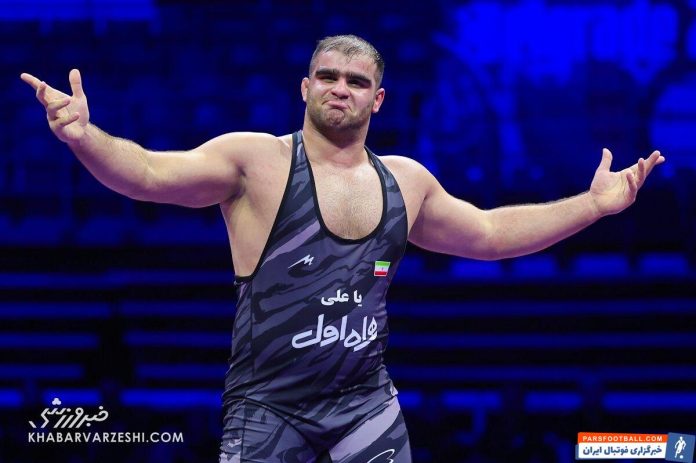
Iran’s Greco-Roman wrestler grabs gold at 2023 World Championships

Mirzazadeh defeated Turkey’s well-known rival Rıza Kayaalp 2-2 in the final bout of 130kg.

Egyptian Abdellatif Mohamed and Cuban Óscar Pino also won bronze medals in the weight class.

Earlier in the day, Pouya Dadmarz in the 55kg and Alireza Mohmadi in the 82kg had won a bronze and a silver medal, respectively.

The 2023 World Wrestling Championships are being held on September 16-24 in Belgrade, Serbia.

Iran summons Swiss chargé d’affaires to protest ‘unfounded [P]GCC-US claims”

The Iranian Foreign Ministry

According to a Friday statement by Iran’s Foreign Ministry, the Swiss chargé d’affaires was summoned on Thursday to express Iran’s “strong protest and condemnation” of a joint statement issued following the ministerial meeting of the United States and the Persian Gulf Cooperation Council in New York on Tuesday and the US acts of provocation.

The ministry reiterated Iran’s determination to “defend its territorial integrity, and protect its security and interests against any threats posed by the US government in connection with maritime security and commercial shipping.”

“Iran will take the necessary strategies in this regard and to secure its national interests,” it said.

Based on its wise approach to safeguard security and stability in the region, the statement added, Iran would never allow the US to plunder regional assets and resources through the continuation of its Iranophobia policy. The Swiss envoy assured that he would convey Iran’s message to American officials, it noted.

The US-GCC statement renewed their call for Iran to fully cooperate with the International Atomic Energy Agency (IAEA).

It accused Iran of proliferating unmanned aerial vehicles and other dangerous weapons that pose a grave security threat to the region and called on Tehran to stop its activities in this regard.

Iranian officials have repeatedly warned that the country will not hesitate to strengthen its military capabilities, which are entirely meant for defense.

The US and GCC foreign ministers also reiterated their support for the United Arab Emirates’ call to reach a peaceful solution to the dispute over the three islands of Abu Musa, the Greater Tunb, and the Lesser Tunb in the Persian Gulf through bilateral negotiations or the International Court of Justice, in accordance with the rules of international law including the UN Charter.

The three Persian Gulf islands have historically been part of Iran, proof of which can be found and corroborated by countless historical, legal, and geographical documents in Iran and other parts of the world. However, the United Arab Emirates has repeatedly laid claim to the islands.

The three islands fell under British control in 1921 but on November 30, 1971, a day after British forces left the region and just two days before the UAE was to become an official federation, Iran’s sovereignty over the islands was restored.

Iran recognizes that Arabs ruled the islands for centuries, but all historical documents show that they did so from the Iranian port city of Lengheh and therefore as Iranian subjects.

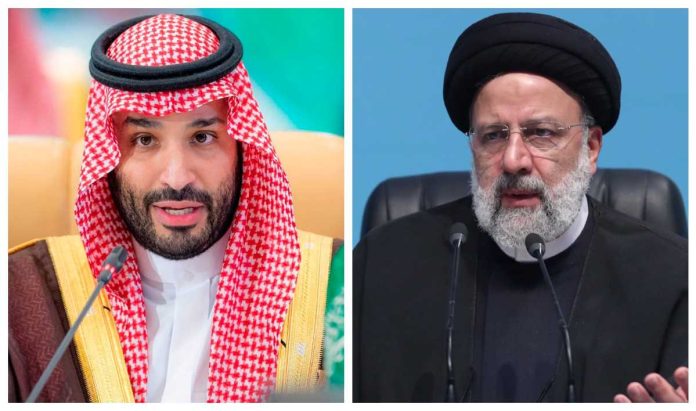
Iran’s Raisi sends congratulatory messages to King Salman, MbS on Saudi Arabia’s national day

Raisi and Bin Salman

Iran’s embassy in Saudi Arabia broke the news in a post on the X social network (formerly Twitter), which also included images of two letters.

The letters were addressed to King Salman bin Abdulaziz as well as his son, Saudi Crown Prince Mohammad bin Salman.

The kingdom of Saudi Arabia was established on September 23, 1932, by Abdulaziz Al Saud, the father of King Salman.

Iran and Saudi Arabia agreed to resume ties following a seven-year hiatus under a China-brokered agreement in March.

The two countries have reopened their respective diplomatic missions and exchanged ambassadors.