Wednesday, December 24, 2025
Home Blog Page 1233

Suicide attack injures 2 police officers in Turkey’s capital Ankara

Turkish Police
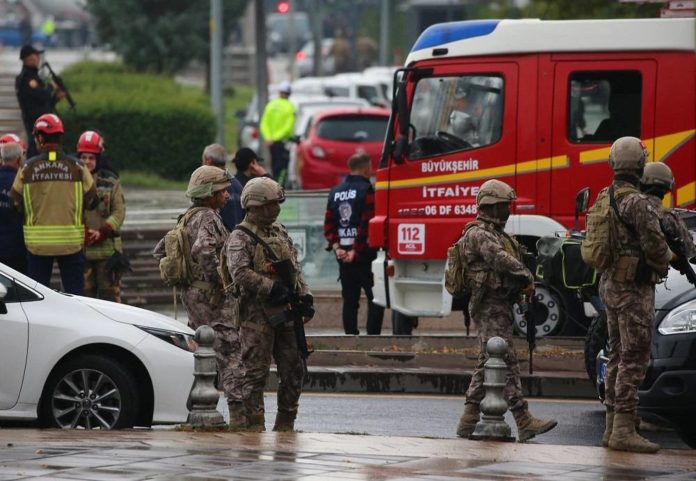
Members of Turkish Police Special Forces secure the area near the Interior Ministry following a bomb attack in Ankara, on October 1, 2023.

The blast on Sunday morning was an attempted terrorist attack, according to the authorities. Two perpetrators were involved in the incident, one of whom blew himself up, while the other was neutralized by the security forces, the Interior Ministry added.

Two police officers were injured in the standoff, officials said.

Images from Ankara show armored vehicles being deployed in the streets, along with numerous armed police officers and soldiers. One of the photos features what looks like a used man-portable rocket launcher thrown on the ground.

The attack took place on the day when Turkey’s parliament was scheduled to reconvene following its summer recess.

Last November, an explosion rocked a busy pedestrian area in the center of Turkey’s largest city, Istanbul. The blast killed eight people, including two children, and injured 80 others. The Turkish authorities blamed the attack on the outlawed Kurdistan Workers’ Party (PKK) and the Syrian Kurdish militia YPG (People’s Protection Units). The PKK denied any involvement.

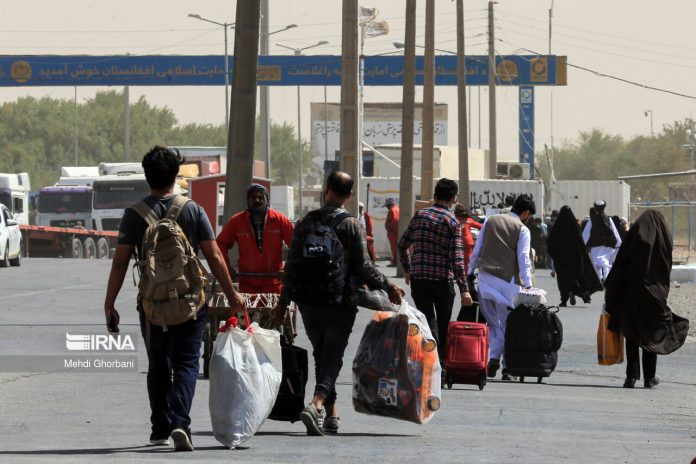
Iran says to organize Afghan migrants to allay public concerns

Afghan Refugee

“We are seriously pursuing efforts to organize them,” said Fadahossein Maleki, a member of Parliament’s National Security and Foreign Policy Committee.

“The important point is that we expect further coordination among relevant bodies, so that we will pursue a single policy on the issue and people’s concerns will be removed accordingly,” he added.

This comes as public concern has grown over the presence of Afghan refugees in Iran.

People argue that the presence of Afghan nationals has not only increased costs of public services, but also undermined security in the country.

Last week Ahmad Vahidi, the Iranian Interior Minister said currently there are five million Afghans in Iran.

The influx of Afghan refugees into Iran sped up following the Taliban takeover of Afghanistan almost two years ago.

New US Senate Foreign Relations chair to block Egypt military aid over rights record

Biden Sisi

Ben Cardin, the new Senate Foreign Relations chairman, on Saturday said in a statement he plans to block a small portion of the US’s more than $1bn in annual military aid to Egypt.

“It is imperative that we continue to hold the government of Egypt, and all governments, accountable for their human rights violations,” Cardin added.

Cardin took over the role of chairman on one of the Sentate’s most powerful committees after the former chairman, Senator Bob Menendez, was indicted alongside his wife on 22 September for allegedly accepting bribes to influence some US policy decisions in favour of the Egyptian government.

Before becoming chairman, Cardin had criticised US President Joe Biden’s administration for choosing to override a human rights prohibition on $235m of this year’s military aid to Egypt.

Earlier this month, the Biden administration issued a waiver to move forward with the military financing despite concerns over Egypt’s human rights record.

On Friday, Representative Gregory Meeks, the top Democrat on the House Foreign Affairs Committee, sent a related request to the State Department, calling on the Biden administration to withhold $320m in military financing.

“Congress needs more clarity from the State Department on how concerns about treatment of political prisoners, journalists, as well as the rule of law are being tackled in our bilateral relationship,” Meeks stated at the time.

Egyptian President Abdelfattah el-Sisi, has cracked down on dissent ahead of the country’s December presidential elections, according to the Egyptian Network of Human Rights (ENHR), with an estimated 65,000 political prisoners languishing in jails.

Sisi came to power in 2014, a year after leading a coup that toppled Egypt’s first democratically elected president, Mohamed Morsi.

Meanwhile, the country is facing a severe economic crisis that has seen local currency lose half its value against the dollar, leading to record inflation and foreign currency shortages.

In August, annual inflation in Egypt reached close to 40 percent, according to official figures.

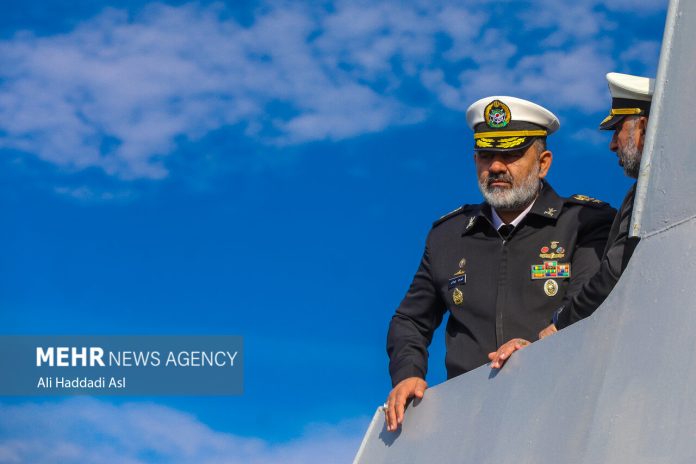
Iranian navy commander says the force to deliver new homemade destroyer soon

Shahram Irani

Addressing students at Sharif University of Technology in the capital Tehran during a Saturday ceremony in commemoration of the anniversary of the 1980-88 Iraq-imposed war, Irani highlighted that the homegrown military vessel, dubbed Deylaman, will soon join Iran’s naval fleet.

He described Deylaman as much more sophisticated than Dena destroyer.

Dena is reportedly the fourth Jamaran-class destroyer manufactured by the Defense Ministry’s naval industries.

The Iranian destroyer is equipped with various defense and offense systems, designed to make long journeys in the oceans, and capable of detecting, tracking, and hitting various aerial, surface, and submarine targets.

Dena is also capable of carrying helicopters on its deck.

Elsewhere in his remarks on Saturday, Irani stated that the Iranian Navy plans to set up a base in the Antarctica. Iran’s southeastern Makran coast is directly connected to the South Pole and the deployment of Iranian servicemen in that region would be of a practical nature, he said.

Antarctica is important from several different aspects as it is the best place to control the cruise of ballistic missiles, the high-ranking Iranian commander said.

Iran’s Navy has in recent years achieved self-sufficiency in manufacturing surface and sub-surface vessels. It has also increased its presence in international waters to protect naval routes and provide security for merchant vessels and tankers.

Israeli protesters rally against PM’s policies for 39th straight week

Israel Protest

The rallies were held on Saturday across more than 100 locations throughout the occupied territories, including the coastal city of Tel Aviv, as well as the occupied city of al-Quds, Modi’in, Ariel, Rosh Ha’ayin, Haifa and Rehovot.

“On Saturday night, we will all meet at Kaplan [Street in Tel Aviv] … in a massive solidarity rally,” protest organizers said in a statement ahead of the rally in the city.

Noting that Israel’s extremist prime minister, Benjamin Netanyahu, “is an expert in dividing people along sectarian lines, religious vs. secular, [and] left vs. right as part of his divide and conquer strategy,” the statement added, “The economy is tumbling down and all we get is provocations…”

Dozens of demonstrators closed the Ayalon Expressway in Tel Aviv, raising protest banners and carrying torches. The regime’s forces then moved in to disperse the crowd, arresting two demonstrators.

Former director general of Israel’s ministry of military affairs, Dan Harel, addressed the Tel Aviv rally, saying that the extremist cabinet’s “actions to weaken the Supreme Court have already resulted in significant damage to the reserve units” of the regime’s military, “causing a loss of readiness and operational capability.”

Hundreds of protesters also held a rally in front of the Israeli president’s residence in the city of al-Quds.

The demonstrations started in January, when Netanyahu’s far-right cabinet unveiled its plan to radically change the structure of the regime’s judiciary and its Supreme Court.

The scheme primarily seeks to prevent the Supreme Court from being able to exercise its power to strike down the decisions made by the politicians.

The protests have gained momentum since the end of July, when the Knesset passed the first bill of the overhaul plan, which restricted the court’s ability to declare the cabinet’s decisions “unreasonable.”

Saturday’s rallies came after the court deliberated petitions against the “reasonableness law.” A verdict, however, is due in weeks, if not months.

Proponents of the overhaul say it helps redistribute the balance of power between the politicians and the judiciary. Its opponents, however, accuse Netanyahu of trying his hand at a power grab. They say the premier, who is on trial in three corruption cases for receiving bribe, fraud, and breach of trust, is also attempting to use the scheme to quash possible judgments against him.

Yerevan says over 80 percent of ethnic Armenians flee Nagorno-Karabakh

Nagorno-Karabakh

Nazeli Baghdasaryan, the press secretary to Armenian Prime Minister Nikol Pashinyan, said on Saturday that 100,417 people had arrived in Armenia from Nagorno-Karabakh, which had a population of approximately 120,000 before Azerbaijan reclaimed the region in a lightning offensive last week.

A total of 21,043 vehicles have crossed the Hakari Bridge, which links Armenia to Nagorno-Karabakh, since last week, Baghdasaryan added. Some lined up for days because the winding mountain road that is the only route to Armenia became jammed.

The departure of more than 80 percent of Nagorno-Karabakh’s population raises questions about Azerbaijan’s plans for the enclave that was internationally recognised as part of its territory.

The region’s separatist ethnic Armenian government announced Thursday it would dissolve itself by the end of the year after a three-decade bid for independence.

Pashinyan has alleged the ethnic Armenian exodus amounted to “a direct act of an ethnic cleansing and depriving people of their motherland”.

Azerbaijan’s Ministry of Foreign Affairs strongly rejected the characterisation, saying the mass migration by the region’s residents was “their personal and individual decision and has nothing to do with forced relocation”.

However, Luis Moreno Ocampo, a former ICC chief prosecutor, told Al Jazeera that it is “obvious” what is happening is ethnic cleansing, saying that “the legal description is called genocide.”

“It’s an excuse that the Azerbaijan government saying, ‘oh, [leaving] was voluntary’ after they were bombing them and were starving them to death for months,” Ocampo added.

During three decades of conflict in the region, Azerbaijan and the separatists backed by Armenia have accused each other of targeted attacks, massacres and other atrocities, leaving people on both sides deeply suspicious and fearful.

While Azerbaijan has pledged to respect the rights of ethnic Armenians in Nagorno-Karabakh, most are fleeing because they do not trust Azerbaijani authorities to treat them humanely or guarantee their language, religion and culture.

The office of Italy’s prime minister announced on Saturday that Armenia has asked the European Union for assistance to help it deal with refugees arriving from Nagorno-Karabakh.

After six years of separatist fighting ended in 1994 following the collapse of the Soviet Union, Nagorno-Karabakh came under the control of ethnic Armenian forces backed by Armenia. Then, during a six-week war in 2020, Azerbaijan took back parts of the region in the South Caucasus Mountains along with surrounding territory that Armenian forces had claimed earlier.

In December, Azerbaijan blocked the Lachin Corridor, the only road connecting Nagorno-Karabakh with Armenia, accusing the Armenian government of using it for illicit weapons shipments to the region’s separatist forces.

Weakened by the blockade and with Armenia’s leadership distancing itself from the conflict, ethnic Armenian forces in the region agreed to lay down arms less than 24 hours after Azerbaijan began its offensive. Talks have begun between officials in the Azerbaijani capital of Baku and Nagorno-Karabakh’s separatist authorities on “reintegrating” the region into Azerbaijan.

Live Update: Russia’s “Special Operation” in Ukraine; Day 584

Russia Ukraine War

Ukraine is working with the US to ensure the budget decision will help Kyiv

The Ukrainian government is working with its partners in Washington to ensure that the budget Congress will work on over the next 45 days will include new funds to help Kyiv push back against Russia, a spokesman for Ukraine’s Foreign Ministry stated.

Washington narrowly avoided a government shutdown with the passage of a stopgap funding bill on Saturday but it dropped funding for Ukraine.

A future budget could have a negative impact on Ukraine, the spokesman, Oleg Nikolenko, said on Facebook on Sunday.

Nikolenko added that the US budget currently includes about $1.6 billion for the defense industry and $1.23 billion for direct budget support, as well as funds for humanitarian and energy projects.


PM: No plan to send UK troops to train in Ukraine

Rishi Sunak has made clear that Defence Secretary Grant Shapps’ suggestion that British troops could train forces in Ukraine is not for the “here and now” during the war against the Russian invasion.

The prime minister on Sunday ruled out UK forces going to Ukraine and said that the recently appointed political head of the Ministry of Defence was discussing possible plans for the “long term”.

Shapps had stated in an interview with The Sunday Telegraph that “eventually” he would like to get Britain’s long-standing training of Volodymyr Zelensky’s troops “in country” rather than in the UK.


Five more cargo ships head for Ukraine’s Black Sea ports: Deputy PM

Five more ships are on their way to Ukrainian sea ports using a new corridor opened to resume predominantly agricultural exports, an alternative arrangement to the Black Sea grain deal blocked by Russia, a top Ukrainian official stated on Sunday.

“5 new vessels are waiting to be loaded in Ukrainian ports,” Deputy Prime Minister Oleksandr Kubrakov said on the X social media platform.

“Bulk carriers OLGA, IDA, DANNY BOY, FORZA DORIA, NEW LEGACY are going to export almost 120,000 (metric) tons of Ukrainian grain to Africa and Europe,” he added.


Traffic restricted at Russia’s Sochi airport following Ukrainian drone attack

Flights were diverted at Sochi International Airport in Russia Sunday after a Ukrainian drone was shot down over Russia’s Krasnodar region, Sochi mayor Aleksey Kopaigorodsky said in a statement.

According to the Russian Ministry of Defence, the drone used in the attack was an aircraft-type UAV.

As a precautionary measure, the Sochi International Airport – over 200 miles from the affected region – had a temporary restriction on their flights.

“Sochi airport imposed a temporary flight restriction. Six flights were diverted to alternate airfields,” the Sochi airport said in a statement on Sunday.

The restrictions were lifted at 8.20 a.m. (local time), with the airport resuming the arrival and departure of aircraft, the mayor and Sochi airport statements both said.

“Everything is normal in Sochi. The situation in the city is calm,” Kopaigorodsky added.

Ukraine has been stepping up its attacks beyond its borders using drones to target Russian infrastructure.


West pushing Russia toward World War III: Medvedev

Through actively engaging in hostilities in Ukraine, Western countries are pushing the situation to the brink of World War III, Russian Security Council Deputy Chairman Dmitry Medvedev has warned.

“The number of decision-making idiots in NATO countries is growing,” Medvedev wrote on his Telegram channel.

“These half-wits are actively pushing us toward World War III…,” he added.

The politician, in particular, cited the idea of Marie-Agnes Strack-Zimmermann, chair of the German Bundestag’s defense committee, to supply Ukraine with Taurus missiles so that the Kiev regime could make strikes on Russian territory to weaken the supply of its army.

“Alleging that this is in line with international law. Well, in that case, strikes on German factories where these missiles are made will also fully comply with international law,” the politician warned.

Medvedev also drew attention to a proposal by British Secretary of State for Defense Grant Shapps to move British training courses for Ukrainian soldiers to Ukrainian soil.

“That is, to turn their instructors into a legal target for our armed forces. Realizing perfectly well that they will be ruthlessly destroyed. And no longer as mercenaries, but precisely as UK’s NATO specialists,” he pointed out.


Biden: US cannot ‘under any circumstances’ allow support for Ukraine be interrupted

Washington cannot “under any circumstances” allow support for Kiev to be withdrawn, US President Joe Biden said on Sunday, commenting on a short-term spending bill, passed by the US Senate to keep the US government open for 45 days.

“Tonight, bipartisan majorities in the House and Senate voted to keep the government open, preventing an unnecessary crisis … While the Speaker and the overwhelming majority of Congress have been steadfast in their support for Ukraine, there is no new funding in this agreement to continue that support. We cannot under any circumstances allow American support for Ukraine to be interrupted,” Biden said in a statement, released by the White House.

The US president also called on House Speaker Kevin McCarthy to keep “his commitment to the people of Ukraine and secure passage of the support needed to help Ukraine at this critical moment.”

The continuing resolution (CR) bill that passed the House and the Senate does not include assistance for Ukraine, however, the House recently passed a bill to provide $300 million to Ukraine that will soon be considered in the Senate. Mitch McConnell (R-KY) the Senate Minority Leader, following the vote, told reporters that he is confident the Senate will pass additional assistance to Ukraine later this year.

Earlier in the day, media reported, citing a US official, that the White House expects the House Speaker to put forward a separate bill to provide further support for Ukraine.

In August, Biden asked the Congress to approve a total of $24 billion in additional assistance for Ukraine as part of $40 billion in supplemental funding requested for 2024.

Since Russia’s special military operation first began in Ukraine, the US has spent an extensive sum of $75 billion in assistance to the country.


UK defense chief wants to send British troops to Ukraine

The newly-appointed Defence Secretary, Grant Shapps, has unveiled ongoing discussions about expanding the UK-led training program for Ukrainian troops and potentially relocating British instructors into the country itself, as well as offering Kiev unspecified naval support in the Black Sea.

“I was talking today about eventually getting the training brought closer and actually into Ukraine as well,” Shapps told The Telegraph after a visit to a Salisbury Plain training ground, on Friday.

During his trip to Kiev earlier this week, the new defense chief, who got his post in a government reshuffle a month ago, apparently saw an “opportunity” to “bring more things in country.” Shapps explained he meant “not just training,” but also weapons manufacturing, as he praised the British arms giant BAE Systems for its plans to localize in Ukraine.

“I’m keen to see other British companies do their bit as well by doing the same thing. So I think there will be a move to get more training and production in the country,” he added.

In his discussions with the Ukrainian President Volodymyr Zelensky, Shapps also reportedly said that Britain’s Navy could play a role in “defending commercial vessels” the Black Sea, according to The Telegraph.

“Britain is a naval nation so we can help and we can advise, particularly since the water is international water,” he said without elaborating what kind of help he offered Zelensky.

The UK military conducted an official operation to train and arm Ukrainian troops since 2015, which has since shifted out of the country. British Royal Marines also conducted several high-risk “discreet operations” in Ukraine last year, according to one general, but officially London never admitted to having any significant presence in the country after the conflict with Russia escalated in 2022. However, several classified US military documents that leaked online earlier this year suggested that some 50 British special operatives were still active in Ukraine.

The open deployment of British military personnel would be yet another escalation, after the UK became the first NATO country to supply Kiev with depleted uranium shells as well as long-range cruise missiles which Ukraine has since repeatedly used in attacks against Russian infrastructure.

Moscow has repeatedly described the conflict in Ukraine as one between Russia and the “entire Western military machine,” while Russian President Vladimir Putin said last year that there are entire military units in Ukraine “under the de-facto command of Western advisers.”


Blaze reported in west Ukraine at oil pipeline

A huge fire has erupted at an oil pipeline in the western Ukrainian region of Ivano-Frankivsk, injuring three people, emergency services said.

Unverified footage shared on social media showed billowing clouds of thick black smoke over what appeared to be a village.

“At 5 pm (1400 GMT), near the village of Strymba, Nadvirna district, an oil pipeline (150 millimetres in diameter) ruptured,” Ukraine’s State Emergency Service said.

It said that the rupture led to an oil spill spanning an area of 100 square metres (1,076sq feet). The cause of the fire was not immediately clear, but local media outlets said there had been a powerful explosion.

“Rescuers are working at the scene,” the emergency services said.


Ukraine ready to become international military production hub: Zelensky

Ukraine is ready to offer special conditions to companies that are willing to develop weapons production jointly with Kyiv, Ukrainian President Volodymyr Zelensky said Saturday.

He made the comments as he met with representatives from defense companies from various countries, including the United States, United Kingdon, Germany, France, Turkey, Sweden and the Czech Republic.

“It will be a mutually beneficial partnership. I think this is a good time and place to create a large military hub,” Zelensky stated, according to his office.

“The sky shield and demining are the two biggest priorities for us today,” Zelensky said, adding this includes air defense means and the production of systems for warning and surveillance.

“We have to do this. This will be useful not only for Ukraine, but also for Europe and our neighbors,” he continued.

Ukraine is also interested in the production of long-range missiles and artillery with new capabilities. The combination of advanced technologies and military tactics will help Ukraine prevail in the war against Russia, Zelensky noted.

“That is why we prioritize the development of defense production using modern technologies, production of shells, missiles, drones in Ukraine in cooperation with global leaders in the field and using our experience in their operation,” Zelensky added.

“Ukraine has shown the whole world what actually works, and I think we can share this experience,” he continued.

Kyiv has been developing its own arms in part as it allows it to strike Russia outside of Ukraine without using Western-supplied arms.


Kyiv seeks to boost spending to $1.5 billion to encourage the country’s nascent weapons industry

The Ukrainian government plans to spend $1.5 billion on weapons and materiel production in 2024 — a sevenfold increase compared to last year — Prime Minister Denis Shmyhal said Saturday.

The increase was included in the government’s budget proposal for next year. The plans come as Kyiv has been using domestically produced missiles and drones to strike targets on Russian soil, beyond the front lines.

Shmyal touted the “new birth” of Ukraine’s weapons manufacturing sector at a defense industries event in Kyiv on Friday.

“We are launching new production facilities. We are expanding those that were producing results before the full-scale invasion. We are investing in new technologies and new developments,” he said.

“We are ready to help everyone who produces high-quality weapons for our army.”

Ukraine President Volodymyr Zelensky addressed the audience at the International Defense Industries Forum in Kyiv on Saturday.

“The world sees what Ukrainian missiles, technologies, and drones are capable of. We are creating the world’s first fleet of naval drones that render Russian military ships ineffective and force them into hiding,” Zelensky said.

Zelensky added Ukraine would start producing 155 mm caliber artillery systems and shells, commonly used weapons during the war with Russia.

Thirty countries from Europe, North America, Asia and Oceania, as well as over 250 weapons manufacturing companies, have representatives at the forum, he continued.

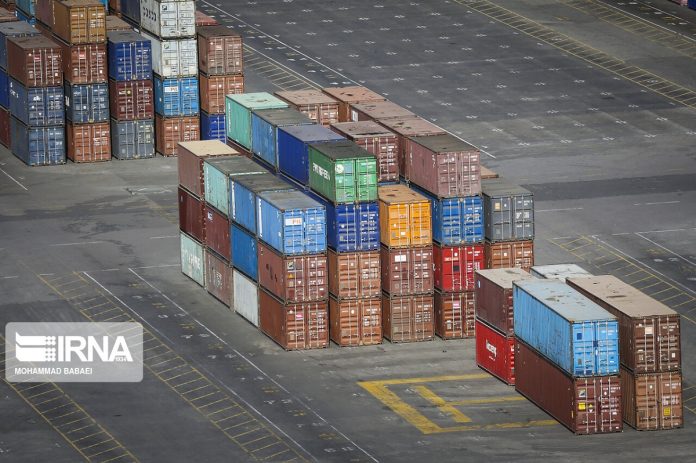
Official: Iran’s non-oil exports hit 54.6 billion dollars

Iran Trade

Mohammad Rezvanifar told Fars News that the figure shows a 5% increase compared to the same period last year.

As for Iran’s business partners, Rezvanifar said there has been no change in this respect and China, Iraq, the UAE, Turkey and India are the largest markets for Iran’s exports while the most important sources of Iran’s imports are the UAE, China, Turkey, Germany and India.

The head of the Customs Organization of the Islamic Republic of Iran also spoke about the transit of goods from the country in the first half of this year, saying the volume of goods transported during the period was 7.7 million tons, which shows an 8.2% increase compared to the same period last year.

Iranian musician appointed as Tehran Symphony Orchestra permanent conductor 

Manouchehr Sahbaee

The appointment was made by Mehdi Salem, Director of the Roudaki Foundation, a non-governmental body dealing with cultural and artistic issues in Iran.

The letter hails Sahbaee’s background and record as well as his collaboration with the Tehran Symphony Orchestra.

Sahbai, an orchestra conductor and oboe soloist has a doctorate degree in musicology and arts from the University of Strasbourg in France.

As an oboe soloist, he has collaborated with the symphony orchestra of St. Gallen, Switzerland, and as a conductor with several European orchestras.

Sahbai also has a professorship from Feldkirch Conservatory in Austria.

He previously was the permanent conductor and artistic director of the Tehran Symphony Orchestra from January 2008 to May 2010.

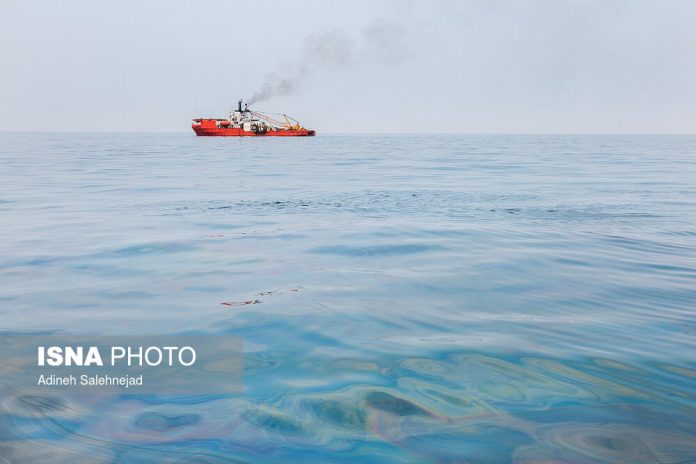
Iranian experts contain oil pollution off Ganaveh Port along Persian Gulf

Iran Oil Spill

Abbas Gharibi added that following the incident in a submarine line two miles away from Ganaveh port in September, equipment, teams and sea vessels were deployed to deal with the issue.

He said the first step was to contain and prevent the spread of the oil spill in order to prevent more pollution.

The CEO of the Iran Oil Terminals Company stressed that the Iranian experts were absolutely capable to do the job in cooperation with the Continental Plateau Oil Company and the Provincial Ports Organization.

According to Gharibi, the main policy of the National Iranian Oil Company is to protect the environment and the company has taken all necessary measures to prevent the spread of pollution and possible accidents at sea.