Sunday, December 28, 2025
Home Blog Page 1175

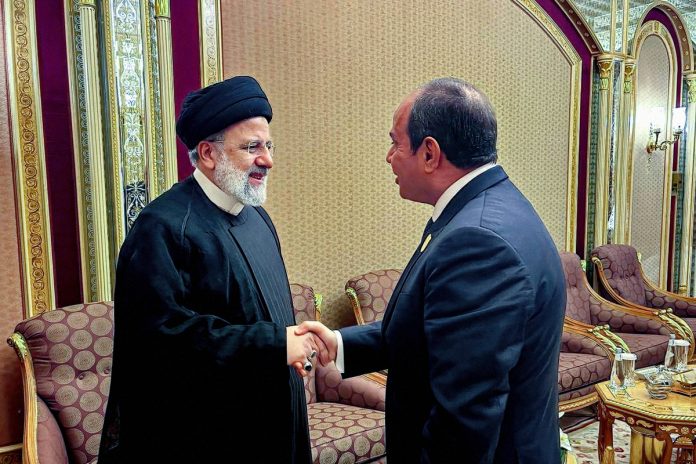
Iranian President urges Egypt to re-open Rafah border crossing to Palestinians in Gaza

Raisi and Sisi

Raisi told Sisi that everybody knows that it’s the US and the Zionist regime that are preventing the re-opening of the Rafah crossing to the oppressed people of Gaza.

He added that anyway, all these obstacles must be overcome to get aid to the Gazans. The Iranian president described the Cairo peace conference as a positive initiative, noting that Western governments prevented that meeting from producing positive results.

Raisi stressed the Cairo conference could have been a turning point in ending the crimes of Zionists against the defenseless women and children but the Western supporters of Israel foiled it.

Elsewhere, Raisi spoke about ties between Iran and Egypt. He said Iran sees no obstacles in expanding relations with Egypt, calling the country a “friend”.

Sisi for his part said Egypt is determined to have genuine ties with Iran.

The Egyptian president added that he had instructed relevant ministers to pursue deeper ties with Iran.

On Palestine, Sisi said Egypt has borne the brunt of the plight of Palestinians.

Iranian U17 footballers stun Brazil’s in 2023 World Cup 

Rayan gave the Brazilian team the lead in the 28th minute of the match. This was an own goal scored by Iran’s Abolfazl Zamani in the first half.

Yaghoob Barajeh pulled a goal back in the 54th minute.

In the 69th minute, Kasra Taheri made it a 2-2 draw. But four minutes later came the third goal.

But it was not Brazil that netted, but Iranian footballer Esmaeil Gholizadeh.

In the remaining time of the match, Brazil stepped up pressure in search of an equalizer but to no avail.

The final whistle by the referee sparked a wild jubilation among the Iranian players and staff.

Meanwhile, Iran national cerebral palsy football team have won Asia-Pacific Championship after defeating Australia 2-0. Moslem Mehrabian and Abbas Torabi netted for Iran.

After this historic win, Iran national cerebral palsy football team qualified for the World Cup finals in Spain.

Iran national football team reached the final match of the Asia-Pacific Championship without losing and after beating Japan, Australia, Thailand and India.

Most Americans won’t defend US in next war: Poll

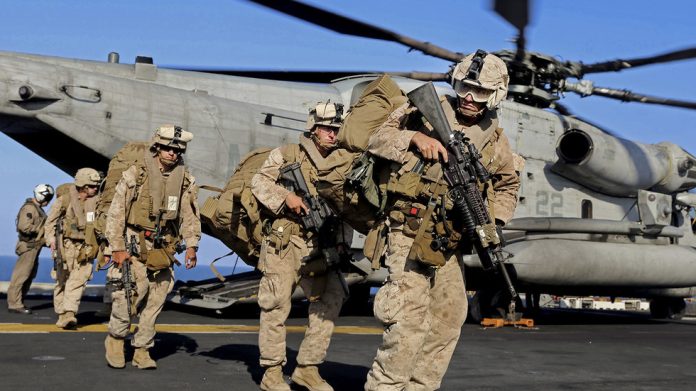
US Forces in ME

US armed forces have struggled to meet recruiting goals in recent years, falling short of enlistment targets by thousands. Now, new polling shows Americans wouldn’t rush to join the military even if the country were at war.

The survey by the group Echelon Insights found that 72% of Americans would not be willing to volunteer to serve in the armed forces if the country entered a major conflict. Only 21% of people polled said they would join the US military under those circumstances.

The poll was conducted from October 23-26, two weeks after the Palestinian group Hamas mounted a surprise attack in Israel.

“We have strike groups, aircraft carriers with a Marine Expeditionary Unit outside Israel now,” said Justin Henderson, a US military recruiter.

“We’re funding two wars, but we’re actually boots on the ground, drones above Gaza. So we’re already involved in there – and we’re not sure what’s happening in Taiwan. So this is a very tumultuous time for us, because we don’t know what’s going to happen.”

The chronic ambivalence over military service in the US continues to impact recruiting, which could have consequences for overall preparedness according to experts.

“Let’s say the Navy misses recruiting targets for an extended period and wasn’t able to bring on the people that it needs to manage submarines and fly its airplanes… if you end up in a major conflict, it’s going to take time to train those people,” stated Tom Shugart, a fellow at the think tank Center for a New American Security.

Analysts say the state of the US economy makes recruiting difficult – during a period of low unemployment and rising wages, military service is seen as less appealing for young people. A certain degree of economic coercion is needed to meet enlistment targets.

“There’s definitely a strong relationship between [the] unemployment rate and how hard it is to recruit people,” added Shugart.

“When we’re in a recession and unemployment is high, then generally the military has very little trouble recruiting people [at] the numbers that it needs because people are looking for a job.”

“On the other hand, if the economy is really good and the employment market is really tight, and people have lots of options, sometimes the military has more trouble recruiting.”

Some recent public relations efforts have also fallen flat with detractors accusing the military of “going woke” with ad campaigns featuring drag queens and transgender servicepeople. Polling generally shows younger Americans are more socially liberal than previous generations, although one recent study suggested high school-age males are trending towards conservatism.

“Some parents will be turned off by those things and maybe not endorse military service as much,” stated David Eustice, the CEO of Military Recruiting Experts.

“It’s usually a little bit of a challenge to get parents to be for it anyway,” admitted Eustice.

“They’re supportive of their military but would prefer it to be someone else’s child.”

Eustice blamed “the civilian media looking from the outside in and making judgments and cherry picking stories to try to divide” for the declining appeal of the US military.

Since the 2003 US invasion of Iraq, movies and television programs have featured plotlines demonstrating the struggles of some service members to adapt to life outside the armed forces.

Some 24 veterans commit suicide each day in the United States, according to a recent study sponsored by the US Department of Defense and the University of Alabama.

Persistent recruiting shortfalls have reportedly contributed to a US Army that’s smaller in size than any time since 1940.

Some analysts claim the reputational problem is a result of failed messaging, but political cynicism in the United States may also be contributing to an overall lack of national self esteem. Approval of US Congress currently stands at 17%, according to recent polling.

Surveys have shown consistently high support in the country for progressive measures such as single-payer healthcare, but America’s political system continues to make such policy impossible.

Iran President Raisi says plight of region can be solved through formation of Palestinian state in all of Palestine, calls for arming Palestinians

Ebrahim Raisi

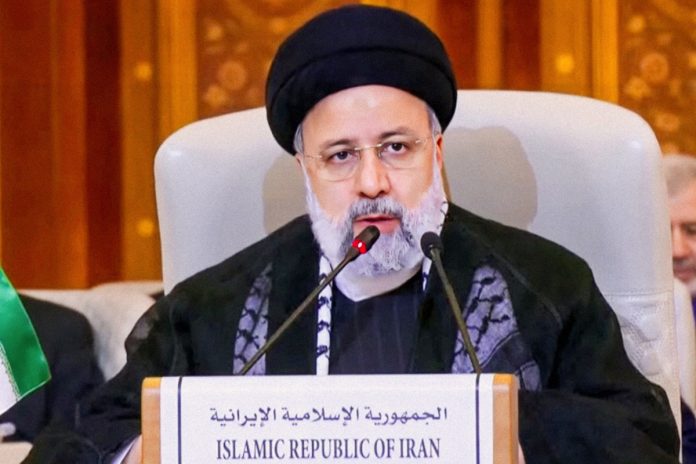
Speaking at the emergency summit of the Organization of Islamic Cooperation (OIC) in Riyadh, Saudi Arabia, on Saturday, President Raisi said this resistance is “a matchless record”.

“We kiss the arms and hands of Hamas”, calling the resistance group “a hero”. The Iranian president also paid tribute to the people of Gaza for what he described as their “steely resolve”.

Raisi then slammed the US for its unbridled support of the Israeli regime and filling its arsenals with arms. He said both the war machine of Israel and the machine’s fuel come from the US.

The Iranian president blamed the US for all “ills”, pointing to Washington’s wars on Iraq and its occupation of Syria and other Muslim countries.

Raisi also spoke about the creation of Israel in the first place, saying the installment of “this bloodletting regime in the heart of the Muslim world pursued no goal other than domination of the region by arrogant Western powers”.

He noted that the plight of the West Asian region can be resolved if some measures are taken. Those measures, Raisi said, include lifting the siege of Gaza, the withdrawal of the Zionist troops from the territory, cutting all political and trade ties with the Zionist regime, supporting those who sanction the regime and the blacklisting of the Israeli army as a terrorist organization by Muslim nations.

Other solutions offered by Raisi were the dispatch of relief aid for the Palestinian people and the formation of a Palestinian government in all of occupied Palestine following a referendum.

The Iranian president also called for setting up a fair tribunal for probing Israeli crimes and the prosecution of both Israeli officials and its US supporters for “their complicity” in those crimes.

Raisi also urged the formation of a fund for the rebuilding of the Gaza Strip.
The Iranian president highlighted the arming of the Palestinian people to confront the war-mongering usurping forces should the occupation of their land continues.

Source: Iran calls for recognition of Palestinians’ right to self-defense

Gaza Summit in Saudi Arabia

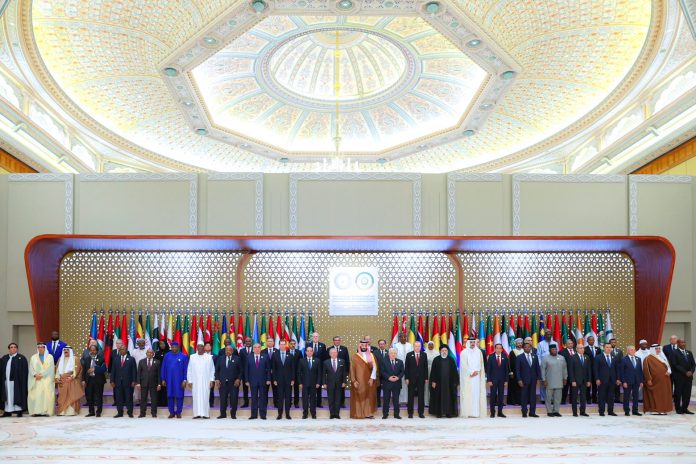
Riyadh is hosting a joint extraordinary summit of the Organization of Islamic Cooperation (OIC) and the Arab League on Saturday to support Palestine and condemn Israeli crimes.

An informed source told Iranian Tasnim News Agency that Iran pursues two objectives in these talks.

First, Iran will call for the recognition of Palestinians’ right to self-defense like the Bosnia model in 1992 and urge Islamic states to take practical measures and offer armed assistance to defend Palestinian people’s legitimate rights.

Back in 1992 when Serbs were committing crimes against Muslims in Serbia, Bosnian people’s right to defend themselves was recognized at Iran’s suggestion, and arms aid to Bosnia repelled Serbs and led to a decrease in their crimes.

The second issue brought up by Iran in the preliminary meeting was a call for Islamic and Arab countries to boycott Israel, especially countries exporting oil to the Tel Aviv regime.

Other key issues were also discussed in the sessions, namely the need to stop allowing Israel to use the airspace of Muslim and regional countries and stop the supply of weapons from US bases in the region to the occupied territories.

Some countries, particularly those exporting crude to the occupying territories such as Turkey and the Azerbaijan Republic, have stopped short of cooperating on some of the issues brought up and have simply settled for condemning Israeli actions.

EU admits won’t reach Ukraine ammunition target

Russia Ukraine War

The European External Action Service, the EU’s foreign policy wing, informed member states on the lagging progress of the ammunition drive this week, unnamed sources familiar with the discussions told the news agency.

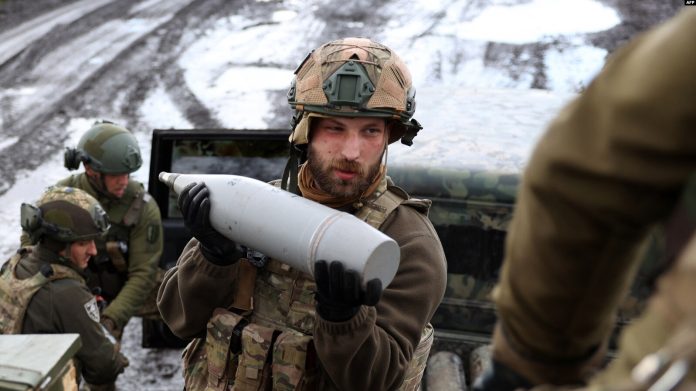
While the bloc pledged to supply hundreds of thousands of 155-millimeter shells to Kiev earlier this year, hoping to reach 1 million by March 2024, so far it has provided just 30% of that figure, according to Bloomberg.

The proposal called to draw initial shipments directly from the stocks of EU member states, and to later sign contracts to procure shells from arms manufacturers, with an expected cost of around €2 billion. With just months before the deadline, however, it is unclear whether the target can be reached.

The issue is on the agenda for an EU defense ministers’ meeting next week, where officials will also discuss billions in additional security aid to Ukraine. Some EU members have reportedly been hesitant to offer details about their ammunition stocks, and the bloc could soon request more information to determine whether it can meet its goal.

Ukrainian forces have burned through vast supplies of shells and other military gear amid the conflict with Moscow, with officials repeatedly urging foreign sponsors to deliver more arms and ammunition. Despite the Western largesse, however, Kiev’s summer counteroffensive failed to meet its objectives, with the Russian Defense Ministry estimating that Ukraine had lost more than 90,000 troops, along with over 55 tanks and 1,900 armored vehicles, since June.

The EU has authorized a total of €83 billion in military, economic and humanitarian aid to Ukraine since the start of Russia’s military operation in February 2022, according to the European Commission.

Moscow has argued that Western nations have already become de facto parties to the fighting by providing arms, intelligence-sharing and training to Kiev’s troops, and described the conflict as a US-led proxy war against Russia, in which Ukrainians are used as “cannon fodder”.

Diplomats privately warn White House of growing fury against US in Arab world

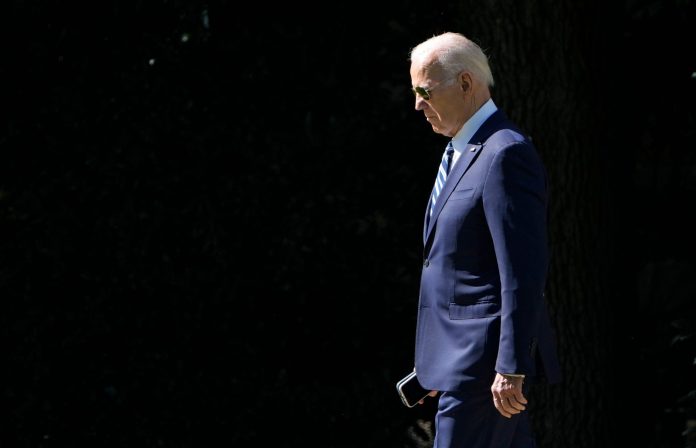
Joe Biden

The cable stresses profound concern among American officials about the growing anger against the United States that erupted soon after Israel launched its operations against Hamas.

“We are losing badly on the messaging battlespace,” reads a cable from the US Embassy in Oman, citing conversations with “a wide range of trusted and sober-minded contacts”.

The robust US support for Israel’s actions is being seen, the cable warns, “as material and moral culpability in what they consider to be possible war crimes”.

The cable from the embassy was written by the second-highest US official in Muscat and sent to, among others, the White House’s National Security Council, the CIA and the FBI. While it’s just one cable from a regional embassy, it provides a private snapshot of the alarm over the growing anti-US wave sweeping the Middle East.

Another cable obtained by CNN from the American embassy in Cairo relayed back to Washington, as part of a daily media summary, the commentary in a state-run Egyptian newspaper that “President Biden’s cruelty and disregard for Palestinians exceeded all previous US presidents”.

Biden has been under growing pressure domestically and abroad over US support of Israel amid images of destruction in Gaza and the dire humanitarian crisis in the region. While the administration has resisted calls for a ceasefire, officials have worked to ramp up aid going into Gaza and pushed for humanitarian pauses to allow more assistance to flow into the enclave and to allow civilians to flee away from the fighting.

In recent days, US allies in the Arab world have made clear their deep anger at the humanitarian crisis in Gaza.

Last weekend, Secretary of State Antony Blinken attended a summit convened by the Jordanian foreign minister that was attended by the top diplomats from Egypt, Qatar, the United Arab Emirates, and Saudi Arabia, as well as the secretary general of the Palestine Liberation Organization.

At the summit, the Arab leaders called for an immediate ceasefire in Gaza while Blinken reiterated US opposition, arguing that it would give Hamas time to regroup and launch another attack on Israel.

The White House announced Thursday that Israel had agreed to move forward with daily four-hour pauses of military operations in areas of Northern Gaza.

Blinken had an agreement in principle on the pauses after his meetings in Israel last week, even though Prime Minister Benjamin Netanyahu came out against the idea of humanitarian pauses on Friday, US officials told CNN. That was seen as the Israeli prime minister playing to his coalition, and the officials noted it was similar to when the Israeli government opposed humanitarian aid getting into Gaza before deciding to allow it.

Although Israel had already been instituting such pauses, American officials see this agreement as progress because the Israelis are using the language of “pauses”, which is something the US believes it can build on.

Still, within the administration, concerns have grown over US support for Israel.

CNN previously reported that some senior officials privately say there are aspects of Israel’s military operations they simply cannot stomach defending; calls for the US to back a ceasefire are growing among government employees; and others are distraught by the incessant images of Palestinian civilians being killed by Israeli airstrikes.

Biden has also been confronted by the frustration growing domestically.

The president was confronted by a protester calling for a ceasefire at a private fundraiser last week; pro-Palestinian protests have been a daily occurrence near the White House compound; and this week, one of the entrances near the West Wing was covered in bright-red handprints – meant to mimic blood – and words like “genocide Joe.”

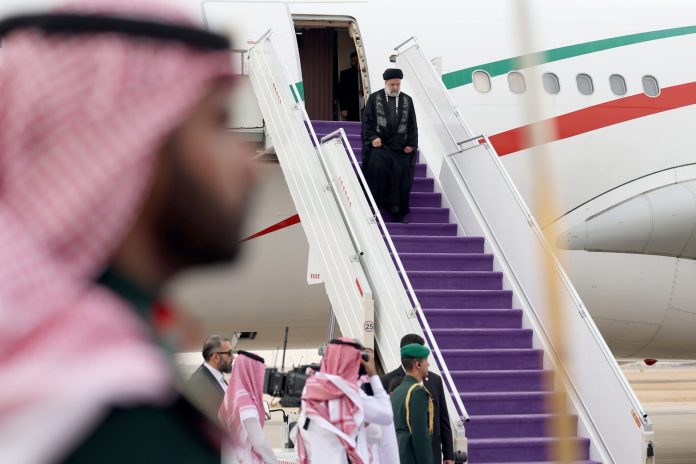
Iran president arrives in Saudi Arabia to attend OIC summit on Palestine

Ebrahim Raisi in Saudi Arabia

“The president arrived in Riyadh after 11 years wearing a Palestinian keffiyeh in support of the oppressed residents of Gaza,” said the Public Relations Office of the Presidential Office.

Before heading to the Saudi capital, the president had said US is blocking the establishment of a ceasefire in Gaza.

Over 11,000 Palestinians have died in Israel’s military campaign in Gaza over the past few weeks. Around 4,500 of the dead are children while 2,500 of them are women.

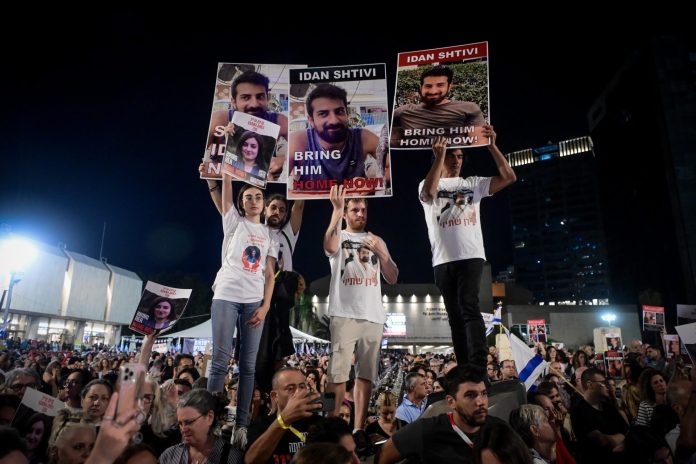
Poll suggests most Israelis want to negotiate for hostages but continue fighting, over 11,000 killed so far

Israel Hostages

Nearly four out of 10 Israelis (38%) expressed the opinion in a survey by the Viterbi Family Center for Public Opinion and Policy Research at the Israel Democracy Institute.

That’s a rise from 32% saying Israel should negotiate while fighting when the survey was last conducted about two weeks earlier.

Another 22% – about one in five – said Israel should not negotiate at all to trade Hamas prisoners in Israeli jails for hostages.

One in 10 (10%) said Israel should negotiate only when the fighting is over, while about one in five (21%) said Israel should begin negotiations immediately, even if it meant halting the fighting.

The survey of 606 men and women was carried out online and by phone on November 5-6, 2023. Some 502 interviews were in Hebrew and 104 were in Arabic. The margin of error on the full sample is four points.

An informed source told the official Israeli Broadcasting Corporation Friday that there has been significant progress in talks to release Israeli hostages.

More than 240 people, including Israeli soldiers and civilians, as well as foreigners from numerous countries, were taken captive by Hamas and other Palestinian armed groups during a deadly assault on Israel on October 7 that Israeli authorities say killed more than 1,500 people.

Five hostages have been released thus far, most of them following negotiations through diplomatic channels with assistance from countries including Qatar and Egypt, and one after a ground incursion by Israeli soldiers inside Gaza.

The Palestinian group Hamas has announced it is ready to conclude a deal on swapping prisoners with the Israeli side.

Hamas Spokesman Hazem Kasem has recently told Al Jazeera the movement is ready to release all the prisoners held by it in exchange to all those held by Israel.

There are 19 prisons within Israel and one inside the occupied West Bank that hold thousands of Palestinian prisoners.

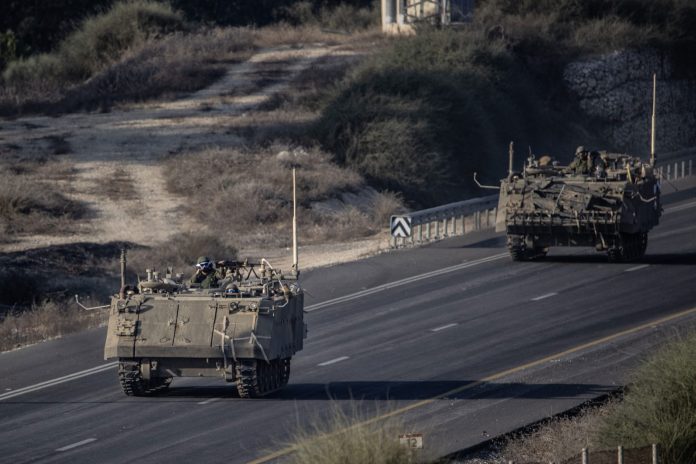
Israeli soldiers close in on Gaza’s al-Shifa Hospital, trapping thousands

Israeli Army

Israeli forces had fully encircled the al-Shifa Hospital as of early on Saturday morning, preventing ambulances from entering or leaving the facility, where medical supplies and food are running low.

“They are attacking and destroying the front gates of the main medical complex in the Gaza Strip as patients and thousands of Palestinians are still residing inside the yard of this hospital,” Al Jazeera’s Tareq Abu Azzoum said.

“Those people are really trapped right now by Israeli forces who are stationed in different sectors encircling the entire place. They are no longer able to move ambulances to bring victims and wounded people from the areas targeted. People are trapped and they lack food.”

Abu Azzoum added that Israeli snipers and artillery were also targeting anyone moving outside the hospital.

Al-Shifa director Muhammad Abu Salmiya described the area around the hospital as a “battlefield”, but said the hospital’s staff have pledged to stay with patients until the “last moment”.

“We will not leave, because we know if we leave the hospital, dozens of patients will die,” Abu Salmiya told Al Jazeera.

The escalating bombardment comes after an Israeli strike on the al-Shifa Hospital early on Friday killed many people and wounded several others, according to the Health Ministry in the Hamas-governed enclave.

Health officials stated later on Friday that Israeli tanks were closing in on at least four hospitals in northern Gaza from all directions.

As fighting escalated on Friday night, Marwan Jilani, director general of the Palestine Red Crescent Society, condemned Israel for attacking hospitals at the UN Security Council in New York.

“Displaced people at the hospitals are getting shot at as we speak,” Jilani said.

“They are asking, ‘What can we do? Where can we go?’ Thousands of innocent lives are under imminent threat.”

World Health Organization (WHO) chief Tedros Adhanom Ghebreyesus echoed his concerns, stating he was “extremely disturbed” by the situation at the al-Shifa Hospital.

“Many of the thousands sheltering at the hospital are forced to evacuate due to security risks, while many still remain there,” he posted on X, formerly known as Twitter.

“WHO is very concerned about the safety of patients, health workers and those sheltering in hospitals. They need immediate protection,” he added.

The area around al-Shifa has been bombed at least five times since Thursday, according to Gaza health officials, while Israeli forces have also struck al-Nasr Medical Centre, al-Quds Hospital and al-Rantisi Hospital.

The WHO has confirmed that half of Gaza’s 36 hospitals are not functioning and two-thirds of its primary care facilities are out of commission amid the fighting.

At least 11,000 Palestinians have been killed in Israeli attacks on Gaza since the start of the Israel-Hamas war, according to Palestinian health officials.

The Palestinian Health Ministry in Gaza asked “international institutions to come immediately to al-Shifa [Hospital] complex and hospitals in the northern Gaza Strip to protect them and enable them to carry out their humanitarian work”.