Thursday, January 15, 2026
Home Blog Page 1153

Israeli soldiers ‘arbitrarily’ detain Palestinian women and girls from Gaza

Gaza War

Since Israel launched a ground invasion of Gaza in late October, its forces have detained hundreds of civilians from their homes or while fleeing on a road declared by the army as part of a “safe corridor”.

Some have been released after interrogation but many have been taken to undisclosed locations, including mothers who were separated from their babies and detained.

The Palestinian Authority’s Commission of Detainees and Ex-Detainees Affairs on Sunday confirmed at least 142 females – including senior women and infants – are currently held in Israeli jails.

In a joint statement with the Palestinian Prisoners’ Club, the commission warned that “horrific crimes” have been carried out against the female prisoners.

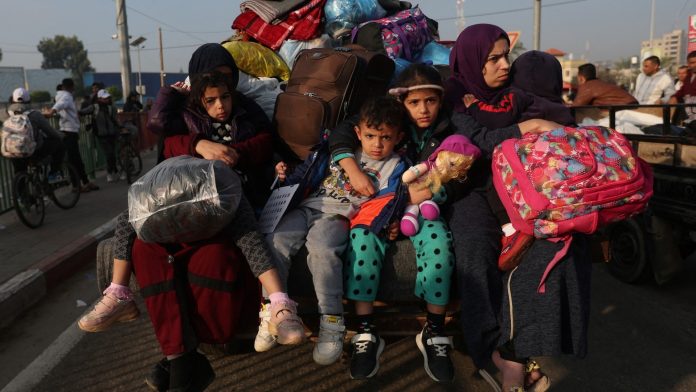
It added that they were detained while forcibly fleeing along with tens of thousands of Palestinians from the northern Gaza Strip to the south through the Salah al-Din road.

The women were stopped at a checkpoint set up by the military on the road and taken to several prisons inside Israel, including Damon prison and Hasharon prison.

Inshirah al-Shaikh, a relative of one of the detained women, told Middle East Eye that her cousin, 19-year-old Aseel, was being held in the Damon prison.

“Aseel was with her mother, her wounded brother and two younger siblings,” Shaikh explained.

“When she was stopped, she thought it was due to an issue with her documents and that she would be questioned, but she didn’t come back and there’s no news about her.”

Shaikh added that some of the women who were detained were travelling south with their children but without their husbands.

“One woman was going towards Khan Younis when she was detained. Now her young children don’t have anyone with them, they are just young infants,” she said.

Another woman, who was employed by the United Nations Development Programme, was detained and taken to an undisclosed location.

“I still don’t know where she was taken to until now. It is not even clear if she has been taken to prison or not,” Shaikh told MEE.

Suhair Barghouti, 65, a Palestinian freed from prison last month, told MEE she saw at least 10 female detainees arrive from the Gaza Strip ahead of her release.

The Israeli prison administration informed prisoners that they were forbidden from talking to those arriving from Gaza or approaching their section, Barghouti said.

“We were able to see them through a small slit in the section door. They were handcuffed and wearing uniforms belonging to the prison administration. The jailers were treating them harshly and pushing them forcefully into their new section,” she recalled.

The female prisoners didn’t know anything about the women from Gaza and were not allowed to go out even into the prison courtyard, but Barghouti said that she was going to shower in the outdoor bathroom and peeked into their room.

“I carried with me extra clothes that belonged to female prisoners who had been released in the [prisoner swap] deal. I pretended to go to take a shower, and when the prison guard was away, I looked out the small window in the door and called to the female Gazan prisoners in a whisper. I gave them the clothes and asked them about their arrest,” Barghouti continued.

According to Barghouti, some of the detained women were separated from their children by soldiers and forced to leave them behind despite their young age.

One of the women saw a 13-year-old boy crossing the street and told him to take her children with him before she was taken away.

Barghouti also said the detainees faced brutal treatment, including beatings, threats of rape, removal of clothes and hijabs, insults and deprivation of food.

“One of them told me in pain that the soldiers let police dogs loose on them to maul their bodies. The arrest was in a so-called safe passage that was not safe at all,” she added.

According to Amani al-Sarahna, the spokesperson for the Palestinian Prisoners’ Club, the women have been forbidden to speak to lawyers, family members or other prisoners.

“The lawyers are forbidden from visiting them, but according to the testimonies we have received, Israel is carrying out horrific and atrocious crimes against detainees from Gaza,” al-Sarahna told MEE.

Middle East Eye contacted the Israeli Prisoner Authority for comment. They replied that MEE should “speak to those who detained them” without providing further details. An Israeli military spokesperson has not responded to a request for comment by the time of publication.

The PA’s commission and the Prisoners’ Club announced they feared for the fate of the detained women in light of the information blackout imposed by Israeli authorities.

“In light of the shocking and horrifying images and testimonies that have emerged from citizens recently arrested in Gaza, the level of fear over their fate is increasing day by day,” the group said in a statement.

“We do not rule out the possibility of Israeli forces carrying out field executions of the detainees from Gaza,” they added.

Last week, Israeli forces stripped dozens of civilian Palestinian men of their clothes before detaining them from their homes in northern Gaza.

An eyewitness stated at least seven men were fatally shot by troops for not complying with the soldiers’ orders fast enough, according to the Euro-Mediterranean Human Rights Monitor.

The virality of the photos was followed by a US response on Monday, in which the State Department said it found the pictures of the detained and naked Palestinian men “deeply disturbing”.

Pressure has been building on Washington over its continued support of Israel’s military campaign in Gaza. Monday saw a mass mobilisation of several grassroots organisations across the US capital calling for a ceasefire and end to American military support to Israel.

Dozens of protesters were arrested in the US Senate as lawmakers were discussing a spending bill that included $14bn in aid to Israel. And a group of Jewish protesters handcuffed themselves to the fence in front of the White House demanding an end to Israel’s bombardment of Gaza.

The Center for Constitutional Rights (CRR) also told MEE that it is planning on filing a response to the Biden administration’s motion to dismiss their lawsuit, in which Palestinians are accusing the US government of failing to prevent a genocide in Gaza being committed by Israel.

The administration has also said it is looking into reports of white phosphorus being used by Israel. For months human rights organisations have reported on Israel’s use of white phosphorus in Gaza and southern Lebanon.

However, a Washington Post report on Monday outlined the most definitive evidence so far that Israel has been using US-supplied white phosphorus rounds on civilians in Lebanon.

White phosphorous is a chemical weapon that ignites when in contact with air and can cause severe burns in people or structures it comes into contact with.

In certain conditions, using the weapon is a violation of international law.
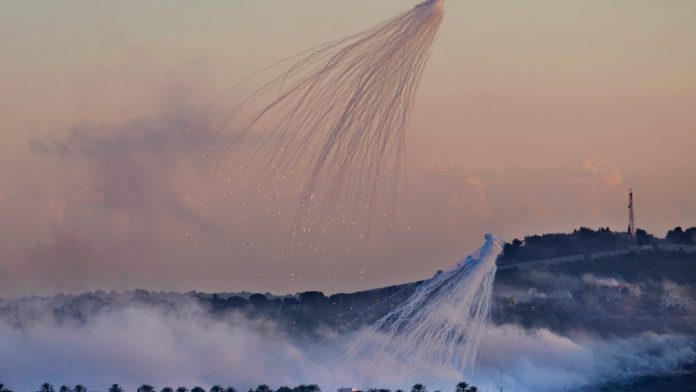
Israel used US-supplied internationally banned weapons in Lebanon: Report

Gaza War

“A journalist working for The Post found remnants of three 155-millimeter artillery rounds fired into Dheira, near the Lebanese border with Israel, which wounded at least nine civilians and incinerated at least four homes, residents said,” the newspaper said.

Lot production codes found on the shells match the nomenclature used by the US military to categorize domestically produced munitions, which show they were made by ammunition depots in Louisiana and Arkansas in 1989 and 1992, the report added.

The light green color and other markings – like “WP” printed on one of the shells – are consistent with white phosphorous rounds, according to arms experts cited by the publication.

Photos and videos verified by international rights groups and reviewed by The Post show the characteristic ribbons of white phosphorus smoke falling over Dheira on October 16.

Israeli forces continued to shell the town with white phosphorus munitions for hours, residents said, trapping them in their homes until they could escape around 7 a.m. the next morning. Residents now refer to the attack as the “black night.”

The US origin of the shells was verified by Human Rights Watch and Amnesty International.

Shortly after the October attack, Human Rights Watch said it had verified footage taken in Lebanon and Gaza showing multiple uses of artillery-fired white phosphorus over the Gaza City port and two rural locations along Lebanon’s border.

The same manufacturing codes also appear on white phosphorus shells lined up next to Israeli artillery by the city of Sderot, near the Gaza Strip, in an October 9 photo.

The Crisis Evidence Lab at Amnesty International said they corroborated the authenticity of videos and photos depicting the utilization of white phosphorus smoke artillery shells in Dhayra on October 16.

The rounds, which eject felt wedges saturated with white phosphorous can stick to the skin, causing potentially fatal burns and respiratory damage, and its use near civilian areas could be prohibited under international humanitarian law.

Tirana Hassan, the executive director of HRW, stated US Congress “should take reports of Israel’s use of white phosphorus seriously enough to reassess US military aid to Israel.”

The weapons are part of billions of dollars in annual US military assistance to Israel.

Israel has killed nearly 18,000 people, a huge number of whom children, in Gaza since October 7.

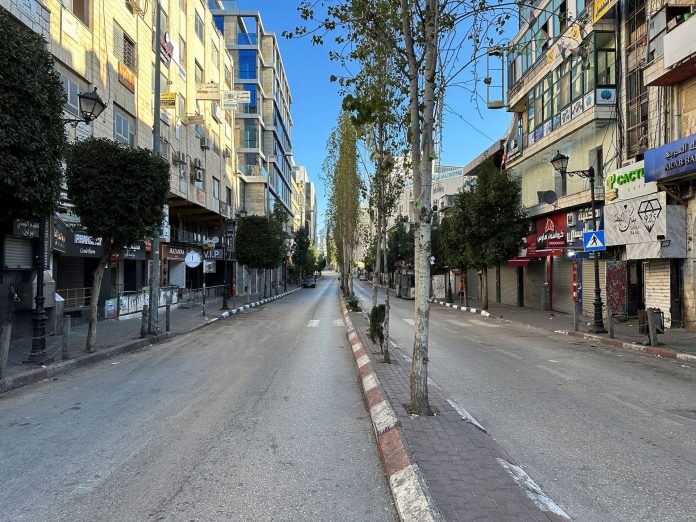
General strikes in East Jerusalem, West Bank, Lebanon in support of Gaza

In East Jerusalem, shops were shuttered and the streets and alleyways were deserted, as Palestinians stayed home.

In the occupied West Bank, public transport, schools, banks and shops have also been closed.

In Lebanon, government institutions and schools as well as places of higher education are closed, according to the National News Agency (NNA).

Jordan has also come to a standstill as citizens observe the strike, with pictures from the capital of Amman showing rainy, empty streets and shops closed for the day.

Posters with the slogan “#strikeforgaza” have been plastered on walls calling for support of Gaza and solidarity with the Palestinian cause.

At least 18,800 Palestinians have been killed in Israeli attacks in Gaza from October 7 through December 10, according to the Palestinian Ministry of Health in Ramallah, citing sources from the Hamas-controlled enclave. It said 70% of the fatalities were children, women, and the elderly.

Israel accused of staging footage of stripped Palestinians surrendering weapons

Israel Army

In a video shared on Saturday, scores of men wearing only their underwear are seen next to an Israeli tank holding up their identification cards.

One of the men proceeds to walk forward with his arms in the air in a surrendering motion, before placing at least one gun on the ground.

The Palestinian man in the video was identified as Moin Qeshta al-Masry, the owner of a local aluminium workshop. The video was taken in front of a United Nations-run school in Beit Lahia, north of Jabalia refugee camp.

In two separate clips shared online, Masry can be seen handing over a gun with his left hand, and then again with his right hand. An investigation by Al Jazeera’s fact-checking unit found that it was two takes of the same video.

Marc Owen Jones, academic and commentator who writes extensively about online disinformation, posted a thread on X, formerly Twitter, suggesting Israeli troops temporarily armed a civilian for the purpose of a “photo shoot”.

In the footage, an Israeli soldier can be heard telling Masry: “Grab the gun I gave you, don’t shoot. Walk slowly, and leave it on the ground on the other side.”

Jones also pointed out that it would appear illogical for Israeli troops to remove the clothes of the detainees while they were still armed.

A BBC Verified report suggested that both clips were part of the same continuous sequence, and three guns were handed over in total.

“I don’t really understand the one continuous take argument. It seems to be splitting hairs,” Jones told Middle East Eye.

“The fact is they seemed to be using him to fetch guns for the purpose of propaganda film. Obviously whether they reshot or filmed it continuously seems irrelevant.”

The BBC report stated that Masry was being held at gunpoint and issued directions by Israeli officers, raising questions about whether he was “surrendering” weapons.

“Given he is already in his underwear and he cannot have been concealing them on his person, it’s unlikely Israeli troops did not know about these weapons, suggesting this may be performed for the camera, rather than as an act of authentic surrender,” the investigation added.

Last week, images and videos emerged showing Israeli troops detaining dozens of Palestinian men, stripping them of their clothes and forcing them to sit lined up on the ground with their hands tied behind their backs.

Israeli media suggested that the men were Palestinian fighters, but provided no evidence.

i24News, an Israeli broadcaster, said Saturday’s video showed “another batch of Hamas jihadists surrendering to the IDF in Jabalia”.

MEE obtained a list of full names, ages, and professions of 25 people among those arrested by Israel last week.

That list, as well as eyewitness accounts, indicate that those detained are academics, journalists, teachers at UN-run schools, school students, blue-collar workers, and employees with the Palestinian Authority.

Among the detainees were Darwish al-Gherbawi, 58, a school principal; Ahmed Akram Mohammed Lubbad, 35, a teacher; Youssef Khaled Mohammed Lubbad, 15, a student; Tamer Omar Surour, 35, a barber; Atiya Faye Lubbad, 43, a tailor; Ibrahim Abdul-Raouf Lubbad, 35, a computer engineer; and university students Abdullah Akram Lubbad, 19; Abdul-Rahman Abdul-Raouf Lubbad, 19; Hamza Jamil Lubbad, 19; and Jihad Abdul-Raouf Lubbad, 22.

On Thursday, Israel’s broadcasting authority noted that the Israeli military has jailed around 700 Palestinians from the Gaza Strip and placed them in administrative detention since 7 October.

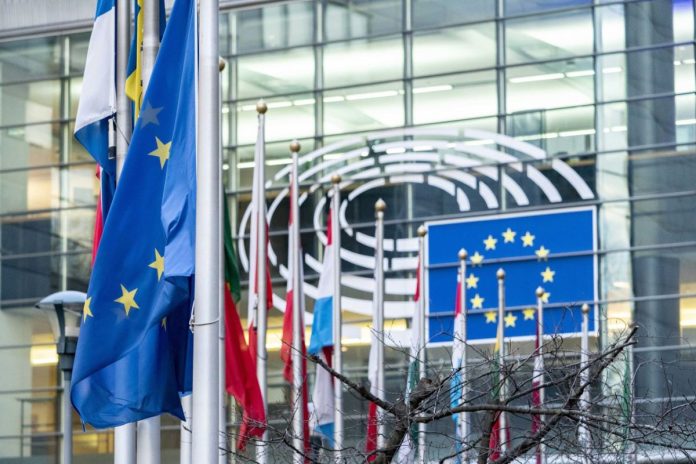
European commission president issues reality check on Ukrainian membership

European Parliament

Last month, the Commission recommended starting negotiations with Ukraine, as well as Moldova. However, several member states have since reiterated their opposition to fast-tracking Ukraine’s candidacy at the expense of other hopefuls that have been in the EU waiting room for years.

In an interview to France’s Le Parisien newspaper on Sunday, von der Leyen said her own “firm conviction and that of many European leaders is that Ukraine’s accession goes in the direction of history.”

However, she added that the “European Council will discuss [on Thursday and Friday] the opening of accession negotiations, not accession itself.” The latter, if it does come to pass, is likely to “take time no matter what.”

The Commission president hailed Kiev for having “undertaken profound reforms” in recent months, adding that the EU had “everything to gain from” Ukraine’s possible accession.

She also dismissed recent reports in the Western media, according to which the mood among officials in Kiev has been increasingly gloomy of late. She went on to claim that the majority of Europeans back the continuation of the bloc’s support for Ukraine.

Back in November, von der Leyen stated Kiev had carried out “well over 90% of the necessary steps” for membership set out by the bloc last year. However, she stopped short of offering a concrete timeline for the bloc’s potential enlargement.

Earlier this year, European Council President Charles Michel argued that the EU should prepare to expand by 2030 – a suggestion that von der Leyen and several leaders of member states have spoken against.

Iran downplays reports on President Raisi’s postponement of trip to Turkey

Nasser Kanaani

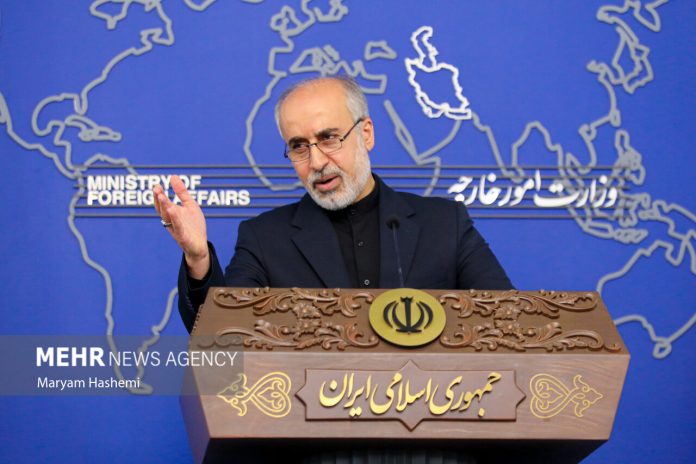
Nasser Kanaani told a press briefing on Monday, the Iranian and Turkish presidents had agreed to meet on Palestine to follow up on a meeting between the foreign ministers of the two countries in New York.

Kanaani further explained that the US refused to issue a visa for the Iranian foreign minister in time, therefore, the meeting between the two heads of state was postponed.

Earlier, Al-Asharq al-Awsat, citing unofficial sources, had reported that the Iranian president failed to show up last Tuesday at a summit in Ankara that Turkey’s Recep Tayyip Erdogan had earlier announced to demand Turkey go beyond words and take a firm measure regarding Palestine.

As the Israeli onslaught in Gaza has claimed nearly 18,000 lives since Oct. 7 strikes, the Iranian spokesperson said the failure of the United Nations Security Council to put an end to the occupying regime’s atrocities is a source of concern.

“The Security Council has failed to fulfill its duty efficiently to protect international peace and security and has failed to fulfill its responsibilities,” he stated.

He raised the alarm that the US veto of a UN resolution backed by a vast majority of the Security Council members demanding an immediate ceasefire in Gaza, showed that the Security Council has reached a dead-end.

Kanaani also touched on Iran’s nuclear deal with the West, known as a Joint Comprehensive Plan of Action (JCPOA), saying a ‘second JCPOA’ which alters the original 2015 text is not acceptable for Tehran.

“The ideas presented are by those who refused to fulfill their commitments within the framework of the agreement, and they are seeking to get away with deviant ideas,” he said, referring to the Western signatories including the US.

Iran to put MKO members on trial

MKO Albania

Nasser Kanaani told a press conference on Monday that the legal grounds have been prepared for the trial by the judiciary.

The spokesperson also said the trial is in line with measures to hold the criminals to account for killing nearly 17,000 Iranians in their terrorist attacks during the past four decades.

Kanaani also noted that Iranian officials are following up on the legal complaint filed against assassins of top Iranian anti-terror commander Lieutenant General Qassem Soleimani in Iraq in 2020.

General Soleimani, the late commander of the Quds Force of IRGC, was assassinated in a US drone attack in January 2020 authorized by the then-president Donald Trump near Baghdad International Airport.

US support for Israel ‘root cause of Gaza genocide’: Iran parliament speaker

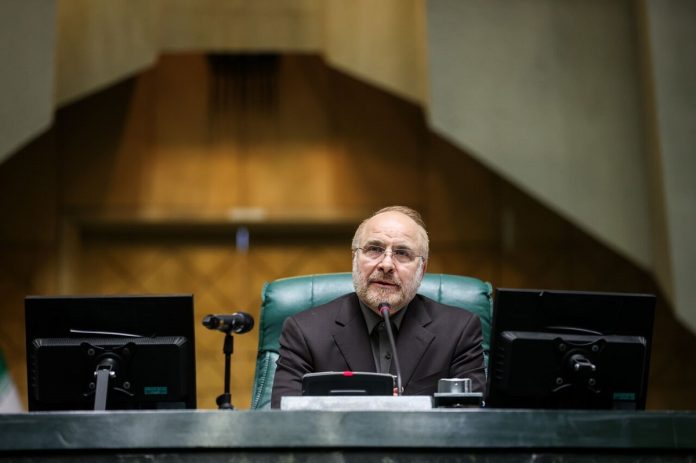
Iranian parliament speaker Mohammad Baqer Qalibaf

“We are still witnessing that the Zionist regime continues to kill the innocent people of Gaza and destroy its vital civilian infrastructures with the full cooperation of the United States as its main partner in crime,” Qalibaf said while addressing an open session of the parliament on Monday.

On Friday, the US used its veto in the United Nations Security Council to block a draft resolution calling for an immediate humanitarian ceasefire in Gaza.

Thirteen other Security Council members voted in favor of the resolution, put forward by the United Arab Emirates, while the United Kingdom abstained.

Slamming “US stubbornness” at the Security Council, Qalibaf said Muslims and freedom seekers of the world expect their governments not to enable such “unjust structures” to allow the Israeli regime to continue its genocidal crimes.

He also added the people of Gaza have proved that they were the “real winners” of the events that unfolded on October 7, when the Palestinian resistance movements launched a surprise operation into the occupied territories.

Nothing can undo the crushing defeat and restore the lost dignity of the Tel Aviv regime, he asserted.

The top Iranian parliamentarian maintained that Israel is now much more hated in the world than in the past, and its fake grandeur has been shattered even in front of its friends.

As announced by Leader of the Islamic Revolution Ayatollah Seyyed Ali Khamenei, the Palestinian issue will be solved soon and the Palestinian sovereignty will be established across the territory, he added.

Israel waged the devastating war on Gaza on October 7 after the territory’s Palestinian resistance movements carried out a surprise retaliatory attack, dubbed Operation Al-Aqsa Storm, against the occupying entity over its intensified violence against Palestinians.

The health ministry in the Hamas-run Gaza Strip on Sunday said the death toll from the Israeli war on Gaza had risen to at least 18,000, most of them women and children. There were an additional 49,229 wounded.

Tel Aviv has also cut off one of the most densely populated places in the world from basic supplies, such as water, electricity, and fuel. Shortage of medical supplies and food has left 2.3 million Palestinians at risk of starvation.

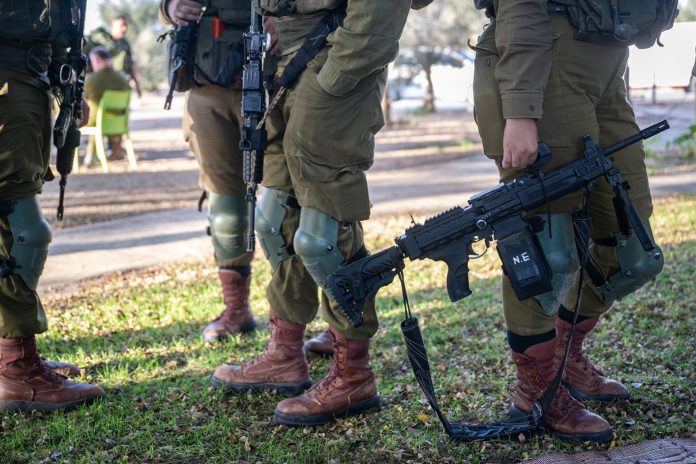
Israeli military confirms 100 soldiers killed in Gaza

Israeli Army

About 600 Israel Defence Force (IDF) members have been wounded since the ground invasion began on October 27, the IDF also said, adding that they were rescued from the strip in approximately 300 helicopter evacuations.

In total, almost 1,600 soldiers in total have been wounded since Israel began its war in Gaza in response to the October 7 Hamas attack, according to the latest figures.

About 18,000 people have been killed in Gaza since the war began, according to the Hamas-run Ministry of Health in Gaza.

Israeli national security adviser Tzachi Hanegbi claimed Saturday that at least 7,000 of the dead were Hamas fighters.

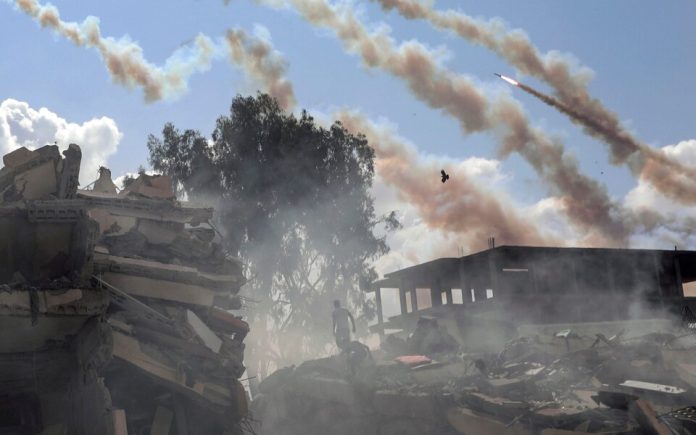
Israel says 12k missiles fired by Hamas since early October

Hamas

“Since October 7, Hamas has launched more than 12,000 missiles at Israel, including from humanitarian zones [in the enclave]. The launch of more than 2,000 of these missiles was abortive and most of them fell down on Gaza’s residents,” he told a briefing.

Israel launched the war on Gaza on October 7 after the territory’s Palestinian resistance movements waged the surprise Operation Al-Aqsa Storm against the occupying entity in response to the Israeli regime’s decades-long campaign of bloodletting and devastation against Palestinians.

The health ministry in the Hamas-run Gaza Strip on Sunday announced the death toll from the Israeli war on Gaza had risen to at least 18,000, most of them women and children. There were an additional 49,200 wounded.

Tel Aviv has also cut off one of the most densely populated places in the world from basic supplies, such as water, electricity, and fuel. Shortage of medical supplies and food has left 2.3 million Palestinians at risk of starvation.