Saturday, April 18, 2026
Home Blog Page 115

EU squabbling over frozen Russian funds: Politico

EU officials are debating the so-called “reparations loan” of about €140 billion ($162 billion) to Ukraine that would be guaranteed by Russian assets immobilized by the West after the escalation of the Ukraine conflict in 2022.

According to the proposal, Kiev would repay only if Moscow covers damages incurred by the conflict. Moscow has repeatedly condemned Western efforts to use its frozen funds to aid Ukraine, calling the move “theft.”

Although the EU has not yet agreed on the plan, Politico said “friction is already growing over whether to attach conditions to the loan”. One idea – which is being pushed by France and, to a lesser extent, Germany and Italy – is to ensure money “flows back as much as possible into the EU’s defense sector — and not across the Atlantic.”

According to Politico, this pressure led to draft summit conclusions emphasizing “the importance of reinforcing the European defense industry” with the loan. However, tensions are expected to sharpen at an EU leaders’ meeting in Brussels on Thursday, the report added.

Critics quoted by Politico argue that such limits “smack of hypocrisy.”

“If the aim is to keep Ukraine in the fight, you need to keep the criteria open,” a senior EU diplomat told the paper.

One particular concern is that the “Buy European clause” could block Kiev from buying crucial American weapons, including US-made Patriot air defense systems that the bloc does not produce.

Bloomberg reported this week that Washington will not join the EU-led initiative, citing concerns the move could unsettle global markets. Western officials have also for months warned that outright confiscation of frozen Russian assets – estimated at around $300 billion – would be illegal and undermine the West’s credibility.

Russian President Vladimir Putin has stated that “those who are smarter” in the West oppose seizing Russian assets while warning that Western moves to confiscate the funds would not go unpunished.

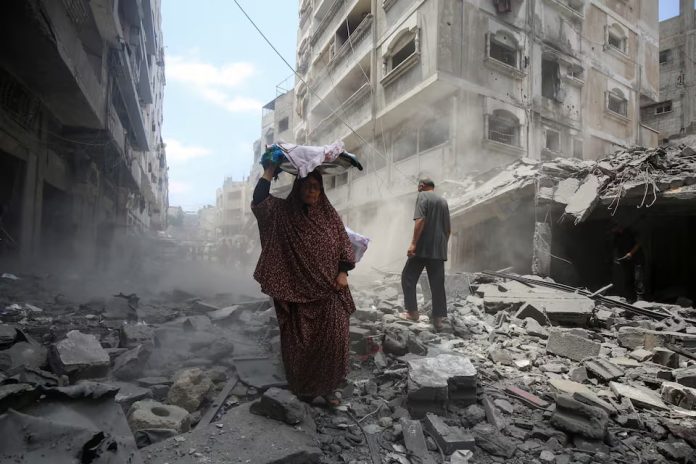
Over 61mn tons of debris left by 2 years of Israeli war on Gaza: UN

“Entire neighborhoods have been erased, and families search the ruins for water, for shelter,” the UNRWA wrote X.

The agency stressed that its humanitarian mission and lifesaving assistance for Palestinian people continue in Gaza despite the ongoing Israeli blockade and restrictions on UNRWA aid stocks.

According to UNRWA Commissioner-General Philippe Lazzarini, the agency has medicine, essential supplies, and a sufficient amount of food for the coming three months for the entire Gaza population.

In October 2024, the Israeli parliament, the Knesset, voted in favor of blocking UNRWA operations in the occupied West Bank and Gaza due to the alleged involvement of its staff in attacks by Palestinian group Hamas on Oct. 7, 2023.

But on Wednesday, the International Court of Justice rejected Israel’s claims, saying that “Israel has not substantiated its allegations that a significant part of UNRWA employees are members of Hamas” or were involved in the attacks.

The court also ruled that Israel is obliged under the Geneva Convention to agree to and facilitate relief schemes provided by third states and impartial humanitarian groups, including the UNRWA and the International Committee of the Red Cross (ICRC), to ensure that sufficient aid reaches the Gaza Strip.

Since October 2023, Israel’s genocidal war has killed over 68,000 people and injured more than 170,000, according to the Gaza Health Ministry.

A ceasefire deal took effect on Oct. 10 in Gaza, based on a phased plan presented by US President Donald Trump.

Iran’s foreign minister warns against “failed repetition” after IAEA chief’s remarks

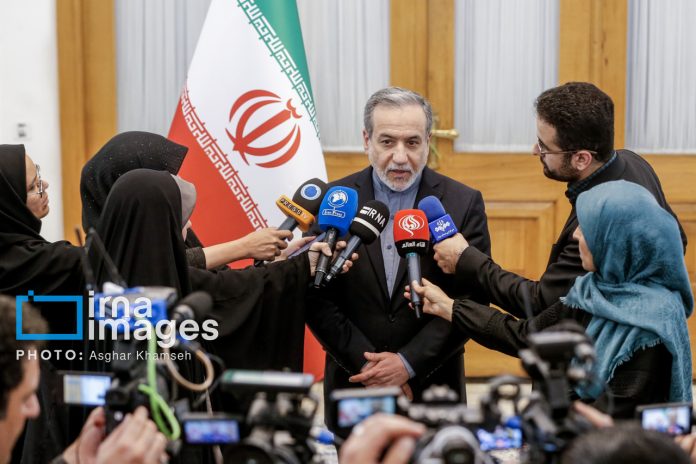
Abbas Araghchi

Speaking on the sidelines of a regional diplomacy conference in Mashhad, Araghchi said, “I don’t know whether his remarks came from concern or from a threat, but in any case, those making such threats should remember that repeating past mistakes yields nothing but renewed defeat.”

Grossi had said on Wednesday that recent US and Israeli attacks had caused significant damage to Iran’s nuclear facilities in Isfahan, Natanz, and Fordow, but emphasized that Iran’s nuclear know-how remained intact.

He added that Tehran currently allows IAEA inspectors to enter the country only “on a drip-feed basis.”

Grossi said Iran imposes restrictions for security reasons, pointing out, “I understand that, but if diplomacy fails, I fear a return to the use of force,” referring to the aggression by the US-Israeli alliance against Iran in June.

He also stated that the IAEA had found no evidence suggesting Tehran was seeking to build a nuclear weapon.

Grossi earlier confirmed that the agency had inspected the Iranian sites just before the attacks and continues to monitor them via satellite imagery, maintaining oversight of Iran’s nuclear program.

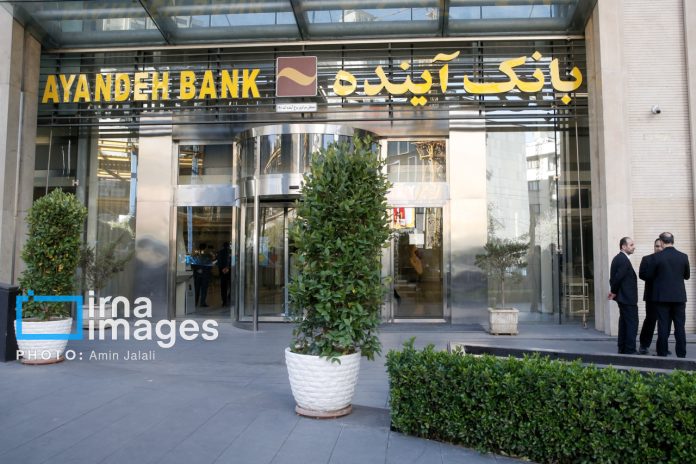
Iran’s Central Bank transfers Ayandeh Bank deposits to Bank Melli

CBI Governor Mohammadreza Farzin said the move follows two decades of “structural deficiencies and unhealthy performance” by Ayandeh Bank, which failed to meet the central bank’s reform standards. He emphasized that this action, known as the “resolution process,” is designed to protect depositors and stabilize the banking system.

“All Ayandeh Bank branches will operate under Bank Melli from Saturday, and customers can continue using their cards and accounts without disruption,” Farzin assured.

He stressed that no financial imbalance or deficit from Ayandeh Bank will be transferred to Bank Melli, as all assets of Ayandeh Bank will be taken over by the Deposit Guarantee Fund.

Farzin also announced that Ayandeh’s employees will become Bank Melli staff, and small shareholders will have the option to sell their shares to the Deposit Guarantee Fund at the highest price of the past year.

He described the decision as part of broader reforms to improve transparency, stability, and health in Iran’s banking system.

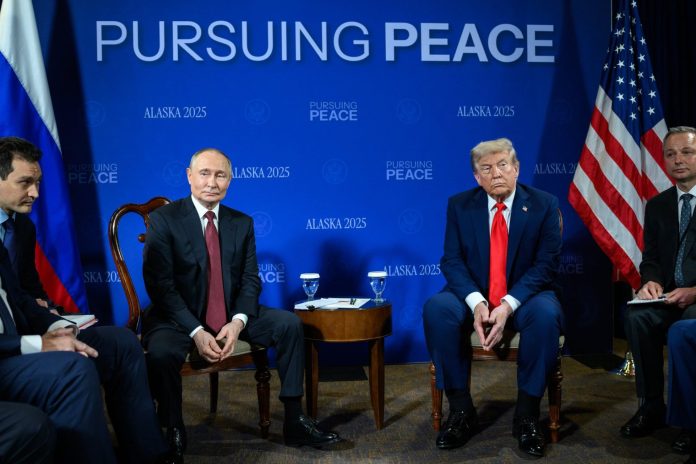
Trump says meeting with Putin ‘canceled’

Trump made the announcement during a meeting with NATO Secretary-General Mark Rutte at the White House on Wednesday, saying the planned summit in Hungary “did not feel right.”

“It did not feel like we were going to get to the place we have to get, so I cancelled it,” he said.

However, Trump did not rule out holding talks with Moscow at a later date. “But we will do it [the summit] in the future,” he added, without specifying when or where such a meeting might take place.

Trump’s remarks come shortly after the US Treasury Department unveiled additional sanctions on Russia, citing its ”lack of serious commitment to a peace process.” The restrictions targeted two of Russia’s largest oil companies, Rosneft and Lukoil, as well as their subsidiaries.

However, the US President admitted that he was not sure whether the new sanctions would change Russia’s stance on the Ukraine conflict. “Hopefully he [Putin] will become reasonable, and hopefully [Ukraine’s Vladimir] Zelensky will be reasonable too,” he said. “It takes two to tango.”

Plans for a Putin–Trump summit were first announced last week after the two leaders spoke by phone, though no specific date had been set.

Kremlin spokesman Dmitry Peskov earlier said the Russia–US meeting should be preceded by “serious preparations,” emphasizing that a summit between the two leaders “should not be wasted,” as both presidents “are accustomed to working for a result.”

Trump hits Russia’s oil giants with sanctions over Ukraine war

US Treasury Secretary Scott Bessent said the sanctions would target Russia’s two largest oil companies, Lukoil and Rosneft, due to Russian President Vladimir Putin’s “refusal to end this senseless war” in Ukraine and Moscow’s “lack of serious commitment” to the peace process.

“Today’s actions increase pressure on Russia’s energy sector and degrade the Kremlin’s ability to raise revenue for its war machine and support its weakened economy,” Bessent said in a statement on Wednesday.

“We encourage our allies to join us in and adhere to these sanctions,” he said.

The measures taken by the Department of the Treasury, which also sanctioned dozens of Rosneft and Lukoil subsidiaries, block the US assets of the designated firms, while preventing Americans from doing business with them. Notably absent from the US sanctions were Chinese and Indian buyers of Russian oil.

The US Treasury Department also said it was prepared to take further action if Russia continues to wage its more-than-three-year war in Ukraine.

Russia has yet to issue a public response to the US measures.

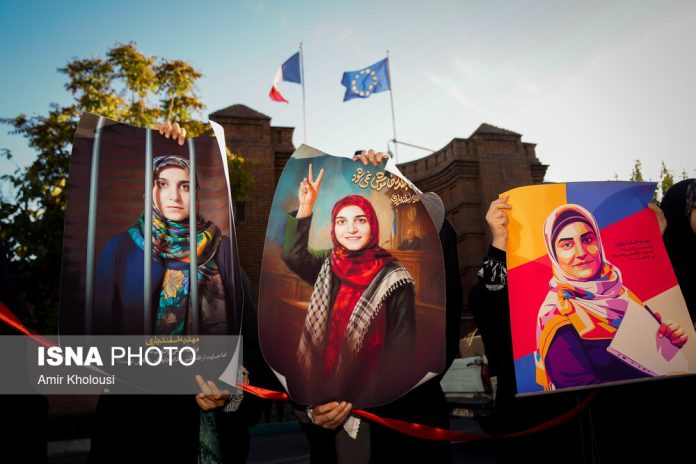
Iranian citizen Mahdieh Esfandiari granted conditional release from French prison

Foreign Ministry spokesperson Esmaeil Baghaei said on Wednesday that Iran’s embassy in Paris was informed of the decision by the case judge.

“The permit for conditional release has been issued, meaning she has been transferred from prison to a supervised residence outside the facility until her court hearing,” he explained.

According to Baghaei, Esfandiari’s trial has not yet taken place, and the court session is expected to be scheduled for December or January.

He described the development as “a positive step” and expressed hope that it would pave the way for her full release in the near future.

Esfandiari disappeared in late February 2025, and her family reported her missing to Iranian authorities after weeks of no contact. French prosecutors later confirmed in April 2025 that she had been detained and was being held at Fresnes Prison near Paris.

She faces charges of pro-Palestinian content. Iranian officials have described the accusations as politically motivated and related to her support for Palestinians and condemnation of civilian killings in Gaza.

Iranian Muay Thai champion Saba Chenari passes away at 25

Chenari was an accomplished martial artist with more than 12 years of experience as a fighter, coach, and referee in various combat sports.

She held the title of world vice-champion in Muay Thai and served as an official referee for the Iranian Martial Arts Federation, overseeing national and provincial kickboxing and Muay Thai events.

Born in 2000, Chenari also taught martial arts and headed the Women’s Competitions Committee in grappling kickboxing. Known for her discipline and passion, she was widely respected among Iran’s martial arts community for promoting women’s participation in combat sports.

In a recent interview, Chenari described the essentials of athletic excellence as “physical and mental readiness, tactics and strategy, technical skills, spirit and professionalism, as well as proper nutrition and rest.”

She was the daughter of Dr. Hossein Chenari, founder of the Avicenna International College in Georgia, where she also taught and mentored young martial arts enthusiasts.

Israel must allow aid into Gaza: ICJ

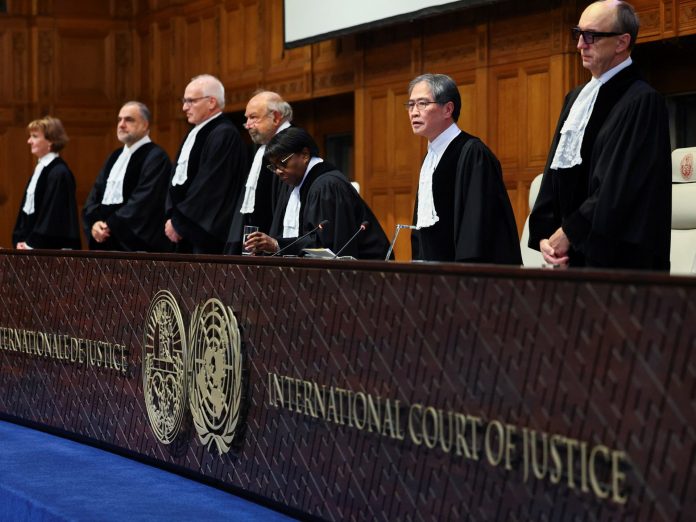
The panel of 11 judges said on Wednesday that Israel is forced to support the relief efforts provided by the United Nations in the bombarded Gaza Strip and its entities.

It includes UNRWA, the United Nations Relief and Works Agency for Palestine Refugees in the Near East, which Israel has banned from operating in Israel after accusing some of its staff of taking part in the October 7, 2023, Hamas-led attack.

As part of its findings, the ICJ said Israel has failed to show evidence that UNRWA also worked for Hamas as it claimed.

“The court finds that Israel has not substantiated its allegations that a significant part of UNRWA’s employees are ‘members of Hamas … or other terrorist factions’,” stated ICJ President Yuji Iwasawa.

Advisory opinions of the ICJ, also known as the world court, carry legal and political weight, but they are not binding, and the court has no enforcement power.

In April, lawyers for the United Nations and Palestinian representatives at the ICJ accused Israel of breaking international law by refusing to let aid into Gaza between March and May.

Since then, some humanitarian aid has been allowed in, but UN officials say the relief is nowhere near what is needed to ease a humanitarian disaster and an Israeli-induced famine in parts of the enclave.

The 20-point ceasefire plan mediated by the US earlier this month allows for 600 trucks of aid a day into Gaza. Israel has previously accused Hamas – without providing evidence – of stealing food delivered into the enclave, which the group strongly denies.

Israel has claimed the aid restriction, still in place despite provisions in the ceasefire stipulating that aid must enter Gaza at scale, was to put pressure on the group.

Israel’s ambassador to the UN, Danny Danon, slammed the ICJ’s advisory opinion as “shameful”, claiming UN institutions are “breeding grounds for terrorists”.

Israel did not take part in the proceedings, but it did submit its legal position in writing. In April, Israeli Foreign Minister Gideon Saar dismissed the hearings as a “circus” and said the court was being politicised.

Iwasawa noted that the court “rejects the argument that the request abuses and weaponises the international judicial process”.

On the eve of the ICJ ruling, Abeer Etefa, Middle East spokesperson for the UN’s World Food Programme (WFP), stressed that 530 of the organisation’s trucks had crossed into Gaza since the ceasefire.

Those trucks had delivered more than 6,700 tonnes of food, which she said was “enough for close to half a million people for two weeks”.

Etefa added about 750 tonnes a day were now coming through, which, although more than before the ceasefire, remains well below WFP’s target of about 2,000 tonnes daily.

The ICJ announced that Israel, as an occupying power, was under an obligation “to ensure the basic needs of the local population, including the supplies essential for their survival”.

At the same time, Israel was “also under a negative obligation not to impede the provision of these supplies”, the court said.

The court also recalled the obligation under international law not to use starvation as a method of warfare.

The UN General Assembly had asked the ICJ to clarify Israel’s obligations, as an occupying power, towards the UN and other bodies, “including to ensure and facilitate the unhindered provision of urgently needed supplies essential to the survival” of Palestinians.

ICJ judges heard a week of evidence in April from dozens of nations and organisations, much of which revolved around the status of UNRWA.

The ICJ at the time noted that UNRWA “cannot be replaced on short notice without a proper transition plan”.

Palestinian official Ammar Hijazi told the ICJ judges during the April hearings that Israel was blocking aid as a “weapon of war” and triggering starvation in Gaza.

Wednesday’s case was separate from the others Israel faces under international law over its assault in Gaza.

In July 2024, the ICJ issued another advisory opinion stating that Israel’s occupation of the Palestinian territory was “unlawful” and must end as soon as possible.

ICJ judges are also weighing accusations, brought by South Africa, that Israel has broken the 1948 UN Genocide Convention with its actions in Gaza.

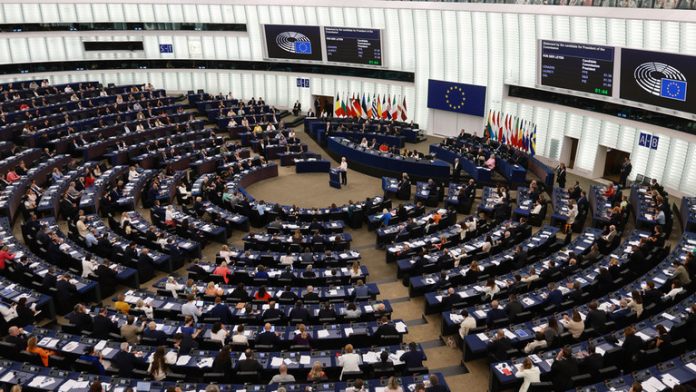
EU agrees 19th sanctions package against Russia over Ukraine war

The package — the 19th from the EU since the Kremlin’s 2022 invasion — comes as Europe seeks to keep the pressure on Russia in the face of US President Donald Trump’s faltering peace push.

Kremlin-friendly Slovakia had held up adoption of the package over a separate issue as it sought protections for its car industry from EU climate legislation.

As part of the new measures, the 27-nation bloc is bringing forward a ban on the import of liquefied natural gas from Russia by a year to the start of 2027.

It is also blacklisting over 100 more tankers from the so-called “shadow fleet” of ageing vessels used to help Russia dodge restrictions on its oil exports.

Beyond efforts to hit Moscow’s revenues, the EU was also looking to crack down on Russian diplomats suspected of espionage by imposing controls on their travel around Europe.

Those new measures mean that Russian diplomats have to inform the authorities in countries where they are stationed of any travel abroad.

Slovakia’s Prime Minister Robert Fico agreed to drop his opposition to the sanctions on Wednesday after claiming to get adequate assurances on the car industry.

The package will be formally adopted tomorrow, just before Ukraine’s Volodymyr Zelensky joins EU leaders at a summit in Brussels.