Tuesday, December 30, 2025
Home Blog Page 1141

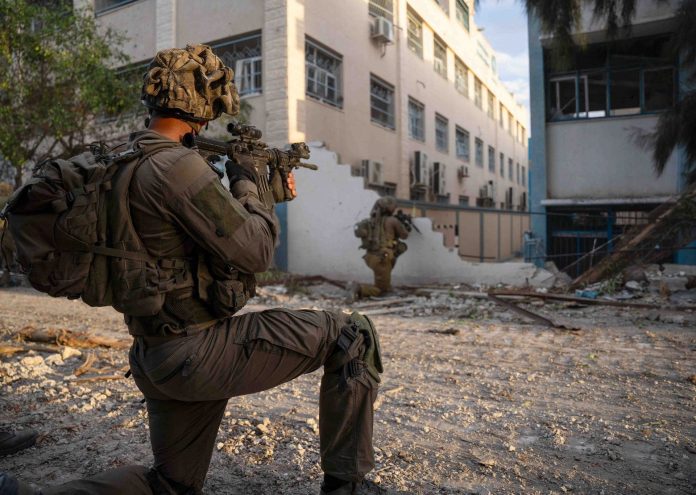
Over 5k Israeli soldiers wounded and ‘disabled’ in Gaza fighting: Report

Israeli Army

Specialists from Israel’s Ministry of Defence said its rehabilitation department had received 60 wounded soldiers every day since the start of the war in Gaza.

Limor Luria, deputy director general and head of the ministry’s Rehabilitation Department, told Yedioth Ahronoth newspaper that at least 2,000 Israeli soldiers had been declared disabled, with health officials “in a hurry to release the wounded so it can admit new patients”.

“We have never faced something like this,” Luria said, adding that 5,000 soldiers had been wounded since the start of the fighting.

“Who will help them shower or get around the house? Most of the victims suffered serious injuries, and the state needs to understand that there is an arena here that requires a new distribution of injuries.”

Luria added that nearly 60 percent of the wounded have suffered from severe wounds to their hands and feet, including those who have required amputations.

Around 12 percent of injuries consist of damage to the spleen, kidneys, and rupture of internal organs, the official said.

Luria also warned of a looming mental health crisis that will impact Israeli soldiers who come back from Gaza, saying that cases of post-traumatic stress disorder and other trauma-related issues will “skyrocket” in the next few months.

Idan Kaliman, who heads the Israeli army’s disabled people’s organisation, echoed Luria’s concerns.

“There is a huge mass of wounded here, even before the wave of post-trauma that will wash over us in about a year,” Kaliman told Yedioth Ahronoth.

“Israel has not experienced this level of trauma since our war of independence. First responders and soldiers have been exposed to horrific sights since the beginning of the war. [Disabled] veterans of previous wars say that this is the first time they know of someone who has experienced something more challenging. In the end, it is not just a war on the battlefield, but soldiers who fought inside Israel, on the lawn of the kibbutz, in their homes.”

At least 420 Israeli soldiers have been killed since 7 October, according to the military.

During that same period at least 17,500 people have been killed in Gaza, according to the local ministry of health, with many thousands more presumed dead. Around 46,000 have been wounded.

Meanwhile, Israeli forces have killed at least 270 people in the occupied West Bank, and wounded around 3,500 others.

Since a truce collapsed last week, Israel has expanded its ground campaign into the southern half of the Gaza Strip by launching the storming of Khan Younis.

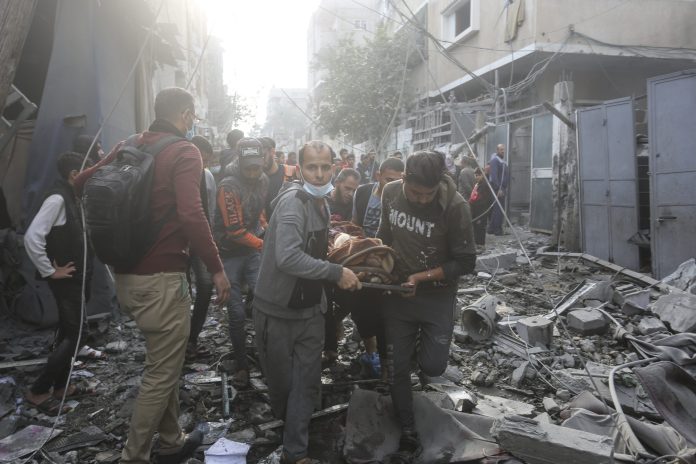
The vast majority of Gaza’s 2.3 million residents have already been forced from their homes, many fleeing several times. With fighting raging across the length of the territory, residents and UN agencies say there is now effectively nowhere safe to go.

Israel has blocked Palestinians in Gaza from fleeing along the main north-south route down the spine of the narrow strip, and is shunting them instead towards the Mediterranean coast.

UNICEF warns Israeli restrictions on aid delivery death sentence for Gaza children

Gaza War

Adele Khodr, UNICEF’s Regional Director for the Middle East and North Africa, made the comment on Saturday, while explaining about the dire humanitarian situation across Gaza.

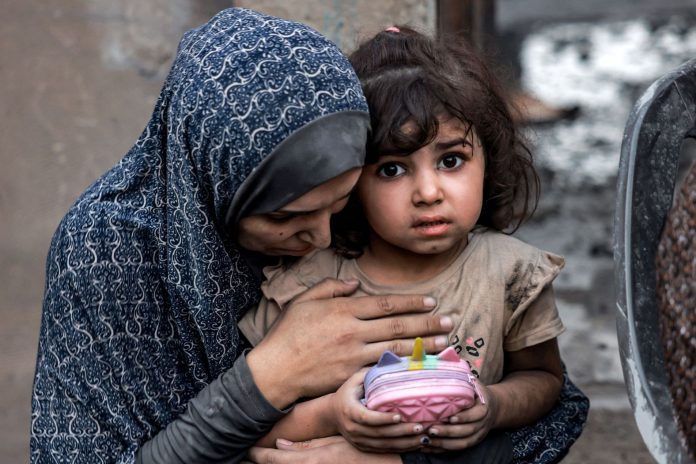
“Our team on the ground describes meeting children with missing limbs and third-degree burns, and children left shell-shocked by the continuing violence that surrounds them,” Khodr stated.

Reflecting on the impact of Israel’s total siege of Gaza on children, the UNICEF official said, “Close to one million children have been forcibly displaced from their homes, pushed into tiny, overcrowded areas without water, food, or protection, putting them at increased risk of respiratory infections and waterborne diseases.”

She described Israel’s restrictions on delivering lifesaving aid into the Gaza Strip as “another death sentence for children”, adding that the quantities of aid entering the blockaded territory “are far from adequate, and the challenges have been intensified due to ongoing Israeli bombing and fuel shortages.”

Khodr stressed that an immediate, long-lasting humanitarian ceasefire is the only solution to end the suffering of children and civilians in Gaza, affirming that it is crucial to protect civilians and enable the delivery of urgently needed lifesaving aid.

“Humanitarian aid must be allowed [to enter Gaza] at a scale to prevent further suffering. UNICEF and humanitarian organizations must have safe access to all children and their families wherever they are in the Gaza Strip, including in the north,” Khodr noted.

Stressing the need for the international community to take swift action on the situation in Gaza, the UNICEF official said, “The world is watching, helpless and devastated – we cannot act quickly enough. This must stop immediately.”

Israel launched its devastating war of genocide against Gaza on October 7 following a surprise operation by the territory’s resistance groups, dubbed Operation al-Aqsa Storm.

The Palestinian Health Ministry in the Gaza Strip announced on Saturday that the regime’s onslaught has killed 17,700 people so far with 48,780 others injured.

The United Nations Secretary General Antonio Guterres has invoked Article 99 of the UN Charter to notify the world body’s Security Council about the threat that has been posed to international peace and security as a result of the Israeli onslaught on Gaza.

‘People are starving’: WFP says humanitarian operation in Gaza Strip ‘collapsing’

Gaza War

“There’s not enough food. People are starving,” WFP Deputy Director Carl Skau wrote on X, formerly Twitter, following a visit to the besieged coastal strip on Saturday.

He said his team had reached more than a million people, “but the situation is untenable. We need to get our supplies in”, calling for an immediate humanitarian ceasefire.

Only a fraction of the necessary food is reaching the Gaza Strip, there is a lack of fuel, and no one is safe, Skau continued in a WFP statement, adding: “We cannot do our job.”

Camps and emergency shelters were overcrowded, he wrote, as the muffled thunder of Israel’s bombing raids could be heard in the background every day.

“With law and order breaking down, any meaningful humanitarian operation is impossible,” the United Nations official said.

“Gazans are living packed into unhealthy shelters or on the streets as winter closes in, they are sick, and they do not have enough food,” he added.

Israel continues its bombardment of Gaza after the United States vetoed a UN Security Council resolution calling for a ceasefire on Friday, a move strongly condemned by humanitarian groups.

In a rare move, UN Secretary-General Antonio Guterres had triggered the vote by invoking Article 99 of the UN charter, a measure unused in decades, saying, “The people of Gaza are looking into the abyss.”

At least 17,700 Palestinians, mostly women and children, have been killed in two months and nearly 49,000 wounded, while many people are still trapped under the rubble.

“We have food on trucks, but we need more than one crossing. And once the trucks are inside, we need free and safe passage to reach Palestinians wherever they are. This will only be possible with a humanitarian ceasefire and ultimately, we need this conflict to end,” he stated.

On Saturday, Skau told the Reuters news agency a new process for inspecting Gaza aid at Karem Abu Salem crossing, called Kerem Shalom by Israel, is being tested.

Israel has so far rebuffed UN pleas to open Karem Abu Salem, but both signalled on Thursday that the crossing could soon help process the delivery of humanitarian supplies into Gaza.

Until now, limited quantities of aid have been delivered from Egypt through the Rafah crossing, which is ill-equipped to process large numbers of trucks.

Trucks have been driving more than 40km (25 miles) south to Egypt’s border with Israel before returning to Rafah, leading to bottlenecks and delays.

“It’s good, it’s useful because it would also be the first time that we can then bring in a pipeline from Jordan. But we need that entry point as well because that would make all the difference,” Skau said.

Speaking to reporters in Israel earlier this week, Colonel Elad Goren, head of the civil department at COGAT, the Israeli agency for civilian coordination with the Palestinians, stated, “We will open Kerem Shalom just for inspection. It will happen in the next few days.”

Goren added a COGAT team was engaged in discussions with the United States, the UN and Egypt on raising the volume of humanitarian assistance.

“We have frontloaded with our internal resources so that we have food available in Egypt and in Jordan to reach some 1,000,000 people in one month. We are ready to roll. The trucks are ready to move,” Skau continued.

Skau described the situation in Gaza as increasingly chaotic as people grabbed what they could from aid distribution points.

“There is a question for how long this can continue, because the humanitarian operation is collapsing,” he added.

“Half of the population are starving, nine out of 10 are not eating every day. Obviously, the needs are massive.”

Iran says US veto of ceasefire resolution showed Washington’s role in Gaza genocide

Nasser Kanaani

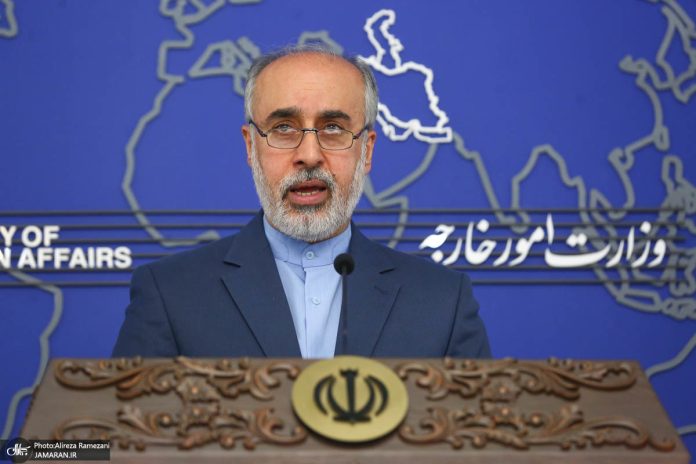
Iranian Foreign Ministry Spokesman Nasser Kanaani has condemned Washington’s vetoing, again, of a UN Security Council resolution aimed at establishing an immediate humanitarian ceasefire in Gaza, saying, “The United States proved once again that it is the main player and contributor to  the killing of civilians and Palestinian citizens, especially women and children, and the destruction of vital infrastructure in Gaza.”

“Since the onset of the child-killing Zionist regime’s brutal onslaught on Gaza, the US regime has, time and again, proven its alliance and cooperation with the apartheid Israeli regime in committing war crimes and genocide against the Palestinian nation,” he explained.

“Current American officials who, hiding behind a cloak of hypocrisy, had voiced concern over the lives of children and civilians in Gaza, sent their 200th consignment of arms and military assistance to the child-killing Israeli military last week, and have, over the past more than two months, spared no military, political, intelligence and media support for the barbaric crimes committed by the Zionist regime against defenseless Palestinian people in the Gaza Strip and the West Bank,” the spokesman added.

“Undoubtedly, the US government has been an accomplice in the merciless killing of nearly 18,000 civilians, around 8,000 of whom are oppressed children, and definitely, the United States and usurper Israel regimes will be responsible for the consequences of any possible spread of war in the region.”

Kanaani stressed that US authorities’ heritage of anti-human and racist policies will only bring shame and disgrace for posterity in that country.

On Friday, the US used its veto in the United Nations Security Council to block a draft resolution calling for an immediate humanitarian ceasefire in Gaza. Thirteen Security Council members voted in favor of the resolution, put forward by the United Arab Emirates, while the United Kingdom abstained.

Israel launched the war on Gaza on October 7 after the territory’s Palestinian resistance movements waged the surprise Operation Al-Aqsa Storm against the occupying entity in response to the Israeli regime’s decades-long campaign of bloodletting and devastation against Palestinians.

The Israeli aggression has so far killed at least 17, 000 Palestinians, most of them women and children. More than 46,000 people have been wounded as well.

Hamas condemns US veto at UNSC, describing it as “immoral and inhumane position”

Biden Netanyahu

“America’s obstruction of the issuance of a ceasefire resolution is a direct participation with the (Israeli) occupation in killing our people,” Izzat Al-Rishq, a member of the Hamas political bureau, said in a statement.

The resolution — presented by the United Arab Emirates — had called for “an immediate humanitarian ceasefire,” as well as “the immediate and unconditional release of all hostages” and “ensuring humanitarian access”, according to a draft copy.

Thirteen countries were in favor, the US vetoed and the UK abstained.

The United States had previously signaled disapproval of the draft text. One of the council’s five permanent members with veto power, the US has repeatedly resisted calls for a “ceasefire”, emphasizing Israel’s right to defend itself following Hamas’ October 7 terror attack.

The vote was the sixth attempt by the 15-member group to reach a consensus on the ongoing war between Israel and Hamas. Only one previous vote was successful, which called last month for “humanitarian pauses and corridors” to be established in Gaza.

Hamas launched a surprise attack on Israel on October 7, and the ensuing fighting has left more than 1,200 Israelis and 17,000 Palestinians dead. In late November, the belligerents reached a temporary Qatari-mediated ceasefire, with Hamas agreeing to release dozens of Israeli hostages in exchange for the regime freeing many Palestinians from prisons. Last week, however, the fragile agreement collapsed, with both sides accusing each another of violating the truce.

Palestinian Authority President Mahmoud Abbas has also said the United State’s decision to veto a UN Security Council Resolution calling for a ceasefire in Gaza made it complicit in “war crimes” against Palestinians.

A statement released by the PA presidency added Abbas held the US responsible for the bloodshed of Palestinian children, women and the elderly in Gaza.

Hamas says over 100 mosques, three churches destroyed in Israel’s attacks on Gaza

Gaza War

“In the course of the ongoing aggression in Gaza, Israeli forces have struck most of the historical monuments in the Palestinian enclave,” it said in a statement.

According to Hamas, as many as 104 mosques and three churches have been destroyed in bombardments as of today.

It condemned the strike on the Great Omari Mosque, one of the oldest mosques in the Gaza Strip, which led to its partial destruction. It slammed this attack as a “barbaric crime against a religious and historic monument”.

Nevertheless, “such methods cannot break the will of the Palestinian people and its resistance to the aggression”, Hamas added.

Hamas launched a surprise attack on Israel on October 7, and the ensuing fighting has left more than 1,200 Israelis and 17,000 Palestinians dead.

UN chief: Gaza facing humanitarian disaster, ceasefire a necessity

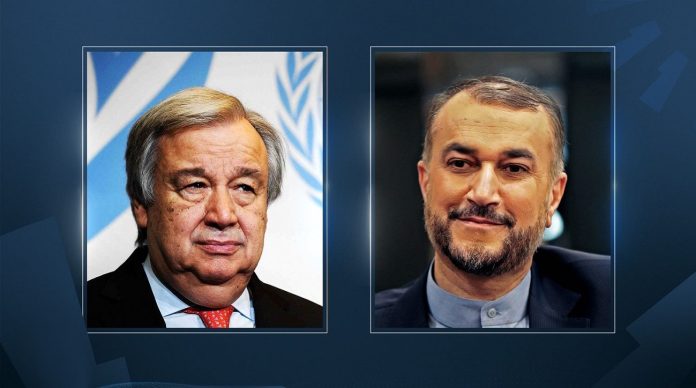
Antonio Guterres and Hossein Amir Abdollahian

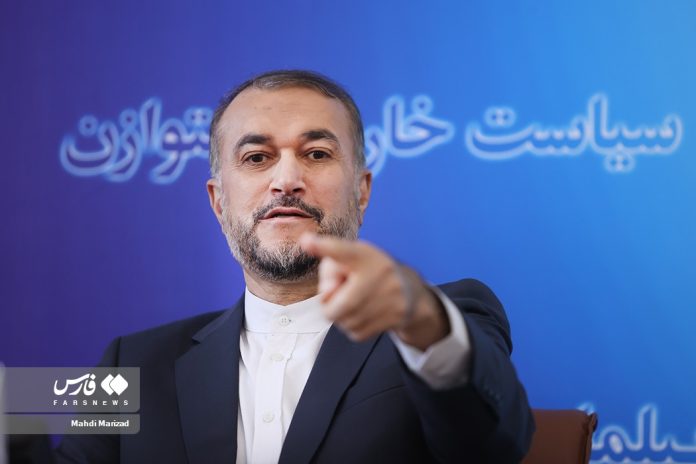
In a phone call with Iranian Foreign Minister Hossein Amirabdollahian, the UN chief described the humanitarian situation in Gaza as disastrous.

He said Article 99 of the UN Charter has not been invoked since 1989, but it has been invoked now due to the complicated situation in Gaza and Palestine.

Guterres stressed the need for an immediate ceasefire in Gaza is felt more than ever before, adding a humanitarian end should be enforced to keep tensions from spreading in the region.

The UN chief underlined the necessity of pressing ahead with efforts to restore Palestinians’ rights and establish a Palestinian state based on resolutions already passed by the UN.

Amirabdollahian, for his part, appreciated the move by Guterres to invoke Article 99 of the UN Charter about developments in Palestine and the genocide in Gaza, stressing, “Using Article 99 of the UN Charter is a valiant move by you in order to maintain international peace and security and is backed by the world public opinion.”

The top Iranian diplomat touched upon the complicated and harrowing humanitarian situation in south Gaza as well as the displacement of women and children left homeless in cold winter in deserts in south Gaza, calling for rapid deterrence against the Israeli regime’s crimes and support for Palestinian citizens, including a swift opening of the Rafah border crossing to send in humanitarian aid and an end to the forced displacement of Palestinians.

The head of the Iranian foreign policy apparatus touched upon his phone conversations, on Friday, with Palestinian resistance leaders, adding, “As long as the United States backs the Zionist regime’s crimes and the continuation of war, not only is the ongoing war likely to spread, but also the situation in the region could explode out of hand.”

“The Israeli regime’s claim that Hamas called off the ceasefire is a sheer lie, and despite efforts to make the ceasefire last, Washington’s support for the continuation of the Israeli regime’s military strikes has made it difficult to reach a lasting ceasefire,” Amirabdollahian continued.

Israel launched the war on October 7 in response to an operation staged by Gaza’s resistance movements. Israel has killed more than 17,400 people, most of them women and children, and injured over 46,500 others in its relentless aerial and ground attacks on Gaza since.

US vetoes UNSC resolution calling for ceasefire in Gaza Strip

UNSC

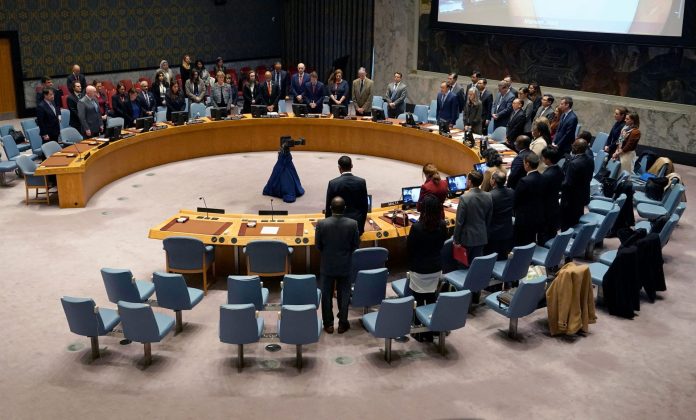
Thirteen UN Security Council members voted in favour of a brief draft resolution, put forward by the United Arab Emirates on Friday, while the United Kingdom abstained.

The vote came after UN Secretary-General Antonio Guterres made a rare move on Wednesday to formally warn the 15-member council of a global threat from the two-month-long war.

“While the US strongly supports a durable peace in which both Israel and Palestine can live in peace and security, we do not support calls for an immediate ceasefire. This would only plant the seeds for the next war, because Hamas has no desire to see a durable peace, to see a two-state solution,” said Robert Wood, deputy US ambassador to the UN.

The US and Israel oppose a ceasefire because they believe it would only benefit Hamas. Washington instead supports pauses in fighting to protect civilians and allow the release of hostages taken by Hamas in a deadly October 7 attack on Israel.

A seven-day pause – that saw Hamas release some hostages and an increase in humanitarian aid to Gaza – ended on December 1.

After several failed attempts to take action, the Security Council last month called for pauses in fighting to allow aid access to Gaza, which Guterres on Friday described as a “spiralling humanitarian nightmare”.

The US favours its own diplomacy, rather than Security Council action, to win the release of more hostages and press Israel to better protect civilians in its assault on Gaza, which it launched after the Hamas attack that Israel says killed 1,200 people. Gaza’s Health Ministry says more than 17,500 people have been killed in the Israeli assault.

The vote came after Guterres deployed rarely-used Article 99 of the UN Charter to bring to the council’s attention “any matter which, in his opinion, may threaten the maintenance of international peace and security”.

Israel has bombarded Gaza from the air, imposed a siege and launched a ground offensive. Vast areas of the territory have been reduced to a wasteland. The UN says about 80 percent of the population has been displaced, facing shortages of food, fuel, water and medicine, along with the threat of disease.

“There is no effective protection of civilians,” Guterres told the council earlier on Friday.

“The people of Gaza are being told to move like human pinballs – ricocheting between ever-smaller slivers of the south, without any of the basics for survival. But nowhere in Gaza is safe.”

Israel even outdoes Daesh: Iran’s FM

Hossein Amirabdollahian

“Genocide and infanticide, the use of prohibited weapons, preventing the delivery of water, food and medicine to Gaza, and brutality towards the captives and innocent citizens show the apartheid and occupying Israeli regime is way ahead of Daesh in committing a variety of crimes,” Amirabdollahian said in a post on his X account on Friday.

He warned against the structural collapse of international organizations and the threat to global peace and security in case Israel keeps ignoring warnings by the chief of the United Nations.

“[Israel’s] lack of urgent attention to the warnings issued by the UN secretary general (António Guterres) and the continuation of the White House support for the Israeli regime’s war crimes will lead to the structural collapse of international organizations, global peace and security, and ultimately the decline of human dignity,” the top Iranian diplomat added.

The minister expressed confidence that the failure of the Israeli and US war policy and genocide against Palestine is “very close”.

Israel launched the war on Gaza on October 7 after the Palestinian resistance movement Hamas waged the surprise Operation Al-Aqsa Storm against the occupying entity in response to the regime’s decades-long campaign of bloodletting and devastation against Palestinians.

More than 17,400 people, most of them women and children, have been killed and over 46,500 others injured in Israel’s relentless air and ground attacks on Gaza.

Russia says US making billions at cost of Ukrainian lives

Russia Ukraine War Weapons Arms

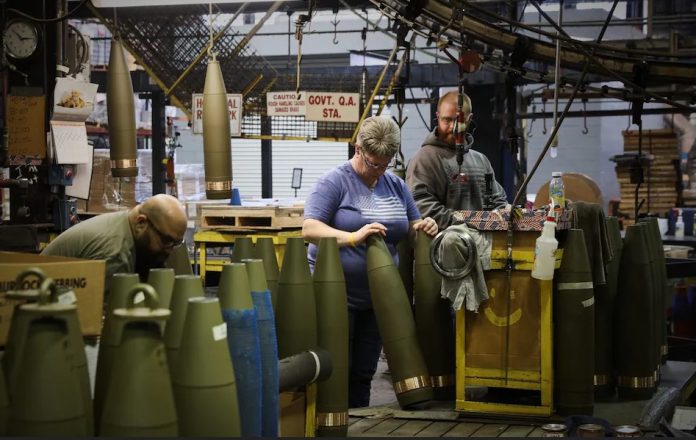
Peskov was speaking a day after US Secretary of State Antony Blinken admitted that the overwhelming majority of Kiev’s monetary aid had been spent in the US.

“90% of the security assistance we’ve provided has actually been spent here in the United States with our manufacturers,” he said at a briefing alongside UK Foreign Minister David Cameron, adding, “So this has also been a win-win that we need to continue.”

Asked to comment on the statement, Peskov stated at a press conference on Friday that the US earns billions from the conflict, and that Ukraine needs to understand it.

“They aren’t the main concern for the US,” the spokesman remarked, “the main concern for the US was always themselves, even at the cost of a large number of Ukrainian lives.”

The US has pledged more than $100 billion in aid, including military equipment, since the start of Moscow’s military operation in February 2022 – more than any of Ukraine’s other sponsors.

Blinken’s statement on the benefits to the US military-industrial complex echo Pentagon chief Lloyd Austin’s remarks at the Reagan National Defense Forum in California last week. “$50 billion of our supplemental budget request would flow through our defense industrial base,” to replenish the arms stocks depleted from being used to supply Ukraine, the US defense secretary declared.

He summed it up as “the most ambitious modernization effort in nearly 40 years”.

Former Russian President Dmitry Medvedev suggested on X (formerly Twitter) that the US is not motivated by a desire to help Ukraine, but rather by “the enormous profit that the companies close to the Biden administration get from it”.

Meanwhile, a lack of success at the front has only increased Kiev’s pleas for more funding. At the US Institute of Peace on Tuesday, Ukrainian President Volodymyr Zelensky’s chief of staff, Andrey Yermak, warned that delaying US military aid exposes Kiev to a “big risk to lose this war”.

The administration of US President Joe Biden has been wrestling with Republican lawmakers in the past few weeks to push through another supplemental budget request of $111 billion, of which more than half is intended for Ukraine.

After the budget request was blocked in the Senate, National Security Council spokesman John Kirby had to admit in a press conference that the White House could not offer any assurances to Kiev.

“We’re not in a position to make that promise to Ukraine, given where things are on the Hill.”